There have been some pretty exciting races in F1 these days which is great for the fans and the sport in general. After all, who wants to see the same old faces winning again and again? But in this post I’d like to look at the men behind the machines, the designers who have created the cars that are the tools that the drivers use.

John Cooper.
I could start a little further back in the history of motor sport I suppose but I’ve chosen to start with the late 1950’s and John Cooper because he made a fundamental change to racing cars that set them on to today’s path. He decided to move the engine from the front to the back.
The rear engine revolution began in 1957 when Jack Brabham drove a rear engined Cooper at the Monaco Grand Prix. Jack won the championship in 1959 and 1960 for Cooper and since then every F1 winner has sat in front of the engine, not behind. The Cooper team sadly folded in the late 1960’s but the name is remembered today by the BMW Mini Cooper.
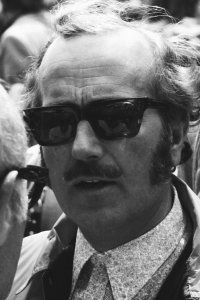 Colin Chapman.
Colin Chapman created his Lotus company in 1952 but had started out in racing by modifying an Austin 7. Later he created the Lotus 7 and made the car available to others in kit form. The car is still available today manufactured by the Caterham company and was the car driven by Patrick McGoohan in the TV series The Prisoner.
Chapman brought aircraft engineering and techniques into motorsport and created the first monocoque chassis with the Lotus 25. His design philosophy was for cars with lightweight construction rather than big heavy cars and engines.
Maurice Philippe.
In 1970 Colin Chapman worked with designer Maurice Philippe to produce the revolutionary Lotus 72. The car featured inboard brakes and moved the radiator from the front to the sides of the car where they remain today on modern F1 cars. This produced a wedge shaped car which went on to win championships for Jochen Rindt and Emerson Fittipaldi.
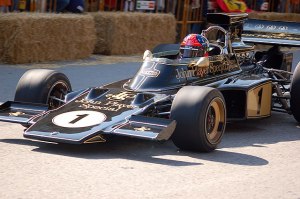 Lotus produced other groundbreaking cars such as the Lotus 79 which dominated the 1978 championship. The car was the first ground effect car which used aerodynamics to produce a low pressure area under the car which literally sucked the car down to the track. Skirts were added to seal in the low pressure area but ground effect cars were later banned.
Another Chapman innovation was the dual chassis car, which had a softly sprung chassis in which the driver sat and a second chassis to which the aerodynamics were attached giving the driver a much smoother ride. Sadly the car, the Lotus 88, was banned.
Gordon Murray.
Gordon Murray was the designer for Bernie Ecclestone’s Brabham team in the late 70s and to combat the Lotus 79 he came up with the concept of the BT46b Fan car. The car had a huge fan, ostensibly used for cooling but a side effect was that it sucked the air from the underside of the car creating a low pressure area and consequently sucked the car to the track surface. The car was only used in one race despite the FIA, the F1 governing body, ruling the car was legal. Bernie Ecclestone withdrew the car fearing that as he had just been made the leader of FOCA, the Formula One Constructors’ Association, disputes about the car could derail FOCA.
When John Barnard left McLaren, Murray was invited to join the team as technical director by Ron Dennis. Murray worked with the McLaren design team on the MP4/4 car which, coupled with the Honda engine, won 15 out of the 16 races in 1988.
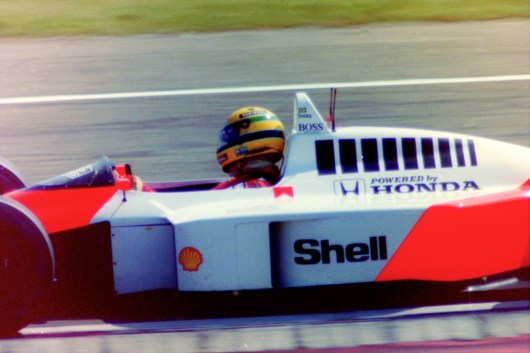
Ayrton Senna in the Mp4/4 in 1988. Photo by the author
John Barnard.
 Barnard first worked in F1 for the McLaren team in the early 1970s then moved to the USA to work in US racing. He was recalled back to McLaren when the team was taken over by Ron Dennis and there he produced the first carbon fibre chassis in F1 which was built for the team by Hercules Aerospace in the USA. Other teams followed and today all F1 cars are built using carbon fibre.
Barnard became the key designer of the period and in 1986 he moved to Ferrari. As he was in such great demand he was able to name his own price which included surprisingly a design office not in Marenello in Italy but in the UK. A revolutionary design by Barnard was the semi automatic gearbox where the driver changed gear from paddles on the steering wheel rather than having to reach down to a gear lever. Once again, the semi automatic gearbox and steering wheel paddles are still in use today on all the current F1 cars.
Frank Dernie
Frank worked for the Hesketh team and designed his first F1 car for them in 1976. Frank Williams later hired him to work with technical manager Patrick Head. Dernie was one of the first designers to use computers to aid design and he convinced Frank Williams to get a wind tunnel to aid their development programs. That made Williams the first team to have their own wind tunnel which is today a vital element of F1 design and development. Frank also created the active suspension concept in which a car’s suspension was controlled by a computer which set up the suspension in the optimum configuration for each corner on any given circuit. Active ride suspension was later banned for the 1994 season.
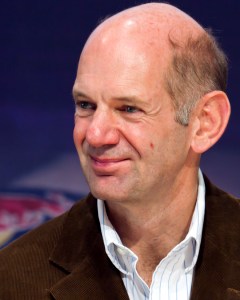 Adrian Newey.
Adrian Newey has been in the news lately as he has just signed to start work for the Aston Martin team from March 2025. Newey designed cars have won 25 world championships and Adrian designed cars for March, Williams and McLaren before joining the Red Bull team in 2006.
Newey has also seen the other side of Formula One. He designed the car which Ayrton Senna was driving when he was killed at the San Marino Grand Prix in Italy in 1994. It was a tragic day for all motorsport fans but it must have been even worse for Adrian.
Millionaire Laurence Stroll purchased Aston Martin in 1920 and he has spent a great deal of money in his quest to win at the sport. Numerous talented engineers and staff members have joined the team as well as double world champion driver Fernando Alonso. Aston Martin seemed to be looking good for a while in 2023 but this year seemed to be consigned to the middle of the grid. Adrian Newey has been hailed as one of greatest designers in F1 history. Will Newey and his design talent catapult Aston Martin towards the winners’ circle? Only time will tell.
All pictures courtesy Wikipedia creative commons except for the author’s shot of Ayrton Senna in the McLaren MP4/4.
 Letters from an Unknown Author!
Pingback: F1 in Numbers | Letters from an Unknown Author!
Pingback: 2024: My Blogging Year in Review | Letters from an Unknown Author!