The Democratic Way

As I write this latest blog post it’s the 20th January and Donald Trump is about to be sworn in as the 47th president of the USA. This was apparently the 60th such ceremony according to the first speaker although how that has been worked out, I’m not sure. Going by the huge amount of coverage on British TV, you might think that Trump had been elected president of the UK also.

When you look at it, Trump has pulled off an incredible comeback, He was defeated in the last election by Joe Biden and universally condemned for instigating a riot after claiming that his defeat by Mr Biden was a fix. He has been at the centre of various legal actions and prosecutions for numerous things including a pay off to a porn star hoping she would keep quiet about their affair. The porn star in question did not keep quiet and I’m pretty certain Mr Trump would be within his rights to ask for his money back although I doubt if he will.

The only other political comeback as impressive as Trump’s was the comeback by Richard Nixon.

Vice President Nixon as he was then was beaten by John Kennedy in the Presidential Election of 1960. He decided then to run for Governor of California but he was beaten in that contest too. He looked up at the assembled reporters and journalists and told them bitterly that that was it, ‘You won’t have Nixon to kick around anymore.’ He appeared to be retiring from politics. Even so, eight years later he was back as the Republican nominee in the election of 1968 and on that occasion, he won.

Picture courtesy Wikipedia

Some years later, things weren’t going too well for Nixon. He was caught in the middle of the Watergate scandal. Watergate would ultimately be the end of his presidency but his downfall would be his own presidential recordings. He tried to hang on to his tapes but when he appointed a special prosecutor and that same prosecutor began to want more and more tapes, Nixon fired him and various others in what became known as the Saturday Night Massacre.

Did he order the bugging of the Watergate building? Of course he did! Did he try to justify it? Well, he did say famously, ‘when the President does it, then it’s not illegal.’

As I mentioned last week, I’ve been watching a BBC documentary about King Charles the 1st and Charles, like Richard Nixon, was removed from office although in a much bloodier fashion. After his defeat in the English Civil War, he was put on trial and asked to plead either guilty or not guilty. Charles declined to plead. He was the King and had a divine right to rule over his kingdom. The court decided that his refusal to plead could only be interpreted as an admittance of his crimes. He was pronounced as guilty and only a few days later was put to death. The day of his execution was on the 30th January 1649. It was a cold and chilly day and Charles asked for an extra shirt in case the assembled crowd though he might be shivering with fear. He gave a short speech in which he said he was ‘going from a corruptible to an uncorruptible crown.’ Below is the King’s final scene from the film Cromwell.

Oliver Cromwell ruled England as the Lord Protector until his death in 1658 and two years later Charles II was recalled from exile and asked to return as the King.

Anyway, back in 2017 Donald Trump was declared the victor in the election and duly became the Chief Executive and Commander in Chief of the United States for the first time on January 20th of that year and all seemed to go fairly smoothly. The chap who introduced the proceedings back then -I’m afraid I can’t remember his name- commented on the inaugural speech of President Ronald Reagan which I quote here:

“To a few of us here today this is a solemn and most momentous occasion, and yet in the history of our nation it is a commonplace occurrence. The orderly transfer of authority as called for in the Constitution routinely takes place, as it has for almost two centuries, and few of us stop to think how unique we really are. In the eyes of many in the world, this every 4-year ceremony we accept as normal is nothing less than a miracle.”

Ronald Reagan via Wikipedia Commons

Reagan touched on the whole essence of democracy in that speech which is essentially this, that of the leader of a nation voluntarily handing over power to the new leader, the victor of the election process. In the news that same day in 2017 was a story about The Gambia’s long-term leader Yahya Jammeh who had, until then, refused to accept that Adama Barrow had defeated him in the election the previous December. He finally decided to hand over power as threats from other West African nations forced him to concede defeat. It would have been interesting if Barack Obama had said in 2017, ‘sorry, no, I’m not stepping down, I’m not ready yet!’ The last president who had to be forced from office was the man I mentioned earlier, Richard Nixon who finally accepted that the Watergate scandal had destroyed his presidency in 1973 and resigned, handing over to Vice-President Gerald Ford.

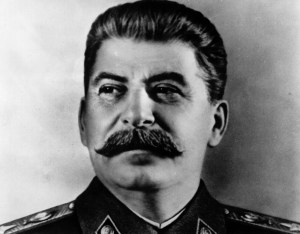
Joseph Stalin continued as leader of the Soviet Union until his death in 1953 at the age of 73. When he did not arise from his bedroom one morning at his dacha in Kuntsevo, just outside Moscow, his guards were too nervous to enquire if the feared dictator was alright. When they finally entered the room, they found he had collapsed and assumed he was suffering from a bout of heavy drinking the previous night. The guards made him comfortable on a couch and then withdrew. When he was found unable to speak the following day, only then were the doctors summoned.
Adolf Hitler and the Nazi party swept to power in Germany not by a revolution or by a military takeover but by the ballot box. Hitler’s Nazi party was the largest party in the Reichstag, the German parliament. Various other parties supported the Nazis all with the same thought, that Hitler was a simple man who could be controlled. They supported Hitler and convinced President Hindenburg to appoint him as chancellor. The thing is, once Hitler gained power and became chancellor, he gave himself emergency powers and began to imprison his political enemies. When Hindenburg died, Hitler combined the office of president and chancellor in one office. He outlawed other political parties and stopped elections.

Seen in that light, the events in the USA are, as Ronald Reagan said, nothing less than a miracle.

A US president can only serve two terms as the US senate, perhaps resentful of Franklin D. Roosevelt’s three terms in office, voted to limit a president to only two four-year terms. Eight years, not much time to change the world, is it? And there are only four years left for Donald Trump to make America great again, part of which seems to be the reappraisal of drug cartels as terrorist organisations, to rename the Gulf of Mexico the Gulf of America and to take over the Panama Canal.

What will happen then when Trump’s four years are over? Will he hand over to the next president as easily as Biden has handed over to him? Will he anoint a successor? His vice president, JD Vance perhaps? Or will he even try to stay on somehow for a third term?

Donald Trump. Picture courtesy Wikipedia

The election last year was interesting in that Joe Biden declined to run again. His decision was perhaps a little late and his chosen successor, vice president Kamala Harris, didn’t have a great deal of time to start her election campaign.

The very last time a sitting president decided not to run again was when Lyndon Johnson decided against being a candidate in 1968. Johnson wanted to create a great society for the American people but his administration was completely caught up in the Vietnam war. In one of 1968’s first primaries, anti-war candidate Eugene McCarthy featured well against Johnson, prompting LBJ’s arch enemy Robert Kennedy to enter the contest. Johnson withdrew and Kennedy was assassinated by Sirhan Sirhan. The Democratic candidate eventually turned out to be LBJ’s Vice President, Hubert Humphrey. I don’t think Humphrey even entered any primaries so how he eventually won the nomination I really don’t know. Either way he ran but was ultimately soundly defeated by Richard Nixon.

I personally didn’t rate Trump’s inaugural speech that well, it was hardly up there with ‘ask not what America can do for you but what you can do for America.’ Interestingly, many of the TV pundits I watched seemed to think it was all pretty wonderful stuff. Can he end the war in the Ukraine in one day like he claims?

Well, I’ll give him at least a week.


What to do next: Here are a few options.

Share this post on your favourite social media!

Hit the Subscribe button. Never miss another post!

Listen to my podcast Click here.

Buy the book! Click here to purchase my new poetry collection.

Click here to visit Amazon and download Floating in Space to your Kindle or order the paperback version.

Click here to visit amazon and purchase Timeline, my new anthology.

Some Random Thoughts on Box Rooms, Stormy Daniels and Action Man!

This is one of my favourite times of the year. March and its bad weather are on the way out (soon anyway) and April and gradually longer days are coming. Last weekend the hour went forward which was doubly enjoyable for me because I was working a night shift and therefore only worked 7 hours!

It was also the first morning this year that I left work in daylight and not the leftover darkness from the night before. Spring had arrived.

Last weekend I was staying with my Mum in Manchester and I slept in the small boxroom that I have used for years. It’s not my childhood bedroom, Mum and Dad have had a few house moves since then, but it’s pretty similar. It’s nice to be surrounded by my old books and cassette tapes from my past as well as my vinyl records and VHS tapes leftover from a previous house move.

Its called a boxroom, I suppose because of the large wooden ‘box’ that takes over one corner where the stairs below and this small room compete for space. When I was a young lad this part of the room was my focus. I used to have numerous plastic kit models on display there before my childhood Action Man phase took over. Action Man was a male figure about a foot high and you could buy various outfits and equipment for him. I think I’d almost forgotten about Action Man until the recent Money Supermarket TV advert brought my schoolboy memories flooding back.

https://youtu.be/PmSZX2kvfYc

We weren’t particularly well off so I used to make a lot of my Action Man gear myself, mainly out of cardboard, plastic or balsa wood. On the box in the corner of my room I set up a sort of control room based on the one in the TV show ‘The Time Tunnel’. In case you never watched that or were just too young when it aired, Time Tunnel is about ‘Two American scientists (who) are lost in the swirling maze of past and future ages, during the first experiments on America’s greatest and most secret project, the Time Tunnel. Tony Newman and Doug Phillips now tumble helplessly toward a new fantastic adventure, somewhere along the infinite corridors of time.” Or so the introduction told us.

I started off with one Action Man, a second-hand Action Man I picked up from my friend Peter Condron in a swap for something or other, I don’t remember what. Another one came from my brother in another swap and the third was a brand new Action Man I got free by collecting the ‘stars’ on new Action Man products. There were ‘stars’ on each product and when you collected 21 and fixed them to a special chart you were sent a free Action Man. As I didn’t buy much Action Man stuff I used to cadge stars off people at school or swap for comics, books or models.

One day I picked up this sheet of plywood about 3′ x 2′ and decided to convert my control room into a flying ‘jet raft’ for my Action figures. I built the seats out of balsa wood and cardboard, glued together with Bostick. The control and computer arrays were made from plastic bottle tops, toothpaste lids and bits of plastic model kits. They were cannibalised from the former control room and I added panels that lit up with some bulbs and bulb holders attached to a battery underneath the rear ‘thrusters’. How I loved that ‘Jet Raft’! When my free Action Man arrived I built a navigator’s console onto the rear area with maps and his own little control panel. Yes, lying there in my boxroom all those memories come back.

My present car was one I bought in 2008 and before that the old banger Rover I drove had a cassette player and I made and played music cassettes by the dozen. From my teenage years, right up to the present day I have made music tapes, although these days it’s CDs I put together rather than tapes. Most of my older tapes are still stored here in my little room. I used to mix vinyl tracks with bits and pieces I had taped from the radio over the years, not just music but film dialogue and comedy routines too. The other day I came across a tape with two of my favourite comedy sketches. In the first one an unknown American impressionist does the voice of JFK, uncannily realistic, as he speaks to his daughter Caroline. He reads her a bedtime story about the ‘Steel Duke’ and the ‘Bad Prince with the Black Beard from the island in the south’ (with me so far?). At the end of the story JFK leaves Caroline who says to the listener ‘these sessions do him so much good!’

In the other one, another impressionist voices Richard Nixon, again incredibly realistically, as he meets the Godfather, Don Corleone. ‘Thanks for coming to see me’ says the Don, ‘on the day of my daughter’s wedding. How may I help you?’ ‘Well, says Nixon. ‘I have to get out of the Watergate mess.’ ‘Do you want justice? asks Corleone. Nixon thinks for a moment: ‘Not necessarily!’ he replies.

As I said above, I’ve no idea who the impressionist was but it’s amazing what a simple search on google will bring up:

Back to the present and that last night shift. It was actually pretty busy but there was a lull around 3am when I had a chance to catch up on the recent news events courtesy of the BBC 24 news channel. Two interesting items stood out. The first was adult star Stormy Daniels and her revelations about her encounters with Donald Trump, now of course President of the USA. It seems Trump or at least ‘his people’, paid her $130,000 to keep quiet about their liaison. Pretty natural really if you’re running for the presidency. However, for whatever reasons Stormy decided to reveal all in a TV interview which probably wasn’t what Mr Trump had in mind when he bunged her the $130,000! I personally think now he would be within his rights to ask for his money back! Stormy of course is relishing in the free publicity and has even added more dates to her tour of US strip clubs.

The other item which I thought was interesting was the one about the ball tampering scandal in Australian cricket. Even the Aussie Prime Minister has had a say in the matter but what is it all about really? Cricketers tend to give the ball a bit of a polish don’t they so why shouldn’t they be able to go the other way and rough up the ball a little? To be honest, cricket is a sport that makes that age-old practice of watching paint dry look attractive. Ball tampering scandal? Do me a favour! I remember once when I was a coach driver taking a load of fans from the Lancashire Cricket Club which perversely, due to boundary changes is no longer in Lancashire but now in Greater Manchester. I took them to a match at Lytham Cricket Club and was given a free ticket to stay and watch the action. After thirty minutes I was so bored I was ready to end it all but instead I went for a wander around in search of a cup of tea and a sandwich. I’ve loved Lytham St Annes ever since.

One final nostalgic memory: Once, again when I was a coach driver, a job I used to get regularly was a pick up and drop off service for some small kids at a special school. I used to start off by picking up this supervising lady who told me where to go to pick up the kids. They were all problem kids with behavioural or physiological issues: Special needs is the term I think I’m looking for. Anyway, they were a bit of a handful and one week I was allocated a coach with a video player. So, I brought along a VHS tape of the TV show Thunderbirds and set it up for the kids to watch. It quickly got their attention and calmed them down and I felt pretty pleased with myself. However, the trip to the school was only about 30 minutes after the last pick up and Thunderbirds lasts for an hour, which unfortunately set up a scenario at school where the kids all started getting rowdy again because they wanted to see the end of the episode!

Anyway, I just fancy an hour of nostalgic TV viewing, something like Thunderbirds perhaps. Where did I put that box of old VHS tapes?


Steve Higgins is the author of Floating in Space set in Manchester, 1977. Click the links at the top of the page for more information!

Howard Hughes and the Watergate Tapes.

A week or so ago, August the 8th was the anniversary of the resignation of President Richard Nixon. He resigned the US presidency in 1974 after realising his battle to remain in office was finally lost. His battle for his tapes, which he believed were his personal property went on and on and was continued by his estate even after his death.

I have always understood that John F Kennedy was the first President to install a taping system in the white house though Wikipedia seems to think the practice began with Roosevelt. Many of the recordings made during Kennedy’s presidency have been released including those of cabinet meetings during the missile crisis of 1962.

Johnson carried on the tradition of taping and recording phone calls and numerous calls have been declassified and released by the authorities. Some with a special poignancy were even recorded on Air Force One on the 22nd November, 1963, the day Kennedy was shot and Johnson elevated to the presidency.

Anyway, despite his two predecessors, the President most famous for taping in the white house was Richard Nixon and it was the ‘Watergate tapes’ that were at the heart of the Watergate scandal and after reading many books on the subject I feel the Watergate scandal as it came to be known really had its roots in the turbulent year of 1968.

1968 was a landmark year for Nixon and for the USA itself. The public feeling for Vietnam had turned more and more sour as more GIs returned home in body bags. Demonstrations began; university campuses were alight with protests.

In the first primaries of the year incumbent president Johnson, who previously had a high approval rating with the public was surprised by a good showing from rival Senator Eugene McCarthy, running on a anti-war stance. His success urged Robert Kennedy to throw his hat into the ring and on the 3rd June, 1968 Johnson announced in a televised broadcast that he would not accept the nomination for president. Vietnam had overshadowed his presidency and all his other efforts, his so called ‘great society’ and his civil rights programme; all were overshadowed by the conflict in Vietnam.

Martin Luther King was shot dead in 1968 as was Senator Kennedy. Kennedy’s body was taken to Washington from California by rail and as millions waited by the tracks to watch his funeral train pass by, it must have seemed for many Americans like the end of the world.

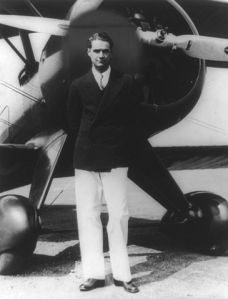
Howard HughesFor one man though, sitting alone in a Nevada hotel suite, sealed off from the world by his Mormon minders, the death of Bobby Kennedy was an opportunity. The elderly Hughes, lying naked on a bed watching TV, his hair, long and unkempt and his finger and toenails uncut, was a far cry from the young film maker, aviator, and entrepreneur he had once been. Immediately he wrote a memo to his chief executive and public alter ego, Robert Maheu. He said basically that now Kennedy was lying dead or dying on the pantry floor of a California hotel this was a once in a lifetime opportunity to put on the payroll the entire Kennedy election team, in particular electoral strategist Larry O’Brien.  O’Brien had served under Presidents Kennedy and Johnson and would later become chairman of the Democratic National Convention. Not a thought for the dying Kennedy, just the opportunity to get hold of a ready-made election team and put his own man in the white house. At the time Hughes had the idea of promoting Governor Laxalt of Nevada for the job. Fantastic as it may seem the genesis of what would become Watergate lay in Hughes actions on that night.

Hughes was worried about the nuclear testing in Nevada and he had sent Maheau on a mission to get Johnson to move the tests elsewhere. Johnson met with Maheau, listened, tried to get the promise of a donation towards his presidential library, but would not move the nuclear tests. Hughes felt he would need to speak with whoever won the election. Becoming increasingly more paranoid, and more and more worried about the nuclear testing, he tasked Maheau with offering a million dollar bribe to the man who would move the tests elsewhere:The man who would emerge victorious in the presidential election was Richard Nixon.

It was a pretty close run battle for the presidency in 1968 but Hubert Humphrey, the democratic candidate had little election funding although Hughes cannily hedged his bets. He made donations to both opposing candidates. Humphrey was elected as the democratic candidate in a shambolic convention marred by tear gas and protests and Eugene McCarthy, running on an anti-war ticket was ignored despite his earlier success in the primarys. Humphrey won the nomination even though he had not won or even contested any of the primarys. Richard Nixon however, won the eventual presidential election with his campaign pledges of ‘bring us together’ and ‘peace with honour’, which did not mean retreating from Vietnam as perhaps some people may have thought.

Picture courtesy Wikipedia

Picture courtesy Wikipedia

Nixon though, despite his victory, was worried. The defeat by John F Kennedy in 1960 still rankled. Many thought that the Kennedy victory had been a given a helping hand by voting fraud, especially in the Chicago area controlled by Democrat Governor Daley. Nixon though, felt his defeat was due to leaks about loans to his campaign and to his brother Donald from Howard Hughes. Larry O’Brien, despite his retainer from Hughes was running the democratic campaign and Nixon felt that O’Brien must know about Nixon’s own Hughes connection. What information did he have? What was in his safe in the Democratic Campaign headquarters in the Watergate building in Washington?

The FBI and CIA had already spurned Nixon’s requests for covert surveillance and they were dragging their feet over the leaks of highly classified information from government offices. The answer, it seemed to Nixon, was the  creation of a white house covert intelligence unit that became known as the ‘Plumbers’ made up of of ex CIA and FBI members. Their job was to stop the leaks, and get Nixon the information he wanted.

Nixon wanted to know what was in Larry O’Brien’s safe in the Watergate building, what information did O’Brien have about a Nixon-Hughes connection? The plumbers would have to find out. On May 11th, 1972 the plumbers secretly entered the Democratic National Convention offices and left behind a number of bugs and listening devices. Problems arose soon afterwards when it was found the wiretapping devices were malfunctioning. There was no choice but to enter the building again. The five man team did so on the night of June 16th/17th 1972. Sometime after midnight on the 17th a security guard noticed that various doors into the building had been taped, preventing them from locking. He called the Police and the five men were arrested.

  1. James W. McCord – a security co-ordinator for the Republican National Committee and the Committee for the Re-election of the President. McCord was also a former FBI and CIA agent.
  2. Virgilio R. Gonzales – a locksmith from Miami, Florida. Gonzalez was a refugee from Cuba, following Castro’s takeover.
  3. Frank A. Sturgis – another associate of Barker from Miami, he also had CIA connections and involvement in anti-Castro activities.
  4. Eugenio R. Martinez – worked for Barker’s Miami real estate firm. He had CIA connections and was an anti-Castro Cuban exile.
  5. Bernard L. Barker – a realtor from Miami, Florida. Former Central Intelligence Agency operative. Barker was said to have been involved in the Bay of Pigs incident in 1962.

The five men were charged with attempted burglary and attempted interception of telephone and other communications. The burglary was reported in the media and it seemed at first that the incident was an unremarkable ‘third class burglary’ just as the white house press secretary Ron Zeigler described it. Zeigler announced that white house aide John Dean had made a full investigation into the matter when in fact Dean had done no such thing. Two others, E. Howard Hunt and G. Gordon Liddy who were involved in planning and arranging the break in, were also later arrested. They were the link from the burglars to the white house.

Gradually, various revelations appeared in the press, particularly those by Washington Post reporters Bob Woodward and Carl Bernstein, and this escalation of the issue, especially when reports of other abuses of power by the Nixon White House were revealed, forced the announcement of a Senate Investigation.

On February 7th 1973 the Senate voted to establish a select committee to investigate Watergate and during the hearings a surprising revelation emerged. On the 16th July 1973, testimony revealed that President Nixon had a recording system in the White House. Archibald Cox, the special counsel for investigating Watergate immediately issued a subpoena for the tapes. Nixon refused to hand them over citing executive privilege.

As you know, Nixon had to eventually hand over the tapes including one that had a mysterious eighteen minute gap. An impeachment process began and when Nixon was advised that the recommendation was likely to pass through the senate, he resigned. On August 8th, 1974, Nixon broadcast his resignation speech from the White House and stepped down at noon on the next day in favour of Gerald Ford.

One of the most interesting conversations on the Watergate tapes was, I have always thought, a conversation that took place on March 21st, 1973. John Dean felt that Watergate was fast becoming ‘a cancer within-close to the presidency, that’s growing. It’s growing daily’

John Dean: Where are the soft spots on this? Well, first of all, there’s the problem of the continued blackmail—

President Nixon: Right.

Dean: –which will not only go on now, it’ll go on when these people are in prison, and it will compound the obstruction-of-justice situation. It’ll cost money. It’s dangerous. Nobody, nothing–people around here are not pros at this sort of thing. This is the sort of thing Mafia people can do: washing money, getting clean money, and things like that. We just don’t know about those things, because we’re not used to, you know, we’re not criminals. We’re not used to dealing in that business. It’s a–

President Nixon: That’s right.

Dean: It’s a tough thing to know how to do.

President Nixon: Maybe we can’t even do that.

Dean: That’s right. It’s a real problem as to whether we could even do it. Plus, there’s a real problem in raising money. [John] Mitchell has been working on raising some money, feeling he’s got, you know, he’s got—he’s one of the ones with the most to lose. But there’s no denying the fact that the White House and [John] Ehrlichman, [Bob] Haldeman, and Dean are involved in some of the early money decisions.

President Nixon: How much money do you need?

Dean: I would say these people are going to cost a million dollars over the next two years.

Short pause.

President Nixon: We could get that.

Dean: Mm-hmm.

President Nixon: If you—on the money, if you need the money, I mean, you could get the money fairly easily.

Dean: Well, I think that we’re–

President Nixon: What I meant is, you could get a million dollars. And you could get it in cash. I know where it could be gotten.

Dean: Mm-hmm.

President Nixon: I mean, it’s not easy, but it could be done.

Could it really have been that the million dollars that Nixon was talking about was the same million dollars Hughes was offering to get the nuclear testing moved elsewhere? A paranoid old billionaire living in squalor, obsessed by germs who everything handed to him had to be wrapped in tissue paper. Could it be that Howard Hughes’ obsessions had eventually brought down the Nixon white house?

Further reading.

The Ends of Power. H.R. Haldeman

All The President’s Men. Carl Bernstein and Bob Woodward

Blind Ambition. John W. Dean

Will. G. Gordon Liddy

Citizen Hughes. Michael Drosnin


Steve Higgins is the author of Floating In Space available from Amazon.