The Beatles and the Rolling Stones were the two great English bands of the 1960s. Both went on to become supergroups and pop legends. This week I thought I’d take a quick look at the evolution of both bands.
Mick Jagger and Keith Richards were schoolmates until the Jagger family moved home from Dartford in Kent to nearby Wilmington in 1954. Jagger formed a band with his friend Dick Taylor and they played material sourced from performers like Chuck Berry and Little Richard.
 In 1956 over in Liverpool, John Lennon formed a skiffle band called the Quarrymen. On the 6th July 1957 Lennon met Paul McCartney at the Woolton village fete and invited him to join the band. A year later in 1958 McCartney asked his school friend George Harrison to join but Lennon declined thinking the 15 year old George was too young. The two kept on at Lennon and he finally allowed George to join up after hearing him play guitar on the top deck of a bus.
By 1959, the three were playing together whenever they could find a drummer and they performed under the name Johnny and the Moondogs. John’s art school friend Stuart Sutcliffe joined the band in 1960 after buying a guitar. The group performed later as the Silver Beatles, later becoming The Beatles as a sort of tribute to Buddy Holly and the Crickets.
On the 17th July 1961, Mick Jagger and Keith Richards met up again on the platform at Dartford Railway Station. They later met up with other friends and formed a group called The Blues Boys. They read about the Ealing Jazz Club in a newspaper and sent some of their recordings to Alexis Korner who had a band called Blues Incorporated. They visited the Jazz Club and met members of Blues Incorporated including Brian Jones and drummer Charlie Watts.
In 1962 Brian Jones had left Blues Incorporated behind and advertised for musicians to make up a new band and Jagger, Richards and keyboard player Ian Stewart decided to join. While Brian Jones was on the phone to Jazz News he was asked the name of his new band. Apparently, he looked around, saw a record by Muddy Waters lying around and quickly snapped off the name of one of the tracks, naming the band The Rolling Stones.
The Beatles meanwhile had taken on Pete Best as their drummer and went off to Hamburg to perform at a former strip club in the Reeperbahn district. While they were there, they met Astrid Kirchherr who took the first semi professional pictures of the band. Later when Harrison was found to be under age the group was forced to return to Liverpool. In 1961 during their second Hamburg engagement Astrid cut Stuart’s hair in a distinctive hairstyle, later adopted by the other Beatles. Sutcliffe became close to Astrid and the two became engaged and he dropped out of the band to concentrate on his art work.
Back again in Liverpool the group were spotted by Brian Epstein and he became their manager in 1962.
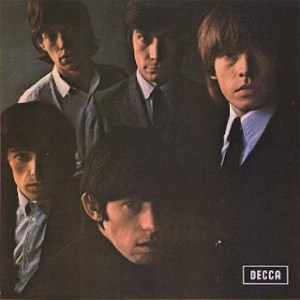
The Rolling Stones via creative commons
On 12th July 1962 the Stones performed at their first ever gig as The Rollin’ Stones (later becoming The Rolling Stones) at the Marquee Club in London. The line up was Mick Jagger, Keith Richards, Brian Jones, Ian Stewart and Dick Taylor. Later that year Bill Wyman joined to replace Taylor. In 1963 Charlie Watts joined as the band’s regular drummer.
Brian Epstein was meanwhile trying to get a recording contract for the Beatles. In January 1962 they had a New Year’s Day audition with Decca who rejected the group with the famous comment “guitar groups are on the way out, Mr Epstein”. Even so, it was barely three months later when EMA signed the group to their Parlophone label.
On 6th June 1962 the Beatles had their first recording session with George Martin. He didn’t like Pete Best’s drumming and brought on board his own session drummer. The three other Beatles were already contemplating dumping Best and in August Ringo Starr left Rory Storm and the Hurricanes to join the band. Even so, George Martin still preferred to use a session drummer on their recordings.
In January 1963, Please Please Me became their first ever number one single.
 Also in 1963 the Rolling Stones first single was a cover version of Chuck Berry’s Come On which rose to 21 in the UK singles chart. Their second single was a Lennon/McCartney song, I Wanna be Your Man.
In 1964 The Rolling Stones were the first band to play on the new TV show Top of the Pops and their first number one record that year was a self-titled EP. (To those younger readers EP stood for extended play, a single sized record which contained usually about 4 tracks).
1964 was the year the two bands began to conquer the world. It was also the point at which the music press started encouraging fans to pick a side. Were you a Beatles fan or did you prefer the Stones?
The contrast was easy to spot. The Beatles smiled for the cameras, cracked jokes during interviews and generally looked like the sort of young men your mother would happily invite round for Sunday lunch. The Stones, on the other hand, went for an entirely different image. They looked scruffier, a little more dangerous, and seemed to delight in annoying respectable adults. One newspaper famously asked, “Would you let your daughter marry a Rolling Stone?”
It is difficult to imagine anyone asking the same question about the Beatles. At that time their image was keenly cultivated by their management. Brian Epstein made the Beatles wear smart suits and it was Allen Klein, who took over as the Stones’ manager in 1965, who wanted something different for his group. In 1971 Bill Wyman claimed that the Rolling Stones were the first band to break away from a sort of ‘Cliff Richard’ mould, that of dressing smartly and doing little coordinated dances and steps.
 Behind the scenes there was a good deal of mutual respect between the Stones and the Beatles. In fact, John Lennon and Paul McCartney had helped the Stones early in their career by giving them the song “I Wanna Be Your Man”.
As the decade progressed, both bands grew more ambitious. This is where comparisons become particularly interesting. The Beatles seemed determined to reinvent themselves every few months. Listening to their records from 1965 onwards is like watching a time-lapse film of musical evolution. One moment they were producing catchy pop songs, the next they were experimenting with new instruments, unusual recording techniques and increasingly sophisticated lyrics.
The Stones developed too, but in a different direction. While they certainly experimented during the psychedelic years, their real strength remained rooted in rhythm and blues. Where the Beatles often sounded as though they were trying to discover where music might go next, the Stones excelled at taking older musical traditions and making them feel exciting and contemporary.
Both bands experimented with drugs and both Keith Richards and Mick Jagger were arrested for drug use. Brian Jones though seemed to be the most affected by drugs. He decided to leave the band and sadly in July 1969 was found dead in his swimming pool in mysterious circumstances.
By the late 1960s the differences between the two groups had become even more pronounced. The Beatles’ music became increasingly varied and eclectic, while the Stones doubled down on a tougher, earthier sound. At this point they were no longer travelling along the same road. They were heading towards entirely different destinations.
On the 30th January 1969 the Beatles final live performance was filmed on the roof of the Apple Corporation Building in the centre of London and used as the finale of a cinema documentary project.
 As a band, the Beatles had come to the end of the line. There were arguments about the cinema film, the final album mixes, whose songs were to be included on the final album and all sorts of business issues. Allen Klein became the Beatles’ new manager but Paul McCartney wanted John Eastman, his new father in law. He was overruled by the other Beatles and Klein became their business manager and Eastman their lawyer.
The legal disputes dragged on until 1974 when the dissolution of the band was finally formalised.
The Stones too had their legal issues. They parted company with Allen Klein and in 1971 formed their own record company, Rolling Stone Records. The first record they released was the album Sticky Fingers with a cover designed by Andy Warhol. They also made a documentary film; Ladies and Gentlemen, the Rolling Stones about their 1972 North American Tour.
Despite changes in their line up, The Rolling Stones have continued to the present day. Their new album Foreign Tongues is due to be released in July this year, 2026.
John Lennon was murdered in New York in 1980 and George Harrison died of cancer in 2001. The final Beatles song to be released was Now and Then. An old demo tape of Lennon’s was remastered using AI technology and combined with musical input from the other Beatles, even from George Harrison.
There is no definitive answer to the question which is the better group? Perhaps it is a question that doesn’t even need to be asked. The Beatles and the Rolling Stones might have had some similarities back in 1963 but they were really two different musical groups. One specialised in innovation and constant reinvention. The other mastered attitude, live performance and longevity.
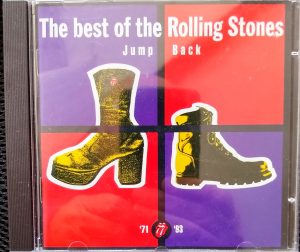
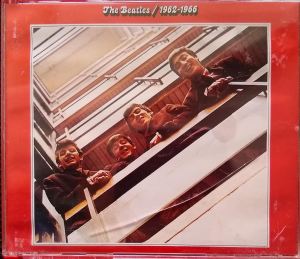
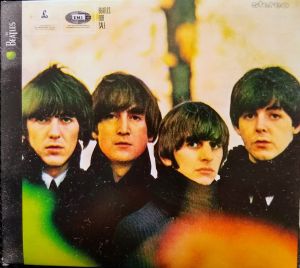
To a certain extent, neither band is my perfect cup of tea. I could only find one Stones CD in my collection although I do have many of their vinyl singles in my old record box. Many years ago, I decided to gradually buy all the Beatles albums on CD. I think I only bought three and then gave up. I’ve always thought the Beatles hit records to be outstanding but I find a lot of their album tracks are just not to my taste.
Still, if music fans are still talking about -and listening to- the Beatles and the Rolling Stones after all this time, both bands must have done something right.

