1973 was really a significant year for me. It was my first record buying year and the year I left school and for this week I thought I’d have another look back in the dusty avenues of my memory and see what was happening back then.
 For Christmas the previous year my mother had given my brother and me a shared present. It was a portable stereo record player. At the time neither myself nor my brother were that interested in the pop charts. The first album I bought was a collection of TV theme tunes by composer John Barry. Barry wrote a number of famous tunes for both TV and the cinema. He is probably best remembered for a tune he didn’t write, the James Bond theme tune. There was actually quite a controversy over the authorship of the tune. Monty Norman is credited as the writer of the music although it was John Barry’s jazz arrangement of the theme that most people are familiar with.
Monty Norman won two libel actions against publishers for claiming that Barry wrote the theme, most recently against The Sunday Times in 2001.
The theme is used in the first Bond film Dr No and then in all the subsequent 007 films with varying different arrangements reflecting the musical tastes of the times in which the films were made. In Daniel Craig’s first Bond film Casino Royale, the theme isn’t heard until the very end of the film.
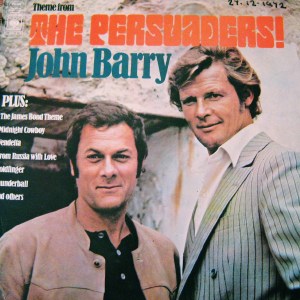 The title track from the album is the theme from The Persuaders, a TV show starring future James Bond, Roger Moore and Tony Curtis. The pair played Lord Brett Sinclair and US businessman Danny Wilde who are recruited by a retired judge to fight crime. Tony Curtis drove my favourite car of all time in the series, a Ferrari Dino 246 GT. Price tag today, anything between £500,000 to a million.
In 1973 Roger Moore made his debut as James Bond in Live and Let Die. My brother and I went to see it at the cinema. He enjoyed it, but as much as I’ve always loved Roger, I wasn’t keen on his Bond films. The film’s theme song was written and performed by Paul McCartney and Wings.
What else was on TV in 1973? The pilot episode of Porridge starring Ronnie Barker was first shown on BBC1. Another great comedy series making its TV debut was Whatever Happened to the Likely Lads. The series was in the news a few years ago when Rodney Bewes who played Bob sadly passed away. He had wanted to appear in a follow up to the series set in the present day with the two ‘likely lads’ as old men. Co-star James Bolam declined and in fact there was a lot of talk in the media about a falling out between the two and the pair never speaking to each other again.
Bewes died in 2017 and Bolam denied any feud telling BBC Radio, “This is what happens in acting; you work with people, you get to know them, you like them, we have a great time and the job finishes and you go off and it all starts again with other people and you can’t keep contact with everybody that you know.”.
Two series from the US that I was very fond of were MASH and Kung Fu.
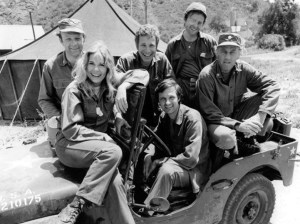 MASH was a series based on a book and film about US army surgeons in Korea who worked in a mobile army hospital unit. Alan Alda played the wisecracking Hawkeye Pierce and the series ran for many years combining humour and drama in a most impressive way. It perhaps ran a few years longer than it should have done and the later episodes were not as good as the earlier ones, at least in my opinion.
Kung Fu was a cowboy western series with a twist. It wasn’t about gun slinging cowboys but about Kwai Chang Caine, a half American, half Chinese boy who is accepted into a Shaolin monastery in China and tutored in the arts of philosophy as well as martial arts. As a grown man, Caine is forced to flee to America. Cue some impressive slow-motion fights where Caine, played by David Carradine, wipes out numerous knife wielding and gun toting bad guys. Cue a load of flashback philosophising too. I loved it and looking over at my DVD shelf where I can see Kung Fu and MASH DVD boxsets; I suppose I’m still fond of those shows today.
In 1973 I bought my first vinyl singles. They were Banks of the Ohio and What is Life both sung by Olivia Newton John. I got them for half price each as they were no longer in the charts, 48 pence if I remember correctly; what a bargain! Later in the year I discovered Elton John and began buying his albums. Goodbye Yellow Brick Road was the first one I ever bought.
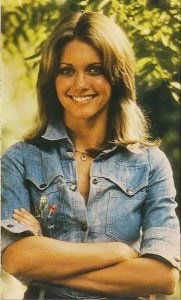
The poster that graced my bedroom wall back in 1973
My singles collection began to pile up as my interest in music flourished. My brother and I used to tape the weekly BBC Top Twenty and in the summer holidays we were glued to my combined radio and tape deck listening to the new chart which Johnny Walker played on a Tuesday lunchtime on Radio One.
My brother later became rather jealous of my singles collection and he saw an advert in one of those pop newspapers, New Musical Express or Rolling Stone perhaps, and bought a huge collection of ex jukebox records. We had a lot of fun sorting through and playing them and we commenced what would be a lifetime of swapping records which would end up, months later of repeated scenes of me finding a record in his collection which I claimed was mine and he would counter ‘yes but I swapped that one for this one so it’s really mine!’
What was happening in the UK in 1973? Well, I vaguely remember the ‘cod wars’ which was a dispute between the UK and Iceland over fishing rights. The Royal Navy even sent frigates out to protect British vessels.
The UK joined the EEC, the forerunner of the European Union.
On the 26th March, Noel Coward died. He was in bed reading a book by one of his favourite authors, E Nesbit. I knew Noel was a great fan of Nesbit and I’m sure I had heard or read somewhere that when he died, he was reading his favourite of that author’s books, The Railway Children. A quick bit of internet research and I see that Noel died after reading Nesbit’s The Enchanted Castle. Coward discovered the books as a child and revisited them many times during his life.
In 1973 President Nixon began his second term as US president and not long after he signed a peace accord with Vietnam, ending the Vietnam war.
Later in the year the Watergate scandal seemed to grow and grow and numerous people were fired by Nixon. Various others resigned and in July, it was revealed in senate hearings that Richard Nixon had installed a tape recording system in the White House.
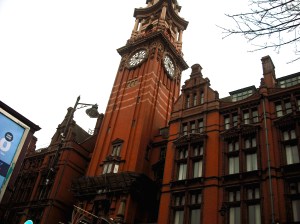
The former Refuge Assurance building
On October 20 the so-called Saturday Night Massacre began. President Richard Nixon ordered Attorney General Elliot Richardson to dismiss Watergate Special Prosecutor Archibald Cox. Richardson refuses and resigns, along with Deputy Attorney General William Ruckelshaus. Solicitor General Robert Bork, third in line at the Department of Justice, then fires Cox. The event started calls for Nixon’s impeachment. Nixon finally resigned in August, 1974.
In 1973 having left school clutching my four O levels I went for two interviews in Manchester city centre. One went really well. It was in a steel and glass modern office block with open plan working areas. I really liked the place and was hoping to get the job. Next, I had another interview at the Refuge Assurance Company on Oxford Road. The building and offices were very old fashioned and I didn’t really fancy working there. As it happened, Refuge offered me a job and I started work there a few weeks later.

