4 Classic US Mini Series from the Seventies and Eighties

The late seventies and early eighties were the heyday of the TV ‘mini series’. What is a mini series I hear you asking? Well, they were short TV series with only a few episodes. You rarely hear the name ‘mini series’ these days but they are still about. I mentioned some time ago about the series ‘Until I Kill You’ about a girl, Delia Dahmer, who unwittingly invited her lover to move in with her, not knowing that he was actually a serial killer. I started off this post as usual writing from memory, firmly convinced that the mini series was an eighties phenomenon. So, imagine my surprise to find that the first series on my list was broadcast back in 1974. OK, hasty change of this week’s blog post title from Mini series of the Eighties to Seventies and Eighties and here we go.
QB VII

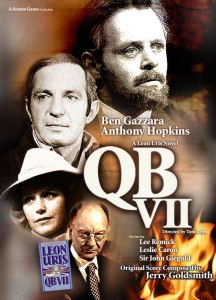
Image via listal.com

QB VII was one of those huge television mini series that really felt like a major event when it was broadcast. It was based on Leon Uris’s bestselling novel and came out in 1974, with Ben Gazzara and a young Anthony Hopkins in the starring roles. The story kicks off with a libel case brought by a very respected Polish-born doctor who insists he’s been wrongly accused of being a Nazi collaborator. Anthony Hopkins plays the doctor and Ben Gazzara plays author Abraham Cady who feels it’s time to write about the holocaust. Adam Kelno, the doctor played by Hopkins, is only mentioned in a short segment of Cady’s book but as he has already been cleared of any war crimes by an earlier court, he feels free to sue the author.

The story starts in the courtroom, in Queen’s Bench VII but as things go on, the story keeps slipping back into flashbacks of the Second World War and that’s where the real core of the story is to be found. Anthony Hopkins, still fairly early in his career at that point, is especially good, as is Ben Gazzara.

Ben Gazzara was a graduate of the Actors’ Studio, the New York acting school that taught ‘the method’ to actors like Brando, Dean and Montgomery Clift, although at the time I only knew him from the TV series Run For Your Life about a terminally ill man trying to get the best out of the last years of his life.

Anthony Hopkins went on to star in many classic films and is perhaps most well known for his portrayal of Hannibal Lector in Silence of the Lambs.

QB VII had a big, serious, slightly grand feel that so many 1970s TV series lacked, like here was a  really important story to tell. It was the kind of show you’d settle in to watch properly, knowing you were in for some real epic TV and out of all the mini series here, I think this was my favourite.

Rich Man, Poor Man

Based on Irwin Shaw’s bestselling novel, it followed the very different fortunes of the Jordache brothers, Rudy and Tom, played by Peter Strauss and Nick Nolte. Set against the backdrop of post-war America, it had a bit of everything: ambition, money, family feuds, romance, betrayal and more than its fair share of trouble. Rudy becomes a wealthy, ambitious businessman and politician, while Tom is a rebellious, tough-minded drifter who pursues a career in boxing. Their rivalry, romances, family troubles and contrasting fortunes unfold over several decades, making it as much a story about family as it is about wealth, ambition and class.

Nick Nolte played Tom; rough around the edges, unpredictable and forever getting himself into scrapes while Peter Strauss’s Rudy took a rather more respectable route to success. What made the series so addictive was that it wasn’t simply about getting rich; it was about two brothers taking completely different paths through life and discovering, rather painfully, that money doesn’t necessarily buy happiness. It was classic 1970s television at its most gloriously melodramatic and millions of viewers were hooked. Fifty years later, I can still remember the sad ending which I won’t give away here.

The series was broadcast in nine parts in 1976.

Captains and the Kings

Captains and the Kings is another wonderfully grand example of the television mini series at its most ambitious. Based on Taylor Caldwell’s novel, this 1976 series follows the fortunes of the Armagh family, Irish immigrants who arrive in America with very little and gradually build a huge fortune and political influence. Perry King, Richard Jordan and Jane Seymour were among the impressive cast and the story has all the ingredients you could want from a sprawling family saga; poverty, ambition, romance, betrayal, politics and plenty of money. Like Rich Man, Poor Man, it’s really a story about the American dream, although here the journey from humble beginnings to wealth and power comes with a darker side.

I’m tempted to think the story was based on the Kennedy family or at least inspired by them. The parallels are pretty striking. The Armaghs are Irish immigrants who arrive in America with very little, build a huge fortune and then use their wealth to enter politics. The family eventually produces a charismatic young politician with presidential ambitions. That certainly sounds familiar. There are also elements involving political influence, wealth, family loyalty and the pursuit of the White House that inevitably bring the Kennedys to mind.

However, Caldwell’s story is much darker and more conspiratorial than the Kennedy saga.

I remember reading the book which was a very enjoyable read. The book opens with an introduction telling us about a meeting of very important people who get together to decide the political direction the USA is about to take. The members of the group are not politicians but a group of very rich men and the author mentioned they were a real group of people and they clearly inspired the story the author is about to tell.

Richard Jordan plays Rory Armagh, the ambitious Irish immigrant who claws his way from poverty to wealth and political power. The performance won him a Golden Globe and made him a familiar face to TV audiences.

He appeared in many films including Raise the Titanic and the sci-fi classic Logan’s Run. His career was cut short when he developed a brain tumour and he died aged only 39 in 1993.

Kane and Abel

Kane and Abel was another of those sprawling television dramas that seemed to arrive with the promise of several evenings of proper escapism. Based on Jeffrey Archer’s bestselling novel, this 1985 mini series starred Peter Strauss and Sam Neill as two men born on opposite sides of the world and into completely different circumstances, whose lives become increasingly intertwined through ambition, wealth and rivalry. Strauss plays William Kane, the privileged American banker, while Neill is Abel Rosnovski, a Polish immigrant who rises from poverty to build his own business empire. The two were born on the same day and their lives take dramatically different paths but an early encounter sets them on a lifelong collision course. As both men build powerful business empires, their rivalry becomes increasingly bitter, driven by ambition, pride, revenge and a determination to outdo the other.

It’s big, glossy and unabashedly melodramatic story, with fortunes made and lost, family feuds, business battles and enough twists and turns to keep you coming back for the next episode.

There is something wonderfully nostalgic about these old mini series; they knew how to tell a big story and more importantly, how to make you wait until the following week to find out what happened next. In today’s digital age, viewers would probably binge watch the whole series in one go.

Those are my four US mini series. There are probably more but they were the ones which have remained firmly stuck in my memory. All were adaptations of successful novels and perhaps their secret is that they were too long to be made into a film but not long enough for further seasons.

Which one is ripe for a re run on one of today’s many digital TV channels I wonder?


What to do next: Here are a few options.

Share this post on your favourite social media!

Hit the Subscribe button. Never miss another post!

Listen to my podcast Click here.

Buy the book! Click here to purchase my new poetry collection.

Click here to visit Amazon and download Floating in Space to your Kindle or order the paperback version.

Click here to visit amazon and purchase Timeline, my new anthology.

1973

1973 was really a significant year for me. It was my first record buying year and the year I left school and for this week I thought I’d have another look back in the dusty avenues of my memory and see what was happening back then.

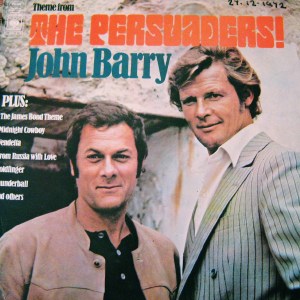
For Christmas the previous year my mother had given my brother and me a shared present. It was a portable stereo record player. At the time neither myself nor my brother were that interested in the pop charts. The first album I bought was a collection of TV theme tunes by composer John Barry. Barry wrote a number of famous tunes for both TV and the cinema. He is probably best remembered for a tune he didn’t write, the James Bond theme tune. There was actually quite a controversy over the authorship of the tune. Monty Norman is credited as the writer of the music although it was John Barry’s jazz arrangement of the theme that most people are familiar with.
Monty Norman won two libel actions against publishers for claiming that Barry wrote the theme, most recently against The Sunday Times in 2001.

The theme is used in the first Bond film Dr No and then in all the subsequent 007 films with varying different arrangements reflecting the musical tastes of the times in which the films were made. In Daniel Craig’s first Bond film Casino Royale, the theme isn’t heard until the very end of the film.

The title track from the album is the theme from The Persuaders, a TV show starring future James Bond, Roger Moore and Tony Curtis. The pair played Lord Brett Sinclair and US businessman Danny Wilde who are recruited by a retired judge to fight crime. Tony Curtis drove my favourite car of all time in the series, a Ferrari Dino 246 GT. Price tag today, anything between £500,000 to a million.
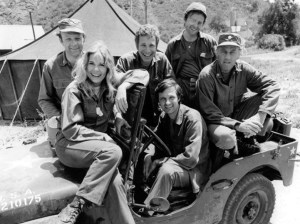
In 1973 Roger Moore made his debut as James Bond in Live and Let Die. My brother and I went to see it at the cinema. He enjoyed it, but as much as I’ve always loved Roger, I wasn’t keen on his Bond films. The film’s theme song was written and performed by Paul McCartney and Wings.

What else was on TV in 1973? The pilot episode of Porridge starring Ronnie Barker was first shown on BBC1. Another great comedy series making its TV debut was Whatever Happened to the Likely Lads. The series was in the news a few years ago when Rodney Bewes who played Bob sadly passed away. He had wanted to appear in a follow up to the series set in the present day with the two ‘likely lads’ as old men. Co-star James Bolam declined and in fact there was a lot of talk in the media about a falling out between the two and the pair never speaking to each other again.

Bewes died in 2017 and Bolam denied any feud telling BBC Radio, “This is what happens in acting; you work with people, you get to know them, you like them, we have a great time and the job finishes and you go off and it all starts again with other people and you can’t keep contact with everybody that you know.”.

Two series from the US that I was very fond of were MASH and Kung Fu.

MASH was a series based on a book and film about US army surgeons in Korea who worked in a mobile army hospital unit. Alan Alda played the wisecracking Hawkeye Pierce and the series ran for many years combining humour and drama in a most impressive way. It perhaps ran a few years longer than it should have done and the later episodes were not as good as the earlier ones, at least in my opinion.
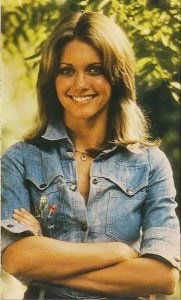

Kung Fu was a cowboy western series with a twist. It wasn’t about gun slinging cowboys but about Kwai Chang Caine, a half American, half Chinese boy who is accepted into a Shaolin monastery in China and tutored in the arts of philosophy as well as martial arts. As a grown man, Caine is forced to flee to America. Cue some impressive slow-motion fights where Caine, played by David Carradine, wipes out numerous knife wielding and gun toting bad guys. Cue a load of flashback philosophising too. I loved it and looking over at my DVD shelf where I can see Kung Fu and MASH DVD boxsets; I suppose I’m still fond of those shows today.

In 1973 I bought my first vinyl singles. They were Banks of the Ohio and What is Life both sung by Olivia Newton John. I got them for half price each as they were no longer in the charts, 48 pence if I remember correctly; what a bargain! Later in the year I discovered Elton John and began buying his albums. Goodbye Yellow Brick Road was the first one I ever bought.

The poster that graced my bedroom wall back in 1973

My singles collection began to pile up as my interest in music flourished. My brother and I used to tape the weekly BBC Top Twenty and in the summer holidays we were glued to my combined radio and tape deck listening to the new chart which Johnny Walker played on a Tuesday lunchtime on Radio One.

My brother later became rather jealous of my singles collection and he saw an advert in one of those pop newspapers, New Musical Express or Rolling Stone perhaps, and bought a huge collection of ex jukebox records. We had a lot of fun sorting through and playing them and we commenced what would be a lifetime of swapping records which would end up, months later of repeated scenes of me finding a record in his collection which I claimed was mine and he would counter ‘yes but I swapped that one for this one so it’s really mine!’

What was happening in the UK in 1973? Well, I vaguely remember the ‘cod wars’ which was a dispute between the UK and Iceland over fishing rights. The Royal Navy even sent frigates out to protect British vessels.

The UK joined the EEC, the forerunner of the European Union.

On the 26th March, Noel Coward died. He was in bed reading a book by one of his favourite authors, E Nesbit. I knew Noel was a great fan of Nesbit and I’m sure I had heard or read somewhere that when he died, he was reading his favourite of that author’s books, The Railway Children. A quick bit of internet research and I see that Noel died after reading Nesbit’s The Enchanted Castle. Coward discovered the books as a child and revisited them many times during his life.

In 1973 President Nixon began his second term as US president and not long after he signed a peace accord with Vietnam, ending the Vietnam war.

Later in the year the Watergate scandal seemed to grow and grow and numerous people were fired by Nixon. Various others resigned and in July, it was revealed in senate hearings that Richard Nixon had installed a tape recording system in the White House.

The former Refuge Assurance building

On October 20 the so-called Saturday Night Massacre began. President Richard Nixon ordered Attorney General Elliot Richardson to dismiss Watergate Special Prosecutor Archibald Cox. Richardson refuses and resigns, along with Deputy Attorney General William Ruckelshaus. Solicitor General Robert Bork, third in line at the Department of Justice, then fires Cox. The event started calls for Nixon’s impeachment. Nixon finally resigned in August, 1974.

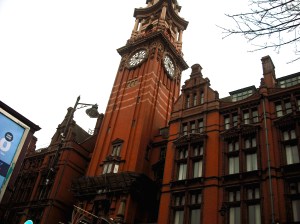
In 1973 having left school clutching my four O levels I went for two interviews in Manchester city centre. One went really well. It was in a steel and glass modern office block with open plan working areas. I really liked the place and was hoping to get the job. Next, I had another interview at the Refuge Assurance Company on Oxford Road. The building and offices were very old fashioned and I didn’t really fancy working there. As it happened, Refuge offered me a job and I started work there a few weeks later.


What to do next: Here are a few options.

Share this post on your favourite social media!

Hit the Subscribe button. Never miss another post!

Listen to my podcast Click here.

Buy the book! Click here to purchase my new poetry collection.

Click here to visit Amazon and download Floating in Space to your Kindle or order the paperback version.

Click here to visit amazon and purchase Timeline, my new anthology.

Islands

Last week Liz and I were dining out with our friends Emma and Paul and Emma happened to mention about her ‘private island’. It turned out to be a computer game called Animal Crossing in which the user can design his or her own island. You can fill it with various animals and engage in activities like fishing, insect catching and fossil hunting. According to Wikipedia the game is known for its ‘open-ended gameplay, humorous dialogue and use of the consoles internal clock to simulate the real passage of time’.

Anyway, that of course got me thinking about islands so without any further ado, here we go.


Tracy Island

Gerry and Sylvia Anderson produced a series of puppet shows in the 1960s and their greatest success was called Thunderbirds. Thunderbirds was about a secret organisation called International Rescue that had a small fleet of highly advanced machines and equipment with which to perform rescue operations. Millionaire ex-astronaut Jeff Tracy was the head man and the organisation was secreted in his island home known as Tracy Island. His five sons were the Thunderbird pilots; John, Scott, Virgil, Gordon and Alan, all named after US astronauts of the 1960s. The genius behind the Thunderbird craft was Hiram Hackenbacker, known as ‘Brains’. Thunderbird’s nemesis was a secret agent known as the Hood because of his talent for disguise and in many episodes the Tracy brothers had to ask their London agent, Lady Penelope, to track him down and sort him out.

The entire organisation was hidden away in Tracy Island. Thunderbird One launched from underneath the swimming pool which slid away to reveal the launch silo. Thunderbird 2 lumbered to its launch point after exiting its hangar hidden behind a fake cliff face and Thunderbird 3, the organisation’s space rocket, launched through the circular round house.

The great thing about Thunderbirds and really, the secret of its success was the highly intelligent scripts which treated its audience of children not as kids but as intelligent young adults. That pretty much enabled myself and other viewers to overlook the realities of say launching a rocket from under a swimming pool or not having a team of technicians to service these amazing vehicles.

In one episode Tracy Island had a visitor and Jeff Tracy had to ask Tin Tin, the daughter of his manservant Kyrano, to take the guest diving and the Thunderbirds were able to set off on a rescue mission while he was underwater. A model version of Tracy Island was hugely popular over the years especially in 1993 when it was voted the toy of the year by the British Association of Toy Retailers.

Isle of Skye

It was back in 2020 when Liz and I decided to take our motorhome on a run out up to Scotland. (See the video by clicking here.)We travelled north along the M6 and stopped at various places along the way. Day 3 found us arriving at Mallaig, a quiet fishing village where we could board the small ferry to the Isle of Skye. Skye was a spectacular place, starkly beautiful and it reminded me so much of Lanzarote with deep valleys and great hills and mountains reaching into the sky. We found an excellent parking spot, again recommended by the Park4Night app which was conveniently just across from a fantastic chip shop. Fish, chips and peas was our evening meal and this particular chip shop served haddock rather than cod. The food was excellent and though it was a little pricey, the portions were huge. The view from the car park across the bay at Broadford was one we could only really appreciate the next morning.

The splendour of Skye (Photo by the author)

The following day we explored Skye bathed in warm autumn sunshine. We made a quick stop to pick up some Isle of Skye black pudding and after some more exploring we left the island over the spectacular bridge to the mainland. The bridge was opened in 1995. There was originally a toll charge but after numerous protests this was removed and now the bridge is free to use.

Lanzarote

For perhaps the last ten years, if you want to get hold of me during January or February, you’ll find me in Lanzarote.

What can I tell you about this place? Looking over on Wikipedia I see the Canary Islands emerged from the sea bed during a volcanic eruption about 15 million years ago. There is apparently some evidence the Phoenicians were the first settlers here although the first known records of the islands come from Pliny the elder, the Roman scholar.

After the fall of the Western Roman Empire, nothing is recorded about the Canary Islands until 999, when the Arabs arrived at the islands. In 1336, a ship arrived from Lisbon under the guidance of Genoese navigator Lancelotto Malocello, who used the alias ‘Lanzarote da Framqua’ which is where the island’s name comes from. Today Lanzarote is part of Spain.

When we first came here about ten years ago, we hired a car and drove round the island. We visited the volcano which was pretty much what you’d expect a volcano to look like, although the drive down a very narrow winding road in a coach towards the centre of it was a little scary. Otherwise, apart from the usual touristy stuff, there wasn’t that much to see and we quickly realised that the Marina Rubicon in Playa Blanca is by far our favourite place. Our rented villa is on the bus route and only five minutes’ walk from both the bus stop and the local shop so renting a car is not a particular concern.

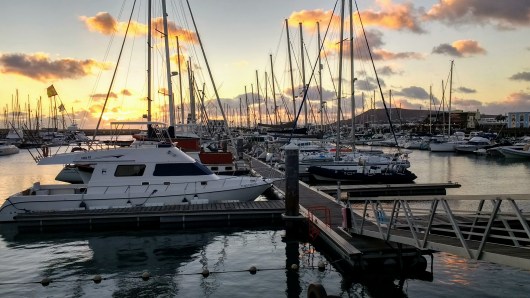
Boats at Marina Rubicon, Lanzarote (Photo by the author)

What else do I do on Lanzarote? Well, I read a lot of books, drink a lot of wine and eat out a great deal in a variety of restaurants. Sometimes we have tapas, sometimes Chinese and the last time we went to Lanzarote we actually ate a great deal of Indian food as the closest restaurant to our rented villa was an Indian restaurant.

St Helena

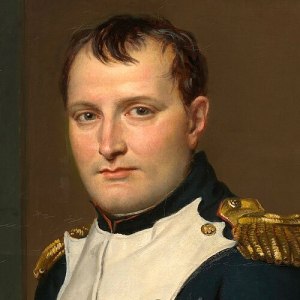
Napoleon (Jacques-Louis David, Public domain, via Wikimedia Commons)

St Helena is one of those places I’ve always wanted to visit. It was discovered by the Portuguese in 1502 but these days is a British Overseas Territory. St Helena is located in the South Atlantic Ocean about 1200 miles west of Africa. It comprises 47 square miles, has a very temperate climate and is perhaps most famous for being the place where Napoleon Bonaparte was exiled to in 1815. Napoleon was taken to the island following his defeat at the battle of Waterloo and subsequent abdication. On October 17th that year Napolean took up residence at the Briars Pavilion hosted by the Balcombe family. In December he moved to Longwood House which was originally a farmhouse but converted for Napoleon’s use. Today the house is a museum owned and run by the French government.

The former ruler of France dictated his memoirs at St Helena and spent a lot of time reading. He died in 1820 aged only 51. An autopsy showed that he had died of stomach cancer although I remember reading some time ago that some experts felt Napoleon had been poisoned by arsenic. Others say that the amount of arsenic in his system was normal for the time. In Longwood House, the wallpaper contained arsenic but that was a common feature of luxury homes at the time.

Island Records

Just to finish on a more musical note, the Island record label was created by Chris Blackwell, Graeme Goodall and Leslie Kong in 1959 in Jamacia. In 1962 Chris Blackwell brought the label to the UK and began to sign new artists and by the 1970s Island was a major record label. The first Island single I ever bought was probably by Roxy Music and I’m guessing it was either Pyjamarama or Street Life in the early 1970s. The label was eventually sold to Polygram in 1989 for 180 million pounds.

Completely irrelevant fact #1: One of my friends used to think that Brian Ferry sang ‘like a monkey’. What do you think?


What to do next: Here are a few options.

Share this post on your favourite social media!

Hit the Subscribe button. Never miss another post!

Listen to my podcast Click here.

Buy the book! Click here to purchase my new poetry collection.

Click here to visit Amazon and download Floating in Space to your Kindle or order the paperback version.

Click here to visit amazon and purchase Timeline, my new anthology.

5 Crime Fighting Duos

Crime Fighting Duos? What’s that about you might be thinking? Well I thought I’d write about TV investigative couples so let’s go back to the 1960s and start with one of my favourite TV pairings, Steed and Mrs Peel.

Steed and Emma

Steed and Emma featured in The Avengers, no, not the Marvel comic book heroes but the TV sci-fi/espionage series. John Steed and Emma Peel were two secret agents working for an unnamed agency in a very quirky version of 1960s England. The series was first broadcast in 1961 and starred Patrick Macnee and Ian Hendry. Macnee played the debonair John Steed and when Ian Hendry left after the first series, Steed became the focus of the show with his new assistant Cathy Gale played by Honor Blackman.

Honor Blackman became a TV star with her portrayal of Cathy Gale as a leather wearing judo expert. She and Macnee even recorded a hit single together called ‘Kinky Boots’ which became a minor hit.

When Honor left to become a Bond girl in the film Goldfinger the TV production had something of a makeover. The series was sold to the US TV network ABC and moved from videotape to 35mm film. A new character was added, Mrs Emma Peel. The producers chose actress Elizabeth Shepherd to play the part. Shepherd shot the pilot film episode and part of the next one, but the producers decided to drop her, feeling she was not right for the role. With a two-million-dollar deal with the US network ABC hanging in the balance, they began searching for a new Emma Peel and chose unknown actress Diana Rigg.

Diana Rigg was perfect for the new crime fighter/agent Mrs Peel and wowed TV audiences with her intelligence, her judo and karate skills, her avant-garde fashion sense and her witty banter with Steed.

Diana Rigg became famous as Mrs Peel and played the part until 1967 when, like Honor Blackman before her, she left the to become a Bond girl in ‘On Her Majesty’s Secret Service’. Patrick Macnee continued to play the bowler hatted John Steed and Linda Thorson was recruited to star as Steed’s partner. The series was rebooted in the 1970s as The New Avengers starring Macnee with Joanna Lumley and Gareth Hunt as his new colleagues.

Steed and Mrs Peel are surely the most fondly remembered characters in the series. My favourite episode is one called The House That Jack Built which was about a mad inventor who is fired from a company run by Mrs Peel’s father. He builds an electronically operated house in which to trap and kill Mrs Peel. She eventually escapes just as Steed arrives to save her!

A film version was made with Ralph Fiennes and Uma Thurman in 1998 but it was a resounding flop.

Napoleon and Illya

Robert Vaughn and David McCallum played two secret agents working for UNCLE (the United Network Command for Law and Enforcement) who try to foil the evil organisation THRUSH. (What that stood for I’ve never known.) Vaughn starred as Napoleon Solo and McCallum played Russian born Illya Kuryakin. UNCLE headquarters was in New York, accessed through a fake dry-cleaning store. Inside UNCLE HQ was a very hi-tech environment with steel corridors and sliding doors.

Head of UNCLE was Mr Waverly played by Leo G Carroll who every week gave his two agents their assignments and off they went into the world, armed with an array of secret gadgets like explosives hidden in their shoes and a communicator built into a pen. ‘Open channel D’ was something regular viewers like me would hear every week as well as the wonderful theme music by Jerry Goldsmith.

David McCallum had a big fan following especially with the ladies but Robert Vaughn as Napoleon Solo was my favourite.

Starsky and Hutch

I used to watch this show many years ago and to be honest, I liked it but I was never a firm fan. Starsky and Hutch were two California plain clothes cops played by Paul Michael Glaser and David Soul. They drove around Bay City, a fictional California town in a Ford Gran Torino in bright red with a white vector flash down the sides. Looking up the series on Wikipedia, I see that Paul Glaser actually hated the car, pointing out that a bright red car with a distinctive paint job was not the best idea for a pair of undercover cops. Oh well, the car was pretty popular with viewers and especially with a certain type of late seventies boy racers. (You know the type, young guys who painted or stuck white flashes on the sides of their souped up old bangers and tried to burn you off at traffic lights).

To sum up then, Starsky and Hutch is about two somewhat scruffy wisecracking cops, tearing around the city in a bright red car like they’ve got somewhere very important to be, even if half the time they’re just chasing some dodgy lead or getting into trouble. The whole vibe is full on ’70s; big collars and big flairs but then again, it was made in the mid 70s so you can’t get more 70s than that.

Starsky and Hutch was remade as a not particularly serious big screen film in 2004 starring Ben Stiller and Owen Wilson. Glaser and Soul made a brief appearance at the end of the picture but I can’t help thinking the film might have worked out better if things were the other way round and Stiller and Wilson were the ones who only appeared at the end.

Randall and Hopkirk

Randall and Hopkirk (Deceased) is one of those offbeat late 60s TV shows where the premise sounds completely ridiculous and yet somehow works perfectly: two private detectives, but one is a ghost. Marty Hopkirk gets run over and killed in episode one but returns as a ghost to help Jeff Randall solve his murder. After that, Marty decides to stay on and help out with other cases too. On one side you’ve got a fairly standard detective story unfolding, the next minute poor Jeff Randall is trying to explain clues that only he can see because his dead partner Marty Hopkirk is hovering nearby in an unmistakable white suit but invisible to anyone except Jeff. It’s quirky, a bit spooky, very tongue in cheek and exactly the sort of inventive television that the late sixties seemed to produce with effortless confidence.

In later years the show was rebooted with comedy duo Reeves and Mortimer. Personally, I’ve always found the 60s version starring Mike Pratt and Kenneth Cope with Annette Andre as Marty’s widow to be far superior.

Mulder and Scully

Mulder and Scully are the two FBI agents at the centre of the X Files, secret FBI files profiling unexplained and unsolved mysteries. Fox Mulder is convinced of the existence of the paranormal while Dana Scully is a practical scientist assigned to take a technical and analytic view of Mulder’s work.

The two argue and debate their way through various bizarre cases. One minute it’s some weird creature lurking in the woods, the next it’s shadowy government plots and secret labs. Somehow, despite all the paranoia and eerie moments, there’s a lot of dry humour and a really strong partnership between them that makes the whole thing strangely cosy to watch, even when the lights are off and the theme music is giving you goosebumps.

In my absolute favourite episode, the pair are monitoring a secret installation in area 51 and are confronted by government officers when a flying saucer flies overhead. When it passes over, it’s energy or radiation morphs Mulder’s mind into the mind of one of the area 51 staff and his mind into Mulder’s body. The other guy, the area 51 guy is quite happy at this incredible transformation. He and his wife are not getting on and suddenly finding himself in the body of a single man is clearly ok with him. Mulder on the other hand has to convince Scully that this incredible incident has actually happened.

The X Files was first shown in the late 1990’s and ran until 2002 spanning 9 seasons. The series returned in 2016 and then again in 2018. Plans are afoot, or so I have read, for another revival with new actors.

Remember, the truth is out there.


What to do next: Here are a few options.

Share this post on your favourite social media!

Hit the Subscribe button. Never miss another post!

Listen to my podcast Click here.

Buy the book! Click here to purchase my new poetry collection.

Click here to visit Amazon and download Floating in Space to your Kindle or order the paperback version.

Click here to visit amazon and purchase Timeline, my new anthology.

Netflix and Me

I’m 69 years old and I come from a generation (the so-called baby boomers generation) that expects certain things. One of those is that for the most part, television is free. I say for the most part because of course one has to buy an actual TV set, set up an aerial and pay for a TV licence. Apart from those minor things TV is comparatively free.

Tv programmes of course cost money, quite a lot of money in fact. Back in the 1990s when I was fresh from a video production course and hoping to actually get a job in the TV industry (I never did) I was told an hour of television costs £100,000. What it costs nowadays is anyone’s guess but then again, it’s so easy to make a TV show in 2026. One of my favourite programmes is Canal Boat Diaries, an entirely self-shot show which has graduated from YouTube onto the BBC and can be seen quite regularly on the U-Yesterday channel. Does that mean an hour of TV is worth more or less than that 90’s figure of £100,000?
There was once a time when I could settle back and watch all the current F1 races live for free but sadly, those pesky money-making F1 managers combined forces with their like-minded TV producers and decided they could make a little extra dosh by setting up the Sky F1 Channel and charging people to watch live F1. No thanks. I’ll carry on putting up with the Channel Four highlights until I either get bored with F1 or win the lottery.

Perhaps it’s then a little mean of me to sit back and expect free television. Times move on and instead of the two or even three channels I remember from my youth, today we have hundreds of channels. Even so, there are many evenings when I scroll through my channel listings only to find nothing worth watching.

That brings me to Netflix. Not so long ago when Liz renewed her Sky package, some negotiation was involved and to sweeten the deal, Sky threw in a Netflix subscription. I have to say I haven’t looked at Netflix much but I always assumed it was just an ordinary channel like BBC1 for instance, in that there was a schedule and certain programmes were broadcast at certain times. Not so, Netflix is more like YouTube, you can watch programmes on demand but what to watch, that is the question.

Some time ago Liz wanted to watch The Crown which I can’t say I was really interested in at first but after a while I realised what a really excellent production it is. The actors are really good especially the portrayals of the Queen, Princess Margaret and Winston Churchill.

The younger Queen was played by Claire Foy and Princess Margaret by Vanessa Kirkby and Margaret’s situation as the Queen’s sister was explored in a few episodes. Her love affair with Peter Townsend was doomed because Townsend was a divorcee. The Queen was advised to ask Margaret to wait until she was 25 and then she could marry. When the time came the Queen’s advisors brought up more issues and then ultimately the two lovers had to separate which of course didn’t help the sisterly relationship between the Queen and Margaret.

Before watching The Crown, I had no idea of the background of Prince Phillip. I always assumed he was English and a member of some family which was eligible to marry into the royals. In actual fact he was Greek and aged only eighteen months old he and his family were exiled from their homeland which left him with a lifetime fear of revolution and anything that might threaten the royal family.

His and Charles’ school days at Gordonstoun was really well done especially the interplay and flashbacks between Philip’s and his son Charles’ time there. Philip apparently loved it but Charles hated it.

A real stand out story was the one about the retirement of Churchill which was cleverly linked to the famous, or infamous painting of a portrait of Churchill by Graham Sutherland. Churchill played by John Lithgow, was coming up to his 80th birthday and various people wanted him to retire but he was adamant that he would carry on. Churchill had various sittings for the painting and the two, both of whom were artists, tried to examine the other through their works. Churchill was hugely disappointed at the result and came to see at last, according to The Crown anyway, that the time had come for him to retire and hand over the leadership of the country to Anthony Eden. Everything was beautifully done.

The other thing about The Crown was, even the quick cutaway and establishing shots of cars driving up to the Palace or through London in the 50s and 60s, were expertly done. I’m sure there was an element of special effects involved especially in scenes of crowds in London but even so, everything looked so good.

Another episode dramatised was the broadcast made by the Duke of Windsor when he abdicated. The Duke flips in and out of various episodes. The Queen Mother detested him as he had forced the mantle of kingship onto her husband when he was ill-prepared for it. Prince Charles however, did strike up a sort of friendship with the Duke. I should imagine that a former King and a future one would have much in common although how much was fiction and how much was accurate, I don’t know.

I thoroughly enjoyed this splendid series which I’m sure everyone has watched ages ago but for me, a latecomer to Netflix, is very new.

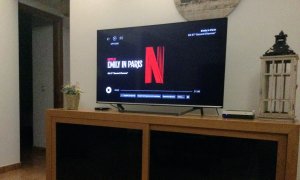
We watched The Crown last year while staying in the Loire valley even though we don’t normally watch much TV on holiday. This year in Lanzarote, we spent many an evening watching Emily in Paris, another Netflix show. I’d found it by searching on the internet for good TV shows to watch on Netflix and Emily came up so we thought we’d give it a go.
The series was created by producer Darren Star who was also the producer of Sex and the City and in some ways Emily in Paris is very similar to the early Sex and the City seasons. Emily was produced for the Paramount TV channel but made its way over to Netflix. It’s a light comedy show about a young girl, Emily, who is asked to move from Chicago to work in the Paris office of a marketing firm. The comedy comes about from highlighting the cultural differences between the USA and France and although the last season, season 5 was a little tame, the previous 4 seasons were excellent.

At the heart of the show is a love story. Emily falls for a young chef who has an apartment on the floor below her Paris flat. He falls for her too but he is engaged to another girl who befriends Emily. Later Emily gets involved with an British banker but then he falls for Emily’s other friend and then the chef’s girlfriend has a lesbian affair. See what I mean about Sex and the City?

According to Wikipedia, the show did get some criticism for stereotyping the French in general and Parisians in particular but for me I thought the depiction of the French was really quite good. Even though I speak only a little French, one of the things that is difficult for an Englishman in France is the speed at which the French speak. It’s not too bad in the Loire but especially noticeable in subtitled French films and TV shows.

What else have I watched on Netflix? Well, I did watch the film version of The Thursday Murder Club as I mentioned in another post a few weeks ago. Other than that, I haven’t watched much else. Netflix is a little overwhelming for me, I much prefer my TV in the old-fashioned way, regular broadcast times like they have on the traditional terrestrial channels.

Still, if Netflix is the TV of the future, I suppose I’d better get used to it!


What to do next: Here are a few options.

Share this post on your favourite social media!

Hit the Subscribe button. Never miss another post!

Listen to my podcast Click here.

Buy the book! Click here to purchase my new poetry collection.

Click here to visit Amazon and download Floating in Space to your Kindle or order the paperback version.

Click here to visit amazon and purchase Timeline, my new anthology.

2025: My Blogging Year

So here we are fast approaching the end of 2025 and I think it’s time to look back over my year and the blog posts I have published over the past 12 months. It’s almost unbelievable but this is my 699th Blog post. All the links to the posts mentioned below open up in another window.

January

Back in January Liz and I had jetted off as usual to Lanzarote but sadly, a fabulous villa we had found the previous year was fully booked and so we had to settle for another property. On paper it looked like a lovely place and to a great extent it was. A nice living space, comfy bedroom and a nice patio with comfy sun loungers. The pool was a little small but the big problem was that it was an end property at the top of a rise and next door and across the way was a big expanse of empty ground. It looked good but it meant that as Lanzarote tends to get a little windy in the winter a regular gale force wind often seemed to blast across our small terrace which sadly, in the afternoon, tended to be in the shade. Happily, in 2026 we look forward to occupying our favourite villa which not only gets the sun all day but has other properties around which act as a windbreak.

As usual in Lanzarote I was able to combine swimming, sun bathing and blog writing and produced my usual weekly post including January: Don’t You Just Hate it! and The Democratic Way, a post about the election of Donald Trump to another term as president of the USA.

February

In February I wrote Underwater Adventures which was a post about films and TV that involved underwater stuff, things like Voyage to the Bottom of the Sea. I even threw in an anecdote about the time I tried to get my scuba diving licence. Another post that month was one of my favourites, Changing the Narrative, which involved how the storylines of film and TV and even books can change when required. When it comes down to it, there have been times when I wouldn’t have minded changing my own narrative too.

March

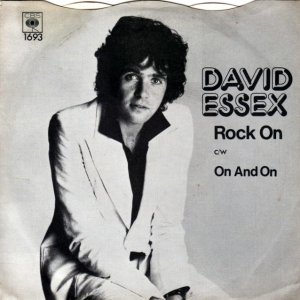
In March I was getting a little stuck for ideas and I had to recycle an old post, The Men in White Suits, a post that linked people like Alec Guinness who starred in the Ealing film comedy, The Man in the White Suit and David Essex who used to wear a white suit back in the 1970’s and other similar situations and characters.

April

In April I was reliving some old bus driving memories in Driving the Bus and in Painters and Paintings I published an art post looking at my favourite artists and pictures.

May

In May Liz and I were off to France in our motorhome. We had hardly arrived when I became a little concerned as my brother Colin wasn’t answering my calls or messages. This led to a really upsetting situation in which we had to ask one of his friends to go and check on him and later when he got no response we had to ask him to call the police. A really odd situation began to commence. The police wouldn’t attend but said they would send an ambulance. The ambulance service wouldn’t attend as they couldn’t gain entry so the fire brigade were called. After about two hours the fire service turned up, forced open the door to Colin’s flat and found him dead on the bedroom floor. He was my younger brother and only 64 years old.

June

In June I wrote Sadness and Telephone Menus, about the difficulties faced dealing with the practicalities of death; reporting the death, closing bank accounts, arranging the funeral and so on. I don’t publish much fiction on WordPress but another post was A Genie Called Ralph, a quirky fantasy story. By the way, if you’d like to read more of my fiction head over to the downloads page where you download a few of my stories to read at your leisure.

July

It was a fairly good summer in the UK and most of the time it was sunny and warm; in other words, perfect barbecue time. Heatwaves and Barbecues was a post I wrote in July and in another I wrote about memories of past Saturday Nights as well as linking in films and music on the same theme.

August

I’ve written many posts about books and a regular series is one in which I compare books to their filmed counterparts. In August I added a post about one of my favourite book/film series, the James Bond books by Ian Fleming. I must have been in a pretty nostalgic sort of mood that month because another post was Comfort Food, talking about the memories that my favourite food conjures up for me.

September

In September I was Travelling and Writing in France and another post was Working with AI Images. My latest obsession is making AI pictures and short videos to use on social media, hopefully to tempt more visitors to my blog page and maybe even buy my books.

October

October was another sad time as my late brother’s birthday was on the 10th. I’ve always tried to get him a birthday present, even if it was only just something simple like aftershave or something. Last year I didn’t get him anything but I didn’t feel bad because he rarely if ever got me anything. Even so, he seemed really hurt about it so I picked up something simple from Asda, a toiletry set, wrapped it up and gave it to him. He must have liked it because after his death I found a lot of the same product in his bathroom. Back to my blogs and another film post I wrote in October was one about the films of Ridley Scott.

November

Richard Burton and Elizabeth Taylor. Image courtesy Wikipedia Creative Commons.

November was the centenary of the birth of Richard Burton. He was born on November 10th, 1925 and I’ve always loved his wonderful speaking voice. Someone else with an interesting voice although hardly in the same class as Burton was Woody Allen and Woody got a mention in a post called Bad Meals, North Roxbury and Woody which was inspired by a remarkable autobiography of Mia Marrow called What Falls Away.

December

The Formula One season finally finished in December and so I wrote a post about the World Champions, McLaren and their champion driver Lando Norris. In another post I remembered the sad death of John Lennon in New York 1980 in a post about 4 Things That Happened in December.

That brings me to the end of this little review. I hope you have enjoyed reading my posts this past year. If they have given you as much pleasure as it was for me to write them then I’ll be very pleased. I hope you had a great Christmas!


What to do next: Here are a few options.

Share this post on your favourite social media!

Hit the Subscribe button. Never miss another post!

Listen to my podcast Click here.

Buy the book! Click here to purchase my new poetry collection.

Click here to visit Amazon and download Floating in Space to your Kindle or order the paperback version.

Click here to visit amazon and purchase Timeline, my new anthology.

4 Things That Happened in December

John Lennon shot dead in New York December 8th 1980

One day in December 1980 I was working as a bus driver and I was driving one of our old half cab buses into Manchester. My conductor, Bob, was kept pretty busy as we took a bus load of passengers into Manchester city centre for their jobs in shops, offices and other places. At one point Bob poked his head through the little window into the cab and told me that he had heard from a passenger that John Lennon had been shot in New York. It was shocking news and when we arrived in Piccadilly, we both ran to the news stand to read the news in the morning papers. There was nothing about Lennon in any newspaper and we wondered if it had been just a mad rumour. Later when we went back to the canteen for our break, we heard the news either on the TV or the radio. Lennon had indeed been shot and was dead.

I can’t claim to be a great fan of John Lennon. I liked him and his music and had a copy of one of his albums, Walls and Bridges and a few years later I bought Double Fantasy, his last album and the last vinyl album I would ever buy but what did happen that day back in December, 1980?

It was a cold day in New York and a man called Mark Chapman took a .38 calibre revolver out of his pocket and calmly fired five shots at John Lennon who had just exited a limo outside his home in the Dakota building, just across from Central Park.

Chapman had a copy of The Catcher in the Rye, a novel by JD Salinger with him when he shot Lennon. In his copy Chapman had signed ‘from Holden Caulfield to Holden Caulfield (a reference to the main character in the story) This is my statement’. He had hung around the Dakota building in New York where Lennon lived with his wife Yoko Ono and son Sean and when Lennon left for the Record Plant recording studio, he had pushed forward his copy of Double Fantasy, Lennon’s latest album, for the singer to sign.

The last vinyl album I ever bought and the last one that John Lennon made. Double Fantasy. £2.99, what a bargain!

Lennon wrote ‘John Lennon 1980’ on the record and handed it back to Chapman asking ‘Is this all you want?’ Chapman took the album back and Lennon jumped into a limo and was gone. A photographer named Paul Goresh was there and snapped a photo of Lennon signing the album. Chapman was excited about it and asked for a copy before Goresh left. Goresh promised to return the next day with a print.

Later the Lennons returned to the Dakota and Chapman was still there waiting. Yoko entered the building and Lennon was following when Mark Chapman pulled out his .38 revolver and fired five times at the ex-Beatle. Lennon staggered into the Dakota entrance saying ‘I’m shot’. Chapman dropped his gun and began reading The Catcher in the Rye until the police came and arrested him. Another Police car arrived and seeing that Lennon was losing a lot of blood carried him to the police car and took him directly to Roosevelt Hospital. Staff there tried to revive Lennon but the wounds were too severe and he was pronounced dead at 11:15pm.

Mark Chapman is still alive today. He is still serving his life sentence in Wende Correctional Facility in New York and first became eligible for parole in 2000. All Chapman’s applications for parole have so far been denied.

King Edward 8th Abdicates December 11th 1936

The story of King Edward VIII and Wallis Simpson remains one of the most dramatic turning points in modern British history. A collision of personal desire, constitutional duty and public expectation. Edward was charming, modern and hugely popular but it seemed to me that he wasn’t strong enough to carry the weight of the monarchy on his shoulders. His deep attachment to Wallis, an American divorcee, placed him on an unavoidable collision course with the Government and the Church of England. At a time when divorce was still not really socially acceptable, the idea of a king marrying a twice-divorced woman was more than a social scandal, it was seen as a direct threat to the stability of the Crown itself.

It was all terribly inconvenient for Edward, who seemed far more interested in cocktail parties and Wallis’s company than in matters of state.

His radio address to the nation was quiet and deliberate with a hint of regret. He emphasised that he could not carry on his duties ‘without the help and support of the woman I love.’ The episode left deep rifts within the royal family and cast a long shadow over the Windsors for decades, a reminder of the delicate balance between individual freedom and constitutional responsibility.

The former King, now the Duke of Windsor, left for France and prepared for his marriage to Wallis, while his shy younger brother suddenly found himself as George VI, the new King. Edward spent the rest of his life swirling around Europe in a haze of glamour, gossip and lingering tension with the royal family. When his mother, Queen Mary, died the Duke was not allowed to bring his wife to the funeral. The next time Wallis came to England was in 1972 for the funeral of the Duke himself. Honestly, it’s one of those moments in history that still feels like a cross between a constitutional crisis and a tabloid love story.

December 16th 1984 Gorbachev visits the UK

Image courtesy Wikipedia creative commons.

When Brezhnev the leader of the Soviet Union died, a succession of old men took over the leadership and within a few years, all of those had followed Brezhnev to the grave. Mrs Thatcher, the British Prime Minister, felt it was time to try and improve relations with the USSR and so she decided to attend the Moscow funeral of Yuri Andropov in February of 1984. To build on this she invited Mikhail Gorbachev to visit the UK. She guessed that Gorbachev might be a possible future leader and a break from the old elderly Soviet leaders of the past.

Gorbachev and his wife Raisa, arrived in the UK on December 16th 1984 and Mrs Thatcher announced famously after their meeting that ‘I like Mr Gorbachev, we can do business together.’ Gorbachev spent a week in the UK visiting places that Lenin and Karl Marx had frequented. Mrs Thatcher later flew to the USA to brief her ally President Reagan who later began his own talks with Gorbachev.

Gorbachev became the General Secretary and leader of the USSR when Konstantin Chernenko died in 1985 and he began a policy of openness (glasnost) and democratisation which ultimately led to the collapse of the Soviet regime.

First episode of Coronation Street 9th December 1960

I thought I might finish with something a little lighter than Lennon and Gorbachev and King Edward 8th and so that brings me to Coronation Street. I can’t say I’m the greatest fan of TV soaps in general although I do watch Coronation Street. When you watch something like Corrie over a long period of time you do get quite attached to the characters. Soaps, I suppose, do have their place in the TV schedules.

Coronation Street was the idea of writer Tony Warren who wrote the first 13 episodes. He based the fictional suburb of Weatherfield on his home town of Salford, just over the river Irwell from Manchester. Coronation Street is a small cobbled street in Weatherfield and the stories of the various residents have entertained many of us over the years. Elsie Tanner, Annie Walker, Bette Lynch, Mavis Riley and the Jack and Vera Duckworth have long gone to be replaced gradually with new characters, some good and some not so good. I like Corrie because Manchester is my home time and it’s nice to hear the characters talk the way I talk although proper Mancunians on the show are sadly becoming fewer. These days Coronation Street is broadcast in three hourly chunks per week and as much as I enjoy it, I doubt we will ever see a moment as memorable as that one back in 1984 when Hilda Ogden returned home from hospital after the death of her husband Stan. She opened a small parcel containing Stan’s effects including his old spectacles and slowly began to cry her eyes out. Probably the saddest thing I have ever seen on television. (For some reason I couldn’t seem to add the video clip of that moment but click here to see it on YouTube.)


What to do next: Here are a few options.

Share this post on your favourite social media!

Hit the Subscribe button. Never miss another post!

Listen to my podcast Click here.

Buy the book! Click here to purchase my new poetry collection.

Click here to visit Amazon and download Floating in Space to your Kindle or order the paperback version.

Click here to visit amazon and purchase Timeline, my new anthology.

F1, The Crown and Watching the Box on Holiday

My original title for this post was Watching the Box in France. That however seemed to give the impression that this post was about French TV which it isn’t. Liz and I don’t normally watch much television on holiday, we are far more interested in swimming, going out for meals and barbecuing. On this holiday however, the weather was a little mixed and on quite a few evenings we settled down in the lounge of our rented house and decided to pop the TV on.

Just to backtrack a little, we rented this same house back in May and usually, the only time I put the TV on is to watch F1 racing. May is the usual month in the calendar for the Monaco grand prix, one of my favourite races of the year. There is actually plenty of talk recently about cancelling the race as nowadays, the F1 cars are faster and much bigger and so there is very little room left to overtake.

Back in the 1960s, cars were much smaller, in fact in those days there were three cars on the front row of the starting grid, the cars lining up in 3-2-3 formation. Fast forward to the present day and F1 cars and their aerodynamic fins and wings have spread out hoping to grab that extra bit of air in order to generate more downforce and push themselves down to the track so they can corner ever faster.

Many people have called for the race to be cancelled as bigger cars combined with a narrow track makes it virtually impossible to overtake which reduces the racing to just a procession of high speed cars and of course whoever is on pole position is pretty much guaranteed a win. Push that to one side and I must tell you that I happen to love the Monaco grand prix, I love the track, I love the exotic names of the corners: Saint Devote, Mirabeau and Rascasse. I love the run down to the Casino Square, the dash into the tunnel and the following tight chicane, the prize giving, the boats in the harbour, the glamour; in short, I love it all.

Back in May then I was disappointed to find that the Skybox in this lovely house did not seem to be working. I switched it on and off, rebooted it, checked the connections but all to no avail. I was forced to watch the 8 minute highlights on YouTube and quite frankly, I was gutted. OK back in England our own trusty Skybox had recorded the race but by then I knew the outcome, I knew the winners and the excitement had all been lost.

Anyway, we came here once again in September and I was looking forward to watching the Italian Grand Prix, another of my favourite races. The TV worked ok but the skybox was no more, lying abandoned and disconnected on one side. A new TV set up had been sorted with the TV connected to the internet. I quickly ascertained that in France, F1 was available on Canal+. Yes, Canal was there, ok so far. I clicked on the channel only to find that a subscription was required. I would have to pay and subscribe to Canal to watch the racing!

My inner tightwad kicked in and declined to open up my wallet so once again I had to make do with the 8 mins of YouTube highlights. Oh well, we didn’t come on holiday to watch TV but even so, I was disappointed.

The other thing we noticed on one rainy evening was that Netflix was available. Now just recently when Liz renewed her Sky package, some negotiation was involved and to sweeten the deal, Sky threw in a Netflix subscription. I have to say I haven’t looked at Netflix much but I always assumed it was just an ordinary channel like BBC1 for instance, in that there was a schedule and certain programmes were broadcast at certain times. Not so, Netflix is more like YouTube, you can watch programmes on demand but what to watch, that is the question.

Liz wanted to watch The Crown which I can’t say I was really interested in at first but after a while I realised what a really excellent production it is. The actors are really good especially the portrayals of the Queen, Princess Margaret and Winston Churchill.

The younger Queen was played by Claire Foy and Princess Margaret by Vanessa Kirkby and Margaret’s situation as the Queen’s sister was explored in a few episodes. Her love affair with Peter Townsend was doomed because Townsend was a divorcee. The Queen was advised to ask Margaret to wait until she was 25 and then she could marry. When the time came the Queen’s advisors brought up more issues and then ultimately the two lovers had to separate which of course didn’t help the sisterly relationship between the Queen and Margaret. Margaret actually could have married Townsend but that would have meant giving up her royal status so it seems to me that perhaps being a royal meant more to her than being with Peter Townsend.

Prince Philip courtesy creative commons

Before watching The Crown I had no idea of the background of Prince Philip. I always assumed he was English and a member of some family which was eligible to marry into the royals. In actual fact he was Greek and aged only eighteen months old he and his family were exiled from their homeland which left him with a lifetime fear of revolution and anything that might threaten the royal family.

His and Charles’ school days at Gordonstoun were really well done especially the interplay and flashbacks between Philip’s and his son Charles’ time there. Philip apparently loved it but Charles hated it.

A real stand out story was the one about the retirement of Churchill which was cleverly linked to the famous, or infamous painting of a portrait of Churchill by Graham Sutherland. Churchill, played by John Lithgow, was coming up to his 80th birthday and various people wanted him to retire but he was adamant that he would carry on. Churchill had various sittings for the painting with the artist and Churchill himself was an amateur painter of some merit. The two, one a professional and the other an amateur, tried to examine each other through their works. Churchill was hugely disappointed with the result which portrayed him as a very old man and came to see at last, according to The Crown anyway, that the time had come for him to retire and hand over the leadership of the country to Anthony Eden. Everything was beautifully done.

The other thing about The Crown was even the quick cutaway and establishing shots of cars driving up to the Palace or through London in the 50s and 60s, were expertly done. I’m sure there was an element of special effects involved especially in scenes of crowds in London but even so, everything looked so good.

An interesting episode concerned Lord Altrincham who was concerned enough to put forward a little criticism of her Majesty when she seemed to brand the workers at a car factory ‘ordinary’ instead of praising their work. He said himself that he didn’t blame the Queen but those who were writing her speeches and he added; “The personality conveyed by the utterances which are put into her mouth is that of a priggish schoolgirl, captain of the hockey team, a prefect and a recent candidate for Confirmation.”

In the show, Lord Altrincham is invited to the palace to meet the Queen’s secretary, however when he arrives, he finds himself face to face with the Queen.

I doubt that ever actually happened but if it did then full marks to the Queen for meeting criticism head on. Many of the Lord’s recommendations, such as making a Christmas TV broadcast, were accepted by the monarch and surely must have helped her feel not as remote from her people as she had up till then. Another broadcast which was dramatised was the one made by the Duke of Windsor when he abdicated. The Duke flips in and out of the story. The Queen Mother detested him as he had forced the mantle of kingship onto her husband when he was ill-prepared for it. Prince Charles however, did strike up a sort of friendship with the Duke. I should imagine that a former King and a future one would have much in common although how much was fiction and how much was accurate, I don’t know. Charles was played by Josh O’Connor extremely well and the Duke in his later incarnation by Derek Jacobi.

Our last evenings in our gite at Parçay-les-Pins were made all the more enjoyable by this splendid series which I’m sure everyone has watched ages ago but for me, a latecomer to Netflix, is very new.


What to do next: Here are a few options.

Share this post on your favourite social media!

Hit the Subscribe button. Never miss another post!

Listen to my podcast Click here.

Buy the book! Click here to purchase my new poetry collection.

Click here to visit Amazon and download Floating in Space to your Kindle or order the paperback version.

Click here to visit amazon and purchase Timeline, my new anthology.

3 Summer Reads

A long time ago I decided that I would set myself the task of reading the entire Hamish Macbeth series of books. There are 34 books in the series, all written by author M.C. Beaton which is in fact a pen name for Marion Chesney. Marion actually wrote many books under various pseudonyms including Ann Fairfax, Jennie Tremaine, Helen Crampton, Charlotte Ward and Sarah Chester. After Marion’s death in 2019 further Hamish Macbeth novels have appeared penned by writer R.W. Green.

Hamish Macbeth is a country policeman in the small Scottish Highland village of Lochdubh. Macbeth is a very relaxed kind of fellow. Some might even call him lazy. He shies away from promotion, even giving the credit for solving crimes to others so he can stay on in his beloved village.

A few years back the BBC made a TV series based on the books. ‘Based on’ is quite an interesting use of that particular phrase because the TV series is actually nothing like the books. The series was filmed in Plockton and Macbeth is played by Robert Carlyle. Macbeth is a laid-back relaxed character, just like in the books. He is not averse to poaching the odd salmon and he likes to apply the rule of law in his own way. He avoids promotion as all he wants is to remain in Lochdubh. That is pretty much where the resemblance to the books ends which was quite a surprise to me. Most of the characters in the series are the invention of the TV writers and not M.C. Beaton who wrote the books.

I’m not sure how happy I would be if someone made a TV show out of my book and then proceeded to change all the characters, still I did enjoy Hamish Macbeth as a TV show. It was an oddball, quirky little drama which ran for only three seasons and a few years ago Liz and I visited the village of Plockton which was very small and to be honest, didn’t actually look like the place in the TV series.

Not long ago after reading Death of a Scriptwriter last year, I put down the Hamish Macbeth books and took a little break from the murders in Lochdubh but as the summer has warmed up nicely and I’ve plenty of time to sit out in the back garden reading, I thought it was a good time to pick up the series again.

Death of an Addict.

This was a little different to the usual Hamish Macbeth novel. Macbeth and another officer, Glasgow DI Olivia Chater, masquerade as drug dealers to trap a drugs cartel operating in the highlands. I have to say that I didn’t like how the book leaves the usual village life behind and to be fair, I didn’t enjoy the book as much as the previous ones.

Death of a Dustman.

All the Macbeth series are titled ‘Death of’ someone and I noticed on the internet that there is one book that differs from the others called A Highland Christmas which seems to come in between Addict and Dustman. Anyhow, I don’t have a copy so I went straight on with Death of a Dustman. All the books in my collection end with the first chapter of the next book and Addict ended with chapter one of Dustman so perhaps the Christmas book is something a little different. Anyway, the action takes place once again in the village of Lochdubh where a new councillor decides to make the village ‘green’ by promoting recycling. As a result, the local dustman causes a lot of aggro when he declines to empty bins containing the ‘wrong’ sort of rubbish and of course he ends up getting bumped off.

Things get a little far fetched towards the end but overall, Death of a Dustman was a fairly pleasant read and another look at highland village life and its various characters.

Marathon Man

I mentioned a while ago about my brother dying and when I was sorting out his things I came across this short novel. Actually it was one of my own books and I must have lent it to Colin years ago and now it has once again come back to me. I can just imagine telling him ‘I told you that you never gave me Marathon Man back!’ to which he would probably reply ‘Well what about that Cary Grant book I lent you?’ Yes, I borrowed the Grant book ages ago when I wrote a post about Cary Grant and it’s still there, part read in my bedroom.

Marathon Man was written by the screenwriter William Goldman and later made into a film using Goldman’s own screenplay. It’s a fairly short book and according to Wikipedia it was the author’s most successful thriller novel. Escaped nazi dentist Christian Szell has been living in Paraguay since the end of WWII. He has a stash of diamonds acquired while he worked in a concentration camp which are in a New York vault looked after by his father. When his father dies in a car crash Szell has to return to New York to get the diamonds. Will it be safe though? Szell thinks that a US agent working for a secret department called the Division may be about to rob him when he picks up the diamonds.

The agent is known by the code name Scylla and Szell meets with him and uses a hidden knife to stab him. Scylla manages to survive long enough to get to his brother’s New York apartment whereupon he dies from his injuries. Szell believes that Scylla must have survived long enough to give his brother, nicknamed ‘Babe’, information about the diamonds and so his men kidnap Babe and he is tortured to reveal any information. Szell is a dentist and so he tortures Babe by drilling into his teeth. Later, Babe, a student who hopes to be a marathon runner manages to get away.

The story was made into a film starring Laurence Olivier as Szell and Dustin Hoffman as Babe. This led to an interesting confrontation of acting styles with Hoffman the ‘method’ actor and Olivier the celebrated traditional actor. On one occasion when Hoffman had to appear tired out after staying awake for three days Hoffman chose to actually stay awake for three days also. Olivier, tired of these antics famously asked Hoffman ‘Dear boy, why don’t you just act?’

(I should mention here that while researching this and checking my facts -I had originally thought that Hoffman had gone running to make himself appear breathless- I found a really interesting article in the Guardian in which the author finished with a wonderful quote about acting from George Burns who once said “sincerity is everything. Fake that and you’ve got it made!”)

The film very much follows the lines of the book except that in the film, it is Szell’s brother, not his father who looks after the diamonds and also in the book, Babe is a little more ruthless and cold blooded than Hoffman portrays him on film. In fact, Babe shoots Szell dead in the book but in the film, Szell is killed by falling on his own knife.

Both the book and the film were highly successful and Olivier’s Szell is one of the most famous screen villains, particularly with his catchphrase ‘Is it safe?’ which he continually asks Hoffman’s character before commencing to torture him. It’s a film which probably put a huge amount of people off going to the dentist for years and the book is equally as scary and also superbly written.

Anyway, that’s what I’ve been reading. What are your summer reads?


What to do next: Here are a few options.

Share this post on your favourite social media!

Hit the Subscribe button. Never miss another post!

Listen to my podcast Click here.

Buy the book! Click here to purchase my new poetry collection.

Click here to visit Amazon and download Floating in Space to your Kindle or order the paperback version.

Click here to visit amazon and purchase Timeline, my new anthology.


Titanic

The story of the Titanic, the ship that hit an iceberg and sank in 1912, is one of those stories which seems to be forever in the news. It’s a story that has caught the imagination of pretty much everyone. Even the other day, just scrolling through the BBC news page, I came across an item about some new digital scan of the Titanic wreck which revealed new information about the disaster.

This week I thought I’d take a look at the story of the Titanic and how it has been represented by television and film, well at least the TV shows and films that made an imopression on me, as well as the actual story of the tragedy.

The Titanic was designed to be the new premier ship of the White Star Line. It had been built by Harland and Wolff in Belfast and built alongside its sister ship the Olympic and was launched on the 31st May 1911 and was then towed to another berth where its engines and superstructure was installed as well as its majestic interior. The sea trials of the ship were undertaken on the 2nd April 1912 just eight days prior to leaving Southampton on its maiden voyage. The Titanic was the largest ship in the world and advertised as having the passenger accommodation of ‘unrivalled extent and magnificence’. It was also billed as unsinkable even though a few days into its first journey it would end up at the bottom of the Atlantic Ocean.

The Titanic on Television.

The Time Tunnel

The Time Tunnel was a sci-fi series created by Irwin Allen in the 1960s. The best episode in the series was probably the very first one. A US senator has come to take a look at a secret time travel project and see if the huge amounts of money being spent are justified. Scientist Tony Newman, fearful that the project will be cancelled, decides to trial the new Time Tunnel apparatus and send himself back in time. He activates everything and transports himself back in time arriving in 1912 on board the  Titanic.

His colleague, Doug Phillips also goes back to the same time zone to rescue Tony. The captain of the Titanic naturally doesn’t believe his ship is doomed to sink and back in the Time Tunnel control room the technical staff have a bit of a problem bringing the two scientists back to the present (actually 1968) but manage to transfer them to another time zone and so the scene is set for the subsequent adventures.

The Titanic at the Cinema.

A Night to Remember (1958)

I’ve always liked this film. It starred Kenneth Moore as the Titanic’s second officer, Charles Lightoller, and was based on a book about the disaster. The film was released in 1958 and tells the usual story about the sinking. The ship sets off but during the journey the overworked telegraph officers fail to pass on a warning about icebergs. The ship hits the iceberg and sinks. Despite a limited budget and only 1950s era special effects, A Night to Remember is actually a really good film.

Raise the Titanic (1980)

This was a film produced by TV mogul Lew Grade who was wanting to move his TV production company ITC Entertainment into the world of cinema. He had read the original book and thought that it might be possible to make a film series about US government operative Dirk Pitt in the manner of the Bond series.

In the film Dirk Pitt played by Richard Jordan proposes a salvage operation for the Titanic as he is convinced an American named Brewster had discovered a rare radioactive element called Byzanium which was stowed in wooden shipping boxes aboard the Titanic.

A huge undersea search takes place and the Titanic is ultimately found and raised. The Byzanium is not found aboard though although it does finally emerge in a neat twist at the end.

I’ve always enjoyed Raise the Titanic. It was based on a bestselling book by Clive Cussler although the film did not emulate the book’s success.

A great deal of the budget for the film was used to create a 50 foot model which was filmed at a huge water tank at the Mediterranean Film Studios in Malta. Apparently the three million pound model remains there today rusting away although the water tank is in regular use.

Not long after the film was made the real Titanic was located and it was confirmed the ship had broken up and was lying on the sea bed in two separate sections.

Titanic (1997)

Titanic was written and directed by James Cameron. The main thrust of the story is about two passengers from wildly different social classes who fall in love on the ship although one, played by Leonardo DiCaprio, dies in the disaster and the other played by Kate Winslet survives.

A treasure hunter (Bill Paxton) and his salvage team explore the wreck of the Titanic looking for a famous necklace, the Heart of the Ocean. They discover a safe which they bring to the surface to find it only contains a sketch of an unknown woman. After it is featured on TV the woman comes forward and tells the story of meeting Jack Dawson (DiCaprio) and of course of the sinking of the Titanic.

Director Cameron and his producers built a huge outdoor set in Playas de Rosarito in Mexico with uninterrupted views of the ocean and a water tank in which the Titanic set could be tilted to film the sinking scenes. Overall, the production cost was over 200 million dollars making it the most expensive film of all time. Happily for the producers, it also became the highest grossing film of all time until the release of Avatar, another film written and directed by Cameron.

The Novel

Dreaming a story and making it into a novel or a screenplay sounds pretty fantastic but in 1898 an American writer, Morgan Robertson, wrote a story about an unsinkable ship called the Titan which sailed from England to the USA but during the journey hit an iceberg and sank. The story was published fourteen years before the Titanic disaster. I remember reading the story of this writer years ago, even that the writer saw the story played out in front of him like a movie but all the research I did on the internet for this blog seems to imply that the author was a man who knew his business where ships were concerned, felt that ships were getting bigger and bigger and that a disaster like that of the Titanic was inevitable.

Books

I only have one book in my collection about the Titanic. It’s a big glossy picture book, not about the actual ship, but about the shooting of James Cameron’s film. It documents Cameron’s twelve dives in a tiny submersible which gave him the idea of the treasure hunters looking to find the necklace the ‘Heart of the Ocean’ and his realisation as Cameron himself mentions in the book’s foreword that the main thrust of the story should be a love story with the Titanic disaster almost as a backdrop.

The book tells about the numerous models that were built of the ship both as a pristine sea going vessel and as an underwater wreck. The making of the full size set in Mexico which could be dropped via hydraulic pistons into a huge water tank was an immense undertaking and adds immeasurably to the finished film.

So what actually happened to the Titanic?

The Titanic was on its maiden voyage to the USA. It left Southampton on the 10th April 1912 and stopped at Cherbourg in France to pick up more passengers before heading out across the Atlantic to New York. Four days into the voyage it hit an iceberg. Lookouts had been sent aloft to look for icebergs but their task was difficult. It was a moonless night and pitch black. The sea was very calm which meant that the lookouts could not see waves crashing against the icebergs that they had been warned to look out for. When an iceberg was finally spotted the lookouts rang down to the bridge. The officers there ordered the ship to turn hard to port. Some reports say that the engine room was ordered to stop engines which would not have helped the turn. Either way the ship brushed the iceberg and the resulting contact made a gash along the side of the ship and water rushed in.

The ship had been designed to stay afloat with four of her watertight compartments flooded but it could not stay afloat with the flooding of six. Interestingly the compartments were not sealed at the top so that when one flooded, the water tipped over into the next and so on until the ship sank.

The bow of the Titanic courtesy Wikipedia Commons

In another documentary I watched a few years ago a theory was put forward that the three million rivets that held the steel plates of the ship together were made of poor grade metal which became brittle in the freezing sea water. When the ship impacted the iceberg, the heads of the rivets popped off and sea water flooded inbetween the steel plates of the hull.

RMS Carpathia arrived about an hour and a half after the sinking and rescued all of the 710 survivors by 09:15 on 15 April. More than 1500 people died in the freezing waters of the Atlantic.

Titanic in the News.

As I mentioned earlier, the Titanic was in the news again when a new 3d scan of the wreckage of the Titanic was revealed.


What to do next: Here are a few options.

Share this post on your favourite social media!

Hit the Subscribe button. Never miss another post!

Listen to my podcast Click here.

Buy the book! Click here to purchase my new poetry collection.

Click here to visit Amazon and download Floating in Space to your Kindle or order the paperback version.

Click here to visit amazon and purchase Timeline, my new anthology.