5 Things that Happened in July

I published a post quite a while ago about the month of January. January of course is cold and believe me, I hate the cold so I thought I’d get a lot of cold and chilly feelings off my chest by writing about my least favourite time of the year. Today I’m going to go the opposite way and write about the month of July, generally the warmest month of the year. In fact the warmest month ever recorded was July 2023 according to a survey by scientists at NASA, the US space agency.

The Battle of the Somme July 1916

On the first of July, 1916, the Battle of the Somme began. It was an attempt by combined French and British forces to attack the German held lines by the river Somme in northern France during the First World War. The first day was the worst day in British military history with 57,470 casualties, 19,240 of which were men who were killed. The battle continued for another four months and the total casualties for both sides were over 1.5 million. The battle ended in November of 1916 with allied forces only making an advance of some 7 miles.

In March of 1917 the German forces drew back to the Hindenburg line and began to increase U Boat attacks on British shipping in an effort to starve the British into defeat. This however only spurred the entry of the Americans into the war in April 1917.

A few years ago, Liz and I visited the Somme and we saw a crater which is supposed to be the biggest crater of the First World War. It’s called the crater of Lochnagar and back in 1916 the 179th Tunnelling Company of the Royal Engineers had burrowed under the German lines and laid down huge explosive charges. They were detonated at 07.28 on the morning of July 1st. The British expected the Germans to have been wiped out by this and a huge artillery barrage but they were sadly mistaken.

Wilson44691, CC0, via Wikimedia Commons

Today the crater is still there. I had expected it to have perhaps become a lake but no. It’s a deep depression in the ground surrounded by wooden walking boards, many of which have the names of deceased soldiers inscribed on them.

The Trent and Mersey Canal 1766

The canal system of Great Britain was probably the shortest lasting transport revolution ever. After only a few years the railway revolution began and suddenly, the canal system was old technology. Parliament authorised the construction of various canals in 1766, one of them being the Trent and Mersey Canal. Construction began in July of that year and it was designed by James Brindley to link the rivers Mersey, Trent, Severn and Thames. It was completed in 1777.

Canals were built for the efficient transport of goods and raw materials during the Industrial revolution although shortly afterwards the new railways became the primary method of transporting goods and of course passengers.

Today the canal system in the UK is primarily one of leisure and holiday boating and many people like me have become interested in canals through TV programmes like Canal Boat Diaries. The show is a sort of video diary by a boater called Robbie Cummings who takes his viewers on a gentle meander through the canals of the UK. I’ve always found it an enjoyable and relaxing show although when I last looked into hiring a canal boat it was super expensive. Maybe one day though.

Execution of the Romanov Family, July 1918

The Romanov family, Czar Nicholas II and his family, were shot and bayoneted to death on the night of the 16th/17th July 1917. The Soviets were worried that the family might be rescued by the anti-revolutionary forces known as the ‘Whites’.

After the revolution the royal family had been moved to various places but in 1917 ended up at ‘The House of Special Purpose’ in Yekaterinburg. Friendly guards had been replaced by non-Russians who were chosen to murder the family.

On the night of the 16th July, the family were told that they were to be relocated because of the impending arrival of pro-monarchist forces. They were asked to assemble in the basement where they were all shot. Many survived the shooting because of diamonds and other jewellery sewn into their clothes and so the murderers were forced to use bayonets to finish off those still alive. The bodies were then dumped into a mine shaft. Later it was realised that the shaft was not deep enough so the bodies were extricated and transferred to another one.

The bodies were discovered many years later by a local amateur researcher in 1979 but he kept his discovery a secret until the fall of the Soviet Union. The bodies were removed and identified using DNA. They were eventually laid to rest in the Peter and Paul Cathedral in St Petersburg.

Picture courtesy Wikipedia Commons

Various people have claimed to be survivors of the murders, notably Anna Anderson who claimed to be Anastasia. DNA testing later proved she was not related to the Romanov family but was actually a woman named Franziska Schanzkowska.

Others have claimed to be Tatiana, Anastasia’s sister and also Tsarevich Alexei Nikolaevich, the only son of the Tsar. Alexei suffered from haemophilia, a condition in which the blood does not clot so it is unlikely that he survived the shooting. Interestingly though, Alexei and one of his sisters were discovered separately from the rest of the family in 2007.

The Ipatiev house where the family were murdered –the house of special purpose- was demolished in 1977 by Boris Yeltsin on the orders of the Politburo as it was attracting people who came to pay their respects to the Romanovs. Later when Yeltsin became president, he ordered a memorial church to be built on the site.

A famous film Anastasia was released in 1956 starring Ingrid Bergman as Anastasia and Yul Brynner as a man trying to use her to gain access to the Romanov millions stored in a British bank. Funnily enough, it’s a film I have not seen for years but after writing this passage I noticed it was coming up on TV so I recorded it and watched it the following evening.

The Moon Landing July 1969

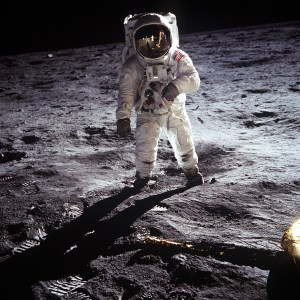
The moon landing was one of the very first historical events that I actually felt a part of. In July 1969 I was 12 years old and on the morning of the 20th of July my mother had woken me up as usual for school. I came downstairs in my pyjamas for breakfast and to my utter amazement there was Neil Armstrong and Buzz Aldrin walking on the moon over on mum’s black and white television set. How my mother got me away from that TV set and off to school I’ll never know because at the time I read and watched everything I could about the US space program.

Believe it or not, many people today refuse to accept that Armstrong and Aldrin actually did walk on the moon that day. Many armchair ‘experts’ will call attention to photos from the lunar surface and explain that they were fakes because of various anomalies. On TikTok I recently watched a video in which a man swears his father was a security guard at a secret base where the moon landing was filmed. On YouTube there is a video where someone tries to get Armstrong to swear on the bible that he went to the moon. Neil Armstrong declined. Why? Was it because he didn’t go to the moon? Why did he retire from NASA so early? Was he ashamed about his continuing lies?

My personal verdict: Baloney. Armstrong and Aldrin walked on the moon in July 1969 in an incredible feat of exploration and bravery and as for refusing to swear on the bible about it, why should he?

The British Grand Prix

The first ever British Grand Prix was held in 1926 at Brooklands, one of the world’s first ever purpose-built racing tracks. Brooklands had an oval configuration and was famous for its banked corners. The track was also an airfield and during the two world wars Brooklands was taken over by the military for aircraft production. After 1945 the racing circuit was in poor condition and Brooklands was sold to the Vickers-Armstrong Company as a base for aircraft production. Motor sport was unable to return to Brooklands especially as after 1951, a four-lane road was built through the track area.
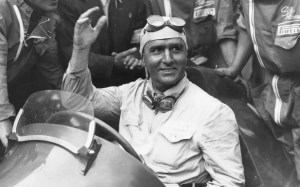
Giuseppe-Farina (Image from Motorsport Magazine fair use commons)

The current Formula One World Championship actually began at Silverstone in 1950 with the very first world championship Grand Prix. The first Silverstone British Grand Prix however was held two years earlier in 1948 when motor sport began again after the second world war. Luigi Villoresi won in 1948 in a Maserati but the 1950 race, round one in the new World Championship, was won by Giuseppe Farina.

This year, 2025, the British Grand Prix was held on the 6th of July and once again provided an exciting race with Lando Norris giving the fans another British winner after his team mate was given a controversial ten second penalty.

What to do next: Here are a few options.

Share this post on your favourite social media!

Hit the Subscribe button. Never miss another post!

Listen to my podcast Click here.

Buy the book! Click here to purchase my new poetry collection.

Click here to visit Amazon and download Floating in Space to your Kindle or order the paperback version.

Click here to visit amazon and purchase Timeline, my new anthology.

Remembering Apollo 11

I’m not one for writing topical blog posts. I pretty much write about whatever comes into my head but this week it’s the 50th anniversary of the Apollo 11 moon landing, something that made a deep impression on me as a 12 year old boy in June, 1969.

There have been lots of anniversary programmes on TV about the moon shots and Apollo 11 and for me who was once obsessed by the Apollo missions they were all pretty interesting.

One was a programme I have seen before about Neil Armstrong which involved his friends and family talking about the late astronaut. Armstrong was a quiet man who took lessons at his local aerodrome and learned to fly before he could drive. He joined the US air force and became a pilot in the Korean War before returning home to study aeronautics at university.

Later he joined NASA and became an astronaut and apparently the first his family knew about it was when NASA introduced its new trainees on the television news.

Armstrong was a talented pilot who went from testing aircraft like the experimental X15 to become part of the manned spaceflight program and later from being an unknown astronaut to perhaps the most famous man in the world. Everyone wanted to meet the first man on the moon and perhaps get his autograph.

Later on he declined to sign autographs when he found that people were selling them on.

Armstrong resigned from NASA in 1971 and decided to take up a professorship at the University of Cincinnati.

He seemed reluctant to talk about Apollo 11 and I even remember back on the 25th anniversary, the BBC ran a documentary in which Buzz Aldrin did most of the talking, explaining how Neil landed the Lunar Module Eagle on the moon’s surface.

On the way down the Eagle’s computer kept throwing up ‘1201’ and ‘1202’ program alarms. Neither Armstrong nor Aldrin knew what that was but the controllers at mission control knew. The on-board computer which had less memory than a modern mobile phone, could not deal with all the data is was receiving. Armstrong switched over to manual flight, hopped the lunar lander over a rocky area then finally dropped down safely onto the lunar surface with only a scant few seconds of fuel remaining.

Anyway, getting back to July, 1969, I don’t know if you can imagine the excitement of a twelve year old boy, getting up for school one morning to find the TV on and Neil Armstrong walking on the moon when the usual TV broadcast at that time would have been the test card!

Those black and white ghostlike TV images enthralled me that July morning and how my Mother eventually managed to pack me off to school I do not know. Back then I was glued to the BBC transmissions about the Apollo programme and I was a great fan of James Burke who gave us concise updates on what was happening in space and at mission control.

Another BBC programme I saw recently was one about the BBC broadcasts of those days and James Burke himself looked back at film from the late sixties. Video tape was apparently in short supply at the BBC back then and most of his broadcasts were deleted but many of the filmed inserts, broadcast presumably when not much was happening live, were really interesting.

In one, Burke gets inside the cramped command module and shows us just how small it actually was. Apparently in zero g: weightlessness, it appeared bigger because then one could float off into a corner that was normally inaccessible and go to sleep.

In another Burke goes aboard a NASA plane which makes a steep descent creating a few moments of weightlessness which was important for astronaut training.

I often think about that day in 1969, watching the Apollo 11 crew on the moon. The images looked ethereal and ghostly as the two astronauts bobbed about in the low gravity of the moon. I used to wonder just what it was like for Aldrin and Armstrong and what it was like also for Mike Collins, waiting patiently orbiting above in the Command Module Columbia.

Collins must have been the loneliest man in the world just then.

Later in the Apollo program, the TV pictures improved enormously but it was the pictures and cine film that the astronauts brought back which were really amazing.

You might be forgiven for thinking that with the moon landing being 50 years ago, manned space exploration has gone on to bigger and better things. Not so. The Apollo program was incredibly expensive: 25.4 billion dollars according to a quick search on Google: Money that of course the US government could well use elsewhere and after Apollo 17 the moon landing programme was shut down.

Still, think about the spin offs in technology, not only rocketry but computers and electronics and so on. I once read that the secret to the US winning the space race was computer technology and that many calculations done by the Soviets were done by teams of mathematicians using abacuses!

The space race was also part of the cold war and although the Soviets seemed to excel in the early part of the 1960’s, it was the USA that finally put a man on the moon and that man, the first man, was Neil Armstrong who went from relative obscurity to the most famous man in the world. The only other person I can really think of with a similar fame was Charlie Chaplin, whose films, in the days of silent films, went all the way around the world.

One interesting thing to finish with: On one of the BBC documentaries, one of Armstrong’s friends, or perhaps it was his brother, remembered Neil as having a regular dream when he was a child.

Armstrong dreamt that he could float in the air by holding his breath! Quite an interesting dream for a future astronaut!


Floating in Space is a novel set in Manchester, 1977. Click the links at the top of the page to buy or for more information.

Breakfast TV and The Apollo Moon Landing.

I’ve always been a sci-fi fan but when I was a child growing up in the 1960’s I was probably more interested in science fact. The sixties was the time of the space race and the Gemini and Apollo missions were covered in great detail on TV and when I say covered I mean full features and bulletins and not just a one minute item on the news.

I don’t know if you can imagine the excitement of a twelve year old boy, getting up for school one morning to find the TV on and Neil Armstrong walking on the moon when the usual TV broadcast at that time would have been the test card! Those black and white ghostlike TV images enthralled me that July morning and how my Mother eventually managed to pack me off to school I do not know.

The moon landing was covered on UK TV by both the BBC and ITV although in our house we watched the BBC coverage exclusively. Cliff Michelmore was the main presenter but it was James Burke who explained all the technical stuff.
The launch of the Apollo missions was always a highlight for me. Although I enjoyed all the other elements too like the crew broadcasts from space, and those from Mission Control in Houston especially when a major decision had to be taken, for instance, ‘are we ok for lunar trajectory insertion?’ And the answers would come from the experts around the control room:

Mission_Control_Celebrates_After_Conclusion_of_the_Apollo_11_Lunar_-_GPN-2002-000033

Mission Control: Image courtesy wikipedia.

Capcom? (Capsule communications)Go!
Retro? (Retrofire officer)Go!
Fido? (Flight Dynamics Officer)Go!
Guidance? (Flight Guidance Officer)Go!
Booster? (Booster Systems Engineer) Go!
And so on round the room.

Now the Space Shuttle has been mothballed there are very few launches from Cape Canaveral. (Originally I had written Cape Kennedy but as usual after finishing writing I did a quick search on the internet to check my facts and found, surprisingly, that Cape Kennedy reverted back to its original name of Cape Canaveral in 1973. I never knew that!) But another highlight of TV space coverage was in 1968 when Apollo 8 made the first manned trip to the Moon. Apollo 8’s mission was not to land but to fly to the Moon, orbit and return to Earth. The three crew members were Commander Frank Borman, James Lovell, and William Anders.

There were numerous broadcasts from the crew, especially during their orbits of the moon and they sent back to mission control their impressions of the lunar surface, Lovell commenting that “the Moon looks like plaster of Paris or sort of a greyish beach sand.”
Every time the spacecraft passed behind the Moon radio transmissions were blacked out and the crew and ground control were relieved to hear each other’s voices once again when they came back, unscathed, from the far side of the Moon.

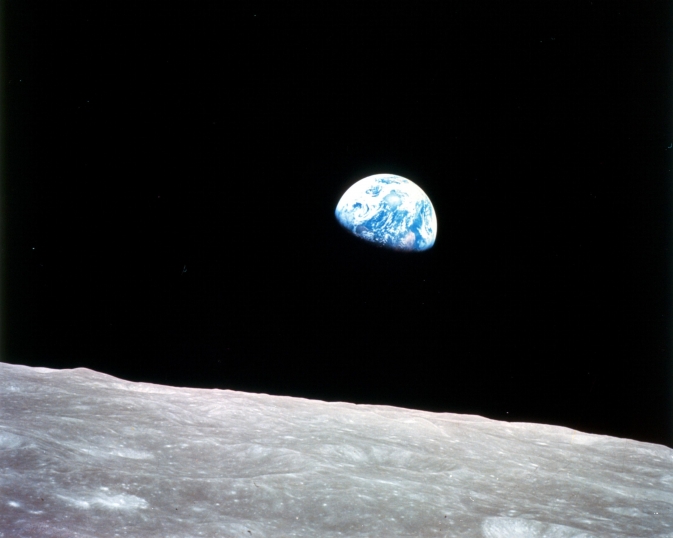
The crew of Apollo 8 were the first in history to see ‘earthrise,’ the Earth emerging from the lunar horizon. The crew all scrambled for their cameras but it was Anders who took the famous colour photo seen here.

297755main_gpn-2001-000009_full_0The most moving broadcast ever was when the crew read lines from the book of Genesis and Borman finished by saying “and from the crew of Apollo 8, we close with good night, good luck, a Merry Christmas and God bless all of you – all of you on the good Earth.”
Every time I see a documentary about the Apollo programme that includes that transmission, I can feel myself taken back to Christmas of 1968 and once again I become that same small boy, glued to our old black and white TV set. Incredibly, NASA was hit by a lawsuit because of this by an atheist who objected to astronauts broadcasting religious activities while in space.

Back to 1969 though as the Eagle, Apollo 11’s lunar module piloted by Neil Armstrong dropped down towards the Moon an alarm sounded in the spacecraft. Ed Aldrin passed the information back to earth; “Alarm 1201”.
Armstrong carried on, dropping the craft ever so closer to the Moon’s surface but again that alarm sounded. What was it? Well believe it or not, the Eagle’s on-board computer, which had a memory less than that of your mobile phone had locked up with an overload of data. Armstrong switched over to manual control and landed the Eagle, dodging an area in the Sea Of Tranquillity littered with boulders without computer assistance. His remaining fuel supply when Eagle touched down was just 30 seconds!

Armstrong was the first man to step out of the hatch and to drop down onto the lunar surface and I should imagine everyone is familiar with his famous words: ‘That’s one small step for man and one giant leap for mankind.’ However Armstrong’s first step out onto the Moon wasn’t small at all, because the Lunar Module landed so gently that the shock absorbers hadn’t compressed. His first step out onto the Moon was almost a four foot jump onto the lunar surface. TV cameras beamed the event to viewers back on Earth and along with myself, almost 600 million people watched Neil Armstrong walk on the Moon. It seems incredible to me even now, that back then in 1969, I was getting ready for school, eating my porridge or cornflakes and watching science fiction become science fact.

I must remember to ask my Mum though, how did she manage to get me off to school on the day Neil Armstrong walked on the moon?


If you liked this blog, why not try my book, Floating in Space. Click the links at the top of the page for more information. Click the picture below to go straight to amazon!

Floating in Space