5 British Rom-Coms

My original idea for this post was to write about 90s British films but then I realised some of those 90’s films were actually from the 2000’s. I then changed tack to a blog about films written by Richard Curtis but that meant cutting out a few films that I really wanted to include. Then I thought what about films with Hugh Grant? Great but although many of the films below feature Hugh, I’ve got a personal favourite in which he doesn’t star. That of course has led to the final incarnation of this post, 5 British Rom-Coms.

4 Weddings and a Funeral 1994

I’ve always rather loved this film. In a way I tend to think of it as a sort of modern Ealing Comedy, or at least the sort of film that Ealing would be making were they still in business. The only difficulty in that respect is the rather liberal use of the ‘f’ word that the film can really do without. In the USA, or so I have read, the version screened over there has the ‘f’ word substituted by the slightly less alarming word bugger.

The plot is pretty simple. It’s about a group of friends who only seem to meet regularly at weddings. At the first wedding Charles, played by Hugh Grant, meets Carrie and falls for her only to find she is about to return to the USA. Happily he meets her again at another wedding and, sadly for Charles, he meets her again at yet another wedding, this time one in which she is the bride.

The happiness of constant weddings is shattered by the death of one of Charles’ friends but this being a rom-com, things all work out in the end. Carrie is played by Andie McDowell and the supporting actors who appear at each wedding are all well known to fans of British film and TV.

Four Weddings and a Funeral is the movie that brought fame to writer Richard Curtis and actor Hugh Grant, as the announcer mentioned last time I saw this film on the television. Strangely, he didn’t mention Mike Newell, who directed the film. Funny how the credit from a successful film doesn’t always get spread equally around.

Notting Hill 1999

Written again by Richard Curtis and starring Hugh Grant, Grant this time plays William Thacker, the owner of a bookshop in London’s Notting Hill. One afternoon at the bookshop, Hollywood film star Anna Scott played by Julia Roberts comes into the shop to browse. Not long afterwards William accidentally walks into her and spills takeaway drinks all over her. He invites her back to his place just across the road where she cleans herself up.

On another occasion the two go out for a date but William’s oddball flatmate Spike played by Rhys Ifans, happens to mention the film star’s presence to his mates at the pub and the flat is soon swamped by reporters. Anna is not amused and the two fall out and seem to go their separate ways.

There is a really lovely sequence here in which William walks along the Portabello Road and the scene transforms into winter, then autumn and finally summer showing the passage of time in a really unique way. Later, the two manage to sort things out just before Anna leaves for the USA.

Over on Wikipedia it was interesting to find that according to a 2018 interview High Grant gave to GQ magazine, the idea came to Richard Curtis after one of his friends became involved with an unnamed ‘big star’. The film was shot on location in Notting Hill and the blue door to William Thacker’s place in the film was actually a property owned by Richard Curtis.

Julia Roberts was the producer’s only choice for Anna Scott although personally, just like Andie McDowell in 4 weddings, I’ve never found her remotely attractive.

The film won a Brit Award for its soundtrack.

Sliding Doors 1998

This was a film written and directed by Peter Howitt. Howitt is probably best known for playing the part of Joey Boswell in the TV comedy series Bread. This is a really super film which is about a girl, Helen Quilley, who gets fired from her PR job. Helen, played by Gwyneth Paltrow, heads off for home. She goes to the tube station but is only seconds too late and misses her train. The film then rewinds a few minutes and when it replays, Helen manages to catch the train. The film then sets off in two separate directions with two differing storylines. In one she arrives home to find her boyfriend in bed with another woman. In the second she arrives home later and the boyfriend manages to cover up his two timing activities.

The film was made in 1998 but still looks fresh and contemporary. The only jarring things -from a 2026 point of view- are people still smoking in pubs and offices filled with huge computer monitors. It’s a lovely film and one I tend to watch quite a lot on DVD.

Bridget Jones Diary 2001

This film was based on the book by Helen Fielding and had a script written by Fielding, Andrew Davies and once again, Richard Curtis. American actress Renee Zellweger played Bridget with a very impressive British accent with her love interests played by Hugh Grant and Colin Firth.

Bridget works in publicity for a publishing company. She is 32 and worried about her weight and confides all her worries as well as her fantasies to her diary. At her mother’s Christmas party, she meets barrister Mark Darcy, a neighbour from her childhood, who she finds arrogant and rude. At work she flirts a lot with her boss Daniel Cleaver played by Grant and begins an affair with him only to find that he is a serial cheater.

Who will Bridget end up with, the slimy but nice Daniel or the boring but nice Mark? One of the film’s highlights is a drunken street fight between Daniel and Mark which plays out pretty much how two upper/middle class twits would be expected to behave.

Three sequels were made to the film, the last one was Mad About the Boy in 2025 but personally, I think the original was the best.

About a Boy 2002

This is still a rom-com but considerably darker than the other films on this list. Hugh Grant plays someone slightly different to his usual film persona. Will Freeman is a young man in his 30s who lives a rather aimless life. He does not go out to work, instead he has ample funds because of regular royalties due from a popular tune which was written by his late father. His one aim in life is to meet women and he happens to come across a young mother and feels that young single parent females would be good for him because they are mostly on the lookout for a new man. To achieve this aim he joins a group for single parents where he is the only man and after spinning a yarn about being deserted by the mother of his only child, ‘Ned’, he feels warmed by the sympathy vote of the whole group and quickly gets involved with an attractive young mother called Suzie.

Through various circumstances, this leads him to meet Marcus, the son of one of Suzie’s friends and the two begin a friendship of sorts which begins to bring a new meaning to Will’s life.

Overall, the film is perhaps a little slow and rather dark in a way but still a great film based on a book by Nick Hornby.


What to do next: Here are a few options.

Share this post on your favourite social media!

Hit the Subscribe button. Never miss another post!

Listen to my podcast Click here.

Buy the book! Click here to purchase my new poetry collection.

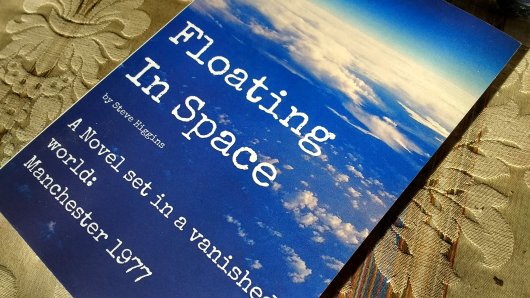
Click here to visit Amazon and download Floating in Space to your Kindle or order the paperback version.

Click here to visit amazon and purchase Timeline, my new anthology.


The Dambusters and The State of The Union

When I say the union, I’m not talking about the United States of America but that other union, the one between England, Scotland, Wales and Northern Ireland. So, what has happened to the United Kingdom? Why is it in such a state, beset by strikes and unrest?

It’s hard to say but a big factor is the Covid 19 epidemic which led to major lockdowns over the past three years. The nurses of the NHS are striking for better pay yet not long ago we, the British public, were clapping them outside on our streets because they were on the front line, risking infection whilst battling against the pandemic. Now, underpaid and overworked, they want more money. True they have done a great job but to be fair, all of us are in the same boat seeing our income dwindling because of inflation and seeing our utility bills soar as well as food prices going up and up.

Many suffered financially during the lockdown, especially those in the hospitality sector. Pubs and clubs were forced to close their doors, some feeling the financial burden so badly that they were unable to reopen and now they have further problems. Because of Brexit, many foreign workers in the licenced trade have returned home to Poland and other places in Eastern Europe. That means that pubs and restaurants are feeling the pinch because they can’t get the staff. It’s the same in the NHS; nurses and hospital staff are working more and more hours because there is no one to fill the numerous vacancies, and yet there are still 1,382,000 people unemployed in the UK according to the Office of National Statistics.

So why is it that despite all the available jobs going are people still unemployed? Is it that we as a nation think that jobs in bars and restaurants are beneath us? Are cleaning and hospital jobs not good enough? There is a great move in the UK to push more and more people into higher education which is great but it seems that these days everyone and his dog is wanting to go to university, so who is left to do the cleaning and beer pulling? The Poles and the other Eastern Europeans? No because they have all buggered off back home. Of course, there are a shed load of illegal immigrants parked up in various places in ex army camps and hotels that have been taken over by the government but they are too busy being looked after to do any work but perhaps in the future they could be offered work in the NHS and in bars and restaurants.

The other day I happened to be watching the film The Dambusters which as you will probably know is about 617 squadron which was formed in World War II specifically to attack the dams of Germany so as to destroy the Nazi industrial capability. Destroying the German dams flooded the Ruhr Valley and dealt a huge blow to the Nazi war effort. The story was more than that though, it was also about Barnes Wallis, the inventor of the bouncing bomb and showed how he developed an idea from the drawing board through to models and finally to the real thing.

At the beginning of the film Barnes’ wife calls the doctor to look at their sick child and also to have a word with Barnes himself as his wife suspected he was working too hard and making himself ill. The doctor was a kindly old chap who came to the house, attended to the child and dispensed advice and wisdom to the hardworking inventor.

That was back in 1940 but try getting a doctor to pop round to your house these days! Not only would that be next to impossible but try to get an actual appointment to see a doctor! At my surgery I thought it might be possible to ask for a routine appointment, something of a non-urgent nature so I could perhaps discuss with the doctor some minor ailments that were causing me a little discomfort. No, I was told, not possible. I have to call in at 8am in the morning and try and get through for one of the appointments for that day which, based on previous experience, will all be booked up by about 8:30. Not only that but the last time I visited my doctor after two days of trying to get through on the phone, he was already writing out a prescription for painkillers before I had even finished telling him about my problem.

It was not easy for Barnes Wallis to develop his idea for the bouncing bomb and it was even harder for him to get Whitehall and the RAF to follow through and actually prepare to attack the German dams. Perhaps what we need in the NHS is someone similar, someone with vision, someone both creative and tenacious that can sort out the whole terrible mess we seem to be in now.

One of the problems of reshowing the Dambusters film on TV these days is that back in the 1940’s, Wing Commander Guy Gibson, the leader of the Dambusters squadron had a black dog and this being the 1940’s he chose, like many others of the time, to call his dog by the N word. I’m sure Gibson chose that name quite innocently but it is a word that has caused untold pain and unhappiness to a great many people with dark skin. Just prior to the famous dam busting raid, Gibson’s dog was killed in a hit and run accident and he asked that his dog should be buried at the same time as he was going into action over Germany. I mention this so you can see it would be pretty hard to delete the entire dog scenario from the film so as not to cause offence with viewers today.

What did happen though was a pretty remarkable editing job in which the dog was renamed ‘Trigger’ via some really outstanding audio dubbing. So outstanding that you can hardly even believe a change had taken place.  In a way it’s a little sad that we worry so much about offending others that we must change historical names that are considered today to be unacceptable. It’s not as if by doing so we can change the past. Anyway, the result was that this story of ingenuity and heroism can still be told and seen by young people without upsetting anyone.

Guy Gibson won the Victoria Cross for commanding the raid on the dams of Nazi Germany. He was later stood down from active flying after completing his 174th mission in 1943. He was asked to join Prime Minister Winston Churchill on a trip to Canada. He also visited the USA for propaganda and publicity reasons. On his return to England, he was asked to write a book about his experiences, again presumably for publicity purposes.

After writing his book, Enemy Coast Ahead, he was posted to RAF Coningsby where he was mostly responsible for planning and liaison which did not suit him at all. He was anxious to go flying again and was concerned that the war would end before he could get back into combat.

On the night of the 19th August 1944 an order came through for a raid on Germany and as senior officer he took control of a Mosquito aircraft for which he had only logged 9 hours and 35 minutes flying time. Returning from the mission Gibson’s aircraft entered into a steep dive over Steenbergen in Holland. The aircraft crashed killing all on board. In 2011 a British film maker made claims that Gibson’s plane had been shot down by a gunner aboard an RAF Lancaster who mistook the Mosquito for a German Junkers 88.

Gibson was buried in the local cemetery in Steenberegen where there are a number of streets dedicated to his memory, Gibsonstraat and Warwickstraat named after his navigator James Warwick.
This week Liz and I have flown to Lanzarote to get away from the cold of the UK. Luckily we weren’t flying last Thursday as Manchester Airport had been closed because of half an inch of snow. I read about that on an English newspaper site so I assume it was accurate, despite Prince Harry having a go at English journalists and blaming them for all his problems.

One of the books I have brought with me to read on holiday was a book by the BBC’s former World Affairs Correspondent, John Simpson. His book is called ‘A Mad World, My Masters’. In his introduction he says this.

I decided to lift the title of this book from the Jacobean playwright Thomas Middleton because I felt it expressed the sense that many people have now, and clearly had 400 years ago too, that things around them have gone mildly crazy. Of course, today’s craziness is tomorrow’s rational order, which becomes disrupted again at some future point and then becomes a new and and perfectly workable basis for society.

That was written in the year 2000 and seems still relevant today over twenty years later. Still, I’m sure the United Kingdom will still be in one piece when we get back. I can just imagine being stranded at Lanzarote airport like Tom Hanks in the film The Terminal. ‘I’m sorry, you cannot fly with a UK passport as the UK no longer exists’ the airport staff tell me.

Oh well, I don’t mind staying in sunny Lanzarote while the UK sorts itself out!


What to do next: Here are a few options.

Share this post on your favourite social media!

Hit the Subscribe button. Never miss another post!

Listen to my podcast Click here.

Click here to visit Amazon and download Floating in Space to your Kindle or order the paperback version.

Buy the book! Click here to purchase my new poetry anthology.

6 Great British Films You May Never Have Heard Of!

The Night my Number Came up (1955) starring Michael Redgrave, Sheila Sim, Alexander Knox and Denholm Elliot. Directed by Leslie Norman.

A senior Royal Air Force officer (Michael Redgrave) is at a dinner party in Hong Kong and a naval Commander played by Michael Hordern, talks about a dream he had in which the Air Marshal and a group of 5 other companions were flying from Bangkok in a Dakota which crashed on a rocky shore. The Air Marshal is due to fly to Tokyo the following day but he is not unduly bothered as many of the details differ from his planned flight including using a different kind of aircraft, a Consolidated Liberator.

When technical issues ground the planned aircraft a Dakota airliner, like the one seen in the dream, is substituted, and a number of other passengers arrive to make the total number of people on board 13, the same number of people as in the dream. As the flight proceeds, other circumstances change so that eventually most of the details correspond to the dream. When the aircraft runs low on fuel due to becoming lost in bad weather the pilot manages to bring the aircraft down in emergency landing in a snowfield in the mountains and all on board survive. The naval commander hears about the missing plane and arrives at the RAF base to direct search parties to the correct area.

The director, father of the film critic Barry Norman, builds the tension in the aircraft as more and more people come to know about the dream and gradually become more and more anxious. It was interesting to find out when I researched the film that it was based on a real incident in the life of British Air Marshal Sir Victor Goddard. All in all, an excellent film with good performances from Michael Redgrave, Alexander Knox and a young Denholm Elliot.

The Dead of Night (1945) starring Mervyn Johns. A series of short stories that combine together. Each instalment had a different director.

This is probably one the great horror movies of the 1950’s, in fact, one of the great movies full stop. It’s a series of short stories all linked together by the central character played by Mervyn Johns. His character architect Walter Craig, arrives at a house in the countryside where he has been consulted on some building work. The house seems all too familiar to him and then he then realises that everything that happens he has already lived through in a dream, a nightmare in fact. As more guests arrive for the weekend he recognises them from the dream and is convinced something terrible is about to happen. When he confides this story to the others, they in turn all relate a supernatural story before the central theme reaches a terrifying climax. Two stories that were particularly good were one in which an unbalanced ventriloquist (Michael Redgrave) believes his dummy is alive and another where a woman played by Googie Withers buys an antique mirror for her husband and finds that the mirror has an hypnotic effect on the man.

An outstanding film and one that was highly rated by director Martin Scorcese and was voted the 35th best horror film of all time by Time Out magazine.

The Intruder (1953) starring Jack Hawkins. Directed by Guy Hamilton.

Another classic 50’s film starring Jack Hawkins. Hawkins plays Colonel Merton, an ex-army officer who returns home one night to find his London flat being burgled by a petty thief. Merton confronts the man played by Michael Medwin, only to find that the intruder is in fact Ginger Edwards, one of the men from his old command. He is shocked to see one of his former soldiers reduced to crime. He tries to talk to Ginger but accidentally knocks over his phone in another room which leads Ginger to think he has called the Police. When there is a knock at the door Ginger bolts and makes a hasty departure. Merton then decides to visit some of his old army comrades – Ginger mentioned he was in touch with one of them – in order to track the man down. Each old comrade tells a story about Ginger which all nicely link together to show how circumstances have worked against their old friend. A lovely film with excellent performances and a number of familiar faces from British film and TV, among them Dennis Price, Dora Bryan and George Cole.

The Long Arm (1956) starring Jack Hawkins and directed by Charles Friend.

This is a brilliant film, it really is. It’s a sort of CSI London from the 1950’s. Like the present day CSI series, this film shows the crime detection process using the then start of the art technology. Jack Hawkins is a police inspector and is called on to look at a robbery in London. The theft was from a safe manufactured by a company called Rock. There is little to go on and Jack returns to his 1950’s suburban home feeling rather disappointed. Happily his typical 1950’s housewife is there waiting for him, his tea is ready and his evening bottle of beer also all ready too. Hawkins spends a little time with his son before bed time and tells him all about his current case and the lack of clues. Well, says the boy, perhaps the thief is a super thief who has never been caught. This revolutionary thought rings a bell for Hawkins and he goes back down to Scotland Yard straight away for a meeting with the records guy played by Geoffrey Keen. Together they trawl through the card file (no computers back in the 1950’s!) of unsolved cases and find one relevant link. A set of robberies all from  safes manufactured by, yes you’ve guessed it, Rock.

OK next up is a visit to the Rock factory for more investigation but then the robber makes a fatal mistake. While fleeing from the scene of his latest heist the robber runs over and kills a passerby. Later the abandoned murder car is found and 1950’s style forensic technology uncovers various clues. The most interesting one is a rolled up newspaper used to clean the window. A fascinating look at newspapers and how they are produced and distributed follows and the police are soon on the trail of their man. I won’t give away the ending but the film kept me on my toes throughout and Guy Hamilton who directed some of the early Bond films throws in a little action to bring the film to a climax.

No Highway in the Sky (1951) starring James Stewart, Marlene Dietrich, Glynis Johns. Directed by Henry Koster.

James Stewart plays an aircraft technical expert Theodore Honey who is trying to solve the mystery of a crash involving a new aircraft, the Rutland Reindeer, which has crashed in Canada. Honey theorises that the crash was a result of metal fatigue and sets up an experiment which involves the tailplane of the aircraft subjected to continual vibration in a controlled environment. When Mr Honey flies home on another Reindeer he is shocked to find that the aircraft is an early production model and is fast approaching the flight time that he has theorised the tailplane will fail. Mr Honey decides to warn the crew and also a famous film star aboard played by Marlene Dietrich. Consternation reigns in the cockpit but the pilot has no choice but to carry on. On arrival at Gander the pilot consults with experts in London and the aircraft is cleared to fly on. In a desperate act, Honey retracts the undercarriage and wrecks the plane to stop it from flying.

Stewart plays Mr Honey as a slightly eccentric character, very similar to his character in the film Harvey. Marlene Dietrich takes quite a liking to him as does the stewardess and they are both eager to help and support him and his young daughter when his theory is attacked from all sides. Needless to say, he is proved right in the end.

Last Holiday (1950) starring Alec Guinness. Directed by Henry Cass.

Guinness plays a pleasant mild-mannered salesman called George Bird who has no friends or family and finds out he only has a few weeks to live. He decides to spend the time he has left by going to a rather posh residential hotel where the residents find him a sort of enigma. His star rises here as he becomes involved with the residents and staff and people start to wonder about him. Who is he? Is he rich? Lucrative job offers come his way as well as love but only one person knows his secret, a member of staff that he confides in. In the end Mr Bird finds out he was wrongly diagnosed but the film ends on a sad note when he is killed in a car crash. Penned by author J.B.Priestley, it’s another wonderful British picture full of excellent performances with a whiff of sadness and poignancy about it.  Guinness’ performance is excellent and the underlying sense of inevitability is further enhanced by a haunting musical theme that we hear throughout the film.

If I had written this a few years back I might have been tempted to add this to a blog like Unseen TV which was a post about cinema and TV films which rarely get an airing on terrestrial TV. However, I am happy to see that all of the above films can be found on the new freeview channel 81 Talking Pictures.


Floating in Space is a novel set in Manchester, 1977. Click the links at the top of the page to buy or to find out more!