 It’s been another cold and wet week and as usual I’ve tended to lie back on my couch and watch a lot of television and not just broadcast TV either. Lots of times when broadcast TV isn’t up to the job of entertaining me, I’m forced to crank up a recording and watch that. Just lately I’ve watched a couple of biopics, films about real people, so for this post I thought I’d continue that theme and look at films and TV shows where the actors have had to portray real people.
Barbara Windsor
One night last week I watched a documentary about the Carry On films. It was really interesting and was titled Secrets and Scandals. It showed a lot of previously unseen interviews in which the stars had a whinge about various things, in particular the fact that they didn’t get paid when the films were reshown time and time again on TV. The producers made a shed load of money but the stars were paid peanuts. One of those stars was Barbara Windsor and after I had watched the documentary, I remembered a TV film called Babs about Barbara’s life. It was made in a really interesting way and involved Barbara in later life, imagining that she was talking to her late father about various things that have happened to her. Events from her life are recreated in front of her and she turns and discusses the incidents with her dad.
Theatre director Joan Littlewood was really impressed by Babs and wanted her to play various parts for her but after working together for a short while, Barbara opted to play a part in Carry on Spying which set up her comedy persona for the rest of her life.
Barbara loved her dad but when he and her mother divorced, Barbara, as a small child, was asked to tell the courtroom about the times he had shouted and sworn and later her dad ignored her when leaving the court. Two actresses played Barbara, Honor Kneafsey in her younger days when she played in her first Carry On films and Samantha Spiro who interacts with her father throughout the film. It’s a really good film and it’s put together in a slightly unconventional way which really works.
I couldn’t find a clip on YouTube but the film can be seen on BBC iPlayer by clicking here.
Jimmy Saville
Another TV film I saw earlier in the year was The Reckoning in which Steve Coogan plays Jimmy Saville. It was another 4 part series which we had to stream and Coogan really seemed to me to capture the essence of Jimmy Saville.
I have to admit I always used to rather like Jimmy Saville. I liked his slightly comic presentations on Top of the Pops and his ‘now then, now then’ act. This film was different though and showed the dark side of Saville and the way he used his pretty considerable fame to abuse women and children and get away with it.
 Stan Laurel
Steve Coogan also played Stan Laurel in the film Stan and Ollie, a film which looks at the later years of the famous comedy duo. John C Reilly played Oliver Hardy and the film shows the two when they embarked on a music hall tour of the UK in 1953. They were still hugely popular but the tour had a big impact on them, particularly Oliver Hardy. Coogan does have a look of Stan and the two actors played great parts and even recreated some of their comedy routines on stage.
Lee Harvey Oswald
In the film JFK, director Oliver Stone takes a look at the assassination of John F Kennedy. The alleged assassin was an oddball individual called Lee Harvey Oswald. Oswald in the film is played by British actor Gary Oldman. Oswald was paraded to the press in Dallas on a few occasions after his capture and Oldman perfectly captures his look and speaking voice in the film. Stone apparently urged Oldman to do his own research and he met with Marina, Oswald’s widow and some of their Dallas acquaintances. Strangely, Oswald was interviewed on camera before the assassination talking about Marxism and Communism and the differences between the two. No doubt Gary Oldman watched these too.
Winston Churchill
Gary Oldman also played another historical person in Darkest Hour in which he plays Winston Churchill. A great deal of makeup went in to putting together Winston’s visual appearance and the film looks at the outbreak of World War II and Churchill’s ascent to the premiership. Oldman achieves an interesting approximation of Churchill’s overall look and speech and the film is excellent although whether deposed PM Neville Chamberlain had as strong a hold on the conservative party after Churchill had taken over as the film makes out, is open to question. Interestingly though, even though Churchill became the Prime Minister, Chamberlain retained the party leadership and apparently had thoughts of returning to 10 Downing St in later years. He died of cancer though in 1940.
Cary Grant
Archie is a wonderful four part series and Jason Isaacs plays an outstanding part. He doesn’t try to impersonate Cary but he did manage to create a look of the late star and he caught Grant’s voice and enunciation perfectly. Most of the series follows Cary in later life when he becomes involved with and later marries Dyan Cannon. Dyan was his fourth wife and she was the mother of his only child Jennifer and she and her mother co-produced the series which is definitely well worth watching.
Cary Grant retired from films in 1966, the year his daughter was born and he and Dyan Cannon divorced in 1968. Many tried to bring him out of retirement for various films including his favourite director Alfred Hitchcock but he declined. He must have wanted to keep on working though because he did accept a position on the board of Fabergé.
He died in 1986 aged 82 and left behind an estate reputedly worth around 80 million dollars. Archie is a well made and quite fascinating piece of TV. Look out for it, it’s well worth watching.
Howard Hughes
The Aviator was a film released in 2004 starring Leonardo Di Caprio as the billionaire Howard Hughes. Looking at Wikipedia, the film had an extensive development background with other film makers vying with each other to produce biopics about Hughes. This film however finally came together with Martin Scorsese directing and with a screenplay by John Logan. Hughes famously suffered from OCD, Obsessive Compulsive Disorder and in Hughes the disease manifested itself in a fear of germs and an obsession with cleanliness. Apparently Di Caprio did a huge amount of research on OCD and the film shows how Hughes went from an eccentric millionaire film maker and pilot to someone who finally retreated into reclusive madness.
I enjoyed The Aviator although a better film about Hughes was probably a mini series based on a book by Hughes’ former business manager, Noah Dietrich. The TV mini series was called Howard, The Amazing Mr Hughes and starred Tommy Lee Jones as the famous billionaire. I’ve always thought that Jones’ portrayal was much more convincing than Di Caprio’s but I did enjoy both versions.
An interesting element in the TV show was a recreation of an incident in 1972 when Hughes appeared by telephone live on air, to speak with four journalists he personally knew, in order to denounce fake ‘diaries’ which had been published by author Clifford Irving. On the TV mini series the actual journalists played themselves.
Brian Clough
I’m not a great football fan but not long ago I picked up a DVD from the charity shop. It was The Damned United starring Michael Sheen as the 70s football manager Brian Clough. Clough was famous in the UK in the 1970s and was to be seen regularly on various TV shows and all the top impressionists of the day, people like Mike Yarwood, all did a version of Clough. The film follows Clough as he takes over Leeds United from outgoing manager Don Revie. He denounces the team as unsporting because of their brutal and physical style of play and promises a new start for the team. However, only 44 days later Clough was sacked as manager. Despite not being a football fan, the film recreates the 1970s very well and Sheen’s performance as Clough was an outstanding approximation of the real Clough. Various people sued the production company due to a number of factual errors in the film but as a non-football fan I found the film very convincing and hugely entertaining.
I could go on with many other films. James Stewart for instance played both Glenn Miller and Charles Lindbergh although the end result in both cases was someone who looked and talked just like James Stewart usually does. The same could be said for James Cagney who played George M Cohan in the film Yankee Doodle Dandy. Neither actor even tried to impersonate the real person although Stewart did wear spectacles to play Miller. Anyway, I’ll save those examples for another post.
Have a good weekend and thanks for looking in.

 Quite a while ago, I pondered in another post what I might do if I should win a lot of money in the lottery. I thought about it quite a bit and came up with the usual answers like new home, new car, holiday homes and so on. Maybe a new laptop or stand-alone PC. The fact is, not being used to money and not having particularly expensive tastes I probably wouldn’t have much of a clue. At home I have a whole lot of collectable things, model cars, antique telephones, books and DVDs so I could easily find myself being like the character in the film Citizen Kane, buying lots of things and having them stored somewhere. Would I be affected by a big win? I can see the headlines now: Northern Lottery winner says his 32-million-pound win won’t affect him. But of course, that wouldn’t necessarily be true. How did big money affect others? Let’s take a look at three multi-millionaires.
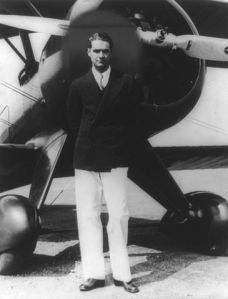 For one man though, sitting alone in a Nevada hotel suite, sealed off from the world by his Mormon minders, the death of Bobby Kennedy was an opportunity. The elderly Hughes, lying naked on a bed watching TV, his hair, long and unkempt and his finger and toenails uncut, was a far cry from the young film maker, aviator, and entrepreneur he had once been. Immediately he wrote a memo to his chief executive and public alter ego, Robert Maheu. He said basically that now Kennedy was lying dead or dying on the pantry floor of a California hotel this was a once in a lifetime opportunity to put on the payroll the entire Kennedy election team, in particular electoral strategist Larry O’Brien. O’Brien had served under Presidents Kennedy and Johnson and would later become chairman of the Democratic National Convention. Not a thought for the dying Kennedy, just the opportunity to get hold of a ready-made election team and put his own man in the white house. At the time Hughes had the idea of promoting Governor Laxalt of Nevada for the job. Fantastic as it may seem the genesis of what would become Watergate lay in Hughes actions on that night.
 Letters from an Unknown Author!