 I published a post quite a while ago about the month of January. January of course is cold and believe me, I hate the cold so I thought I’d get a lot of cold and chilly feelings off my chest by writing about my least favourite time of the year. Today I’m going to go the opposite way and write about the month of July, generally the warmest month of the year. In fact the warmest month ever recorded was July 2023 according to a survey by scientists at NASA, the US space agency.
The Battle of the Somme July 1916
On the first of July, 1916, the Battle of the Somme began. It was an attempt by combined French and British forces to attack the German held lines by the river Somme in northern France during the First World War. The first day was the worst day in British military history with 57,470 casualties, 19,240 of which were men who were killed. The battle continued for another four months and the total casualties for both sides were over 1.5 million. The battle ended in November of 1916 with allied forces only making an advance of some 7 miles.
In March of 1917 the German forces drew back to the Hindenburg line and began to increase U Boat attacks on British shipping in an effort to starve the British into defeat. This however only spurred the entry of the Americans into the war in April 1917.
A few years ago, Liz and I visited the Somme and we saw a crater which is supposed to be the biggest crater of the First World War. It’s called the crater of Lochnagar and back in 1916 the 179th Tunnelling Company of the Royal Engineers had burrowed under the German lines and laid down huge explosive charges. They were detonated at 07.28 on the morning of July 1st. The British expected the Germans to have been wiped out by this and a huge artillery barrage but they were sadly mistaken.

Wilson44691, CC0, via Wikimedia Commons
Today the crater is still there. I had expected it to have perhaps become a lake but no. It’s a deep depression in the ground surrounded by wooden walking boards, many of which have the names of deceased soldiers inscribed on them.
The Trent and Mersey Canal 1766
The canal system of Great Britain was probably the shortest lasting transport revolution ever. After only a few years the railway revolution began and suddenly, the canal system was old technology. Parliament authorised the construction of various canals in 1766, one of them being the Trent and Mersey Canal. Construction began in July of that year and it was designed by James Brindley to link the rivers Mersey, Trent, Severn and Thames. It was completed in 1777.
Canals were built for the efficient transport of goods and raw materials during the Industrial revolution although shortly afterwards the new railways became the primary method of transporting goods and of course passengers.
Today the canal system in the UK is primarily one of leisure and holiday boating and many people like me have become interested in canals through TV programmes like Canal Boat Diaries. The show is a sort of video diary by a boater called Robbie Cummings who takes his viewers on a gentle meander through the canals of the UK. I’ve always found it an enjoyable and relaxing show although when I last looked into hiring a canal boat it was super expensive. Maybe one day though.
Execution of the Romanov Family, July 1918
The Romanov family, Czar Nicholas II and his family, were shot and bayoneted to death on the night of the 16th/17th July 1917. The Soviets were worried that the family might be rescued by the anti-revolutionary forces known as the ‘Whites’.
After the revolution the royal family had been moved to various places but in 1917 ended up at ‘The House of Special Purpose’ in Yekaterinburg. Friendly guards had been replaced by non-Russians who were chosen to murder the family.
On the night of the 16th July, the family were told that they were to be relocated because of the impending arrival of pro-monarchist forces. They were asked to assemble in the basement where they were all shot. Many survived the shooting because of diamonds and other jewellery sewn into their clothes and so the murderers were forced to use bayonets to finish off those still alive. The bodies were then dumped into a mine shaft. Later it was realised that the shaft was not deep enough so the bodies were extricated and transferred to another one.
The bodies were discovered many years later by a local amateur researcher in 1979 but he kept his discovery a secret until the fall of the Soviet Union. The bodies were removed and identified using DNA. They were eventually laid to rest in the Peter and Paul Cathedral in St Petersburg.

Picture courtesy Wikipedia Commons
Various people have claimed to be survivors of the murders, notably Anna Anderson who claimed to be Anastasia. DNA testing later proved she was not related to the Romanov family but was actually a woman named Franziska Schanzkowska.
Others have claimed to be Tatiana, Anastasia’s sister and also Tsarevich Alexei Nikolaevich, the only son of the Tsar. Alexei suffered from haemophilia, a condition in which the blood does not clot so it is unlikely that he survived the shooting. Interestingly though, Alexei and one of his sisters were discovered separately from the rest of the family in 2007.
The Ipatiev house where the family were murdered –the house of special purpose- was demolished in 1977 by Boris Yeltsin on the orders of the Politburo as it was attracting people who came to pay their respects to the Romanovs. Later when Yeltsin became president, he ordered a memorial church to be built on the site.
A famous film Anastasia was released in 1956 starring Ingrid Bergman as Anastasia and Yul Brynner as a man trying to use her to gain access to the Romanov millions stored in a British bank. Funnily enough, it’s a film I have not seen for years but after writing this passage I noticed it was coming up on TV so I recorded it and watched it the following evening.
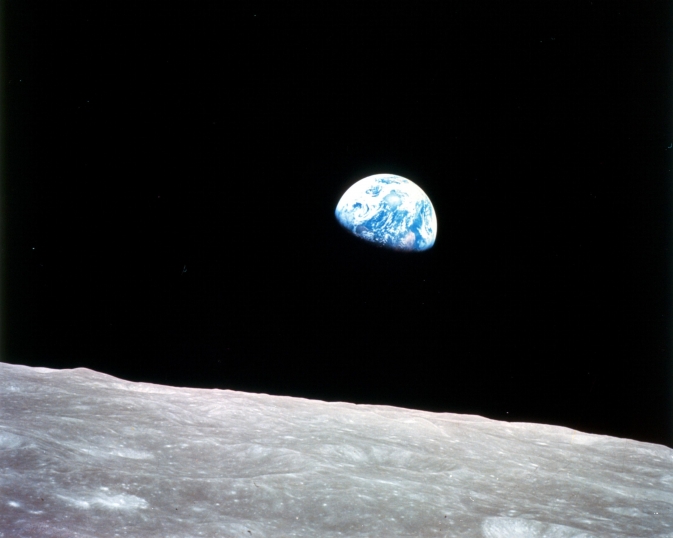
The Moon Landing July 1969

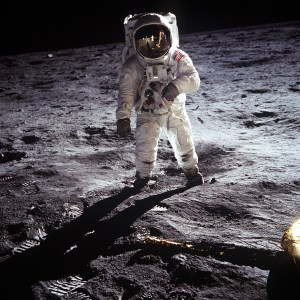
By NASA – http://grin.hq.nasa.gov/ABSTRACTS/GPN-2001-000013.html, Public Domain, https://commons.wikimedia.org/w/index.php?curid=32049
The moon landing was one of the very first historical events that I actually felt a part of. In July 1969 I was 12 years old and on the morning of the 20th of July my mother had woken me up as usual for school. I came downstairs in my pyjamas for breakfast and to my utter amazement there was Neil Armstrong and Buzz Aldrin walking on the moon over on mum’s black and white television set. How my mother got me away from that TV set and off to school I’ll never know because at the time I read and watched everything I could about the US space program.
Believe it or not, many people today refuse to accept that Armstrong and Aldrin actually did walk on the moon that day. Many armchair ‘experts’ will call attention to photos from the lunar surface and explain that they were fakes because of various anomalies. On TikTok I recently watched a video in which a man swears his father was a security guard at a secret base where the moon landing was filmed. On YouTube there is a video where someone tries to get Armstrong to swear on the bible that he went to the moon. Neil Armstrong declined. Why? Was it because he didn’t go to the moon? Why did he retire from NASA so early? Was he ashamed about his continuing lies?
My personal verdict: Baloney. Armstrong and Aldrin walked on the moon in July 1969 in an incredible feat of exploration and bravery and as for refusing to swear on the bible about it, why should he?
The British Grand Prix
The first ever British Grand Prix was held in 1926 at Brooklands, one of the world’s first ever purpose-built racing tracks. Brooklands had an oval configuration and was famous for its banked corners. The track was also an airfield and during the two world wars Brooklands was taken over by the military for aircraft production. After 1945 the racing circuit was in poor condition and Brooklands was sold to the Vickers-Armstrong Company as a base for aircraft production. Motor sport was unable to return to Brooklands especially as after 1951, a four-lane road was built through the track area.
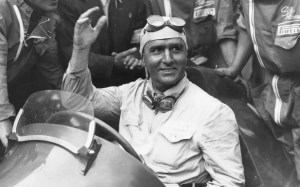
Giuseppe-Farina (Image from Motorsport Magazine fair use commons)
The current Formula One World Championship actually began at Silverstone in 1950 with the very first world championship Grand Prix. The first Silverstone British Grand Prix however was held two years earlier in 1948 when motor sport began again after the second world war. Luigi Villoresi won in 1948 in a Maserati but the 1950 race, round one in the new World Championship, was won by Giuseppe Farina.
This year, 2025, the British Grand Prix was held on the 6th of July and once again provided an exciting race with Lando Norris giving the fans another British winner after his team mate was given a controversial ten second penalty.
 I was watching the TV show Countdown the other day and when the contestants took a short break from their word and maths games, Suzie Dent, the mistress of Dictionary Corner went into her usual talk about words. In this particular episode she decided to talk about the word pilot which inspired me to write this entire blog post on the subject.
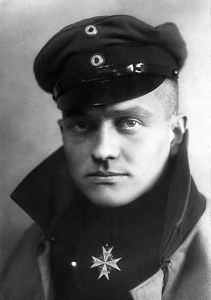 Fighter combat in WWI evolved quickly. At first aircraft were used for reconnaissance but then aircraft from opposing armies took pot shots at each other with rifles and then later, fixed machine guns. British aircraft were ‘pusher’ aircraft with a propellor at the rear to push the plane along. This meant that a machine gun could be placed at the front so the pilot could shoot at whatever was ahead. Aircraft with propellors at the front were better and faster but how could a gun shoot through the propellor blades?
 In 1928 she was asked to join the crew of an aircraft that was to cross the Atlantic. The flying crew were a pilot and mechanic and Amelia was basically a passenger and admitted that was the case. ‘I was just baggage’ she told the press. Even so, she was the first female to cross the Atlantic in an aircraft and she and the crew were treated to a ticker tape parade in Manhattan and a visit to the White House to see President Coolidge. Later, in 1932 she flew solo across the Atlantic arriving in Ireland on May 20th. Amelia made many other trips and also competed in long distance air racing. She became a celebrity in America and in 1937 began a round the world flight. Amelia piloted a Lockheed Electra 10E and the only other crew member was navigator Ted Noonan. The pair departed from Miami on June 1 and after numerous stops in South America, Africa, the Indian subcontinent and Southeast Asia, arrived at Lae, New Guinea, on June 29, 1937. The final 7,000 miles would be over the Pacific. The duo left Lae at 10:00 am on July 2nd and were heading for Howland Island, a small coral island in the Pacific. The US coastguard had sent a cutter there to assist with navigation. As Amelia neared Howland Island the coastguard picked up various messages and it became clear that the Electra was lost and could not see the island. The last transmissions stated that fuel was running low and that they were flying at 1000 feet. The coastguard generated black smoke in the hope that the aircraft could see them but the aircraft never appeared. The coastguard cutter initiated a search an hour after the last message but nothing was found. The next day the US Navy began a search which lasted for three days but no trace of Amelia Earhart was ever found. Some thought the aircraft had ditched in the sea and that the crew had drowned. Various other theories were put forward: The two managed to get to Gardner Island but died there or perhaps they were captured by the Japanese and shot as spies. The mystery has continued to this day.
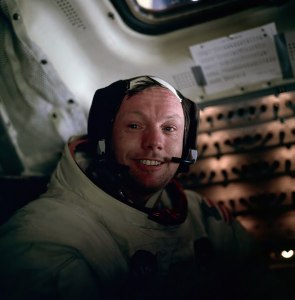 In 1969 Armstrong flew to the moon on Apollo 11 and became the first man to walk on the moon. It was a tricky mission though and during the landing as the Lunar Excursion Vehicle dropped towards the moon’s surface the spacecraft’s computer kept throwing up ‘1201’ and ‘1202’ program alarms. Neither Armstrong nor Aldrin knew what that was but the controllers at mission control knew. The on-board computer which had less memory than a modern mobile phone, could not deal with all the data it was receiving. Armstrong switched over to manual flight, hopped the lunar lander over a rocky area then finally dropped down safely onto the lunar surface with only a scant few seconds of fuel remaining.


 Letters from an Unknown Author!