Back to the 1960s

The 1960s seem like a long way off these days. We moved into the 1970s 54 years ago but even so, the 1960s were a revolutionary time in terms of music, the cinema and of course TV. This last Sunday afternoon after a gruelling session of blog writing, I settled down in front of the TV with a cup of tea and a cheese sandwich and what did I find? Well, a whole stack of TV shows from the 1960s still bringing in viewers today in 2024.

So, what did I watch? Well, time to settle back for some serious TV viewing.

Columbo

Columbo, as you probably know, differs from other TV detective shows by showing the viewer exactly who the murderer is and how he, or she, did it. The whole point is not who did it, but how Columbo catches them. The essence then of a great episode comes in the clever way Columbo nails his man, or woman. Sometimes that moment is a bit of a non starter, other times it’s nothing short of brilliant. Sometimes, even if that final moment is not so great, it’s still been a great episode.
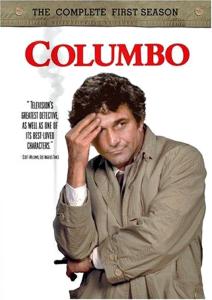
The Columbo of the early series is an absent-minded quirky fellow although in later episodes, Peter Falk who plays the detective, seems to downplay that quirky element. The later episodes are still pretty good though and among various episodes on TV today was Any Old Port in a Storm with Donald Pleasance as the guest murderer. Pleasance plays Adrian Mancini, the part owner of a wine producing business. He is something of a wine snob and he has just been voted ‘man of the year’. That was the good news; the bad news is that his half brother is threatening to sell the business. That of course doesn’t go down well so Adrian in a fit of anger bumps him off. A whack on the head didn’t quite do the job so Adrian leaves him to suffocate in his wine cellar. Unfortunately, it happens to be a really hot day which eventually leads Columbo to the clue that bags the culprit.

That was an episode from 1973 but the original Columbo pilot first aired in 1968.

Thunderbirds

Thunderbirds was about a secret organisation called International Rescue that had a small fleet of highly advanced machines and equipment with which to perform rescue operations. Millionaire ex-astronaut Jeff Tracy was the head man and the organisation was secreted in his island home. His five sons were the Thunderbird pilots, John, Scott, Virgil, Gordon and Alan, all named after US astronauts of the 1960s. The genius behind the Thunderbird craft was Hiram Hackenbacker, known as ‘Brains’. Thunderbird’s nemesis was a secret agent known as the Hood because of his talent for disguise and in many episodes the Tracy brothers had to ask their London agent, Lady Penelope, to track him down and sort him out.

Lady Penelope Creighton-Ward lived in a huge mansion somewhere in southern England and her manservant and chauffeur was Parker, a reformed safecracker. The head of ITV Sir Lew Grade saw the first episode and was so impressed that he asked for the episodes to be extended from 30 minutes to a full hour, less TV adverts of course. Gerry wanted Fenella Fielding to voice Lady Penelope but in the end, his wife Sylvia took on the role.

One other thing, I know Thunderbirds sounds pretty sophisticated from those last two paragraphs but it was actually a puppet series aimed at children. The great thing about it and really, the secret of its success, was the highly intelligent scripts which treated its audience of children not as kids but as intelligent young adults.

Two scripts that spring to mind were one called The Cham Cham about a code transmitted on a musical melody and another where Parker was called upon to break into the Bank of England. Later in the episode someone is trapped inside the vault and Parker is asked to break in again to rescue the man before the air is used up in the vault. Parker though thinks that his old mate, a bank robber recently released from prison, is about to complete his life’s ambition to break into the bank and so he tries to slow down his and Penelope’s drive into London. Everything of course comes right in the end though.

Time for a fresh cup of tea and I’m ready for the next programme.

Batman

We are probably all familiar with the modern Batman films which all have pretty grim and dark overtones. Tim Burton directed the first modern Batman film in 1989 which starred Michael Keaton as Batman and Jack Nicholson as the Joker. Back in 1966 however there was a TV series produced by William Dozier which starred Adam West as Batman and Burt Ward as Robin.

The suave Alan Napier played the part of Alfred, the butler to Bruce Wayne (Batman’s alter ego) and numerous guest stars played the villains. Frank Gorshin was a memorable Riddler, Burgess Meredith (remember him as the trainer in the Rocky films?) played the Penguin and Cesar Romero who refused to shave off his moustache played a rather manic Joker. Julie Newmar and Eartha Kitt both played Catwoman. George Sanders and Vincent Price also appeared as guest stars and even Hollywood director Otto Preminger appeared on the show as Mr Freeze. Anyway you look at it, that is an impressive cast list.

The episodes were all two parters and in the UK were aired on Saturday and Sundays; the Saturday episode always left the Dynamic Duo in some impossible situation and the Sunday one showed how they would escape and track down the villains. The series was very light hearted unlike the modern Batman films and in fact played rather like a live action cartoon series.

The series ran for three seasons and a feature film before being cancelled. In the UK episodes are currently being broadcast on the Talking Pictures channel.

Mission Impossible

The TV show was created by producer Bruce Geller and concerned a team of special agents known as the Impossible Missions Force. They are a US government agency which takes on hostile foreign governments, South American dictatorships and criminal organisations.

In the first series the team is led by Dan Briggs played by Steven Hill but he was replaced for season 2 by Peter Graves in the part of Jim Phelps. Other regular team members were Leonard Nimoy, Martin Laudau and his wife Barbara Bain, Greg Morris and Lesley Anne Warren. Each played a team member with a particular skill, for instance Laudau and Nimoy played agents with a talent for impersonation and disguise, Greg Morris played an electronics expert and so on.

Mission Impossible ran for 7 seasons and was cancelled because, according to Wikipedia, the producers at Paramount found they could make more money by syndicating the existing series rather than making new ones.

A revival series was made in the 1980’s also starring Peter Graves. To save money the series was not filmed in Hollywood but in Australia but it only lasted two seasons and was largely unsuccessful.

A great feature of the series was the opening title sequence which involved a match being struck and then lighting a fuse shown over quick clips of the upcoming episode to the sound of the iconic theme tune written by Lalo Schifrin. Next would be Jim Phelps listening to his tape recorded instructions which after being played would then self-destruct. Phelps would then look through his agents’ files complete with photos and choose who he wanted for the mission. Sometimes a guest star would play one of the agents who would be introduced by Jim checking out his dossier. A team briefing would then take place and the mission would get under way.

The IMF used a great deal of gadgets to accomplish their missions; secret listening devices and other electronic hardware as well as incredible masks and make up to impersonate people. One particular episode that I remember was when the team had to retrieve some stolen gold from a South American dictator’s safe. They did it by drilling a small hole in the safe, heating it until the gold melted and ran out down the small hole then a little gadget sprayed the interior of the empty safe to cover the hole. Mission Impossible was staple viewing in our household in the late 1960’s and it was nice to see once again on UK TV.

From Russia with Love

I’m perhaps cheating a little here because this is a film rather than a TV show but what the heck, it popped up on ITV so I thought I’d watch it. Just lately there seem to be James Bond films popping up on TV almost every week. This film was the second in the Bond series, made in 1963 and it’s probably one of the very best. There are no super villains trying to take over the world and the plot is actually pretty sensible. SPECTRE -the Special Executive for Counter Intelligence, Revenge and Extortion- decide to offer British Intelligence a Soviet Lektor decoding machine but the catch is, the lovely Soviet consulate clerk chosen for the mission and based in the Soviet embassy in Turkey will only offer it to Bond himself.

Sean Connery played James Bond of course and the Soviet clerk was Tatiana Romanova played by Italian actress Daniella Bianchi. A great Bond villain was former Soviet agent now a part of SPECTRE, Rosa Klebb played by Lotte Lenya. The best performance though was by Robert Shaw who plays Red Grant, the killer specially trained to eliminate Bond. Bond and Grant have a hugely exciting fight in a railway carriage towards the end of the film which underlines the serious and gritty nature of the film. I don’t think I’m giving anything away when I tell you Grant wasn’t successful but Rosa Klebb nearly gets Bond with a concealed knife in her shoe.

I could have gone on and talked about Star Trek, The Saint with Roger Moore and even The Avengers with Patrick MacNee as Steed and Diana Rigg as Mrs Peel.

Yes, in some ways the 60s are done and dusted but when it comes down to it, you only have to tune in to a few vintage TV shows to relive it all again.


What to do next: Here are a few options.

Share this post on your favourite social media!

Hit the Subscribe button. Never miss another post!

Listen to my podcast Click here.

Buy the book! Click here to purchase my new poetry anthology.

Click here to visit Amazon and download Floating in Space to your Kindle or order the paperback version.

ULEZ, the Lottery and More Thoughts From a Sun Lounger

It always happens to me when I’m away. I know I’ve written about this before but the National Lottery has been annoying me. Here I am away from home and I get an email saying check your account, you’ve won a prize. Great! I wonder what is it? The million-pound jackpot or £3.42 on the Thunderball? I’m guessing it’s the £3.42. Either way, the National Lottery site cannot be accessed from abroad so I’ll just have to wait until I’m back in the UK before I find out if I’m a millionaire -or not.

What would I do though if I won a huge amount, millions of pounds? Well, it would be brilliant of course but me with my council house mentality, what could I do with say three million pounds? Well, the first thing would be to give away a third to charity. Yes, sounds good, doesn’t it? Really commendable but the thing is, I’ve already promised the Almighty that if he stopped for a minute and gave me a multi-million pound win, I’d give a third to charity.

I’ve promised so I could hardly say no and keep all the dosh could I? He would probably bump me off in a car crash or something. The big problem there is that I’ve also promised a third to the other side, you know, Lucifer, The Devil, Satan. I’ve promised him a certain amount of wickedness if he, the devil, will give me the jackpot. It’s shocking I know but I won’t be doing anything really nasty, just something moderately wicked like blocking up a post box on the last posting day before Christmas, just a little something that could be accepted as being wicked. Know what I mean?

Still, once I had the money, what would I do with it? Its ok for these rich people who are used to money. They will invest it and even if they invest it and go bankrupt, they will be still riding around in Rolls Royces and staying at top hotels whereas little old me would be in the nick for insider trading before you can say Gordon Gekko!

So, imagine I’ve got three million burning a hole in my pocket. Well, my old HP laptop is a little behind the times and slows down quite a lot when I try to edit my YouTube videos so a new PC or laptop must be on the cards. A new house? Of course, in fact the lovely villa that we rent here in Parçay Les Pins is a wonderful place. Perhaps I’d offer Rebecca the owner a few quid to take it off her hands. A little updating would be good. The lounge needs a makeover as do the bedrooms and the bathroom. Yes, I could see myself settling here quite happily. Then of course I’d need a nice car. My current vehicle, a Skoda is looking a bit long in the tooth, I quite fancy one of those cars with a lot of leg room. A few years ago the government was encouraging us to buy diesel cars, now those of us who still own them are being penalised by idiots like the Mayors of London and Manchester, Sadiq Khan and Andy Burnham.

Both want new low emissions in their towns and Khan has already gone ahead and expanded ULEZ, the Ultra Low Emission Zone from the centre of London to the Greater London area. Now, if you want to use a diesel car in those areas you will have to pay £12.50 per day. Yes, £12,50 per day to drive in the low emission zone, even though your vehicle has an MOT and has passed the ministry of transport emissions test. I’m all for cleaner air but what Khan is trying to do is get the working man who mostly drives a second hand car or van to contribute towards the London Mayor’s almost bankrupt set up. How fines will change the air quality though I’m not sure but what about the companies who designed and produced our polluting vehicles in the first place? Wouldn’t it be better if the government decided to say to the manufacturers, reduce the emissions on your vehicles by 2025 and then allow those vehicles time to gradually drop down into the second hand market? After all, we can’t all afford brand new electric vehicles.

Andy Burnham wanted to do a similar thing in Manchester but the outraged response of the residents of Manchester forced him to back down. Now he will tell you he didn’t want a low emission zone. Actually he did, certainly when he was MP for Leigh. Now as Mayor he says ‘I was forced into this by the Government.’ No, not really, the Government didn’t ask for a charging zone, just a small city centre low emissions zone, it was Andy Burnham who extended the zone to the whole of Greater Manchester, no one else. Sorry but Andy Burnham is a liar.

Funny how you can get onto a rant without meaning to. Time to calm down and read a book.

Faithful by Marianne Faithful.

I picked this book up after reading a blog post that made it seem like the most wonderful book ever written about the 1960s. I knew very little about Marianne Faithful except that once upon a time she was involved with Mick Jagger and I was surprised to find that Marianne was actually a singer. She had a hit in 1964 with a song called As Tears Go By which I thought I’d never heard of but when I played it, I realised I had. I’d always thought this was by the Seekers but of course it wasn’t. Good job that song hasn’t been played on our weekly quiz night as I would have got it wrong.

Marianne seems to have made friends with someone who was a record producer and in the crazy world of the 60s a couple of tracks were recorded, a single was put out and made the charts. Later, caught up in the swinging London scene she met Mick Jagger and began seeing him regularly. This being the rock and roll scene, booze, drugs and sex make a lot of appearances. Marianne was initially attracted to Keith Richards but after the two hit the hay together Keith remarked casually while getting dressed that he thought Mick really fancied her so despite her rather liking Keith she began seeing Mick.

Mick comes over in her book as quite a nice guy really. He seems to have been happy to enjoy booze, drugs and sex just like your average rock and roller but he seems to have always been able to step away from anything, like drugs or booze in particular, and stop it taking over his life.

Marianne did let drugs take her life over later on but at the beginning things seemed pretty amateur. For instance in the famous police drugs raid on the Rolling Stones, circa 1967 I think, Marianne had bought some travel sickness pills quite legally in either Italy or Spain but because they contained speed, they were illegal in the UK, not that anyone knew that of course.

Marianne stayed with Mick for quite a while but her life seemed to be going out of control as she seems to have been stoned for most of the 60s. Eventually she became a major drug user and at one point ended up living in a squat but still seems to have found the time and money to score drugs.

Actually, this book is very like a book I read not long ago about John Cooper Clarke in that when people are drug addicts, all they can think of is getting more drugs. Even though Marianne gets in quite a state, she never thinks that the reason might actually be her drug taking and neither does she ever even entertain actually not taking drugs.

Somehow, even when Marianne is living in a squat someone thinks she might be able to put an album together and make some money which she does. She ends up in New York and eventually manages to get into a detox place from which she finally emerges, in later life, clean and drug free.

Her life has been  -and here I have to use a phrase that I hate but here is actually relevant- a sort of roller coaster ride and the book is written in a sort of stream of consciousness way in which she describes her LSD trips with quite mesmerising clarity.

At the end of the book, she is happy that her albums have done well and people regard her now as a serious artist and not just Mick Jagger’s druggie girlfriend which, sorry Marianne, was my conception of her before reading this book.

One final thing. I clicked onto Spotify and listened to a few of her music tracks and I have to say, even though Marianne seems to be nowadays up there with the gods of rock and roll, I didn’t find anything that resonated with me. Sorry, Marianne.

Here in France we have been really lucky with the weather, it has been lovely, sunny and warm. I’ve been to France at this time of the year many times and usually the summer ends with a big thunderstorm. One day it’s hot, the thunderstorm comes and the next day it’s considerably cooler and the summer has gone. This year we had the usual storm but afterwards it was still muggy and hot. As I write this on the 13th of September, we’ve sat outside for our usual evening meal but as we came to the cheese course I felt cold. After a while I was so cold, I had to nip inside and dig out my fleece.

Yes, the summer is finally over.


What to do next: Here are a few options.

Share this post on your favourite social media!

Hit the Subscribe button. Never miss another post!

Listen to my podcast Click here.

Buy the book! Click here to purchase my new poetry anthology.

Click here to visit Amazon and download Floating in Space to your Kindle or order the paperback version.

Will the Real Fifth Beatle Please Stand Up?

The story of the Beatles is a story that envelops anyone who is interested in music. A whole generation grew up with them and watched them morph from mop tops to hippies and beyond. That same generation was shattered when John Lennon was killed and saddened when George succumbed to cancer. The Beatles have always been there and have always been a part of our lives. It seems to me that there is always something in the media about the Beatles and one thing that comes up time after time is the mysterious fifth Beatle. The fifth Beatle is a sort of honary title bestowed either by the media or the Beatles themselves. We all know who the Beatles were; John, Paul, George and Ringo, so who was the fifth Beatle? Here are a few of the contenders.

beatlesStuart Sutcliffe.
Stuart was a great friend of John Lennon’s and John invited him to join the band despite his lack of musical talent. In fact he couldn’t even play the guitar properly which dismayed Paul McCartney no end. However, John was the creator of the band and the leader. John and Stuart met at Art College in Liverpool where Stuart had a reputation for being a talented artist. Stuart later went to Hamburg with the Beatles where they had a long term gig as the resident band at a club in the Reeperbahn district. There he met and became involved with a young photographer called Astrid Kirchherr and stayed with her when the rest of the Beatles returned to the UK. Sutcliffe enrolled in Hamburg art college to further his artwork. Astrid was a stylish influence on the Beatles and encouraged them to abandon Brylcream and try the now famous mop top haircut which was popular at the time with students in Hamburg. She was studying art and photography and took many famous photos of the group.
Sutcliffe began to experience severe headaches and after one such episode in 1962 he was rushed to hospital. He died on the way there, the cause of death later diagnosed as a cerebral haemorrhage.

Picture courtesy Wikipedia

Picture courtesy Wikipedia

Brian Epstein.
Brian Epstein was the manager of his family’s music store in Liverpool city centre, NEMS. Epstein worked hard to make the store a success and it became one of the biggest music stores in the North of England. The story goes that a local music fan came into the store and ordered a copy of ‘My Bonnie’ which the Beatles had recorded with Tony Sheridan in Germany. Epstein was curious and made enquiries about the group, later going to see them at the Cavern in Liverpool. Some have dismissed this story, as Epstein was bound to be aware of the Beatles through the local magazine Merseybeat which was on sale in NEMS and featured the Beatles in their second edition. Whatever the original facts are, Epstein liked the Beatles immediately, watched their performances several times at the Cavern and eventually approached them with an offer to be their manager. Brian Epstein went on to manage the Beatles until his death in 1967. His management of their business lives was not too successful as he was perhaps, like everyone, not prepared for the whirlwind global stardom into which the Beatles were catapulted. Marketing and licensing opportunities were lost and other artists that Epstein managed felt that they were overlooked as Brian concentrated on the Beatles.
Brian Epstein died in August 1967. The coroner recorded his death as an accidental overdose.

George Martin.
Brian Epstein made many attempts to get his band a recording contract with little success. One record producer famously told Epstein that ‘Guitar groups are on the way out!’ Epstein persevered and managed to get George Martin, a producer for the EMI label Parlophone to record the Beatles. Martin, who had previously worked on comedy records with stars like Peter Sellers, was reportedly not completely impressed with the Beatles’ music but more so with their wit and banter. Drummer Pete Best did not impress Martin either and he engaged a session drummer to work with the Beatles on their first recordings. That was to have important repercussions for Pete and the band later.

John Lennon and me . .

John Lennon and me . .

George Martin paired his formal musical expertise with the Beatles raw talent and in fact either wrote or performed many of the orchestral arrangements on their recordings. The violin quartet on ‘Yesterday’ was one of Martin’s ideas.
He died at the age of 90 in 2016.

Pete Best.
Pete Best joined the Beatles in 1960 on the eve of their departure for Hamburg. He became a popular member of the group, especially with the fans and was noted for his James Dean-like moody good looks.
His mother Mona, had bought a large house in Liverpool that was formerly the West Derby Conservative club and she modelled the basement into a coffee bar which opened in the early sixties as the ‘Casbah’ and Pete played there regularly with his group the ‘Black Jacks’. Paul McCartney spotted Pete there and convinced him to join the Beatles in Hamburg.
On New Year’s Day 1962 the Beatles, including Pete on the drums, recorded fifteen songs as part of an audition for Decca. Decca ultimately rejected the Beatles but Epstein bought the tapes and managed to get George Martin from Parlophone to listen to the tracks. He liked them, offered a possible recording contract to Epstein but wanted to record the Beatles himself first. In June of 1962 the group went to Abbey Road studios to play in the recording studio for George Martin. They played a number of songs but then Martin decided he wanted a session drummer to stand in for Best. Later, the Beatles learned that at the next recording session, planned for September of 62, the engineers still wanted a session drummer so they decided that it was time to replace Best. Their new drummer, Ringo Starr, was also replaced by a session drummer and George Martin has said he was surprised that the group wanted to get rid of Pete. Pete at the time, was the most popular Beatle with the fans. Whatever the ins and outs of the issue, whether it was Pete’s drumming, the fact that he was a bit of a loner and spent little time with the others, or just didn’t fit in well with them, we will never know for sure. The three other Beatles, Lennon, McCartney, and Harrison tasked Brian Epstein with giving Pete Best the sack. He was out and Ringo Starr was in.
Pete Best had missed out by a whisker on global fame and fortune on a massive scale.

beatles-alternate-album-cover-a-hard-days-night-mono-33.gifDerek Taylor.
Taylor was a journalist who worked for newspapers in the North West. He wrote a review of the Beatles in concert and gradually became a trusted insider and confidante of the group. Later, Brian Epstein asked him to become their press officer. He left the Beatles after their US concert tour in 1964 but returned in 1968 to become the press officer for the Beatles’ Apple Corps. In the late seventies Taylor collaborated with George Harrison on his memoir, ‘I, Me, Mine.’

Derek Taylor died in 1997 while still working for Apple on the Beatles’ Anthology book.

Neil Aspinall.
Neil Aspinall was the Beatles’ road manager and personal assistant and surprisingly, he was originally employed by Pete Best on behalf of the band. Neil drove the band up and down the UK to various gigs in a small Commer van for which he paid £80. Aspinall was a great friend of Pete Best and offered to resign from his work with the Beatles in sympathy with Best’s sacking but Best apparently felt Aspinall should carry on. Later, Aspinall became manager of the Apple Corps when Brian Epstein died. He was the executive producer for the Beatles’ Anthology.
He died in New York in 2008.

Murray the K.
Murray the K was a New York disc jockey in the early sixties. When the Beatles first went to the USA in 1964 Murray was an instant hit with the band. He accompanied them to various events in the US and even broadcast his radio show from the Beatles’ Plaza hotel suite. He claimed to have been named the fifth Beatle by either George Harrison or Ringo Starr and his radio station WINS built him up as the ‘Fifth Beatle’ in their publicity.


If you liked this post, why not try my book, Floating In Space? Click the links at the top of the page for more information or click here to go straight to my Amazon page.