
A long time ago I was reading a biography about Richard Burton called ‘Rich’ by Melvyn Bragg. The book used Burton’s own diaries and mentioned, amongst other things, Burton’s love of books. When Burton went on holiday he looked forward with delight to the contents of his ‘book bag’. I know it’s a pretty tenuous link but one thing I have in common with Richard Burton is a love of books and when I go on holiday, one of the delights of lying under a warm sun on my sunbed is a good, undisturbed read. I read a lot at home and before I retired, on my lunch breaks at work but it’s a few minutes here and a few minutes there and whenever I get interrupted it kind of breaks the flow. Some books, as we all know, are just made for a really long, uninterrupted read so here are the books I took on holiday with me recently, all sourced from either the internet or secondhand bookshops.
I Wanna Be Yours by John Cooper Clarke
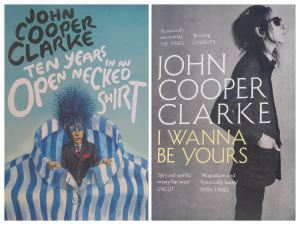
I’ll start off this book bag with this autobiography by John Cooper Clarke. I wrote about it a few weeks ago so I’ll keep it brief here. This was a wonderful read. It wasn’t the I did this and then I did that conventional autobiography, it was a very observational book and Cooper Clarke paints an interesting picture of Manchester and Salford from the 1950s to his heyday as a punk poet in the 1980’s. The last quarter of the book resembles a more conventional biography and it made me want to read some of his poetry.
Verdict: A fabulous, entertaining read.
10 Years in an Open Necked Shirt by John Cooper Clarke
This was a poetry book by John and to be fair I found it a little disappointing. The thing is, Clarke is a performance poet and his grammar free poetry doesn’t work as well on the printed page as it does when Clarke performs it on stage. Some poetry I suppose is meant to be read, other poetry needs to be performed and Clarke’s comes into the latter category.
Verdict: Interesting but not my cup of tea.

The Unlikely Pilgrimage of Harold Fry by Rachel Joyce
I first heard about this from seeing a trailer to the new film version and it looked pretty interesting. I do love something that is new and original and so Liz and I went to the cinema to see it which was my first cinema visit for a long time. It’s a good film but not a cinema classic and I wondered if the book would be better. The story is about Harold Fry who is retired and lives with his wife on a suburban housing estate. He gets a letter advising him that a friend and former workmate named Queenie, is dying of cancer and he pens a short note of sympathy in reply. He goes out to post the letter but decides to walk further wrapped up in thoughts about Queenie. At a petrol station where he buys a sandwich the young girl assistant tells him a story about her aunt who suffered with cancer and she -the shop assistant- feels that real faith and positive thoughts can help beat even something like cancer. Harold decides there and then to walk all the way to Berwick-upon-Tweed and see Queenie in person.
Along the way Harold meets various people and when news of his march reaches the media, many others come to join him. Along the way he thinks a lot about the events of his life, in particular his relationships with his wife and son and eventually both he and his wife, who he speaks constantly to on the telephone, seem to reach a sort of understanding about what has happened to them as well as an unspoken desire to reunite and move forward. The book was a great success world wide and many reviews printed on the back cover tell the reader what an uplifting read it was. It wasn’t a bad read at all but I actually found it not only sad but rather miserable and, to be honest, not uplifting at all.
Verdict: Original and interesting but a bit too melancholic for me.

Then Again by Diane Keaton
This is another autobiography and like the one by John Cooper Clarke it was a rather unconventional one. Diane Keaton is a film actress you might remember from the Godfather movies or from Annie Hall. Diane’s mother had died and looking through her effects she had found numerous notebooks and diaries in which her mother had written about her life. In this autobiography, Diane has tried to link her story with that of her mother and has put her own experiences and memories side by side with those of her mother. The result is for the most part a really very interesting book, told in a very open and talkative way by both Diane Keaton and her mother. Diane doesn’t get too personal but does talk quite a lot about her work and her life in particular with Woody Allen and Warren Beatty, both of whom she was involved with for a time. She also had a long relationship with Al Pacino who she played opposite in the Godfather series of films and it seems to me she was expecting to marry Al but for whatever reason he decided to call the relationship a day.
The last part of the book is really about her decision, late in life, to adopt two children and the result for the autobiography is rather like when one of your friends has a child and all they ever seem to do is go on and on about their new little boy or girl. Her mother sadly develops dementia and Diane’s experience of trying to look after her was all too familiar to mine.
Verdict: The book goes off on a bit of a tangent towards the end but generally I really enjoyed it, especially the bits about working with Woody Allen.
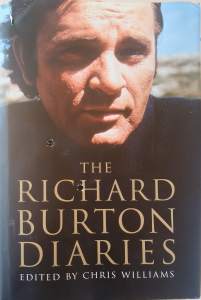
The Richard Burton Diaries edited by Chris Williams
I mentioned at the start of this post about reading Melvyn Bragg’s biography of Richard Burton and how Burton used to always take a ‘book bag’ with him whenever he went away. Bragg’s book was based partly on these diaries which have now been published and are available to everyone.
There is a lot I like about this book and a lot that I don’t like. I tend to prefer paperbacks but I bought this one from the internet and it’s a big heavy hardback and as I’ve dragged it across France it’s generally getting a little tattier every day.
Moving on to the text and I see a lot of the big events in Burton’s life are missing as sometimes he stops writing for days and even months at a time. We don’t hear about the making of Cleopatra and his meeting and affair with Elizabeth Taylor but he does mention some of those events in retrospect.
The book starts with his schoolboy diaries which are rather like mine, brief and to the point. Later, the main diary starts in 1965 and as I write this, I’m up to about 1970. Burton tells us of his immense love for Taylor and how he has given up womanising to be faithful to her but sometimes I get the feeling he isn’t being totally honest, after all Liz has free access to his diary and she frequently jots down her own comments too. Burton was rumoured to have had an affair with Genevieve Bujold during the filming of Anne of a Thousand Days but of course, gives no mention of that in his journal. He does talk a lot about food and having lunch in places like Paris and Rome. He enjoys having money and delights in spending it on jewels for Liz, a new private jet plane and a yacht which he thinks might actually save him money as he can stay on the yacht rather than use hotels. Even so, he continues to use hotels anyway. At one point he considers buying a barge, modernising it and touring the canals of France.
He doesn’t seem to enjoy his acting and in fact rather looks down on it as a profession, although unlike an actor like Brando who had similar thoughts, he did take pride in what he did, learning his part and his lines whereas Brando couldn’t even be bothered to learn the script for the film of Superman despite his million dollar fee.
Surprisingly there is also quite a lot of professional jealousy in the text, for instance, he gives Robert Shaw a bit of a slagging off for his performance as Henry VIII in A Man for all Seasons which I thought was rather good, better or at least the equal of Burton’s Henry VIII in Anne of a Thousand Days.
Burton drinks a lot and frequently argues with Liz, sometimes he is banished to the spare bedroom and usually he regrets his drunken words and wonders why he did what he did or said what he said.
He was though a man who loved books, reading anything from the classics to detective novels. He enjoyed books immensely and even had ambitions of being a writer himself. His entries are peppered with quotations from authors and poets and of course Shakespeare.
I was really looking forward to reading this book but after the first few pages I thought it a little uninteresting. As the narrative moved from 1968 into 1970, Burton seemed to be putting more effort into his journalling and consequently it became more enjoyable to read. Later large gaps appear in the diaries and he doesn’t appear to have written anything about his breakup with Liz Taylor. The entries become less frequent and to be honest, I ended up skipping quite a few pages.
Verdict: A book that promised a lot but failed to deliver.
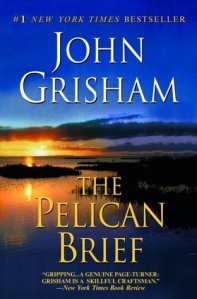
The Pelican Brief by John Grisham
I’ve read a few books by this author before and always enjoyed them, this one being no exception, in fact it might be the best book by Grisham I have read so far. The book opens with the murder of two US Supreme Court judges and this in some ways plays into the hands of the President as he can now nominate new judges who share his political views. At the same time law student Darby Shaw is having an affair with her law professor. She decides to look closely at the murders and develops a thesis, an idea about who may have done the murders and why. The thesis becomes known as the Pelican Brief and she passes it to the professor who in turn sends it to his friend, an FBI lawyer. It then gets passed up the chain to the head of the FBI and on to the White House where the President asks the FBI not to investigate further.
Not long afterwards the professor is blown up in a car bomb which Darby narrowly avoids and from then on, she is on the run trying to evade death herself.
This for me was one of those unputdownable novels which was exciting and kept me interested all the way to the end.
Verdict: A brilliant read.

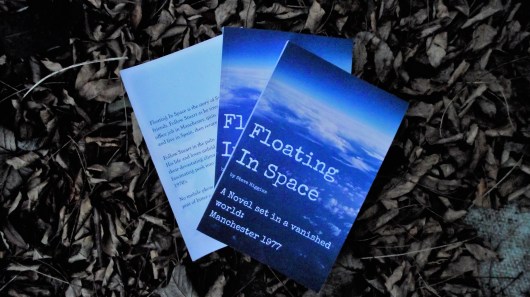
 Letters from an Unknown Author!