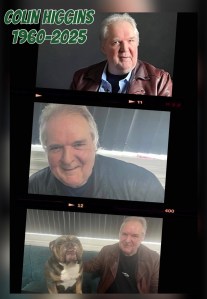
 My brother died this week. As you can imagine I’m pretty upset. He was the younger brother so the accepted plan was for me to die first but somehow, things didn’t work out that way. Still, to a certain extent my brother was a burger and pizza eating TV watching couch potato so perhaps him dropping dead like that was not really unexpected. He was a guy that I sometimes wanted to slap and tell him to sort himself out, to clean his flat up and wash the pots and hoover up and get himself off his lazy backside and get a job or do some training or something.
Once I made him a huge roast beef Sunday lunch. I had done loads of food so I plated up an extra portion and told him to ‘slap this in the microwave and eat it tomorrow’. I called him the next day to remind him. ‘Remember’, I said. ‘You’ve still got that roast dinner in your fridge. Slap it in the microwave tonight.’
‘Oh that’, he said, dismissively. I ate that last night when I got home!’
Despite all that, despite him spending money recklessly, buying numerous leather jackets from catalogues, getting into debt and going everywhere in taxis and eating takeaways when he could have saved money by eating sensibly and eating healthily, Colin, my brother, was a latter day Oscar Madison (remember the Odd Couple) who was happy doing nothing but watching television and old films day after day and paying for the top satellite channels when he had no money. Despite all that and owing money left right and centre, he was my best friend and I loved him and miss him so much.
This next section is something I wrote about him a few years ago. Just reading it brought back our friendship so fully that I almost picked up my phone and texted him there and then.
I’ve written about my mother and father in my blog posts so perhaps it’s about time I wrote about the one remaining family member, my brother. My brother Colin lives in Manchester and we see each other every couple of weeks or so when we meet up in the city centre for a pint or two.
My brother Colin is a very subtle character. He won’t ask me outright if I fancy a pint with him, he’ll tend to text me and his text will usually go something like this:
Meatballs!
You’re probably thinking, now that is subtle; is it a code? No, but the correct answer is this:
Definitely!
Still completely in the dark? Well, I suppose you might not be classic movie fans like Colin and me because a lot of the time we text in movie dialogue.
My brother sent me a text a few days ago; it read simply ‘You don’t remember me do you?’
Probably a little confusing to the man on the street but I knew exactly what he meant. I responded with; ‘I remembered you the moment I saw you!’
My brother came back straight away; ‘by the nose huh?’
Yes, texting in movie dialogue is what we do. Picked up on the movie yet? That particular movie is one of the movie greats of all time. It starred Marlon Brando in an Oscar-winning performance, much better, much more exciting and above all, much more human than his other Oscar-winning role in The Godfather.
Here are some more texts
ME: Do you remember parochial school out on Puluski Street? Seven, eight years ago?
MY BROTHER: You had wires on your teeth and glasses. Everything.
ME: You was really a mess.
The movie was ‘On the Waterfront’ and it’s probably famous for the double act of Marlon Brando and Rod Steiger playing brothers but there are plenty of other wonderful performances and scenes. My personal favourite is when Brando and Eva Marie Saint walk together in the park and Eva drops a glove which Brando picks up but keeps hold of and eventually pulls onto his own hand and we know that Eva wants it back. The dialogue above comes round about here when Brando, playing the part of Terry Malloy, realises he knew Edie, played by Eva Marie Saint at school. He is trying to communicate with her in his oafish way and Edie begins to realise she actually likes him but, well watch the movie, believe me it’s a great scene. It finishes like this:
MY BROTHER: I can get home all right now, thanks.
ME: Don’t get sore. I was just kidding you a little bit.
I read somewhere that Elvis knew all the dialogue from Rebel Without a Cause, the James Dean movie. If so, my brother Colin and I are in good company because we know the dialogue from that film too, as well as Giant and the aforementioned On the Waterfront. One day I thought I’d try a quote on Colin that he would never get.
ME: I took everything out of that car except the rocker panels!
I sent the text off feeling pretty pleased with myself. He’ll never get that in a million years I thought. My phone bleeped a moment later and I looked down to see:
MY BROTHER: C’mon Herb, what the hell’s that?
Top marks indeed if you remember that dialogue from The French Connection.
My brother and I do text each other a lot but we also chat on the phone too. The thing is though; we talk on the phone with East European accents. We started doing it one day then began a sort of unspoken contract to carry it on. Sometimes I’ll get a call and he might say, in his best Hungarian accent ‘ Gut Evenink my friend’
‘Gut evenink to you also my friend’ I tend to reply.
East European is the norm but sometimes we use German accents. Handy when we bounce quotes from The Great Escape off each other!
Me: I hear your German is good, and also your French . .
My Brother: Your hands UP!
The Great Escape is a firm TV movie favourite but let me finish with a 60’s classic we also frequently text about:
Me: She’s in beautiful condition!
My Brother: Blimey girl, you’re not as ugly as I thought!
Me: I saw that geezer Humphrey going off. You’re not having it off with him are you?
My Brother: I tumbled at once. Never be cheerful when you’re working a fiddle!
Me: I ain’t got my peace of mind. And if you ain’t got that, you ain’t got nothing.
My brother: It seems to me that if they ain’t got you one way, they’ve got you another.
 Got the picture yet? The film is Alfie. It was directed by Lewis Gilbert who also directed some of the earlier Bond films. The script was written by Bill Naughton and adapted from his own book and play. Alfie is a fascinating film on many levels. It’s a peek back at the swinging sixties; it explores the elements of comedy versus drama, something I’ve always loved and which I looked at a while ago in a post about the TV show MASH. The film features great performances from all the principal and supporting actors. One fabulous feature is how Alfie talks directly to the camera and sometimes even says things that directly contradict something he is doing or saying to another character. In the opening sequence, Michael Caine as Alfie, addresses the audience and tells them not to expect any titles. There are none, except for the film title itself and the closing credits which feature photos of the cast and crew.
Many actors turned down the chance to play Alfie on film, including Caine’s then flat mate Terence Stamp who played the part on Broadway. Laurence Harvey, James Booth and Richard Harris all turned down the role and Alfie became a breakthrough movie for Michael Caine.
Now my brother has gone it’s too late to text him one final time. If I could though I’d perhaps text him this:
So what’s the answer? That’s what I keep asking myself. What’s it all about?
 So what exactly is a kitchen sink drama? If you’ve read through the pages on my site that deal with my book ‘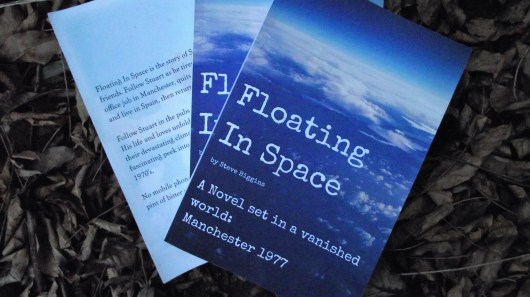
 Letters from an Unknown Author!