Back to the 1960s

The 1960s seem like a long way off these days. We moved into the 1970s 54 years ago but even so, the 1960s were a revolutionary time in terms of music, the cinema and of course TV. This last Sunday afternoon after a gruelling session of blog writing, I settled down in front of the TV with a cup of tea and a cheese sandwich and what did I find? Well, a whole stack of TV shows from the 1960s still bringing in viewers today in 2024.

So, what did I watch? Well, time to settle back for some serious TV viewing.

Columbo

Columbo, as you probably know, differs from other TV detective shows by showing the viewer exactly who the murderer is and how he, or she, did it. The whole point is not who did it, but how Columbo catches them. The essence then of a great episode comes in the clever way Columbo nails his man, or woman. Sometimes that moment is a bit of a non starter, other times it’s nothing short of brilliant. Sometimes, even if that final moment is not so great, it’s still been a great episode.
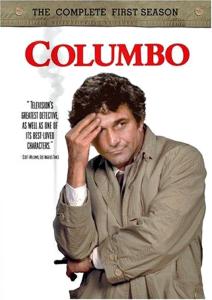
The Columbo of the early series is an absent-minded quirky fellow although in later episodes, Peter Falk who plays the detective, seems to downplay that quirky element. The later episodes are still pretty good though and among various episodes on TV today was Any Old Port in a Storm with Donald Pleasance as the guest murderer. Pleasance plays Adrian Mancini, the part owner of a wine producing business. He is something of a wine snob and he has just been voted ‘man of the year’. That was the good news; the bad news is that his half brother is threatening to sell the business. That of course doesn’t go down well so Adrian in a fit of anger bumps him off. A whack on the head didn’t quite do the job so Adrian leaves him to suffocate in his wine cellar. Unfortunately, it happens to be a really hot day which eventually leads Columbo to the clue that bags the culprit.

That was an episode from 1973 but the original Columbo pilot first aired in 1968.

Thunderbirds

Thunderbirds was about a secret organisation called International Rescue that had a small fleet of highly advanced machines and equipment with which to perform rescue operations. Millionaire ex-astronaut Jeff Tracy was the head man and the organisation was secreted in his island home. His five sons were the Thunderbird pilots, John, Scott, Virgil, Gordon and Alan, all named after US astronauts of the 1960s. The genius behind the Thunderbird craft was Hiram Hackenbacker, known as ‘Brains’. Thunderbird’s nemesis was a secret agent known as the Hood because of his talent for disguise and in many episodes the Tracy brothers had to ask their London agent, Lady Penelope, to track him down and sort him out.

Lady Penelope Creighton-Ward lived in a huge mansion somewhere in southern England and her manservant and chauffeur was Parker, a reformed safecracker. The head of ITV Sir Lew Grade saw the first episode and was so impressed that he asked for the episodes to be extended from 30 minutes to a full hour, less TV adverts of course. Gerry wanted Fenella Fielding to voice Lady Penelope but in the end, his wife Sylvia took on the role.

One other thing, I know Thunderbirds sounds pretty sophisticated from those last two paragraphs but it was actually a puppet series aimed at children. The great thing about it and really, the secret of its success, was the highly intelligent scripts which treated its audience of children not as kids but as intelligent young adults.

Two scripts that spring to mind were one called The Cham Cham about a code transmitted on a musical melody and another where Parker was called upon to break into the Bank of England. Later in the episode someone is trapped inside the vault and Parker is asked to break in again to rescue the man before the air is used up in the vault. Parker though thinks that his old mate, a bank robber recently released from prison, is about to complete his life’s ambition to break into the bank and so he tries to slow down his and Penelope’s drive into London. Everything of course comes right in the end though.

Time for a fresh cup of tea and I’m ready for the next programme.

Batman

We are probably all familiar with the modern Batman films which all have pretty grim and dark overtones. Tim Burton directed the first modern Batman film in 1989 which starred Michael Keaton as Batman and Jack Nicholson as the Joker. Back in 1966 however there was a TV series produced by William Dozier which starred Adam West as Batman and Burt Ward as Robin.

The suave Alan Napier played the part of Alfred, the butler to Bruce Wayne (Batman’s alter ego) and numerous guest stars played the villains. Frank Gorshin was a memorable Riddler, Burgess Meredith (remember him as the trainer in the Rocky films?) played the Penguin and Cesar Romero who refused to shave off his moustache played a rather manic Joker. Julie Newmar and Eartha Kitt both played Catwoman. George Sanders and Vincent Price also appeared as guest stars and even Hollywood director Otto Preminger appeared on the show as Mr Freeze. Anyway you look at it, that is an impressive cast list.

The episodes were all two parters and in the UK were aired on Saturday and Sundays; the Saturday episode always left the Dynamic Duo in some impossible situation and the Sunday one showed how they would escape and track down the villains. The series was very light hearted unlike the modern Batman films and in fact played rather like a live action cartoon series.

The series ran for three seasons and a feature film before being cancelled. In the UK episodes are currently being broadcast on the Talking Pictures channel.

Mission Impossible

The TV show was created by producer Bruce Geller and concerned a team of special agents known as the Impossible Missions Force. They are a US government agency which takes on hostile foreign governments, South American dictatorships and criminal organisations.

In the first series the team is led by Dan Briggs played by Steven Hill but he was replaced for season 2 by Peter Graves in the part of Jim Phelps. Other regular team members were Leonard Nimoy, Martin Laudau and his wife Barbara Bain, Greg Morris and Lesley Anne Warren. Each played a team member with a particular skill, for instance Laudau and Nimoy played agents with a talent for impersonation and disguise, Greg Morris played an electronics expert and so on.

Mission Impossible ran for 7 seasons and was cancelled because, according to Wikipedia, the producers at Paramount found they could make more money by syndicating the existing series rather than making new ones.

A revival series was made in the 1980’s also starring Peter Graves. To save money the series was not filmed in Hollywood but in Australia but it only lasted two seasons and was largely unsuccessful.

A great feature of the series was the opening title sequence which involved a match being struck and then lighting a fuse shown over quick clips of the upcoming episode to the sound of the iconic theme tune written by Lalo Schifrin. Next would be Jim Phelps listening to his tape recorded instructions which after being played would then self-destruct. Phelps would then look through his agents’ files complete with photos and choose who he wanted for the mission. Sometimes a guest star would play one of the agents who would be introduced by Jim checking out his dossier. A team briefing would then take place and the mission would get under way.

The IMF used a great deal of gadgets to accomplish their missions; secret listening devices and other electronic hardware as well as incredible masks and make up to impersonate people. One particular episode that I remember was when the team had to retrieve some stolen gold from a South American dictator’s safe. They did it by drilling a small hole in the safe, heating it until the gold melted and ran out down the small hole then a little gadget sprayed the interior of the empty safe to cover the hole. Mission Impossible was staple viewing in our household in the late 1960’s and it was nice to see once again on UK TV.

From Russia with Love

I’m perhaps cheating a little here because this is a film rather than a TV show but what the heck, it popped up on ITV so I thought I’d watch it. Just lately there seem to be James Bond films popping up on TV almost every week. This film was the second in the Bond series, made in 1963 and it’s probably one of the very best. There are no super villains trying to take over the world and the plot is actually pretty sensible. SPECTRE -the Special Executive for Counter Intelligence, Revenge and Extortion- decide to offer British Intelligence a Soviet Lektor decoding machine but the catch is, the lovely Soviet consulate clerk chosen for the mission and based in the Soviet embassy in Turkey will only offer it to Bond himself.

Sean Connery played James Bond of course and the Soviet clerk was Tatiana Romanova played by Italian actress Daniella Bianchi. A great Bond villain was former Soviet agent now a part of SPECTRE, Rosa Klebb played by Lotte Lenya. The best performance though was by Robert Shaw who plays Red Grant, the killer specially trained to eliminate Bond. Bond and Grant have a hugely exciting fight in a railway carriage towards the end of the film which underlines the serious and gritty nature of the film. I don’t think I’m giving anything away when I tell you Grant wasn’t successful but Rosa Klebb nearly gets Bond with a concealed knife in her shoe.

I could have gone on and talked about Star Trek, The Saint with Roger Moore and even The Avengers with Patrick MacNee as Steed and Diana Rigg as Mrs Peel.

Yes, in some ways the 60s are done and dusted but when it comes down to it, you only have to tune in to a few vintage TV shows to relive it all again.


What to do next: Here are a few options.

Share this post on your favourite social media!

Hit the Subscribe button. Never miss another post!

Listen to my podcast Click here.

Buy the book! Click here to purchase my new poetry anthology.

Click here to visit Amazon and download Floating in Space to your Kindle or order the paperback version.

More Transformations

I’ve always been fascinated by transformations either in fiction or in real life but what do I mean by transformations? Well, I have written about transformations before in a previous post. I talked then about Professor Higgins who helped Eliza Doolittle change from a street flower seller to a lady in George Bernard Shaw’s Pygmalion but with this new post I thought I’d start with the story of Dr Jekyll and Mr Hyde.
The Strange Case of Dr Jekyll and Hyde

Robert Louis Stevenson published his novel The Strange Case of Dr Jekyll and Hyde in 1886. It concerns Dr Jekyll who creates a potion which transforms himself into Mr Hyde, another personality in which he is free to enjoy his vices without fear of detection. In the book Mr Hyde must take more of his serum in order to change back to his original self. Eventually Hyde finds it is not possible to revert back and commits suicide.

The Jekyll and Hyde story was filmed many times but the most famous version was in 1920 starring John Barrymore. In one scene Barrymore as Jekyll changes into Hyde entirely without special effects. It is an extraordinary scene all achieved by facial contortions which may seem a bit laughable today but back in 1920 audiences were amazed. A 1941 version starred Spencer Tracy in the title role and there have been many other film versions.

One of my favourites was the comedy Carry on Screaming in which police officer Sergeant Bung played by Harry H Corbett is investigating some strange goings on. His investigations lead him to an eerie rest home run by Kenneth Williams as Orlando Watt and his sister Valeria played seductively by Fenella Fielding. In one scene Valeria gives Harry a potion which turns him into Mr Hyde with hilarious results.

Bruce Wayne and Batman

A pretty obvious transformation is one I could pick up from any superhero comic, that of an ordinary member of the public transformed by some accident or circumstance into a crime fighting hero. I’ve chosen two you might already be familiar with from pretty much opposite sides of the super hero spectrum.

Bruce Wayne was a young child when his parents were murdered by a criminal. The story first appeared in issue #33 of Detective comics in 1939. Dr Thomas Wayne and his wife Martha were wealthy socialites living in Gotham City. Their son Bruce enjoyed a privileged existence at the family home, Wayne Manor, until he was eight years old when the family encountered small time mugger Joe Chill on the way home from the cinema. Joe shot Bruce’s parents dead and the young lad swore to avenge his parents’ death by fighting crime.

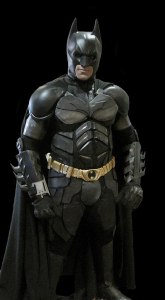
Batman. Picture courtesy Wikipedia commons.

When he is ruminating on this decision and thinking that he must be able to strike fear into the hearts of the criminal fraternity a bat flies in through the window and Bruce wonders if the image of the bat might be something he can use.

The Batman origin story has changed over the years; in a later comic we find that the murder of the Waynes was organised by a mob boss as revenge for when Thomas Wayne gave testimony which sent the mob boss behind bars.

In the Tim Burton film Batman, we find that the killer was actually Jack Napier who later becomes the Joker, one of Batman’s arch enemies.

In the later Dark Knight Batman films things change again with Bruce travelling to Asia to learn martial arts from the League of Shadows. He later splits from the group and as Batman, he has to battle against them.

Peter Parker and Spiderman

Spiderman was a different kind of superhero made to measure for the teenagers of the 1960’s. Peter Parker was a quiet nerdy kind of teenager. He was a high school student who lived with his aunt and uncle as his parents had died in a plane crash. He was attracted to Mary Jane Watson, a gorgeous redhead but he knew he had no chance whatsoever with the muscle-bound Flash Thompson on the scene. Anyway, one day he and his fellow pupils are visiting the Midtown school of Science and Technology and he comes across a radioactive spider. Yes, not something you run into every day.

Anyway, Peter gets bitten by the spider and as a result develops superhuman powers; super strength and agility and also a sort of sixth sense he calls his spider sense. In the comics Peter makes a special gadget that shoots out a strong web on which he swings through the heights of the city. Peter uses his new found powers and becomes a wrestler, but after his uncle Ben is killed by a mugger, he decides to fight crime as Spiderman.

Back in the 1960’s there was a cartoon TV Spiderman show and I can even remember most of the theme tune.

Spiderman, Spiderman, Your friendly neighbourhood spiderman

Spins a web any size

Catches thieves just like flies

Is he strong, listen bud

he’s got radioactive blood.

They just don’t write them like that anymore.

Tobey Maguire starred as Peter Parker in a film trilogy that was quickly rebooted with Tom Holland as the web swinging hero.

Personally, I still prefer the old cartoon version.

Elton John and Reginald Dwight

Reginald Dwight was born on the 25th March 1947. He lived in Pinner in Middlesex with his mother and father, Stanley and Sheila.   Stanley Dwight joined the Royal Air Force in 1942 and elected to stay on after World War II ended. Elton John seemed to think in his autobiography that that was a good thing as together, his mother and father spent a lot of time arguing. While Stanley was away in the air force Reg lived with his mother and his maternal grandmother at 55 Pinner Hill Road, his grandmother’s council house. Elton seems to have been reasonably happy there but understandably distressed at the numerous arguments between his mother and father whenever Stanley came home.

Stanley left the air force and his mother and father divorced when Reg was 14.

One thing that had a very positive effect on the young Reginald was his parents’ love of music and records. He began tapping out tunes on his grandmother’s piano and the age of 11 won a scholarship to the Royal Academy of Music.

At the age of 15 Reg got himself a job playing the piano at the local pub and in 1962 he and some friends formed a small band called Bluesology and they soon picked up a regular gig supporting singer Long John Baldry.

In 1967 Reg answered an advertisement in the New Musical Express. It had been placed by Liberty Records and they were looking for new talent. Reg went to audition for the A & R manager, Ray Williams but he appeared to be unimpressed when Reg sang an old Jim Reeves hit and by way of ending the interview Ray handed Reg a sheaf of unopened lyrics written by someone who had answered the same ad.

That someone was Bernie Taupin. He and Reg hit it off instantly and Reg began writing music to Bernie’s lyrics. Six months later Reg changed his name. He took the name Elton from saxophonist Elton Dean and John from Long John Baldry and put them together to become Elton John.

In 1969 Elton’s album Empty Sky became a minor hit and was followed by the eponymous Elton John in 1970. ‘Your Song’, a single from the album went to number 7 in the UK singles chart and Elton John had arrived.

Norma Jeane and Marilyn Monroe

I should mention that one of Elton’s big hits was Candle in the Wind which leads me nicely into this next section as the song was about Marilyn Monroe. Marilyn was born Norma Jeane Mortensen on June 1st 1926. Her mother was a Hollywood film cutter and her father was a married man named C Francis Gifford who Gladys, her mother, had an affair with.

Gladys divorced her husband who had deserted her some years earlier and she reverted to her previous name, Baker, that of her first husband.

Marilyn: Norman Mailer

Marilyn on the cover of the celebrated book by Norman Mailer

Norma Jeane had a troubled upbringing. Her mother was mentally unstable and was in and out of various institutions, leaving young Norma to be taken into care. On one occasion in her late teens Norma Jeane was living with a friend of her mother, but this friend was moving away and rather than send Norma back into a home, an idea came about which seems a little mad in retrospect. The idea was for Norma to get married to a local boy, Jim Dougherty. The marriage went ahead only eighteen days after Norma’s sixteenth birthday.

The war finally came to came to the USA when the Japanese attacked Pearl Harbour. Jim joined the navy and Norma was working in a war factory when an army photographer called David Conover came round looking for a photo article for a magazine. He asked Norma to pose for him and found that she had a natural affinity with the camera. More photo shoots came her way and soon Norma was convinced by Emmeline Snively, head of the Blue Book Modelling Agency that she was wasting her talents in a defence factory. Within weeks of quitting her job in the factory Norma Jeane became one of the Blue Book’s busiest models.

In 1946 she divorced Jim Dougherty and only a matter of weeks later she went for a screen test at Twentieth Century Fox and Ben Lyon, head of new talent at Fox, offered her a seven-year optional contract. The next issue was her name as Lyon felt that Norma Jeane was not film star material. Lyon suggested the name Marilyn and Norma Jeane provided her mother’s maiden name, Monroe. Norma Jeane had made the transformation into Marilyn Monroe and had begun the long road to film stardom.


What to do next: Here are a few options.

Share this post on your favourite social media!

Hit the Subscribe button. Never miss another post!

Listen to my podcast Click here.

Click here to visit Amazon and download Floating in Space to your Kindle or order the paperback version.

Buy the book! Click here to purchase my new poetry anthology.

A Series of ‘What If’ Events

Last week I wrote a blog post about my life with spectacles. I’ve worn glasses almost all my life and I thought writing about the world seen through corrective lenses was a pretty good idea. I’ve said many times in this blog that my writing is always aimed at one person in particular and that happens to be me so it’s no surprise that I actually really liked that post.

I tinkered with it for quite a while adding new bits here and there. I made a pretty interesting graphic for it made from shots of myself wearing different pairs of specs. I liked that so much I went a step further and made an animated version, one where the text and the pictures seem to just slip into place.

Feeling pretty pleased with myself I thought I’d make a quick promo video with which to plug the post on Twitter and Facebook. Yes, there I was feeling good about my work and my media profile. I put the video on my Facebook page with a little announcement ‘New Post Coming Tomorrow’. I felt like a real media genius and then while I was scheduling the post for my usual time on Saturday, my big fat fingers slipped and pressed the publish button by mistake. If only it had gone out at the usual time of 10am on Saturday morning, I reckon it would have pulled in so many more readers and potential book buyers. Oh well, if only . . .

I wrote about my old Dad a few weeks back. I wrote specifically about his diary as like me, he was keen on keeping a diary and a notebook. Journaling is important for us writers. Don’t take my word for it; Marcus Aurelius Thought so too and he was a great Roman philosopher and of course, an emperor.

My Dad died when he was 72. He lived, I suppose, a good life. He worked hard and was happy walking his dog and keeping his garden in shape. He enjoyed his favourite sport of boxing and was fond of anyone who might possibly beat Mohammed Ali. Ali, or so Dad thought, was a fraud and the ultimate ‘fix’ was Ali’s fake ‘defeat’ of Dad’s idol, Rocky Marciano, in a so called computer fight.

In his youth Dad had a few years of excitement when he joined the army and his memories of army life he kept with him to the end of his days, sharing little stories every now and then to me and my brother. He left school at 14 and worked on farms because back then before World War II, Wythenshawe, a suburb to the south of Manchester where I was brought up, was very much a rural area before the urban development of the 1950’s and 60’s.

He told me once that a farmer he worked for was moving to a new farm in neighbouring Cheshire, in a village called Lymm. Lymm is a very posh area indeed and because a lot of it is green belt land, few housing developments have emerged there, so today it looks pretty similar to what it did in my Dad’s time. At least it did when I last visited, many years ago. The farmer asked my Dad to come with him to Lymm to work on the new farm. It was a better area he said and he would have sorted Dad out with accommodation but Dad declined, choosing to stay in Wythenshawe with his family. If he had moved he would perhaps have met someone else other than my mother. He would have courted and eventually married this new lady and I might never have been born. If I had still emerged as his son, I would have been substantially different, with a different gene set up and a different background.

Strangely enough, many years later I met an old friend on that long defunct web site Friends Reunited. Alan lived just round the corner from me and as children we used to meet up regularly at either his or my back door and we’d both produce a selection of comics, usually American ones like Batman, Superman, Spiderman and so on and decide which ones to swap. I always liked Batman and Superman but there was also the Green Lantern, The Fantastic Four and a whole host of superheroes that today’s youth are probably more familiar with from the cinema. I enjoyed the first Superman and Batman films and also the first Spiderman movie but some of the rest haven’t really done it for me. Maybe that’s because the comics themselves have changed. In the film world they often talk about rebooting a particular film franchise with new actors playing the parts of the franchise hero. James Bond is probably the film series that started off the notion of franchising.

Sean Connery gave way to George Lazenby; Lazenby gave way to Connery again and then Roger Moore and so on down to the present day Bond, Daniel Craig. The Superman films have been rebooted and also the Batman series. Ages ago I picked up a DVD copy of Batman Begins. I wasn’t crazy about the film, mainly because it was so different from the comic book Batman I used to read. The thing is, while I had been absent from reading comic books and generally getting on with my life, the comic books themselves rebooted with new artists and a new origin story for Batman. In this version Bruce Wayne’s parents are still murdered by a mugger but then Bruce goes off to Tibet or somewhere and in a sequence a little like Batman meets Kung Fu, Bruce, who is Batman’s alter ego in case you didn’t know, is trained in the ancient arts of martial combat. He then returns to Gotham City and becomes Batman.

Yes, other comics have rebooted things too with new artists and new layouts and new back stories for their characters. I didn’t care much for the X-Men films but I did used to read the comic versions. In my day The Beast was one of the X-Men but he is nowhere to be seen in the films and Wolverine must have been just a gleam in some comic book writer’s eye when I read about the X-Men because I had never heard of him until I saw the film

Anyway, getting back to Alan my comic swapping friend. Alan was shorter than me and a pretty tubby guy. In the late 60’s he and his family emigrated to Australia. I never heard from him again until we met, as I mentioned, on Friends Reunited. One day on our internet chat Alan asked me to pass on the regards and best wishes of his Dad on to my Mum. I told her and asked did she remember Alan and his Dad. It turned out that Alan’s Dad was once engaged to my Mother. They had gone out together for a while but Mum liked dancing, Alan’s Dad didn’t and when she went dancing he was forever questioning her, asking her who she was with, who she danced with and so on. Eventually she gave him the bullet.

Of course, if she had married Alan’s Dad, once again I wouldn’t have been born. At least not as I am now. I would have been Alan. I would have been the short chubby lad who liked comics and moved to Australia. The thing is, if my Dad had also married someone else, where would that leave me, buying comics in Australia or flicking through comics in a Cheshire village shop?

Just going back to superheroes for a minute, I reckon it would be kind of good to have some superpowers for a day or so. Not necessarily superpowers even, I’d settle for some martial arts skills. During the period I had the powers or the skills, I’d take no messing from anyone. If anyone was rude to me, they’d get a slap and if someone tried to mug me, well I’d send them flying along with a flea in their ear. Once when I was in my twenties, I arrived at my friend Chris’ house to pick him up for a night out. Sometimes we’d go to the Valley Lodge Hotel near the airport where they had a really good night club. I’d leave my car there and Chris and I would both make our own way home. Sometimes he’d pick me up and we’d go into town and he’d be the one to leave his car somewhere.

Once when I was waiting for him to finish getting ready there was a knock on the door. It was a guy called Dennis. Dennis was a bit of a local villain, a very tough hombre and although I knew him, I didn’t know him very well. He had somehow had his car towed away by the police. I’m not sure why but naturally he wasn’t happy. Actually, he was hopping mad and looked like he wanted to take his anger out on someone. He was visiting his mother’s house a few doors away from Chris when this outrage occurred and he wanted an urgent lift to his friend’s place, a ten minute drive away. Chris suggested I take Dennis while he finished getting dressed. I wasn’t too keen on the idea but went along with it. Five minutes down the road we came across a big fella wandering idly across the road. I beeped my horn but all the guy did was give me the V sign and swear at me so I swerved across the road to miss him. ‘Wait a minute’, said Dennis. ‘That’s well out of order, we’re not having that’.

‘It doesn’t matter’, I said. ‘No! Pull up here’ snapped Dennis. We stopped and Dennis stepped out of the car to advise the big fella that his manners were substantially lacking. The guy didn’t take this well, in fact he wasn’t happy at all and a fight began. Dennis basically taught the guy a major lesson in manners that I doubt he ever forgot. I dropped Dennis off at his friend’s house and he left me with thanks as I had apparently got him out of a major spot. ‘If there’s anything I can ever do for you’ he called, ‘give me a shout’.

Now I had no intention of giving Dennis a shout I can assure you and in fact I never did. The good thing about knowing Dennis though was that his reputation as a tough thug was pretty welcome sometimes. I once met him whilst queuing up to get into Fridays, a local nightclub, and he greeted me like a long-lost friend. He convinced the bouncers to let me in without paying the usual outrageous entrance fee and once inside after chatting with him at the bar for a while, I had the feeling that the local punters were eyeing me with a new found respect.

Another place I liked to frequent was a huge pub called the Snooty Fox. They had live music on at weekends and the place was on two levels with a games area upstairs. It had a late bar so back in those far off days, my friends and I could stay out late without having to pay night club prices. Also it was full of pretty girls waiting to hear whatever corny chat up lines we were using back then. The bouncers on the door were of the big neanderthal gorilla type and to be fair, they needed to be because that bar was a pretty rough place. I remember going in one time and a new bouncer stopped me at the door.

‘I know you from somewhere’ he said, breathing stale donner kebab breath all over me. ‘You look like a trouble maker.’

‘Me? No, I’m a quiet lad. You’ll get no trouble from me’

A bit later on I realised who he was. Yes, he was the guy crossing the road the time that Dennis had given him a lesson in bad manners. That was my last night in the Snooty and I was out of there like the proverbial wonga bird before he realised who I was. Pity! If only I hadn’t given Dennis that lift . .

Here’s one final, ‘what if’ story.

I think I’ve mentioned before in these pages that I went from working in an insurance company to being a bus conductor. Working on the buses wasn’t a great career move by any means but I didn’t like being out of work and for a while that new job was actually quite a lot of fun. Friends told me that working shifts would be the end of my social life but actually it was really the beginning of my social life. At the end of an early shift, I could usually be found down at the busman’s club, playing snooker and pool. After a late shift I’d be heading to the pub for last orders or sometimes heading off to a night club. It was all great fun and as someone who suffered greatly from an intense shyness, I found that being a bus conductor brought me out of myself and that gradually I was becoming more and more confident.

Some years later though the company made us all into one-man drivers and driving through the streets of Manchester on my own wasn’t my cup of tea at all. I was desperate to get another job but I didn’t know how to do it or what to do. One day I decided to start my own business selling motor sport merchandise. I called it Armchair Motorsport and I rented a unit inside the Corn Exchange in Manchester city centre. I worked on my small business for about a year. I didn’t make a great deal of money but I did spend a great deal of time chatting about Formula One racing. In fact, now I think about it, a great many of my customers used to come in and buy me a tea from the nearby café, come in, sit down and we’d talk Formula One.

One of my customers was a big Ferrari fan and was always on the look out for Ferrari memorabilia. There was a particular book he wanted and it took me a long time to get it for him but he was really pleased when I did. He mentioned that he drove a Ferrari and said he’d come down one day and show it to me. On the appointed day he came into the shop and asked me to hurry as he was outside on a double yellow line. We hurried outside and I have to say, I was eager to see his car. I expected a blood red Ferrari Dino or something similar.  As a matter of fact, I fully expected to see my favourite car the Ferrari Dino 246GT, the one driven by Tony Curtis in the TV series The Persuaders.

The car wasn’t a Dino, it was actually a very dull saloon car. It wasn’t even red. It was a rather drab green and I have to say I don’t think I disguised my disappointment very well although my customer assured me that the car drove and handled every bit as well as one might imagine a Ferrari to handle.

The aftermath of the IRA bomb, Manchester, 1996. Photo courtesy of BBC

After a year of relatively poor trading, it was time to sell up and say goodbye to the Corn Exchange. I’ve always wondered if I could have lasted longer. Perhaps if I had advertised more, done more promotions, increased my advertising I could have built up a good business. I could have made a decent amount of money, expanded and perhaps employed some staff so I could have spent more time at home or dining at my favourite restaurants but it was not to be. If only I could have made it work.

Then again, not long afterwards the area was destroyed by an IRA bomb planted nearby. If I’d stayed, if my business had worked out, I could have been blown to pieces.


What to do next: Here are a few options.

Listen to my podcast Click here.

Share this post on your favourite social media!

Hit the Subscribe button. Never miss another post!

Buy the book! Click here to purchase my new poetry anthology.

Click here to visit Amazon and download Floating in Space to your Kindle or order the paperback version.