Reading Books and Thoughts from a Sun Lounger

I thought for this week’s post I’d do a combination post, a little of my book bag mixed with some sun lounger thoughts. Let’s see how it all pans out.

Just now we have finished our touring part of the holiday and we have come to our rented gîte where we have parked the van and are spending time in this wonderful house that we regularly rent just outside the small village of Parçay-les-Pins.

I quite often, back in England, watch that TV show about people who want to buy a new house abroad. It’s called A Place in the Sun and it’s aways interesting to watch couples look for a dream home, especially when it features a location we know a little about like France or Lanzarote for instance. Sometimes the contestants -for want of a better word- will come across what I think is a really nice place and will criticise it and start saying how they will rip the kitchen out and knock this wall down and I really want to slap the pair of them. Now and then, the show will produce something really nice and the couple will fall in love with it, put in a bid and find themselves the new owners of a fabulous house in the sun.

Sitting by the pool outside this house in France I do feel that it’s really a place that Liz and I have both fallen for. It’s an old country house with very thick walls and our bedroom is a modern extension with an en-suite bathroom. In a morning our usual routine is for me to get up, make a brew and bring it back to bed and for Liz and I to check our emails and then see who will be victorious in a card game we play together on our iPads. Those thick walls come into play here though as being so thick we don’t get much of an internet signal in the bedroom so one of us will have to reach out for our phone and switch on our internet hotspot so we can play.

Card game done it’s time for breakfast and then out to the pool for a swim, a read and some sunbathing. Here’s the first of my holiday reads;

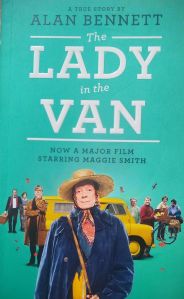
The Lady in the Van

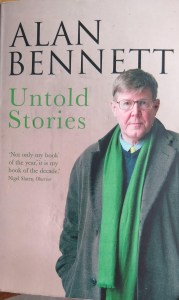
I saw the film version of this a few years ago which was pretty good, if a little odd. It was presented in a very peculiar way in that the author, Alan Bennett, is portrayed as two people, one as himself as he appears in the story and two, as himself as he writes the story. That oddity aside it was really a rather good and original film. When I heard there was a book version I quickly went to one my usual internet book stores and promptly bought it.

I was disappointed to find that it was a very slim volume, only 100 pages in fact and the author might have been better saving it for a collection of short stories. Anyway, it actually made me feel better about my own book, Floating in Space, which is also a rather thin book, though I might add, much longer than this.

Anyway, moving on to the story it was a rather good read. It’s about an oddball character, an old lady who parks outside Alan Bennett’s house in a van and stays there for some time, actually living in the van. She appeared sometime in the 1970’s and when double yellow lines appeared moved into the author’s driveway, staying there until her death in 1989.

The lady, the enigmatic Miss Shepherd, lived in her van continually throughout the year, rain or shine, hot or cold and the author tells her story using his own diary entries. It’s a funny story but also a sad one too. When the lady passes away, he is forced to go through her things in the van;

“…I realised I had to grit my teeth (or hold my nose) and go through Miss Shepherd’s possessions.
To do the job properly would have required a team of archaeologists. Every surface was covered in layers of old clothes, frocks, blankets and accumulated papers, some of them undisturbed for years, and all lying under a crust of ancient talcum powder. Sprinkled impartially over wet slippers, used incontinence pads and half-eaten tins of baked beans, it was of a virulence that supplemented rather than obliterated the distinctive odour of the van. The narrow aisle between the two banks of seats where Miss Shepherd had knelt, prayed and slept was trodden six inches deep in sodden debris, on which lay a top dressing of old food, Mr Kipling cakes, wrinkled apples, rotten oranges and everywhere batteries – batteries loose, batteries in packets, batteries that had split and oozed black gum on to the prehistoric sponge cakes and ubiquitous sherbet lemons that they lay among”

In the van he finds about £6000 in cash and a name and telephone number. Bennett calls the number to find the man at the other end has never heard of Miss Shepherd but then after he describes her, the man realises Miss Shepherd was his sister, although she had for some reason been using an assumed name. Alan Bennett had a love/hate relationship with this strange old lady for many years and came to -I was going to say like, but that’s not the right word. He came to be connected to her in a strange way until one day her social worker arrived with some clean clothes only to find her dead in the van.

To sum up, this was a lovely read even though it only lasted a couple of days for me but I think now I might look out for more of Alan Bennett’s books.

Vide Greniers and Brocantes

Liz and I always visit a village fête at the weekend, usually those with a vide grenier or brocante attached. A vide grenier is just a car boot sale which we both love. I usually pick up connecting leads for my laptop or iPad, after all, you can never have enough electrical leads. Brocantes are more like flea markets or antique fairs. Just the kind of place to pick up those old telephones that I still love, especially those Bakelite ones.

We visited a couple of vide greniers last weekend although the rain put off a great many sellers. The refreshments area was still open though and I ordered sausages and frites undercover from the rain while Liz nipped over to the covered bar across the way and ordered two glasses of vin rouge.

Over the years I’ve picked up various things at French vide greniers including pin badges, glasses and decanters as well as old telephones, cables (of course) old photos and paintings including a framed poster from the Le Mans 24 hour race. What else? A small bust of General de Gaulle which sits on my mantelpiece back home and numerous other things which took my fancy.

Plenty of times we have sheltered in makeshift bars until a rain shower has passed over and the sellers have peeled away plastic covers to reveal their goods.

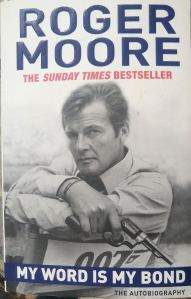
My Word is my Bond by Roger Moore

I picked this book up ages ago and thought it would be a good holiday read. I’ve always liked Roger Moore even though I absolutely hate his James Bond films. I love Moore’s self-deprecating humour, plenty of which is evident in this book. The first part of the book was really interesting and entertaining but like a lot of celebrity autobiographies, this one just gets a little tedious when Roger just seems to list the films and locations and other celebrities he seems to know. On the back of the book was a review claiming this to be the best film autobiography since David Niven’s The Moon’s a Balloon. Sorry but I can’t agree. Roger reveals numerous ‘funny’ incidents from behind the scenes of his films, all of which must have been from the ‘you had to be there’ category because I didn’t think they were that funny. His marriage to his third wife fizzles out with no explanation and the last section is just an endless list of his various travels as a UNICEF ambassador.

He seems to have had a great deal of fun making the Bond films but for me his tenure as 007 marked the series fall from serious spy films into farce. The crazy thing is that after making his first Bond film, Live and Let Die, in which he comes over as a sort of stuffed dummy rather than an action hero, he made a film called Gold. In Gold he starred as the boss of a goldmine and really looked the part of a very tough guy indeed so why he couldn’t have done that as Bond is beyond me.

I prefer to remember Roger as the star of The Saint and The Persuaders, two TV action and adventure classics I loved. Anyway, this was for the most part an entertaining read but don’t think for a moment that it comes anywhere close to David Niven’s classic book.

That’s all from me. The sun has come out so it’s time to put my laptop away and enjoy the pool.

Bye for now!


What to do next: Here are a few options.

Share this post on your favourite social media!

Hit the Subscribe button. Never miss another post!

Listen to my podcast Click here.

Buy the book! Click here to purchase my new poetry collection.

Click here to visit Amazon and download Floating in Space to your Kindle or order the paperback version.

Click here to visit amazon and purchase Timeline, my new anthology.


Book Bag: Frederick Forsyth

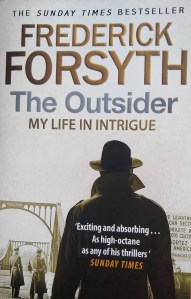
It was sad to read in the news the other day of the passing of journalist and novelist Frederick Forsyth. He was 86 years old and had published more than 25 books. I’ve read quite a few of his novels and I wrote a segment about him some time ago in a blog post about novels that were rejected by publishers. A number of his books were made into films and so many people must be familiar with his work.

Forsyth did his national service in the RAF and was commissioned as an Acting Pilot Officer in 1956. After leaving the RAF he became a journalist working for the news agency Reuters and later he joined the BBC. He was the perfect choice for a foreign correspondent as he spoke numerous languages including French, German and Russian. In 1967 he was reporting on the war between Biafra and Nigeria when the BBC decided they were no longer interested in that particular war. Forsyth resigned from the BBC and continued to report on the war as a freelance. He even admitted later that this was when he was recruited by MI6 as an informant.

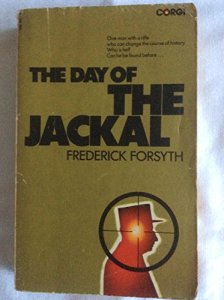
His most famous book and actually one that he struggled to get published was The Day of the Jackal. He apparently had no interest in becoming a novelist but turned to fiction as he was out of work and in dire straits financially.  The Day of the Jackal was rejected numerous times but finally one publisher decided to try a limited print run. The book took off first in the UK and then in the USA. It was a mixture of fact and fiction and Forsyth’s description of how to obtain a fake passport was used by John Darwin, the man who faked his own death in a canoe and later tried to make a new life in Panama. This true story was made into a book and TV mini series called The Thief, his Wife and a Canoe.

Forsyth followed up with The Odessa File, a book about the Odessa organisation which helped former nazis escape detection from the authorities after World War II. He wrote numerous other books but when The Day of the Jackal was re-imagined as a TV series recently on Sky TV, he earned nothing as he had already signed away the TV and film rights with the earlier screen version.

The Day of the Jackal

It was a very long time ago when I first read this book. Someone once called it an assassin’s handbook although I’m not sure that’s really fair. The book is set in the early 60s. The OAS was a terrorist organisation made up of ex-army personnel who were angered at De Gaulle’s decision to give independence to Algeria after many of their comrades had died fighting Algerian nationalists. They were trying to assassinate De Gaulle but their organisation had been penetrated by French Intelligence. To prevent any leaks the OAS top leadership decide to hole up in a hotel and arrange for a professional assassin to kill De Gaulle. The book follows the assassin, code named Jackal, as he plans the murder step by step. The French secret service however decide to kidnap a man who functioned as an aide to the leadership. Under torture he revealed the basic plot but how could the French track down the assassin?

The Jackal arranges three fake identities and the author explains meticulously how he does this. He met with a specialist rifle maker and explained how he wanted a rifle that could be dismantled and fitted into a series of metal tubes, the full import of this is only revealed on the planned day of the assassination.

The Jackal also asks for a number to ring for up to date information and the OAS arrange for an informant to seduce a member of the government and pass vital info to the Jackal.

Forsyth apparently wrote the book in 35 days and continued with a similar non stop workflow for all his subsequent books. He didn’t like the writing process and was anxious to get it all over with as quickly as possible. Even so, the result is a tense and gripping read. Forsyth’s books are heavily researched and often including real-life procedures, political contexts, or military operations. He includes authentic settings and terminology that lend a strong sense of realism to his stories. The characters in his books though are usually pretty functional, just there to carry the plot forwards although in The Jackal we find perhaps his most rounded characters, certainly in the few books that I have read.

The Day of the Jackal was made into a film in 1973 directed by Fred Zinneman.

The Odessa File

Again, it’s a long time since I have read this book but it’s really well put together with a real twist at the end. It’s about a German journalist who discovers a diary written by an old Jewish man who has committed suicide. The man was a former concentration camp prisoner and killed himself after seeing a sadistic SS officer known as ‘the butcher of Riga’ walking free in the city.

The journalist decides to try and track the SS man down and finds out that the nazis run an organisation known as the Odessa, which helps former SS men evade justice, assisting them with fake papers and even travel to friendly countries.

The journalist decides to pose as an ex-SS man seeking help from the Odessa and this leads him on a very dangerous path indeed.

The Odessa File was also made into a film starring John Voight as the journalist and the resulting publicity brought about the exposure of the real life ‘Butcher of Riga’, on whom the fictional character was based. Eduard Roschmann was arrested by Argentine police but then skipped bail and escaped to Paraguay.

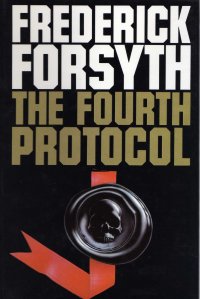
The Fourth Protocol

I started reading this book a while ago and like all of Forsyth’s other books it is a very exciting read. I was also surprised to find that it was really quite different to the film which starred Michael Caine.

In the book, a professional jewel thief robs the safe of safe of a well to do civil servant. He takes away some pretty expensive jewels but breaks a golden rule by also taking what appears to be an expensive hand crafted leather briefcase.

It turns out that hidden in the briefcase are some top secret documents which the civil servant has been passing to a member of the South African security forces.

This gentleman then organises a group of thugs to find the case but the jewel thief is alerted just in time and is able to round up some tough guys of his own to combat the thugs. After finding out the thugs were after the briefcase, he discovers the secret documents and mails them to the authorities.

Robert Preston, our local MI5 man, then has to find out where the documents came from and who has been leaking them.

Eventually, Preston discovers that the civil service man was passing the documents to a south African diplomat who was also a Russian spy.

This whole episode was glossed over in the film and in fact in the film version it is John Preston played by Michael Caine who robs the safe forcing the traitor to meet with his contact.

The main story though involves a Soviet plot to destabilise NATO by causing an atomic explosion at a US Air Force base in the UK. Components for the bomb are to be smuggled into the country, set up at a safe house just by the air force base and later detonated.

Luckily, our man Preston manages to save the day.

Once again, this is an excellent read peppered with fascinating information about the workings of spies in MI5 and MI6 and also the KGB.


What to do next: Here are a few options.

Share this post on your favourite social media!

Hit the Subscribe button. Never miss another post!

Listen to my podcast Click here.

Buy the book! Click here to purchase my new poetry collection.

Click here to visit Amazon and download Floating in Space to your Kindle or order the paperback version.

Click here to visit amazon and purchase Timeline, my new anthology.

Three Reads from My Holiday Book Bag

It’s always good to slip out of the pool, dry yourself off and then relax in the sun with a really good book. Here are three of my latest holiday reads. (try the video version by clicking here!)

The Thief, His Wife And The Canoe

I first heard about this story on the TV news many years ago. I’d mostly forgotten about it until recently when there was an ITV drama based on the story. This was the book version and even though the story is fascinating, the book, written by a newspaper journalist wasn’t that gripping.

Essentially, John Darwin was facing bankruptcy after getting hugely overreached on a series of buy to let mortgages. He decided that the only way out was to fake his own death and cash in on some life insurance policies. His wife apparently tried to talk him out of the idea but John, a dominating and overpowering personality, went ahead and faked his own death. Amazingly he even went back to live with his wife, sometimes having to retreat to the bedsits next door when any friends or family came to visit. He arranged a false passport using a method explained in the book ‘Day of the Jackal’ by Frederick Forsyth and then the two, Darwin and his wife, planned to buy property in Panama and live a new life. Later, Darwin decided he wanted to return to the UK under his own name by posing as someone who had suffered with amnesia and in fact one day he disposed of his fake passport, walked into a police station and told them ‘I’ve lost my memory!’

Journalist David Leigh tracked down Darwin’s wife in Panama and managed to extract the entire story from her before she returned to the UK to face imprisonment along with John.

The result is interesting but not really a great read as perhaps the author is more used to newspaper stories rather than an entire book. Either way, it kept me interested for quite a few days.

Death of a President

I’ve read this book before many years ago but even so I thought I’d throw it in the motorhome and give it another read. The President’s widow, Mrs Jackie Kennedy asked the author, William Manchester to write the book so there would be one authorised record of what happened in Dallas when President Kennedy was assassinated. The result is a record, in fact a micro record of what happened to Kennedy and those around him, beginning a few days before the assassination and ending with his funeral and the shooting of his assassin by another assassin.

For me, who has been interested in the JFK assassination since at least 1968 when his brother, Robert Kennedy was also murdered and I was 12 years old, it’s a fascinating record. Others might think perhaps that the author has spread his research too far, that we are not interested in what the President’s pilot thought or did or how the honour guard prepared for the President’s funeral and how the President’s sister or brother-in-law reacted.

Anyway as a passionate JFK researcher, a couple of things stood out. One was a time chart that showed that JFK was shot at 12:30 and that at 12:31 and a half, motorcycle cop Marion Baker intercepted Lee Oswald, the supposed assassin, on the second floor lunchroom of the Texas School Book Depository calmly drinking a coke. That meant that Lee had, in 90 seconds, hidden his Mannlicher Carcano rifle on the 6th floor and got himself down to the second floor to meet Baker. Did he shoot the President or was he in the lunchroom all the time?

Here’s another thing. In one of my favourite JFK assassination books, Best Evidence, author David Lifton reckons that sometime between leaving Dallas and arriving at Andrews Airforce base in Washington, JFK’s body was somehow removed from his coffin and transferred to a body bag and then helicoptered to Bethesda naval base where work was done on the body prior to it being seen by the official autopsy staff. In Death of a President, William Manchester says that Mrs Kennedy spent all her time sitting near to the casket on Airforce One with many of JFK’s team of assistants and secret service personnel. So how was Kennedy’s body removed without anyone knowing?

OK, I’ve gone off into the realm of JFK assassination folklore there but to get back to normality, this was a very well researched book and gives a massively detailed look at the events surrounding a tragic day. If anything, the detail is perhaps a little too much and I could sort of imagine it as a feature film using that split screen effect that you often saw in the 1970s; Kennedy getting into the limo side by side with a shot of the assassin getting ready and so on.

Verdict; an absorbing read, very detailed.

Blue Angel: The Life of Marlene Dietrich by Donald Spoto

This was a very compelling read, a biography of Marlene Deitrich who to be fair, I didn’t know much about until this book.

Marlene was one of those people perhaps born at the wrong time. Today might be a better time for her when lifestyles of gay and lesbian people are not so much of an issue.

Marlene rose to prominence in the film world of Germany between the world wars. She was married to assistant director Rudolf Sieber and together they had a child, Maria. The couple had what we might call an open marriage and Marlene had various partners, both male and female and her husband too found himself another love. A big hit for Marlene was her performance as Lola Lola in The Blue Lamp, directed by Josef Von Sternberg in 1930. Shortly afterwards Marlene and Von Sternberg moved to Hollywood and the two made a series of films for Paramount. While she was away from Germany the Nazis rose to power. Goebbels himself asked her to come back and work in German films but when she declined, the Nazi party rejected her. Marlene became a naturalised American and even entertained the troops -the allied troops during World War II.

She had affairs with both men and women and at one point even began to wear male oriented clothes and once she was denied entry into a Paris night club for wearing trousers.

She was extremely concerned with how she looked in films and always arranged with the lighting crew for a key light to illuminate her face in a particular way, many times even bypassing the director. Alfred Hitchcock for one was not amused.

When the film work fizzled out she reinvented herself as a performer with a one woman show in Las Vegas. The clothes and lighting she organised herself, in fact at home she even had a special key light, just as she specified for her films, that she would stand under when she met journalists and even her friends.

She was always there to help her friends and still stayed close to her husband and his partner. If friends were sick or even just down, Marlene would come round and clean up and make food. She was not only a famous and beautiful star but also a proud hausfrau.

The book opens with her appearing in a short sequence in her very last film, which incidentally starred pop star David Bowie. She performed for the camera perfectly, only one take was required, then she returned to her Paris apartment and except for hospital and doctors’ appointments, she never left again until her death in 1992.

Not the best film book I’ve ever read but still an informative and intriguing read.


What to do next: Here are a few options.

Share this post on your favourite social media!

Hit the Subscribe button. Never miss another post!

Listen to my podcast Click here.

Buy the book! Click here to purchase my new poetry collection.

Click here to visit Amazon and download Floating in Space to your Kindle or order the paperback version.

Click here to visit amazon and purchase Timeline, my new anthology.

4 Showbiz Stories

I started this post off with three ‘showbiz’ autobiographies of actresses/comediennes of the stage and screen. Despite trawling through my book collection I couldn’t see a fourth so I added one which is the odd one out; a biography, rather than an autobiography and a male actor/comedian rather than a female. Either way, all four are stars who made their respective names in the 1950s and 1960s era of radio, TV and film and together make up a quartet of much loved British comedians.

Fenella Fielding: Do You Mind If I Smoke?

This is an autobiography by Fenella Fielding, co-written with Simon McKay, and the title comes from her part in Carry On Screaming when she played a seductive character, possibly derived from the Adams Family, Valeria. In one scene Valeria tries to seduce Harry H Corbett standing in for the absent Sid James as a detective. Valeria asks ‘do you mind if I smoke?’ and then rather than smoking a cigarette, a cloud of smoke seems to arise from her body and envelop her. Harry H Corbett adds ‘just when I was trying to give it up’ before embracing her in the smoke.

Simon met Fenella at a London Pilates class in 2011. The two became friends and began meeting regularly for coffee. McKay realised that Fenella was a wonderful raconteur and asked if he could record her stories. Fenella agreed and later they used the transcriptions as the basis for a themed evening, An Evening with Fenella Fielding. Later the conversations became an audio book and finally this printed version. It was hugely enjoyable and rather than being a standard story of her life, the book talks about various things in no particular order.

Fenella describes her early life in Clapton and her first forays into the acting world. She won a scholarship to RADA but her parents, who were keen at first, don’t seem to have realised what RADA was, that their daughter was becoming an actress which they seem to have seen as just one step away from prostitution.

Anyway despite only completing one year at RADA, Fenella did manage to become an actress. After one particular success on the stage she began to pick up various small parts on television and on film and as I mentioned above, her most famous part was in Carry On Screaming. She devotes a whole chapter to Kenneth Williams who of course could be a very difficult man to work with. She also played a part in Doctor in Clover and was heard as the village announcer in the TV series The Prisoner. In fact a great deal of her work was voiceovers for various things especially TV adverts.

This was a lovely read and came over as very chatty and talkative, based as it was on recorded conversations.

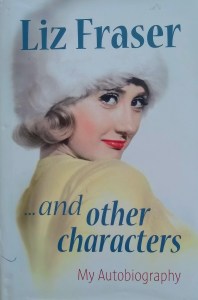
Liz Fraser …. and other characters

In Fenella’s book above, she mentions that she hoped her book would not go the way of a lot of other showbiz autobiographies, interesting at first but then dissolving into lists of plays and films and other celebrities. Sadly, that seems to be the way this book does go, even so I enjoyed it.

Liz was brought up in Southwark, in London. Her mother ran a small shop, one of those shops that used to sell everything that Tesco might sell these days from bags of coal, wood bundles to fresh food. Her father was a travelling salesman but died in 1942 aged only 40.

Like Fenella, Liz attended RADA and afterwards won her breakthrough part in I’m All Right Jack which starred Peter Sellers as a union official. She tells the story of playing minor parts in small plays and eventually got some walk on parts on TV. One day her mother said to her “Was that you last week, walking past Peter Cushing?” It was!

Liz worked on TV shows that were live back in the day. On an episode of Dixon of Dock Green she forgot her line but the crew had a ‘cut key’ which cut out the broadcast sound while they called out the line to the hapless Liz.

To get the part in I’m All Right Jack Liz had to lie about her age as the producers wanted someone younger which led to a career long confusion about her age.

She appeared with Peter Sellers in various films and she reveals that although she liked Sellers she had to fight off his amorous advances several times. Liz shares lots of anecdotes about various people she worked with including Tony Hancock, Benny Hill and Sid James.

She tells about appearing in a few of the Carry On films but like many others is critical of the producers. There was only a one off payment for each film and despite the enduring popularity of the Carry On films, the actors earned nothing from their later success on TV. In later life Joan Sims had a lot of financial difficulty but was helped by actors’ charity organisations. Liz herself was very thoughtful, investing in property and stocks and shares which sustained her during the times when acting work was thin on the ground.

She doesn’t share much about her personal life although her first husband features in a chapter called I Married a Thief. Peter Yonwin was something of a fantasist and their marriage soon broke down.

One shocking disclosure was an incident one night after appearing in a pantomime. Liz took an acquaintance home thinking she could deal with any problem man only to be raped. She doesn’t expand on the incident but seems to just mention it quickly and then move on as if perhaps by talking about it however briefly she could perhaps exorcize this dreadful ordeal.

Liz’s second husband, a TV producer, died of cancer and Liz suffered with cancer herself. She enjoyed fast cars and finishes by talking about her old age.

Liz Fraser died in 2018 aged 88.

According to Dora

I do love my showbiz biographies and autobiographies and one I picked up a while back was an autobiography by Dora Bryan. I love Dora from her many appearances in British films but my favourite film is probably A Taste of Honey. The screenplay was by Shelagh Delaney and director Tony Richardson, adapted from Delaney’s own play which she famously wrote when she was only 18.

Dora Bryan gives an outstanding performance; at times comic but always supremely natural. Dora grew up on an Oldham housing estate. She was a great performer as a child and so her mother took her to dancing school and further encouraged by her mother, she joined Oldham Repertory before moving to London to develop her stage career. She had a great career on the stage as well as on film and TV and appeared in many successful West End productions. The first part of the book is very interesting but then as I mentioned earlier, this becomes one of those books in which the latter part seems to wander off into lists of productions and theatre and TV personalities. Even so, it was a lovely read.

When the Wind Changed (The Life and Death of Tony Hancock) by Cliff Goodwin

This final book is the odd one out in this quartet of British comedy stars. It’s a biography rather than an autobiography. I don’t think Tony Hancock ever wrote one.

Back in his day Tony Hancock was a giant among television performers. Pub landlords complained that their establishments used to empty because people would drink up and rush home to watch Hancock’s Half Hour. I can’t even imagine that happening today to any contemporary comedian not withstanding the emergence of TV recording devices.

Hancock’s half hour was first broadcast on the radio in 1954 and then transferred to television in 1956.

Hancock’s co star on television was Sid James and Hancock decided to part with Sid believing that the public had begun to think of the two of them as a sort of double act. His final comedy series for the BBC was called Hancock but even without Sid James, it was a great success.

An interesting TV interview at this time saw Hancock as a guest on Face to Face, an intensive interview which revealed Tony Hancock to be a different man to the bumbling buffoon of his radio and TV shows, in fact the entire transcript of the interview is repeated in the book. Many felt that this interview made him more and more self-critical which led to him dispensing with many who were important to his professional life such as Sid James and his scriptwriters Galton and Simpson.

After a minor car crash Hancock had to use an autocue for perhaps his most famous TV episode, The Blood Donor. After that, he used the autocue more and more finding it too hard apparently to continue to learn scripts.

His drinking increased. He left his wife for his mistress Freddie Ross who worked as his publicist. Freddie and Hancock eventually married but their relationship later broke down also.

Hancock committed suicide in 1968. He took an overdose of pills and left behind a note which said ‘things seemed to go wrong too many times.’

This is such a fascinating and well written book and if you are interested in actors and performers as I am, it is well worth seeking out.

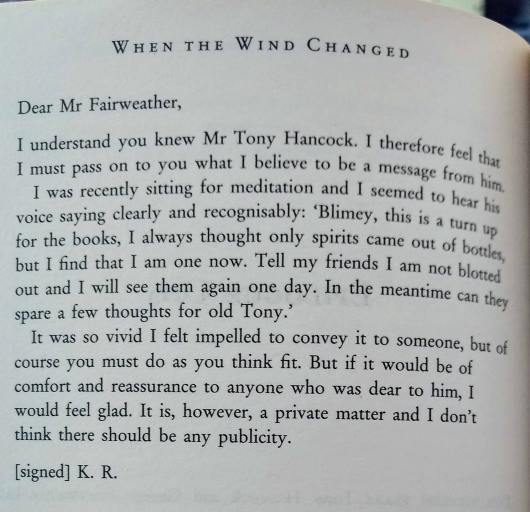
There are a couple of postcripts to the book but one was so intriguing I have to mention it here. George Fairweather was a great friend of Tony Hancock. When Hancock was delighted to find he had been chosen for the royal command performance he told George that he wished his late father could have been there to see it. George commented that perhaps his father would see it and Hancock replied dismissively that ‘only spirits come out of bottles’.

22 days after Hancock’s death, George received a typed letter with no name or address. It said simply that the writer had received a message from Hancock in the afterlife and wished to pass it on. The message is reproduced below.


What to do next: Here are a few options.

Share this post on your favourite social media!

Hit the Subscribe button. Never miss another post!

Listen to my podcast Click here.

Buy the book! Click here to purchase my new poetry collection.

Click here to visit Amazon and download Floating in Space to your Kindle or order the paperback version.

Click here to visit amazon and purchase Timeline, my new anthology.

Book Bag: John Grisham

In my last few posts about books, rather than publish my usual Book Bag posts, I’ve incorporated book reviews into other types of posts; holiday memories and posts about books made into films and so on. During my last few holidays, I always seem to either have a couple of John Grisham books with me or found some in the places, usually rented villas, where we have stayed. I thought it might be an idea to write a John Grisham themed book bag post. Who actually is John Grisham then?

Let’s go over to Wikipedia and see what they have to say:

Born February 8, 1955 John Grisham is an American novelist, lawyer, and former member of the Mississippi House of Representatives, known for his best-selling legal thrillers. According to the American Academy of Achievement, Grisham has written 37 consecutive number-one fiction bestsellers, and his books have sold 300 million copies worldwide. Along with Tom Clancy and J. K. Rowling, Grisham is one of only three anglophone authors to have sold two million copies on the first printing.

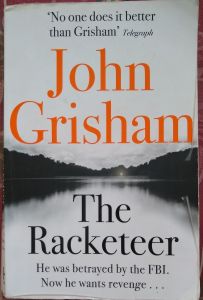
Pretty impressive credentials, aren’t they? Most of the inside back covers of my copies of his books say pretty much the same thing and in the back of the last Grisham book I read, The Racketeer, there are extracts from an interview with Grisham in which he mentions his favourite book is A Time to Kill, his first book and apparently the most personal of his legal thrillers.

Let’s take a closer look at some of the books that I have read.

A Time to Kill by John Grisham

As I said earlier, this book turns out to be Grisham’s first novel and he says in the introduction how proud he was of finishing it, as back then he hardly ever finished anything. It also contains some autobiographical elements; Grisham used to be a street lawyer, similar to the character in the book.

The book is set in America’s deep south where there is or was a great deal of racial prejudice. Two white guys decide to kidnap a young black girl, tie her to a tree and repeatedly rape her. They drive her away and dump her like garbage but she survives and the police arrest the two scumbags responsible. Next, the young girl’s father Carl Lee Hailey decides to take a rifle and shoot the two guys. He is arrested and put on trial for murder and street lawyer Jake Brigance takes on the case.

The case ignites the small town of Clanton Mississippi. The Klu Klux Klan become involved as do various other groups and the stage is set for a tense murder trial which goes on while the police and the National Guard try to keep order.

It’s a very exciting read although the ending was a little underwhelming and if you find the N word offensive then this is a book which is not for you as that particular word appears numerous times on almost every page.

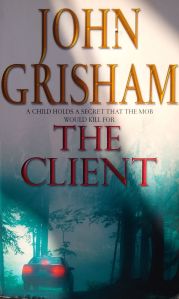
The Client

This book was a great holiday read. It’s about an eleven year old boy who witnesses a suicide but before the man kills himself (he is a lawyer defending a known murderer) he tells the boys, Mark and his little brother Ricky, where his client has hidden the  dead body of a murdered US senator. The senator was the victim of a mob ‘hit’ and Mark won’t tell the police or the FBI about the body as he is concerned for the safety of his mother and brother. When he and his mother are in hospital staying with his brother Ricky, as he has gone into shock, Mark contacts a lawyer and a big legal stand off begins with the FBI. Things eventually get settled but I can’t help wondering why the boy wouldn’t trust the FBI or even why he wouldn’t tell them about the body in the first place. Of course, if he had then there wouldn’t be a story. Either way this was a great holiday read and the narrative kept me interested all the way to the end. I didn’t realise it was also made into a film starring Tommy Lee Jones and Susan Sarandon which I must remember to look out for.

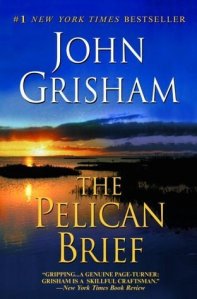
The Pelican Brief by John Grisham

This book might be the best book by Grisham I have read so far. The book opens with the murder of two US Supreme Court judges and this in a way plays into the hands of the President as he can now nominate new judges who share his political views. At the same time, law student Darby Shaw is having an affair with her law professor. She decides to look closely at the murders and develops a thesis, an idea about who may have done the murders and why. The thesis becomes known as the Pelican Brief and she passes it to the professor who in turn sends it to his friend, an FBI lawyer. It then gets passed up the chain to the head of the FBI and on to the White House where the President instructs the FBI not to investigate further.

Not long afterwards the professor is blown up in a car bomb which Darby narrowly avoids and from then on, she is on the run trying to evade death herself.

This for me was one of those unputdownable novels which was exciting and kept me interested all the way to the end.

The Firm by John Grisham

There is a process by which I choose books to take with me on holiday. I like to think it’s a thoughtful process combining different genres of books, some novels, maybe the odd classic, and some biographies and autobiographies. What actually happens is that the day before our trip I’ll just grab something near to hand that I know I haven’t read yet and shove it in my suitcase. Anyway, that’s how I ended up with The Firm. Last year I read The Rainmaker by John Grisham and I thought it was a pretty good read. I must have mentioned that to Liz so she filed that away and got me a stack of Grisham novels for my last birthday. The Firm isn’t a bad read and in my case it was a nice change of pace after reading some non-fiction books.

It’s a good story but like a lot of Grisham’s works, it’s more plot driven than character driven. The characters are sort of bland templates that I’ve recognised in a lot of his novels. Anyway, characters aside, this is a really original story about a young guy who graduates from law school and gets head hunted into a firm he has never heard of but which offers tremendous financial benefits, a brand new BMW, and an ultra cheap mortgage as well as other financial bonuses. The downside, as he comes to learn later, is that the firm is just a cover operation to launder money for a big mafia crime family and the FBI wants our hero James McDeere, to help them.

Verdict: Highly enjoyable and a great holiday read but nothing more, although that didn’t stop the book from becoming a best seller as well as a hit film in the 1990’s.

The Racketeer

This is another legal thriller about a man convicted of money laundering, which he denies by the way, sentenced to ten years in a federal institution. Naturally he is not happy but he hoped to get out by using rule 35 of the Federal Rules for Criminal Procedure which means that if the inmate can solve a crime which the federal authorities are unable to solve, then his sentence can be reduced.

The man, Malcolm Bannister, helps other inmates of the prison with their legal issues and in doing so has come across some information about the murder of a judge, in which the Police and the FBI have no clues about the culprit. He plans to barter this information for his freedom but it turns out that Bannister is actually double bluffing the FBI and has a scheme in mind in which he can gain his freedom and walk away with a considerable amount of money as well as a new identity.

Like most of Grisham’s books, this was an excellent holiday read but towards the end it almost feels as though the writer has become a little fed up with this increasingly complicated story and is rushing to get it finished. This was mostly a good read but the end was a little disappointing.

The Boys From Biloxi

This is a very oddball book indeed. It’s not a courtroom drama although courtroom battles do feature in the book. It’s actually a very long-winded story of two families, one on the wrong side of the law and one on the other. One family is part of a rough and ready area of town and owns saloons that have illegal gambling and prostitution on tap and the other family who hope to clean the town up.

A lot of the story is just reeled off like a sort of narration you might listen to in a museum (which is how one review I read described the text). The author just seems to recount a lot of the story in this same long distance way. Eventually the story becomes more fleshed out and detailed when a tornado hits the town and a lawyer with ambitions to become the district attorney helps the residents fight for compensation from insurance companies that do not want to pay out. His success with compensation claims help him to become the DA but he is murdered before he can bring the criminal family to justice. His son however goes on to clean up the town.

Again this was another great holiday read but if I had been reading it at home for twenty minutes or so before going to sleep at night, I reckon that after a few nights I would have perhaps picked up something else to read.


What to do next: Here are a few options.

Share this post on your favourite social media!

Hit the Subscribe button. Never miss another post!

Listen to my podcast Click here.

Buy the book! Click here to purchase my new poetry collection.

Click here to visit Amazon and download Floating in Space to your Kindle or order the paperback version.

Click here to visit amazon and purchase Timeline, my new anthology.

Holiday Book Bag 2024 Part 4

As usual I always take a number of books with me to read when I’m on holiday. There is nothing better than having a long pleasant read in the sun interrupted only by visits to the pool. This year we only had a swimming pool for just over a week and even then there wasn’t much sun but I still managed to get in some reading. Anyway, time to open up my book bag and see what’s in there.

The Dark Side of Camelot by Seymour Hersh

This was a book which I read a long time ago and thought it was ready for a re-read. It is essentially a book which tries to shatter the image of the long dead President Kennedy. It’s an exercise in character assassination and talks exclusively about JFK’s numerous faults without any balancing stories about what he actually did well.

The Bay of Pigs was a great disaster for Kennedy. He inherited the invasion plans from the Eisenhower administration in which Vice President Nixon was a prime mover. Nixon felt that an invasion would boost his chances in the election contest against Kennedy but the CIA seemed to be relying on the assassination of Castro to kick off the invasion but that planned murder, for whatever reason, never happened.

JFK told the CIA that US forces would not be assisting in the operation but it turned out that the CIA was relying on exactly that, intervention by US forces. The invasion was a disaster and Kennedy privately blamed the CIA who he felt were trying to force his hand in committing American forces. Hersh of course, blames Kennedy.

The most shocking element of the book probably comes from interviews with four former secret servicemen who tell numerous stories of JFK’s aides, Dave Powers and Kenny O’Donnell, bringing in call girls and prostitutes to service the President whenever his wife Jackie wasn’t around. The White House pool seems to have been a particular favourite of Kennedy’s, not for a relaxing swim but for naked skinny dipping and sex with various women, some of whom were White House secretaries.

Throw into the mix father Joe Kennedy’s booze smuggling activities and relentless spending to get his son elected and the author paints a pretty dark picture of the Kennedy White House. Still, as I said earlier, this book is a one sided view. It’s worth reading more about JFK before you make your mind up.

Ten Days to Destiny by John Costello

I’ve always been interested in the Rudolf Hess mystery. Why did Hess fly to England? Why are the Hess files sealed for so long? What was the real story? This was a book about the mystery or so I thought. Actually it’s about the various peace initiatives that were made even while Churchill, the new prime minister, had vowed to fight on and which eventually culminate in Hess arriving in the UK in the latter part of the book.

After the declaration of war in 1939 the government had to bring in Churchill who had long warned about the Nazi menace. Later, when the government realised that a national government was needed, comprising all the main parties, the opposition, the labour party led by Clement Attlee, refused to serve under Neville Chamberlain who they believed had actually caused the crisis by his policy of appeasement. Chamberlain wanted Lord Halifax to take over as prime minister and even put the question to Churchill, asking him would the country be willing to accept a leader in the Lords rather than the Commons. Churchill declined to answer and of course it was later that Chamberlain recommended Churchill to the King.

The author seems to think that part of the deal with Churchill was that Chamberlain should stay in the government and also still retain the leadership of the Conservative party. He even seems to think that Chamberlain had plans to return to number 10 Downing street at a later date. However, Chamberlain died of cancer not long afterwards.

Various others though, in particular Lord Halifax, seemed to be putting out peace feelers to representatives of Hitler who wanted to turn his attention to the Soviet Union rather than fight with the UK. Various people seemed to be trying to negotiate including Mussolini and the Pope. The flight of Hess seems to have come about because of letters intercepted by MI5 from Hess to the Duke of Devonshire. MI5 sent fake replies to Hess which encouraged him to come to the UK for unofficial talks.

Overall this was an interesting book but not not an easy one to read.

Bill Clinton: Mastering the Presidency by Nigel Hamilton

This book was the sequel to another book about Bill Clinton. The first one dealt with Clinton’s early life and his election to the presidency; this one takes us through his first four years as president. The author takes us through the years of the Clinton White House and documents the issues like Troopergate; when the former Governor Clinton’s State Troopers revealed the comings and goings of Bill’s various mistresses, as well as the disaster of his healthcare reform work which he entrusted to his wife Hillary. The public clearly weren’t keen on Clinton’s ‘co-president’ – his wife, and their healthcare proposals were rejected by Congress. The mid term elections were another disaster for Clinton and the Democrats and the book goes on to show how Clinton turned the final two years of his first term presidency around and was able to win a second term.

Unlike the book above, this one was a very easy read and each chapter comes in easily digestible bite size sections.

Encore Provence by Peter Mayle

This is the second follow up to the wonderful A Year in Provence by Peter Mayle. The first follow up was Toujours Provence and neither seem to me to have captured the essential warmth of the first book. This one, just like Toujours is a series of unconnected essays about life in France. It’s a pleasant enough read but not a patch on the original.

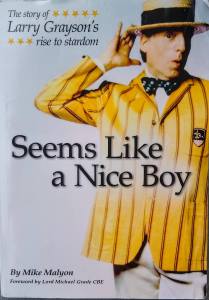
Seems Like a Nice Boy by Mike Maylon.

This is a short biography of Larry Grayson the comedian and one time host of the BBCs Generation Game. I’ve always kind of liked Larry and his camp performances. He was an old style entertainer who found fame in later life after years of summer seasons and working men’s clubs. In a lot of ways his act was similar to the stand up comedy of today; it was a chatty, observational style of comedy that concerned his many creations such as Everard and Slack Alice.

Many have speculated about his true sexuality but it’s clear that Larry enjoyed being labelled as camp rather than gay. The main relationship in his life was with his sister who became a mother figure to him when his adoptive mother died. The two lived next door to each other for many years in later life.

Larry’s career seemed to end when he stepped down from The Generation Game, assuming the BBC would find him some other TV vehicle. They never did. Larry died in 1994.

All in all, an enjoyable read with some interesting insights into the world of entertainment.


What to do next: Here are a few options.

Share this post on your favourite social media!

Hit the Subscribe button. Never miss another post!

Listen to my podcast Click here.

Buy the book! Click here to purchase my new poetry anthology.

Click here to visit Amazon and download Floating in Space to your Kindle or order the paperback version.


Remembering Stirling Moss

I began to follow F1 way back in the late 1960’s. I’m not sure what first attracted me to the sport. I liked cars and back then I subscribed to a free magazine from Corgi, the makers of die cast model cars. They used to send me out a little monthly magazine which was nothing more than an advertising pamphlet and one of those thin missives was dedicated to model F1 cars. As well as reading about model cars I started to find out more about the actual cars and drivers of the time. It was probably 1969 when the cars first flirted with aerodynamics and later in 1970 the grids began to look very colourful as outside advertisers brought their brand colours to the sport.

Yardley sponsored the BRM team and John Player Tobacco sponsored the Lotus cars, even to the extent of naming the cars the John Player Specials. I also started to learn more about the history of the sport. Who was Juan Manuel Fangio, the guy who had won an incredible 5 world championships? Well he was an Argentinian driver who once drove for Mercedes in the 1950’s. His team mate back then was an Englishman named Stirling Moss. What had happened to him I wondered?

Moss was born in September 1928. His parents were amateur racing drivers. His father competed in the 1924 Indianapolis 500 and his mother competed in Hillclimb events. Even his sister Pat Moss became a rally driver so motorsport seems to have been in his blood.

His father got him his first car at the age of 9 and he drove it around the fields near his boyhood home, Long White Cloud House, on the banks of the river Thames.

Moss’s first racing car was a Cooper 500 which he bought using winnings from competing in horse racing events. He was good in the saddle as well as behind the wheel.

His first major international race victory came at the RAC Tourist Trophy in Northern Island driving a Jaguar XK120. That was the beginning of an incredible career in which Moss won 212 of the 529 races he entered including 16 Grands Prix, the most ever won by an English driver until that record was equalled by Nigel Mansell.

Moss came close to winning the world championship although he never quite managed it, becoming known as the greatest driver never to become world champion.

In 1953, Alfred Neubauer, the famous Mercedes team manager, was impressed by Moss. He made it clear he was willing to sign up the Englishman but wanted to see what he could achieve in more competitive machinery. He suggested Moss buy a Maserati 250F for 1954. Moss did so and was impressive; at the Italian Grand Prix that year Moss beat world champions Ascari and Fangio to the lead and only gave it up when his engine failed. Neubauer duly signed Moss for the 1955 season when he would be teamed with Fangio.

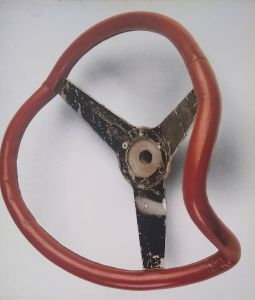
The mangled steering wheel from Moss’s crash.

Fangio and Moss worked well together and although it was Fangio who won another world championship Moss beat him at his home race, the British Grand Prix. The race was held that year at Aintree. The racetrack was in the grounds of the famous horse racing course and in fact used the same grandstands as the horse racing event. For the rest of his life, Moss questioned Fangio as to whether he, Moss, had actually won or had Fangio gifted him the win. Fangio always maintained that Moss was better than him on that day and won on his own merit.

In 1955 Fangio won his third championship and retired some years later having won 5, a feat unmatched until the modern era when Schumacher and later Lewis Hamilton upped the record to 7 titles.

By this time in 1955 Moss was a household name, probably as famous as Lewis Hamilton is today. In 1955 he also won the famous Italian race the Mille Miglia with Dennis Jenkinson as his navigator. Jenkinson was a journalist for Motor Sport magazine and famously signed himself off on his racing articles as DSJ. A few years later the classic race was discontinued after numerous fatal accidents during the race.

In 1962, Moss was competing in a Lotus at the Goodwood circuit. He came off the road and crashed.  He was trapped in his car for three quarters of an hour while various people tried to free him from his mangled car. He had sustained a shattered eye socket but more serious was a severe impact to the right side of his brain and this sent him into a coma. Moss was driving for Rob Walker at the time who was in France. Once he heard the news, Rob and his wife drove back to the UK, their radio tuned into the BBC Home Service which issued hourly updates on Stirling’s condition.

Moss had moments of lucidity but didn’t fully wake up for 38 days. In the excellent biography by Robert Edwards, the author describes Moss’s presence at the hospital in Colchester as ‘something of a sensation’. The switchboard was jammed with callers enquiring after Moss. Even Frank Sinatra called for information. The accident occurred on the 23rd April, 1962. Moss would not leave hospital until July that year.

Over a year later on Wednesday May 1st 1963 he drove a racing car again. It was a Lotus 19 sports car. He put in respectable lap times but the brain injury had resulted in subtle consequences. Moss reported that driving was for him now a disjointed, disconnected experience. Nothing flowed and now he had to think about what to do when before, all the aspects of driving fast would come naturally to him. He said this to a journalist about his decision to retire;

It was an easy decision to take at the time, because it was the only decision to take. I had to think. I had to give orders to myself -here I’ll brake, here I must change down and so on. And another thing: I used to be able to look at the rev counter without taking my eyes off the road -not only that but I could see the rev counter and a friend waving to me all at the same time. I’d lost that, that had gone.

He was by then divorced from his second wife and he was still a celebrity so he settled down at his impressive home at 46 Shepherd Street in London’s Mayfair. Moss had bought the vacant bombed out lot after the second world war and designed what was to him the perfect house. He retained an architect, a female architect to translate his ideas into reality. A spiral staircase takes one up to the first floor where there is a large sitting room and a smaller ‘snug’ and also an office. Upstairs again is a large kitchen and dining area and going up again there is the master bedroom where there are wardrobes with motorised shutters. He had remote controlled garage doors which were pretty amazing for 1962 when the house was built and also a descending table where Stirling could send a meal down from the kitchen to the dining room. He did love gadgets.

Just recently I saw an advert on the TV for a tap which could deliver hot, boiling or cold water at the touch of a button; Moss had one in 1962.

He married for the third and final time in 1980. He worked as a commentator on US TV and in public relations. He became involved in historic car racing but finally gave up competitive driving when he was 81.

He died in 2020 aged 90 after a long illness.

I’ve saved my favourite Moss story till the end. At a memorial service for Stirling this year, 2024, Jackie Stewart revealed that after winning his third world championship he was stopped by the police for speeding. Stewart was pretty famous himself by then. He had been called the world’s first superstar racing driver but as he wound down his window the police officer looked at him and said ‘who do you think you are, Stirling Moss?’

All the information and pictures in this post are from the excellent book by Robert Edwards, Stirling Moss; The Authorised Biography.


What to do next: Here are a few options.

Share this post on your favourite social media!

Hit the Subscribe button. Never miss another post!

Listen to my podcast Click here.

Buy the book! Click here to purchase my new poetry anthology.

Click here to visit Amazon and download Floating in Space to your Kindle or order the paperback version.

Holiday Book Bag 2024 Part 3

Parts one and two of my Book Bag were books I had taken to Lanzarote earlier in the year. This time Liz and I are tootling through France in our small motorhome. The weather has not been kind to us and rather than reading in the usual lovely sun, I’ve been reading indoors away from the rain. This year quite a few of my books are ones I have read before but I thought were due for a re-read. Anyway, here we go . . .

Toujours Provence by Peter Mayle

I wrote about this book a few weeks ago and you might be thinking ‘bet he’s included it here to pad out his post a bit’. Moi? As if I’d do such a thing. It’s the follow up to A Year in Provence, one of my favourite books about France by Peter Mayle. It’s a pleasant enough read but not a patch on the original.

Random Harvest by James Hilton

Wait a minute. Didn’t this guy write about this book a few weeks ago as well? Actually I did but as it was part of my book bag I thought I’d include it here anyway. A nice read, slightly different to the film starring Ronald Colman and Greer Garson. It was written before World War II and reflects the feelings of the time that perhaps more could have been done to either prevent the war or at least prepare more. A great read but I actually think I preferred the film to the book. Click here to read the full film and book review.

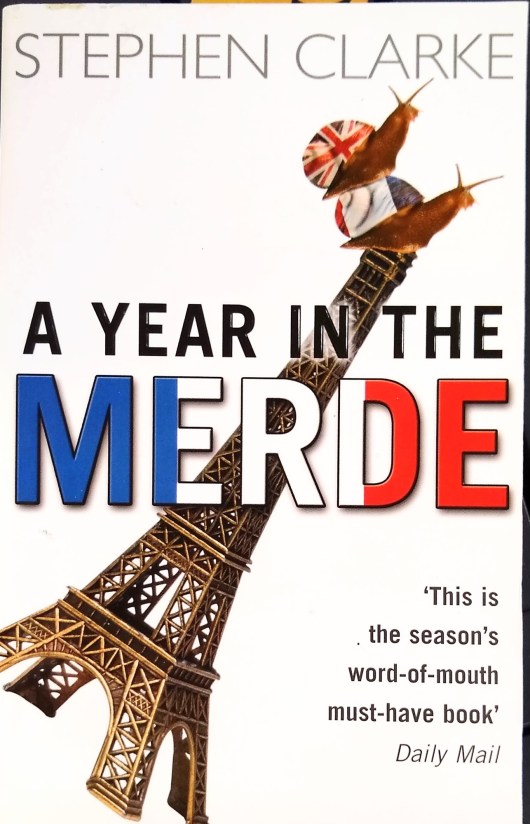
A Year in the Merde by Stephen Clarke

I read this book a few years ago and thought I’d throw it in my book bag for another read. As I remember, the first time round I absolutely loved this book. I saw it on a stall at a market once and mentioned to the seller what a great read it was. ‘Nah.’ replied the man. ‘It’s full of stereotypes!’ I wouldn’t say that at all. It’s a look at the life of a young man working in France as he tries to understand the French way of life and of course the language. The main character is engaged on a project to open an English tea room in Paris but feels that his boss and his colleagues are not that interested at all and when he eventually gets dropped by the company, he goes on to open the tea room himself. A nice read, humourous rather than laugh out loud funny and a little more biting than the Peter Mayle books. It’s a fun holiday read which goes a long way towards deciphering the French psyche.

The Kennedy Half Century by Larry J Sabato

This was billed as the ultimate Kennedy book but sadly it isn’t. It tells the story of John Kennedy and his run for the vice presidency, his years as a senator and then his presidential run. It goes on to look at his presidential years and then his murder and the last half of the book looks at how subsequent presidents have fared compared to JFK and the impact of Kennedy’s own presidency on the latter ones, all the way up to Obama.

A lot of it is interesting but there is nothing that I haven’t not only read about before but read in much more detail. The life and death of John Kennedy is one of my great interests. His murder happened on November the 22nd, 1963 when I was just seven years old and since then I’ve watched documentary after documentary and read numerous books.

The author tries to show an open mind about the assassination, looking briefly at the many theories that have been put forward over the years. Was the CIA or the mafia involved? Were the culprits the Cubans or the anti-Cubans? Was the military industrial complex behind the murder as Oliver Stone suggests in the film JFK? Perhaps it really was Oswald after all.

Looking back I think that one of the drawbacks to the book is that the author hasn’t really made his mind up what he actually thinks has happened. If he had a viewpoint himself, the narrative might have had more focus. The only real investigative effort in the book was to review the acoustical evidence, a recording made by a police officer with a microphone jammed open during the shooting and which led the House Select Committee on Assassinations to declare there was a shooter on the famous grassy knoll.

Well, maybe not says the author. Their research pinpoints a different officer with the jammed microphone and not the one selected by the HSCA which means there wasn’t another shooter after all. OK but there were clear shots of gunfire on the tape. Where did they come from? The author seems to think that they may have been noises from the officer’s motorcycle. Really?

An interesting read but the final chapters on the subsequent presidents and their relationships to JFK was actually a pretty pointless exercise that could have been summed up in just one chapter. If you would like to find out more, the book has its own website where you can read, among other things, the review of the acoustical evidence. Click here to access.

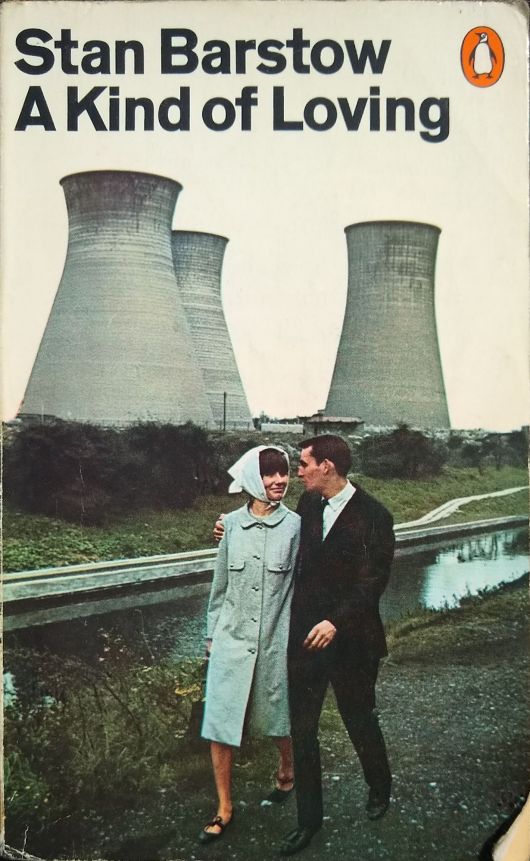
A Kind of Loving by Stan Barstow

This is another book that has been made into a successful film and also a great TV series. It’s a kitchen sink drama set in the early 1960s about a young Yorkshire lad who gets a girl pregnant and then realises he really wasn’t as in love with her as he thought he was. I’ve actually read this book quite a few times and it’s one of those that I mention when people ask me to describe Floating in Space. As much as I’m fond of Floating, this book is infinitely better. It’s a very simple story and probably one that has happened hundreds of times to hundreds of couples.

If you ever watch the TV series Long Lost Family, it shows that many people were in the same position as the couple in the book only instead of getting married, some young mothers in the 1950s and 60s were forced to give up illegitimate children for adoption.

Vic and Ingrid, the fictional couple, do get married even though Vic hopes for a last minute escape before the wedding day arrives. Not only is the main story authentic but so is the background to the book. Vic is a draughtsman in Yorkshire and his father is a miner.

The description of family life back then rings a bell with my own background in Manchester. Vic’s mother is a lot like my mother and there is a very lovely chapter when Vic goes to give blood with his father and then the two pop into the local pub for a pint. It was just like moments out with my own father, down to the banter with my mother when we both returned home. A wonderful read and so glad I brought it along to France.


What to do next: Here are a few options.

Share this post on your favourite social media!

Hit the Subscribe button. Never miss another post!

Listen to my podcast Click here.

Buy the book! Click here to purchase my new poetry anthology.

Click here to visit Amazon and download Floating in Space to your Kindle or order the paperback version.

Holiday Book Bag 2024 (Part 2)

Last week I gave you part one of my Holiday Book bag so here we go with part 2, more of my holiday reads and also what happened when tragedy occurred and I ran out of books.

Let’s kick off with this one, a Christmas pressy from Liz and a book I’ve been dying to read but purposely kept to read on holiday.

Mary’s Mosaic by Peter Janney

Liz bought me this book for Christmas and I’ve been saving it for a time when I can sit and read it undisturbed. After the assassination of President Kennedy there were numerous deaths of various witnesses in Dallas and elsewhere. One such death was of a lady named Mary Pinchot Mayer. She was the ex-wife of CIA agent Cord Mayer and one of JFK’s many mistresses. The author reckons she not only introduced the President to mind altering drugs but also agreed strongly with Kennedy’s desire for peace. He goes a little too far perhaps in making the case that Mary was the force behind JFK’s commencement address at American University in October, 1963 in which Kennedy called for both the USA and the Soviet Union to

‘direct attention to our common interests and to the means by which those differences can be resolved. And if we cannot end now our differences, at least we can help make the world safe for diversity. For, in the final analysis, our most basic common link is that we all inhabit this small planet. We all breathe the same air. We all cherish our children’s future. And we are all mortal.’

Mary was shocked by the murder of the President but came to realise the part played by the CIA and wanted to bring attention to the false story of the Warren Commission report. One day in Washington in October 1964, whilst walking along the towpath of the Chesapeake and Ohio canal towpath, she was murdered. Mary was shot once in the head and once in the chest and in this remarkable book the author goes on to trace the man who he thinks may have been the assassin.

A very fascinating read indeed.

So that was it, by the start of our third week I had read all my books. What could I read next? Well, there wasn’t much in our rented villa’s bookcase so I read one of Liz’s books, Shall we Tell the President?.

Shall we Tell the President? by Jeffrey Archer.

I’ve actually read this book before, many years ago but this was a new edition, rewritten by the author himself. In the original, the president in question was Edward Kennedy but of course, in real life Kennedy never made it to the White House, his challenge cut short by the ghost of what happened to Mary Jo Kopechene at Chappaquiddick. In this rewrite then, the author puts his own fictional president, President Kane in charge at the White House.

The FBI learn of a plot to murder the president. A Greek waiter, an illegal immigrant learns of the plot whilst working as a waiter at a restaurant in Washington DC. He calls the FBI and the two agents assigned to the case report quickly to their superior. Soon, one of the agents and their boss, as well as the informant are dead leaving only one agent who by chance has survived a murder attempt. He has six days to track down the assassins.

The book kept me interested but I can’t say it was a great read and I thought some of the dialogue was a little poor, in particular the FBI agent who kept referring to his new girlfriend constantly as ‘pretty lady’ was a little cringeworthy to say the least. Sorry Mr Archer but I’d have to give this one a five out of ten.

The Long Dark Night by Susan Lund

This was a bit of a first for me. Liz had nothing else that I wanted to read so she said she would sort me out something on her Kindle. She searched for free books and I chose this one by Susan Lund. It was about ex-FBI detective Michael Carter who is now working for the police on cold cases. He is asked to look into the discovery of a dead body on a property that is currently being renovated. As more bodies are unearthed, Carter links the bodies to some current cases and feels that a serial killer might be at work.

Later, two young boys are abducted but one escapes and Carter finally has a clue to work on. Could the killer be an ex-police officer?

The book was a fairly interesting read in part but the author seems to lose direction towards the end and the finale seemed to me to be a bit of an anti-climax.

Even so, the book kept me interested for a few days.

The Woman who Stole My Life by Marian Keyes.

This final holiday read was a book Liz took with her. She read it first, thought it was good and passed it on to me. I thought it was probably standard chick-lit fodder but actually it was a really good read, trotting along in a very chit chatty way, just like my own stories. It flips about timeline wise talking about things in the present and then flipping back to events of some years ago but once you got used to the situation it turned out to be a really enjoyable read.

Stella, many years ago was looking after her family when she was struck down by a mysterious illness which rendered her paralysed and unable to move or talk. Her neurologist Mannix, manages to communicate with her by getting her to blink, so he would go through the alphabet and she would blink at a particular letter and eventually they would put words and sentences together.

Gradually she begins to find that Mannix is becoming quite important to her especially when her husband and children don’t seem to be interested in either her or her predicament. When she gets well, she finds that 1, she has fallen for Mannix and 2, he has fallen for her, so much so that he has self-published a book called One Blink at a Time, a book of based on the notes he has made of their blinking conversations. Anyway, by a series of fluke events the book becomes a best seller in the USA and the two move to New York to promote the book.

All in all, a very enjoyable book indeed and I might even look at reading some more of Marian Keyes books.

That was my holiday book bag. What books are you planning to read on holiday?


What to do next: Here are a few options.

Share this post on your favourite social media!

Hit the Subscribe button. Never miss another post!

Listen to my podcast Click here.

Buy the book! Click here to purchase my new poetry anthology.

Click here to visit Amazon and download Floating in Space to your Kindle or order the paperback version.


Holiday Book Bag 2024 (Part 1)

This year Liz and I have spent five weeks in sunny Lanzarote and when we had just started week three I had run out of books. One of my great holiday pleasures is spending a lot of uninterrupted time reading in the sun. My big mistake this year was not bringing enough books and also including two very slim volumes in the ones I did bring. Sometimes in a holiday villa there will be something readable in the cupboard that other holidaymakers have left behind, but in our villa the majority of previous tenants appeared to be German and unfortunately my German language expertise only amounts to counting to ten.

Anyway, this particular book bag went on for a bit so I’ve split it into two parts and next week you can read part two. So, let’s take a look at what I have been reading in Lanzarote this winter.

The Prime of Miss Jean Brodie

I noticed this title on one of those blog posts about books you should read before you die. I knew I had a copy somewhere and after rummaging about for a while I finally came across it. It was a rather slim volume and I’d probably read it years ago but it looked interesting and so I opened it up and began to read. My big problem in reviewing this book is that I started reading it and after a few chapters put it down and began reading something else. It’s a small slim book so I popped it into my shoulder bag thinking I’d read it on the flight to Lanzarote. I couldn’t concentrate on the flight but I started reading it later by the pool but then I had to backtrack and re read some of the earlier pages so I lost the continuity. It’s about a teacher, Miss Brodie, who feels that as she is in her prime she must devote herself to a chosen group of her favourite pupils; the Brodie Set. Miss Brodie is not a conventional teacher and tells her pupils all about her visits to Italy and of her love for Mussolini and his fascists. This is done sometimes when the class should be studying mathematics and so a complicated mathematical sum is usually put up on the blackboard to fool any interlopers, like the headmistress for instance.

The Brodie Set all wonder about Miss Brodie and her love affairs and later, when Miss Brodie has lost her job, she wonders who was the traitor? Who reported her to the headmistress? Not one of the Brodie Set surely?

It’s an interesting and original book but I can’t say I was totally impressed but perhaps I should have read it properly and not put it down part way through.

Room at the Top

This was another slim volume I found in a box of old books. I first read it in 1984 according to the note I added on the back of the cover. It’s about a young man, Joe Lampton, in a rigidly class structured 1950s England, still dealing with post war rationing and his journey from a small working class village to a room at the top of a big northern town. He gets a job as an assistant treasurer at the Warley district council and he sets his sights on a young girl who also happens to be the daughter of a rich business owning councillor. A man of his background is not the sort of man the councillor wishes to see romancing his daughter so Joe gets quietly warned off. He is jealous of former RAF pilot Jack Wales who is the sort of fellow who is much more acceptable to the councillor. Jack is a WWII hero who escaped from a prison camp. Joe was an RAF rear gunner who was also in a camp but used his time not to escape but to study for his accountancy exams.

Joe joins an amateur theatre group and starts an affair with a married woman ten years older than him. He is happy and there is talk about her divorcing her husband. This though is 1950s Britain. His involvement would mean scandal and the end of his job with the council, so what should he do?

There was a film version of this starring Laurence Harvey as Joe Lampton and Simone Signoret as Alice Aisgil with whom Joe has an affair. It’s slightly different to the book in a few minor ways but Laurence Harvey’s rather fake northern accent always puts me off.

Anyway, it was a fascinating read looking back to an England much different from today.

timestampe=1707908418

The Kennedy Curse by James Patterson with Cynthia Fagen

This wasn’t a bad read but to be fair it only really skimmed the surface of the story of the Kennedy family. There were no great revelations about the family and to be honest, I’ve read a huge amount about the Kennedy family and this was a book I could probably have written myself, at least to a certain extent. The book really begins with Joe Kennedy and his impressive rise in business and banking. He becomes the youngest ever bank manager in the USA and with his business acumen he soon amasses a large fortune along with his famous family. He supports FDR as the democratic candidate for the presidency but he wants something in return, the ambassadorship to Great Britain. Joe becomes the ambassador taking his family over to London but when the second world war looms he decides Britain will be no match for Nazi Germany.

The big problem for Joe is that FDR thinks otherwise and soon recalls Joe who finds himself out of a job. He has designs on the presidency himself but decides a better course of action would be to make his son, Joe, junior president. When Joe is killed in the war, his next son John F Kennedy has to take on the mantle.

As we all know JFK becomes president but is tragically murdered and the same fate falls to Bobby Kennedy who runs for president in 1968. Ted Kennedy decides to follow in his brothers’ footsteps but then the Chappaquiddick incident occurs when Ted leaves poor Mary Jo Kopechne to drown in his overturned car. Ted seems to ride out the ensuing scandal but it becomes clear he will never be president. The story then turns to the next generation of Kennedys who do not seem to be in the same league as their uncles and the narrative begins to turn toward drug addiction and other issues including rape charges against William Kennedy Smith, one of numerous next generation Kennedy cousins.

The story finishes with the death of John F Kennedy junior, the son of the late president, in a light aircraft crash.

A fascinating story but to be honest I’ve read better histories of the Kennedy family although this did keep me entertained for a while.

A Time to Kill by John Grisham

I’ve read a few of Grisham’s books and I’ve always been impressed with them, all except one. This one turns out to be his first novel and he says in the introduction how proud he was of finishing it as at that time, he hardly ever finished anything. It also contains some autobiographical elements as at the time, Grisham was a street lawyer, similar to the character in the book.

The book is set in America’s deep south where there is or was a great deal of racial prejudice. Two white guys decide to kidnap a young black girl, tie her to a tree and repeatedly rape her. They drive her away and dump her like garbage but she survives and the police arrest the two scumbags responsible. The next is that the young girl’s father Carl Lee Hailey decides to take a rifle and shoot the two guys. He is arrested and put on trial for murder and street lawyer Jake Brigance takes on the case.

The case ignites the small town of Clanton Mississippi. The Klu Klux Klan become involved as do various other groups and the stage is set for a tense murder trial which goes on while the police and the National Guard try to keep order.

It’s a very exciting read although the ending was a little underwhelming and if you find the N word offensive then this is a book which is not for you as that particular word appears numerous times on almost every page.

I read more books on holiday in Lanzarote. Tune in next week for more books, same time, same channel, same blog.


What to do next: Here are a few options.

Share this post on your favourite social media!

Hit the Subscribe button. Never miss another post!

Listen to my podcast Click here.

Buy the book! Click here to purchase my new poetry anthology.

Click here to visit Amazon and download Floating in Space to your Kindle or order the paperback version.