
Parts one and two of my Book Bag were books I had taken to Lanzarote earlier in the year. This time Liz and I are tootling through France in our small motorhome. The weather has not been kind to us and rather than reading in the usual lovely sun, I’ve been reading indoors away from the rain. This year quite a few of my books are ones I have read before but I thought were due for a re-read. Anyway, here we go . . .
Toujours Provence by Peter Mayle
I wrote about this book a few weeks ago and you might be thinking ‘bet he’s included it here to pad out his post a bit’. Moi? As if I’d do such a thing. It’s the follow up to A Year in Provence, one of my favourite books about France by Peter Mayle. It’s a pleasant enough read but not a patch on the original.
Random Harvest by James Hilton
Wait a minute. Didn’t this guy write about this book a few weeks ago as well? Actually I did but as it was part of my book bag I thought I’d include it here anyway. A nice read, slightly different to the film starring Ronald Colman and Greer Garson. It was written before World War II and reflects the feelings of the time that perhaps more could have been done to either prevent the war or at least prepare more. A great read but I actually think I preferred the film to the book. Click here to read the full film and book review. 
A Year in the Merde by Stephen Clarke
I read this book a few years ago and thought I’d throw it in my book bag for another read. As I remember, the first time round I absolutely loved this book. I saw it on a stall at a market once and mentioned to the seller what a great read it was. ‘Nah.’ replied the man. ‘It’s full of stereotypes!’ I wouldn’t say that at all. It’s a look at the life of a young man working in France as he tries to understand the French way of life and of course the language. The main character is engaged on a project to open an English tea room in Paris but feels that his boss and his colleagues are not that interested at all and when he eventually gets dropped by the company, he goes on to open the tea room himself. A nice read, humourous rather than laugh out loud funny and a little more biting than the Peter Mayle books. It’s a fun holiday read which goes a long way towards deciphering the French psyche. 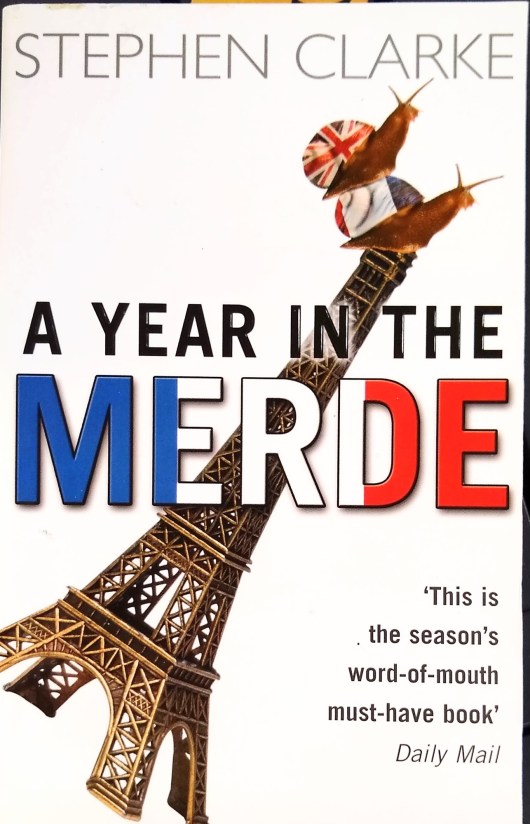
The Kennedy Half Century by Larry J Sabato
This was billed as the ultimate Kennedy book but sadly it isn’t. It tells the story of John Kennedy and his run for the vice presidency, his years as a senator and then his presidential run. It goes on to look at his presidential years and then his murder and the last half of the book looks at how subsequent presidents have fared compared to JFK and the impact of Kennedy’s own presidency on the latter ones, all the way up to Obama.
A lot of it is interesting but there is nothing that I haven’t not only read about before but read in much more detail. The life and death of John Kennedy is one of my great interests. His murder happened on November the 22nd, 1963 when I was just seven years old and since then I’ve watched documentary after documentary and read numerous books.
The author tries to show an open mind about the assassination, looking briefly at the many theories that have been put forward over the years. Was the CIA or the mafia involved? Were the culprits the Cubans or the anti-Cubans? Was the military industrial complex behind the murder as Oliver Stone suggests in the film JFK? Perhaps it really was Oswald after all.
Looking back I think that one of the drawbacks to the book is that the author hasn’t really made his mind up what he actually thinks has happened. If he had a viewpoint himself, the narrative might have had more focus. The only real investigative effort in the book was to review the acoustical evidence, a recording made by a police officer with a microphone jammed open during the shooting and which led the House Select Committee on Assassinations to declare there was a shooter on the famous grassy knoll.
Well, maybe not says the author. Their research pinpoints a different officer with the jammed microphone and not the one selected by the HSCA which means there wasn’t another shooter after all. OK but there were clear shots of gunfire on the tape. Where did they come from? The author seems to think that they may have been noises from the officer’s motorcycle. Really?
An interesting read but the final chapters on the subsequent presidents and their relationships to JFK was actually a pretty pointless exercise that could have been summed up in just one chapter. If you would like to find out more, the book has its own website where you can read, among other things, the review of the acoustical evidence. Click here to access. 
A Kind of Loving by Stan Barstow
This is another book that has been made into a successful film and also a great TV series. It’s a kitchen sink drama set in the early 1960s about a young Yorkshire lad who gets a girl pregnant and then realises he really wasn’t as in love with her as he thought he was. 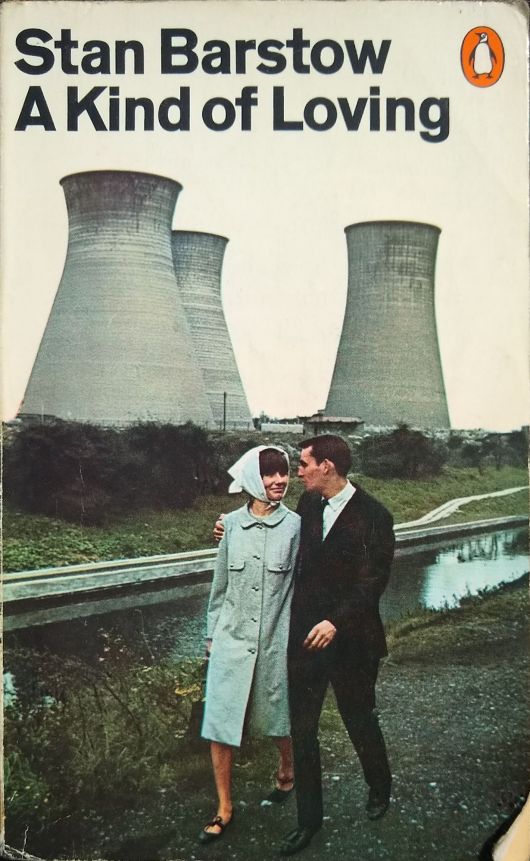 I’ve actually read this book quite a few times and it’s one of those that I mention when people ask me to describe Floating in Space. As much as I’m fond of Floating, this book is infinitely better. It’s a very simple story and probably one that has happened hundreds of times to hundreds of couples.
If you ever watch the TV series Long Lost Family, it shows that many people were in the same position as the couple in the book only instead of getting married, some young mothers in the 1950s and 60s were forced to give up illegitimate children for adoption.
Vic and Ingrid, the fictional couple, do get married even though Vic hopes for a last minute escape before the wedding day arrives. Not only is the main story authentic but so is the background to the book. Vic is a draughtsman in Yorkshire and his father is a miner.
The description of family life back then rings a bell with my own background in Manchester. Vic’s mother is a lot like my mother and there is a very lovely chapter when Vic goes to give blood with his father and then the two pop into the local pub for a pint. It was just like moments out with my own father, down to the banter with my mother when we both returned home. A wonderful read and so glad I brought it along to France.
 Mary’s Mosaic by Peter Janney
 Shall we Tell the President? by Jeffrey Archer.
 The Long Dark Night by Susan Lund
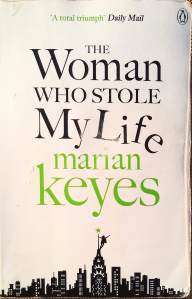 The Woman who Stole My Life by Marian Keyes.
 The Prime of Miss Jean Brodie
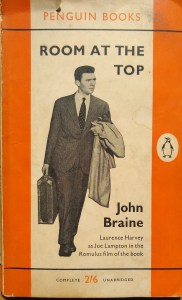 Room at the Top
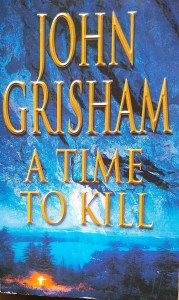 A Time to Kill by John Grisham
 I’m not sure which came first for me, the book or the film but I actually think it was the book. The Godfather was written by Mario Puzo and is the story of Don Vito Corleone, the head of one of the five mafia families of New York. The book opens with the wedding of Don Corleone’s daughter and Puzo sets the scene and introduces the various characters.
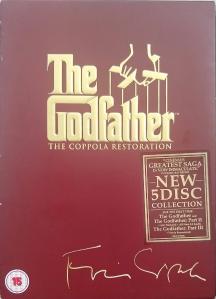 Francis Ford Coppola was the director of the film version and was also the co-writer of the screenplay along with Mario Puzo. Coppola wanted Marlon Brando to play the part of Don Corleone even though Brando at the time was rather unpopular with the producers. He was expensive, his last few films had not done well and his time wasting attitude had added huge expenses to his pictures. After the director had made the producers understand how important Brando was, they set various conditions for his employment. He would have to work for a reduced salary and put up a bond to ensure he would not delay the production. Another was that he had to have a screen test. Coppola has told the story in various interviews how he and his film crew had entered Brando’s house like ninjas and quietly set up their equipment. Brando slicked down his hair with shoe polish and stuffed cotton balls into his mouth to make the transformation into the aging mafia boss.
 Coppola decided that instead of finding the horse at the end of his bed like in the book, it would be better if Woltz awoke, was disturbed by something wet, pulls the bedclothes away to see blood and then uncovers the horse’s head. The head was the actual head of a horse, procured from a dog meat factory and Coppola mentions on the commentary to my DVD version that lots of animal lovers sent him hate mail about the horse, even though the horse had been condemned to its fate anyway.
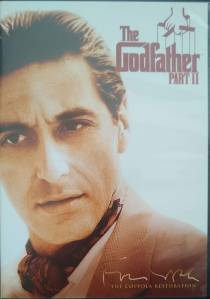 As previously mentioned, the book does have some storylines which were not used in the film but one chapter was a look at the beginnings of Vito Corleone. Born Vito Andolini in the Sicilian village of Corleone, Vito’s father was murdered by a local mafia boss and the young Vito was smuggled away to America. In America he took the name of Corleone and seemed to slip quietly into the role of mafia Don by murdering Fanucci, a New York Sicilian Godfather who preyed on his fellow Italians. Although this element of the story wasn’t used, Coppola kept the storyline for use in The Godfather Part II. The follow up film was a film classic in its own way.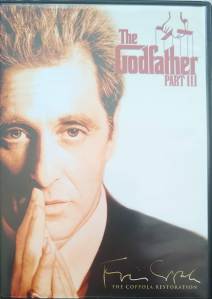
 It always happens to me when I’m away. I know I’ve written about this before but the National Lottery has been annoying me. Here I am away from home and I get an email saying check your account, you’ve won a prize. Great! I wonder what is it? The million-pound jackpot or £3.42 on the Thunderball? I’m guessing it’s the £3.42. Either way, the National Lottery site cannot be accessed from abroad so I’ll just have to wait until I’m back in the UK before I find out if I’m a millionaire -or not.
 Faithful by Marianne Faithful.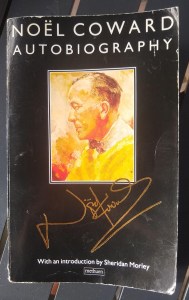


 I haven’t done an F1 post for a while so I reckon it’s time for a new one. F1 in 2023 seems to promise much but so far has failed to deliver. Red Bull seem to be winning everything which is great for them but makes things a bit boring for the average F1 fan. It’s in times like these that I tend to look back to the past for a little F1 drama.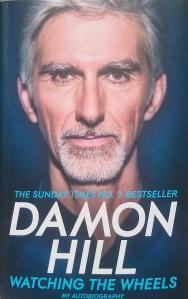
 After Graham’s death it was found that his pilot’s license had expired and this and some other things invalidated his insurance which meant that the other families who had lost loved ones in the crash were forced to sue Graham’s estate for compensation. This meant the Hills had to sell their home and move to a smaller house. These things seem to have weighed on young Damon’s mind for a long time, even into his own days as a racing driver.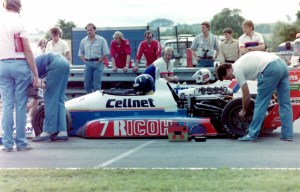



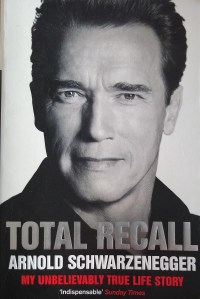 This book was a Christmas gift from Liz. She knows I’m a big film fan and I do love reading about the background to films and how they are made. Arnold is from Austria and he tells us a little of his life there but mainly focuses on his desire to be a great bodybuilder and to eventually go to America. There is a lot of talk about the process of competitive bodybuilding and the different muscles, muscle definition, reps and squats and all that stuff. Arnold eventually wins various competitions and is wondering how he can compete in the USA when he gets an invitation to do just that. The bodybuilding industry is a close knit one and there seem to be various people welcoming him to California, helping him to find a place to stay and so on. He wins more competitions and makes a little money. He starts a mail order business selling magazines and pamphlets about himself and his body building techniques. He brings one of his Austrian friends over and the two begin a bricklaying and home improvement business. His big break is getting a film part as Hercules and even though the production eventually goes bust it seems to give him a taste of the film business and he wants more. He plays Conan the Barbarian in the film version of a comic book hero and pretty soon he plays the Terminator and goes on to success after success, even becoming governor of California.
 This is not a book I brought on holiday but one I found on the shelves of our rented villa in Lanzarote. I started reading it when I got a little bored with Arnold Schwarzenegger and liked it so much I just carried on to the end. It is a real pleasure to read something by a master wordsmith and I enjoyed every minute even though I had read this novel years ago. Young Pip, apprenticed to be a blacksmith, is invited to the home of an eccentric rich woman, Miss Havisham, purely for her amusement. Later in his young life he finds he has ‘great expectations’ and is to inherit a remarkable property. He is taken to London to be brought up as a gentleman and although he is told that his benefactor has asked to remain a secret, he naturally assumes it is Miss Havisham. At the beginning of the book, Pip encounters Magwitch, an escaped convict on the marshes near his home. He compels Pip to bring him some food and a file. He is captured and transported to Australia and later we find, much to Mr Pip’s shock and amazement that Magwitch is the mysterious benefactor.
 This is a collection of globe trotting stories from John Simpson who has travelled the world as a journalist for the BBC. These though are travel stories with a difference, for instance in the first chapter he talks about airports, not the airports that I generally use, tourist destinations like Spain and Greece. The ones Mr Simpson mentions are airports in war torn Angola and Bosnia, and places like Kabul in Afghanistan and other places where he has had his passport and papers routinely torn up or thrown into a river by laughing revolutionaries and mercenaries. He tells us about headlong dashes to catch flights, including one somewhere in eastern Europe where he was in such a mess after weeks living rough the stewardess was reluctant to let him on board, especially as he had a first class seat. His fellow passenger in the next seat asked to be moved. Luckily John wasn’t flying on a budget airline like the ones I travel with.
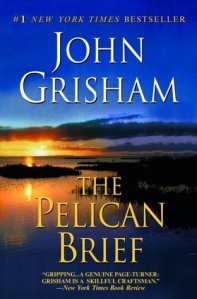
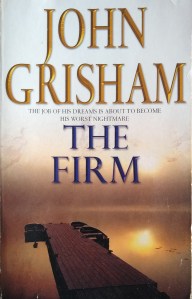 There is a process by which I choose books to take with me on holiday. I like to think it’s a thoughtful process combining different genres of books, some novels, maybe the odd classic, and some biographies and autobiographies. What actually happens is that the day before our trip I’ll just grab something near to hand that I know I haven’t read yet and shove it in my suitcase. Anyway, that’s how I ended up with the books you see above. Last year I read The Rainmaker by John Grisham and I thought it was a pretty good read. I must have mentioned that to Liz so she filed that away and got me a stack of Grisham novels for my last birthday. The Firm isn’t a bad read and in my case it was a nice change of pace after reading Dickens and John Simpson’s globetrotting memories. It’s a good story but like a lot of Grisham’s works, its more plot driven than character driven. The characters are sort of bland templates that I’ve recognised in a lot of his novels and so far I’ve only read three. Anyway, characters aside, this is a really original story about a young guy who graduates from law school and gets head hunted into a firm he has never heard of but which offers tremendous financial benefits, a brand new BMW, and an ultra cheap mortgage as well as other financial bonuses. The downside as he comes to learn later is that the firm is just a cover operation to launder money for a big mafia crime family and the FBI wants our hero James McDeere, to help them.
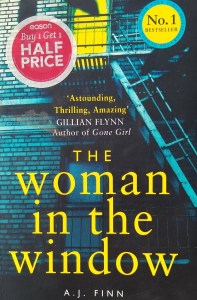 I’m not sure I would normally have picked up this book if I hadn’t run out of books to read. I saw this on the shelf in our rented villa and Liz had read it and mentioned about numerous references to old black and white films which were right down my alley, apparently.
 Sometimes you pick up a book that is just a joy to read and this was one of those books. Julia Child is a US TV chef, maybe one of the first TV chefs ever, although she is little known in England. The book is a memoir of her life in France, her journey as a Cordon Bleu chef and as a cookery book author, a TV star and as a wife and Francophile.
 During the lockdown I read a blog that was something along the lines of 100 authors you must read before you die. One of those authors was Ernest Hemingway. Not long afterwards I spotted a compilation of his works in a charity shop and I thought to myself, I’d better pick that up and get cracking on those 100 authors. It had been lying unattended on my book shelf for quite a while so I thought I’d throw it into my book bag for our latest trip to France.
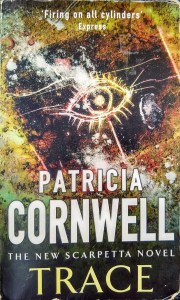 I picked this up a while ago, started to read it and lost interest, not because of the book itself but because it was in my book bag for taking outside and as the UK weather has been so poor, I haven’t done much outdoor reading this year so far. Anyway, I thought I’d throw it in my holiday book bag and give it a read while I was touring France. I’ve always liked the Kay
  I picked up this book in a second hand book shop. I’ve always liked Hillary Clinton. She’s not your average First Lady, content to stay in the background and support her husband, the President. Mrs Clinton liked to be part of Bill Clinton’s administration in a way that other first ladies have never been, sometimes for the right reasons, sometimes for the wrong ones.
