A week or so ago, August the 8th was the anniversary of the resignation of President Richard Nixon. He resigned the US presidency in 1974 after realising his battle to remain in office was finally lost. His battle for his tapes, which he believed were his personal property went on and on and was continued by his estate even after his death.
I have always understood that John F Kennedy was the first President to install a taping system in the white house though Wikipedia seems to think the practice began with Roosevelt. Many of the recordings made during Kennedy’s presidency have been released including those of cabinet meetings during the missile crisis of 1962.
Johnson carried on the tradition of taping and recording phone calls and numerous calls have been declassified and released by the authorities. Some with a special poignancy were even recorded on Air Force One on the 22nd November, 1963, the day Kennedy was shot and Johnson elevated to the presidency.
Anyway, despite his two predecessors, the President most famous for taping in the white house was Richard Nixon and it was the ‘Watergate tapes’ that were at the heart of the Watergate scandal and after reading many books on the subject I feel the Watergate scandal as it came to be known really had its roots in the turbulent year of 1968.
1968 was a landmark year for Nixon and for the USA itself. The public feeling for Vietnam had turned more and more sour as more GIs returned home in body bags. Demonstrations began; university campuses were alight with protests.
In the first primaries of the year incumbent president Johnson, who previously had a high approval rating with the public was surprised by a good showing from rival Senator Eugene McCarthy, running on a anti-war stance. His success urged Robert Kennedy to throw his hat into the ring and on the 3rd June, 1968 Johnson announced in a televised broadcast that he would not accept the nomination for president. Vietnam had overshadowed his presidency and all his other efforts, his so called ‘great society’ and his civil rights programme; all were overshadowed by the conflict in Vietnam.
Martin Luther King was shot dead in 1968 as was Senator Kennedy. Kennedy’s body was taken to Washington from California by rail and as millions waited by the tracks to watch his funeral train pass by, it must have seemed for many Americans like the end of the world.
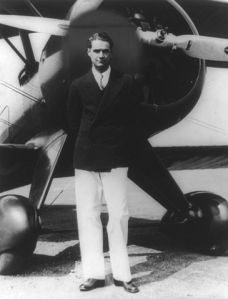 For one man though, sitting alone in a Nevada hotel suite, sealed off from the world by his Mormon minders, the death of Bobby Kennedy was an opportunity. The elderly Hughes, lying naked on a bed watching TV, his hair, long and unkempt and his finger and toenails uncut, was a far cry from the young film maker, aviator, and entrepreneur he had once been. Immediately he wrote a memo to his chief executive and public alter ego, Robert Maheu. He said basically that now Kennedy was lying dead or dying on the pantry floor of a California hotel this was a once in a lifetime opportunity to put on the payroll the entire Kennedy election team, in particular electoral strategist Larry O’Brien. O’Brien had served under Presidents Kennedy and Johnson and would later become chairman of the Democratic National Convention. Not a thought for the dying Kennedy, just the opportunity to get hold of a ready-made election team and put his own man in the white house. At the time Hughes had the idea of promoting Governor Laxalt of Nevada for the job. Fantastic as it may seem the genesis of what would become Watergate lay in Hughes actions on that night.
Hughes was worried about the nuclear testing in Nevada and he had sent Maheau on a mission to get Johnson to move the tests elsewhere. Johnson met with Maheau, listened, tried to get the promise of a donation towards his presidential library, but would not move the nuclear tests. Hughes felt he would need to speak with whoever won the election. Becoming increasingly more paranoid, and more and more worried about the nuclear testing, he tasked Maheau with offering a million dollar bribe to the man who would move the tests elsewhere:The man who would emerge victorious in the presidential election was Richard Nixon.
It was a pretty close run battle for the presidency in 1968 but Hubert Humphrey, the democratic candidate had little election funding although Hughes cannily hedged his bets. He made donations to both opposing candidates. Humphrey was elected as the democratic candidate in a shambolic convention marred by tear gas and protests and Eugene McCarthy, running on an anti-war ticket was ignored despite his earlier success in the primarys. Humphrey won the nomination even though he had not won or even contested any of the primarys. Richard Nixon however, won the eventual presidential election with his campaign pledges of ‘bring us together’ and ‘peace with honour’, which did not mean retreating from Vietnam as perhaps some people may have thought.

Picture courtesy Wikipedia
Nixon though, despite his victory, was worried. The defeat by John F Kennedy in 1960 still rankled. Many thought that the Kennedy victory had been a given a helping hand by voting fraud, especially in the Chicago area controlled by Democrat Governor Daley. Nixon though, felt his defeat was due to leaks about loans to his campaign and to his brother Donald from Howard Hughes. Larry O’Brien, despite his retainer from Hughes was running the democratic campaign and Nixon felt that O’Brien must know about Nixon’s own Hughes connection. What information did he have? What was in his safe in the Democratic Campaign headquarters in the Watergate building in Washington?
The FBI and CIA had already spurned Nixon’s requests for covert surveillance and they were dragging their feet over the leaks of highly classified information from government offices. The answer, it seemed to Nixon, was the creation of a white house covert intelligence unit that became known as the ‘Plumbers’ made up of of ex CIA and FBI members. Their job was to stop the leaks, and get Nixon the information he wanted.
Nixon wanted to know what was in Larry O’Brien’s safe in the Watergate building, what information did O’Brien have about a Nixon-Hughes connection? The plumbers would have to find out. On May 11th, 1972 the plumbers secretly entered the Democratic National Convention offices and left behind a number of bugs and listening devices. Problems arose soon afterwards when it was found the wiretapping devices were malfunctioning. There was no choice but to enter the building again. The five man team did so on the night of June 16th/17th 1972. Sometime after midnight on the 17th a security guard noticed that various doors into the building had been taped, preventing them from locking. He called the Police and the five men were arrested.
- James W. McCord – a security co-ordinator for the Republican National Committee and the Committee for the Re-election of the President. McCord was also a former FBI and CIA agent.
- Virgilio R. Gonzales – a locksmith from Miami, Florida. Gonzalez was a refugee from Cuba, following Castro’s takeover.
- Frank A. Sturgis – another associate of Barker from Miami, he also had CIA connections and involvement in anti-Castro activities.
- Eugenio R. Martinez – worked for Barker’s Miami real estate firm. He had CIA connections and was an anti-Castro Cuban exile.
- Bernard L. Barker – a realtor from Miami, Florida. Former Central Intelligence Agency operative. Barker was said to have been involved in the Bay of Pigs incident in 1962.
The five men were charged with attempted burglary and attempted interception of telephone and other communications. The burglary was reported in the media and it seemed at first that the incident was an unremarkable ‘third class burglary’ just as the white house press secretary Ron Zeigler described it. Zeigler announced that white house aide John Dean had made a full investigation into the matter when in fact Dean had done no such thing. Two others, E. Howard Hunt and G. Gordon Liddy who were involved in planning and arranging the break in, were also later arrested. They were the link from the burglars to the white house.
Gradually, various revelations appeared in the press, particularly those by Washington Post reporters Bob Woodward and Carl Bernstein, and this escalation of the issue, especially when reports of other abuses of power by the Nixon White House were revealed, forced the announcement of a Senate Investigation.
On February 7th 1973 the Senate voted to establish a select committee to investigate Watergate and during the hearings a surprising revelation emerged. On the 16th July 1973, testimony revealed that President Nixon had a recording system in the White House. Archibald Cox, the special counsel for investigating Watergate immediately issued a subpoena for the tapes. Nixon refused to hand them over citing executive privilege.
As you know, Nixon had to eventually hand over the tapes including one that had a mysterious eighteen minute gap. An impeachment process began and when Nixon was advised that the recommendation was likely to pass through the senate, he resigned. On August 8th, 1974, Nixon broadcast his resignation speech from the White House and stepped down at noon on the next day in favour of Gerald Ford.
One of the most interesting conversations on the Watergate tapes was, I have always thought, a conversation that took place on March 21st, 1973. John Dean felt that Watergate was fast becoming ‘a cancer within-close to the presidency, that’s growing. It’s growing daily’
John Dean: Where are the soft spots on this? Well, first of all, there’s the problem of the continued blackmail—
President Nixon: Right.
Dean: –which will not only go on now, it’ll go on when these people are in prison, and it will compound the obstruction-of-justice situation. It’ll cost money. It’s dangerous. Nobody, nothing–people around here are not pros at this sort of thing. This is the sort of thing Mafia people can do: washing money, getting clean money, and things like that. We just don’t know about those things, because we’re not used to, you know, we’re not criminals. We’re not used to dealing in that business. It’s a–
President Nixon: That’s right.
Dean: It’s a tough thing to know how to do.
President Nixon: Maybe we can’t even do that.
Dean: That’s right. It’s a real problem as to whether we could even do it. Plus, there’s a real problem in raising money. [John] Mitchell has been working on raising some money, feeling he’s got, you know, he’s got—he’s one of the ones with the most to lose. But there’s no denying the fact that the White House and [John] Ehrlichman, [Bob] Haldeman, and Dean are involved in some of the early money decisions.
President Nixon: How much money do you need?
Dean: I would say these people are going to cost a million dollars over the next two years.
Short pause.
President Nixon: We could get that.
Dean: Mm-hmm.
President Nixon: If you—on the money, if you need the money, I mean, you could get the money fairly easily.
Dean: Well, I think that we’re–
President Nixon: What I meant is, you could get a million dollars. And you could get it in cash. I know where it could be gotten.
Dean: Mm-hmm.
President Nixon: I mean, it’s not easy, but it could be done.
Could it really have been that the million dollars that Nixon was talking about was the same million dollars Hughes was offering to get the nuclear testing moved elsewhere? A paranoid old billionaire living in squalor, obsessed by germs who everything handed to him had to be wrapped in tissue paper. Could it be that Howard Hughes’ obsessions had eventually brought down the Nixon white house?
Further reading.
The Ends of Power. H.R. Haldeman
All The President’s Men. Carl Bernstein and Bob Woodward
Blind Ambition. John W. Dean
Will. G. Gordon Liddy
Citizen Hughes. Michael Drosnin
Steve Higgins is the author of Floating In Space available from Amazon.
 The 22nd November is the anniversary of the assassination of John F Kennedy; one of the most shocking events of the twentieth century. It’s something I’ve been interested in ever since I was a boy and I’ve collected many books about the subject.
 Rush To Judgement by Mark Lane
 Six seconds in Dallas by Josiah Thompson

 Time, there’s a thing. I have a theory about time and it’s this, it’s that time flows differently in different places. OK; sounds a bit mad doesn’t it? Let me explain further. Take somewhere like France. Dotted about France are innumerable war grave cemeteries. The conflicts of the first and second world wars left their mark on the landscape in various ways and even today farmers in the Somme and other places continue to dig up artillery shells and other reminders of the past.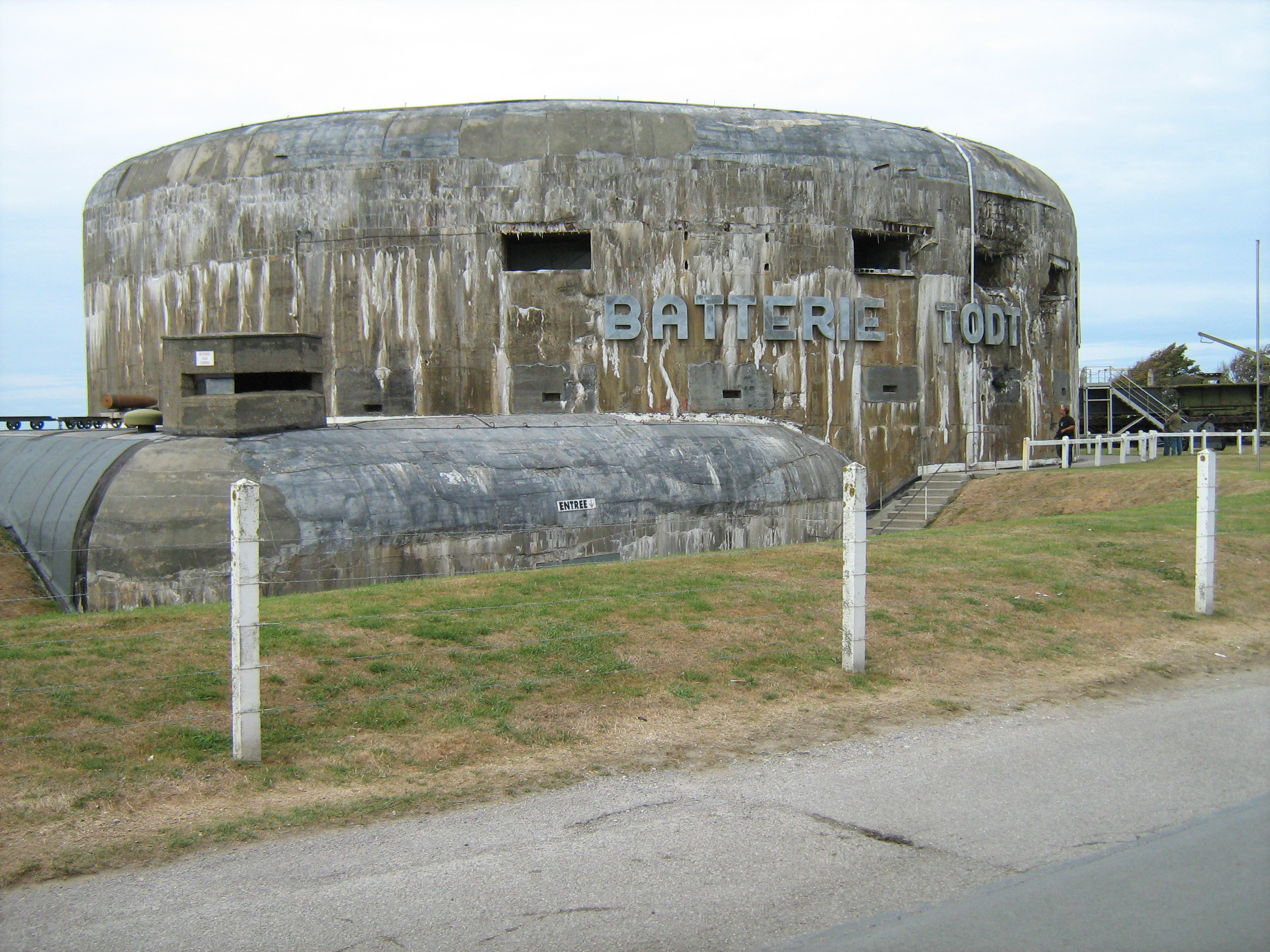


 I’ve seen and heard a lot of shocking events on television over the years. I remember hearing about the death of Princess Diana one Sunday morning while I waited for the kettle to boil for a morning cup of tea. I was watching TV when 9/11 happened and watched with horror as the second tower was hit by an aircraft. The very first tragedy I learned about from the television though was the shooting of Bobby Kennedy. I was only eleven years old then in 1968 but I knew exactly who Bobby Kennedy was and that his brother, the President, had been assassinated five years before.

