 As I write this latest blog post it’s the 20th January and Donald Trump is about to be sworn in as the 47th president of the USA. This was apparently the 60th such ceremony according to the first speaker although how that has been worked out, I’m not sure. Going by the huge amount of coverage on British TV, you might think that Trump had been elected president of the UK also.
When you look at it, Trump has pulled off an incredible comeback, He was defeated in the last election by Joe Biden and universally condemned for instigating a riot after claiming that his defeat by Mr Biden was a fix. He has been at the centre of various legal actions and prosecutions for numerous things including a pay off to a porn star hoping she would keep quiet about their affair. The porn star in question did not keep quiet and I’m pretty certain Mr Trump would be within his rights to ask for his money back although I doubt if he will.
The only other political comeback as impressive as Trump’s was the comeback by Richard Nixon.
Vice President Nixon as he was then was beaten by John Kennedy in the Presidential Election of 1960. He decided then to run for Governor of California but he was beaten in that contest too. He looked up at the assembled reporters and journalists and told them bitterly that that was it, ‘You won’t have Nixon to kick around anymore.’ He appeared to be retiring from politics. Even so, eight years later he was back as the Republican nominee in the election of 1968 and on that occasion, he won.

Picture courtesy Wikipedia
Some years later, things weren’t going too well for Nixon. He was caught in the middle of the Watergate scandal. Watergate would ultimately be the end of his presidency but his downfall would be his own presidential recordings. He tried to hang on to his tapes but when he appointed a special prosecutor and that same prosecutor began to want more and more tapes, Nixon fired him and various others in what became known as the Saturday Night Massacre.
Did he order the bugging of the Watergate building? Of course he did! Did he try to justify it? Well, he did say famously, ‘when the President does it, then it’s not illegal.’
As I mentioned last week, I’ve been watching a BBC documentary about King Charles the 1st and Charles, like Richard Nixon, was removed from office although in a much bloodier fashion. After his defeat in the English Civil War, he was put on trial and asked to plead either guilty or not guilty. Charles declined to plead. He was the King and had a divine right to rule over his kingdom. The court decided that his refusal to plead could only be interpreted as an admittance of his crimes. He was pronounced as guilty and only a few days later was put to death. The day of his execution was on the 30th January 1649. It was a cold and chilly day and Charles asked for an extra shirt in case the assembled crowd though he might be shivering with fear. He gave a short speech in which he said he was ‘going from a corruptible to an uncorruptible crown.’ Below is the King’s final scene from the film Cromwell.
Oliver Cromwell ruled England as the Lord Protector until his death in 1658 and two years later Charles II was recalled from exile and asked to return as the King.
Anyway, back in 2017 Donald Trump was declared the victor in the election and duly became the Chief Executive and Commander in Chief of the United States for the first time on January 20th of that year and all seemed to go fairly smoothly. The chap who introduced the proceedings back then -I’m afraid I can’t remember his name- commented on the inaugural speech of President Ronald Reagan which I quote here:
“To a few of us here today this is a solemn and most momentous occasion, and yet in the history of our nation it is a commonplace occurrence. The orderly transfer of authority as called for in the Constitution routinely takes place, as it has for almost two centuries, and few of us stop to think how unique we really are. In the eyes of many in the world, this every 4-year ceremony we accept as normal is nothing less than a miracle.”

Ronald Reagan via Wikipedia Commons
Reagan touched on the whole essence of democracy in that speech which is essentially this, that of the leader of a nation voluntarily handing over power to the new leader, the victor of the election process. In the news that same day in 2017 was a story about The Gambia’s long-term leader Yahya Jammeh who had, until then, refused to accept that Adama Barrow had defeated him in the election the previous December. He finally decided to hand over power as threats from other West African nations forced him to concede defeat. It would have been interesting if Barack Obama had said in 2017, ‘sorry, no, I’m not stepping down, I’m not ready yet!’ The last president who had to be forced from office was the man I mentioned earlier, Richard Nixon who finally accepted that the Watergate scandal had destroyed his presidency in 1973 and resigned, handing over to Vice-President Gerald Ford.
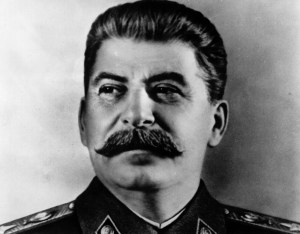
Joseph Stalin continued as leader of the Soviet Union until his death in 1953 at the age of 73. When he did not arise from his bedroom one morning at his dacha in Kuntsevo, just outside Moscow, his guards were too nervous to enquire if the feared dictator was alright. When they finally entered the room, they found he had collapsed and assumed he was suffering from a bout of heavy drinking the previous night. The guards made him comfortable on a couch and then withdrew. When he was found unable to speak the following day, only then were the doctors summoned.
Adolf Hitler and the Nazi party swept to power in Germany not by a revolution or by a military takeover but by the ballot box. Hitler’s Nazi party was the largest party in the Reichstag, the German parliament. Various other parties supported the Nazis all with the same thought, that Hitler was a simple man who could be controlled. They supported Hitler and convinced President Hindenburg to appoint him as chancellor. The thing is, once Hitler gained power and became chancellor, he gave himself emergency powers and began to imprison his political enemies. When Hindenburg died, Hitler combined the office of president and chancellor in one office. He outlawed other political parties and stopped elections.
Seen in that light, the events in the USA are, as Ronald Reagan said, nothing less than a miracle.
A US president can only serve two terms as the US senate, perhaps resentful of Franklin D. Roosevelt’s three terms in office, voted to limit a president to only two four-year terms. Eight years, not much time to change the world, is it? And there are only four years left for Donald Trump to make America great again, part of which seems to be the reappraisal of drug cartels as terrorist organisations, to rename the Gulf of Mexico the Gulf of America and to take over the Panama Canal.
What will happen then when Trump’s four years are over? Will he hand over to the next president as easily as Biden has handed over to him? Will he anoint a successor? His vice president, JD Vance perhaps? Or will he even try to stay on somehow for a third term?

Donald Trump. Picture courtesy Wikipedia
The election last year was interesting in that Joe Biden declined to run again. His decision was perhaps a little late and his chosen successor, vice president Kamala Harris, didn’t have a great deal of time to start her election campaign.
The very last time a sitting president decided not to run again was when Lyndon Johnson decided against being a candidate in 1968. Johnson wanted to create a great society for the American people but his administration was completely caught up in the Vietnam war. In one of 1968’s first primaries, anti-war candidate Eugene McCarthy featured well against Johnson, prompting LBJ’s arch enemy Robert Kennedy to enter the contest. Johnson withdrew and Kennedy was assassinated by Sirhan Sirhan. The Democratic candidate eventually turned out to be LBJ’s Vice President, Hubert Humphrey. I don’t think Humphrey even entered any primaries so how he eventually won the nomination I really don’t know. Either way he ran but was ultimately soundly defeated by Richard Nixon.
I personally didn’t rate Trump’s inaugural speech that well, it was hardly up there with ‘ask not what America can do for you but what you can do for America.’ Interestingly, many of the TV pundits I watched seemed to think it was all pretty wonderful stuff. Can he end the war in the Ukraine in one day like he claims?
Well, I’ll give him at least a week.
 As I’ve mentioned in a number of blog posts, it’s not enough to simply write a book, you have to get out there and start to sell it. Marketing is the bane of any self-published author’s life. Videos, Tweets, Facebook posts and WordPress blogs; I’ve done them all endlessly trying to bring my two short books into the media spotlight and flog a few copies.
 I heard nothing back but while I was shopping at Asda, I saw a stack of the free paper The Local Voice and picked one up. To my surprise there I was, beaming at the camera on page 8 proudly displaying A Warrior of Words to the unsuspecting reader. If that small article will get me any new sales only time will tell. Until then I’ve put the order for my new Ferrari on hold. I have to say though that seeing my picture in the paper did give me a sense of pride, just like whenever someone presses the ‘like’ button on one of my posts. Writing gives me a sense of accomplishment and like everyone, the occasional pat on the back – or picture in the newspaper – gives me that feel good factor.
 Letters from an Unknown Author!