It’s only the end of November as I write this but in January, Liz and I will be off to Lanzarote once again to escape the cold and wintry UK. I do love the laid back (and warm) atmosphere in Lanzarote and as usual I’ll be taking a stack of books to keep me occupied while I laze about on my sun lounger in-between dips in the pool.

The other day I popped on the TV to find one of the James Bond films showing. It was Casino Royale, the film version of the very first book in the Bond series and I thought about popping my copy of the book into our suitcase with an idea of re-reading the entire series of James Bond novels. Of course knowing me I’d probably leave the book over there and that would be my tidy collection of Ian Fleming 007 novels ruined.
Fleming did a lot of his writing in a small house he owned in Jamacia which happened to be not far from another house which Noël Coward used to own. Back in WWII, Coward had the idea of making a film about the Royal Navy and so he wrote a screenplay for a film titled ‘In Which we Serve.’ It was the story of a ship. The ship is engaged in battle and is sunk and as the survivors hang on to lifeboats and debris, their thoughts meander over their past lives and the story of the ship is told in flashbacks.
It’s a very good film inspired by the story of an actual ship, HMS Kelly, which was commanded by Lord Mountbatten and Coward was justifiably proud of the finished result. He stars as the captain of the ship and along the way there are various notable British stars, some of them making their film debuts. Coward realised he needed someone to help him with the technical aspects of the film so he asked film editor David Lean to help him direct the film. Lean was happy to do so. Coward asked what sort of a credit would he want and Lean answered that he felt the film should be credited as being directed by Noël Coward and David Lean. Coward wasn’t sure about this but he agreed and the filming began with Coward dealing with the actors and Lean dealing with everything else. Lean mentioned in an interview that Coward soon got bored with directing and pretty much left the whole thing to David.
David Lean went on to have a long career as a film director and made a number of huge epics. One of them was a controversial film called Bridge over the River Kwai. This was about British prisoners of war who were forced in very inhumane conditions to build a railway through the Burmese jungle. Alec Guinness plays the senior British officer who feels that building the bridge will restore British morale and undertakes to build it to the very highest standards.
One of the prisoners decides to escape and with a great deal of luck he makes it to the British lines. He is then approached by another officer played by Jack Hawkins and asked to return to the jungle and help blow the bridge up. Many veterans of the war in Asia were very unhappy about the film as the true horror of the cruelty and deprivations unleashed against the POWs was not properly depicted.
Alec Guinness and William Holden were the stars of the film and third on the billing was Jack Hawkins. Hawkins was one of the leading stars of British cinema in the 1950s. During the war Hawkins served in the army and when he returned to civilian life in 1946, he was soon acting on the stage. With a pregnant wife he became concerned about his future and so accepted an offer to become a contract star for Alexander Korda. He really became a star after a performance in Angels One Five, a film about an RAF station in the war. Another hit was Mandy where he played a sympathetic teacher of deaf children.
In 1953 he starred as a naval captain in The Cruel Sea. The film starts off at the beginning of World War 2 when the Jack Hawkins character is at the builder’s yard helping with the fixing up of his new escort ship, Compass Rose. His officers begin to arrive, many of whom are easily recognisable as stalwarts of the 40’s and 50’s British film industry: Donald Sinden, Denholm Elliot and Stanley Baker and later in the film Virginia McKenna appears as an officer in the WRNS.
The cast and characters are therefore introduced and then the ship goes off to war, protecting the many convoys of merchant ships, bringing the supplies so desperately needed by Britain. It’s one of the great war films of all time.
Two of my personal favourite films starring Hawkins were The Intruder, a great film in which Hawkins plays a former military officer who discovers a past member of his old tank regiment robbing his flat. He determines to find the man again and the story is told in flashback as he interviews a group of his former officers and men.
The other was The Long Arm in which we see how Scotland Yard worked back in 1956. Card files, books of fingerprints and albums containing mugshots, all of which had to be laboriously checked by hand. Some great detective work finally manages to nail the villain.
Hawkins was the epitome of the trustworthy British authority figure. In his obituary one writer wrote that Hawkins ‘exemplified for many cinemagoers the stiff upper lip tradition prevalent in post war British films. His craggy looks and authoritative bearing were used to good effect whatever branch of the services he represented.’
Hawkins himself was a three pack a day smoker and later became ill with throat cancer. In 1966 his entire larynx was removed however he was still able to appear in films with his dialogue dubbed by either Charles Gray or Robert Rietti. In the film Young Winston, he has hardly any dialogue at all.
Jack Hawkins died on the 18th July 1973. He was only 62 years old.
As I mentioned, Charles Gray was one of the actors who dubbed dialogue for Hawkins in later life. It must have been a difficult task because Hawkins has one of the most memorable voices in British cinema. Who was Charles Gray? Well you might not remember the name but Gray played one of cinema’s most notorious villains, Ernst Stavro Blofeld in the 007 film Diamonds Are Forever.

Charles Gray (Picture courtesy James Bond Movie Encyclopedia)
Diamonds Are Forever was the follow up film to On Her Majesty’s Secret Service. In that film George Lazenby had taken over the role of 007 from Sean Connery. Personally, I thought he was a great Bond but George himself was not popular with the producers. After the shoot was over he had grown his hair long and was sporting a beard. The producers wanted someone who could promote the 007 image even in their private life. Later Lazenby’s agent began to feel that the Bond franchise was finished and Lazenby decided against making another Bond film. What could the producers do? Well their knee jerk reaction was to offer Connery a large sum of money to return to the role. Connery agreed to play Bond one more time, banked a huge amount of money and pretty much appeared to sleep walk through the film.
Charles Gray played Blofeld who has taken over a huge empire run by the mysterious millionaire Willard Whyte and he plans to create a powerful laser using diamonds.
Who was the author of Diamonds Are Forever? None other than Ian Fleming of course, bringing our connections full circle.
 This isn’t a post about my
 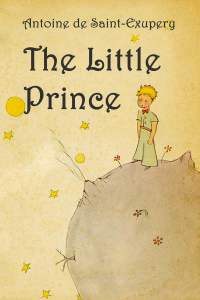 In the film William Bast played by Michael Brandon, leaves Dean in a restaurant and Dean later asks why Bast left. Bast was intimidated by Dean’s important looking friends and Dean replies that he was judging by surface appearances. When Bast questions Dean further, Dean produces his favourite book, The Little Prince and then goes on to read his favourite passage.
 Donald Campbell was the son of a famous racing driver and record breaker, Sir Malcolm Campbell. Campbell first broke the land speed record in 1924 at Pendine Sands in Wales which was the first of his nine land speed records. He also set the water speed record in his boat Bluebird K4. He was knighted in 1931 and died in 1948 aged 63. He was one of the few racing drivers and land speed record holders of his era to die of natural causes as many of his rivals were killed in crashes. His son, Donald Campbell, was determined to equal and even surpass his father’s achievements.
 This is perhaps where this post might start to unravel. I know the Donald Campbell link was a little tenuous and only based on a film but this next one was based on my own memory which can be prone to failure. I knew Noel was a great fan of the children’s writer E Nesbit and I’m sure I had heard or read somewhere that when he died, he was reading his favourite of that author’s books, The Railway Children. A quick bit of internet research and I see that Noel died after reading Nesbit’s The Enchanted Castle. Coward was a lifelong fan of E Nesbit who wrote a series of children’s books. He discovered the books as a child and revisited them many times during his life. In his diary he wrote this about the author:
 Woody is one of my


 Letters from an Unknown Author!