Last week I gave you part one of my Holiday Book bag so here we go with part 2, more of my holiday reads and also what happened when tragedy occurred and I ran out of books.
Let’s kick off with this one, a Christmas pressy from Liz and a book I’ve been dying to read but purposely kept to read on holiday.
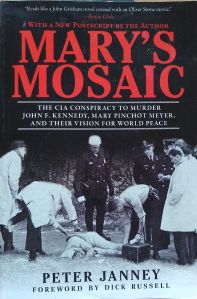 Mary’s Mosaic by Peter Janney
Liz bought me this book for Christmas and I’ve been saving it for a time when I can sit and read it undisturbed. After the assassination of President Kennedy there were numerous deaths of various witnesses in Dallas and elsewhere. One such death was of a lady named Mary Pinchot Mayer. She was the ex-wife of CIA agent Cord Mayer and one of JFK’s many mistresses. The author reckons she not only introduced the President to mind altering drugs but also agreed strongly with Kennedy’s desire for peace. He goes a little too far perhaps in making the case that Mary was the force behind JFK’s commencement address at American University in October, 1963 in which Kennedy called for both the USA and the Soviet Union to
‘direct attention to our common interests and to the means by which those differences can be resolved. And if we cannot end now our differences, at least we can help make the world safe for diversity. For, in the final analysis, our most basic common link is that we all inhabit this small planet. We all breathe the same air. We all cherish our children’s future. And we are all mortal.’
Mary was shocked by the murder of the President but came to realise the part played by the CIA and wanted to bring attention to the false story of the Warren Commission report. One day in Washington in October 1964, whilst walking along the towpath of the Chesapeake and Ohio canal towpath, she was murdered. Mary was shot once in the head and once in the chest and in this remarkable book the author goes on to trace the man who he thinks may have been the assassin.
A very fascinating read indeed.
So that was it, by the start of our third week I had read all my books. What could I read next? Well, there wasn’t much in our rented villa’s bookcase so I read one of Liz’s books, Shall we Tell the President?.
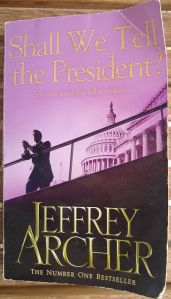 Shall we Tell the President? by Jeffrey Archer.
I’ve actually read this book before, many years ago but this was a new edition, rewritten by the author himself. In the original, the president in question was Edward Kennedy but of course, in real life Kennedy never made it to the White House, his challenge cut short by the ghost of what happened to Mary Jo Kopechene at Chappaquiddick. In this rewrite then, the author puts his own fictional president, President Kane in charge at the White House.
The FBI learn of a plot to murder the president. A Greek waiter, an illegal immigrant learns of the plot whilst working as a waiter at a restaurant in Washington DC. He calls the FBI and the two agents assigned to the case report quickly to their superior. Soon, one of the agents and their boss, as well as the informant are dead leaving only one agent who by chance has survived a murder attempt. He has six days to track down the assassins.
The book kept me interested but I can’t say it was a great read and I thought some of the dialogue was a little poor, in particular the FBI agent who kept referring to his new girlfriend constantly as ‘pretty lady’ was a little cringeworthy to say the least. Sorry Mr Archer but I’d have to give this one a five out of ten.
 The Long Dark Night by Susan Lund
This was a bit of a first for me. Liz had nothing else that I wanted to read so she said she would sort me out something on her Kindle. She searched for free books and I chose this one by Susan Lund. It was about ex-FBI detective Michael Carter who is now working for the police on cold cases. He is asked to look into the discovery of a dead body on a property that is currently being renovated. As more bodies are unearthed, Carter links the bodies to some current cases and feels that a serial killer might be at work.
Later, two young boys are abducted but one escapes and Carter finally has a clue to work on. Could the killer be an ex-police officer?
The book was a fairly interesting read in part but the author seems to lose direction towards the end and the finale seemed to me to be a bit of an anti-climax.
Even so, the book kept me interested for a few days.
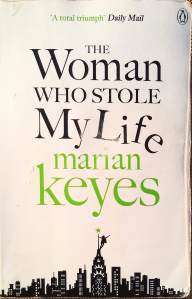 The Woman who Stole My Life by Marian Keyes.
This final holiday read was a book Liz took with her. She read it first, thought it was good and passed it on to me. I thought it was probably standard chick-lit fodder but actually it was a really good read, trotting along in a very chit chatty way, just like my own stories. It flips about timeline wise talking about things in the present and then flipping back to events of some years ago but once you got used to the situation it turned out to be a really enjoyable read.
Stella, many years ago was looking after her family when she was struck down by a mysterious illness which rendered her paralysed and unable to move or talk. Her neurologist Mannix, manages to communicate with her by getting her to blink, so he would go through the alphabet and she would blink at a particular letter and eventually they would put words and sentences together.
Gradually she begins to find that Mannix is becoming quite important to her especially when her husband and children don’t seem to be interested in either her or her predicament. When she gets well, she finds that 1, she has fallen for Mannix and 2, he has fallen for her, so much so that he has self-published a book called One Blink at a Time, a book of based on the notes he has made of their blinking conversations. Anyway, by a series of fluke events the book becomes a best seller in the USA and the two move to New York to promote the book.
All in all, a very enjoyable book indeed and I might even look at reading some more of Marian Keyes books.
That was my holiday book bag. What books are you planning to read on holiday?
What to do next: Here are a few options.
Share this post on your favourite social media!
Hit the Subscribe button. Never miss another post!
Listen to my podcast Click here.
Buy the book! Click here to purchase my new poetry anthology.
Click here to visit Amazon and download Floating in Space to your Kindle or order the paperback version.
 The Prime of Miss Jean Brodie
 Room at the Top
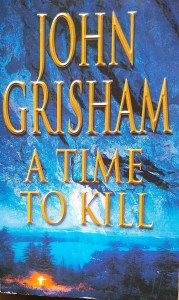 A Time to Kill by John Grisham


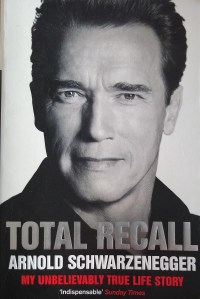 This book was a Christmas gift from Liz. She knows I’m a big film fan and I do love reading about the background to films and how they are made. Arnold is from Austria and he tells us a little of his life there but mainly focuses on his desire to be a great bodybuilder and to eventually go to America. There is a lot of talk about the process of competitive bodybuilding and the different muscles, muscle definition, reps and squats and all that stuff. Arnold eventually wins various competitions and is wondering how he can compete in the USA when he gets an invitation to do just that. The bodybuilding industry is a close knit one and there seem to be various people welcoming him to California, helping him to find a place to stay and so on. He wins more competitions and makes a little money. He starts a mail order business selling magazines and pamphlets about himself and his body building techniques. He brings one of his Austrian friends over and the two begin a bricklaying and home improvement business. His big break is getting a film part as Hercules and even though the production eventually goes bust it seems to give him a taste of the film business and he wants more. He plays Conan the Barbarian in the film version of a comic book hero and pretty soon he plays the Terminator and goes on to success after success, even becoming governor of California.
 This is not a book I brought on holiday but one I found on the shelves of our rented villa in Lanzarote. I started reading it when I got a little bored with Arnold Schwarzenegger and liked it so much I just carried on to the end. It is a real pleasure to read something by a master wordsmith and I enjoyed every minute even though I had read this novel years ago. Young Pip, apprenticed to be a blacksmith, is invited to the home of an eccentric rich woman, Miss Havisham, purely for her amusement. Later in his young life he finds he has ‘great expectations’ and is to inherit a remarkable property. He is taken to London to be brought up as a gentleman and although he is told that his benefactor has asked to remain a secret, he naturally assumes it is Miss Havisham. At the beginning of the book, Pip encounters Magwitch, an escaped convict on the marshes near his home. He compels Pip to bring him some food and a file. He is captured and transported to Australia and later we find, much to Mr Pip’s shock and amazement that Magwitch is the mysterious benefactor.
 This is a collection of globe trotting stories from John Simpson who has travelled the world as a journalist for the BBC. These though are travel stories with a difference, for instance in the first chapter he talks about airports, not the airports that I generally use, tourist destinations like Spain and Greece. The ones Mr Simpson mentions are airports in war torn Angola and Bosnia, and places like Kabul in Afghanistan and other places where he has had his passport and papers routinely torn up or thrown into a river by laughing revolutionaries and mercenaries. He tells us about headlong dashes to catch flights, including one somewhere in eastern Europe where he was in such a mess after weeks living rough the stewardess was reluctant to let him on board, especially as he had a first class seat. His fellow passenger in the next seat asked to be moved. Luckily John wasn’t flying on a budget airline like the ones I travel with.
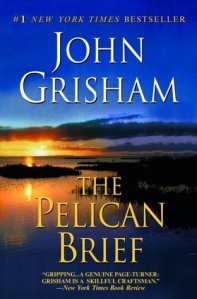
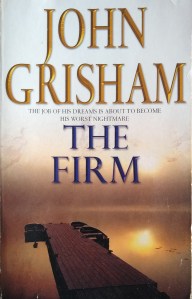 There is a process by which I choose books to take with me on holiday. I like to think it’s a thoughtful process combining different genres of books, some novels, maybe the odd classic, and some biographies and autobiographies. What actually happens is that the day before our trip I’ll just grab something near to hand that I know I haven’t read yet and shove it in my suitcase. Anyway, that’s how I ended up with the books you see above. Last year I read The Rainmaker by John Grisham and I thought it was a pretty good read. I must have mentioned that to Liz so she filed that away and got me a stack of Grisham novels for my last birthday. The Firm isn’t a bad read and in my case it was a nice change of pace after reading Dickens and John Simpson’s globetrotting memories. It’s a good story but like a lot of Grisham’s works, its more plot driven than character driven. The characters are sort of bland templates that I’ve recognised in a lot of his novels and so far I’ve only read three. Anyway, characters aside, this is a really original story about a young guy who graduates from law school and gets head hunted into a firm he has never heard of but which offers tremendous financial benefits, a brand new BMW, and an ultra cheap mortgage as well as other financial bonuses. The downside as he comes to learn later is that the firm is just a cover operation to launder money for a big mafia crime family and the FBI wants our hero James McDeere, to help them.
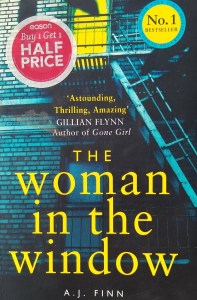 I’m not sure I would normally have picked up this book if I hadn’t run out of books to read. I saw this on the shelf in our rented villa and Liz had read it and mentioned about numerous references to old black and white films which were right down my alley, apparently.
 Sometimes you pick up a book that is just a joy to read and this was one of those books. Julia Child is a US TV chef, maybe one of the first TV chefs ever, although she is little known in England. The book is a memoir of her life in France, her journey as a Cordon Bleu chef and as a cookery book author, a TV star and as a wife and Francophile.
 During the lockdown I read a blog that was something along the lines of 100 authors you must read before you die. One of those authors was Ernest Hemingway. Not long afterwards I spotted a compilation of his works in a charity shop and I thought to myself, I’d better pick that up and get cracking on those 100 authors. It had been lying unattended on my book shelf for quite a while so I thought I’d throw it into my book bag for our latest trip to France.
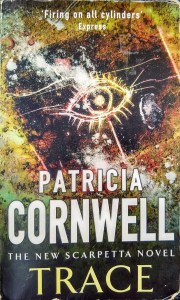 I picked this up a while ago, started to read it and lost interest, not because of the book itself but because it was in my book bag for taking outside and as the UK weather has been so poor, I haven’t done much outdoor reading this year so far. Anyway, I thought I’d throw it in my holiday book bag and give it a read while I was touring France. I’ve always liked the Kay
  I picked up this book in a second hand book shop. I’ve always liked Hillary Clinton. She’s not your average First Lady, content to stay in the background and support her husband, the President. Mrs Clinton liked to be part of Bill Clinton’s administration in a way that other first ladies have never been, sometimes for the right reasons, sometimes for the wrong ones.
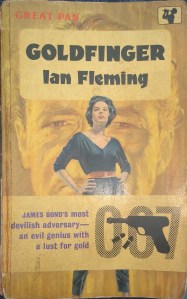 The James Bond Books by Ian Fleming.
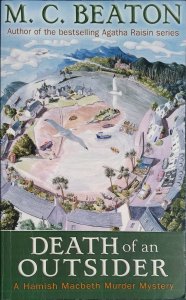 The Hamish Macbeth series by MC Beaton
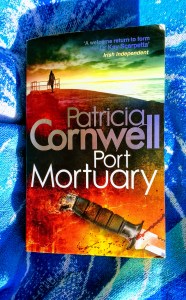 The Kay Scarpetta Series by Patricia Cornwell
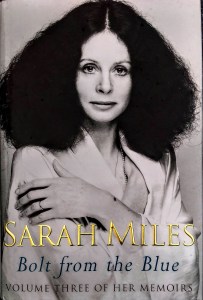 A long time ago I picked up A Right Royal Bastard somewhere in a charity shop. I have a feeling it was whilst walking round Skipton a few months ago but anyway, I didn’t know much about Sarah Miles except that she was a film actress and had appeared in Those Magnificent Men in their Flying Machines and also Ryan’s Daughter, that latter film being one of director David Lean’s less appealing films. Apparently, as Sarah reveals in Serves Me Right, Lean was so upset by the bad reviews he didn’t make another film until A Passage to India, many years later.
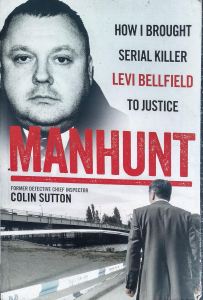 I always find it interesting just how I seem to hook up with a particular book. In this case I had an email from the ITV Hub telling me about a great new series of Manhunt and how I could watch the previous one on the ITV hub. Now what criteria ITV uses to send me an email like that I don’t know because not only had I never watched Manhunt, I’d never even heard of it. Looking at the ITV website I found that Manhunt was a three part thriller based on the real life case of killer Levi Bellfield. Having nothing more interesting lined up to watch that evening, Liz and I settled down to watch and actually got pretty interested, so much so that I immediately went to Abebooks and ordered a copy of the book that the series had been based on. It had been written, in fact written quite well by former Chief Inspector Colin Sutton who was in charge of the real life investigation of a young French student murdered in Twickenham, London.
 I really do love books and reading. My idea of heaven is lying by a pool in somewhere like Lanzarote with the sun shining and a book in my hand. What is important for a good read is time. It’s alright to read a book on your lunch break or on the bus travelling home after work but to really get into a book, some uninterrupted time is important. So, what is really so good about reading? You, the reader must like reading otherwise you probably wouldn’t be reading this but for me reading is about connecting with worlds I will never see and connecting with my own world too; finding that I’m not as unique or as different as I had thought and that other people have had similar experiences to me.
 The Wooden Horse was written by one of the actual escapees, Eric Williams. He was an RAF pilot shot down over Germany and imprisoned in 1942 and in 1950 the book was made into a classic WWII film.
 Under normal circumstances I might go on to talk further about my favourite books but I have done that already. I think I did my top
 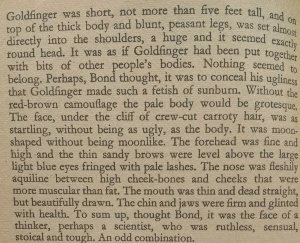 At school in English class our teacher had asked us to bring in a book with a vivid description of someone and my choice was Goldfinger. The book is about a man called Auric Goldfinger, a rich businessman who is suspected of smuggling gold. Bond is tasked to find out more and Fleming gives the reader a particularly compelling description of Goldfinger. Fleming describes him as having a body seemingly put together with parts of other people’s bodies. I always thought that was pretty good. Fleming used to write his first drafts of a book and then add in all sorts of details afterwards like the vodka martinis that James Bond liked so much and the Sea Island cotton shirts that Bond favours in the novels. It was actually Fleming who wore those particular shirts and who drank vodka martinis and also preferred scrambled eggs for breakfast. Many people have speculated who Bond was based on and my feeling has always been that in fact it was Ian Fleming himself.
 My current read is a book I mentioned last week, Charlie Chaplin and his Times by Kenneth S Lynn. Chaplin was a music hall entertainer working for the great impresario Fred Karno. Karno regularly sent teams of entertainers to the USA and while there Chaplin was invited to make a film for Mack Sennett, the famous producer of comedy films. Chaplin’s films proved to be enormously popular and so Chaplin moved on to different studios, all for better and better money until he established his own studio. I’ve always found the early days of Hollywood to be fascinating and this book is no exception.
 I do love books and like everyone I have my favourites. Last week I wrote about reading a blog post asking the reader for their top 5 books of all time. I decided to go one better and work out my top ten. I gave you the first five of my top ten books of all time and this week it’s time for the other five, all in no particular order.
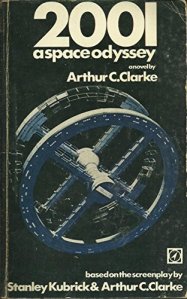 2001 A Space Odyssey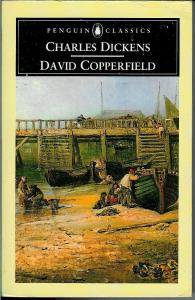
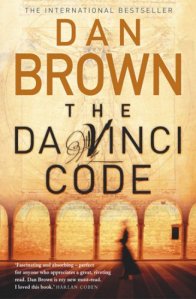 The Da Vinci Code
 page is for writers to talk about stuff, you know, publishing, agents, even actual writing but writers being a self-indulgent selfish lot, they usually just post links to their new books. Being similarly selfish I tend to add links to my new blog posts but on this occasion, I noticed something different, someone had asked a question. What are your 5 favourite books of all time?
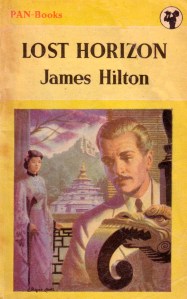 Lost Horizon
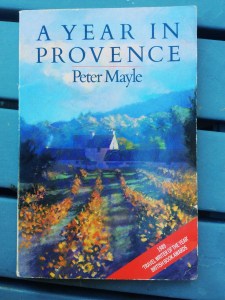 A Year in Provence by Peter Mayle

