 I do love my music. At home when there is nothing much on the TV I like to flip through the recommendations that come my way on Spotify. In my car I listen to CDs. I have always told myself that my precious CDs were too good to be dragged about in my car so I lovingly copied them to writeable CD discs, carefully, in most cases editing out the tracks I didn’t like. I’d be my own invisible DJ making up new CD albums with a track from here, another from there and so on. Lately, I haven’t done that so much and seeing that I don’t play my CDs much at home, I decided not to copy them just to bring the original CDs themselves into my car.
The other day after a particularly bad day at work, a day that was busy, where things didn’t go so well and I was just wanting to forget about things and release all the stress that had built up, I searched for something new, some music that I hadn’t played for a while that would relax me. I chose a CD that was a 1970’s disco collection.
I cranked my motor up, turned up the volume and as I turned onto the M6 motorway heading for home, my mind went back to a better time, a younger, easy going more relaxed time. I went back to the disco era.
So when did the disco era start and what was the first disco record?
Looking on Google to answer that question gives up various results by numerous authors and music writers but the answers are invariably just the opinions of those same writers. One answer was Rock the Boat by the Hues Corporation, another was She’s a Winner by the Intruders. (Never heard of it.) It might even have been that disco classic, Never can Say Goodbye by Gloria Gaynor. When it comes down to it, there is no definitive answer.
A lot of disco music comes from the soul tracks of the early seventies by groups like the O’Jays, Harold Melvin and the Bluenotes and the Trammps. Later, traditional pop bands tried to emulate those soul groups and the resulting soul/pop sound that became disco began emerging in the early 1970s in US urban night clubs and discotheques.
Here’s another random disco fact: the word discotheque is a French word meaning a library of discs. Discotheque was used in France to describe a nightclub where playing records had replaced a live band in the 1940s during the Nazi occupation. Modern Discotheques are where disco music began and something else that I noticed on Google were comments about the disco clubs of the seventies, the most famous one must have been the Studio 54 club in New York. Another google result mentioned that Seventies Disco was born on Valentine’s Day 1970, when David Manusco opened The Loft in New York City.
Anyway, that’s enough of Google for a while so here are some personal memories.
The record I probably most associate with disco is The Hustle, by a group called Van McCoy. I have a feeling they were just one hit wonders but I might be wrong. The Hustle seemed to me to be the perfect disco record at the time. Great tune, a great dance beat and just really well put together. Looking back at the track today in 2021, it’s still good but it’s not the work of musical genius I once thought it was.
Back in the mid seventies I used to occasionally visit the discos of Manchester, places like Pips, Saturdays, Rotters, Fagins and a dozen other clubs I can hardly remember. There was a club called Sands in Stretford which was always packed to the seams but the disco I remember the most was one I wrote about in Floating in Space, it was called Genevieve’s.
Genevieve’s was in Longsight, which was a pretty rough area of Manchester and one of the hazards of the place was that if you went there in your car, you never found it in quite the same shape as how you left it, if you found it at all.
I remember one long ago Saturday night. My friends and I had to queue up for about ten minutes to get inside but we took that as a good sign. After all, a queue meant the club was busy. A group of grizzly bouncers scrutinised us and under their intense gaze we paid the entrance fee then went on inside. We were met by the warm fireside glow of soft lighting and the loud, pulsating beat of disco music. Coloured spot lights flashed over the four dance floors, in the hub of which sat the DJ, turning slowly around in a revolving booth.
There were five bars. Two small corner bars, two long bars, and a circular bar at the far end of the club. It really was a well set out place. We headed for one of the corner bars and my mate asked “bitter Steve?” I nodded and he called out to the barmaid.
A small army of bouncers was wandering around the club and as we waited for our drinks an argument broke out at one of the slot machines. Without any questions two burly bouncers grabbed the offender and propelled him expertly to the door. Another hooligan tried to come to the rescue by jumping on the back of one of the bouncers but a third bow-tied, black suited gorilla punched him solidly in the side, twisted his arm up his back and quickly removed him also. It was the sort of place where they didn’t stand any messing and the beer tasted like 3 parts water to one part beer and your feet stuck to the floor as you walked around. No one to my knowledge ever decided to complain to the management.
Genevieve’s attracted all sorts of people. There were smartly dressed, obviously wealthy people, peeling off rolls of bills to pay for whiskies and gins and other spirits. There were many attractive, well dressed girls. The younger girls drank halves of lager, sat in groups, and danced in groups to the Motown music of the sixties. They would drop their handbags onto the floor as they converged together for the formation dance routines for ‘Jimmy Mack’ and ‘Third Finger Left Hand’.
There were groups of lads too, who held cigarette packets and lighters in their hands, or placed them down in front of them on the tables while they drank, talked and eyed up the girls.
I spent a lot of my young life in that club. Despite the watered down drinks and the frequent fights, my friends and I had a lot of fun there until one day it either closed down or we found a better place to go.
The track that really reminds me of that club was Bus Stop by the Fatback Band. It had a strong disco beat and lyrics that just seemed to consist of ‘Bus stop!’ ‘Do the Bus stop!’ ‘Are you ready? Do the Bus Stop!’
In 1977 John Travolta appeared in the ultimate disco film ‘Night Fever’ and Travolta danced away to the music of the Bee Gees and tracks like ‘Stayin’ Alive’ and the title track ‘Night Fever’. I don’t ever remember there being dancers like that in any club I ever visited but what the heck, it was still a good film.
It wasn’t enough to buy the records and dance to disco records in clubs, you had to look the part too. I had a stack of shirts with ‘penny round’ collars and matching fat ties and quite a few pairs of flared trousers. Oh, and don’t forget the 1970’s platform shoes. I must have looked about seven foot tall back in those days.
Disco came to an abrupt end in 1979 in the USA where there seemed to be an outcry against the genre. Many music fans apparently felt that the music industry had been taken over by disco and many artists who had begun to produce disco music themselves, people such as Rod Stewart, were accused of selling out. In the UK and most of Europe, disco music morphed seamlessly into new electronic music. Artists like Michael Jackson took dance music to a new level and his album Thriller which spawned a number of hit singles became one of the best selling albums of the 1980’s.
What was the last ever disco single? The easy answer is that there wasn’t one. Dance music continued into the eighties and from there to the present day. Groups like Shalamar and Colonel Abrams just carried on producing dance tracks but if I had to put my finger on any one track as being the last of the disco era, I’d vote for I’m Coming Out by Diana Ross, released in 1980 when flared trousers were making way for drainpipes and when ties and shirt collars were thinning down.
What was your favourite disco track?
What to do next: Here are a few options.
Share this post on your favourite social media!
Hit the Subscribe button. Never miss another post!
Listen to my podcast Click here.
Buy the book! Click here to purchase my new poetry anthology.
Click here to visit Amazon and download Floating in Space to your Kindle or order the paperback version.
 The lockdown has almost come to an end here in the UK this week. There are still some restrictions and it’s still advisable to continue wearing a mask in public and to keep washing your hands. If anything, at least we may benefit from the increased hygiene standards in future. I’m lucky in that I haven’t had the coronavirus but not only that, the winter is usually a bad time for me because I always, always end up with the flu or at least a very bad cold. This year I haven’t and that must surely be due to the continued hand washing and mask wearing.

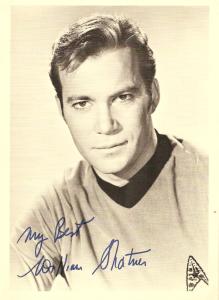 As a schoolboy I wrote to Desilu studios where I believed Star Trek was made, based on credits shown at the end of the show. After a while I received a set of glossy pictures of the show’s stars. They were all signed by the various actors, Shatner, Nimoy and so on but the signatures, I have long suspected, were made by a machine.
 When I used to work a nine to five job, I always looked forward to a bank holiday. It meant only working four days instead of five. Nowadays when I work shifts, I sometimes end up working the bank holiday but when it comes down to it, I don’t really care. It’s actually nicer having a break when the holiday resorts and seaside destinations are not packed. This bank holiday I wasn’t working but the weather in the UK, at least in the northwest where I live, was dreadful. It was cold and did nothing but rain so I spent the day watching TV.
 Last week I wrote a blog post about my life with
 Quite a while back, probably over two years ago, I seemed to be having problems focussing my right eye. My right eye is actually my good eye, the other, the left one is what my optician has always called my lazy eye. Years ago as a schoolboy I had to watch TV for an hour a day with a patch over my good eye. This was supposed to make my left eye, the lazy one, pull its way a bit more. That was successful to a point but the right one has always been better.
 One day when I had left school and could afford to pay for my frames I bought some aviator styles. I always loved that aviator shape you know, that sort of stylish aerodynamic looking frame. I even had a pair with smoked graduated lenses. That’s just an excuse to show you my favourite picture of myself. I was 21 and had the whole world at my feet. I was in Paris having just packed my job in and I was having the time of my life with one of my best friends, and I loved those glasses. A lot of years later when my optician recommended a pair of reading glasses I had those same aviator frames turned into reading glasses.
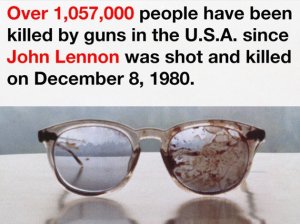 Elton John is probably the most famous spectacle wearer of all time. He even once wore a pair of specs with little windscreen wipers. John Lennon is another famous spectacle wearer. He wore those famous round glasses that you will see if you just type ‘Lennon glasses’ into Google.
 I really do love books and reading. My idea of heaven is lying by a pool in somewhere like Lanzarote with the sun shining and a book in my hand. What is important for a good read is time. It’s alright to read a book on your lunch break or on the bus travelling home after work but to really get into a book, some uninterrupted time is important. So, what is really so good about reading? You, the reader must like reading otherwise you probably wouldn’t be reading this but for me reading is about connecting with worlds I will never see and connecting with my own world too; finding that I’m not as unique or as different as I had thought and that other people have had similar experiences to me.
 The Wooden Horse was written by one of the actual escapees, Eric Williams. He was an RAF pilot shot down over Germany and imprisoned in 1942 and in 1950 the book was made into a classic WWII film.
 Under normal circumstances I might go on to talk further about my favourite books but I have done that already. I think I did my top
 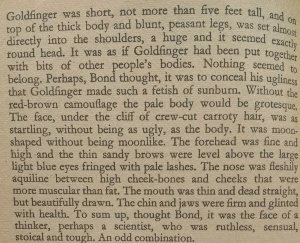 At school in English class our teacher had asked us to bring in a book with a vivid description of someone and my choice was Goldfinger. The book is about a man called Auric Goldfinger, a rich businessman who is suspected of smuggling gold. Bond is tasked to find out more and Fleming gives the reader a particularly compelling description of Goldfinger. Fleming describes him as having a body seemingly put together with parts of other people’s bodies. I always thought that was pretty good. Fleming used to write his first drafts of a book and then add in all sorts of details afterwards like the vodka martinis that James Bond liked so much and the Sea Island cotton shirts that Bond favours in the novels. It was actually Fleming who wore those particular shirts and who drank vodka martinis and also preferred scrambled eggs for breakfast. Many people have speculated who Bond was based on and my feeling has always been that in fact it was Ian Fleming himself.
 My current read is a book I mentioned last week, Charlie Chaplin and his Times by Kenneth S Lynn. Chaplin was a music hall entertainer working for the great impresario Fred Karno. Karno regularly sent teams of entertainers to the USA and while there Chaplin was invited to make a film for Mack Sennett, the famous producer of comedy films. Chaplin’s films proved to be enormously popular and so Chaplin moved on to different studios, all for better and better money until he established his own studio. I’ve always found the early days of Hollywood to be fascinating and this book is no exception.
 This week the lockdown has eased a little here in the UK. Groups of six can now meet together in public places and soon we will be able to go to the pub once again, as long as we stay outside. No doubt pubs who don’t already have beer gardens or some sort of outside area will be scrambling to get one set up. It will be nice to go down to the pub or restaurant again and take another step towards normality.
 Quite a while ago, I pondered in another post what I might do if I should win a lot of money in the lottery. I thought about it quite a bit and came up with the usual answers like new home, new car, holiday homes and so on. Maybe a new laptop or stand-alone PC. The fact is, not being used to money and not having particularly expensive tastes I probably wouldn’t have much of a clue. At home I have a whole lot of collectable things, model cars, antique telephones, books and DVDs so I could easily find myself being like the character in the film Citizen Kane, buying lots of things and having them stored somewhere. Would I be affected by a big win? I can see the headlines now: Northern Lottery winner says his 32-million-pound win won’t affect him. But of course, that wouldn’t necessarily be true. How did big money affect others? Let’s take a look at three multi-millionaires.
 Letters from an Unknown Author!