 Time for another film connections post, in which I link films and cinema personalities together and tell a few interesting stories along the way. This week, I hope to connect Douglas Fairbanks to Marlon Brando — and maybe even back again.
During Hollywood’s silent‑film era, Douglas Fairbanks was arguably its greatest star. In 1922 he released his lavish version of Robin Hood, the first film ever to have a Hollywood premiere, held at Grauman’s Egyptian Theatre. The production featured enormous sets, including a castle and an entire town built at Fairbanks’ studio on Santa Monica Boulevard, expanded on screen with hanging models and matte paintings.
Fairbanks, who performed many of his own stunts, famously rode down a huge curtain at Nottingham Castle, made slightly easier by a concealed slide. The film was directed by Allan Dwan, one of early cinema’s great pioneers.

Fairbanks, Mary Pickford, Chaplin and DW Griffiths who together created United Artists.
Among the cast was Alan Hale as Little John, a role he reprised years later in the 1938 Technicolor version starring Errol Flynn.
Flynn’s The Adventures of Robin Hood featured Olivia de Havilland as Maid Marian and Basil Rathbone as Guy of Gisborne, who serves as the film’s main villain. The Sheriff of Nottingham, the traditional arch enemy of Robin is portrayed in this film as more of a comic figure. Much of the film was shot in California’s Bidwell Park, standing in for Sherwood Forest, with additional scenes filmed at the Warner Ranch in Calabasas.
The film began under director William Keighley, but producer Hal B. Wallis later brought in Michael Curtiz, who had previously made several films with Flynn, including Captain Blood, the film that made Flynn a star.
The highlight of The Adventures of Robin Hood is the climactic duel between Robin and Sir Guy, culminating in the famous moment when their shadows dance along the castle walls.
Olivia de Havilland and Errol Flynn later admitted they were in love during filming, but Olivia declined to pursue a relationship as Flynn was married to actress Lili Damita. Olivia’s relationship with her sister Joan Fontaine was far less affectionate. Their childhood rivalry carried on into adulthood: when Joan won an Oscar for Suspicion, she rejected Olivia’s congratulations, and when Olivia later won her own Oscar, she returned the favour. They reconciled in later years, only to fall out again over their mother’s medical treatment.
My favourite of Joan’s films, and perhaps her most well‑known, is Rebecca, directed by Alfred Hitchcock.
Released in 1940, Rebecca was Hitchcock’s first Hollywood film. In Monte Carlo, a shy young woman (played by Fontaine) meets the English gentleman Maxim de Winter and believes he is about to jump off a cliff. They later fall in love and marry, but the new Mrs de Winter (her name is never revealed) feels overshadowed by Maxim’s late wife, Rebecca. Olivier apparently wanted his own wife, Vivien Leigh, for the role, but Hitchcock chose Fontaine.
In 1956 Laurence Olivier announced he would direct a film version of Terence Rattigan’s The Sleeping Prince, retitled The Prince and the Showgirl. That same year Marilyn Monroe, newly married to Arthur Miller, arrived in England to make the film. Her production company, Marilyn Monroe Productions, had purchased the rights to Rattigan’s play, and she and Olivier would co‑produce.
Just as in Rebecca, Olivier wanted Vivien Leigh for Marilyn’s part, and tensions arose early. Marilyn looked to her acting coach, Paula Strasberg, after every take rather than to Olivier. He banned Strasberg from the set but soon had to readmit her. Marilyn was nervous and frequently late while Olivier and the rest of the cast were punctual. It was not a smooth shoot.
 The fundamental clash was their acting styles. Olivier was classically trained and dismissive of the Method, the technique Marilyn had embraced. Yet in the finished film which I watched recently, Marilyn comes across far better than Olivier.
Marilyn studied the Method at the Actors Studio in New York under Lee Strasberg. The technique, rooted in the work of Konstantin Stanislavski, encourages actors to draw on their own emotional experiences to inhabit their characters fully.
Another famous Method actor (perhaps the most famous Method actor ever) was James Dean. His breakthrough came in 1955 with East of Eden, directed by Elia Kazan. Dean had also studied at the Actors Studio and, after theatre work and television roles, was cast in East of Eden while performing in the play See the Jaguar.
Kazan had previously directed Marlon Brando in A Streetcar Named Desire and On the Waterfront. Streetcar, based on Tennessee Williams’ play, was set in the Deep South. Kazan had directed the Broadway production and used the same cast for the film, with one exception: Vivien Leigh, who had played Blanche DuBois in the London stage version, was brought in for the film because of her star status.
In the story, Blanche, a former Southern belle, moves in with her sister Stella and Stella’s husband, Stanley Kowalski, after losing her home to creditors. Blanche finds Stanley loud and rough, and at one point he explodes in a drunken rage. Blanche and Stella hide from him, only for Stella to return to Stanley’s arms after his famous calls of “Stella!”
Brando was one of the great screen actors, but like Richard Burton, he sometimes questioned whether acting was a suitable profession for a man. Burton nevertheless gave his all to every role, knew his lines, and delivered superb performances. Brando, especially later in life, often did not. He refused to learn his lines and relied on “idiot boards” placed just out of shot.
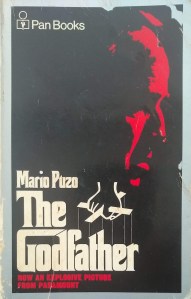 When The Godfather was being cast, Warner Bros. refused to consider Brando, viewing him as too difficult. Director Francis Ford Coppola, however, was determined to have him as Don Corleone. The studio eventually agreed, but only if Brando accepted a reduced salary, posted a financial bond against potential misbehaviour, and completed a screen test.
Coppola filmed the test at Brando’s Mulholland Drive home. In the footage, which can be found online, Brando stuffed his cheeks with cotton wool, slicked back his hair, and muttered vague Italian‑sounding phrases. The studio was impressed, and Brando was cast.
Filming took place in and around New York in 1971, and the film was released in 1972. Brando won the Oscar for Best Actor but boycotted the ceremony, sending Sacheen Littlefeather to decline the award on behalf of Native Americans.
Earlier I wondered whether I could link back from Brando to Fairbanks. Here’s the admittedly thin connection.
In 1967 Brando starred with Sophia Loren in A Countess from Hong Kong, a romantic comedy written and directed by Charlie Chaplin. The film was a box‑office failure and turned out to be Chaplin’s last.
Chaplin had been heavily criticised after World War II for supposed communist leanings, and in 1952, when he left for a visit to England, the US Attorney General declined to renew his re‑entry permit. Chaplin did not appeal. Instead, he sent his new wife, Oona, to settle his affairs and moved permanently to Switzerland.
In 1972 Chaplin was invited back to Hollywood to receive a special Oscar for his contribution to cinema. It was an emotional return, and he was visibly moved as he accepted the award.
In the film Chaplin, directed by Richard Attenborough, we see Chaplin returning to the USA and taking a sentimental drive past his old studio lot, then the headquarters of A&M Records.
As he drove through Hollywood, I’m sure Chaplin might have thought for a moment about his best friend, Douglas Fairbanks, his partner in United Artists who, back in 1922, made his memorable version of the Robin Hood story.
What to do next: Here are a few options.
Share this post on your favourite social media!
Hit the Subscribe button. Never miss another post!
Listen to my podcast Click here.
Buy the book! Click here to purchase my new poetry collection.
Click here to visit Amazon and download Floating in Space to your Kindle or order the paperback version.
Click here to visit amazon and purchase Timeline, my new anthology.
Share this:
- Share on Facebook (Opens in new window) Facebook
- Share on LinkedIn (Opens in new window) LinkedIn
- Share on WhatsApp (Opens in new window) WhatsApp
- Share on Reddit (Opens in new window) Reddit
- Share on X (Opens in new window) X
- Email a link to a friend (Opens in new window) Email
- Share on Pinterest (Opens in new window) Pinterest
- Print (Opens in new window) Print
- Share on Tumblr (Opens in new window) Tumblr
 My Autobiography by Charles Chaplin.

 Peter Sellers was a master of impersonation and the funny voice and it was his voices and the inspired madness of writer Spike Milligan that made the Goon show such a hit. Sellars went on to make many a memorable comedy movies, including the Inspector Clouseau series but for his last movie, ‘Being There’, Sellers based his character, Chancey Gardner on Stan Laurel, whom he made friends with and spent time with when he lived in Hollywood. Sellars was a strange character and if you ever catch that wonderful
