10 Classic TV Ads

Don’t you just hate TV adverts? I certainly do. There are those times when a TV advert comes in useful I suppose. Perhaps when you are watching a good film and you need to make a cup of tea or pop to the toilet. These days in the hi tech world of TV, most people are able to pause live TV and do those things anyway. I wouldn’t mind if the TV adverts were actually worth watching but these days of course they aren’t. Anyway, here are 6 classic TV ads of yesteryear that I think are rather good. Here we go . .

1.

This is an advert for Strongbow cider featuring Johnny Vaughn, who you might remember as fronting the Channel 4 breakfast show many years ago, and Jerry Hall. Jerry was an American model and was once upon a time involved with Bryan Ferry and then Mick Jagger. It’s a fun advert that has always made me laugh.

2.

A particular favourite of mine is the Ford Puma advert from 1997 featuring Steve McQueen. McQueen of course passed away from cancer in 1969 so how did he feature in the ad? Well, filmmakers shot footage of the Ford Puma in modern San Francisco and digitally inserted McQueen into the driving seat using footage from his 1968 film Bullitt. The result was a stylish short TV ad recreating a scene from the original feature film.

3.

An old TV advert I always used to enjoy involved an old guy trying to trace a copy of a secondhand book; Fly Fishing by J R Hartley. He eventually finds a copy and the book seller asks his name. “J R Hartley” he replies. What were they advertising? Yellow Pages! Strangely enough some bright spark – actually author Michael Russell – produced a spoof book; Fly Fishing by J R Hartley which became a best seller and prompted two additional sequels.

4.

Probably the funniest classic TV ads are the ones with Leonard Rossiter and Joan Collins which are promotions for Cinzano. They actually made 10 TV commercials between 1978 and 1983 which all ended with a glass of Cinzano getting spilled all over Joan.

Rossiter had a successful theatre career but is best remembered for his portrayal of the seedy landlord Rigsby in TV’s Rising Damp, still shown regularly on UK TV. Joan Collins has had a long career in TV and films including a spell in the USA starring in the TV series Dynasty. This year, 2025, she is due to portray Wallis Simpson in a new film production. Leonard Rossiter died in 1984 aged 57.

5.

A great advertising series were those for Boddingtons beer. I used to love a pint of ‘Boddies’ as we used to call it but then the brewery was taken over by another company (Whitbread, I think) and the Boddingtons bitter they produced was really not like the original Boddingtons at all. Anyway, back in the 1990s a series of adverts were produced starring Melanie Sykes speaking in a broad Manchester accent.

6.

My particular favourite Boddingtons ad was this one that starts off in Venice but ends up somewhere in Manchester.

7.

Bolton comedian Peter Kaye featured in a series of ads for John Smiths beer. Can’t say I was that keen, then or now, on John Smiths beer but the adverts were good.

8.

A great favourite for many people were the puppet ‘aliens’ used in an advert for Smash which was a powdered version of mashed potatoes. You just added liquid I presume but personally, I’m happy peeling and boiling my potatoes to make mash just as I have always done.

9.

In 2018 Elton John featured in a Christmas commercial for top end store John Lewis. According to Wikipedia there is a regular Christmas ad for the store every year. I’ve clearly missed the others but I always thought the Elton John one was pretty special.

10.

I’m going to finish with this one advertising another beer, this time Heineken. Bryan Pringle plays a sort of latter day Professor Higgins trying to teach a very well spoken lady, the exotically named Sylvestra le Touzel, to speak cockney. Bryan Pringle featured in a number of films and numerous sitcoms from the 70s to the 90s. He died in 2002.

What were your favourite TV ads?


Those were my 10 TV ads but just before I go to press I thought I’d add one final one. I know I said earlier that modern ads are just not as good these days but I recently spotted this one in which Meg Ryan and Billy Crystal were asked to recreate that famous scene from When Harry met Sally. (I’ll have what she’s having!)


What to do next: Here are a few options.

Share this post on your favourite social media!

Hit the Subscribe button. Never miss another post!

Listen to my podcast Click here.

Buy the book! Click here to purchase my new poetry collection.

Click here to visit Amazon and download Floating in Space to your Kindle or order the paperback version.

Click here to visit amazon and purchase Timeline, my new anthology.



The TV Shows of Gerry Anderson

Many years ago when I was still at junior school, one of my friends asked me if I had seen a new TV show about a flying car. I hadn’t but apparently it was really good and so I made a mental note to watch out for it. As a child I was pretty keen on TV. My dad used to call me ‘square eyes’ because I watched so much TV and as you might imagine I soon found the TV show my friend had told me about. It was a short puppet show about a special machine called Supercar that could not only fly but also dive under the sea. It was designed and built by Professor Popkiss and Dr Beaker and the test pilot was a guy called Mike Mercury. I loved Supercar and everything about it and even though I didn’t realise it then, I had become a huge fan of TV producer Gerry Anderson and his Century 21 Productions.

Gerry Anderson was born in 1929 and after the war earned a traineeship with the British Colonial Film Unit. Later he worked for Gainsborough Pictures and had various jobs, subsequently as a director. He and cameraman Arthur Provis formed a production company called AP Films after their two names and began producing TV shows for children. Their first project was in 1957 called The Adventures of Twizzle and was the first time Gerry worked with puppeteer Christine Glanville, musician Barry Gray and special effects supervisor Derek Meddings.

They followed up with more puppet shows, Torchy the Battery Boy and the first series I remember, Four Feather Falls, a cowboy show about a sheriff with magic guns.

Anderson married his wife Sylvia in 1960 and the two collaborated on Supercar, Gerry’s first sci-fi puppet show in 1960. The series marked the first time Gerry used the name Supermarionation to describe the process which enabled the puppet mouths to move in synchronisation with pre-recorded dialogue. All the characters in the shows had American accents so the shows could be sold to the USA and it was Sylvia who was responsible for the characters and their fashions while Gerry concentrated on other aspects of the shows.

The next series was Fireball XL5 about a spacecraft that was part of the World Space Patrol piloted by Steve Zodiac. The following show, Stingray was the first to be filmed in colour. Stingray was a submarine in the service of the WASP, the World Aquanaut Security Patrol and was piloted by Troy Tempest and his colleague ‘Phones’ who was a master at using sonar equipment. The duo discover an undersea kingdom where King Titan holds sway over his people, the Aquaphibians. Troy and Phones rescue the mute undersea girl Marina who joins them onboard Stingray. Most of the characters had sea related names like, Marina, Commander Sam Shore and his daughter, Atlanta. Atlanta was voiced by Lois Maxwell who played the original Miss Moneypenny in the James Bond films.

Stingray was probably my favourite of Anderson’s TV shows. I particularly loved the opening sequence in which Commander Shore exclaims ‘Anything can happen in the next half hour!’

Stingray was filmed in 1964 and the show fitted neatly into the expanding Anderson universe set, like all his sci-fi shows, 100 years into the future. Around this time AP Films developed a merchandising company responsible for licensing all kinds of items related to the shows, things like models and puppets and so on. I used to have a puppet of Venus, the space doctor from Fireball XL5 although I think I would have preferred a Steve Zodiac puppet. I had a Fireball XL5 rocket which could be fired into the air with a big catapult and as it came down, a parachute deployed to float it down gently. I also had quite a few Stingray models. One was a plastic kit I had to put together and another was a plastic Stingray shaped water pistol.

image courtesy flickr

There was also a comic which I absolutely loved called TV21 with comic strips of all the sci-fi Anderson shows. TV21 had a front page fashioned like a newspaper with headlines referring to the stories coming up on the inside pages.

The next project for AP Films was probably Gerry and Sylvia’s greatest success and it was called Thunderbirds. Thunderbirds was about a secret organisation called International Rescue that had a small fleet of highly advanced machines and equipment with which to perform rescue operations. Millionaire ex-astronaut Jeff Tracy was the head man and the organisation was secreted in his island home. His five sons were the Thunderbird pilots, John, Scott, Virgil, Gordon and Alan, all named after US astronauts of the 1960s. The genius behind the Thunderbird craft was Hiram Hackenbacker, known as ‘Brains’. Thunderbird’s nemesis was a secret agent known as the Hood because of his talent for disguise and in many episodes the Tracy brothers had to ask their London agent, Lady Penelope, to track him down and sort him out.

Lady Penelope Creighton-Ward lived in a huge mansion somewhere in southern England and her manservant and chauffeur was Parker, a reformed safecracker. The head of ITV Sir Lew Grade saw the first episode and was so impressed that he asked for the episodes to be extended from 30 minutes to a full hour, less TV adverts of course. Gerry wanted Fenella Fielding to voice Lady Penelope but in the end Sylvia herself took on the role.

Thunderbirds is probably my second favourite of all the Gerry Anderson series. The great thing about it and really, the secret of its success was the highly intelligent scripts which treated its audience of children not as kids but as intelligent young adults. Two scripts that spring to mind were one called The Cham Cham about a code transmitted on a musical melody and another where Parker was called upon to break into the Bank of England. Later in the episode someone is trapped inside the vault and Parker is asked to break in again to rescue the man before the air is used up in the vault. Parker though thinks that his old mate, a bank robber recently released from prison, is about to complete his life’s ambition to break into the bank and so he tries to slow down his and Penelope’s drive into London.

A successful feature film, Thunderbirds are Go, was made in 1966 and AP Films began a new life as Century 21 Productions.

The follow up TV series was called Captain Scarlet and the Mysterons. Captain Scarlet is part of an organisation called Spectrum in which all the members have code names relating to colours. The Mysterons have the power of re-animation and both Scarlet and Captain Black have been re-animated giving them powers of indestructibility. It wasn’t really my cup of tea but the puppets in the series made a step forward in having normal dimensions instead of large heads like the previous shows.

Two further puppet shows followed, Joe 90 about a young boy who becomes a secret agent by using the brain patterns of various people. His father, Professor MacLaine had designed a machine called the Big Rat (Brain Impulse Galvanoscope Record and Transfer -funny how all these old acronyms come back to me!) The Big Rat takes the brain pattern of a pilot for instance, feeds them to the professor’s young son -the Joe 90 of the title- and he is able to fly a plane.

The Secret Service was a mixed puppet/live action series about a secret agent who is shrunk down to a small size and the producers used puppets in normal sized sets. Stanley Unwin played the role of an eccentric vicar who is part of a secret organisation called BISHOP (British Intelligence Service Headquarters – Operation Priest). The series was cancelled after 13 episodes as Lew Grade didn’t think the inclusion of comedian Stanley Unwin and his gobbledegook language would work in the USA.

Gerry Anderson’s ambition was always to leave the puppet shows behind and move on to live action features and after a live action sci-fi film Doppelganger, Gerry began work on UFO. UFO was set in the 1980s and was about a secret organisation called SHADO (Supreme Headquarters Alien Defence Organisation). The Earth is under attack from UFOs and it is SHADO’s job to defend the world. The headquarters is based in the Harlington-Straker film studios with an outpost on the moon called Moonbase. Moonbase tracks the UFO’s with the help of SID (Space Intruder Detector) and launches their interceptors. Ed Bishop, previously the voice of Captain Blue in Captain Scarlet, played Ed Straker and Gabrielle Drake was the Commander of Moonbase.

I loved the series but the TV networks were unsure whether UFO was aimed at children or adults, presumably because of Gerry Anderson’s previous childrens’ shows. Anderson prepared for the second series in which the American networks had asked for more lunar based stories. Many new sets were built and then series 2 was cancelled. Gerry then offered the networks a new show, Space 1999, centred entirely on the moon.

In Space 1999, a series I never really liked, a nuclear explosion pushes the moon out of earth orbit and out into space and the series chronicled the adventures of those still living on Moonbase Alpha. Husband and wife team Martin Laudau and Barbara Bain starred in the show which ran for two seasons but during the production Sylvia and Gerry divorced.

Gerry returned to producing more TV shows for children like Terrahawks and Space Police but even though new technology and techniques helped with the puppetry and filming, without Sylvia and her characterisations, those productions were a little lame.

In the 1990s Gerry produced a new series of Captain Scarlet replacing the puppets with computer animations.

Gerry Anderson died in 2012 aged 83 while Sylvia lived to be 88. In 2015 she made a guest appearance in an episode of a new animated series of Thunderbirds are Go as Great Aunt Sylvia, a relative of Lady Penelope. She died in 2016.

The two left behind a legacy of some much-loved television shows but what was the secret of the success of Gerry and Sylvia’s original productions? Personally, I think there were a number of elements: Outstanding and intelligent scripts that treated the younger viewers as young adults. The fabulous music and theme tunes of composer Barry Gray. The wonderful characters created by Sylvia. The special effects from Derek Meddings who went on to work on the James Bond films and of course Gerry Anderson who brought all those elements together.

This year, 2023, Thunderbirds can be seen on the Talking Pictures TV channel, 58 years after it was first seen on TV.


What to do next: Here are a few options.

Share this post on your favourite social media!

Hit the Subscribe button. Never miss another post!

Listen to my podcast Click here.

Buy the book! Click here to purchase my new poetry anthology.

Click here to visit Amazon and download Floating in Space to your Kindle or order the paperback version.

Prisons and Prisoners in TV, Books and Film

As usual on this blog I’ll be talking about books, films and TV and what started me off on this theme of prisons and prisoners was watching my box set of the 60’s TV series the Prisoner. Anyway, I’ll get to that shortly but first let me start with a book. It’s one I reviewed earlier in the year
Papillon by Henri Charrière

Papillon is a book by Frenchman Henri Charrière. It is an autobiographical novel about Charrière’s imprisonment in the French penal colony of French Guiana and covers a period of about fifteen years. The original novel was written on a series of exercise books and is presented in just that way. Charrière describes his experience of imprisonment as a terrible one. He escaped and was recaptured many times and ended up in solitary imprisonment twice. The first time was for two years and he was kept in solitary for 24 hours a day. In his second bout of solitary a new officer takes over the running of the area and prisoners are let out for exercise every day. At one point in his escape Charrière encounters a tribe of Indians and joins them for many months, even marrying one of the Indian girls but despite finding this apparent paradise, he leaves and is imprisoned again. He eventually escapes from Devil’s Island by jumping into the sea aboard a sack filled with coconuts. The book is an incredible read and I found it one I just couldn’t put down. It is filled with action and adventure but also with thoughtful observations about the human condition and there are many moments when simple acts of kindness stand out to the author against a background of cruelty and inhumanity.

The book was an instant hit when it was published in France in 1969 and the author, Henri Charrière, nicknamed Papillon because of a tattoo of a butterfly on his chest, became a French celebrity. He died in 1973 but always maintained the book was true and based on his own recollections despite claims to the contrary. Whatever its origins the book is a true classic adventure story.

Papillon was made into a film in 1973 and on paper this should have been a brilliant film; Steve McQueen and Dustin Hoffman star, there was a screenplay by Dalton Trumbo and the author acted as an advisor. Actually it’s pretty poor, I’m not sure why but McQueen was not suited for the role and the writers tried to cram in all the events of a pretty hefty book into a film when there really wasn’t room. Forget the film, read the book.

One Day in the Life of Ivan Denisovitch by Alexander Solzhenitsyn

It’s a long time since I read this book and I couldn’t seem to dig my copy out so I don’t think I can be too critical. According to Wikipedia it was first published in a Soviet magazine and was only later published in book form. It’s the story of a single day in the life of a prisoner in a Soviet labour camp seen through the eyes of a man called Ivan. It’s a pretty bleak book as I remember and unlike the book by Henri Charrière, it’s not a hopeful book and there is no feeling that Ivan will ever escape or would even try to escape. It is a book about survival rather than escape. The book was first published during the Khrushchev years when the new Premier Nikita Khrushchev attempted a degree of openness after the repressive years of Stalin’s rule. Author Solzhenitsyn won the Nobel prize for Literature in 1970.

The Prisoner TV Series.

Actor Patrick McGoohan was the man behind this exceptional TV series made at the end of the 1960’s. McGoohan had become a TV star with a series called Danger Man about a secret agent called John Drake and the actor had become fascinated with what would happen to a spy or agent when they decided to retire. Would their spymasters be happy to let someone with highly classified secret information emigrate for instance? On Danger Man, McGoohan met writer George Markstein and the two discussed McGoohan’s ideas. Markstein hinted that he might have had connections to the secret service in the past and told McGoohan about a top secret establishment called Inverlair Lodge in Inverness, Scotland where during the Second World War ‘recalcitrant agents were housed.’ McGoohan and producer David Tomblin, also from the Danger Man series, started their own production company, later called Everyman Films to produce a new TV series based on these ideas. McGoohan asked Tomblin and Markstein to write the script for the first episode into which he later incorporated some of his own ideas.

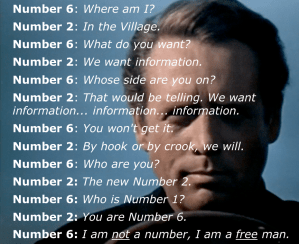
The basic idea was that a secret agent resigns and he is kidnapped and taken to an unknown place known only as the village. The agent was possibly John Drake from the Danger Man series but this could never be said publicly because of copyright reasons. In the village there are no names, only numbers. McGoohan plays Number Six and the chairman of the village is Number Two, played by a different actor every week. Will Number Six reveal why he has resigned? Who is running the village? Is it our side or the enemy?

McGoohan, then a hugely popular TV star went to Lew Grade, the head of the ITV network and told him he wasn’t keen on a new Danger Man series but had an idea called the Prisoner. Grade apparently said ‘you know it’s so crazy, it just might work’, and production went ahead.

In the first episode we see McGoohan driving into London in his Lotus 7 and slapping down his resignation letter on the desk of some unknown person. The man at the desk was in fact George Markstein who became the story editor of the series. McGoohan returns home to pack but then his house fills with gas rendering him unconscious. When he awakes, he is not at home but in the village.

Confused and disorientated he attempts to find out where he is and soon meets Number Two. Number Two explains that he wants to know why McGoohan resigned and that there is no escape from the village. The exteriors of the village were filmed in the Welsh village of Portmerion but the interiors, especially Number Two’s office, had a very futuristic, hi-tech feel.

Lew Grade had expected various seasons of The Prisoner but Patrick realised early on that the format was not something that could be sustained for multiple seasons so eventually he and Lew Grade agreed on making 17 episodes in order to realise a product that could be marketed to other countries, particularly the USA.

The 17 episodes all had either a mystery, sci-fi, espionage appeal or leaned towards McGoogan’s vision of an avant-garde allegory about the individual and freedom. In the first episode, Arrival, the prisoner who we come to know only as Number Six wakes up in the mysterious village. What is it all about? Why is here?

Number Two comes straight to the point, ‘why did you resign?’ he asks.

Number Six looks down at his file and observes the time of his birth is missing.

‘Let’s bring it up to date’ replies Number Two.

‘4:30 am, 19th March, 1928’ answers Six. ‘I’ve nothing more to say’ he adds slapping the file shut.

4:30am, 19th March 1928 just happens to be Patrick McGoohan’s date and time of birth so we can see just how personal The Prisoner was to him. The file photo of number Six used throughout the series was McGoohan’s own actual publicity picture.

The final episode where viewers expected everything to be explained and for Number Six to escape and find out who was Number One was a controversial episode and many viewers jammed the network in the UK complaining about the crazy ending in which a mock trial descends into a psychedelic montage of 1960’s music and imagery.

McGoohan defended himself by describing The Prisoner as an allegory when the viewers were still expecting something similar to The Saint or Man in a Suitcase, the action/ adventure and espionage series that were being filmed at the time. Today over 50 years later the Prisoner is a TV show with cult status.

The Truman Show

The Truman show is a film starring Jim Carrey. Carrey plays Truman who lives in a small town but does not realise that he is in fact the star of a reality TV show. Secret cameras film everything he does and all those around him, including his mother, his wife and best friend who are all actors in on the secret. The TV show is the brainchild of Christof, a producer/director played by Ed Harris. As the film unfolds we gradually realise that Truman is becoming aware of things that are not right; a spotlight that falls from the sky, people who approach him and want to talk but are hustled away by strange people, an office building where no one is working and his wife who seems to announce the benefits of various products as if she is in a TV advert.

The film is based on an episode of the Twilight Zone. A man getting ready for work finds a camera in his bathroom and realises he is being secretly filmed. It turns out that unknown to him, he is the star of a reality TV show. The producers take him aside and explain what a hit the show is and how much money he could be making. Why not carry on as if he never found out the truth they ask. Keep the show running. No one would ever know.

The man decides to just carry on with his life and allow the filming and the money to continue. In some ways I think that might even be a better storyline than the Truman show. Either way, this film is a really interesting look at the current reality TV genre and flips the whole concept on its head. Carrey is great in what is really his first dramatic role too. The most telling moment comes at the end when the whole world has been glued to the last episode. When it has finished one of the enthralled TV viewers asks ‘what’s on now?’

So, are we all prisoners then, prisoners trying to break free from either the bars of our cell or from the restrictions imposed on us by modern living, the media or society itself?

As they say in The Prisoner, ‘be seeing you!’


What to do next: Here are a few options.

Share this post on your favourite social media!

Hit the Subscribe button. Never miss another post!

Listen to my podcast Click here.

Buy the book! Click here to purchase my new poetry anthology.

Click here to visit Amazon and download Floating in Space to your Kindle or order the paperback version.

A Bit of a Blog or a Blog of Bits: Christmas Version

Well, we’re at that time of year again, Christmas. This time it will be Christmas with a difference; no parties, no meals out, no pub nights. The Coronavirus has changed everything. When it comes down to it, I’m not a great Christmas fan. It was good years ago as a child, waking up with the excitement of it all; the presents, the food, the cosy evening watching classic TV. But now I find myself wishing it was all over. I find myself looking forward to my favourite time of the year, the spring when days are getting longer and warmer and the bad weather is beginning to ease and  things are gradually becoming more light than dark and more warm than cold. This Christmas I will be working, even though I only work three shifts out of nine it turns out that my three days this week have fallen on the 25th, the 26th and 27th. Still, I’ve worked Christmas days before now as well as New Year’s day and Easter and other holidays. This time however, I’ve promised myself I won’t be working another one.

There isn’t much to do during the lockdown and apart from work, the only excitement in my life has been TV, books and writing.

TV.

The good thing about Christmas, speaking strictly as a couch potato, is the good stuff that will be on the television. At least, the good stuff I expect will be on. Last week I sat and watched one of my favourite films Fantastic Voyage. It’s a brilliant film in many ways. Firstly, it’s so incredibly original. We’ve all heard of outer space and seen a hundred or more films on the subject but this film is something different, it’s about inner space. An important scientist lies stricken with an inoperable blood clot on the brain and the solution is this: take a team of doctors, put them in a submarine and shrink them down so that they are so small, so very tiny that they will fit in a hypodermic and can be injected into the scientist’s bloodstream so they can journey towards the brain and clear the blood clot from the inside. Brilliant, wish I’d thought of it. Some of the special effects are a little tame and to be honest, it’s a film that is ripe for a 2021 remake with 21st century CGI special effects. Even so, I enjoyed it just the same.

The film stars various well known actors, from the glamorous Raquel Welch to the villainous Donald Pleasance. Also starring is Stephen Boyd. Boyd was an Irish actor who appeared in over 60 films. Boyd was a good actor who seemed to vanish quite abruptly from our film and TV screens. I looked him up on Wikipedia to find out what had happened to him and discovered that he had died suddenly at a very young age. He hailed from County Antrim in Northern Ireland. His big movie breakthrough was the film Ben Hur in which he played the part of Roman Tribune Messala for which he won a Golden Globe award. He was only 45 when he died of a heart attack whilst out playing golf at a course in California.

A few days ago I watched a repeat of one of the Christmas episodes of Everybody Loves Raymond. One of the great things about that show is Liz and I both enjoy it. In this episode Ray, just like me, is wondering what presents to buy. In particular he wants something for Debra, his wife. Previous failed presents were a set of pyjamas, he bought the wrong ones and his present idea, a space heater. Brother Robert, the funniest character in the show suggests a first edition of Debra’s favourite book, To kill a Mockingbird. Ray gets the book, Debra is over the moon -Ray finally bought her a good present- but Robert ruins everything by revealing the book was his idea. That show always makes me laugh especially as I’m so bad at buying gifts.

Just as I was doing the final edit for this post I took a quick glance at the TV guide. Bypassing Stalkers who Kill scheduled for Christmas Day –somehow I don’t think I’ll be watching that– I noticed It’s a Wonderful Life showing on Christmas Eve. I love that film and come to think of it, I haven’t seen it for quite a few years. It’s about George Bailey played by James Stewart who looks forward to an interesting life of travel but then finds obligations force him to stay in the small town where he has always lived. George is beset by problems and even considers suicide but then his guardian angel -literally- arrives to help him. The secret of this film is, I think, the fact that despite the fantasy premise of the film, everyone plays their parts as if they were in a serious drama. The result is that the drama and emotion of the situation rises to the surface and we are left with a vibrant and dramatic piece of cinema.

Books.

Hollywood has always fascinated me, especially Hollywood’s Golden Age. Just recently I’ve been reading Murder Hollywood Style written by Samuel Marx and Joyce Vanderdeen. Samuel Marx worked in Hollywood for many years and was a story editor and later a producer. He was a friend of Paul Bern who had married the original platinum blonde, Jean Harlow, in 1932.

On the morning of September the 5th, 1932, Marx received a phone call advising him that Bern had been found dead that morning. Bern was a former script writer who now worked as a producer for MGM where he was assistant to Irving Thalberg. Thalberg was known as the ‘Boy Wonder’ of MGM having produced a number of hit films such as Grand Hotel and Mutiny on the Bounty. Marx was shocked by the news and went quickly over to Bern’s house. Thalberg was already there and Marx spoke to neighbour about a mysterious veiled woman who had arrived the previous night. She arrived in a limousine and the neighbour heard various sounds that evening. Some sounds of laughter, some of anger. Marx went to go inside Bern’s house but Thalberg told him not to enter. Bern had committed suicide by shooting himself in the head. It was not a pretty site. Louis B Mayer the famous head of MGM had been to the house already and the head of the studio police force was also there. Marx, who had dined with Bern and his wife Jean Harlow only recently was shocked and left for home.

Strangely nothing appeared on the news until the next day. Who was the woman in the limo and had Bern really committed suicide? Marx takes us on an interesting tour of 1930’s Hollywood and along the way talks about many of the famous personalities of the time as well as the background to MGM studios and the films they made. He explains how the studio managed the press and dealt with the law enforcement officials of the day. Nothing was allowed to upset the carefully managed careers of stars like Jean Harlow and Clark Gable, her co-star in the hit movie Red Dust which was completed after Bern’s death.

All in all, a fascinating read.

Writing.

I was watching a TV quiz show the other day and one of the celebrity contestants mentioned that he had just finished writing a book. He did it by setting himself a target of 2000 words per day. Now sometimes I’ve hit 2000 words myself although certainly not every day. Sometimes it’s just 200. Writing isn’t always that easy and working from home there are so many distractions like emails and time wasting web sites like Pinterest and eBay. On eBay you can not only waste time but also spend money that you didn’t want to spend. When I’m stuck on a blog post or any other writing project I tend to look back at my half finished projects and work on those. I have a whole stack of half written poems, some of which I wrote many years ago and recently I put together a collection of poems with a vague idea of publishing them on Amazon. Lo and behold, just then a publisher contacted me asking to publish my poems! It was an Indian publisher and over on their web page there was a lengthy portfolio of their published editions which will soon be joined by my own book, A Warrior of Words.

Hope you’re having a good socially distanced Christmas. All the best and I’ll see you over in 2021.

What to do next:

Share this post on your favourite social media!

Hit the Subscribe button. Never miss another post!

Buy the book! Click here to visit Amazon and download Floating in Space to your Kindle or order the paperback version.


A Few Pandemic TV Thoughts

Lockdown may have finished on December 2nd in the UK but if you live in a tier 3 region, like me, it’s still going on. OK, I understand the need for the lockdown, I know we have to prevent the virus from spreading but that doesn’t stop the whole thing being a pain in the neck. No quiz nights at the pub, no restaurant meals out and so on. Not only that but why does the virus have 2 separate names? Is it Covid 19 or is it Coronavirus? And where does the 19 come from? Was there a Covid 18?  Does this mean there have been 18 previous versions of this insidious plague? If so, why have we never heard of them? We, the public, need to know.
This being December it certainly isn’t the time of the year for relaxing in the back garden but at least we have our TV set to keep us entertained. What TV gems have I found this week?

Showing on an obscure TV channel, Forces TV, I found the old Gerry Anderson TV series UFO. The show still looks pretty good after many years on the shelf. Ed Straker, the boss of SHADO is still trying to defend the world from alien attack and he and his colleagues look pretty good in their natty suits. In fact the whole thing looks pretty futuristic despite its obvious 1980’s origins, more so than Star Trek which, as much as I love it, does look very 1960’s.

It just so happens that I can remember that SHADO stood for Supreme Headquarters Alien Defence Organisation. What is interesting about that is this: The other day I went into the bedroom to get something and forgot what it was I’d gone in there for and yet I still knew what SHADO stood for.  A contributory factor might be that as a youngster I fell off a playground roundabout right onto my head. In fact, I can remember it like it was yesterday, falling off head first and heading towards the ground, actually a concrete slab and taking a hell of a whack on my bonce. Yes, that hurt, it really did but I’m still wondering what I wanted in the bedroom.

Anyway, when I mentioned Star Trek above. I’m talking about the original Star Trek, not the slightly lacking Star Trek:The Next Generation. Captain Picard and the cocktail lounge atmosphere of his space craft was not my cup of sci-fi at all and while Picard was running all the command decisions past everyone from the ship’s counsellor up, Kirk was already hitting the aliens with phasers on stun and getting up close and personal with some gorgeous interplanetary beauty.

The original Star Trek, like UFO was shot on film and today looks pretty sharp compared to the Next Generation which was shot straight to video. The original series was given a digital makeover a few years back with digital effects and new CGI spacecraft and is looking pretty good these days. The franchise has spawned quite a few follow up series and films. After the Next Generation came Deep Space 9 which was just as bad as the Next Generation if you ask me and then Star Trek Voyager. I actually like Voyager but it didn’t start off well for me and as much as I liked Captain Janeway, her oddball hairstyles just annoyed the hell out of me until in the later series they decided to employ someone who actually knew how to style hair and Janeway ended up looking pretty normal.

As Janeway became normal, the writers decided to shake things up with the pretty sexy Seven of Nine character. She was rescued from the Borg, an alien race whose catchphrase is you will be assimilated. Seven was given a very appealing tight fitting catsuit to wear instead of the Space Federation regulation uniform. Catsuits are OK and maybe they are pretty popular in the 24th century but they never seem to have any pockets. What Seven does with her handkerchiefs, lip gloss, mobile phone and purse I really don’t know. In the future people must prefer looking sexy rather than worrying about their stuff, at least they do in the eyes of the Star Trek writers.

While on the subject of cat suits, I feel I must mention, even just for a fleeting moment, the original cat suit girl who, at least in my mind, was Mrs Emma Peel played by Diana Rigg in the TV show The Avengers. The Avengers started off as a crime drama starring Ian Hendry as a police doctor, assisted in solving crimes by the dapper John Steed. Hendry left the show leaving Steed, played by Patrick MacNee needing a new assistant. His assistant was Kathy Gale played by Honor Blackman. She left the series to star in the film Goldfinger and Emma Peel was recruited as Steed’s new assistant. Kathy Gale was also a catsuit wearer although she seemed to prefer a leather version. When Emma Peel joined the series, the show moved from video to film and the production values increased enormously. The show also began to move in a sort of sci-fi fantasy espionage direction. Off the top of my head, I remember episodes about a mad scientist who shrinks other scientists and Steed, down to a small size, killer robots, time travel and cats that become wild animals.

Another problem with tight fitting cat suits must surely come whenever the wearer needs a bathroom break. Imagine having to strip right down just so you can have a wee. On board the Enterprise I can imagine that, like in any spaceship, space must be at a premium so the toilets must be pretty small. Now this is the perfect opportunity to introduce my own personal experience of using a ladies toilet. Years ago, when I had a cigarette vending machine round (writer, blogger, vending machine repairman -I’ve done it all) I remember visiting a pub in Prescot in Merseyside. I can’t remember the name of the place but it was the reverse of a normal pub in that most old pubs usually have a big room; the lounge and a small one, the vault, where men play cards, pool and darts. In this pub, the big room was the vault and the lounge was the small room. Anyway, after servicing the cigarette machine I wanted to use the toilet so I asked the cleaners, who were pretty fierce in that place, could I go in the gents. No she said, the floor was still wet but I could go in the ladies.

The ladies I soon found was actually two rooms, one with three toilet stalls and an outer room where you could wash your hands. The outer room had two huge mirrors for making sure your hair and makeup were OK and two comfy couches where the women could sit and presumably have a good natter before going back to join the men. Yes, that ladies toilet was a real eye-opener for me used to, like all men, smelly urinals.

Diana Rigg left The Avengers to become a Bond girl, just like Honor Blackman before her. Diana starred in On Her Majesty’s Secret Service as the woman who finally got 007 to the altar only to be shot later by Bond’s enemy Blofeld.

Anyway, getting back to Star Trek, the latest series in the franchise are Discovery, which is rather like watching a very fast music video, I gave it a good 15 minutes and then had to switch off, and Star Trek Picard, which sees the return of Captain Picard and various other characters including Seven of Nine from Trek’s back catalogue. I actually quite fancy watching that but alas, not having Amazon Prime I’ve yet to do so. Pity because it actually looks pretty good from the clips I’ve seen on YouTube. Eventually it will filter down to the Freeview channels and one day I’m sure I’ll see it late at night on BBC2 perhaps.

https://youtu.be/LjdL56odffE

William Shatner who starred as Captain Kirk in the original series is a firm favourite of mine and it would be rather nice to see his character pop up again. Star Trek: Kirk sounds like a pretty good idea for a new series to me. Shatner is now 89 years old and still going strong. His character was actually killed off in the Star Trek film Generations which started off pretty well, combining the usual sci-fi elements of Star Trek with an intriguing mystery; who is the mysterious Soran and what is he up to? As it happened what he was up to wasn’t really that interesting but the film marked the cinema handover from the original Star Trek cast to the new one. Pity really because as I mentioned above, I never really took to the Next Generation.

Star Trek is ultimately about three people, Kirk, Spock and McCoy and the producers probably realised that, which is why, in the latest Trek films a new generation of actors have been asked to recreate the old roles meaning that Captain Kirk lives on again for a new generation of sci-fi fans.

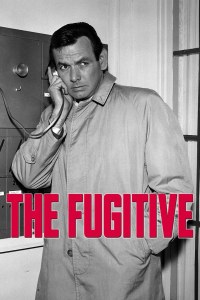
Another old show repeated currently on the CBS justice channel is The Fugitive starring David Janssen as Dr Richard Kimble, falsely accused of the murder of his wife. The show ran for four seasons but as viewer ratings began to fall, the series was cancelled. It was then that the producers hit on what at the time was an unusual idea. Instead of the show just ending, they decided to make an actual finale. Yes, they would wrap up the story of Kimble’s wife’s murder. Kimble had been searching for the supposed one-armed man he had seen leaving the murder scene for the past four seasons, now he would finally find him!
Back in the 1960’s, TV was not very highly thought of even by the TV networks themselves. So what if Kimble never finds the murderer. So what? It’s only a TV show. Of course, the viewers would disagree. They had kept faith with the series for four long years, they deserved a proper ending.

The final episode aired on August 29th 1967 and in the USA the viewing figures were a sensation: 72% of US TV viewers were watching that final episode and the show held the most watched record until November 1980 when someone shot JR in Dallas.

When I watched The Fugitive yesterday, I think we were up to episode 20 in season 4. Hope I remember to watch that final episode, then again, I still can’t remember what I wanted from the bedroom!


What to do next:

Share this post on your favourite social media!

Hit the Subscribe button. Never miss another post!

Buy the book! Click here to visit Amazon and download Floating in Space to your Kindle or order the paperback version

Codes, Films, Christmas and John Wayne

There are two particular films that come to mind at Christmas. I’m not talking about films that are typical Christmas films, things like It’s a Wonderful life or Scrooge or even Home Alone but films that tell the true story of Christmas, the story of Jesus himself. The two films I’m thinking of are King of Kings and The Greatest Story ever Told.
King of Kings starred Geoffrey Hunter as Jesus and in the Greatest Story it was Max Von Sydow. Max was in a way an unusual choice to play Jesus, he was pale and blue eyed and had a faint Swedish accent. Even so, he played a good part, so much so that whenever I see another portrayal of Christ, I always mentally compare it to that of Max. As for being pale and blue eyed, I suppose it is inevitable that people everywhere will envisage their religious icons in their own terms.

Geoffrey Hunter you may remember from the Star Trek pilot episode where he played Captain Pike, the original captain of the Enterprise. The producers of Star Trek, not wanting to waste the footage shot in the pilot, remade it into a two part episode where Mr Spock tries to help his former captain and is court marshalled.  In King of Kings Hunter plays a Jesus a little more forceful than that of Max Von Sydow’s but both portrayals are excellent. In King of Kings the director seems to compare the life of Jesus with that of Barrabus the rebel and freedom fighter –or terrorist, depending on your viewpoint. The two lives come together when Pontius Pilate asks the Jerusalem mob who do they wish to be freed. The mob chose Barrabus.

King of Kings was directed by Nick Ray who directed the famous Rebel without a Cause, James Dean’s iconic second film.

The Greatest Story was directed by George Stevens who made such classic films as Shane and James Dean’s last film Giant. Stevens was a director who worked the way I would work if I was a director. He shot a great deal of film then sat back, reviewed everything and put his film together one brushstroke –or film clip-  at a time. He chose Max to star as Jesus as he wanted a performer that was unknown to the general public. He might have been better in choosing unknown actors for the other roles too because the many star appearances seem to stop the viewer in his or her tracks as we spot various top actors and actresses in minor roles.

I do have a personal reason for liking this film. Once, many years ago my school friends and I were taken on a Christmas school trip to watch the film. We walked it as I remember in crocodile fashion from our Junior school Crossacres, down Wiggins hill and into Gatley, a small nearby village that boasted a lovely old cinema. That trip to watch this film did more for me than any teacher or RE lesson had ever done before or since and although I cannot claim to be overtly religious, I am certainly not an atheist and my respect for the person of Jesus has never been greater.

In Dan Brown’s thriller the Da Vinci Code, Brown looks at the ideas presented in The Holy Blood and the Holy Grail about the idea that Jesus was married and that his widow, Mary Magdalene went to France where her child began a bloodline that exits to this day. The Holy Grail apparently was not a goblet that caught drops of blood from Jesus but an actual bloodline, a dynasty of Meringovian Kings that can be traced back to Jesus himself.

In the Da Vinci Code, Brown reveals these things as something that could tear the Christian church apart, why, I don’t know. To me, the idea that Jesus married and had children means he is more human and more understanding of the human condition than I have previously thought, so this news, if indeed it is actual news, does not distress me, to me it is joyous news.

While on the subject of the Da Vinci Code, I read it some time ago and although the book has many detractors, I personally found it a gripping read, one that I found hard to put down. Its effect though is perhaps like one of those very bright and loud fireworks that capture the attention for a short while and then fizzle out. In a St Annes charity shop not long ago where I go to peruse the second hand books and DVDs, they had a sign up next to an entire row of Da Vinci Codes. No more Da Vinci Code please: We’ve got plenty!

At the Regent Cinema in Blackpool they recently had a showing of that Christmas classic It’s a Wonderful Life. Sadly I was working that day but I hope to catch up with the film soon as they are bound to show it again on TV over Christmas. Director Frank Capra is another of my favourite directors and the film successfully combines fantasy with real life and James Stewart plays such a good part. Pity I missed that showing at the Regent, I really fancied seeing the film on the big screen.

There are a whole lot of film versions of a Christmas Carol, 73 TV and film versions according to a BBC news item I saw a while ago but the definitive version is the one with Alastair Sim as Ebenezer Scrooge

A Christmas Carol was published over a hundred and seventy years ago. It’s a wonderful story by that master storyteller Charles Dickens. Within six days the entire print run of 6,000 copies had sold out. Within six weeks theatre adaptations had hit London’s theatres. In many ways the book is Dickens’ defining vision of a Victorian Christmas.

Going back to the film versions there’s one with Albert Finney, one with George C Scott, a cartoon version and even a version with Bill Murray as a modern-day Scrooge.. Don’t give any the time of day except for the definitive 1951 classic.

I must finish with one final anecdote about The Greatest Story ever Told. As I have mentioned, numerous star actors make guest appearances in the film from Sydney Poiter to Van Heflin, Angela Lansbury to Shelley Winters and many others but there is one I must mention: John Wayne as the Centurion who watches Jesus die on the cross. When Wayne uttered his immortal line, ‘truly this man was the son of God.’ Director George Stevens called ‘cut’ and asked Wayne to do the scene again but this time with more awe.

Wayne duly complied.

‘Action’ called Stevens.

‘Aww, truly this man was the son of God’ said Wayne.


Floating in Space is a novel by Steve Higgins set in Manchester 1977. Click the links at the top of the page to buy or for more information.

My Top 10 TV Moments

OK, 10 favourite TV moments. When I thought of that idea I had one particular TV moment in mind and thought I could easily come up with 9 others. I did but they are not exactly TV moments as such, they are more TV episodes or theme tunes or just generally TV stuff. Anyway if you have a spare few minutes stick with me and let’s see what I did come up with. They are in no particular order but I did save my absolute favourite until the end.

TV Moment 10

The TV show the Prisoner was produced back in 1968 and was the brainchild of its star actor Patrick McGoohan. McGoohan was fresh from the hit TV show Danger Man and he wanted to make a series about a spy who had resigned from the secret service but refused to give up his secrets. Episode number 1, Arrival, set the scene for the cult series. McGoohan, playing an unknown spy, resigns from the secret service by slamming his resignation letter down on the desk of his boss and drives back home in his Lotus 7. As he packs his belongings, he becomes aware of his home filling with gas. He slumps down unconscious and when he awakes he finds that he is in the mysterious ‘village’.

The series was filmed in the Welsh village of Portmerion. I visited the village in 1986 but when I returned a few years later they tried to charge me just to enter the village and look around. As this is against all the rules of a card-carrying tightwad like myself, I had to decline.

TV Moment 9

Do you ever wonder what happened to all those great TV western shows? Back in the sixties when I was a mere schoolboy my old dad and I regularly watched series like Branded, Bonanza, The Big Valley and many others. One of the very last western series was Alias Smith and Jones. The show was about two cowboy outlaws, Kid Curry and Hannibal Hayes. The Kid was the fastest gunslinger around and the producers used a very simple editing trick to show this. The other guy would be shown drawing and they would then cut quickly to the kid whose gun was already out of his holster and cocked, already to fire.

It was a great show but fizzled out when Pete Duel who played Hannibal Hayes committed suicide. They carried on with another actor playing Hayes but it was never the same afterwards. The show ran from 1971 to 1973.

TV Moment 8

I’ve always been a big fan of Star Trek especially the original series with Kirk, Spock and McCoy. Everything else is just a pale imitation of the original and it’s no surprise to me that the recent Star Trek films have centred on the original characters. The very best Star Trek episode ever, and it’s not just my choice, this particular episode was voted the best ever episode by Star Trek fans and also by Empire magazine, has to be City on the Edge of Forever. In this episode the Enterprise has been buffeted by waves of temporal energy and Doctor McCoy is called to the bridge to deal with casualties. This being Star Trek the antidote for any wound or disease is the wonder drug of the future, cordrazine. McCoy however accidentally injects himself with a full hypo of the drug and goes completely crazy. He escapes to the transporter room, beams down to a nearby planet where he encounters a time portal and jumps through it thereby changing the whole of time. Captain Kirk decides the only way to change time back to normal is to try and enter the time portal in the same fashion, locate McCoy and reverse whatever damage he has done. It turns out McCoy has saved social worker Joan Collins from death in a car accident which in turn has various effects, one of which delays the US entry into World War 2, enabling the Nazis to complete their atom bomb and win the war. Kirk who has fallen in love with Miss Collins has to decide what must happen, does he save her or let her die? Look it up on YouTube, it’s a great episode!

TV Moment 7

I’ve always been fascinated by the concept of time travel and another of my favourite TV shows was The Time Tunnel. The series was produced by Irwin Allen and featured two American scientists ‘lost in the swirling maze of past and future ages, during the first experiments on America’s greatest and most secret project, the Time Tunnel. Tony Newman and Doug Phillips now tumble helplessly toward a new fantastic adventure, somewhere along the infinite corridors of time’ as the opening blurb used to go. In my very favourite episode Tony and Doug arrive in Honolulu on the day of the attack on Pearl harbour. Tony lived here as a child with his mother and father and on the day of the attack, his father disappeared. The two try to warn Tony’s dad about the attack but they are not believed but they do solve the mystery of his death finding that he was fatally wounded in a control centre hit by Japanese bombs.

TV Moment 6

I might as well stay with the subject of time travel and tell you about another great TV series, Doctor Who. Doctor Who has been running since 1963 and the very first episode was broadcast on the fateful day of November 22nd of that year. When actor William Hartnell decided to leave the series the writers came up with the idea of the Doctor ‘regenerating’ in order to introduce another actor into the role. My favourite Doctor, and it’s hard to nominate one because I like them all, is probably the 1980’s version played by actor Tom Baker. Tom’s assistant back then was Sarah Jane Smith played by actress Elizabeth Sladen. She stayed with the Doctor until 1976 when he dropped her off supposedly in Croyden before he went off back to his home planet of Gallifrey. Sarah Jane returned in 1983 for the series’ 20th anniversary episode The Five Doctors.

The series was cancelled in 1989. There was the possibility of a reboot of the series in 1996 but only a one-off TV film was made. In 2005 the BBC began to produce the series once again with Christopher Eccleston in the lead role. David Tennant became the 10th Doctor after Eccleston left. In that second season of the new series Sarah Jane returned in an episode called ‘School Reunion’. It was wonderful to bring back Sarah Jane after so many years and showed that the new producers of the show were respectful of the series’ long history. Not only that, Sarah Jane has long been my favourite of the Doctor’s companions.

TV Moment 5

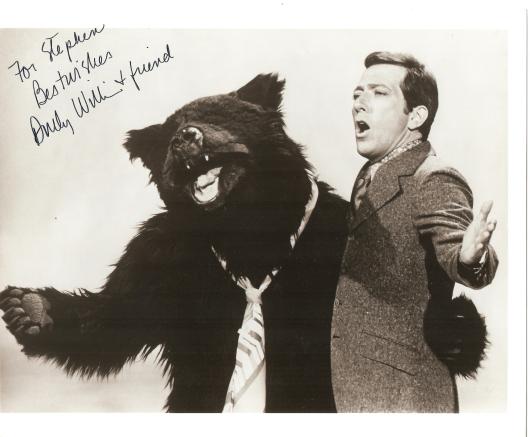
Andy Williams had a hugely popular TV series in the 1970’s and one of my favourite parts in it was a comedy sketch with Andy and a bear (OK, a guy dressed in a bear outfit) who always asked Andy for some cookies and then they went into a different comedy routine every week. Sounds a little crazy I know but I loved that show and Andy’s music ever since. I loved the bear sketches so much that I wrote a fan letter to Andy Williams care of Desilu productions in Hollywood California, who were mentioned on the credits of his show. Months later, a large envelope arrived and inside was a picture of Andy and the bear. ‘To Stephen from Andy and friend’ was the inscription.

I think it says a lot about Andy Williams, that he should make such a gesture for a faraway English schoolboy. Thanks Andy, I loved that picture so much!

Andy_Williams

TV Moment 4

That leads me smoothly onto this next section because Moon River sung by Andy featured in a great episode of Sex and the City. Sex and the City is a comedy/drama about sex and relationships and the episode in question was the one where Mr Big decides to leave New York as he has bought a vineyard in the Napa valley. Season 4 of Sex and the City was the season where all the elements of this great show seemed to just come together to produce some outstanding TV. Carrie, played by Sarah Jessica Parker gets involved with former beaux Aiden played by John Corbett. Aiden is reluctant to get involved again with Carrie as she cheated on him last time around with the super cool Mr Big played by Chris Noth, however Aiden decides to take another chance and the two embark on a new relationship. Miranda’s mother dies and although she tries to keep everything to herself, she is happy to see her friends at the church for the funeral. Miranda still has time though to help former boyfriend Steve with his testicular cancer problems.

Later Aiden realises Carrie does not want to get married and they split up. Its hard to compress a whole season into this short paragraph but if you ever see season 4 going cheap on DVD, it’s well worth getting it.

TV Moment 3

I’ve already written a blog post about my favourite TV detective, Columbo. I love so many of the episodes it’s hard to pick my favourite but it’s probably ‘Murder by the Book‘, starring my favourite murderer, Jack Cassidy. In this 1971 episode, Jack plays a writer, actually part of a writing double act who together produce a series of novels about ‘Mrs Melville’ who is an amateur detective. The thing is, Jack’s partner wants to ditch the partnership but Jack is not happy about it. He is so unhappy he decides to, yes you guessed it, bump off his co-writer. He does it in a rather ingenious way which foxes Columbo but not for long and to cap it all, the episode is directed by none other than Steven Spielberg!

TV Moment 2

Way back in my school days Monty Python was on TV late on -I think- a Thursday night. It was certainly a week night and it was certainly late as I had a running argument with my Mum about staying up to watch it. The next day talk at school would be all about the latest episode and if you had missed it, which happened to me quite a few times when I lost that long running argument, you were just socially dead for a day.

Deciding on a favourite sketch is a difficult if not impossible task. I loved the Superman/Bicycle Repair Man sketch, thought the Dirty Fork sketch hilarious, the Lumberjack Song broke me up but the one I’ve chosen here is the ‘Is this the right room for an argument’ sketch. Enjoy.

TV Moment 1

MASH was a sitcom that ran for 11 seasons and an incredible 256 episodes. In case you didn’t know MASH stands for Mobile Army Surgical Hospital and is set in the Korean War. The series follows the exploits of the doctors and nurses of the MASH, in particular Hawkeye played by Alan Alda and Trapper John played by Wayne Rodgers. The episodes feature a mixture of comedy and drama expertly mixed together by the writers and performers.

My favourite ever MASH episode was one called ‘Sometimes you Hear the Bullet.’

Hawkeye’s friend Tommy comes to visit the 4077th MASH. He’s a former journalist who wants to write the story of the Korean War from the point of view of the soldier, not the journalist which is why he has not enlisted as a war correspondent. He stays with Hawkeye for a while and the usual zany humour ensues. Tommy then has to return to the war. A side story is one where a wounded young lad (played by future film director Ron Howard) admits he is under age but joined up to prove to his girl that he was a man. In one scene he tells Hawkeye that he is out to get him some ‘gooks’ and Hawkeye replies calmly that another word for gooks is people.

Hawkeye and Trapper plan to steal Major Frank Burns’ Purple Heart- he’d had an accident and because it happened in a war zone, he is eligible for the award -and pass it on to the young lad so he can impress his girl back home. Anyway, later in the episode, Tommy the journalist returns to the MASH, only this time he is seriously wounded. He was planning on writing a book called ‘They Never Hear the Bullet’ but this time he heard the bullet. ‘Never mind’ says Hawkeye, ‘just change the name. Sometimes you hear the bullet, it’s a better title anyway.’ Tommy is anaesthetised and Hawkeye gets to work. Sadly, Tommy dies on the operating table. Colonel Blake has to remind Hawkeye about the queue of wounded and Hawkeye, tragedy etched on his face (an outstanding performance by Alan Alda) has to carry on with his next patient. Every time I watch that episode, I sob my heart out, just as I did years ago when I first saw that episode on my Mum and Dad’s old black and white TV.

I couldn’t find the episode on YouTube so here’s a clip of Alan Alda who played Hawkeye, talking about the episode.


Steve Higgins is the author of Floating in Space, a novel set in Manchester, 1977. Click the links at the top of the page to buy or for more information.


Rooms, Film sets and Homes from the Corners of my Mind . .

Film sets? Rooms? What exactly is this guy going to write about rooms you might think? Well, this idea about rooms might take me a while to explain so here we go.

I’ve always been interested in really exciting rooms, usually those seen on a film where the room in question has been designed by some really top designer and put together by some award-winning prop guy and set dresser but the first room that comes to mind is one from my comic book days.

Back in the 1960s some British comics started to reprint American super hero comic strips. They did it by combining various super hero comic strips into one comic. The one that comes to mind was called Marvel after the producers of such comic books as Spiderman, the Hulk and so on.

One strip that I really loved was the new super hero Daredevil. Now he, believe it or not, was a blind guy but had this ‘radar sense’ that enabled him to see in a way that no sighted person could. In the first Daredevil strip I ever read there was a cutaway drawing showing Daredevil’s flat (apartment to you US readers) and its secret ‘underground lair’ when Daredevil got his kit off and exercised in a personal gym where he honed his gymnastic skills which as you know, are required by all costumed crime fighters. It was probably the idea of the concealed rooms that interested me as a child, I always loved that in the sci fi of the 1960s.

Image courtesy berkeleyplaceblog.com

Batman too had his underground lair; it was the Batcave and there was a great moment in the 1960’s TV series when Bruce Wayne would say to his young ward Dick Grayson ‘to the Bat poles!’ Robin alias Dick would flip the switch on the bust on Bruce’s desk and the two would leap onto the bat poles in the now opened secret compartment and slide down to the Batcave.

https://youtu.be/mjKyGs-G6Sg

Another underground lair was that of Doctor No, the first villain in the James Bond film series. The doc had these amazing quarters with a glass wall looking out under the ocean.

‘A million dollars’ says the doc to James Bond as he quietly enters the room.

‘You were thinking of how much it cost?’ He goes on.

Actually, I wasn’t as I knew it was a film set but it was pretty cool.

The next great room and location that comes to mind was that of Ernst Stavro Blofield in my favourite Bond movie, On her Majesty’s Secret Service. Blofield has a mountain hideaway on top of a peak in the French Alps, or was it the Italian Alps? Either way Piz Gloria was an actual skiing lodge that had just been constructed and had been lent to the film crew. The interior, which I always rather liked, particularly Blofield’s inner sanctum was really cool and presumably designed by the production designer Syd Cain.

https://youtu.be/_U5WOWKNLgk

Another room I always liked was Joe 90’s dad’s house from the TV series Joe 90. It was a very comfy old-fashioned farmhouse where Joe and his dad, professor -I nearly said professor 90 but I don’t think it was. Anyway, the two of them lived there assisted by their housekeeper until Joe went off on his secret missions. Their front room was remarkably similar to the one owned by Barnes Wallis in the film The Dambusters. Wallis’ home was a typical 1940’s English farmhouse and it all looked pretty comfortable to me.

Remember the Beatles movie Help? In the film there is a great shot of the four Beatles walking up to their respective front doors along a typical row of English terraced houses.

They turn their keys, open their doors and they each step into: -Cut to interior shot- One ultra-modern long room and we see the Beatles step inside and settle down. John has a settee or couch sunk into a low area which he has to step down into and down there, or so I imagine, he has a TV and stereo and all the mod cons of the mid-1960s. I loved that little space and if I had a big enough house it would be great to recreate it. Then again, I can just imagine coming home late at night after a few beers at the pub, walking into it in the dark and breaking my neck!

Did you ever watch the 60’s TV show The Prisoner? A secret agent resigns, returns home to find gas filling his house. He awakes, seemingly in the same room but when he opens the window, he finds himself in a village where he is apparently a prisoner. The Prisoner starred Patrick McGoohan and the show combines elements of intrigue, espionage and sci fi. It was filmed in the Welsh village of Portmerion where a long time ago I was able to visit number 6’s old house. The inside of it was of course not in Portmerion but was something assembled on a film set at Elstree or somewhere. It was small and compact and the door automatically opened as you approached.

Number 2, the administrator of the village had an ultra modern office with stylish 1960’s bubble chairs. I’ve always fancied one of those chairs: I can just imagine curling up in one and having a good read.

Another great setting was Hugh Grant’s house in the film Notting Hill. Notting Hill is an actual area of London and Grant’s house in the film was presumably an actual house. Notting Hill, and I have to say I have no actual experience of the real Notting Hill, comes over in the film as a busy, vibrant and exciting place to live. Hugh’s house is a terraced house, rather narrow but with lots of light and a rather cosy area on a landing by the stairs with a couch where Grant spends the night on one occasion in the film and looks to be a really great place to relax, maybe watch TV or write blogs and just generally have some private time.

Anyway, enough of films, it’s about time I told you about my favourite room. I had two and they were both at the first house I ever bought; my house in Didsbury, Manchester. There was a small front room which I decorated myself, slowly. There was a dado rail with different but matching wallpapers above and below, bookshelves, books and videos (VHS of course). I also kept one of the three bedrooms for myself as a music room and my stereo and records were all stored there along with a couple of comfy chairs and all the other toys, gadgets and cameras I had at the time.

Once, years later, I remember visiting the old place and I parked outside for a while feeling like an intruder. Years before, this had been my street and my house and if, back then I had glanced outside and seen a strange guy in a strange car just waiting, I might have been tempted to call the police. Times had changed, and now I was the intruder.

There was a time when I might have been tempted not to mention that story but I remember watching my favourite TV documentary of all time about the late actor, Peter Sellers. Sellers had a thing about dragging his ex-wife out and taking her on these regular tours of his old haunts, his old schools and old homes and so on. If a famous actor and comedian like Sellers did something like that then clearly parking outside my old house for a few moments can’t be so bad after all.

I enjoyed some happiness in that house but also a lot of pain and sadness too. I remember sitting there in my car and I tried to turn my mind to the happier times I had there.

Once, we had a sort of, well gathering there. I was tempted to say dinner party but really it was just a few people coming around for drinks and nibbles and things.

One guest was our solicitor, I’ll call him Phil (although his name was actually Pete!) Seriously, Phil was a really arrogant guy. In fact he had very bad eyesight and could hardly see his hand in front of his face. He rejected the use of a white stick and arrogantly pushed away anyone who tried to help him. He was a good solicitor and although he could be a bit of a pain I had a lot of respect for him.

He was sitting in the small lounge in my comfy chair when he got up to get a drink or some food or something from the other room. I was tempted to nip into the comfy chair but another guest pushed me aside and slipped into the seat. When Phil came back with a plate of nibbles he turned to sit back in the chair, obviously not seeing the girl sitting there and she slipped out of the seat just as Phil sat down again.

We were all killing ourselves laughing but Phil didn’t quite get the joke.

Later when he left, he once again declined any assistance. Pity really because the path from our front door to the street went towards the right at a 45 degree angle whereas Phil went straight ahead towards the privet hedge.

Never did get that gap in the hedge sorted.


Floating in Space is a novel by Steve Higgins set in Manchester, 1977. Click the links at the top of the page to buy or for more information.


A Completely Inaccurate and Unreliable History of TV and Film Time Travel!

I think I’ll start this post with that fabulous time travel film Back to the Future. If you have never seen it, (shame on you) the film concerns young Marty McFly who helps his friend Doc Brown with a time travel experiment. The time machine is a 1985 DeLorean sports car which morphs through time when it reaches the magical speed of 88 mph. The experiment goes horribly wrong when a gang of Libyan terrorists whom the Doc has double crossed in order to get some vital nuclear supplies for his car/time machine arrive and shoot the Doc apparently dead.

Marty escapes in the DeLorean, accidentally hits the time travel switch (the flux capacitor) and zooms back to 1955 when he speeds up to 88 mph.
There Marty has to enlist the help of Doc Brown’s younger self, get his parents’ romance back on course after accidentally knocking that off target, and get himself back to 1985 in time to prevent the Doc being murdered by terrorists.

In Back to the Future 2, Crispin Glover, who played Marty’s dad, failed to agree terms with the producers so was not in films 2 or 3. Instead a look-alike actor was used prompting Glover to sue the production company. His legal challenge failed but next time you watch 2 and 3, that’s why Marty’s dad isn’t in the film much!

There are some great little touches to the film too, some you may not even have noticed, for instance, when Marty leaves 1985 and goes back to the past, he departs from the Twin Pines Mall. There, in 1955 he hits a pine tree and later arrives back in 1985 at the Lone Pine Mall!

In the final film Doc Brown gets accidentally flipped back to 1885 and Marty has to time travel back there to save the Doc. How does he know the Doc is in 1885? Well, the Doc arranges for a courier service to deliver a message to Marty at the exact time and spot where he disappears and flips back to 1885. Of course as Marty rescued him and brought him back to the future, then he wouldn’t have been there to write the message for the courier, well wouldn’t he? Maybe he wrote the message before departing!

Funnily enough, that is a similar situation in one of my favourite of the rebooted Doctor Who episodes, Blink. The doctor, played by David Tennant, gets stuck in the past courtesy of the Weeping Angels, aliens who appear frozen when watched but otherwise move in the blink of an eye. However he manages to add some special video links to a future DVD so people in the present can pick up his messages and help him.

Blink is possibly the most beloved episode of the modern Doctor Who era, with an oddball mystery that is intriguing and a slightly off beat approach to the show’s usual format, focusing mainly on a new character named Sally Sparrow instead of David Tennant’s Doctor. Sally is played by the now famous Carey Mulligan, and her portrayal of a normal young woman who has to solve a crazy time mystery when her friend is transported to the past by a living angel statue won her plenty of fans among the Doctor Who faithful.

Really though, the best Doctor Who episodes were back in the 1980’s with Tom Baker as the Doctor and Elizabeth Sladen as assistant Sarah Jane Smith. A great episode was Pyramids of Mars, which combines sci- fi with the mystery of Egyptian tombs and artefacts. The Tardis materialises back at Unit headquarters in the UK. (UNIT by the way, is a military organisation the Doctor worked with in the 1980’s.) However, they are not at the current time period but have arrived earlier, in 1911. A great country house is there and it appears that a mysterious Egyptian has taken over the late Professor Scarman’s estate and there are many strange goings on. Later the Doctor finds that an ancient alien called Sutekh, imprisoned thousands of years ago by another alien, Horus is trying to escape captivity and wreak death and destruction on the universe. The Doctor, naturally, foils his plans.

Doctor Who is the world’s longest running sci-fi show having been first broadcast on the 23rd November 1963. Not many people watched the show that day as most people were desperate to find out more about the Kennedy assassination which had happened the previous day and so it was repeated again the following week. William Hartnell, the original doctor, left the show in 1966 and the role passed to Patrick Troughton. The producers came up with the ingenious idea of having the doctor, an alien from the planet Gallifrey, regenerating into another body making it easy to reboot the series every time the lead actor left.

Star Trek, although not really a time travel programme actually had quite a few episodes which involved time travel. The fans’ firm favourite, an episode voted the best ever Star Trek episode, was City on the Edge of Forever. The crew of the Enterprise arrive at a distant planet searching for the source of some time displacement. The source is a time portal, left among the ruins of an ancient civilisation which although abandoned, still emits waves of time displacement. In the meantime, Doctor McCoy is suffering from paranoia brought on by an accidental overdose of the wonder drug cordrazine which any Star Trek fan will tell you can cure any known Galactic ailment. McCoy in his crazed state bumbles through the time portal, back to 1930’s America (handy for that old 1930’s set on the Paramount back lot) and changes history. Kirk and Spock are forced to also go back in time, stop McCoy from changing history and restore things to as they were. Joan Collins plays a charity worker at the core of events; does she have to die in order to restore things to as they were?

In the Star Trek movie world there was another great time travel film, Star Trek 4 in which earth is threatened by a space vehicle causing havoc with the world’s weather. It turns out that the aliens are sending signals in whale-speak so the crew travel back to the 1980’s in order to find a hump back whale which can respond to the aliens. Sounds a bit mad when I put it like that but actually Star Trek 4 was one of the best Trek films. Highlights included Mr Spock diving into a giant pool and mind melding with a whale and later asking a punk rocker to turn down his ghetto blaster.

I must of course mention the sixties show the Time Tunnel the Irwin Allen show about two American scientists ‘lost in the swirling maze of past and future ages, during the first experiments on America’s greatest and most secret project, the Time Tunnel. Tony Newman and Doug Phillips now tumble helplessly toward a new fantastic adventure, somewhere along the infinite corridors of time’ as the opening blurb used to go.

The Time Tunnel starts off with a Congressman coming to investigate the growing budget of the time tunnel complex and threatens to close things down unless he sees results. Scientist Tony Newman decides he must therefore travel back in time to prove that the tunnel really works and save the project. Tony ends up on the ill-fated liner Titanic. His colleague Doug follows him back to 1912 and the control room struggle to shift the two in time before the ship sinks. Unable to return the duo to the present,  the technicians struggle every week to shift the duo to somewhere new just in the nick of time. One episode that I particularly remember was when the pair land in Pearl Harbour, just before the Japanese attack in 1941. Tony meets himself as a young boy and finally solves the mystery of the disappearance of his father in the attack.

I’m at the point of running out of time travel TV shows but here is one great time travel movie, 12 Monkeys. I didn’t like it the first time I saw it then some time later I saw part of the film again and thought, hey, maybe this film isn’t so bad. The third time I saw it all the way through and did enjoy it although it can be a little hard to follow. 12 Monkeys was inspired by the French short film La Jetée made in 1962 and it goes something like this; Bruce Willis plays prisoner James Cole who lives in a post apocalyptic society in the year 2035 where people are forced to live underground after a deadly virus was released in 1996 which wiped out most of humanity. The virus was released by a group known only as the 12 Monkeys and Cole is selected to be sent back into the past to try and find the original virus so scientists can perfect a cure. Cole is plagued by a vision which constantly returns to him in which a man is shot dead on a railway station and as the film reaches its final moments, this tragic vision is finally explained.

I’ve tried to keep this post pretty much research free so no doubt numerous errors and omissions will be evident. What was your favourite time travel film or TV episode?


Floating in Space is a novel set in Manchester 1977. Click the links at the top of the page to buy or for more information.

Putting the O in Columbo

It’s hard to believe that after three years of weekly blogging, I have never written anything about my favourite TV detective, lieutenant Columbo. What made me think of Columbo for a blogging post was that the other day, after three gruelling shifts at work, I slipped seamlessly into couch potato mode and settled down for a lazy day of TV watching. Happily it was a Sunday and there are two particular TV channels in the UK that, on a Sunday, pay homage to the Los Angeles based detective; ITV3 and 5USA.

So here we go, bacon sarnie sorted and TV remote to hand, first on the list was ‘Lovely but Lethal’ starring Vera Miles as the guest murderer. Columbo, as you probably know, differs from other TV detective shows by showing the viewer exactly who the murderer is and how he, or she, did it. The whole point is not who did it, but how Columbo catches them. The essence then of a great episode comes in the clever way Columbo nails his man, or woman. Sometimes that moment is a bit of a non starter, other times it’s nothing short of brilliant. Sometimes, even if that final moment is not so great, it’s still been a great episode. ‘Lovely but Lethal’ was pretty good with great performances all round but it wasn’t quite up there in my top 10 episodes.

Mickey Spillane. Picture courtesy Wikipedia

Next up was ‘Publish or Perish’, a cracking episode with my all time favourite guest murderer, Jack Cassidy. Jack appeared in at least three Columbo episodes including one that is a contender for best Columbo ever, but more about that later. In this one, Cassidy plays a publisher who decides to bump off his top writer, played by real life writer Mickey Spillane, because he is about to jump ship to another publisher. Cassidy hires a crazy ex Vietnam veteran and explosives expert to do the job and arranges the perfect alibi; he gets drunk, has a drunken car crash at the exact time of the murder and even ends up in the local police drunk tank for the rest of the night. Of course, he makes several mistakes, including one crucial one which inevitably, lieutenant Columbo spots. A great episode and well worth looking out for.

The Columbo of the early series is an absent-minded quirky fellow although in later episodes, Peter Falk who plays the detective, seems to downplay that quirky element. The later episodes are still pretty good though and armed with a fresh brew and the opening of a McVities chocolate biscuit packet, it was time to turn over to ITV3 for a great episode entitled ‘Sex and the married detective ‘. This episode is one of the later ones, actually season eight from 1989, and it concerns a sex therapist who bumps off her boyfriend after she finds out he’s cheated on her. The episode features the usual great performances and the guest murderer is Lindsay Crouse who adopts the alter ego of Lisa, a lady dressed in black. She gets her boyfriend to meet up with Lisa as part of a role-playing fantasy. She shoots him and it’s the unknown Lisa who gets the blame. Columbo once again nabs his murderer, but with this episode being one of the later ones, it doesn’t feature the quirky Columbo I love but it’s still a great episode and it has a really good musical soundtrack with a lovely musical motif that is perfect for the ‘Lady in Black’.

That was my ‘Three Columbo Sunday’ which I was tempted to use as a title for this post except that my trusty (so far) laptop began playing up a little. The letter ‘o’ on my keyboard has always been a little sticky but as I began to write this one it gave up the ghost and ceased to work completely. I have always thought that ‘e’ was the most used letter in the English language but now I’m pretty certain it’s ‘o’, especially if you are writing about a man called Columbo. Anyway, it just so happens that because of this keyboard issue I am now pretty well acquainted with the windows ALT keyboard. In case you didn’t know, you press the ALT key on your keyboard coupled with 111 and hey presto, there’s an ‘o’. Great, except not great, especially when you’ve written C(ALT111)umb(ALT111) numerous times.

Picture credit: pixabay.com

Luckily, the Internet comes with a lot of help and over on YouTube I found an out of focus video by a semi literate computer nerd who guided me through the process of removing the keys, cleaning them and putting everything back together. OK so back to Columbo!

I thought I’d finish with my all time favourite episode, ‘Short Fuse’ from 1972. The episode stars Roddy McDowall as a spoilt young lad who plans to kill off his uncle in order to take over the family company. His uncle has the goods on Roddy and is about to use this information to force him out of the company. However, the uncle is blown up before he can show the goods to Roddy’s aunt. The murder weapon is a bomb hidden in a cigar box, timed to go off during a car ride to the Uncle’s mountain lodge. As Columbo is set in Los Angeles I can only assume that somewhere nearby is a mountainous holiday area where people have holiday cabins. Anyway, a nice film sequence shows the cigar box being opened, setting off a timer and then the bomb. Columbo has no real proof to nail the murderer but later, on a ride in a cable car, Columbo opens a bag with some new evidence provided by the local police. Yes, it’s the cigar box, apparently intact. Once again we see the taut little sequence of the cigar box and the timer and then we cut to Roddy as he scrabbles about looking for the explosive, realising too late that he has given himself away. The box, as Columbo explains to a colleague, is just another cigar box, made to look a little distressed as if it has been extricated from a car crash. This is one of those memorable endings that I so love in Columbo.

Oh, and another thing. When it comes down to it, I’m not absolutely certain ‘ShortFuse’ was my all time favourite Columbo. In fact, it might really be ‘Murder by the Book‘, starring my favourite murderer, Jack Cassidy. In this 1971 episode, Jack plays a writer, actually part of a writing double act who together produce a series of novels about ‘Mrs Melville’ who is an amateur detective. The thing is, Jack’s partner wants to ditch the partnership but Jack is not happy about it. He is so unhappy he decides to, yes you guessed it, bump off his co-writer. He does it in a rather ingenious way which foxes Columbo but not for long and to cap it all, the episode is directed by none other than Steven Spielberg!

Just one more thing . . Then again, my favourite episode might really be this one with Robert Culp, another favourite murderer. In a 1973 episode called ‘Double Exposure’, Culp plays a motivation research specialist who uses a special technique of subliminal imaging to make his victim leave a film preview where Culp shoots him and returns to the preview where he has been reading the film narration to a small audience. Actually he had sneakily used a tape recording while he nipped out and murdered his victim.

The very last Columbo episode aired in 2003 entitled ‘Columbo likes the Nightlife’. Peter Falk himself, who played the crumpled detective, died in 2011 after a long battle with dementia. Still, if you like Columbo, check your TV guide for Sunday, there are plenty of episodes to be found there on UK TV.


Steve Higgins is the author of Floating in Space, a novel set in Manchester, 1977. The book is available in Kindle or paperback formats. Click the icon below to go straight to Amazon.

Floating in Space