7 Directors Who Acted in Their Own Films

I thought I’d try to write or at least start this post off by writing from memory without using Google. I could only come up with 6 directors so I added another who acted but not in his own films. I decided to exclude actor/directors like Woody Allen and Clint Eastwood but then I broke that rule by adding Orson Welles. Now that the parameters are clear for this post, well fairly clear, let’s get going . . .

Alfred Hitchcock

Hitchcock was a British director who began in the days of silent films and came to be known as the master of suspense. Blackmail made in 1929 was the first British Talkie and 10 years later producer David O Selznick lured him to Hollywood where he made many films that are now regarded as classics, films like North by Northwest, Dial M for Murder, Rear Window, The Birds and Pyscho. Hitchcock might also be seen as one of the first celebrity directors. He became popular because of his habit of appearing, however briefly, in all of his films, sitting on a bus for instance, just missing the bus in another. He also became well known by introducing his television series, Alfred Hitchcock Presents. He is probably the most famous director to appear in his own films. He never played a speaking role but he appeared in every one of his films in some small way.

Hitchcock was knighted in 1980 and died in March that same year.

Quentin Tarantino

Tarantino is an interesting filmmaker in many ways, writing and acting as well as directing. His films also seem to follow an unconventional path with many extended scenes and dialogue to fill in character background. I haven’t seen many of his films but Pulp Fiction from 1994 is one of my favourites and it involves a number of overlapping storylines. Tarantino plays the part of Jimmie, a friend of two gangsters played by John Travolta and Samuel Jackson. Travolta’s character accidentally shoots someone in the back of their car and the two turn to Jimmie for help who then calls another gangster played by Harvey Keitel who sorts out the situation.

Oliver Stone

Oliver Stone is one of my very favourite filmmakers, responsible for directing such films as Platoon, Born on the Fourth of July and JFK. In Wall Street Stone takes a close look at the American stock market and the world of stocks, shares and stockbroking. A young ambitious trader dreams of working with big time corporate trader Gordon Gekko,

The young ambitious trader is Bud Fox played by Charlie Sheen and he manages to wangle himself into the world of the high flying Gordon Gekko played by Michael Douglas who won an Oscar for his portrayal. The two find that rival stockbroker Sir Lawrence Wildman is buying Anacot Steel and they buy shares and then leak information to the press which drives up the price. In a montage of shots, Oliver Stone himself appears as an investor who is buying shares.

Stone also had a cameo in the film Dave in 1993 in which the President of the USA has a stroke and an impersonator takes over until the President is well enough to return. Stone plays himself as a ‘conspiracy theorist’ claiming that the President has been replaced by a doppelganger.

Martin Scorcese

Scorcese is one of the great filmmakers of all time having directed numerous classic films such as Goodfellas, Raging Bull, The Aviator and many others. In Taxi Driver, Scorcese follows a disturbed former Vietnam veteran called Travis Bickle played by Robert De Niro. Bickle works nights in New York City as a taxi driver and as he drives around we hear his voice on the soundtrack lamenting the moral decay of the city and his desire to rid the streets of the scum that he sees nightly. Later he plans to assassinate a political candidate but eventually shoots the pimp of a young girl. Wounded by the pimp, he falls into a coma but awakens to find he has become a hero to people in the city.

In one scene, Scorcese plays a passenger in Bickle’s cab who asks to stop below an apartment where his wife is apparently involved with another man.

Martin Scorcese continues to make films and his latest release in 2023 is Killers of the Flower Moon.

John Huston

Born in 1906, John was the son of the Walter Huston and his wife Rhea. Walter was an actor and Rhea a sports editor for various magazines. His parents divorced when he was young but Huston spent time with both his parents. He wrote stories for various magazines and decided to try his hand with the new film business starting up in Hollywood. Huston had a contract with Universal, his father’s studio, and wrote dialogue for various films but after a drunken incident driving a car which left an actress dead he left to live in Paris. Later he returned and began writing for Warner Bros with great success. After the hit film Sergeant York starring Gary Cooper for which he wrote the screenplay, he managed to convince the film company to let him direct a picture. Huston chose The Maltese Falcon and the result was an absolute classic film starring Humphrey Bogart.

In 1948 Huston directed The Treasure of The Sierra Madre. He adapted the book by B Traven for his own screenplay and also cast his father, Walter Huston, as the old time prospector who takes two others, Humphrey Bogart and Tim Holt, on a search for gold.

In the opening scenes Bogart is down on his luck in the Mexican town of Tampico and approaches a smartly dressed American asking ‘could you stake a fellow American to a meal?’

Later Bogart, as Fred C Dobbs, approaches the same man again until the man asks ‘can’t you occasionally go to someone else?’ The smart American was played by Huston himself.

Huston had various other roles as an actor, one I remember was in the 1960’s spoof version of Casino Royale. Various directors contributed to the chaotic film including Huston. He was to shoot a segment about M, the head of the Secret Service but Robert Morley was unable to play the part so Huston played it himself.

Huston directed numerous films but died in 1987 aged 81.

Orson Welles

Primarily Welles was known as an actor but he directed many films, including his very first one, Citizen Kane which has become known as one of the greatest films of all time. Welles was known for having one of the most incredible contracts in Hollywood history, not in terms of money but for the creative control that Welles had. In Citizen Kane the film opens with the death of Kane, a millionaire newspaper magnate. His last words were ‘Rosebud’. The makers of a cinema newsreel decide to find out what or who Rosebud was.

To do so they research Kane’s life; his inheritance of a huge fortune, his takeover of a newspaper, his great wealth, his power and influence, his marriage and divorce and ultimately his death. The reporters never find the answers to their questions but we, the cinema audience, have the secret revealed to us right at the end of the picture.

Citizen Kane is a wonderful piece of cinema with an outstanding visual style and the only criticism I can put forward is that for all its visual fireworks it is a film with a cold centre, a cold heart. Does the viewer feel sympathy for Kane? I’m not sure he does.

Welles went on to make many films but never again achieved the directorial success he had with Kane. He died on the morning of October 10th, 1985 from a heart attack. He left behind numerous unfinished films and screenplays.

Cecil B DeMille

Cecil was born in 1881 and is known as one of the founding fathers of American cinema. He was famous as a director of epics from the silent Ten Commandments in 1923 to Samson and Delilah and another version of The Ten Commandments, this time with sound and shot in colour in 1956.

DeMille actually appeared in many cameos doing prologues or trailers but in 1950 he starred as himself in Sunset Boulevard directed by Billy Wilder. In the film, retired silent star Norma Desmond wants to return to the screen. She has written a screenplay which she has asked Joe Gillis, a writer desperate for some income, to edit. The script is terrible but after a phone call from the studio, Desmond arrives at the Paramount lot to see DeMille. DeMille finds that the phone call was actually a request to hire her grand old car for use in a film and not, as Norma thought, a call for her to return to films.

What to do next: Here are a few options.

Share this post on your favourite social media!

Hit the Subscribe button. Never miss another post!

Listen to my podcast Click here.

Buy the book! Click here to purchase my new poetry anthology.

Click here to visit Amazon and download Floating in Space to your Kindle or order the paperback version.

The Human Eye and A Handful of Film Directors

I wrote a blog post a while ago about the 60s TV show the Time Tunnel. I used to love that show when I was about 12 years old but watching it these days it isn’t quite as good as I remember. If the time tunnel was real and I could sneak inside and send myself back in time the place I’d like to go would probably be the early days of cinema in Hollywood.

Back then when the cinema was new and the job of film director was something that didn’t require a degree, I reckon I might have been in with a chance of getting to direct a film. These days I have to content myself with being an amateur video maker. Anyway, I may not be a director but I can certainly write about film directors if nothing else.

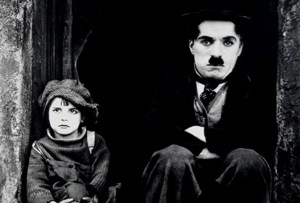
Charlie Chaplin

I’m going to start off with Chaplin because he was one of the very first to give actual direction to a motion picture. Charlie came to Hollywood after a career in Fred Karno’s musical halls in England. Karno was a successful impresario and producer and when his productions became successful, he decided to export them and sent various troupes on tours of the USA. On one of those tours Chaplin was spotted by slapstick film maker Mack Sennet and Chaplin began to appear in early Hollywood comedy shows. In those days there were no scripts. The actors and directors threw a few ideas about and then the cameras began to roll. The short films were made quickly and then sent off for distribution across the USA and even the world.

Chaplin clashed frequently with his directors when his ideas or suggestions were dismissed but after exhibitors asked Sennett for more Chaplin films, he was allowed to direct his own. When his contract expired in 1914 Chaplin asked for 1000 dollars per week. Mack Sennett complained that that figure was more than he was getting and refused. Another film company Essanay, offered him $1200 per week and a signing fee and Chaplin signed. He wasn’t initially happy with Essanay and didn’t like their studios in Chicago, preferring to work in California.

Chaplin was also unhappy after he finished his contract at Essanay because they continued to make lucrative Chaplin comedies by utilising his out-takes. Chaplin was however an astute businessman. In his new contracts the negative and film rights reverted to Chaplin after a certain amount of time. This was in the days when a movie had a life of months, if not weeks.

I can’t honestly say that I’ve ever thought of Chaplin as a genius but he was clearly one of the first to realise a film needed a structure and that comedy films didn’t need to be gag after gag after gag. They needed a story, the audience needed to sympathise with the characters and so on. Whatever you think of Charlie Chaplin, his contribution to the film world was immense.

Billy Wilder

My favourite Billy Wilder story goes like this: In his later years he wanted, as usual, to make a movie. He approached a studio and was invited in to make his pitch, as they call it in the movie world. The executive who met with Billy was a young man. He said to Billy, “I’m not familiar with your work could you tell me about it?”

Wilder replied, “of course, after you!”

Wilder was born in 1906 in Austria. He became a screenwriter while living in Berlin but left when the Nazi party began their rise to power. In 1933 he moved to Hollywood where many artists and film makers fled to escape the Nazis. Wilder wrote numerous screenplays with his co-writer Charles Brackett and in 1942 made his directing debut with The Major and the Minor.

A big hit for wilder was the film Double Indemnity. Wilder co-wrote the script with Raymond Chandler and the film was nominated for 7 academy awards as well as becoming a classic of film noir.

By far my favourite Wilder film though was Sunset Boulevard. The film follows William Holden as screenwriter Joe Gillis who is down on his luck and is about to have his car repossessed. To escape the repo men, Holden drives into what he thinks is a deserted house on Sunset Boulevard. To his surprise he finds reclusive film star Gloria Swanson living there. Swanson plays Norma Desmond, once a star of the silent era who is planning her return to the screen.

Norma engages Joe to edit a script she has written herself and Joe soon finds himself seduced by the affection and money she lavishes on him. Some of Swanson’s own silent films are used within the production and one of her old directors, Erich Von Stroheim plays the part of her butler and former husband. The final scene of Joe floating dead in Norma’s pool took was a difficult shot to film. Wilder eventually did it by putting a mirror in the bottom of the pool.

Wilder died in 2002. He is buried in Los Angeles and on his grave is inscribed. ‘Billy Wilder. I’m a writer but then, nobody’s perfect’, a reference to the final line in Some Like It Hot.

Oliver Stone

Oliver Stone enlisted in the US Army in 1967 and served in Vietnam with the 25th Infantry and later the 1st Cavalry.
Back in the USA he enrolled at university in New York and studied filmmaking. Martin Scorsese was one of his teachers. Vietnam was among the first subjects of his student films.

Stone graduated in 1971 and took on various jobs while he wrote screenplays. His breakthrough success was in 1978 with the screenplay for the film Midnight Express for which he won the Academy Award for best adapted screenplay.

The first Oliver Stone movie I ever saw was the 1986 movie ‘Platoon.’ Stone wrote and directed the movie set during the Vietnam War and based on some of his own experiences.

He followed up with another Vietnam film, ‘Born on the 4th of July’ about Vietnam veteran Ron Kovic. A third film completed Oliver Stone’s Vietnam trilogy, Heaven and Earth released in 1993.

Wall Street was a hit movie for Oliver Stone in the eighties and the character of Gordon Gekko played by Michael Douglas became an eighties screen icon. In Wall Street Stone first developed a mesmerising visual style almost akin to a music video and it is a style that many film-makers seem to have picked up.

In JFK, Stone takes this visual style to another level and combines various film formats to produce a stylish visual montage. The subject is a controversial one, the shooting of President John Kennedy in Dallas in 1963. Stone decides to use the investigation by New Orleans District Attorney Jim Garrison as a vehicle to explore the various theories about the shooting although ultimately an amorphous military industrial complex is blamed for the conspiracy. Criticism rained down on Oliver Stone from anti conspiracy theorists but I personally felt that the movie was a fair one and everything that was conjecture was shown as conjecture. The great treat for me was the combining of the different visuals and the inter weaving of documentary film with new footage. Stone went on to make two more films about American presidents, Nixon and W, the latter film about George W Bush.

George Stevens

George Stevens made many memorable films and I’ve including him in this handful of directors because if I was a director, I reckon I’d make my films the way George did. George directed the classic western Shane starring Alan Ladd. Shane is one of the great film westerns and one that tried to show the west as it really was. Stevens also directed Giant, James Dean’s last film. Giant is about Bick Benedict, a Texas rancher played by Rock Hudson and Dean plays Jett Rink, a surly ranch hand who is fired by Benedict. Benedict’s sister however, has a soft spot for Jett and when she is unexpectedly killed in a fall from a horse, we find that she has gifted a small piece of land to Jett. Bick wants to keep the ranch together and offers Jett a large sum of money for the property but he declines and goes on to strike oil on the land. Stevens filmed his actors with many cameras and liked to shoot everything he could then sit back and work his way through the resulting footage and slowly figure out how to edit it together, which is pretty much what I do with my short amateur YouTube videos.

Alfred Hitchcock

Hitchcock was a British director who began in the days of silent films and came to be known as the master of suspense. Blackmail made in 1929 was the first British Talkie and 10 years later producer David O Selznick lured him to Hollywood where he made many films that are now regarded as classics, films like North by Northwest, Dial M for Murder, Rear Window, The Birds and Pyscho. Hitchcock might also be seen as one of the first celebrity directors. He became popular because of his habit of appearing, however briefly in all of his films, sitting on a bus for instance, just missing the bus in another. He also became well known by introducing his television series, Alfred Hitchcock Presents.

Alfred Hitchcock (Picture courtesy Wikipedia)

There are some directors who have tried to make films that show events the way the human eye sees things. Roberto Rossellini was one. Another surprisingly was Hitchcock himself.

In 1948 he made the film The Rope. It was an unusual film in many ways, especially for Hitchcock. The length of a film magazine back then was ten minutes so Hitchcock decided to shoot the film in a series of 10 minute takes each take morphing smoothly into the next one. The set was built with moveable walls which were able to be moved swiftly out of the way by the prop men to accommodate the very large film camera of the time as it moved about the set.

Making a film without the usual cuts and edits would create a viewer experience more akin to the way a human being sees things, or so Hitchcock thought. My personal view is that we see things with our mind more than the eye. The human eye is constantly scanning the scene before us and these scans are used by the mind to put together an image for us. Some of that image will be up to date, especially whatever it is we are concentrating on. Other elements, things in our peripheral vision for instance may be seconds out of date because that element of the image we are seeing was scanned seconds or even minutes ago. That’s my theory anyway. For me the director who films in the way the human eye sees things is Woody Allen.

Woody Allen

I’ve written plenty about Woody before so I won’t go on about him here too long. The great thing about Woody’s films is that they don’t follow the usual film school format of close up, medium shot and wide shot. Woody usually makes a one or two camera set up with few if any close ups and that’s it. In one shot in Hannah and Her Sisters, Michael Caine is talking to someone, it might have been Mia Farrow but I can’t remember off the top of my head and the Mia character goes into the bedroom but continues to talk with Caine. Michael expected there to be a second set up filming Mia in the bedroom but there wasn’t. He asked Woody why not and Woody answered why do we need to see the other person in the bedroom? We can hear their voice that’s all we need. If the character was hiding a gun in their purse or pocket or something pursuant to the plot then we need to see that but otherwise, what’s the point? That’s what I like about Woody’s films, their economical use of film and the lack of multiple set ups.

Those then are my handful of film directors. Who are your favourites?


What to do next: Here are a few options.

Share this post on your favourite social media!

Hit the Subscribe button. Never miss another post!

Listen to my podcast Click here.

Buy the book! Click here to purchase my new poetry anthology.

Click here to visit Amazon and download Floating in Space to your Kindle or order the paperback version.


Movie Connections Part 2: Nora Ephron

A while back I wrote a post about my movie connections. Every time I see a great film it registers up there in the old grey matter and at some point I’ll take a closer look at the credits of those films and see if there was a connection. In the case of that particular post the connection was Terence Rattigan. Rattigan was a playwright who wrote many film scripts and adapted many of his own plays for the screen and in the course of my often extensive TV viewing I’ve come across a number of great films all written by him.

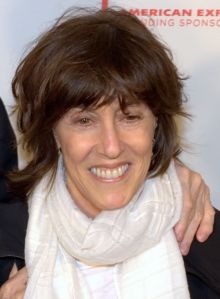
In another similar mental exercise, I examined another group of films and the common denominator turned out to be Nora Ephron. Now some of you out there may never have heard of Nora. Who was she anyway? Well Nora was a journalist, a screenwriter and a director. She’s probably most famous for penning the brilliant comedy When Harry met Sally.

Photo by David Shankbone -, courtesy Wikipedia

When Harry met Sally is one of my all time favourite films and one that I wasn’t keen on at first. It didn’t impress me that first time at the cinema, the second time I saw it on TV I thought, hey, this isn’t so bad and I made a particular effort to seek it out a third time. After that third viewing, I loved it so much I bought the DVD version.

I was sad to hear of Nora’s passing in 2012 and made a mental note to find out more about her. Naturally, being me, a lazy semi-retired English blogger and occasional maker of YouTube videos, I never did.

A few weeks ago and eight years after making that mental note I was scanning idly through the TV listings and noticed a documentary film about Nora called Everything is Copy. The writer and director, Jacob Bernstein turned out be Nora’s son so he was clearly qualified to make a documentary about his mother. It wasn’t the greatest documentary film I’ve ever seen but it was certainly interesting. The film told the story of Nora’s life through various interviews. One surprising one was with Carl Bernstein, the famous Washington Post reporter whose articles on Watergate with Bob Woodward revealed the Watergate scandal to the world and eventually forced President Nixon to resign.

Nora was married to Bernstein and after becoming pregnant for a second time with their other son Max, Nora discovered he was having an affair with Margaret Jay, a British journalist and friend. Nora used the experience to write a book called Heartburn which was later made into a film starring Jack Nicholson and Meryl Streep. I have to say I’ve not seen the film or read the book but once again I’ve made a mental post it note and stuck it firmly up there in my brain for further attention.

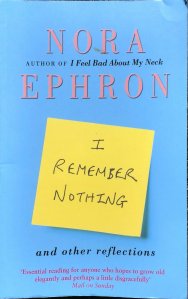
After watching the documentary film I felt even more determined to find out more about Nora so I went to abebooks on the internet and after some research ordered a copy of I Remember Nothing, a book by Nora that seemed to be a memoir. The book starts out as a sort of memoir, telling humorous stories about this and that, and her life without really giving much away. Nora wanted to be a journalist and after working for the Kennedy White House for a short while she joined the staff of the magazine Newsweek. In her book she tells the story of how Newsweek did not hire female writers and offered her a job as a mail girl. She doesn’t appear to have been upset by this despite it being blatantly sexist. She just got on with her job, still determined to be a journalist. In her book Nora makes the whole episode sound quite amusing, especially when she later writes a parody column during a newspaper strike and as a result gets invited to write for the New York Post. Over on Wikipedia, there is a slightly different story in which Ephron gets involved with a class action lawsuit filed against Newsweek for sexual discrimination.

I Remember Nothing is an amusing book although it’s a little short on copy for someone for whom everything is copy. I enjoyed it enormously although had I been reading it on holiday, I could have got through it in an afternoon by the pool. Even so, the book has some great stories, in particular I liked the one about when Nora was nearly an heiress and thought she was about to inherit a formidable sum of money. There is another one about Christmas dinner and the one about when a meal was named after her in a posh restaurant. All of the stories are nice blog post sized stories which if I were devious enough, I could easily steal for the days when I have no idea what to write about.

When Nora was married to Bernstein, she put together a screen version of All the President’s Men which was ultimately rejected (William Goldman eventually wrote the script) but her version was seen by someone else who offered her the chance to write the script for a television movie and that was how her screen career started.

Nora wrote the screenplay for When Harry met Sally in 1986 and apparently imagined herself in the role of Sally, and Rob Reiner, who directed the film, as Harry. Nora wrote the screenplay after interviewing Reiner and producer Andy Scheinman and various others about their lives.

There is one scene from When Harry met Sally that has become a classic. It’s the one where Harry and Sally are eating in what looks like a diner or cafe and Sally shows Harry how easy it is to fake an orgasm by demonstrating it there and then in the cafe. According to Wikipedia, the cafe was actually Katz’s Delicatessen at 205 East Houston street in Manhattan. Also, just while I’m in the mood for dishing out useless information, the lady in the film who says to the waiter, ‘I’ll have what she’s having‘ when Meg Ryan, who played Sally, had finishing orgasming was actually director Rob Reiner’s mother and the line was suggested by Billy Crystal who played Harry.

Personally, I’d be hard pushed to tell you my favourite scene in the film although the one where Harry tells his best friend about his divorce is a major contender. Harry says he only knew about the split when the moving men came to his house to shift his wife’s stuff. One of the movers wore a t-shirt with the legend ‘don’t f’**k with Mr Zero’ on his chest and Harry’s friend asks ‘are you saying Mr Zero knew you were getting divorced before you did?’

I thought the pairing of Meg Ryan and Billy Crystal was wonderful and I could never understand why the producers of films like You’ve Got Mail and Sleepless in Seattle paired Meg with Tom Hanks. Then again, Nora actually directed both those films so maybe she just preferred Tom Hanks.

Here’s one of the crazy things I love about movie connections. Ages ago, I caught a film on TV about a woman who wrote a cookery blog. Can you imagine that, a film, an actual motion picture about blogging? Who could do that, who could make a picture like that? I missed a few minutes at the beginning of the picture and made a mental note (yes, another one) to make sure to record it next time it was shown. No, I didn’t record it the next showing but to answer my last question, who would make a picture about blogging, the answer was, surprise surprise, Nora Ephron.

In 2009 she released Julie and Julia, a film based on an actual blog by Julie Powell, an American who decides to cook her way through the cookbook of Julia Child, a 1950’s American cook played by Meryl Streep. As Julie blogs about her cooking the film flashes back to the life of Julia. It’s a great film and the only film I can think of which focusses on blogging.

Nora died in 2012 from pneumonia, a complication of the leukaemia she was suffering from. She had not shared her illness with friends or family, thinking it might impede her career. However, in I Remember Nothing, she left a list of things she would miss when she had departed:

They include Spring, a walk in the park, reading in bed, the view out of the window, Paris, butter and taking a bath.

She was 71 years old.


What to do next:

Share this post on your favourite social media!

Hit the Subscribe button. Never miss another post!

Buy the book! Click here to visit Amazon and download Floating in Space to your Kindle or order the paperback version.

Favourite Film Directors Part 3- Stanley Kubrick

This is number three in my Favourite Director series. Stanley Kubrick is one of the cinema’s great visual artists and a particularly memorable cinema moment for me was watching Kubrick’s classic sci-fi film 2001 on a hot weekday afternoon during the school summer holidays of 1968.

I was only 11 when I first saw 2001 and I remember my Mum being surprised that I had spent hours at the cinema on a lovely hot day. I watched the film in the huge movie theatre in Northenden, a suburb of Manchester, now a Jehovah’s Witness assembly hall. There were only a few people in the picture house that day and it was wonderful having this huge place almost to myself and seeing this incredible film in 70mm on the big screen. I recall being somewhat confused by it all, especially the jump from Neanderthal times to the future, until I bought the novel by Arthur C Clarke which explained things in a way the movie did not.

2001 is a particularly visual film. Kubrick cut out a lot of dialogue because he wanted the film to stand as “basically a visual, nonverbal experience” that “hits the viewer at an inner level of consciousness, just as music does, or painting.”

According to Wikipedia, despite the few people in the cinema with me that day in 1968, the movie went on to become the highest grossing North American movie of that year.

2001 set the standard for the sci-fi movie with its depiction of spacecraft drifting slowly and silently through space. The first Star Trek movie was heavily influenced by 2001 which made it look a little dated when the movie Star Wars was released and did the opposite thing, showing spacecraft whooshing across the screen at lightning speeds.

As I mentioned above, I was rather confused by the film and there were quite a few moments when I was wondering what was actually happening, for instance the jump from Neanderthal times to the future, the moment when the monolith sends its deep space signal and various other things too. All the technology that Kubrick displayed had its origins in science fact, both the space missions and the computer technology which make up the main parts of the story.

If you have never seen the film or read the book (shame on you) 2001 is about a mysterious monolith which appears on earth in neolithic times and helps the ape men of the day to develop. Later, in the future, the mysterious monolith is found buried on the moon and when it is exposed to sunlight for the first time, it blasts off a signal to Jupiter. (In the book the destination is Saturn, it was changed for the film as director Stanley Kubrick thought that the special effects department would struggle to create Saturn’s rings).

Anyway, the scientists of the day decide that the monolith is part of some extraterrestrial intelligence and set up a manned space mission to investigate. As the mission progresses, the onboard computer, HAL, decides to have something of a nervous breakdown which creates an unexpected hazard for the crew.

The film came about because Kubrick wanted to make the definitive science fiction film and he wrote to Aurthur C Clarke, one of the foremost sci-fi writers of the time and asked him to collaborate on the screenplay. Stanley liked Clarke’s short story ‘the Sentinel’ and the two worked together to formulate the final script. Other works of Clarke’s were added to the timeline and while the two wrote the script together, the novel version was written by Clarke simulateously as he worked on the screenplay. The two, book and screenplay do differ slightly.

Huge amunts of research was done to find the best way to show space travel on the screen and for it to be scientifically accurate. One interesting feature was a huge centrifuge built on the set at Shepperton Studios in the UK which represented how the spacecraft duplicated artificial gravity by rotating. The huge set cost around one million dollars in total. The centrifuge enabled Kubrick to shoot the actors from various positions including a 360 complete arc of the set as the astronauts did their daily fitness jog.

Kubrick was born on the 26th July in 1928. He lived with his family in the Bronx, New York and after leaving high school became a photgrapher for Look magazine. During his time there he became interested in motion pictures and in 1950 he decided to make a short film about boxer Walter Cartier based on a series of photos he had taken for the magazine. In 1951 he resigned from Look to concentrate on making films. His first theatrical feature was Fear and Desire which he produced, directed, photographed and edited. That film was largely financed by his uncle.

An incredible leap in film making for Stanley came in 1956 when he was asked to direct Paths of Glory by the producer and star, Kirk Douglas, based on a true story of the French army in the first World War. The film showed the trenches in a different light to many films that came before and in particular, Kubrick’s tracking shots through the trenches were a revelation. Paths of Glory is a powerful film and well worth watching if you ever get the chance to see it.

Kirk Douglas later asked Stanley to take over the director’s chair on Spartacus, after he sacked original director Anthony Mann. Spartacus is perhaps the only film on which Stanley did not have full editorial control.

Stanley Kubrick acquired the film rights to Vladimir Nobokov’s controversial novel Lolita and decided to film in England. He moved his entire family to the UK where they would set up home. Kubrick first worked with Peter Sellers on Lolita and was so impressed with him, he asked him to play multiple roles in his next film Dr Strangelove. Dr Strangelove was a cold war film about a US bomber crew that decides to drop the atom bomb on Russia. Sellers played various roles, the US President, A British air force officer, and Dr Strangelove, an ex-nazi scientist. He was also supposed to play a US air force pilot but dropped out of that role which went to American actor Slim Pickens.

It almost seems as if every picture Stanley Kubrick made was something new in cinema, something that broke new ground. In Barry Lyndon Kubrick had to create new filming techniques because he decided to film in completely, or almost completely, natural light. Barry Lyndon was the film version of William Makepeace Thackeray’s novel The Luck of Barry Lyndon, about an 18th century rogue and adventurer. The film was shot on location in England and Ireland and many of the shots were set up to resemble various 18th century paintings. New techniques and lenses were introduced to allow the director to shoot in candle light although diffused artificial light was used as well.

Kubrick ventured into the horror genre with The Shining based on the book by Stephen King. A writer played by Jack Nicholson decides to take a job looking after the Overlook Hotel during the winter season when the hotel is closed and snowbound. During the stay the character descends into madness amidst various supernatural events and his wife and son played by Shelley Duval and child actor Danny Lloyd struggle to stay alive when Jack turns into a homicidal maniac.

Apart from second unit location shots, the film was shot entirely in England at Elstree Studios and featured extensive filming with the Steadicam, a new device which allowed for smooth hand held filming. Kubrick was apparently super keen on getting the exact shot he wanted which resulted in multiple re-takes. Today the film is considered to be a horror classic although Stephen King apparently hated the film.

Stanley Kubrick’s final film was Eyes Wide Shut starring Tom Cruise and Nicole Kidman. Sadly, Kubrick died of a heart attack on the 7th March 1999 only days after screening the almost completed film to producers Warner Brothers.

Kubrick made other films which I have not mentioned here. One particularly controversial film was A Clockwork Orange which sparked great debate about violence, not only violence itself but how it had been handled by the cinema. Utimaltely, Kubrick withdrew Clockwork Orange from British cinemas and it was not available in the UK until after Kubrick’s death.

Stanley Kubrick was one of the most talented and influential directors in the history of the cinema and he leaves behind an amazing portfolio of motion pictures.

A lot of the information here was from the splendid book Stanley Kubrick: A life in Pictures by his widow, Christianne Kubrick, well worth reading if you ever see a copy.


What to do next:

Share this post on your favourite social media!

Hit the Subscribe button. Never miss another post!

Buy the book! Click here to visit Amazon and download Floating in Space to your Kindle today!