A Few Unconventional Thoughts about Time

quotescover-jpg-88bTime, there’s a thing. I have a theory about time and it’s this, it’s that time flows differently in different places. OK; sounds a bit mad doesn’t it? Let me explain further. Take somewhere like France. Dotted about France are innumerable war grave cemeteries. The conflicts of the first and second world wars left their mark on the landscape in various ways and even today farmers in the Somme and other places continue to dig up artillery shells and other reminders of the past.
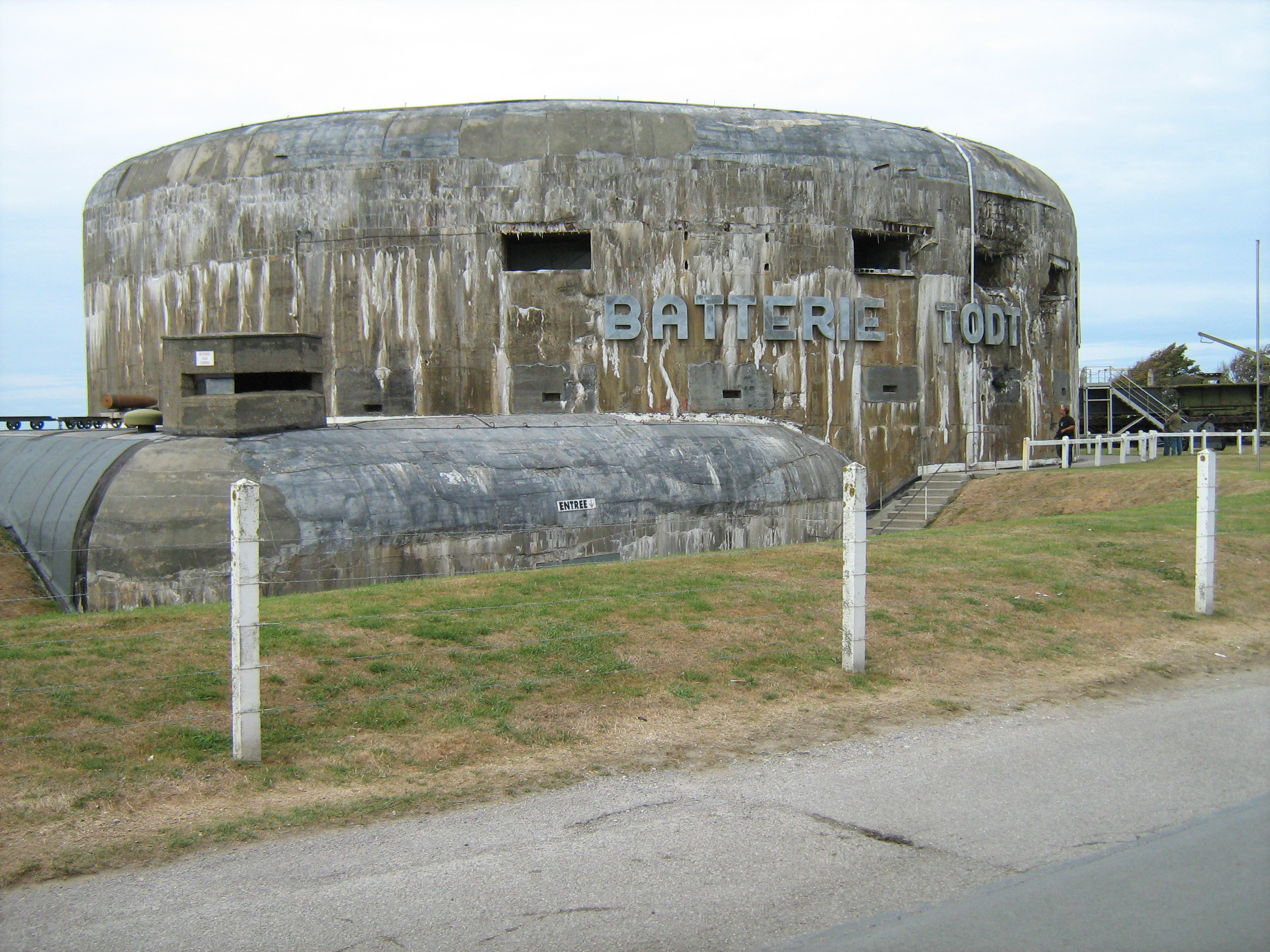
Batterie Todt, Pas De Calais

Batterie Todt, Pas De Calais

On many occasions when trundling through rural France I’ve come across many bunkers, fortresses and other sites. In northern France Liz and I stopped at a war grave cemetery that was picture perfect in its own way. The lawns were incredibly neat, and the hedgerows immaculately trimmed. Sadness pervaded the site like a scent coming over from the adjacent fields. Throughout there is a feeling of peace, of slowness and a feeling that time has stopped here or perhaps just slowed. That’s not strange when you think that time must have speeded up during the action of the first and second world wars, so it seems only fair that nature must compensate, that time must slow later to make up for the fast and frantic earlier time.

You can imagine the pace of things even a hundred years ago: The early morning bombardment, the whistles blowing as officers called their troops to go over the top. The advance parties who made ahead to cut the barbed wire, the troops walking apprehensively forward until they walked into the deadly machine gun fire that cut most of them down. Many found their final resting places in these cemeteries, places that are now quiet and peaceful with a silent beauty, timeless and moving with the beat of nature as a backdrop, the humming of the insects, distant cows mooing, and the birds flying past.

Many soldiers’ bodies slipped deeper into the mud of places like the Somme and remain there still. Others have no resting places, their bodies blown to pieces by artillery shells, their names marked on marble walls forever missing in action.

War memorial, France, 1940

War memorial, France, 1940

At one place, travelling from St Quentin to Soissons we stopped by the road to find a huge sword standing in the rock. Like a giant Excalibur, it stood there waiting to be pulled by some giant hand, bearing silent witness to a long ago battle from the Second World War.

We once visited Compiegne, the place where the armistice was signed at the end of the First World War. The famous railway coach there is not the authentic one. No, that one was where Hitler forced the French to surrender in the early days of World War 2. The coach was then taken away to Berlin where the Nazis destroyed it in the closing stages of the war to stop its return to France. The coach that stands here now in Compiegne is a similar one and it’s easy to imagine the scenes all those years ago, the French accepting the German surrender in 1918, then years later Hitler and his gang pressing their terms on the French.
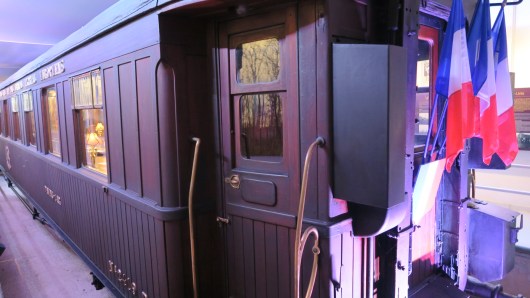
Compiegne, France

I’ve never been to Auschwitz, the Nazi concentration camp in Poland but whenever I look at one of those TV documentary programmes where TV cameras return to the site, it doesn’t look like a place of mass destruction. It looks calm, serene and another silent witness to the death and destruction of the past. Time ran faster here when the Nazi death machine was in full swing. Now time flows peacefully past over those who come to learn about what has gone on before. This must indeed be a sombre place to visit but Auschwitz is not only a memorial to those who had their lives snuffed out in such a terrible fashion but a reminder to all of the dangers of prejudice and hatred. Time hangs heavy over this place but the evil that built and maintained this death camp has long gone.

All the places mentioned here have had their moments in the spotlight of world history. They all lived through times of accelerated pace when time flowed swiftly. Perhaps it’s their time now for a quieter pace while time flows slowly . .


If you enjoyed this post, why not try my book. Click the links at the top of the page for more information.
dscf1792_31219045553_o

How Cars Have Changed Life as we know it!

quotescover-JPG-14It always used to be that the top prize on a TV gameshow, especially in the heyday of the game show in the 80s, was a car: A brand new top of the range family car. The motor car is probably one of the great status symbols of our time and also one of those things that give us unprecedented freedom, certainly compared to our ancestors. Turn the clock back to the 1950s: If people wanted to get out and about and enjoy the great outdoors on a bank holiday the only way to travel was by bus or train. Yes, public transport was crammed with people in those days, all on their way to enjoy the great British seaside destinations.

Today, we are free of all those past restrictions, no waiting for trains or buses. It’s just a simple matter to pop outside, start up the motor and you’re off. The only restriction is probably traffic congestion. How many of us spend our bank holidays stuck in some traffic jam that clogs up the roads to the holiday hotspots?

Traffic is just a nightmare in the UK but then when you consider the densely populated nature of the UK it’s hardly surprising. That’s why I just love driving on the roads of France. OK, Paris may be just like driving in the UK, if not worse but out in the country in departments like the Loire, Brittany and Burgundy the auto route and the A roads are just a joy to drive on. Forget also the drab overpriced service areas in the UK. In France it’s so nice to drive into an ‘aire’ as they call them, a lovely picnic area with toilets and picnic tables. How often have Liz and I stopped at one of these delightful places and opened our sandwiches and bottles of water to find a French couple stop at the next table and open a hamper the size of a house complete with wine, salad, cold meats and God only knows what else.

It’s relatively easy in the UK to drive over to France on the ‘shuttle’. A quick trip to Folkestone, drive onto the train, handbrake on and off we chug down and under the channel.  Thirty minutes later and we are driving off in Calais. Sometimes I think about my very first car and wonder if I could have made that journey in that car. Possibly not as my very first car was a Bond Bug. A what?  Do I hear you might ask?

9o698i3bgeI’m probably pushed to tell you the registration number of my current car but the registration of my Bond Bug, PDB 71M, is still firmly anchored in my old memory bank.  A Bond Bug, for those of you who don’t know was a sporty little three wheeler car and I bought one because I failed my driving test twice and I could drive the Bug on my motorbike licence.

It was actually a pretty eye catching car for a three wheeler. No doors but the roof lifted up to gain access and the side windows were plastic held on by Velcro. I always remember bringing it home and showing it off to my family with a certain amount of pride and my Dad looking at it and saying “How are we all going to get into that?” Perhaps he thought I was going to take us all away for a holiday! It certainly wasn’t a car for travelling over to France in!

Still, we had some nice times, me and the Bond Bug but then one cold and snowy Christmas I decided to chance going out to a Christmas party in the car even though it was losing coolant. I topped it up with water and went off for a night of Christmas cheer. I walked home sensibly, I might add, but when I returned the next day I found that the car had frozen overnight and it ended up having to have an engine rebuild. That was a pretty expensive night out! Later when I passed my driving test I got myself a proper car.

The author and his, well ok not his actually, just some random Ferrari!

The author and his, well ok not his actually, just some random Ferrari!

I’m pretty happy with my current car generally, it’s a Renault Megane convertible and I kind of like being just a bit of a poser, driving round when it’s sunny with the roof down and looking generally pretty cool what with my leather seats and my shades but you do get those days when things go wrong.

I spent a lot of time the other day burning a few new cds to play in my car and just as I joined the motorway on the way to work I pressed the eject button on my CD player but the old cd wouldn’t eject. I could hardly pull over on the motorway so already my journey had not started well.

The other thing is that one of my electric windows, the rear off side one to be exact, has jammed. OK, at least it jammed in the up position but the car automatically drops the windows when raising or lowering the roof, so that means I can’t open my roof.  Add to that the prospect of spring and hopefully some lovely weather – perfect for open top driving – and as you can imagine, I’m not happy!

Anyway, I have to look on the bright side. When I pulled up at work and switched off the radio, my CD ejected! At least I was OK for music on the return journey and now I’ve had the window fixed expect to see me cruising around Lytham with my roof down, posing!

If you liked this blog, why not buy my book; available as a paperback or a Kindle download:

FIScoverbuynow

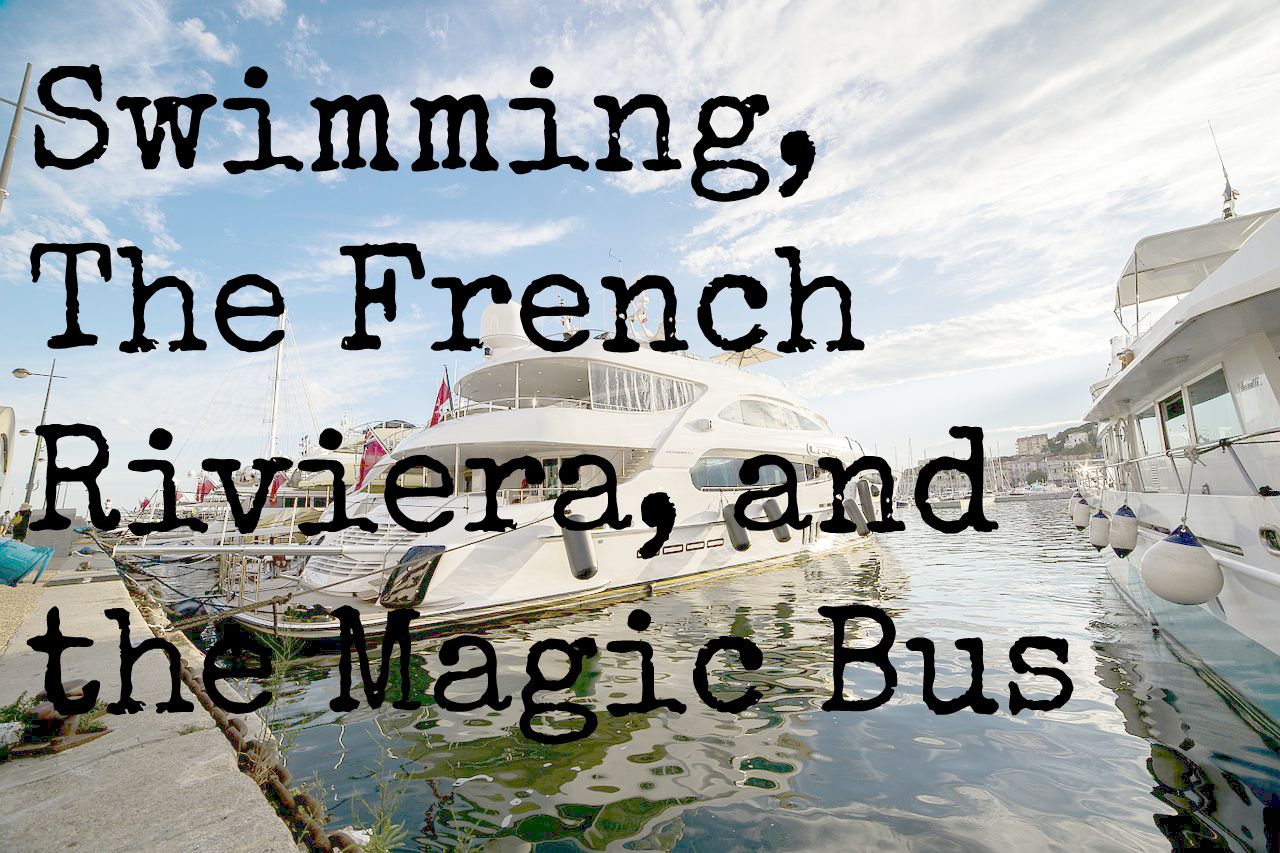
Swimming, The French Riviera, and the Magic Bus.

Years ago when I was a teenager, my friend Chris asked me if I fancied a holiday in France with him at his Grandfather’s villa in Hyeres, not far from St Tropez. Now on the surface that seemed to be a pretty incredible invitation. I wish I had a friend today who could make me an offer like that. Like a lot of things in life though, there was a catch, and in fact there turned out to be more than one. Chris’ Grandfather was retired and living in the UK and we were taking him with us to visit his property in France. Anyway, we booked a trip on something called the Magic Bus; a coach service frequented by students and back packers attracted to the cheap fares. It was quite a contrast when we arrived in London and boarded our bus at the coach station; fifty or so teenage travellers and one rather frail old man.

cannes-190461blog_1280Two things stand out from that journey. One was waking up in the middle of the night, curled up in my seat and watching the two young French drivers effect a driver change while the bus was still travelling at roughly seventy miles an hour in lane one of the autoroute. One driver leant out of the cab, still hanging on to the steering wheel, while the other slipped nimbly past him into the seat. He took the wheel and then reached down to adjust the seat with his other hand. Once he was comfy and settled in, he put his foot down and carried on. The other driver was already asleep in his little bunk.

The other thing was early in the morning we awoke to find ‘Pappy’ as Chris called him, scrabbling about on the floor. He didn’t seem to understand my poor schoolboy French so I had to nudge Chris awake and ask what was going on. After a swift French exchange Chris said he was looking for the false teeth he had dropped in the night. One of the back packers nearby found them and Pappy leapt up, grabbed the gnashers and popped them into place!

Poor old Pappy was not happy when we arrived at his French villa. The villa had come to him after the death of his second wife and there were conditions attached meaning it would pass to her family in full when Pappy died. During his absence, the French relatives must have been getting impatient about their inheritance and they had somehow managed to sell off some parts of his land and rented out the downstairs of the villa to a motor mechanic. Pappy was not happy.

The villa was the second catch. Lovely as it was with its extensive grounds, it appeared to me to have been untouched for many years. There was no running water at all in the house. If we needed water it had to be pumped up from a well in the garden. There were no indoor toilets; one had to use the traditional ancient French toilet outside. Pappy, being unable to reach these facilities in a rush, had a bucket in his bedroom which Chris and his brother Tony also made use of. As I could not approach the bucket without retching I declined to either use or empty it. However, after one evening of excessive drinking they caught me using it and I was forced to empty it the next day. I could only do so by wearing my diving mask and snorkel and as I pottered along to the French toilet the two of them, watching from afar collapsed into laughter which soon passed to me and it was much later, after repeated attempts, when I managed to complete my task.

That snorkel and mask turned out to be pretty helpful in an other way too. As a school pupil at Sharston Comprehensive school, every Wednesday I think it was, we marched the short distance to Sharston baths for our swimming lesson. I use the word ‘lesson’ reluctantly as I really don’t remember getting much tuition at all, As usual I joined the small band of non swimmers in the shallow end of the pool. The teacher tossed us a few polystyrene floats then joined the others at the deep end. That was generally the last we saw of him till the end of the lesson. All the time at that school I can only think of one person who ever made the move from the non swimmers to the swimmers and that was because his dad taught him to swim in the summer holidays. All well and good you may think but what has that to do with a trip to France? Well, simply this, on that holiday in Hyeres, with the help of my two friends and a borrowed dive mask, I finally gained my confidence in the water and learned to swim in the gentle blue waters of the Mediterranean by a quiet beach called ‘Le Cat.’

When the time came to leave, Pappy refused to go. He was Italian by birth but had lived all his life in France and wanted to stay here in a place where they spoke a language he understood. He was very old though and unable to look after himself and after some persuasion, he came with us and returned to the UK. Sadly, he died some time later.

Years afterwards Chris returned to Hyeres to take a look at the old place. He told me that the villa was still there but the land had all been sold and numerous properties now closely surrounded it. The relatives had finally got their inheritance.


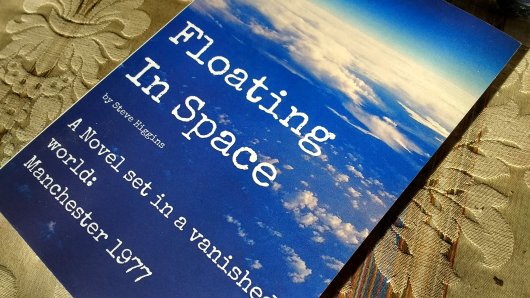
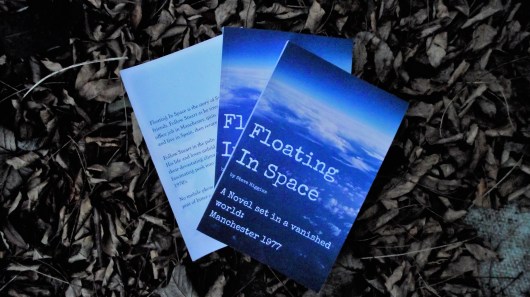
If you liked this post, why not try my novel? Floating in Space is set in Manchester, 1977. Click the links at the top of the page to buy or for more information.


When the Holiday is Over

Forget the blue skies and the swimming pool
Your desk is all ready so don’t act like a fool.

Forget the pavement cafes and Mademoiselles
As your computer fires up with a thousand e-mails
Enough to numb the pain
And the nagging desire for a glass of red wine;
Act cool.

Briefings, meetings and folders to review
Memoranda and consultations to plough through

Forget the camembert and French bread
Close the door on the plat du jour
Its not even lunch and I can’t resist
The thought of a cool aperitif;
As if . .

Revised protocols need to be sorted
And I see the new software is unsupported

I’ll enjoy my lunch in the works canteen
A ham sandwich and a cup of tea
And the memory of a French bistro won’t even arise
All bustle and chatter and joie de vivre
No, not for me . .

What happens with the cheese -stays with the cheese!

quotescover-JPG-36Not so long ago my team and I had a team night out. It was great for work colleagues to have the chance for a good get together, have a few beers and some food, and talk about things that were UN- work related. It was a pretty good evening, all arranged by me I might add, and the pub I chose for a meeting place was just opposite Manchester’s Chinatown, so when we were all ready it was just a case of popping across the road for our meal.
I was not amused then when the evening was hijacked by one of our group who wanted to go to a tapas bar on the other side of town. To cut a long story short, I had far too much to drink and gave some no holds barred stick to the perpetrator of this infamy, who just so happened to be my boss!

Next week at work I approached my boss meekly with a prepared apology only to be stopped in my tracks.’ Steve’, my boss said, ‘what happens on the night out, stays on the night out!’

Due credit to the boss for his understanding attitude and in a roundabout way that brings me to another thought on this last night of my French holiday :

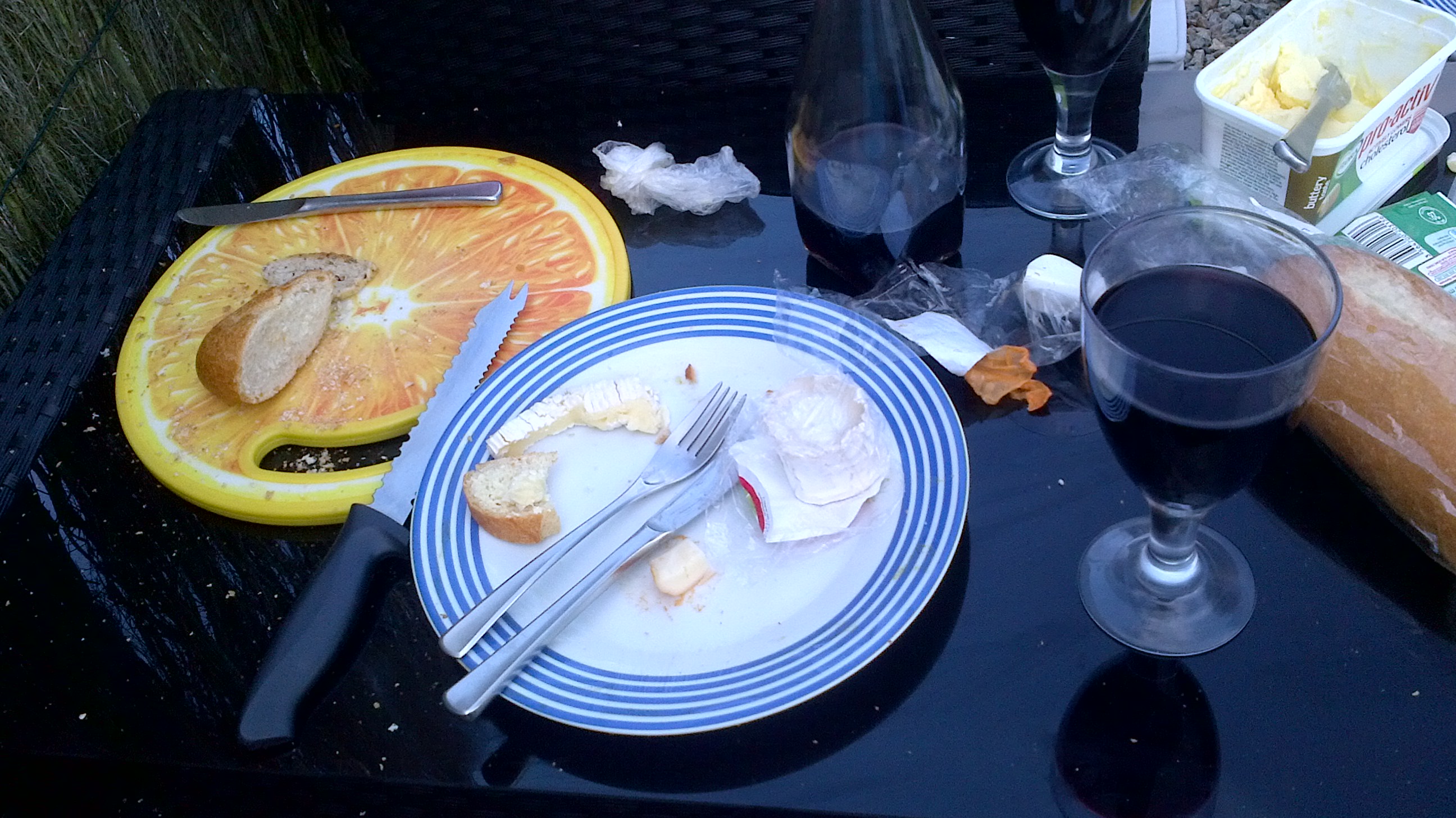
In previous years, as well as stocking la voiture with French wine, I always used to take back a considerable supply of cheese -not anymore! I’ve come to feel that French cheese, as much as I love it, doesn’t sit well on an English table. Our food doesn’t suit the cheese, and drinking and eating habits change when we get home. So leave your French cheese in France, in a sunny pavement cafe, where you can enjoy it with some French bread and a lovely glass of French red.

Oh well, here’s to l’annee prochaine!

Image

A French evening In

France2010 320

I’m coming to end of my three week stay in France now and here in the rural part of the Vendee a night out at a restaurant is pretty much a waste of time. The thing is this; the rural French are not interested in a night out. Friday night at your local restaurant means nothing to them. Lunch however, lunch is a whole new ball game. Lunch in France is twelve till two. Shops close, offices shut. The lunch is all important. Trying to get a table in Lucon our local town is a pretty tall order but come Friday night at seven, take your pick, any table in the house and oh, who’s that at the other table, yes, another couple of Brits!

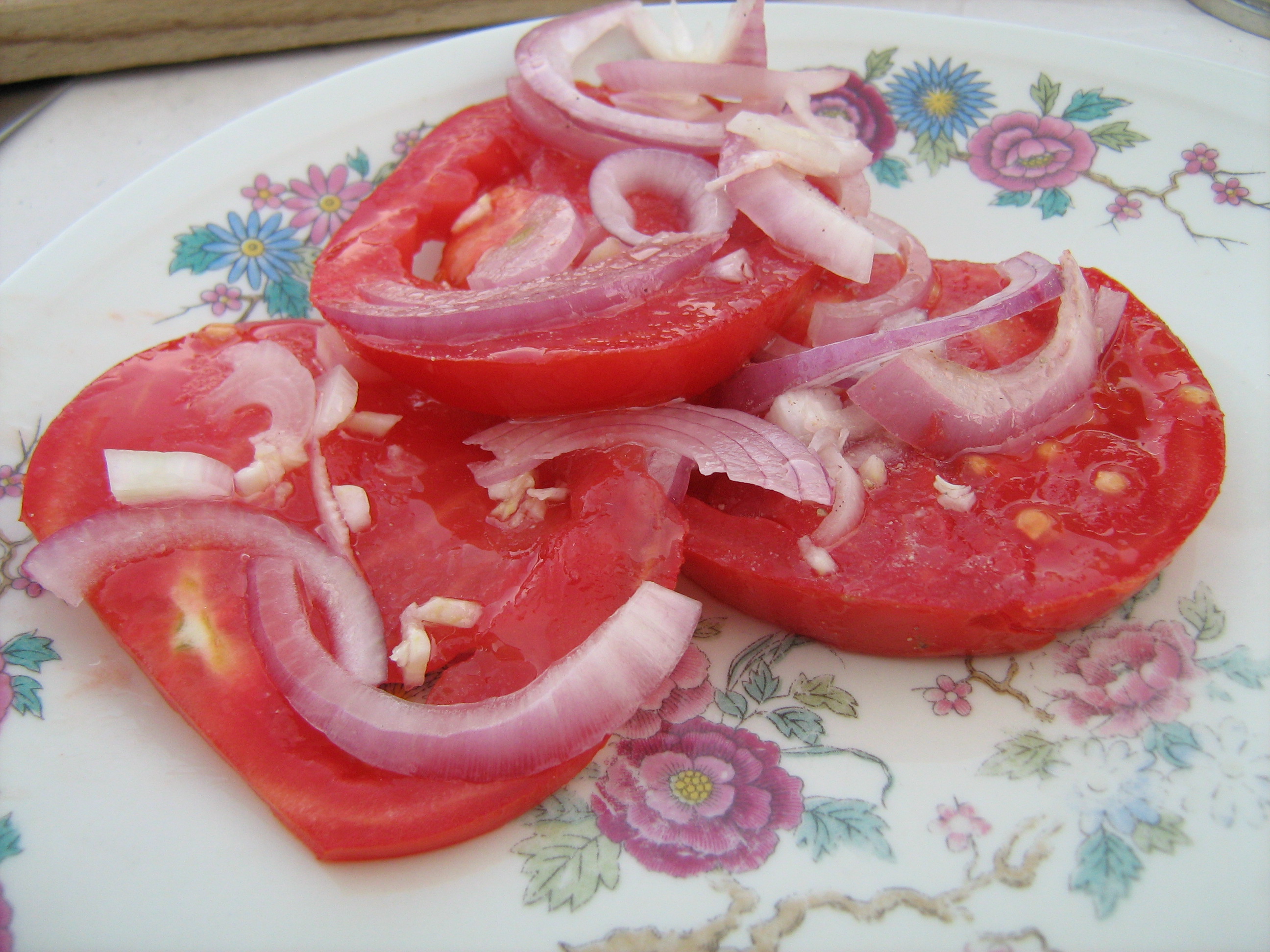
Tomorrow night’s tea looks like being something like a sandwich as we’ll be packing up so we can make the early ferry next morning from St Malo. Tonight we went Italian; The starter was goats cheese and spinach with chilli oil served with French bread and a nice tomato and onion salad. Main course; stir fried chicken livers with garlic and chilli and green peppers and of course, more French bread. Throw in a lovely garden and patio, some hot vendee sun, some lovely French red wine and the result is an unbeatable dinner for two.

A pretty European collaboration I suppose; Italian food, French bread and wine, and two English tourists!

The French way of Dining

menuThe French have a rather unjustified reputation for rudeness in my opinion. OK, Parisian waiters are not the most polite and neither are Parisians for that matter, but take a drive out of Paris into the country  and you will meet the real French. The French who appreciate that you try, in only perhaps a small way, to communicate in their language. In a bar in the Loire that I always return to, every drinker that arrives will say ‘bonjour’ to everyone in turn, regardless of whether they are like me , strangers or foreigners and will say ‘au revoir’ when they leave and as for food, well, I will be the first to say that French cooking is not always the gastronomic delight that it is supposed to be but I do like the French way of eating. I like the ‘formule’ menus you see in French restaurants, the starter, main and cheese or dessert for sometimes as little as twelve euros or even less. And don’t forget the ‘plat du jour’, the French dish of the day.

Saumur, one of my favourite French towns is beautiful, not too busy but full of lovely restaurants. One I always frequent has most of its seats and tables on the pavement, what they do in the winter I do not know as the main brick part of the establishment is small!

The starters are small but full of flavour. The mains are wonderful and the cheese and French bread, exquisite! All washed down with a carafe of water and lovely French wine. A good meal does not need to be large but it needs to have a rhythm and those three acts, starter, main and cheese are a wonderful way to enjoy food, though it’s not just the food that is important. The wine, the service, the mood, all that comes into play and when that last mouthful of bread and camembert are gone, its time to call; ‘l’addition s’il vous plaît’.

English pub restaurants; take note!


If you liked my blog, why not buy my book!


What do French people do?

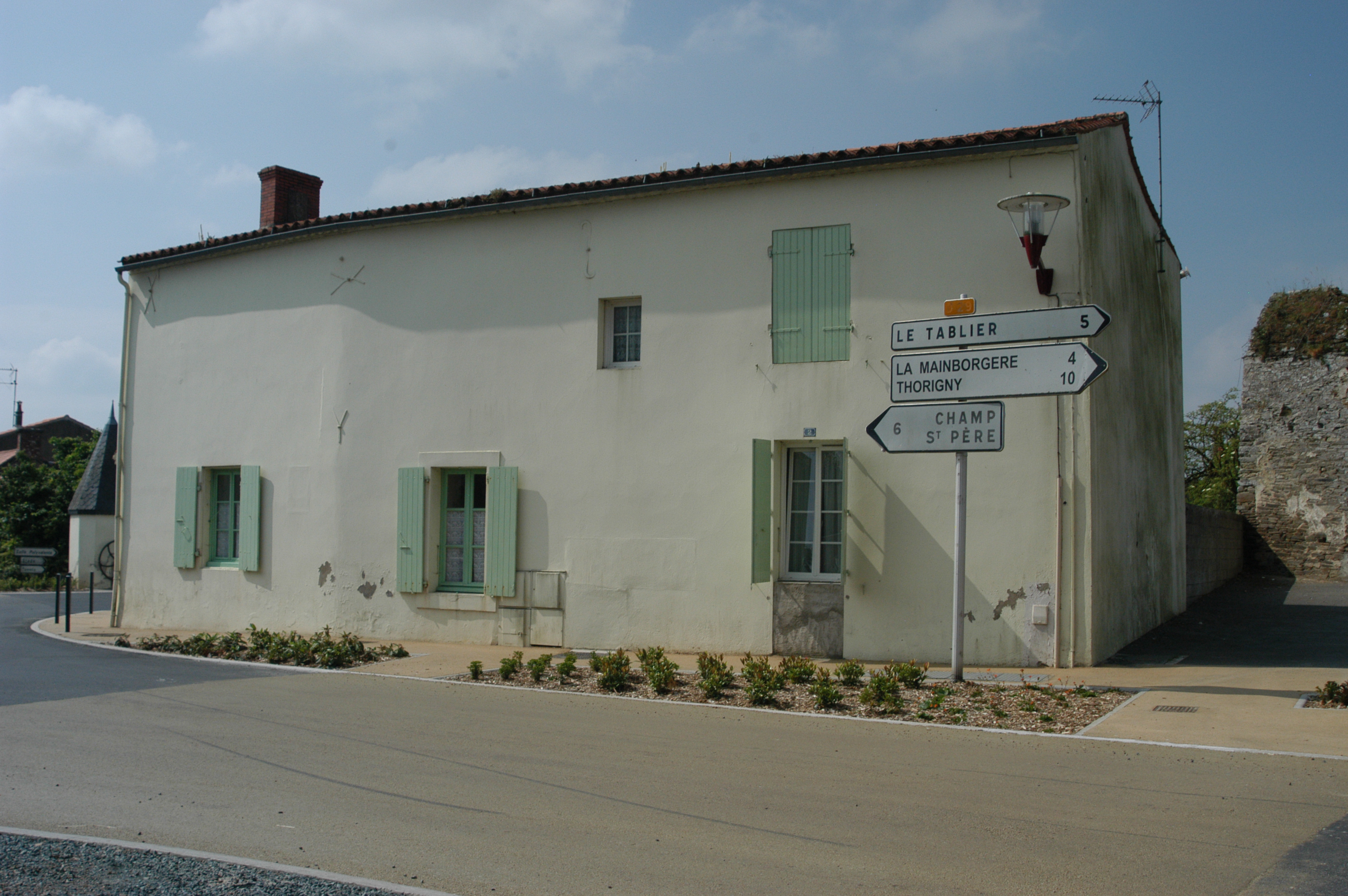
A French villageI’m coming towards the end of my three week stay in France.  I do love it here, I really do.  My fiance and I spend most of our weekends at vide greniers and brocantes. A vide grenier is literally a loft sale,  the equivalent of a UK car boot sale.  A brocante is slightly different, a cross between a flea market and an antique sale. Many of these events in France are combined with a village fete and have a bar and a food area which can range from a full three course French sit down meal to merguez (French sausages) and frites (chips to UK readers and fries to you in the USA)

There is also always a bar, hey we are in France after all. Eighty cents for a glass of vin rouge, two euros for a glass of beer, and nothing stops these events. Rain shower at a UK car boot -forget it! Event over! Everyone leg it to your car and pack up. Are the French bothered by a downpour? No way! Put a bit of plastic sheeting down on your goods and quickly make way to the bar for a glass of red. Open up again when the skies clear. Now, here’s another thing; All these events are pretty well attended which means there are people about inhabiting these places but- and this is an important question. What do the French do when there isn’t a village fete on? Where do they go? What do they do and where do they do it!

Okay, deep breath needed here. I don’t mean to get excited but I’ve travelled for three weeks and here’s the thing; French towns close at 12 midday on the dot. Shops close. The only places open are the restaurants because nothing, and I mean nothing interferes with the French lunch. Nothing! Everywhere shuts down until two pm. Okay, I’ve noticed in recent years the supermarkets have started to stay open, which is a good time to shop for all us UK tourists. But even in the late afternoons French villages are still and quiet. UK villages are full of people, cars, traffic and kids. Where do the kids go? Why aren’t they kicking balls about in the middle of the street like normal kids? Where do the people go and what are they doing? If you know the answer, let me know!

This is what we need to do. Not so long ago on BBC there was a pretty interesting documentary about cats. The BBC team wired up all the cats in a village, had cameras and tracking devices on the cats and worked out what the cats did, where they did it and in fact the whole pattern of their behaviour. What the BBC need to do for a follow up programme is to attach cameras and gps tracking to a village of French people and report the results as soon as possible!

We need to know!


If you liked this post, why not buy my book! Click the links at the top of the page to buy or for more information.