One of the great things about having a lazy relaxing time in France is that I have plenty of time to settle down after a meal or a swim and have a long relaxing read. Here are a few more of my holiday reads.

The Eagle has Landed by Jack Higgins

I’ve seen the film of this numerous times and although it isn’t a particular favourite I’ve always enjoyed it. My brother died earlier this year and when I cleared his flat out, I noticed this book. He had urged me a number of times to read it as he said it was rather different to the film so I brought it along on holiday and thought I’d give it a read.
It actually reminded me a little of The Day of the Jackal, in that the book focusses mainly on the preparations for the operation and the action only occupies a small portion of the book.
In the opening pages Hitler has a rant about various things but praises the operation of Otto Skorseny who brilliantly freed the Duce, Mussolini, from captivity and brought him to Hitler. He chastises Admiral Canaris for not being able to do a similar operation such as kidnapping Churchill and Himmler, always wanting to please his Führer, takes note.
Canaris feels he has to placate Hitler and following on from a comment from Himmler decides to put forward a feasibility study. He assumes Hitler will forget about the whole project but Himmler gets wind of the study which he feels could work and forces one of Canaris’ aides to follow through with the project.
Colonel Radl, the aide in question, recruits Lieutenant-Colonel Kurt Steiner and his team who are veterans of fighting in Russia and various other places but due to Steiner’s defence of an escaping jewish girl, have now been relegated to a penal unit. Radl also engages Liam Devlin, an IRA soldier, to act with a British spy who has advised the details of a visit by Winston Churchill to a remote English village.
Verdict: The author builds up all the elements of this story in a tense and exciting fashion and the result is a really enthralling read. This result was much better than the film version even though the film is a great watch. I think I might look out for more books from Jack Higgins.
Mandy by Mandy Rice-Davies and Shirley Flack

This was another of my late brother’s books. He had mentioned to me that he was interested in the Profumo scandal and in fact, many years ago, he and I went to see the film Scandal at the cinema.
This book is an autobiography of sorts by Mandy Rice Davies who wasn’t really connected directly to the Profumo affair although she was a friend and flatmate of one of the principals, Christine Keeler.
As a young girl Mandy aged 16, real name Marilyn, left home in Birmingham and caught the train into London. That same day she auditioned for a job as a dancer in a night club and after getting the job she was given lodgings for 12 weeks after which she and Christine Keeler, a fellow dancer, became flatmates. There was a strict rule at the club which was that employees could not fraternise with the club’s members. The members were all very well-off gentlemen and many of the dancers flouted the rules. Christine and Mandy were invited out by various people and taken to exclusive clubs and restaurants and met many of the rich and famous of the day.
Marilyn did a lot of modelling assignments and was encouraged to use a different name to Marilyn so after some thought she came up with Mandy. She and Christine were youngsters who sought out fun and adventure and the two befriended an osteopath by the name of Stephen Ward. Ward introduced the girls to many celebrities of the day and one day Christine confided in Mandy that she was having an affair with a government minister, John Profumo.
Mandy was called a sex worker in the famous court case but as she points out in this book, she was not a sex worker or prostitute even though she was promiscuous and had a number of affairs. Neither was Stephen Ward a pimp or someone who lived off the earnings of prostitutes. Mandy was famous for admitting in court that she had had sex with Lord Astor. When she was told that Astor had denied the claim she famously replied ‘well, he would, wouldn’t he’?
Mandy had a long affair with Peter Rachman who later became infamous as someone who rented out run down properties to immigrants and used various thugs to make sure the rent was paid. Rachman was a self-made millionaire who survived concentration camps in both Nazi Germany and the Soviet Union. He died of a heart attack aged only 43 and Mandy was shut out of his properties by Rachman’s widow. Not only that but various gifts Rachman had made to her including a brand-new Jaguar car were swiftly repossessed.
In later life Mandy married and moved to Israel and describes life there as the owner of one of Tel Aviv’s first nightclubs as well as life during the 6-day war and other conflicts.
Verdict: This was a really well written and insightful book, whether that was due to Mandy or her co-writer I’m not sure but it was a hugely interesting and enjoyable read.
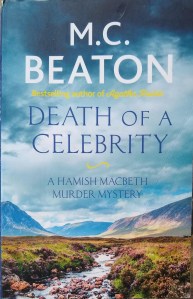 Death of a Celebrity by MC Beaton
This was another Hamish Macbeth mystery and I’m slowly ploughing on through the entire series. In this one a brash young TV presenter decides to make a new TV series exposing various scandals in Scotland and when she appears in the village of Lochdubh in search of new stories for her TV show, many people are not happy. When she gets murdered Macbeth has to find the culprit.
Verdict: This was a pleasant enough read but I began to lose interest somewhere in the middle and although the case was finally wrapped up, I didn’t find it quite as enjoyable as some of the previous entries in the series.
Young Stalin by Simon Sebag Montefiore
You wouldn’t think that new information about a character like Stalin could be forthcoming in this day and age, however, with the fall of the Soviet Union in the 1990s, the author has searched various archives in Russia and Georgia and unearthed much that is new about Josef Vissarionovitch Djhugashvili.
The future Soviet dictator was born in Georgia. His father was a shoemaker and his mother wanted him to become a priest. Stalin did study as a priest but later became an atheist and left the church to join local revolutionaries in Georgia.
 Stalin became one of the leading providers of funds for the revolutionaries. He did this by masterminding numerous bank robberies and sending the funds on to Lenin.
He eluded the Tsarist authorities many times but even so, he had to endure prison as well as exile to Siberia.
Later Stalin ran various printing presses and also edited newspapers for the revolutionaries. In 1917 he was exiled to a place close to the Arctic circle. In exile he read voraciously and became close to the hunters who used the reindeer in much the same way as the Native Americans used the buffalo. They used them for food, their used skins for clothing and protection from the cold and to a great extent worshipped these creatures for their sustenance.
When the revolution of 1917 broke out, Stalin headed for St Petersburg to link up with Lenin, even at one point disguising Lenin and helping him evade the police.
When Lenin and the Bolsheviks were able to take power from the provisional government after convincing the Soviets, councils of workers and soldiers, to side with them, Stalin was made a commissar, a minister, in Lenin’s new government.

The various faces of the young Stalin
It has always seemed to me that Stalin was the cruel and hardline man and Lenin was the thinker, the politician. In fact, Lenin was a hard and ruthless man too. When someone decreed that no more shootings would take place under the Bolsheviks it was Lenin who called for more shootings. It’s a revolution he said, people must be shot! He liked Stalin because he knew Stalin was ruthless and could get things done. Later, when he realised that Stalin craved power for himself, he tried to have him removed from the leadership but by then he was sick and dying and it was too late.
This is a book about young Stalin and so the book finishes with the October revolution and Stalin’s appointment as one of Lenin’s commissars or ministers. There is an interesting epilogue though and reveals Stalin as an old man visiting his Dacha on the Black Sea coast. He invites many former friends and comrades who he had known in the past and even laments the death of many old comrades even though they were all shot on his orders.
It also gives the chance for the author to reveal the fates of various characters that have crossed paths with Stalin during his early life.
One interesting story which I read in the author’s other book, The Court of the Red Czar, occurred in 1941 when the Nazis invaded Russia. Stalin was a great reader as I mentioned earlier and he was sure after reading Hitler’s Mein Kampf that the Nazi leader would never attack Russia when he was still fighting a war with the west. Despite many warnings, the attack came and Stalin was silent for many weeks. Eventually his generals came to see him. They wanted orders and plans to combat the Nazis. Stalin clearly thought they had come for another reason. His first words were ‘have you come to arrest me?’
It would probably have been better for them and the country if they had.
Verdict: A excellent and well researched biography.
What to do next: Here are a few options.
Share this post on your favourite social media!
Hit the Subscribe button. Never miss another post!
Listen to my podcast Click here.
Buy the book! Click here to purchase my new poetry collection.
Click here to visit Amazon and download Floating in Space to your Kindle or order the paperback version.
Click here to visit amazon and purchase Timeline, my new anthology.
 As I write this, I’m in France once again as Liz and I have decided to nip over to the continent. We came over earlier this year and have wanted to return for a while but various appointments and arrangements have been in place, keeping us at home but what the heck we thought, time for another trip in our motorhome.
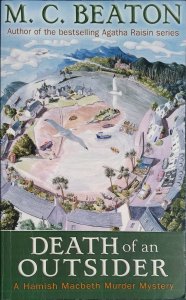
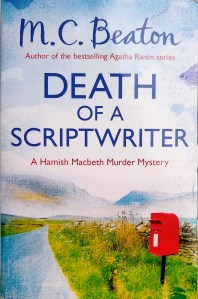 So, what else have I done on this trip? Well I’ve read books, after all reading has always been one of my greatest pleasures. I took it upon myself some time ago to read the entire library of Hamish Macbeth novels. They are not great works of literature but the world of books has everything for everyone and sometimes, I just like an old fashioned, easy going mystery read. Here in France, I’ve just finished Death of a Scriptwriter, the 14th entry into the series which wasn’t actually one of the best. The previous two were very good though, Death of a Macho Man and Death of a Dentist. If you are not familiar with Hamish Macbeth, he is a constable in a Scottish highland village. He likes to apply the rule of law in his own way, taking away the car keys from drink drivers before they leave the pub, giving various minor bootleggers a warning before removing their illegal stills and he’s not averse to poaching the odd salmon. The books are wonderful, quirky murder mysteries which Hamish always solves but tries to give credit to others in case his bosses think of promoting him and moving him away from his beloved village of Lochdubh.
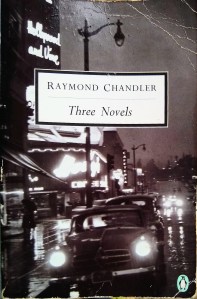 Book 2, Farewell My Lovely, starts off well. It’s about Moose Malloy, an oversized fellow looking for Velma, an old flame. Marlowe gets in on the hunt as well as looking into another case and later finds both are related. I read the first part of the novel pretty much all in one go and enjoyed it very much. The next quarter was a little confusing. (During the filming of The Big Sleep the director and his stars wondered who killed the character of Owen Taylor, the Sternwood’s chauffeur. They sent a cable to Raymond Chandler asking him. Chandler told a friend later ‘Dammit, I don’t know either!)’ Happily, in Farewell My Lovely, everything finally came together towards the end.
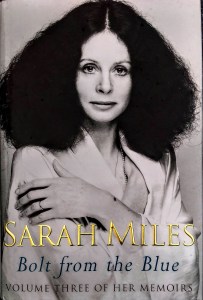 A long time ago I picked up A Right Royal Bastard somewhere in a charity shop. I have a feeling it was whilst walking round Skipton a few months ago but anyway, I didn’t know much about Sarah Miles except that she was a film actress and had appeared in Those Magnificent Men in their Flying Machines and also Ryan’s Daughter, that latter film being one of director David Lean’s less appealing films. Apparently, as Sarah reveals in Serves Me Right, Lean was so upset by the bad reviews he didn’t make another film until A Passage to India, many years later.
 I wrote in an earlier post about being a fan of the
 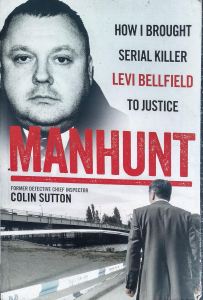 I always find it interesting just how I seem to hook up with a particular book. In this case I had an email from the ITV Hub telling me about a great new series of Manhunt and how I could watch the previous one on the ITV hub. Now what criteria ITV uses to send me an email like that I don’t know because not only had I never watched Manhunt, I’d never even heard of it. Looking at the ITV website I found that Manhunt was a three part thriller based on the real life case of killer Levi Bellfield. Having nothing more interesting lined up to watch that evening, Liz and I settled down to watch and actually got pretty interested, so much so that I immediately went to Abebooks and ordered a copy of the book that the series had been based on. It had been written, in fact written quite well by former Chief Inspector Colin Sutton who was in charge of the real life investigation of a young French student murdered in Twickenham, London.
 Papillon by Henri Charrière
 The Wooden Horse by Eric Williams
 On her Majesty’s Secret Service by Ian Fleming
 Death of A Dreamer by MC Beaton
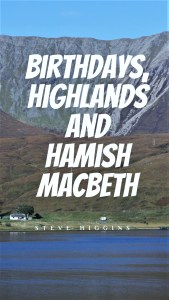 Last week was my birthday week and Liz suggested a trip up to the Scottish Highlands. The Scottish Highlands I thought, is it hot there? Can you sunbathe and swim in the sea? Well, you can although I wouldn’t advise it in October. The thing is with the current lockdowns in place all over the country and indeed the world, jetting off to somewhere warm isn’t much of an option. Anyway, our much under used motorhome was sitting on the drive just waiting for an opportunity for a run out so off we went.


 Plockton itself is a tiny village with a small harbour. We parked up at the car park while I went for a wander about. I found the row of cottages where Isobel, the town reporter lived but the village pub, a white building in the TV show eluded my searches. There was a pub, a grey building with an outside seating area looking over the bay, but it wasn’t the one I knew from the television. As we drove off, we passed another couple of pubs, neither of which was the TV village pub but I could imagine having a pleasant evening in Plockton with a nice pub crawl thrown in too.
 Letters from an Unknown Author!