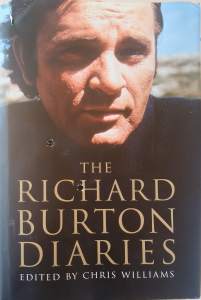
Many years ago when reading a biography about Richard Burton, I was interested to hear about Burton’s love of books and that when he went on holiday he looked forward with delight to the contents of his ‘book bag.’ I know it’s a pretty tenuous link but one thing I have in common with Richard Burton is a love of books and when I go on holiday, one of the delights of lying under a warm sun on my sun bed is a good undisturbed read. So without further ado, let’s take a closer look at the books I have been reading in Lanzarote this winter.

The Thursday Murder Club
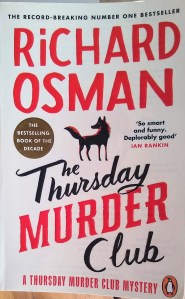 I know I’ve written about this first book already but as it’s part of this month’s holiday read, I feel I have to talk about it once again. As I mentioned in a previous post, I saw the film version over on Netflix and enjoyed the first part but then lost interest during the middle and finally picked up again to watch the end. It is a rather complicated plot so I picked up the book hoping to understand things better but also I’ve always found it interesting to compare book and film versions of the same story.
The book and film are about a group of people in a retirement village who meet to discuss cold case crimes but then find a murder committed on their very own doorstep. The group of mostly eighty-year-olds then get on with the task of solving the murder. There seem to be a lot of things going on and a great deal of characters to remember which put me off a little at first but a great device used by the writer is having alternate chapters written as diary entries by Joyce, one of the club members. She goes over the past events, adding in details of her own life along the way, talking about her neighbours and daughter amongst other things and sometimes previewing the next chapter for us.
It’s a very original and witty novel and I’m already thinking about getting the follow up book. One minor complaint though; there is a large cast of characters and things do get complicated, making it not always easy to follow. After reading the book and realising that our villa here in Lanzarote comes complete with Netflix, we watched the film again and this time I managed to pay attention all the way through. Both the book and film are very enjoyable but I’d have to say I think the book is generally better than the film.
Verdict; 8/10. Great read but complicated plot.
Untold Stories by Alan Bennett
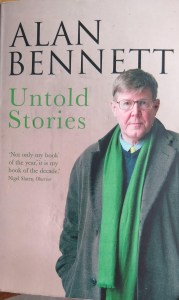 I sought this book out on the internet after reading Bennett’s The Lady in the Van which was a very enjoyable although short book. This volume is a collection of various essays and diaries by the author and it begins with the title essay, Untold Stories which is a series of observations mostly about his mother and father. He describes the life of his family in Yorkshire as he saw it evolve. It is perhaps a very ordinary story of a working class family and their fairly uneventful journey through life. It is very sharply observed and the author takes us through the lives of not only his parents but also of his two aunts as well as other family members. I found this section hugely interesting and with many parallels to my own life, especially when Bennett deals with his aging parents and he has to take them to numerous hospital appointments. His mother suffered with depression and was even hospitalised on a couple of occasions. Later in life she begins to suffer with dementia.
He ponders about the worth of a life, are children in some ways worth more than older people? If a child went missing there would be a public outcry but if an older person goes missing, no one is interested. His aunt, suffering with dementia in old age goes missing from a nursing home and the police seem uninterested. Later, Alan and his brother go searching for her themselves, taking what they think might be a logical way to walk from the home where she resides. They find her dead body in a field and the author wonders, why wasn’t there a search, why didn’t the police find her? Was it because she was just an old lady and they assumed that she would just ‘turn up’ one day?
There is a lot of humour also and I enjoyed hearing about the author’s father who had two suits, his ‘suit’ and his ‘other suit’.
His diaries were not so interesting, in fact most of the entries were rather boring and I found myself skipping various entries. Another section deals with his work in TV and the portrait he paints of actress Thora Hird is one of great warmth and affection.
Overall this was a good read but I found myself unable to agree with the comment on the back cover by a reviewer from The Sunday Times who says ‘I have never read a book of this length where I have turned the last page with such regret.’ I was glad to move on to something else.
Verdict: Interesting in parts. 7/10
Letter From America by Alistair Cooke
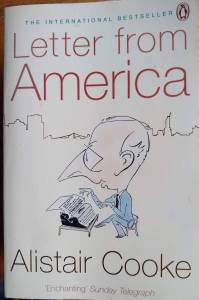 I picked this book up in a sale ages ago, in fact actually a few years ago. I think it was one of those offers like ‘buy two and get one free’. This was my free choice and as such it’s been lying around waiting to be read. It’s a collection from the author’s radio series ‘Letters from America’ which used to be broadcast many years ago on BBC Radio 4. I can’t say I’ve ever listened to the broadcast but I do remember watching a quite exceptional TV documentary series called ‘Alistair Cooke’s America’ which detailed the history of the USA.
The book is divided into decades starting with the 1940’s and records Cooke’s views of various things and people in the USA.. Some of the letters, which incidentally would be perfect for modern day publishing as a series of blog posts, are hugely interesting, others not. Cooke is a very eloquent writer and like one of the reviews on the back cover said, I felt I could actually hear his voice as I read them.
Cooke was in the Ambassador Hotel in California the night Bobby Kennedy was shot and he records what happened but little else. It mentions Watergate also on the back cover but I’ve just finished his 1970s writings and there was no mention of Watergate so perhaps he returns to it much later. The assassination of JFK is mentioned but Cooke seemed to be more interested in President Johnson than Kennedy but then perhaps that was the feeling of Americans back then, shocked by the murder of Kennedy and looking to Johnson to move the country forward.
Verdict: I felt the book was a case of more style than content. 7/10
The Outsider by Frederick Forsyth
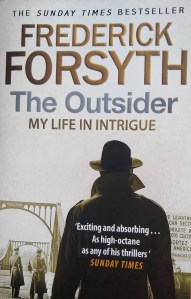 This is not one of Forsyth’s thrillers but an autobiography and it was a really interesting read. Forsyth spoke many languages and he puts this down to learning them with local people. He studied French and German at school of course but then spent the summer holidays in France learning from a French family and then later did the same with a German family and even later with a family in Spain. His observations in France were really interesting. The French welcomed Forsyth as an English hitchhiker with the union flag on his backpack but later when travelling in what had been Vichy, France, he felt the English were not as popular.
His ambition was to be a fighter pilot and he trains privately as a pilot and then later gets accepted into the RAF indeed becoming a fighter pilot. He spends only two years in the RAF and then leaves to follow another ambition, that of being a foreign correspondent. After training with a local newspaper, he moves to Fleet Street and with the advantage of his language skills joins Reuters, first in Paris and later in a very fascinating chapter, he is stationed in East German Berlin.
He joins the BBC which he is not complimentary about, especially their civil service style hierarchy. Forsyth covers the Nigerian/Biafran war but is not happy with the BBC coverage and so resigns to work as a freelance. He clearly blames the Wilson Labour government for escalating the war in Biafra and supplying weapons to Nigeria which the Wilson government denied.
Out of work and broke, he decided to write a novel based on his time reporting in Paris. The Day of the Jackal was rejected by many publishers but then he explains why he thinks that was. Who is charged with reading submissions at a publishing company? The lowest of the low, students, new employees charged with making suggestions after reading perhaps one chapter.
Forsyth was lucky in that he met a publishing executive at a party and then decided to visit him and try to cajole him into reading his manuscript. Happily, the executive agreed, was duly impressed and The Day of the Jackal was finally published.
The final part of the book was not so good. It was as if the author had run out of ideas and decided to add some quick chapters detailing various situations, once when he was under mortar attack, another on a fishing boat when a cyclone hit and a chance he got to fly in a Spitfire.
Overall, a great read but a pity about the last few chapters.
Verdict: 9/10
 As usual Liz and I have left behind cold and unpleasant England for the much warmer climes of Lanzarote. We’re renting a place that we first found two years ago but were unable to rent last year as it was fully booked. This time Liz got in early and so here we are for four weeks. The villa is very comfortable with a great outlook, sunny on the patio all day and it has a great pool and comfy outdoor couches.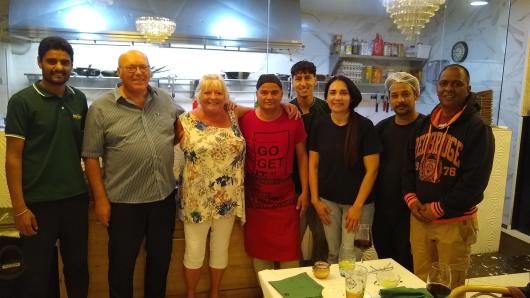
 Just now we have finished our touring part of the holiday and we have come to our rented gîte where we have parked the van and are spending time in this wonderful house that we regularly rent just outside the small village of Parçay-les-Pins.
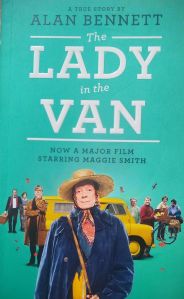 I saw the film version of this a few years ago which was pretty good, if a little odd. It was presented in a very peculiar way in that the author, Alan Bennett, is portrayed as two people, one as himself as he appears in the story and two, as himself as he writes the story. That oddity aside it was really a rather good and original film. When I heard there was a book version I quickly went to one my usual internet book stores and promptly bought it.
 Liz and I always visit a village fête at the weekend, usually those with a vide grenier or brocante attached. A vide grenier is just a car boot sale which we both love. I usually pick up connecting leads for my laptop or iPad, after all, you can never have enough electrical leads. Brocantes are more like flea markets or antique fairs. Just the kind of place to pick up those old telephones that I still love, especially those Bakelite ones.
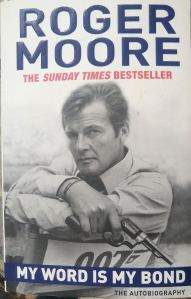 I picked this book up ages ago and thought it would be a good holiday read. I’ve always liked Roger Moore even though I absolutely hate his James Bond films. I love Moore’s self-deprecating humour, plenty of which is evident in this book. The first part of the book was really interesting and entertaining but like a lot of celebrity autobiographies, this one just gets a little tedious when Roger just seems to list the films and locations and other celebrities he seems to know. On the back of the book was a review claiming this to be the best film autobiography since David Niven’s
  A long time ago I decided that I would set myself the task of reading the entire Hamish Macbeth series of books. There are 34 books in the series, all written by author M.C. Beaton which is in fact a pen name for Marion Chesney. Marion actually wrote many books under various pseudonyms including Ann Fairfax, Jennie Tremaine, Helen Crampton, Charlotte Ward and Sarah Chester. After Marion’s death in 2019 further Hamish Macbeth novels have appeared penned by writer R.W. Green.
 I mentioned a while ago about my
  Essentially, John Darwin was facing bankruptcy after getting hugely overreached on a series of buy to let mortgages. He decided that the only way out was to fake his own death and cash in on some life insurance policies. His wife apparently tried to talk him out of the idea but John, a dominating and overpowering personality, went ahead and faked his own death. Amazingly he even went back to live with his wife, sometimes having to retreat to the bedsits next door when any friends or family came to visit. He arranged a false passport using a method explained in the book ‘Day of the Jackal’ by Frederick Forsyth and then the two, Darwin and his wife, planned to buy property in Panama and live a new life. Later, Darwin decided he wanted to return to the UK under his own name by posing as someone who had suffered with amnesia and in fact one day he disposed of his fake passport, walked into a police station and told them ‘I’ve lost my memory!’
 For me, who has been interested in the JFK assassination since at least 1968 when his brother, Robert Kennedy was also murdered and I was 12 years old, it’s a fascinating record. Others might think perhaps that the author has spread his research too far, that we are not interested in what the President’s pilot thought or did or how the honour guard prepared for the President’s funeral and how the President’s sister or brother-in-law reacted.
 Marlene was one of those people perhaps born at the wrong time. Today might be a better time for her when lifestyles of gay and lesbian people are not so much of an issue.
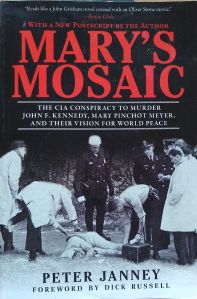 Mary’s Mosaic by Peter Janney
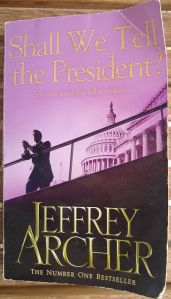 Shall we Tell the President? by Jeffrey Archer.
 The Long Dark Night by Susan Lund
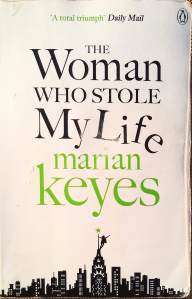 The Woman who Stole My Life by Marian Keyes.
 The Prime of Miss Jean Brodie
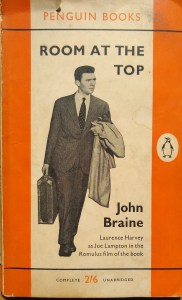 Room at the Top
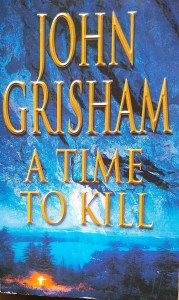 A Time to Kill by John Grisham


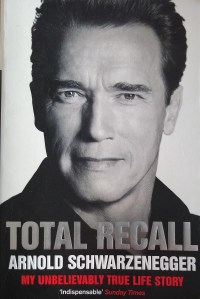 This book was a Christmas gift from Liz. She knows I’m a big film fan and I do love reading about the background to films and how they are made. Arnold is from Austria and he tells us a little of his life there but mainly focuses on his desire to be a great bodybuilder and to eventually go to America. There is a lot of talk about the process of competitive bodybuilding and the different muscles, muscle definition, reps and squats and all that stuff. Arnold eventually wins various competitions and is wondering how he can compete in the USA when he gets an invitation to do just that. The bodybuilding industry is a close knit one and there seem to be various people welcoming him to California, helping him to find a place to stay and so on. He wins more competitions and makes a little money. He starts a mail order business selling magazines and pamphlets about himself and his body building techniques. He brings one of his Austrian friends over and the two begin a bricklaying and home improvement business. His big break is getting a film part as Hercules and even though the production eventually goes bust it seems to give him a taste of the film business and he wants more. He plays Conan the Barbarian in the film version of a comic book hero and pretty soon he plays the Terminator and goes on to success after success, even becoming governor of California.
 This is not a book I brought on holiday but one I found on the shelves of our rented villa in Lanzarote. I started reading it when I got a little bored with Arnold Schwarzenegger and liked it so much I just carried on to the end. It is a real pleasure to read something by a master wordsmith and I enjoyed every minute even though I had read this novel years ago. Young Pip, apprenticed to be a blacksmith, is invited to the home of an eccentric rich woman, Miss Havisham, purely for her amusement. Later in his young life he finds he has ‘great expectations’ and is to inherit a remarkable property. He is taken to London to be brought up as a gentleman and although he is told that his benefactor has asked to remain a secret, he naturally assumes it is Miss Havisham. At the beginning of the book, Pip encounters Magwitch, an escaped convict on the marshes near his home. He compels Pip to bring him some food and a file. He is captured and transported to Australia and later we find, much to Mr Pip’s shock and amazement that Magwitch is the mysterious benefactor.
 This is a collection of globe trotting stories from John Simpson who has travelled the world as a journalist for the BBC. These though are travel stories with a difference, for instance in the first chapter he talks about airports, not the airports that I generally use, tourist destinations like Spain and Greece. The ones Mr Simpson mentions are airports in war torn Angola and Bosnia, and places like Kabul in Afghanistan and other places where he has had his passport and papers routinely torn up or thrown into a river by laughing revolutionaries and mercenaries. He tells us about headlong dashes to catch flights, including one somewhere in eastern Europe where he was in such a mess after weeks living rough the stewardess was reluctant to let him on board, especially as he had a first class seat. His fellow passenger in the next seat asked to be moved. Luckily John wasn’t flying on a budget airline like the ones I travel with.
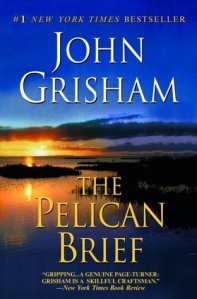
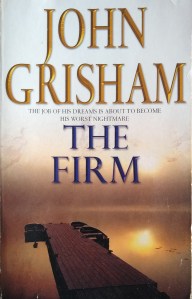 There is a process by which I choose books to take with me on holiday. I like to think it’s a thoughtful process combining different genres of books, some novels, maybe the odd classic, and some biographies and autobiographies. What actually happens is that the day before our trip I’ll just grab something near to hand that I know I haven’t read yet and shove it in my suitcase. Anyway, that’s how I ended up with the books you see above. Last year I read The Rainmaker by John Grisham and I thought it was a pretty good read. I must have mentioned that to Liz so she filed that away and got me a stack of Grisham novels for my last birthday. The Firm isn’t a bad read and in my case it was a nice change of pace after reading Dickens and John Simpson’s globetrotting memories. It’s a good story but like a lot of Grisham’s works, its more plot driven than character driven. The characters are sort of bland templates that I’ve recognised in a lot of his novels and so far I’ve only read three. Anyway, characters aside, this is a really original story about a young guy who graduates from law school and gets head hunted into a firm he has never heard of but which offers tremendous financial benefits, a brand new BMW, and an ultra cheap mortgage as well as other financial bonuses. The downside as he comes to learn later is that the firm is just a cover operation to launder money for a big mafia crime family and the FBI wants our hero James McDeere, to help them.
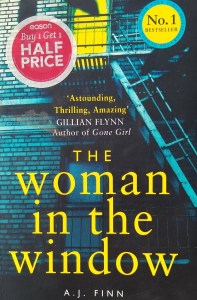 I’m not sure I would normally have picked up this book if I hadn’t run out of books to read. I saw this on the shelf in our rented villa and Liz had read it and mentioned about numerous references to old black and white films which were right down my alley, apparently.
 Sometimes you pick up a book that is just a joy to read and this was one of those books. Julia Child is a US TV chef, maybe one of the first TV chefs ever, although she is little known in England. The book is a memoir of her life in France, her journey as a Cordon Bleu chef and as a cookery book author, a TV star and as a wife and Francophile.
 During the lockdown I read a blog that was something along the lines of 100 authors you must read before you die. One of those authors was Ernest Hemingway. Not long afterwards I spotted a compilation of his works in a charity shop and I thought to myself, I’d better pick that up and get cracking on those 100 authors. It had been lying unattended on my book shelf for quite a while so I thought I’d throw it into my book bag for our latest trip to France.
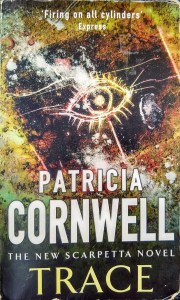 I picked this up a while ago, started to read it and lost interest, not because of the book itself but because it was in my book bag for taking outside and as the UK weather has been so poor, I haven’t done much outdoor reading this year so far. Anyway, I thought I’d throw it in my holiday book bag and give it a read while I was touring France. I’ve always liked the Kay
  I picked up this book in a second hand book shop. I’ve always liked Hillary Clinton. She’s not your average First Lady, content to stay in the background and support her husband, the President. Mrs Clinton liked to be part of Bill Clinton’s administration in a way that other first ladies have never been, sometimes for the right reasons, sometimes for the wrong ones.
 Letters from an Unknown Author!