It’s a long time since I’ve made a video for my YouTube channel and recently I’ve been trying to think about what my next project should be. When I’m stuck for a video I tend to tweak or even remake some of the short videos I use on social media to promote this page and my two books. In fact my YouTube page is made up of quite a lot of videos like that as well as numerous short video versions of my poems. Every now and again I try and put something different together. I usually make a video about our yearly trips to France in our motorhome and I’ve made a few videos about Manchester, my home town and also the place where my book Floating in Space is set.
Liz and I have just spent 5 weeks in Lanzarote and although I took my video camera over there I actually didn’t use it except to take some holiday snaps.
Last week I decided to take a little jolly out on the bus over to Stockport and see how the new bus station, currently under construction there, was coming along. Travelling to Stockport on the bus made me think about how our lives change and move on. Back in 1979 I was a coach driver for National Express but I wasn’t happy with the job. In the summer of 79 I was 22 years old and far too young and immature to do such a responsible job. Covering the long distance National Express routes wasn’t too bad but private hires were difficult as the driver had to plan his routes and to be honest I didn’t know my way about the country particularly well.
After being stuck on the same long distance bus route from Manchester to Lowestoft far too many times I packed the job in. I went to ask for my old job back at GM Buses but they gave me a big lecture about how they were fed up of training drivers only for them to resign and go driving for other companies and so I was turned away. That same afternoon I drove over to the GM Bus depot at Stockport where they were short of staff and they started me the same day. For over ten years I spent every working day in Stockport taking fares and later, driving buses. Returning in 2024 after over 30 years away was interesting, I must say.
 Most of Mersey Square, the square at the very centre of Stockport, was fenced off while the builders worked on the new bus station. A huge railway viaduct spans the centre of Stockport and the bus station or bus interchange as they are now calling it is mostly on one side of the viaduct with part of it spilling over onto the other side. Someone told me it was due to open in two weeks time but looking around, that seemed to be a pretty tall order.
I shot some video in the square then walked around the construction, filming as I went. I was planning to film myself with my trusty selfie stick and chat away to the camera about my memories of Stockport but as usual, I felt a little self-conscious and just stuck to filming the new construction. I couldn’t walk through the area as of course the builders were still working so I had to walk around it.
When I got to the other side a new Stagecoach bus went past on its way into the Stagecoach garage. It was displaying the route number 192 which is a very busy bus route indeed, going down the A6 from Hazel Grove into Stockport and then on into Manchester. Back in my day there was a 192 every six minutes and each one was packed. Looking back I must have spent an awful lot of time going up and down on that bus route.
When the bus services were deregulated in 1986 the Busy Bee bus company tried to muscle in onto our route and so the service moved up to one every three minutes! Yes we would load up in Piccadilly, Manchester. An inspector would count three minutes and then you were off. Straight away there was a set of traffic lights and if you hit those on red you were in trouble as the bus behind was already following you out.
I followed the Stagecoach bus round the corner to the old GM Buses depot, now of course owned and run by Stagecoach. Inside it was full of buses and for a moment I remembered the old days when it was full of the old orange and cream of GM Buses.
I left the bus company in the early 1990s and started my own company selling motorsport memorabilia. I loved that job and spent all my day chatting to various regular people about F1 and motorsport but sadly, I didn’t make a lot of money, eventually selling all my stock to someone who had a similar business. After a failed attempt to become a TV producer I ended up short of money and went back to GM Buses. I worked for the GM coaching company known as Charterplan. After a short while there I transferred to an office job in the GM Buses control room in Ardwick, Manchester and that was the last time I set foot in Stockport, until last week.
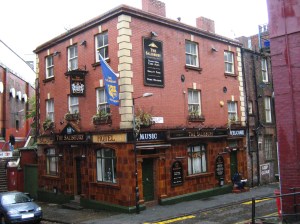
 I walked round to the other side of the bus depot and there opposite, what used to be the main exit for our buses, was the Comfortable Gill. The Comfy, as we affectionately called it, was the pub where we busmen used to drink after the day’s shift was over. At one time if a driver was due to finish after last orders at 11, the landlord used to accept telephone orders for a pint so sometimes we could pull in at 11:20, park the bus in the depot and then pop over to the Comfy to find a pint waiting for us to sup while we cashed up our day’s takings. When I saw it the other day the Comfy was all closed up and looked neglected. So many of Britain’s pubs have closed down and I walked away hoping that the Comfy might be saved in the near future.
It’s always interesting to look back and have a stroll down memory lane. I can’t say working at GM Buses was a great job and looking back I wonder why I stayed so long. Of course back then I had bought a house and I had a very expensive mortgage to pay and I put in a lot of hours to pay for it. Perhaps I would have been better served by prioritising my career rather than my house. Oh well!
Liz and I went to the pictures this week. It was the first time we had visited the cinema since seeing Oppenheimer last year and although I didn’t rate it as the work of genius many people seem to think it is, Oppenheimer was certainly an excellent film and deservedly won the best picture Oscar.
The film we went to see was Wicked Little Letters set in England after the first World War. It’s about an Irish lady who comes to live in an English village. She is outspoken, very rude and swears a lot and is soon branded as the author of a very nasty series of poison pen letters. It wasn’t a bad film but what was odd was the way the 1920s were portrayed. There was a black judge, a black Asian policewoman, numerous other black people and the Irish lady was living with a black man. It was if they had substituted 1920s life with today’s multicultural society. I’m not sure why they would do that but the end result was that the entire film looked a little bit strange. Why didn’t they just set the film in the present day when different ethnic groups, as well as bad language is just the norm? Or was the director trying to make some point about society that perhaps I have missed? Wicked Little Letters isn’t a bad film in fact it’s quite amusing in a way and was actually based on a true story but that cutural shift just didn’t work for me.
Perhaps we all look back at the past in different ways.


 I had a huge amount of recorded music of course. By the mid-seventies my record collection was already pretty big and I was buying vinyl records, usually 45 rpm singles, every week. My tape recorder had a built-in radio so I could record my favourite tracks straight onto tape for free and I spent a lot of time taping the new top twenty which came out every Tuesday. The other thing I could do with my tape recorder was record myself with a microphone.

 Perhaps that’s a consequence of nearing the latter stages of my journey through life. Recently when we were travelling through France motoring along through the endless country lanes of the Loire valley, it seems as if I only became aware of the speed when I reached a new village or hamlet and had to slow down. Perhaps that’s the way it is with time too, that you only notice the passing of time with some new event, something that brings time into perspective.
 1977 was a different world. There was no internet and there were no mobile phones. The only phones were landlines and they were big and heavy with great rotary dials with which you had to laboriously dial a number. As more people wanted telephones they needed more numbers and so numbers got longer and longer. 061, the dialling code for Manchester became 0161 and the code for London which was 01 became two new codes 071 and 081
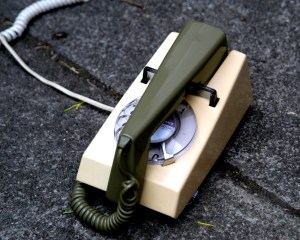 Anyway, time for a 1970’s telephone anecdote:
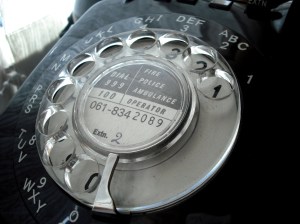 Anne was the template for the character of Anne in my book
  I do love it here in Lanzarote but lately the bad weather has given me a different viewpoint. Yes, this is a wonderful place when the sun is shining but then, so are a great many places. When the winds are blowing and the rain is coming down, Lanzarote is as miserable as anywhere else. I have often thought about upping and leaving for pastures new, especially when I spend time in the other lovely villa we habitually rent in France. I love the pool, I love the quiet, I love the relaxing patio where we barbecue food in the evening. When it’s cold and the rains pour down I often think how I’d much rather be at home, back in Manchester.



 This is a picture of my old childhood home. It didn’t look like that when we lived there, there was no drive for a start and there was no metal fence, we used to have privet hedges but of course don’t forget the first rule of karma; nothing stays the same.

 When I visited last year, I had my camera with me as usual and one thing I have always tried to do is to use my own pictures in my many YouTube videos. When I have had to use a stock picture either from Unsplash or Adobe, I tend to try and replace it with my own photos in my inevitable re-edit if I have taken an appropriate picture at a later date. In one of my videos, I wanted a shot of a pint being poured, so in the bar of the hotel in what used to be our old reception area, I asked the barman if I could take a shot while he pulled my pint. No was the distinctly unfriendly reply. I explained that his face wouldn’t be in the picture, it would be a close up so only his hands would be visible. Was it for me personally or would it be displayed on the internet or used in a YouTube video? Well, yes, it would be used possibly in a YouTube video. No came the answer once again. It wasn’t the hotel policy apparently for staff to get involved in ‘unofficial’ photography. Pity. Anyway, here’s an ‘unofficial’ shot of my pint in the bar which wasn’t really what I wanted. (It wasn’t a great pint either!)
 I’ve written about my lemons before. I’ve always loved growing things from pips or seeds and I have two large lemon trees grown from pips. They must be at least three years old, possibly more and my big ambition is for one of them to give me a lemon. Yes, my own home-grown lemon, I’d love that, I really would. I’m not sure what I’d do with my first lemon. I think I might just pop a big chunk of it into a glass, add some ice, some gin and some tonic and sit back on a sunny evening and just relish the achievement.
 Once again, it’s Saturday and time for me to entertain my small band of readers with a new blog post. Just lately, having produced over 500 blog posts, I’m starting to feel a little pleased with myself. I started blogging in 2014 but now I think of it, I’ve been blogging a lot longer than that. As a schoolboy I used to publish a blog every week. OK, it wasn’t digital, it wasn’t called a blog and it wasn’t available on the internet, in fact the internet itself wasn’t available either.
 I’ve not been at my absolute best this last week. Liz brought the last dregs of a cold over with her from the UK here to Lanzarote and gradually gave it to me. While I’ve been coughing and sneezing I’ve been lacking in a little inspiration for my blog posts and so have just written about our holiday. Two things have given me some ideas. One was a new book I’ve started, the autobiography of Agatha Christie, one of the best-selling authors ever. Her book has so far been a delightful read. She describes scenes and events from her childhood, in the days before Queen Victoria passed away, (Agatha was born in 1890) with great charm.