The Importance of Being Alone

There is a lot to be said for being alone. Not all the time of course, we all need someone most of the time and I know from experience, how sad being alone can be. When my father passed away in 2000, my mother seemed to slip into a little shell. She went shopping every day even though there was always food in her fridge or cupboard. She went to the shops to see other people, to speak with bakers and grocers and other shopkeepers before returning to her empty house. When I got divorced and came back to live with her, I like to think that me being there gave her a sense of purpose once again.
Occasional time on your own though can be good. It gives you time to think and do things that perhaps annoy your usual close partner. Playing music for instance or watching TV shows that your partner does not like. When you are alone you can eat early or eat late. You can get up early or you can get up late. You can even sit in the garden and read without any need to go back inside until you are good and ready. You can indulge in foods that are bad for you and no one will know. That cream cake that you should not have eaten is a secret between you and your inner self but you and you alone will know had good it tasted. Same goes for that Spam sandwich.

Sometimes I might get up early just for a change because together, Liz and I never get up early. Other times I might just lie in bed and read. I’m currently reading Adventures in the Screen Trade by William Goldman. Goldman wrote the screenplays for films like A Bridge Too Far, Marathon Man, Butch Cassidy and the Sundance Kid and All the President’s Men.
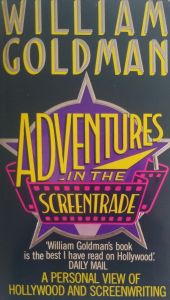
He gives advice on screenwriting and tells a number of film making/writing anecdotes. One I found particularly interesting was how directors want rewrites incorporating their ideas for the film. Then a big star comes aboard but doesn’t like it that his character dies at the end. New rewrite and the character is not killed. Then the star leaves the project and another star arrives. Cue new rewrite, this time the star wants to die but the director leaves and the new director wants to bring his own writer on board.

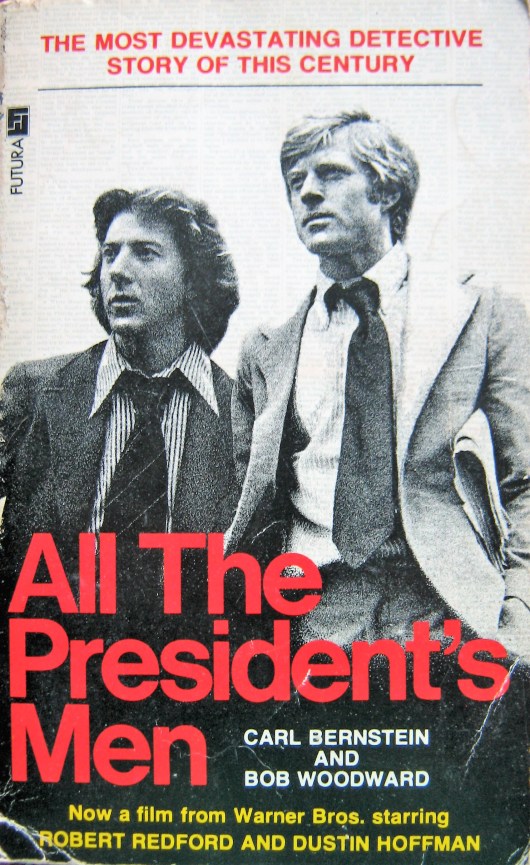
During All the President’s Men, Goldman interviewed the two newspaper men, Woodward and Bernstein, who pursued the Watergate story. After a year of research and interviews particularly with Woodward, Bernstein who was then married to Nora Ephron, put his own screenplay forward written by himself and Nora. Goldman wasn’t amused. Later he says that only one scene of the Bernstein/Ephron screenplay was used in the film but it wasn’t a scene Goldman was happy with. All along he had tried not to ‘Hollywoodise’ the story and keep scrupulously to the facts. The scene that came from the Bernstein script was one where Bernstein tricks a witness into talking. That says Goldman, was pure fiction.
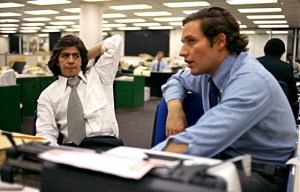
Woodward and Bernstein (Picture via creative commons)

Time to drag myself up and into the kitchen. Breakfast for one is usually bacon and/or sausages cooked on my George Foreman grill. Poached egg and toast and a cup of tea.

After breakfast it’s time to write. Most of the time my laptop is full of part written stories and blog posts and my usual way of working is to write my stories in my head and then when I seem unable to go any further or sometimes when my head is just too full of stuff I’ll write the story down. I’ve got a lot of stories that start off well and then seem to lose their way.

Blog posts are a different matter. I’ve always felt that my deadline of 10.00am on a Saturday morning gives me an impetus to write. I can’t just write in my head or leave unfinished a half written blog post (although to be honest, I actually do). I must write, I must create something ready for Saturday morning, even if it involves dusting off an old blog post and re writing or re-hashing it to create something new.

The best time to write is when it’s raining. That way, particularly in the summer, I don’t feel bad about being inside writing when I should -if the weather is lovely- be outside. I remember once back in 1968 I spent a very enjoyable afternoon on a very hot and sunny day, at the cinema watching 2001 A Space Odyssey. When my mother found out where I had been she told me off for not being outside and enjoying the sunshine.

I don’t eat lunch but round about four I generally feel the need for a cup of tea and a ham sandwich. I do love sandwiches. Another thing about being alone is that I like to cook. I make pretty much the same old things, spaghetti bolognese, chilli, pizza. Most of the time I make a pizza by buying one of those cheap cheese and tomato pizzas and adding more cheese and more toppings but I do like to make a fresh pizza including making the dough. A lot of my pizzas came out a little soggy until I found the perfect solution. When using home made dough it’s a good idea to first bake the dough for a short while then take it out, add the tomato sauce, cheese and toppings and then slap it back in a very hot oven.

As I am writing this, exactly one year ago on the 30th April 2025, I made a pizza with home made dough and that was probably the first time I had made a perfect, well, almost perfect pizza. It had, if I remember correctly, cheese, onion, pepperoni and mozzarella chunks. I served it with salad for myself and my brother although he declined the salad. We had a nice evening. We chatted and watched one his favourite Bond films, Octopussy with Roger Moore as 007. I’m a big Bond fan but I’ve never liked Roger Moore as James Bond. Eventually my brother’s taxi arrived and he left.

I never saw him again; he died of a heart attack a few days later when Liz and I were en route to France.

Another thing I tend to do when I’m alone is to edit video and record my voiceovers. I’ve got a really good microphone and of course to record you do not need any background noise. When I was a school kid living on the council housing estate of Wythenshawe I was always pretty enamoured of Gatley. Gatley is a small village just next door to Wythenshawe. It’s a lovely village with nice pubs and shops and private houses and it’s a place I always thought would be rather lovely to live in. These days I couldn’t afford to live anywhere near unless I was lucky enough to win the lottery.

What I like about Gatley is that although it has changed it actually still looks pretty similar to the way it used to be, so one day I walked round the village with my video camera and then hooked up my mic and told my YouTube viewers my personal history of the village; the pubs I used to drink in, the cinema where I saw a lot of films (including 2001 A Space Odyssey mentioned above) the café I used to eat in, the chip shop I used to visit and the pub where my dad was the gardener and mum used to make the lunchtime sandwiches.

Another great things about being alone is being able to watch whatever I want on the television and not only that, to watch it the way I want to watch it. Sometimes I watch two or more programmes at once by flipping over during the advertisements or whenever I lose interest in one or other of the shows. Sometimes I’ll watch a DVD or even just watch the first half and then the second half the next night. Sometimes I stay up late and sometimes I’ll go to bed early and read a book. That’s the great thing about time on your own, you can do whatever you want.

After about three days on my own I find myself missing Liz and I pack up and drive up the M6 back to her place. The first thing I ask her is ‘have you missed me?’

She’ll look at me and say ‘missed you? I didn’t even notice you’d gone!’


All the links to previous posts above open in a new window.


What to do next: Here are a few options.

Share this post on your favourite social media!

Hit the Subscribe button. Never miss another post!

Listen to my podcast Click here.

Buy the book! Click here to purchase my new poetry collection.

Click here to visit Amazon and download Floating in Space to your Kindle or order the paperback version.

Click here to visit amazon and purchase Timeline, my new anthology.

Tapes and Tape Recordings

I started work in 1973 and one of the first things I wanted to buy with my new found income was a cassette tape recorder. To be honest I can’t think of anything that had such a profound effect on me until the video camera or the home computer which both came along many years later.

I had a huge amount of recorded music of course. By the mid-seventies my record collection was already pretty big and I was buying vinyl records, usually 45 rpm singles, every week. My tape recorder had a built-in radio so I could record my favourite tracks straight onto tape for free and I spent a lot of time taping the new top twenty which came out every Tuesday. The other thing I could do with my tape recorder was record myself with a microphone.

I used to write some rather silly plays made up of sketches based on Monty Python and Spike Milligan and my brother Colin and I used to read the parts. One tape I digitised some years ago featured a cowboy sketch with dialogue something like this:

Colin: (Fake John Wayne voice) You’ve got a helluva chip on your shoulder.

Me: (Fake James Stewart voice) That’s not a chip, it’s a potato!

If you think that was bad, here’s another sketch, this one was a spoof on The Glenn Miller Story.

Me: (Fake James Stewart voice) You know I’m still searching, still trying to find that sound, that special sound . . .

(Colin aka Special effects man: Flushes the toilet.)

Me: (Fake James Stewart voice) That’s it! The sound, the special sound I’ve been looking for!

Later on, I bought myself a music centre which for the benefit of any younger readers was a record deck, a tape recorder and a radio all in one unit. I could then record my music onto a tape and make up music collections. They called them ‘mix tapes’ which to be fair was not a phrase I ever heard back in the seventies but I seem to hear quite a lot these days. Anyway, I used to make lots of mix tapes which became even more important when I bought my first car. To record music back then you had to actually play the record to copy it onto tape so each of my tapes in a way reflected the atmosphere in my bedroom as I played and copied one track after another, each track in turn inspiring the next and then the next and so on. I loved my mix tapes.

Probably the most famous tape in TV fiction was the tape used in Mission Impossible.

The TV show was created by producer Bruce Geller and concerned a team of special agents known as the Impossible Missions Force. They are a US government agency which takes on hostile foreign governments, South American dictatorships and criminal organisations.

A great feature of the series was the opening title sequence which involved a match being struck and then lighting a fuse shown over quick clips of the upcoming episode to the sound of the iconic theme tune written by Lalo Schifrin. Next, Jim Phelps, the head of IMF would listen to his tape-recorded instructions which, after being played, would then self-destruct. Phelps would then look through his agents’ files complete with photos and choose who he wanted for the mission. Sometimes a guest star would play one of the agents who would be introduced by Jim checking out his dossier. A team briefing would then take place and the mission would get under way.

The show was re-booted in 1996 as a film franchise starring Tom Cruise.

When I bought my music centre, I realised I could actually connect my old tape recorder into the music centre and make tape to tape copies so I began to edit my tapes, particularly those radio recordings where I could edit out things like DJs who talked too much or songs I didn’t like. I also used to review my recordings and put together what I called a Tape Review in which I spoke with a microphone and introduced various recordings.

Another tape I made was called ‘Self Portrait in Tape’ which was me yakking away into the microphone talking about my favourite books, TV shows and of course introducing some of my favourite music.

My childhood friend Steve and I were both big record buyers and music fans. We interviewed each other on tape about our music loves in the style of a radio show of the time called ‘My Top Twelve’. The show was really a rip off of Desert Island Discs in which a celebrity is interviewed and talks about their favourite music and Steve and I did the same. I reviewed my tape back in 2017 when I digitised it and transferred it to a CD. I have to say I was surprised at some of the music choices I had made back in the mid-seventies and in the CD version I did give certain tracks the chop and add some additional ones plus I added some comments in a new voiceover discussing how my musical tastes had changed.

In the 1990s I bought another music centre, a mini one with a CD player and tape recorder with which I used to copy my CDs onto tape to play in my car. My car at the time was a Rover and it had a tape player and it wasn’t until 2020 that I bought a car with a CD player and it was only then that my mix tape producing days were over.

The Watergate Tapes.

I have always understood that John F Kennedy was the first President to install a taping system in the White House though Wikipedia seems to think the practice began with Roosevelt. Many of the recordings made during Kennedy’s presidency have been released to the public including those of cabinet meetings during the missile crisis of 1962.

President Lyndon Johnson carried on the tradition of taping and recording phone calls and numerous calls have been declassified and released by the authorities. Some with a special poignancy were even recorded on Air Force One on the 22nd November, 1963, the day Kennedy was shot and Johnson elevated to the presidency.

Anyway, despite his two predecessors, the President most famous for taping in the White House was Richard Nixon and it was the ‘Watergate tapes’ that were at the heart of the Watergate scandal.

The White House under President Nixon was worried about security. When Nixon realised the FBI weren’t willing to do his bidding, he created a security team which became known as the Plumbers. It was their job to plug the leaks to the press and they were also used to get information on Nixon’s rivals in the election.

A team of five men entered the Watergate building on the night of June 16th/17th 1972. Sometime after midnight on the 17th a security guard noticed that various doors into the building had been taped, preventing them from locking. He called the Police and the five men were arrested. They all had connections to the White House. Various investigations began and the President himself was implicated but things changed when investigators became aware that conversations in the Oval Office had been recorded. Would the tapes prove or disprove that Nixon knew about the break in? Well President Nixon refused to hand over his tapes at first but when he finally succumbed to pressure and handed over some, they revealed him to be foul mouthed, bigoted and small minded.

Nixon resigned from the presidency on August 8th 1974.

The Watergate tapes can be listened to on the university of Virginia’s Miller Centre for Public Affairs. (millercenter.org)

I read on the internet that cassette tapes are making a comeback. CDs and digital recordings are of a much higher quality than cassette tapes but tapes are handy, easy to use and certainly in the old days they were pretty cheap. I’d make a music tape up and if it jammed or broke, I’d just throw it away and record a new tape. Recording a music tape was always an experience because, as I mentioned earlier, you had to record it live, you had to actually play the record or CD to copy it onto tape unlike the CD compilations I make nowadays. Those are made by just dragging and dropping a track into the CD burner file so you only get to hear it after it is made.

Tape cassette

Prior to the digital revolution, singers and musicians recorded their songs on vinyl but the vinyls were produced from master recordings made on tape in a recording studio. Pressings of a record are made from a mixing of the master tapes. These days, quite a few classic albums have had their master tapes digitised and many new mixes of old recordings have been released. I’ve got a few albums which have been rereleased in this way; they are a little like ‘director’s cut’ versions of old albums with new mixes, outtakes and alternative versions, so Paul McCartney’s Band on the Run becomes three CDs instead of one, same for Rumours by Fleetwood Mac. Two interesting albums but to be fair, I prefer the original versions.

As I write this, the Beatles are once again running high in the pop charts with a ‘new’ release. Back in the 1970s, John Lennon switched on his cassette recorder high up in his New York apartment and recorded a demo of a song he had written called Now and Then. Yoko Ono passed the tape to the surviving Beatles some years ago and Paul McCartney, Ringo Star and George Harrison tried to make it into a new song. Alas, the background hum on the tape could not be removed and neither could the sound of Lennon’s piano. Recently however, new technology has enabled Lennon’s voice to be cleaned up, Harrison’s guitar has been added as well as new additions from Paul and Ringo. The result is what people are calling the very last Beatles song ever.

Many fans think the result is wonderful and it’s certainly pleasant and interesting but hardly in the same class as the Beatles classics that we know and love.

These days I tend to listen to music via Spotify. One of the great things about Spotify is that it listens to the kind of music you choose and then suggests similar music. On my Spotify page I have various playlists I can listen to but you do need that all important Wi-Fi connection which isn’t always available. Of course, as a fully paid up member of the noble order of Northern Tightwads I still only use the free version of Spotify which means every now and then I have to put up with the bane of the music world – advertisements! (Even the Beatles video above starts with an ad!)

Perhaps that’s why I’m still listening to my mix tapes!


What to do next: Here are a few options.

Share this post on your favourite social media!

Hit the Subscribe button. Never miss another post!

Listen to my podcast Click here.

Buy the book! Click here to purchase my new poetry anthology.

Click here to visit Amazon and download Floating in Space to your Kindle or order the paperback version.

Reading about Watergate

I remember being in our usual pub quiz a few months back and one of the questions concerned Watergate. We were sitting with some friends, actually some much younger friends and one of them asked me, ‘Watergate? What’s that?’
I have to admit to being surprised as the Watergate scandal is something that every one knows about, don’t they? It’s the scandal that gave the world the ‘gate’ suffix which has been added to every scandal that has happened since. Hence Irangate, Camillagate and so on. What was Watergate about then you might ask? OK, it’s a subject that’s well worth reading about if you like American politics, which I do. I have a number of books about Watergate and President Nixon and I’ll go through them in a moment. Firstly though back to that question, what exactly was Watergate all about?

On June 17th 1972, five burglars were caught in the Democratic National Committee headquarters in the Watergate Building in Washington. Some of the five had links to the CIA or the FBI but all of them were linked to an organisation known as CREEP, the Committee to REElect the President. The President was Richard Milhous Nixon who had been defeated by John F Kennedy in 1960 but had made an extraordinary comeback to the political limelight. Just think back now to the presidential elections of recent years. Remember those defeated candidates, Dukakis, Mondale, Dole? Familiar names who had their fifteen minutes of fame and then vanished into the history books. Did any of them ever make a comeback? Well, the only one that I can think of is Richard Nixon.

Defeated in the presidential election of 1960 he then ran for governor of California only to lose that election too. He appeared before the media to concede defeat but in an emotional attack on the assembled press he finally called it a day for his political ambitions. ‘You won’t have Nixon to kick around anymore’ he said angrily. Then he was gone, off to start a new life in a legal practice. Eight years later he would once again be the Republican candidate for the presidency in the turbulent year of 1968 and this time he would win.

Nixon knew about the hard-line politics of the 1960s and 70s. He knew that others used bugging and other illegal means to get political intelligence and he wasn’t above using those tactics himself. During the Vietnam war Government employee Daniel Ellsberg leaked top-secret information that later became known as the Pentagon Papers to the press. Nixon was furious that the FBI and other security services did not seem to be up to the task of stopping those leaks. He created a security intelligence group within the White House to address the problem and they became known as the ‘plumbers’ led by former FBI agent G Gordon Liddy.

After their initial operations to investigate the leaks of secret information, they escalated their activity to include burglary and covert bugging operations. Wiretaps and listening devices were secreted in the Watergate building, presumably to harvest intelligence on the rival Democratic campaign. However, the Plumbers were required to break in again to service existing devices and set up new ones. On the 17th June 1972 they were caught by the Police.

Whether Nixon ordered that actual break in is unclear, but he did block attempts by the FBI to investigate the matter and he also warned the CIA director that a vigorous investigation of the break‐in might ‘blow the whole Bay of Pigs thing, which we think would be very unfortunate—both for C.I.A. and for the country, at this time, and for American foreign policy.’ What, I wonder, was he referring to, what knowledge did Nixon have about the Bay of Pigs that would threaten Richard Helms, the head of the CIA?

John Dean, counsel to the President was concerned about the increasing demands of the Watergate burglars for more and more money. He mentioned to Nixon that these could ultimately cost -and here Dean plucked a figure from thin air- a million dollars. Dean was shocked by the response.

President Nixon: We could get that.

Dean: Mm-hmm.

President Nixon: If you—on the money, if you need the money, I mean, you could get the money fairly easily.

President Nixon: What I meant is, you could get a million dollars. And you could get it in cash. I know where it could be gotten.

By this time, news of Watergate and wider implications of misuse of election funds had permeated into the media. The Washington Post had led the way with its reporting by two journalists, Bob Woodward and Carl Bernstein. They had produced numerous scoops because of information given to them by a high level source in the FBI, a source known only as ‘Deep Throat’ but who was later revealed to have been Mark Felt, a deputy director at the FBI.

In early 1973 the senate began its investigation with televised hearings and one of the first revelations was that Nixon routinely taped conversations in the White House. Archibald Cox who had been appointed Special Prosecutor subpoened the tapes. Nixon refused to hand them over and ordered the Attorney General to fire Cox. He resigned in protest as did the Deputy Attorney General. The Solicitor General was called upon to fire Cox which he did. The incident became known as the Saturday Night Massacre.

The revelations on Nixon’s tapes damaged his reputation severely. In an effort to stave off the release of the actual tapes, he first released transcripts. The public reaction, initially favourable, soon faded after people came face to face with the numerous ‘expletive deleted’ comments which were substituted for their President’s foul language. The Providence Journal wrote,  ‘while the transcripts may not have revealed an indictable offense, they showed Nixon contemptuous of the United States, its institutions, and its people.’

Some time later Nixon was forced to release the first batch of tapes. On 27th July 1974 the House Judiciary committee voted to recommend the first article of impeachment against the president. On August 8th, Nixon broadcast his resignation speech. The next day he resigned from office.

Bob Woodward and Carl Bernstein wrote the excellent book All the President’s Men, later made into a major motion picture. It is well worth reading, an excellent book of investigative journalism.

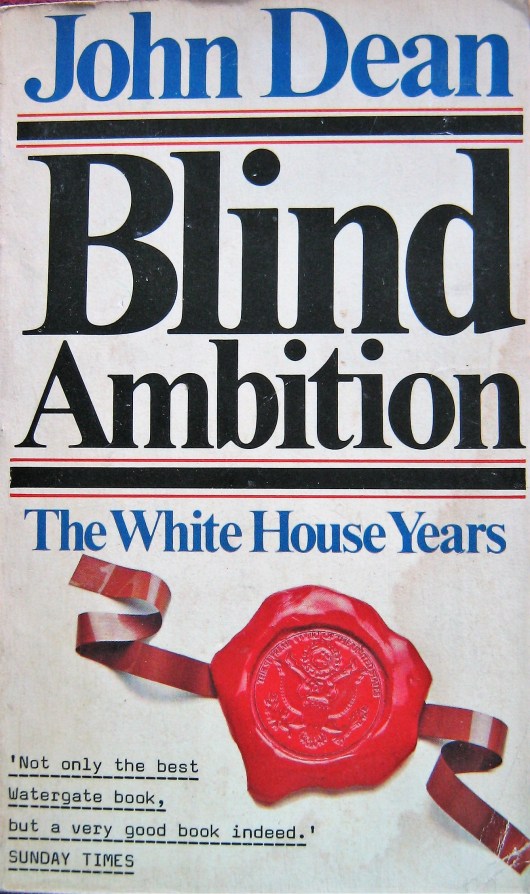
John Dean wrote his version of events in the book Blind Ambition. Dean was given a jail sentence of one to four years for obstruction of justice. He pleaded guilty and after cooperating with prosecutors his sentence was reduced to time served, a mere four months.

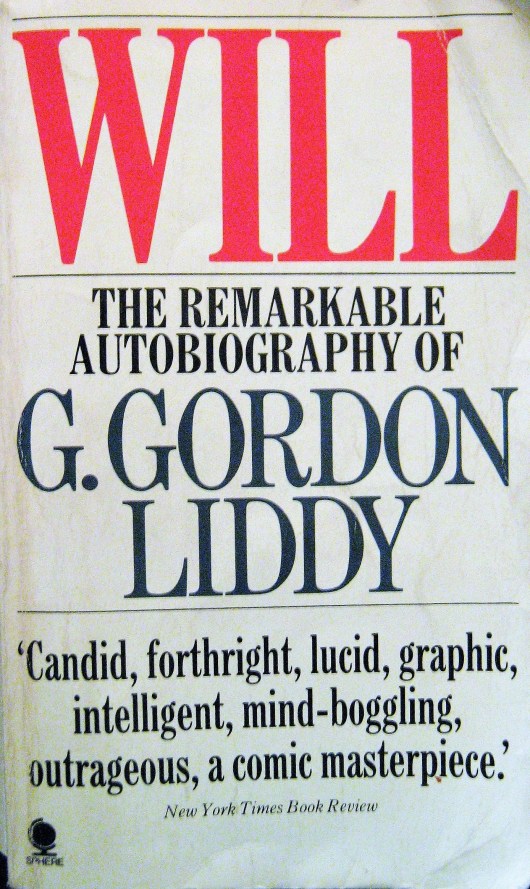
G. Gordon Liddy was a former FBI agent and the chief operative of the White House ‘Plumbers’ unit. Liddy was sentenced to 20 years imprisonment for his involvement in Watergate but this was later reduced by President Carter and Liddy was paroled after four and a half years. Liddy later became a popular radio broadcaster in the USA.

One last book about Nixon himself rather than Watergate.

President Richard Nixon retired in disgrace to his home in San Clemente, California. He never admitted any wrongdoing during his time as President, in fact he stated ‘if the President does it, that means it’s not illegal!’ Nixon in Winter is by Nixon’s research assistant Monica Crowley who worked for the former President until his death in 1994.


Steve Higgins has written a novel ‘Floating in Space’ set in Manchester, 1977. Click the links at the top of the page to buy a copy or for more information.