 I don’t know about you but this hasn’t been a great week for me. I started off with a bit of an ache in my right arm but when you are as ancient as me you get used to your body sending over these signals of age every so often. After a few days it became worse, a nagging ache that turned into a pain. As it happened, I’d had that pain before, in fact, I’d even written about it in a blog post. I was going to write about it again but there was the old blog post just aching to have new life breathed into it, to be rewritten, remodelled or repurposed as we blog writers like to say. After all, no work of art is ever finished, just abandoned. Of course, I do have a sore arm and it’s difficult to type at the moment but what the heck, anyone who knows me understands that at heart I’m just a lazy old codger and so instead of writing something new like a real writer, here’s what happened last time I had a sore shoulder.
2002 (ish)
Samsara, in the Buddhist way is the cycle of life; birth death and rebirth, represented by the circle. That circular vision of life is not always so easy to explain but let me tell you about it in my own way.
A long time ago, years ago in fact I had this really bad pain down my right arm. It didn’t get any better, in fact it got worse and worse so I called in for an appointment at the doctors’. I got to see Doctor Kowalski (as usual names have been changed to protect the innocent.) The thing with Doctor Kowalski was that anyone could see him any time because he wasn’t a doctor who was much in demand. Why not you might ask? No one really wanted to see him because all he wanted was to get you into his office and get you out again.
I sat down and the doctor smiled and asked ‘how can I help you?’
‘Well,’ I began, ‘It’s this pain down the side of my arm . .’
I stopped because Doctor Kowalski was already writing out a prescription. Already, and this was before he had examined me and before I had even finished speaking. Moments later I was on my way out of his surgery and the next patient was already on his way in. All I had to show for it was a prescription for pain killers.
Dr Kowalski must have looked good on the surgery stats as it looked like he dealt quickly with a lot of patients but as we all know, statistics don’t always tell the full story.
A few days later the pain was as bad as ever so I went back but I asked to see Doctor Edwards. Now Doctor Edwards was one of the most popular doctors in the surgery. Why? Because he actually listened to you! He was fully booked up for a while and it took me a week to get in to see him but when finally I sat down in his office, he listened attentively, asked a few questions, took a look at my arm and then sent me for an X ray. It turned out I had a nerve trapped in my neck which was referring pain to my arm and I needed to see the physiotherapist but the waiting time was about six weeks so I decided to go to a private physio.
2021
Anyway, back to 2021 and here I am finding that the only pain free position available is reclining on the couch. Ok I thought, as I’m in position anyway I might as well fire up the TV and slap a DVD in. What did I have that I hadn’t seen for a while? Well the DVD I chose was Avatar. A few years back I got into a conversation with Liz’s younger daughter about the great films of all time and the one she chose was Avatar. Yes, I said, but you’re probably not familiar with real great classic films like Sunset Boulevard, Citizen Kane, Casablanca or even The Godfather. No really, she said, watch Avatar, it’s amazing.
Avatar was written and directed by James Cameron and I have to admit he has made some pretty good films. The first two Terminator films were his projects and he was also responsible for Aliens, the second in the Alien series of films and a great film in its own right. Titanic was again written and directed by Cameron and was just not only an enjoyable film but also a magnificent feat of film making involving a huge mock up of the Titanic built on hydraulic rams which enabled it to drop into the sea for the sinking sequences.
Avatar makes a lot of use of CGI, computer generated images, only this film takes CGI to a whole new level. I actually think that CGI can detract from a film because sometimes it’s so obvious that you are watching something generated by a computer. In Avatar, the imagery and effects are nothing short of incredible. The film is like a sci-fi combination of Dances With Wolves and a Vietnam war film. In the future, an alien planet called Pandora is ripe for exploitation of its vast mineral wealth. The only problem is that a tribe of humanoids, the Na’vi, inhabit the planet and they are not so happy about moving just so the earth people can come and dig up their planet and mine its precious metals. Because of this, the military have initiated the Avatar project which involves growing an alien body and then using technology to transfer a human mind into it, so better first hand relations can be made with the tribe. Jake, a crippled ex marine is invited into the team to take over one of the Avatars and a series of events enable him to get close to the tribe. His job is to convince the Na’vi to move away but as time goes on, he finds himself becoming closer to the tribe and evermore understanding and respectful of their ties to nature and their way of life.
Computer technology has enabled Cameron to produce some incredible scenes of beautiful other worldly forest landscapes as well as numerous animals the tribe interact with and the story that the director weaves is a very thoughtful and moving one. Avatar really is a film that is up there with the all time great films of the cinema world.
2002 (ish)
I eventually got to see the NHS physio. She was a lady, a little old lady in fact. When I walked in to see her she offered me a seat then shouted at me to ‘sit up straight!’ No wonder I had neck and back issues because my posture was dreadful! She may have been a little old lady but she gave me some stick, not only verbally but she did a lot of work on my neck with her hands and eventually the pain in my arm slipped away and I gradually returned to normal.
At the end of my treatment she told me that if the issue returned not to bother going to the doctor again; ‘Come straight to me and I’ll sort you out but for heavens sake, sit up straight. Get your posture right and you’ll be fine!’ ‘OK,’ I said, ‘thanks.’
Some months went by and I began to get the same symptoms again so I went into the doctors’ surgery and asked to see the physio. The lady on the desk said no, I had to see the doctor first. I told her what the physio had said, go straight to her but the receptionist was adamant- I could only see the physio with a referral from the doctor. As I was dejectedly leaving the surgery I saw the physio and went over and told her what happened. She took me back to the reception, gave the receptionist there some first class stick and booked me in the next week to see her. Happy days!
About six to eight months later I once again began getting the neck and arm problems so I returned to the surgery. The receptionist advised me (with far too much smugness, I thought) that the physio had retired and a new younger model had taken over and this one would not see me without first seeing the doctor.
I made an appointment, went in to see the doctor and found myself with Dr Kowalski, pen in hand, ready to write me out a prescription for painkillers!
2021
My arm was really killing me so I went in to see my GP. I called in for an appointment but apparently, appointments can only be arranged by calling in at 8am. The next day I tried calling but could only get an engaged tone. When I finally got through all the appointments for that day were taken. I did manage to get myself booked into a private physiotherapist and he got straight to work giving my neck and shoulder a good pummelling and leaving me with a regime of exercises to do.
The next morning Liz got up at 8 and called the doctors’ surgery. After about thirty minutes she finally got through and managed to get me booked in to see the doctor. I dragged myself and my sore arm along and as I was telling Doctor Khan my story of pain and woe the good doctor was already sorting me out some painkillers and a sick note and telling me that I would be fine within a week, a prediction that has so far failed to come true.
See, the world is a circle after all!

 I do love my music. At home when there is nothing much on the TV I like to flip through the recommendations that come my way on Spotify. In my car I listen to CDs. I have always told myself that my precious CDs were too good to be dragged about in my car so I lovingly copied them to writeable CD discs, carefully, in most cases editing out the tracks I didn’t like. I’d be my own invisible DJ making up new CD albums with a track from here, another from there and so on. Lately, I haven’t done that so much and seeing that I don’t play my CDs much at home, I decided not to copy them just to bring the original CDs themselves into my car.
 Lockdown may have finished on December 2nd in the UK but if you live in a tier 3 region, like me, it’s still going on. OK, I understand the need for the lockdown, I know we have to prevent the virus from spreading but that doesn’t stop the whole thing being a pain in the neck. No quiz nights at the pub, no restaurant meals out and so on. Not only that but why does the virus have 2 separate names? Is it Covid 19 or is it Coronavirus? And where does the 19 come from? Was there a Covid 18? Does this mean there have been 18 previous versions of this insidious plague? If so, why have we never heard of them? We, the public, need to know.
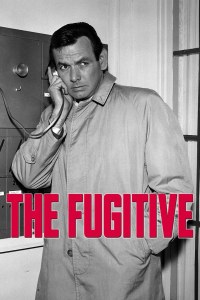 Another old show repeated currently on the CBS justice channel is The Fugitive starring David Janssen as Dr Richard Kimble, falsely accused of the murder of his wife. The show ran for four seasons but as viewer ratings began to fall, the series was cancelled. It was then that the producers hit on what at the time was an unusual idea. Instead of the show just ending, they decided to make an actual finale. Yes, they would wrap up the story of Kimble’s wife’s murder. Kimble had been searching for the supposed one-armed man he had seen leaving the murder scene for the past four seasons, now he would finally find him!
 That of course was 1977. In 2020 Stuart, like me might have been tempted to go into Manchester for a night out but Manchester is a hot spot as far as the Coronavirus is concerned. Bolton, a Manchester suburb has been forced back into lockdown because of a spike in Covid cases so for the time being I thought it might be better to just stay in and stay safe. That’s how I came to settle down in front of the TV with a can of Guinness and a packet of Doritos. I combed through my old VHS box looking for something I hadn’t watched for years. I picked up a couple of documentaries which looked interesting and then came across my Ally McBeal DVDs.
 Well, there goes another year. 2019. Was it a good one for you? Hopefully, it was. For me, 2019 was probably the year I became a carer. OK, I’d looked after my mother before but it was only this year that I became aware of how much help she really needed. Anyway, time for a quick look back focussing on my blog posts from this last year. All the links open up into another page to reunite you with my past posts.
 These last few weeks have seen something of a heatwave in the UK and of course we Brits are just not equipped to cope with extreme heat, well not in the UK anyway. In Spain the buildings are built to keep out the heat where as in the UK, our houses are insulated and are made to hang on to the heat throughout the cooler parts of the year as well as the usual dismal summers.
 A lot has changed in Manchester city centre, at least on the surface, but to a great extent it’s still the same city as it always was. My book, Floating in Space is, as you probably know if you have ever visited this web page before, set in Manchester in 1977 and I thought it might be interesting to take a look at the city, some 41 years later.

