I can’t say I had any great interest in pop music until my brother and I received a record player for Christmas 1972. I always rather liked Olivia Newton-John but to be fair, my interest in her was based more on her looks rather than her singing. The very first singles I ever bought were two 45s by Olivia. Both had dropped out of the charts and my local music shop were selling them for half price so I picked up The Banks of the Ohio and What is Love for a grand total of 48 pence.

That was the start of my music collection although back then I always went for singles rather than albums which of course makes this post so much harder. Anyway, I did buy a few albums. I bought quite a few by Olivia although I can’t really say they are ones that I have loved ever since. One of the first albums I did buy was Goodbye Yellow Brick Road and that is one album I still play today.
Goodbye Yellow Brick Road by Elton John.
Goodbye Yellow Brick Road was released on October 5th, 1973, two days after my 17th birthday. I’m not certain when I bought it although I reckon it was probably the following year. Numerous singles were released from the album, notably the title track and Candle in The Wind, a song about Marilyn Monroe. Another hit was Saturday Night’s Alright for Fighting. Interestingly a big hit in the USA was Bennie and the Jets which was seen as a soul track in the USA and Elton was even invited onto the US show Soul Train to perform the song. In the UK the song was on the flip side of Goodbye Yellow Brick Road.
I saw a TV show about the making of this album on the Sky Arts channel a while ago and Elton’s guitarist Davey Johnstone told some interesting stories. Elton and his band had wanted to record in Jamaica but the facilities at the studio were basic and rudimentary so they flew to the Château d’Hérouville near Pontoise in France, where they had recorded previously for Elton’s album Honky Château . One rather surprising thing was that when Elton and his band arrived at the studio they had no songs written. Elton composed all the songs from the album while at the studio. In some cases he wrote the music, ran through it with his band and then they went into the studio and recorded. As usual Bernie Taupin wrote all the lyrics. Dee Johnstone was on bass guitar and Nigel Olsson was the drummer.
Singer Kiki Dee helped with backing vocals as did the other band members. Davey mentioned that Elton was notoriously difficult to be with when he didn’t have much to do so when everything had been recorded he left and the rest of the band got on with recording the backing vocals without Elton ‘getting on their nerves’. Presumably then Gus Dudgeon, the producer made the final mix.
I still have my original vinyl album as well as a double CD version. I lost interest in Elton in later years and I never liked his work throughout the 1980s but Goodbye Yellow Brick Road remains one of my favourite albums and something that I play frequently on long car journeys.
Favourite track: Difficult but I’d go for The Ballad of Danny Bailey.
Band on The Run by Paul McCartney and Wings.
I can’t say I’ve ever been a really big Beatles fan. Don’t get me wrong, I do like the Beatles. A few years ago I decided I was going to buy all the Beatles albums on CD but the more I bought, the less I liked them. The Beatles classic hits are wonderful of course but I found that there is a lot of other stuff on the Beatles’ albums that I just didn’t like so I just stopped buying them. In 1974 I went to see Paul McCartney and Wings at the Free Trade Hall in Manchester. Their tour had been in part to promote their album Band on the Run which had been released a few months before in November of 1973. A number of tracks had been hit singles but I’ve always particularly liked the title track Band on the Run.
Just like Elton John, McCartney wanted to record an album in an exotic location and found that his record company, EMI, had a studio in Lagos, Nigeria. Prior to leaving, McCartney and guitarist Jimmy McCullough had an argument and McCullough quit the band. Danny Seiwell the drummer also left the group on the day before the band flew to Lagos. This meant that McCartney himself would play the drums and lead guitar with his wife Linda on keyboards and Denny Laine on rhythm guitar.
The studio in Lagos was disappointing. It was a ramshackle establishment and there was only one tape machine and the control desk was faulty. Even so, the band stayed in Lagos and began to record. Lagos had just experienced a civil war and corruption and crime was commonplace. One night Paul and Linda went for a walk and were mugged at knifepoint and as well as losing valuables they also had a bag of demo tapes and lyrics stolen. On another occasion McCartney keeled over gasping for air. Everyone thought he was having a heart attack but the eventual diagnosis was a ‘bronchial spasm’.
After six weeks of recording, the band returned to the UK where the 8 track recordings were converted to 16 track and various overdubs added as well as orchestral arrangements.
Perhaps inspired by the cover for Sergeant Pepper, McCartney decided to create another noteable cover. This time Linda, Denny and Paul posed as prison escapees with various celebrities such as Michael Parkinson, boxer John Conteh and film actor Christopher Lee. Also included were TV personalities Kenny Lynch and Clement Freud.
According to Wikipedia, the album did reasonably well in the music charts then began to drop down a little. Later, buoyed by the success of two tracks released as singles, Jet and Band on the Run, the album began to rise up in the charts, hitting the top spot in the USA in June and in the UK in July.
The album sold 6 million copies and became EMI’s best selling album of the 1970’s.
Favourite track: Band on the Run.
Rumours by Fleetwood Mac.
Rumours was released in February 1977 after recording the previous year. The album was recorded with a background of relationship breakups and heavy drug use by the band members. I first came to be interested in Rumours as I loved the four singles from the album, two of which I bought as vinyl 45s. I’ve never been much of an album man but when more tracks were released as singles I thought it made more sense to buy the album rather than more singles.
The album was recorded first at the Record Plant in Sausalito which consisted of heavily soundproofed small wooden rooms and the band were not completely happy but Mick Fleetwood insisted they stay. John and Christine McVie had recently split up and would not talk to each other except for musical matters. Apparently it was only later than the group realised that many of the lyrics revolved around relationship issues.
After spending two months in Sausalito, the band decided to test some of the new songs by performing them in concert. Later, they returned to the studio, a different studio, to complete the recording sessions.
Favourite track: Go Your Own Way.
Jeff Wayne’s War of the Worlds.
Back in the late seventies when I used to work for a bus company, one of my colleagues was a guy whose name I can never remember. His nickname however was Clouseau as he was the image of Peter Sellers’ famous creation, Inspector Clouseau. Clouseau, my Clouseau, was a former disc jockey who talked non stop music. He ran a mobile disco and still dreamt of being a radio DJ. He was always giving me albums to take home and listen to and was always eager to get my opinion. Some of the music he gave was good and a lot of it just wasn’t to my taste but one album he insisted I take home and play was War of the Worlds and I loved it pretty much on first hearing it.
Jeff Wayne was a producer and musical director working with singer David Essex and he was looking for a new project, a story that he could give a musical interpretation to. His father suggested War of the Worlds and the idea caught Jeff’s interest. He acquired the musical rights to the story and even booked a recording date in advance to give himself a deadline to work to for creating the music. David Essex appears as an artilleryman as well as singing and Justin Hayward and Phil Lynott also sing. Jeff convinced Richard Burton to record the narration and the project was ready for the recording.
A prototype 48 recording system was used which apparently malfunctioned numerous times but the resulting double album was released in June of 1978. According to Wikipedia it was the UK’s 32nd best selling album of all time.
I still have my vinyl version plus the CD version. There have also been remixes, new versions and even a live concert.
Favourite Track: Forever Autumn sung by Justin Hayward.
I did mention earlier I’m more of a singles man rather than an album lover which is why I’ve only covered 4 albums rather than 6. I could add in various Greatest Hits albums from my collection to make up the 10 albums I mentioned in the title but I think I’ll save them for another post.
What are your favourite albums?
 It was a little like the time I worked out my top 10 favourite films of all time and then later, realised I missed out one of my absolute favourites. It was a momentary error, a quick brain fade but something that needs redress. So here it is, a post about music and just to make it more interesting, I think I’ll throw a few links in to some of my favourite tracks.
 Another present was a record to go with our record player. I can’t remember if it was another joint present but the record was The Persuaders. It was an album of TV and film themes by John Barry who wrote much of the music for the James Bond films as well as the theme from The Persuaders. I still have that album today so it was either my personal present or I have just managed to keep it away from my brother for the past fifty years. (Fifty years! I can hardly believe it’s been that long. He kept the record player by the way so I think I can count the record as mine.)
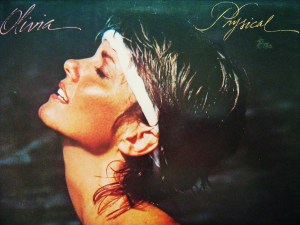 The first single I ever bought was by Olivia Newton John, my teenage heart throb and in fact it was two singles, Banks of the Ohio and What is Life and as they were no longer in the charts, I managed to get them for half price which initiated a lifelong passion for flipping through half price vinyl singles in record shops. I say lifelong passion but then again, these days in 2022, finding a record shop isn’t easy and even if I could find one, I doubt if there would be many 7-inch singles on sale. Having said that, I keep reading that vinyl is making a comeback so maybe it’s not impossible after all.
 One day in December 1980 I was working as a bus driver and I was driving one of our old half cab buses into Manchester. My conductor, Bob, was kept pretty busy as we took a bus load of passengers into Manchester city centre for their jobs in shops, offices and other places. At one point Bob poked his head through the little window into the cab and told me that he had heard from a passenger that John Lennon had been shot in New York. It was shocking news and when we arrived in Piccadilly, we both ran to the news stand to read the news in the morning papers. There was nothing about Lennon in any newspaper and we wondered if it had been just a mad rumour. Later when we went back to the canteen for our break, we heard the news either on the TV or the radio. Lennon had indeed been shot and was dead.

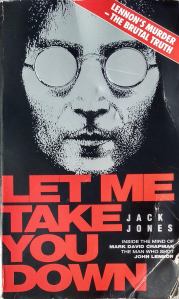 So why did Chapman shoot John Lennon? Apparently, Chapman had been a fan of the Beatles and John Lennon’s solo music but felt that Lennon had become a fake, a ‘phoney’, someone who preached peace and love to the masses while his music made him a multi-millionaire. Chapman signed out of his security job as ‘John Lennon’ on his last day of work so it is even possible that he identified so much with Lennon that the other Lennon, the fake ‘Lennon’ had to die. Chapman also claimed at other times that he shot Lennon to promote Catcher in the Rye.
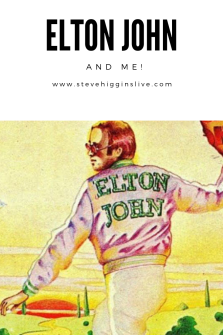 Way back in the 1970’s when I was a shy gawky teenager, one of my very best friends was a big fan of the Moody Blues. Everything that ever happened to him, life, love, romance, anything and everything really, he related back to something on one of the Moody Blues’ many concept albums. I really wanted something like that, a band or musician I could relate to and follow as they created more music. Very quickly I discovered Elton John.
 Stuart Sutcliffe.

 Derek Taylor.
 As a teenager there was one, really important thing in my life. Music. And by music I am talking about singles. The BBC top twenty was all important to me and every Saturday night my mate Steve and I would drink beer and talk about women, sci fi and music. I bought numerous singles every Saturday. It’s very rare that I would buy something already in the charts for the full price. I’d usually wait until the record I wanted started to drop down the placings then I’d snap it up for half price. I spent a lot of time flicking through boxes of records in record stores with the end result that now, in 2016; I have a considerable amount of boxes of records. Ninety nine percent of them are singles. I was never one for albums because mostly albums let you down. You’d hear some great single by somebody new, buy their album and it rarely lived up to the single.
 Letters from an Unknown Author!