Crime Fighting Duos? What’s that about you might be thinking? Well I thought I’d write about TV investigative couples so let’s go back to the 1960s and start with one of my favourite TV pairings, Steed and Mrs Peel.
Steed and Emma
Steed and Emma featured in The Avengers, no, not the Marvel comic book heroes but the TV sci-fi/espionage series. John Steed and Emma Peel were two secret agents working for an unnamed agency in a very quirky version of 1960s England. The series was first broadcast in 1961 and starred Patrick Macnee and Ian Hendry. Macnee played the debonair John Steed and when Ian Hendry left after the first series, Steed became the focus of the show with his new assistant Cathy Gale played by Honor Blackman.
Honor Blackman became a TV star with her portrayal of Cathy Gale as a leather wearing judo expert. She and Macnee even recorded a hit single together called ‘Kinky Boots’ which became a minor hit.
When Honor left to become a Bond girl in the film Goldfinger the TV production had something of a makeover. The series was sold to the US TV network ABC and moved from videotape to 35mm film. A new character was added, Mrs Emma Peel. The producers chose actress Elizabeth Shepherd to play the part. Shepherd shot the pilot film episode and part of the next one, but the producers decided to drop her, feeling she was not right for the role. With a two-million-dollar deal with the US network ABC hanging in the balance, they began searching for a new Emma Peel and chose unknown actress Diana Rigg.
Diana Rigg was perfect for the new crime fighter/agent Mrs Peel and wowed TV audiences with her intelligence, her judo and karate skills, her avant-garde fashion sense and her witty banter with Steed.
Diana Rigg became famous as Mrs Peel and played the part until 1967 when, like Honor Blackman before her, she left the to become a Bond girl in ‘On Her Majesty’s Secret Service’. Patrick Macnee continued to play the bowler hatted John Steed and Linda Thorson was recruited to star as Steed’s partner. The series was rebooted in the 1970s as The New Avengers starring Macnee with Joanna Lumley and Gareth Hunt as his new colleagues.
Steed and Mrs Peel are surely the most fondly remembered characters in the series. My favourite episode is one called The House That Jack Built which was about a mad inventor who is fired from a company run by Mrs Peel’s father. He builds an electronically operated house in which to trap and kill Mrs Peel. She eventually escapes just as Steed arrives to save her!
A film version was made with Ralph Fiennes and Uma Thurman in 1998 but it was a resounding flop.
Napoleon and Illya
Robert Vaughn and David McCallum played two secret agents working for UNCLE (the United Network Command for Law and Enforcement) who try to foil the evil organisation THRUSH. (What that stood for I’ve never known.) Vaughn starred as Napoleon Solo and McCallum played Russian born Illya Kuryakin. UNCLE headquarters was in New York, accessed through a fake dry-cleaning store. Inside UNCLE HQ was a very hi-tech environment with steel corridors and sliding doors.
Head of UNCLE was Mr Waverly played by Leo G Carroll who every week gave his two agents their assignments and off they went into the world, armed with an array of secret gadgets like explosives hidden in their shoes and a communicator built into a pen. ‘Open channel D’ was something regular viewers like me would hear every week as well as the wonderful theme music by Jerry Goldsmith.
David McCallum had a big fan following especially with the ladies but Robert Vaughn as Napoleon Solo was my favourite.
Starsky and Hutch
I used to watch this show many years ago and to be honest, I liked it but I was never a firm fan. Starsky and Hutch were two California plain clothes cops played by Paul Michael Glaser and David Soul. They drove around Bay City, a fictional California town in a Ford Gran Torino in bright red with a white vector flash down the sides. Looking up the series on Wikipedia, I see that Paul Glaser actually hated the car, pointing out that a bright red car with a distinctive paint job was not the best idea for a pair of undercover cops. Oh well, the car was pretty popular with viewers and especially with a certain type of late seventies boy racers. (You know the type, young guys who painted or stuck white flashes on the sides of their souped up old bangers and tried to burn you off at traffic lights).
To sum up then, Starsky and Hutch is about two somewhat scruffy wisecracking cops, tearing around the city in a bright red car like they’ve got somewhere very important to be, even if half the time they’re just chasing some dodgy lead or getting into trouble. The whole vibe is full on ’70s; big collars and big flairs but then again, it was made in the mid 70s so you can’t get more 70s than that.
Starsky and Hutch was remade as a not particularly serious big screen film in 2004 starring Ben Stiller and Owen Wilson. Glaser and Soul made a brief appearance at the end of the picture but I can’t help thinking the film might have worked out better if things were the other way round and Stiller and Wilson were the ones who only appeared at the end.
Randall and Hopkirk
Randall and Hopkirk (Deceased) is one of those offbeat late 60s TV shows where the premise sounds completely ridiculous and yet somehow works perfectly: two private detectives, but one is a ghost. Marty Hopkirk gets run over and killed in episode one but returns as a ghost to help Jeff Randall solve his murder. After that, Marty decides to stay on and help out with other cases too. On one side you’ve got a fairly standard detective story unfolding, the next minute poor Jeff Randall is trying to explain clues that only he can see because his dead partner Marty Hopkirk is hovering nearby in an unmistakable white suit but invisible to anyone except Jeff. It’s quirky, a bit spooky, very tongue in cheek and exactly the sort of inventive television that the late sixties seemed to produce with effortless confidence.
In later years the show was rebooted with comedy duo Reeves and Mortimer. Personally, I’ve always found the 60s version starring Mike Pratt and Kenneth Cope with Annette Andre as Marty’s widow to be far superior.
Mulder and Scully
Mulder and Scully are the two FBI agents at the centre of the X Files, secret FBI files profiling unexplained and unsolved mysteries. Fox Mulder is convinced of the existence of the paranormal while Dana Scully is a practical scientist assigned to take a technical and analytic view of Mulder’s work.
The two argue and debate their way through various bizarre cases. One minute it’s some weird creature lurking in the woods, the next it’s shadowy government plots and secret labs. Somehow, despite all the paranoia and eerie moments, there’s a lot of dry humour and a really strong partnership between them that makes the whole thing strangely cosy to watch, even when the lights are off and the theme music is giving you goosebumps.
In my absolute favourite episode, the pair are monitoring a secret installation in area 51 and are confronted by government officers when a flying saucer flies overhead. When it passes over, it’s energy or radiation morphs Mulder’s mind into the mind of one of the area 51 staff and his mind into Mulder’s body. The other guy, the area 51 guy is quite happy at this incredible transformation. He and his wife are not getting on and suddenly finding himself in the body of a single man is clearly ok with him. Mulder on the other hand has to convince Scully that this incredible incident has actually happened.
The X Files was first shown in the late 1990’s and ran until 2002 spanning 9 seasons. The series returned in 2016 and then again in 2018. Plans are afoot, or so I have read, for another revival with new actors.
Remember, the truth is out there.
 Tv programmes of course cost money, quite a lot of money in fact. Back in the 1990s when I was fresh from a video production course and hoping to actually get a job in the TV industry (I never did) I was told an hour of television costs £100,000. What it costs nowadays is anyone’s guess but then again, it’s so easy to make a TV show in 2026. One of my favourite programmes is Canal Boat Diaries, an entirely self-shot show which has graduated from YouTube onto the BBC and can be seen quite regularly on the U-Yesterday channel. Does that mean an hour of TV is worth more or less than that 90’s figure of £100,000?
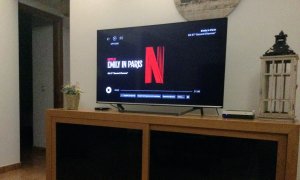 We watched The Crown last year while staying in the Loire valley even though we don’t normally watch much TV on holiday. This year in Lanzarote, we spent many an evening watching Emily in Paris, another Netflix show. I’d found it by searching on the internet for good TV shows to watch on Netflix and Emily came up so we thought we’d give it a go.
 In March I was getting a little stuck for ideas and I had to recycle an old post,
  I’ve written many posts about books and a regular series is one in which I compare books to their filmed counterparts. In August I added a post about one of my favourite book/film series,
 One day in December 1980 I was working as a bus driver and I was driving one of our old half cab buses into Manchester. My conductor, Bob, was kept pretty busy as we took a bus load of passengers into Manchester city centre for their jobs in shops, offices and other places. At one point Bob poked his head through the little window into the cab and told me that he had heard from a passenger that John Lennon had been shot in New York. It was shocking news and when we arrived in Piccadilly, we both ran to the news stand to read the news in the morning papers. There was nothing about Lennon in any newspaper and we wondered if it had been just a mad rumour. Later when we went back to the canteen for our break, we heard the news either on the TV or the radio. Lennon had indeed been shot and was dead.

 Just to backtrack a little, we rented this same house back in May and usually, the only time I put the TV on is to watch F1 racing. May is the usual month in the calendar for the Monaco grand prix, one of my favourite races of the year. There is actually plenty of talk recently about cancelling the race as nowadays, the F1 cars are faster and much bigger and so there is very little room left to overtake.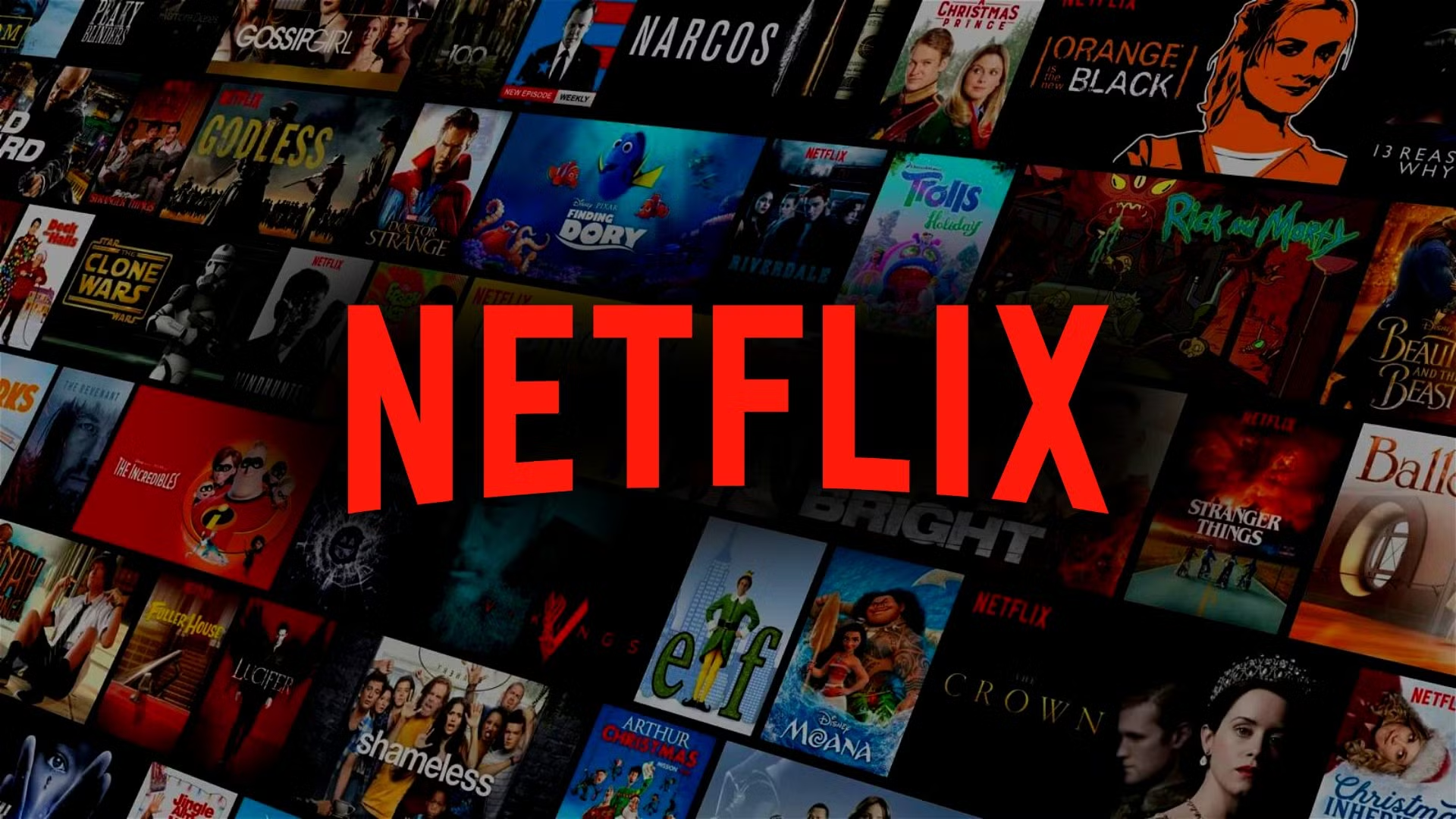

 A long time ago I decided that I would set myself the task of reading the entire Hamish Macbeth series of books. There are 34 books in the series, all written by author M.C. Beaton which is in fact a pen name for Marion Chesney. Marion actually wrote many books under various pseudonyms including Ann Fairfax, Jennie Tremaine, Helen Crampton, Charlotte Ward and Sarah Chester. After Marion’s death in 2019 further Hamish Macbeth novels have appeared penned by writer R.W. Green.
 I mentioned a while ago about my
  The story of the Titanic, the ship that hit an iceberg and sank in 1912, is one of those stories which seems to be forever in the news. It’s a story that has caught the imagination of pretty much everyone. Even the other day, just scrolling through the BBC news page, I came across an item about some new digital scan of the Titanic wreck which revealed new information about the disaster.
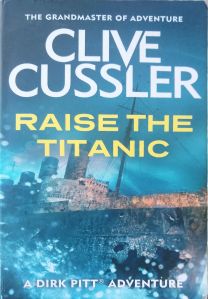 This was a film produced by TV mogul Lew Grade who was wanting to move his TV production company ITC Entertainment into the world of cinema. He had read the original book and thought that it might be possible to make a film series about US government operative Dirk Pitt in the manner of the Bond series.
 I only have one book in my collection about the Titanic. It’s a big glossy picture book, not about the actual ship, but about the shooting of James Cameron’s film. It documents Cameron’s twelve dives in a tiny submersible which gave him the idea of the treasure hunters looking to find the necklace the ‘Heart of the Ocean’ and his realisation as Cameron himself mentions in the book’s foreword that the main thrust of the story should be a love story with the Titanic disaster almost as a backdrop.
 Don’t you just hate TV adverts? I certainly do. There are those times when a TV advert comes in useful I suppose. Perhaps when you are watching a good film and you need to make a cup of tea or pop to the toilet. These days in the hi tech world of TV, most people are able to pause live TV and do those things anyway. I wouldn’t mind if the TV adverts were actually worth watching but these days of course they aren’t. Anyway, here are 6 classic TV ads of yesteryear that I think are rather good. Here we go . .

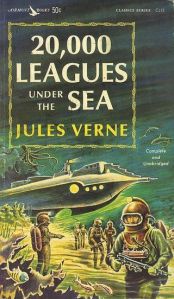 20,000 Leagues Under the Sea
 Letters from an Unknown Author!