20 Outstanding Instrumental tracks (2024 Update)

As it’s been such a dreadful summer here in the UK, I think it’s high time for another music post. In the past I’ve done posts about Christmas chart hits, one about comedy chart hits and one listing some random hits from pop music’s vinyl past. These days I do like listening to chilled down electronic dance tracks, so I thought ‘what about a blog post featuring instrumental hits?’ Anyway, here we go. I’ve tried to find advert free videos where I can but it’s not always been possible. Some tracks are film themes, some are TV themes and some are just great pop, jazz or soul tracks. This post by the way is an older one that has been subtly updated from 19 Outstanding Instrumental Tracks to a round 20.

Theme from Rocky

One of the best things about the Sylvester Stallone movie Rocky has to be the theme tune. For a long time I used to have it as my ringtone on one of my first mobile phones. Its proper title is Gonna Fly Now composed by Bill Conti and the track made number one on the Billboard Hot 100 in 1977, the year the movie was released.

Axel F

Axel F by Harold Faltermeyer was the theme to Beverly Hills Cop, a forgettable film starring Eddie Murphy. If not for this catchy tune the film would long have been forgotton. The track made number 2 in 1985 but younger readers may remember the 2005 Crazy Frog version.

Theme from Hill Street Blues

Hill Street Blues was an outstanding TV show from the early 1980’s about a police station in an unnamed US city. The show won critical acclaim and according to Wikipedia won a total of 98 Emmy Award nominations. The show featured a lot of hand held camera work which gave the series a documentary look and the theme written by Mike Post reached number 10 in the Billboard top 100 and number 25 in the UK singles chart.

(Angela) Theme from Taxi

Angela was written by jazz pianist Bob James. The theme was written for episode 3 in the series but the producers liked it so much it became the main theme for the show.

Theme from Miami Vice

Miami Vice was an American TV cop show from the 1980’s and the theme music written and performed by Jan Hammer was released in 1985. The single reached number 5 in the UK charts.

Love’s Theme by the Love Unlimited Orchestra

Okay, that’s the film and TV themes sorted, let’s move on. Love’s Theme was by the Love Unlimited Orchestra, Barry White’s backing band. I’ve always loved this track and many years ago I frequented a bar in Manchester known as the Playground where the DJ used it as his theme tune. Every time I hear it I never fail to be transported back to those days in the 1970’s.

Apache by the Shadows

The Shadows were British singer Cliff Richard’s backing band and this worldwide hit made it to the UK number one spot in 1960.

Classical Gas by Mason Williams

Classical Gas was a track by Mason Williams and it was a one hit wonder from the year 1968. Steve, the Matty character from my novel, Floating in Space played it for me back in the 1970’s and I fell in love with it straight away.

Pepper Box by the Peppers

Pepper Box by the Peppers is a track you may think you have never heard of but as soon as you hear it, you’ll probably recognise it. It was a popular track way back in 1974 when it peaked at number 4 in the UK charts.

The Hustle by Van McCoy

The Hustle, what a great track! It just brings back memories of nightclubs back in the 1970’s. The Hustle was a single by Van McCoy and the Soul City Symphony. It went to number 1 on the Billboard chart and number 3 in the UK. Even better, here’s a clip from 1975’s Top of the Pops with Pan’s People dancing to the track.

Pick up the Pieces by the Average White Band.

I’m not totally sure how to categorise this one. I suppose it’s 70’s funk but feel free to tell me if it isn’t. It was released in 1974 but failed initially to chart in the UK. After it took off in the USA the track begin to sell in the UK and eventually made the number 6 spot.

Hocus Pocus by Focus

Hocus Pocus is a song by the Dutch rock band Focus, written by vocalist Thijs van Leer and guitarist Jan Akkerman. It was recorded and released in 1971 as the opening track of their second studio album, Moving Waves. I remember hearing it originally on the Alan Freeman radio show. Heavy rock isn’t usually my cup of tea but I kind of like this one.

Time is Tight by Booker T and the MG’s.

This track was recorded in 1968 and was used in a film called Uptight released that same year. A slightly slower version of the track was released as a single in 1969 and reached number 4 in the UK charts.

Soul Limbo by Booker T and the MG’s

Soul Limbo was a hit for Booker T and his MG’s in 1968 but is probably best known in the UK for being the theme for BBC TV’s cricket coverage.

Garden Party by Mezzoforte

Mezzoforte were a jazz fusion band formed in 1977 and their biggest hit was Garden Party which made it to number 17 in 1983.

Song for Guy by Elton John

Elton is not exactly known for instrumental works but this was released as a single in December 1978 reaching the number 4 spot in January of 1979. Elton dedicated the song to Guy Burchett, a messenger at Elton’s record company Rocket. Guy was killed in a motorcycle accident on the same day that Elton wrote the song.

Jazz Carnival by Azymuth

Azymuth are a Brazilian jazz funk band formed in 1971. Jazz Carnival was a 1980 hit for the group reaching number 9 in the UK charts.

Take Five by the Dave Brubeck Quartet

Take Five was composed by Paul Desmond and originally recorded by the Dave Brubeck Quartet in New York City on July 1, 1959 for their album Time Out. Two years later it became a hit and the biggest-selling jazz single ever. Numerous cover versions have been produced since then.

Theme from Shaft

The theme from Shaft was written and performed by Isaac Hayes and was the theme to the 1971 film starring Richard Roundtree as private eye John Shaft. The song won an Academy Award for best original song. In the UK the track reached number 4 in the music charts. I remember hearing this back in 1971 and after buying the single just playing it over and over. The flip side, Cafe Regio, was pretty good too and looking back this was the track that started off my love of soul and funk.

Fanfare for the Common Man by Emerson, Lake and Palmer

This was a 1977 hit for Emerson Lake and Palmer. It was a track from their album Works Volume I and was adapted by Keith Emerson from an original 1942 work by Aaron Copland. The single reached number 2 in the UK singles chart.


What to do next: Here are a few options.

Share this post on your favourite social media!

Hit the Subscribe button. Never miss another post!

Listen to my podcast Click here.

Buy the book! Click here to purchase my new poetry anthology.

Click here to visit Amazon and download Floating in Space to your Kindle or order the paperback version.


The Many Lives of Robin Hood

One of my unofficial New Year’s resolutions this year was to try and declutter, perhaps actually get rid of some of my huge DVD collection. It’s not always that easy though. Mooching around one of those cheap secondhand shops recently I picked up yet another DVD. I’ll tell you about it in more detail later but it was one of the many films made about Robin Hood and his Merry Men.

My first introduction to Robin Hood was a book I was given for Christmas as a child. There were two parts to it; one was the story of King Arthur and the Knights of the Round Table, the second part was about Robin Hood. I don’t have the book anymore and I have no idea who wrote it but I always look for it when I happen to come across a good secondhand book shop. If I ever found it, it would give me a great thrill to read that book again because I have loved the stories of King Arthur and Robin, ever since.

That unknown book had all the elements of the Robin Hood story we have come to know and love. There was Maid Marian, Friar Tuck, Little John, the Sheriff of Nottingham and much more.

The first time I saw Robin Hood on TV was the TV series starring Richard Greene as Robin. There were four series of the TV show which was first produced in 1955. I must have seen repeats shown in the 1960’s but just like that book, all the elements of the Robin Hood story were there and in particular there was a really catchy theme tune and song which even now I can still remember:

Robin Hood, Robin Hood,
Riding through the glen.
Robin Hood, Robin Hood,
With his band of men.
Feared by the bad, loved by the good,
Robin Hood! Robin Hood! Robin Hood!

Yes, they just don’t write them like that anymore.

So who is Robin Hood some of you may be asking? He is a character in old English folklore who was an outlaw who robbed from the rich and gave to the poor. He was a renowned archer and he and his men wore Lincoln Green outfits and lived in Sherwood Forest. In some stories he is of noble birth, in others he is not. In some Robin has served in the Crusades with Richard the Lionheart although many of the stories show Robin at odds with Prince John, the King’s brother, who plans to usurp the King who is away on the Crusades.

According to Wikipedia the first known reference to Robin Hood comes from a ballad from the 1370’s.

In the silent film days Hollywood brought Robin Hood to the screen starring Douglas Fairbanks Junior as the legendary hero.

The film was released in 1922 and was the first film to ever have a Hollywood première. It featured huge sets including a castle and an entire town built at the Fairbank’s studio on Santa Monica Boulevard made to look even bigger on screen with hanging models and matte paintings.

There is also a famous scene where Fairbanks, who did many of his own stunts, rode down a huge curtain at Nottingham castle, made slightly easier with a slide concealed behind the curtain.

Probably the best ever Robin Hood film is the one I mentioned earlier which I picked up on DVD at a charity shop. The Adventures of Robin Hood starred Errol Flynn as Robin, and Olivia De Havilland as Maid Marian. The film differs from many other portrayals of the Robin Hood story in that the main villain of the film is Sir Guy of Gisborne rather than the Sheriff of Nottingham. Basil Rathbone played Guy and the Sheriff  is portrayed as something of a comic figure by Melville Cooper.

Incredibly, James Cagney was supposed to play Robin but he had a major disagreement with Warner Brothers and walked off the lot, not making another film for two years. The studio turned instead to their new star, Errol Flynn. He had shot to stardom in the Film Captain Blood and shortly before production began the studio decided to film the project in their new Technicolor process.

A lot of the film was shot in California’s Bidwell Park which substituted for Sherwood Forest with some scenes shot at the Warner Ranch in Calabasas.

The film had two directors, William Keighley and latterly, Michael Curtiz who was asked to take over when the producer, Hal B Wallis, became dissatisfied with Keighley. Curtiz made a number of films with Flynn including The Charge of the Light Brigade in which Flynn and co-star David Niven fell about laughing when Curtiz called for a horde of riderless horses to enter the scene. Curtiz yelled ‘bring on the empty horses’ which Niven later used as the title of his famous book about Hollywood.

The film picks up on all the elements of the Robin Hood legends, including Friar Tuck and the meeting with Little John. The highlight of the film comes towards the end when Robin and Sir Guy battle it out in an outstanding display of swordsmanship including a famous scene where the two move off camera and we see their shadows dancing along the castle walls.

The Adventures of Robin Hood was a wonderful film and probably the best film ever made about the hero of Sherwood Forest but there are a few other entertaining Robin Hoods.

In 1991 Kevin Costner appeared in Robin Hood: Prince of Thieves. In this film Costner, as the noble Robin of Loxley, returns from the crusades to find that his father has been hung and his home laid to ruin by the Sheriff of Nottingham, played in a villainous but camp way by Alan Rickman, whose performance was universally praised. Robin was accompanied by Azeem, a Muslim who feels he has to repay Robin for saving his life. Costner as Robin, did not attempt to lose his American accent and although the film had mixed reviews, I personally have always enjoyed it.

The film featured the hit single Everything I Do, I Do it For You sung by Bryan Adams and also had a small cameo with Sean Connery playing King John. The exteriors were shot in the UK and one particular location was at Sycamore Gap, just by Hadrian’s Wall in Northumberland. The tree used in the sequence became known as the Robin Hood tree which featured in the news in 2023 when it was cut down by vandals.

A 2010 film version of Robin Hood was directed by Ridley Scott and starred Russell Crowe as Robin. Simply called Robin Hood, this film had a slightly different storyline with Crowe’s character masquerading as Robin of Loxley and was more serious in tone than the Flynn or Costner versions. During the crusades Robin Longstride comforts a dying Knight. Sir Robin Loxley asks him to return his sword to his father in England which he does. Loxley’s father asks him to continue to impersonate Robin to prevent the new King John seizing his lands. Cate Blanchett played the part of Marian and of course Robin soon brings his band of Merry Men together to fight the evil King John.

Perhaps I should also mention the Walt Disney animated version of Robin Hood that was released in 1973. The story is narrated by Alan-a-Dale who tells the story of Robin who as usual, robs from the rich to help the poor. The characters are all animals so Robin becomes a fox, Maid Marian a vixen, Little John is a bear and of course Richard the Lion Heart is a lion. The film was the first animated feature for the Disney Studios following the death of Walt Disney.

I should also mention that a few years ago I actually met Robin Hood. Well, the actor who played Robin in the 2006 BBC series, Jonas Armstrong who now lives in Lytham on the Fylde coast. I met him in the Victoria Hotel in St Annes.

All the films I have mentioned here recreate or at least try to recreate the legend of Robin Hood. All the original stories of folklore and legend are incorporated in the many Robin Hood films, from Robin and Little John meeting, to Robin’s love affair with Maid Marian. One story though that I still remember from that long lost Robin Hood book I used to have is one that I’ve never seen used in any Robin Hood film and it’s this. At the very end of Robin’s life, he is dying and he fires his bow and arrow one last time, asking to be buried wherever the arrow lands. He pulls back the bow and fires his last arrow which I’ve always thought was a fitting finale to the story of Robin Hood.

There are probably more films I could mention, Robin and Marian for instance starring Sean Connery and Audrey Hepburn as an aging Robin and Marian but I think that’s enough Robin Hood for now. Time for a cheese sandwich and a cup of tea. Wonder what’s on the TV this afternoon?

As a great believer in synchronicity, I really wasn’t surprised to see a repeat of Robin of Sherwood, the 1980s TV series!


What to do next: Here are a few options.

Share this post on your favourite social media!

Hit the Subscribe button. Never miss another post!

Listen to my podcast Click here.

Buy the book! Click here to purchase my new poetry anthology.

Click here to visit Amazon and download Floating in Space to your Kindle or order the paperback version.

A Slice of My (Christmas) Life

A few weeks ago during November, I thought that it might be a jolly good idea to start my Christmas shopping so I’d be pretty much ahead of the game when it came to Christmas itself. I’ve had that idea before, on a number of occasions. The strange thing is I’ve never actually done anything about it. Oh well, there’s always next year.

About a week before Christmas, I bought a load of stuff from Ebay and various other places and finally, with a few days to spare, I felt ready for Christmas. On the Monday prior to Christmas we went to our favourite restaurant, Ego. Ego has a special Monday offer with a reduced price for two courses and £10 off a bottle of wine. What I’ve always liked about Ego is that even though the food isn’t actually outstanding, the staff are. They don’t make excuses if you complain, they just sort out whatever the problem is with your food or your wine or whatever it is. Just lately the food there has been a little tame but on that particular Monday our meal was really rather lovely and as a fully paid up member of the Society of Northern Tightwads, the £20 off our two bottles of wine went down a treat.

Tuesday was our day for Cheapy Chippy Tuesday which is a special Tuesday deal at our local chip shop and as a cup of tea goes so well with fish and chips it was also a chance to have a totally alcohol-free day.

Tuesday is usually the day for the quiz down at the Pier Inn but for whatever reason they were having their Christmas version on Wednesday so the next day we went down for a couple of pints and to join in. We didn’t win which was a shame but it was fun anyway, what with some music and a raffle. Our friends Ray and Helen were there and they mentioned that on the following day, Thursday, Ray and his fellow musician Dean would be performing a number of glam rock era songs in their musical alter ego as the Boogie Brothers. That led to a discussion about the efficacy of playing songs by the now disgraced king of glam rock Gary Glitter.

Glitter is another music icon now airbrushed from history. You won’t find him performing on old episodes of Top of the Pops. On a recent TV show about the glam rock era Glitter only got passing mention but none of his music was played. Back in the 1970’s he was a big star but his downfall came when he took a computer to be repaired and it was found to have numerous pornographic images of young girls. Still, is it possible to separate the man from his music? Can we enjoy Gary’s old songs and still condemn him for his pervy activity? Ray was thinking the same thing. If he did a Glitter song in his act, how well would it go down? I told him that we would be there the next day to listen to his music even though we would have to leave early for our regular Thursday quiz night.

That particular night I was wearing a gold signet ring that Liz had bought me some time ago. I’ve always rather loved that ring. I had lost it a while ago but after a little thought and a mental reconstruction of the last time I had worn it, I realised where I had left it. Anyway, reunited with my ring I wore it out to the quiz at the Pier Inn that night. When I came home to get changed, I opened my drawer to pop in the ring but dropped it. I heard a metallic ping so I guessed it had bounced off a fan that was down by the side of the bed which we had used quite a lot during the summer. I lifted up the fan but I couldn’t find the ring. The next day I shifted the fan and a load of books and other stuff that was down there but the ring still eluded me. Later I asked Liz to take a look but she couldn’t find it either. I looked again but it wasn’t there. Where could it have gone? What the heck had happened? I wasn’t happy.

I can’t say that the TV channels have given us much new to watch this Christmas. We watched The Sound of Music over Christmas, one of Liz’s favourite films. I’m not much of a fan of musicals but I do love The Sound of Music. The performances are fabulous as are the songs. I remember once seeing Julie Andrews on a talk show complaining about the goody two shoes image the film had given her. Maybe the film did do that although I’m not so sure but it’s a film that has given a lot of joy to a lot of people and I hope she felt proud about being a part of it.

A different sort of music was performed in The Glenn Miller Story, a film that was shown again on Boxing Day. I really loved that movie when I first saw it on TV back in the 1960’s. Sadly, as much as I loved it then, when I see it these days it is a little disappointing. James Stewart was far too old to play Glenn Miller.

June Alyson played Glenn’s wife and she elevated the use of the word ‘annoying’ to a new level with her constant beginning or ending of a phrase with ‘Honestly!’ I imagine the scriptwriter was fairly pleased with himself, coming up with a cute bit of business like that. Wrong! If I had been Glenn Miller and June Alyson my wife, I would have been sorely tempted to employ some appropriately placed Gaffer tape to remedy that situation.

Another moment in the film comes when Glenn comes home from work and his wife takes him upstairs and says, ‘look what just arrived,’ and guess what had arrived! Two children who seemed to have appeared in time honoured fashion via the unseen stork. Of course, they may have been adopted, I really don’t know because it wasn’t really explained very well but it was a little bit like one of those moments in old episodes of Blue Peter, the children’s TV show, where Valerie Singleton or John Noakes would say, ‘and here’s one I made earlier!’

I must have mentioned in previous posts about how I used to have a cassette tape recorder and how many times I used to drag my poor brother into performing the skits and plays I used to write.

One time we did a skit on the Glenn Miller story and there was me in my best American accent drawling, James Stewart style, ‘that sound, that certain sound, I need to find that certain sound and I’m gonna keep on looking till I find it.’ Throw in my brother blowing a raspberry down a cardboard tube and cue me as James Stewart: ‘That sound, that certain sound: That’s it! I’ve found it!’

One last Glenn Miller memory: Back in the 1970’s I went to see the actual Glenn Miller Orchestra. They were touring the UK and they appeared at the Free Trade Hall in Manchester headed not of course by Glenn Miller but bandleader Buddy De Franco. I didn’t manage to drag any of my friends along so I took my mum with me.

My mum died this year aged 93. It was sad to see her go but at the same time good to see her released from pain and confusion.

The one new thing I watched on TV this Christmas was the new Doctor Who. I’ve watched Doctor Who off and on since I was a child from the first Doctor Who, William Hartnell up to the present. The Doctor, in case you didn’t know, is an alien from the planet Gallifrey whose body ‘regenerates’ every so often which is pretty convenient for when a new actor begins to play the part. In 2017 the Doctor regenerated into a woman for some reason and now the latest Doctor has regenerated into a black man. There were a lot of good points in this Christmas edition of Doctor Who. The production values were excellent, the photography was good. There was a new assistant introduced who seemed pretty interesting with a fascinating and mysterious backstory. On the flip side, the main story about goblins who steal a new baby so they can feed it to a monster resembling Jabba the Hut from Star Wars was a bit weak. I liked the new Doctor’s leather jacket though.

Thursday was a bit of a disaster for us. Our bus into St Annes never appeared so we had to get a taxi. That made us late for tapas at the 54 restaurant and we had to miss out the Boogie Brothers at the Pier Inn so we could get to the Lord Derby in time for the quiz. Hope the glam rock night went ok!

Anyway, fast forward to Christmas morning. It had actually only just gone midnight on Christmas Eve when Liz handed me a small present. It was very small and I guessed it was something like a walnut whip or something small to eat but when I tore off the wrapping paper and opened it, I was surprised to find my lost ring. Yes, Liz had found it after all and had wrapped it up to give me a cheeky surprise on Christmas morning.

Hope you all had a good Christmas and best wishes for 2024.


What to do next: Here are a few options.

Share this post on your favourite social media!

Hit the Subscribe button. Never miss another post!

Listen to my podcast Click here.

Buy the book! Click here to purchase my new poetry anthology.

Click here to visit Amazon and download Floating in Space to your Kindle or order the paperback version.


Captain My Captain

This will be my 592nd post and as you can imagine I sometimes struggle for new ideas. Scrolling through the internet the other day I chanced on something about Robin Williams and the post mentioned the film Dead Poets Society. It isn’t one of my favourite films but if you’ve ever seen it you might remember the poem O Captain My Captain by Walt Whitman which features a lot in the film. It got me thinking about Captains so I thought I might kick of this post with a few words about my favourite captain, James T Kirk.
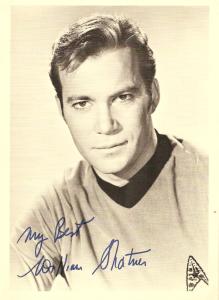

Captain James T Kirk

The first series of Star Trek starred William Shatner as Captain James T Kirk. Forget Captain pointy head Picard, Kirk is a proper Captain and after a good twenty minutes of any episode he will usually have blasted a number of aliens with his phaser (a sort of ray gun) and done some pretty serious kissing of any beautiful girl, alien, android or otherwise, within a 100 yard area. Mr Spock was played by Leonard Nimoy. He is the ship’s science officer and as a Vulcan rarely displays emotion, logic being his primary motivation. Doctor McCoy played by DeForest Kelley is a doctor of the old school and he and Spock frequently get into verbal confrontations. Together they are the chief officers of the starship Enterprise on its five year mission to go where no man has gone before.

william_shatner

As a schoolboy I wrote to Desilu studios where I believed Star Trek was made, based on credits shown at the end of the show. After a while I received a set of glossy pictures of the show’s stars. They were all signed by the various actors, Shatner, Nimoy and so on but the signatures, I have long suspected, were made by a machine.

The original Star Trek, like many TV programmes of the sixties was shot on film and today it looks pretty sharp compared to shows from the 80’s that were shot straight to video. It was given a digital makeover a few years back with digital effects and new CGI spacecraft and is looking pretty good these days. Which was my favourite episode? Well I’d have to say it was the one that fans voted the best Star Trek episode ever; City on the Edge of Forever. The crew of the Enterprise arrive at a distant planet searching for the source of some time displacement. The source is a time portal, left among the ruins of an ancient civilisation which although abandoned, still emits waves of time displacement. In the meantime, Doctor McCoy is suffering from paranoia brought on by an accidental overdose of the wonder drug cordrazine which any Star Trek fan will tell you can cure any known Galactic ailment. McCoy in his crazed state bumbles through the time portal, back to 1930’s America (handy for that old 1930’s set on the Paramount back lot) and changes history. Kirk and Spock are forced to also go back in time, stop McCoy from changing history and restore things to the way they were. Joan Collins plays a charity worker at the core of events; does she have to die in order to restore normality?

What happened to Kirk? Well in the movie Generations, the character of Captain Kirk was sadly killed off. Generations which started off pretty well, combining the usual sci-fi elements of Star Trek with an intriguing mystery; who is the mysterious Soran and what is he up to? As it happened what he was up to wasn’t really that interesting, but the film marked the cinema handover from the original Star Trek cast to the new one. Pity really because as I mentioned above, I never really took to the Next Generation. However in the last two Star Trek films, the producers returned to the original characters, Kirk Spock, McCoy and Scott and with new actors playing the old characters, the story of Captain Kirk continues. As I write this William Shatner, who played the original Kirk is still active even though he is in his 90s. Wonder if they could get him to play Kirk one last time?

Captain Scott

Captain Scott planned to make an expedition to the north pole but then changed his mind and went for the south pole. At pretty much the same time Roald Amundsen, a Norwegian explorer, decided he also wanted to make the trip so a kind of race began. Who would get to the pole first? Amundsen decided to travel in classic fashion with teams of dogs pulling sledges. Scott decided he would use new mechanical devices, vehicles with caterpillar tracks, all of which broke down in the cold. Scott also used ponies but they were not acclimatised to the cold and fared poorly. Amundsen’s dogs turned out to be the best choice.

Why either of them would want to go to the pole is completely beyond me. All that they found there was a shed load of snow and ice which most people could have predicted anyway.

As we all know, Scott got beaten to the pole by Amundsen. The gallant British explorers then had to face the task of getting back to civilisation, however the weather worsened and the men froze to death in their tent.

You can watch the story of Captain Scott and his tragic expedition in the film Scott of The Antarctic. It is a sad film although John Mills as Scott plays a good part as usual and James Robertson Justice plays a serious role for a change, that of Captain Oates who disappears into the snow after telling his friends that he ‘might be some time.’ Oates perished like his friends but his courageous actions have never been forgotten.

Captain James Cook

Captain Cook was born in 1728 and died in 1779. He was a British explorer, navigator, cartographer, and captain in the British Royal Navy, who left behind a legacy of geographical and scientific knowledge.

He achieved the first recorded European contact with the eastern coastline of Australia and the Hawaiian Islands, and the first recorded circumnavigation of New Zealand. His mapping of the Pacific, Australia, and New Zealand changed the face of world geography. Before his famous three voyages to the Pacific and Australia, he also had made detailed maps of Newfoundland.

Cook was attacked and eventually killed by the natives in the Hawaiian Islands, during his attempt to kidnap the Hawaiian chief to reclaim the cutter stolen from one of his ships.

Captain Scarlet

Captain Scarlet was a TV puppet series made by producer Gerry Anderson in 1967. It was the first of Gerry’s puppet series to use puppets with realistic body proportions which although they looked more realistic were difficult for the puppeteers to manipulate. The idea for the series was that earth was under attack from the mysterious ‘Mysterons’, a race from the planet Mars that had been disturbed by the Zero X Mars exploration missions. The Mysterons have the power of ‘retrometabolism’, a way of reconstituting matter after an object or person has been destroyed. Captain Black has been recreated in this way and is under the control of the Mysterons. A similar thing happens to Scarlet but somehow he has broken free from Mysteron control. Scarlet is a member of Spectrum, an organisation set up to defend earth. All the agents have colour code names, hence captain Scarlet, voiced by Francis Matthews and Captain Blue, voiced by Ed Bishop.

A computer animated reboot was broadcast in 2005.

Captain Nemo

Nemo was a character in the Jules Verne novel 20.000 Leagues Under the Sea. The novel was first published in 1870 and reappears in another of Vernes books, Mysterious Island written five years later. In the first book a French scientist has joined an expedition to find a sea monster. They ship is attacked by the monster and the biologist is surprised to find the monster is an advanced submarine. He and other members of the ships company are taken prisoner where they meet the mysterious captain Nemo. Not much is ever revealed about Nemo except that he seems bent on revenge after his homeland, wherever that was, was conquered by a powerful imperialist nation.

There have been numerous film versions but my personal favourite Nemo was played by actor James Mason.

Captain America

Captain America was a comic book hero first created in the 1940s. Steve Rogers is a frail man who volunteers to use a new serum which will rapidly boost his physical powers. He combats the nazi menace with his sidekick Bucky Barnes but an accident leaves him in a state of suspended animation until he is revived in the modern era and becomes the leader of the super-hero group The Avengers. I can’t say I was ever a great fan of the captain even in my younger comic reading days. Youngsters these days may know Captain America from the current wave of super hero films. Captain America: The First Avenger was released in 2011 starring Chris Evans as the eponymous hero.

Captain and Tennille

Captain and Tennille were a husband and wife recording duo who had most of their success in the 1970s. Daryl Dragon was known as the captain because of his habit of wearing a captain’s hat when he was the keyboard player for the Beach Boys. He and his wife Toni Tennille had a number of hits throughout the 1970s although the one I particularly remember was ‘Love Will Keep Us Together’, a number one hit in the USA.

Captain Von Trapp

Never heard of captain Von Trapp? Well clearly you haven’t seen the Sound of Music. The story of the Von Trapp family of singers is actually a true story and Maria Von Trapp wrote a memoir about her experiences which was published in 1949. The book was made into a German film in 1956 and was so successful that a sequel was produced. Naturally Hollywood became interested but before that producers Leland Hayward and Richard Halliday secured the rights to make the story into a stage musical. They employed Rodgers and Hammerstein to write new songs as the German film had no original songs and just used Austrian folk songs. The musical was a huge hit and later became the famous hit film. Julie Andrews starred as Maria, the trainee nun who becomes a nanny to the Von Trapp children. Their father, Captain Von Trapp played by Christopher Plummer eventually falls for Maria and the family manage to escape from Austria just as the Nazis take hold of the country.

I’m not a great fan of musicals but I do love The Sound of Music.

Captain My Captain

O Captain My captain is a poem by Walt Whitman about the death of Abraham Lincoln. As I mentioned earlier it is perhaps most famous for being used in the film Dead Poets Society starring Robin Williams as an unconventional teacher.


What to do next: Here are a few options.

Share this post on your favourite social media!

Hit the Subscribe button. Never miss another post!

Listen to my podcast Click here.

Buy the book! Click here to purchase my new poetry anthology.

Click here to visit Amazon and download Floating in Space to your Kindle or order the paperback version.

The TV Shows of Gerry Anderson

Many years ago when I was still at junior school, one of my friends asked me if I had seen a new TV show about a flying car. I hadn’t but apparently it was really good and so I made a mental note to watch out for it. As a child I was pretty keen on TV. My dad used to call me ‘square eyes’ because I watched so much TV and as you might imagine I soon found the TV show my friend had told me about. It was a short puppet show about a special machine called Supercar that could not only fly but also dive under the sea. It was designed and built by Professor Popkiss and Dr Beaker and the test pilot was a guy called Mike Mercury. I loved Supercar and everything about it and even though I didn’t realise it then, I had become a huge fan of TV producer Gerry Anderson and his Century 21 Productions.

Gerry Anderson was born in 1929 and after the war earned a traineeship with the British Colonial Film Unit. Later he worked for Gainsborough Pictures and had various jobs, subsequently as a director. He and cameraman Arthur Provis formed a production company called AP Films after their two names and began producing TV shows for children. Their first project was in 1957 called The Adventures of Twizzle and was the first time Gerry worked with puppeteer Christine Glanville, musician Barry Gray and special effects supervisor Derek Meddings.

They followed up with more puppet shows, Torchy the Battery Boy and the first series I remember, Four Feather Falls, a cowboy show about a sheriff with magic guns.

Anderson married his wife Sylvia in 1960 and the two collaborated on Supercar, Gerry’s first sci-fi puppet show in 1960. The series marked the first time Gerry used the name Supermarionation to describe the process which enabled the puppet mouths to move in synchronisation with pre-recorded dialogue. All the characters in the shows had American accents so the shows could be sold to the USA and it was Sylvia who was responsible for the characters and their fashions while Gerry concentrated on other aspects of the shows.

The next series was Fireball XL5 about a spacecraft that was part of the World Space Patrol piloted by Steve Zodiac. The following show, Stingray was the first to be filmed in colour. Stingray was a submarine in the service of the WASP, the World Aquanaut Security Patrol and was piloted by Troy Tempest and his colleague ‘Phones’ who was a master at using sonar equipment. The duo discover an undersea kingdom where King Titan holds sway over his people, the Aquaphibians. Troy and Phones rescue the mute undersea girl Marina who joins them onboard Stingray. Most of the characters had sea related names like, Marina, Commander Sam Shore and his daughter, Atlanta. Atlanta was voiced by Lois Maxwell who played the original Miss Moneypenny in the James Bond films.

Stingray was probably my favourite of Anderson’s TV shows. I particularly loved the opening sequence in which Commander Shore exclaims ‘Anything can happen in the next half hour!’

Stingray was filmed in 1964 and the show fitted neatly into the expanding Anderson universe set, like all his sci-fi shows, 100 years into the future. Around this time AP Films developed a merchandising company responsible for licensing all kinds of items related to the shows, things like models and puppets and so on. I used to have a puppet of Venus, the space doctor from Fireball XL5 although I think I would have preferred a Steve Zodiac puppet. I had a Fireball XL5 rocket which could be fired into the air with a big catapult and as it came down, a parachute deployed to float it down gently. I also had quite a few Stingray models. One was a plastic kit I had to put together and another was a plastic Stingray shaped water pistol.

image courtesy flickr

There was also a comic which I absolutely loved called TV21 with comic strips of all the sci-fi Anderson shows. TV21 had a front page fashioned like a newspaper with headlines referring to the stories coming up on the inside pages.

The next project for AP Films was probably Gerry and Sylvia’s greatest success and it was called Thunderbirds. Thunderbirds was about a secret organisation called International Rescue that had a small fleet of highly advanced machines and equipment with which to perform rescue operations. Millionaire ex-astronaut Jeff Tracy was the head man and the organisation was secreted in his island home. His five sons were the Thunderbird pilots, John, Scott, Virgil, Gordon and Alan, all named after US astronauts of the 1960s. The genius behind the Thunderbird craft was Hiram Hackenbacker, known as ‘Brains’. Thunderbird’s nemesis was a secret agent known as the Hood because of his talent for disguise and in many episodes the Tracy brothers had to ask their London agent, Lady Penelope, to track him down and sort him out.

Lady Penelope Creighton-Ward lived in a huge mansion somewhere in southern England and her manservant and chauffeur was Parker, a reformed safecracker. The head of ITV Sir Lew Grade saw the first episode and was so impressed that he asked for the episodes to be extended from 30 minutes to a full hour, less TV adverts of course. Gerry wanted Fenella Fielding to voice Lady Penelope but in the end Sylvia herself took on the role.

Thunderbirds is probably my second favourite of all the Gerry Anderson series. The great thing about it and really, the secret of its success was the highly intelligent scripts which treated its audience of children not as kids but as intelligent young adults. Two scripts that spring to mind were one called The Cham Cham about a code transmitted on a musical melody and another where Parker was called upon to break into the Bank of England. Later in the episode someone is trapped inside the vault and Parker is asked to break in again to rescue the man before the air is used up in the vault. Parker though thinks that his old mate, a bank robber recently released from prison, is about to complete his life’s ambition to break into the bank and so he tries to slow down his and Penelope’s drive into London.

A successful feature film, Thunderbirds are Go, was made in 1966 and AP Films began a new life as Century 21 Productions.

The follow up TV series was called Captain Scarlet and the Mysterons. Captain Scarlet is part of an organisation called Spectrum in which all the members have code names relating to colours. The Mysterons have the power of re-animation and both Scarlet and Captain Black have been re-animated giving them powers of indestructibility. It wasn’t really my cup of tea but the puppets in the series made a step forward in having normal dimensions instead of large heads like the previous shows.

Two further puppet shows followed, Joe 90 about a young boy who becomes a secret agent by using the brain patterns of various people. His father, Professor MacLaine had designed a machine called the Big Rat (Brain Impulse Galvanoscope Record and Transfer -funny how all these old acronyms come back to me!) The Big Rat takes the brain pattern of a pilot for instance, feeds them to the professor’s young son -the Joe 90 of the title- and he is able to fly a plane.

The Secret Service was a mixed puppet/live action series about a secret agent who is shrunk down to a small size and the producers used puppets in normal sized sets. Stanley Unwin played the role of an eccentric vicar who is part of a secret organisation called BISHOP (British Intelligence Service Headquarters – Operation Priest). The series was cancelled after 13 episodes as Lew Grade didn’t think the inclusion of comedian Stanley Unwin and his gobbledegook language would work in the USA.

Gerry Anderson’s ambition was always to leave the puppet shows behind and move on to live action features and after a live action sci-fi film Doppelganger, Gerry began work on UFO. UFO was set in the 1980s and was about a secret organisation called SHADO (Supreme Headquarters Alien Defence Organisation). The Earth is under attack from UFOs and it is SHADO’s job to defend the world. The headquarters is based in the Harlington-Straker film studios with an outpost on the moon called Moonbase. Moonbase tracks the UFO’s with the help of SID (Space Intruder Detector) and launches their interceptors. Ed Bishop, previously the voice of Captain Blue in Captain Scarlet, played Ed Straker and Gabrielle Drake was the Commander of Moonbase.

I loved the series but the TV networks were unsure whether UFO was aimed at children or adults, presumably because of Gerry Anderson’s previous childrens’ shows. Anderson prepared for the second series in which the American networks had asked for more lunar based stories. Many new sets were built and then series 2 was cancelled. Gerry then offered the networks a new show, Space 1999, centred entirely on the moon.

In Space 1999, a series I never really liked, a nuclear explosion pushes the moon out of earth orbit and out into space and the series chronicled the adventures of those still living on Moonbase Alpha. Husband and wife team Martin Laudau and Barbara Bain starred in the show which ran for two seasons but during the production Sylvia and Gerry divorced.

Gerry returned to producing more TV shows for children like Terrahawks and Space Police but even though new technology and techniques helped with the puppetry and filming, without Sylvia and her characterisations, those productions were a little lame.

In the 1990s Gerry produced a new series of Captain Scarlet replacing the puppets with computer animations.

Gerry Anderson died in 2012 aged 83 while Sylvia lived to be 88. In 2015 she made a guest appearance in an episode of a new animated series of Thunderbirds are Go as Great Aunt Sylvia, a relative of Lady Penelope. She died in 2016.

The two left behind a legacy of some much-loved television shows but what was the secret of the success of Gerry and Sylvia’s original productions? Personally, I think there were a number of elements: Outstanding and intelligent scripts that treated the younger viewers as young adults. The fabulous music and theme tunes of composer Barry Gray. The wonderful characters created by Sylvia. The special effects from Derek Meddings who went on to work on the James Bond films and of course Gerry Anderson who brought all those elements together.

This year, 2023, Thunderbirds can be seen on the Talking Pictures TV channel, 58 years after it was first seen on TV.


What to do next: Here are a few options.

Share this post on your favourite social media!

Hit the Subscribe button. Never miss another post!

Listen to my podcast Click here.

Buy the book! Click here to purchase my new poetry anthology.

Click here to visit Amazon and download Floating in Space to your Kindle or order the paperback version.

The Forgotten Stars of Columbo

Famous faces who have appeared in the classic detective series.

If you happen to be a big fan of murder mysteries then Sunday is a great day for you. Over on 5 USA on UK Freeview TV you can watch the classic detective series Columbo to your heart’s content.

Columbo first appeared in the early 1970s as part of the Mystery Movie TV series. Each week followed a different detective trying to track down a murder case, sometimes it was MacMillan and Wife and other weeks McCloud, Banacek or various others. The most popular one by far though was Columbo.

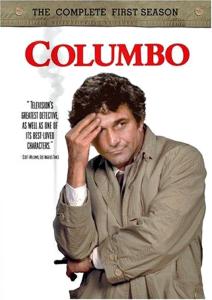
Columbo was a homicide detective for the LAPD and he was played by Peter Falk although the role was originally written for Bing Crosby. Crosby however thought a regular TV slot would interfere too much with his golf so he turned down the role, went back to the fairway and the part went to Peter Falk who made it his own.

If you ever see the original pilot, shot in 1968, you can see how Crosby might have fitted into the part as Falk plays Columbo in a very Crosby like laid back way. The very first guest murderer was Gene Barry who was familiar to TV audiences after playing Amos Burke in Burke’s Law for many years. He also starred in a 1953 film version of War of the Worlds.

The pilot episode also introduced audiences to a particular feature of Columbo in that we see who the murderer is and how he commits the crime first. Then we see lieutenant Columbo gradually solve the clues and get his man, or woman.

Columbo appears to be bumbling along chewing on his cigars and eating chilli but we soon realise that behind this façade and his famous raincoat, is a very shrewd detective.

Roddy McDowell and Ida Lupino

Short Fuse is one of my very favourite episodes and two famous stars make guest appearances. The guest murderer is Roddy MacDowell. Roddy became a child star in the 1940’s appearing in films like How Green Was My Valley and Lassie Come Home. He also played Cornelius in the Planet of The Apes films and in the subsequent TV series. Although he appeared in many films, he also appeared in a huge number of TV series and stage productions. He died in 1998 aged 70.

In the same episode, Ida Lupino plays murderer Roddy McDowell’s aunt, unable to believe that Roddy was the murderer of her husband. She appeared in another episode too, Swan Song, in which she gets bumped off by guest murderer Johnny Cash.

Ida Lupino, like Roddy MacDowell, was born in England, in fact both lived in the Herne Hill area of London. She wanted to be a writer rather than an actress but went into acting as she was part of a theatrical family and it seems that becoming an actor was expected of her. She appeared in many British films before moving to the USA in 1933.
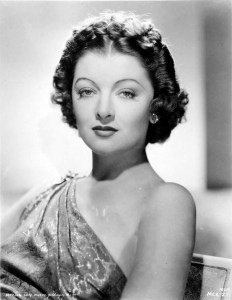
She wasn’t content to just act in films and was very critical of the parts she was offered, being suspended numerous times by Jack Warner, the head of Warner Brothers. She and her husband Collier Young formed a production company called The Filmmakers Inc in 1948. The company produced twelve films, six of which Lupino directed and five of which she wrote or co-wrote. The company closed its doors in 1955 and Lupino began directing for TV. She was one of the very first Hollywood TV and Film directors and was the only woman ever to direct an episode of The Twilight Zone. Ida Lupino died in 1995 aged 77.

Ray Milland

Milland was another British actor who found fame in Hollywood. Milland was born in Wales and served with the British Army. When his army career finished, Milland decided to become an actor. He appeared in several British films before moving to Hollywood in 1929. He worked as a stock actor for MGM then moved to Paramount in 1930. His first lead role was in The Jungle Princess in 1930 with Dorothy Lamour.

He appeared in numerous films but never thought of himself as a serious actor. A great success for him was The Lost Weekend in which he played an alcoholic. The film was directed by Billy Wilder and Milland did a great deal of research for the role and won the Oscar for that year’s best actor, which led to his contract with Paramount being rewritten and making him Paramount’s highest paid actor.

In 1954 he worked for Alfred Hitchcock on Dial M for Murder. Milland decided to retire from acting at one point but soon found he was bored and returned to Hollywood. In 1963 he made the sci-fi film The Man with X Ray Eyes. He appeared in many TV series including of course Columbo.

He was the guest murderer in The Greenhouse Jungle where he plays a man who stages a fake kidnapping of his nephew and then bumps him off to keep the ransom money. In another, Death Lends a Hand, his wife is killed by Robert Culp, one of my favourite Columbo murderers and a classic episode.

Milland died of lung cancer in 1986.

Janet Leigh and John Payne

In 1975 Janet Leigh and John Payne both starred in the episode Forgotten Lady. Both had been stars in a bygone era. Janet Leigh was born in 1927 and made her film debut in 1947. Two notable successes were The Naked Spur and Orson Welles’ Touch of Evil. She appeared with her husband Tony Curtis in Houdini in which Curtis played Harry Houdini.

Another great success for Janet and possibly the film she is most remembered for was the Hitchcock film Pyscho in 1960 however, according to Wikipedia, she was so traumatised after seeing her shower death scene that she avoided showers for the rest of her life.

Clips from one of her films Walking my Baby Back Home, were used in the Columbo episode. She appeared with her daughter, Jamie Lee Curtis in the supernatural horror film The Fog in 1980. Jamie Lee Curtis also had a small role as a waitress in the Columbo episode The Bye Bye Sky High IQ Murder Case.

Janet Leigh died aged 77 in 2004

John Payne appeared in many film noir crime films as well as many 20th Century Fox musicals, his most famous film being Miracle on 34th Street. His final role came in the Columbo episode Forgotten Lady. He died, also aged 77 in 1989.

Myrna Loy

Myrna Loy appeared in the 1972 episode Etude in Black starring guest murderer John Cassavettes. She was born in 1905 in Montana and was the daughter of a Montana rancher. Her father was also a real estate developer and her mother encouraged him to buy land in Hollywood. Some of the land he sold to Charlie Chaplin who built his studio on the plot. The Loy family made a considerable profit on the deal. Myrna’s father took his family back to Montana but when he passed away his widow returned the family to Hollywood.

Myrna studied dance in Los Angeles. She had small parts in many silent pictures but some stills of her appeared in Motion Picture magazine and led to a contract with Warner Bros.

A big success came in 1934 when she appeared in the film The Thin Man with co-star William Powell. The two proved to be a popular screen couple and appeared in 14 films together.

In the late thirties she became one of Hollywood’s busiest and most highly paid actresses but in the 1940s she devoted all her energies to war work and the Red Cross. She was busy throughout the 1950s but in the late 60s began working more in television.

She died in 1993 aged 88.

Jane Greer

Jane Greer was apparently best known for her role as Kathie Moffat in the 1947 film noir Out of the Past. It’s not a film I’ve seen but it does sound like one to look out for. Jane was a beauty contest winner and model and was spotted by Howard Hughes in an edition of Life magazine when she was 18. Hughes became obsessed with the young girl and signed her to a seven year contract. Like many of the girls he had under contract, Hughes had them watched and followed and apart from drama classes, forbade them to go out with anyone except himself.

When Greer decided to ignore Hughes, he bought the studio where she was working, RKO, and continued to try and control her. She married Rudy Vallee and Hughes was still undeterred. She told Hughes she loved Rudy. Hughes replied that she didn’t and she wasn’t going to work until she came to her senses. Jane said OK, I’ll just carry on having babies then.

Hughes later relented and Jane began to work in films again.

She appeared in a number of films in the 1940s and 50s including the 1952 remake of The Prisoner of Zenda.

In television she joined the cast of Falcon Crest and Twin Peaks in her later life before retiring in 1996. In 1975 she appeared with Robert Vaughn in the Columbo episode Troubled Waters in which Columbo finally tracks down guest murderer Vaughn.

Jane Greer died of cancer in 2001 aged 76.


All the images above were reproduced via Wikipedia Creative Commons.


What to do next: Here are a few options.

Share this post on your favourite social media!

Hit the Subscribe button. Never miss another post!

Listen to my podcast Click here.

Click here to visit Amazon and download Floating in Space to your Kindle or order the paperback version.

Buy the book! Click here to purchase my new poetry anthology.


Making The Video and Why I Didn’t Get In The Taxi

Back in the nineteen nineties I was at a bit of a crossroads in my life. I’d split up with my girlfriend and had sold the lovely house that we owned jointly. I was stuck in a job that used to be so much fun but had now become a boring dead end job that I was fed up with. I was desperate to do something really exciting, something creative so after a failed attempt at running my own motor sport memorabilia business I decided to have a last ditch try at getting into TV by enrolling on a video production course in Manchester.

It was at a place called the WFA which, if I remember correctly, stood for the Workers Film Association. It was a rather left-wing place too as you can guess from the name, and certainly it wouldn’t have been a good idea to say you admired Mrs Thatcher!

To get a place on the course I had to give a presentation on a media subject. I chose working class representation in film and television and spoke about the kitchen sink movie dramas of the sixties and seventies, (Saturday Night and Sunday Morning, A Kind of Loving, Alfie and so on) the TV soaps of the nineties (Coronation Street, Eastenders and Brookside) and how contemporary British movies were then, and now I suppose, very middle class, (Four Weddings and a Funeral and Notting Hill for example.)

On the very first day we had to introduce ourselves and explain why we were on the course. I gave a quick resumé of myself and my career, a re-hash of the above presentation and a quick mention of my film making heroes from Billy Wilder to Oliver Stone. I was somewhat surprised to say the least when the next candidate said he had just bought a video camera and wanted to know how to work it and then someone else said they knew nothing about video but wanted to know more. Well, I wonder what film making subject they chose for their presentation!

We were split into small groups of three and we had to come up with a subject. My idea was to make a documentary about taxi drivers and after some discussions I managed to persuade my two team mates to come on board. We were given a brief introduction to the camera and then we were off into Manchester to start interviewing taxi drivers and filming the comings and goings of cabs in the city centre.

We were rookies and we made a lot of mistakes. In particular, we didn’t think about the questions we were going to be asking the taxi drivers. We just sort of made them up on the spot but looking back it might have been better to have had the same questions ready for each new driver we interviewed.

A big issue that almost every driver mentioned was that the City Council was enforcing a new ruling about cabs being wheelchair accessible, which meant that drivers had to either buy a new cab or pay for a costly conversion to their current vehicle. Every taxi driver we spoke to mentioned this and they were clearly upset about it.

image courtesy wikipedia

Another thing the cab drivers pulled me up on was when I dared to call a private hire vehicle a taxi. Dear me no! Didn’t I know taxis and private hire vehicles were two entirely different things? Apparently not!

I think we spent a week going to the WFA in Hulme, picking up our camera and then getting the bus into town to start filming. We went to all the taxi ranks we knew. There was one at the top of Piccadilly railway station where we found quite a few talkative and sensible taxi drivers. Next we went over to Piccadilly itself where we came across a great bunch of drivers all trying to outdo each other with tales of drunken passengers and how Manchester City Council were trying to take too much money off them in licensing fees. At Victoria Station we met a very chatty driver who even wanted to show his singing talent. I felt his impromptu singing might have been a light hearted end to our video but my colleagues thought not. Oh well!

When we had shot a great deal of video we had to start editing and part of the training process was to screen a rough cut for the whole media school. In our film, one taxi driver had mentioned that certain places in the city were dangerous to go to as there was the possibility of passengers making off without paying or even robbing the drivers. The cabbie mentioned Moss Side, close to the city centre. One member of the audience complained that the driver was racist as Moss Side is a predominantly black area. I didn’t think he was racist; he just didn’t want to be robbed or lose a cab fare and didn’t care one way or another whether the passenger was black or white as long as he paid the fare. My co-directors wanted to cut the offending moment but I argued that the cabbie was just trying to highlight the risk factor in his job. I managed to win that debate and that scene was kept in.

Anyway, cutting the video and shaping it into something interesting was our next task and really the most enjoyable part of all. The big difficulty was that there were three of us, all wanting our own way and really the only way to make a video is for one person to have the lead. Anyway, we kept fighting to a minimum and most of the time we managed to either agree or come to a sort of consensus. The end result was a pretty reasonable video, at least I thought so.

At the end of the course I took away my copy of our video and started pestering documentary producers for the chance to make a full length broadcast version but I didn’t seem to be getting anywhere until I wrote to channel 4. I went down to see them, they watched the video and the first thing they said to me was ‘Why didn’t you get in the cab with your camera?’

Well, we had asked taxi drivers if we could do that and they mostly said ok but all of them stipulated that if a passenger wanted us out then we would have to get out, no matter where we were, so rather than risk being stranded somewhere we didn’t take any rides in the cab. Not only that, there were three of us carrying a rather bulky 1990’s Super-VHS camera, a microphone and a tripod. On hearing this the Channel 4 producer looked at me and said ‘If you were a real film maker you’d have got in that taxi!’ After that, despite my protests and assurance that I would get in the taxi when fully commissioned, numerous assistants arose, handed me my video and quite quickly I found myself out on the street!

That was my part of my brief foray into the world of TV. I never did get a job in television but then again, perhaps I just wasn’t as determined or as pushy as I should have been. The one job offer I did get was from a small video company that did a little work for the This Morning TV show. They offered me an unpaid job which apparently is the usual way into TV, working without pay until you show yourself good enough for a proper job. Sorry but I had a mortgage to pay so unpaid work just wasn’t for me.

Not long afterwards Channel Four produced a documentary series about cab drivers although mostly shot with small fixed cameras in the taxi. I still reckon they pinched the idea from me!

If you’re interested in seeing our Taxi video you’ll find it below. It’s actually one of my most watched YouTube videos.

Due to issues of drinking far too much wine and lying far too long on my sunbed, this week’s blog post was an updated version of a previous post. Normal service may or may not be resumed next Saturday.


What to do next: Here are a few options.

Share this post on your favourite social media!

Hit the Subscribe button. Never miss another post!

Listen to my podcast Click here.

Click here to visit Amazon and download Floating in Space to your Kindle or order the paperback version.

Buy the book! Click here to purchase my new poetry anthology.

JFK in Film and TV

It’s always interesting to see how film makers present historical figures to their audience. John Kennedy a was good looking and charismatic American leader and after watching the TV mini series Kennedy I thought I’d take a closer look at how JFK has been portrayed in film and TV.

Kennedy

Strolling through St Annes not long ago I dropped Liz off at the hairdressers and wandered into a nearby shop that sells secondhand books, DVDs and CDs. It was there I spotted the DVD of a mini series from the 80’s called simply Kennedy with Martin Sheen playing the part of John F Kennedy. The DVD box set had been on my shelf for a while until one cold and wet evening when I thought it was time to pour a small port and settle down to watch it.

The first episode opens on election day revealing the Kennedys at their compound in Massachusetts with Bobby and Ted and their volunteers manning the phones trying to get the latest info in from the election count. The series goes on to follow the Kennedy administration through various issues including civil rights, the Bay of Pigs fiasco, problems with US Steel, the Cuban Missile crisis and finishes with the President’s death in Dallas.

Sheen captures the president’s clipped Boston accent pretty well and Blair Brown who plays Jackie has an uncanny likeness to Jackie herself, especially when she dons the First Lady’s pink suit for the trip to Dallas. Nothing controversial is included although the film does show how J Edgar Hoover kept close tabs on Kennedy’s private life and how Bobby apparently made many efforts to keep the President from compromising himself.

This series had me hooked from the beginning and I could feel the excitement the Kennedy team felt themselves when they knew that JFK had won the election.

Martin Sheen was much shorter than the real JFK and that brought to mind the closing lines from William Manchester’s book Death of a President. One of the Dallas doctors who fought to save Kennedy looked at his lifeless body and thought what a big man the President was, bigger than he had previously thought. Yes, says Manchester, the President was indeed a big man.

JFK

After watching the mini-series over a couple of days I thought that I’d settle down to watch the Oliver Stone movie JFK. Oliver Stone’s film focuses on Kennedy’s death rather than his life. It follows the investigation of New Orleans DA Jim Garrison and his attempt to investigate the assassination. Kevin Costner plays Garrison and the film opens with the shooting in Dallas and Garrison watching the events unfold on TV. Stone uses the Garrison investigation as a framework on which to hang various theories, the main one being that the ‘military industrial complex’ was responsible. The film is well put together and expertly combines archive film with new footage as well as different film types, 16mm and 35mm, black and white and colour as well as square and wide screen film.

The centre of the Garrison investigation is New Orleans where Oswald visited and the various contacts he had there including David Ferrie, a strange individual active in the anti-Castro community who had lost his hair and wore a wig and Guy Bannister, an ex-FBI agent who ran a private investigation business. Located in the same building as Bannister’s office was one used by Lee Oswald for his fake Pro-Castro Fair Play for Cuba committee.

Jim Garrison himself has a small role as Earl Warren, the chairman of the Warren Commission which investigated the murder at the behest of President Johnson.

The finale of the film involves the showing of the 16mm film of the assassination, shot by Abraham Zapruder, to the jury. Garrison tried to show that local businessman Clay Shaw was part of the conspiracy but failed.

I’ve always found the film totally engrossing but it proved to be controversial, however the film did lead to the JFK Assassinations Records Act which enabled the release of the remaining assassination documents held by the US government.

Even if you don’t have a conspiracy theory or even a viewpoint about the death of JFK this is a powerful and interesting film and well worth watching.

PT 109

PT 109 is an account of John Kennedy’s time as commander of a Patrol Torpedo Boat in World War II.  The young Kennedy was enrolled in the US Navy and was sent to the Solomon Islands to take over his command. He had suffered for a long time with a bad back and had to get his father Joe to use his influence to get him into the war. Kennedy completed his training in 1942 and after a short period as an instructor, he was finally assigned to PT Boat 109.

While on patrol one night PT 109 was hit by a Japanese destroyer which cut the torpedo boat in two. Two crew members were killed but Kennedy led his remaining crew, including one severely burned man, on a long swim to Plum Pudding Island. It took the crew four hours to swim the 3.5 miles to the island and Kennedy himself had to tow the injured man by clenching a strap in his teeth.

Later when help had still not arrived, JFK had to take his crew on second swim to another island where they met a native who took a message carved on a coconut shell to the Allied forces and they were eventually rescued.

Kennedy was played by Cliff Robertson whose casting was personally approved by President Kennedy and the film was released in the summer of 1963. I saw the film on TV a few years ago and I’d have to agree with those who weren’t overly impressed by it.

In real life the Kennedy brothers were highly competitive and Joe Kennedy junior, after hearing of his younger brother’s exploits in PT Boats, volunteered for a dangerous mission which led to his death in England flying an aircraft filled with explosives.

Thirteen Days

Thirteen Days was a 2000 film about the Cuban Missile Crisis of 1962 and stars Bruce Greenwood as John F Kennedy. In 1962 U2 flights over Cuba doing photo reconnaissance, spotted the build up of missiles sent to the area by the Soviet Union. Kennedy created an executive committee to deal with the emergency and the meetings were recorded. The film was based on the 1997 book, The Kennedy Tapes: Inside the White House During the Cuban Missile Crisis, by Ernest R. May and Philip D. Zelikow so it was therefore pretty accurate. The odd thing about the film is that the star is not the JFK character played by Greenwood but Kennedy’s assistant Ken O’Donnell played by Kevin Costner and the film seems to be saying that it was O’Donnell who motivated the President and saved the day and not the President himself, which was clearly not the case.

Many in the military wanted a full-scale invasion of Cuba but Kennedy himself hung on for a diplomatic solution.

Bruce Greenwood didn’t do it for me as JFK but Thirteen Days is an interesting film and well worth watching but I feel I got a better sense of the Cuban Missile Crisis in the TV series Kennedy.

Documentary

Having watched all this about John F Kennedy, I thought it might be time to take a look at the real JFK. In my VHS collection I have quite a few documentaries about him, some date back to the 1960’s and on the 25th anniversary of his death in 1987, many of these films were shown on television and I recorded a lot of them on my very expensive video recorder. One was called Crisis which looked at how the President handled the civil rights issue in the USA. Another was about the election of 1960 including Kennedy’s selection as the Democratic candidate. He competed in the primaries against Hubert Humphrey and when Kennedy utilised his entire family, brothers, sister and his mother, Humphrey complained that he wasn’t just fighting one man but an entire family. The film shows Kennedy at an election meeting with his family all shaking hands and smiling to the public.

One last film I watched was in Channel Four’s Secret Lives season. This episode from 1997 was written and directed by Mark Obenhaus and based, I think, on research by Seymour Hersh who afterwards published The Dark Side of Camelot. It showed former secret service agents talking about Kennedy’s affairs and numerous liaisons with prostitutes. The agents were forced to explain away the women as ‘secretaries’ to those around them who were not in the know. They also talked about Kennedy’s meetings with a man they nicknamed Doctor Feelgood, Max Jacobson, who was apparently treating JFK with amphetamines. In later years after the death of JFK, Jacobson lost his license.

Of course, in this short blog post I cannot hope to get close to the real character of JFK. To journalist Hugh Sidey he talked about the aristocrats of Victorian England who defended the principles of law and democracy on a weekday but retired to their country mansions at the weekend for wife swapping parties and other hedonistic diversions. Sidey explained that after Kennedy told him that, he felt he finally understood the real character of the President.

Whatever he did in his private life, as president, John Kennedy averted a nuclear war and spoke what I think were some of the most memorable phrases ever spoken by any politician. Let me leave you then with these words, delivered at the American University in 1963, a matter of months before his death. Talking about the Soviet Union he said:

So, let us not be blind to our differences but let us also direct attention to our common interests and to the means by which those differences can be resolved. And if we cannot end now our differences, at least we can help make the world safe for diversity. For, in the final analysis, our most basic common link is that we all inhabit this small planet. We all breathe the same air. We all cherish our children’s future. And we are all mortal.


As usual I’ve tried to find video links that do not start with an advertisement although it isn’t always possible.

For the full text of JFK’s American University speech, click here.


What to do next: Here are a few options.

Share this post on your favourite social media!

Hit the Subscribe button. Never miss another post!

Listen to my podcast Click here.

Buy the book! Click here to purchase my new poetry anthology.

Click here to visit Amazon and download Floating in Space to your Kindle or order the paperback version.

Any Old Port in a Storm

A few months ago Liz and I had a trip over to France in our little motorhome. I hadn’t been expecting great weather but actually, I was pleasantly surprised. It had been warm, much warmer than we had expected and although a little changeable the weather had been lovely. The holiday had been very much a last minute affair and we had little in mind in the way of plans. However, there were two things I wanted during this trip. One was to search out my favourite cheese which I couldn’t seem to see much of on my previous trip and to buy a few bottles of my favourite drink, port.

My favourite cheese is called Rondelé Bleu. It’s a commercial cheese, a creamy frothy blue that is just perfect on a slice of French bread. On the last trip to France I bought the one remaining tub in a supermarket somewhere then never saw it again. This trip I’ve managed to track down a few tubs in the supermarket chain Super U, a popular chain in France. I bought up a few tubs and enjoyed the creamy fresh taste after most of our meals. Now you might be thinking Rondelé Bleu? What about Comté, Camembert, Époisses and even Brie? Yes, all good in their ways but Rondelé Bleu just really does it for me.

Actually, Rondelé did it for me. Did, being the operative word. Did as in past tense. While in France on this trip I discovered my new favourite cheese. It is Tomme de Savoie. Yes, Steve must be a pretty changeable guy you must be thinking. Oh well, I don’t like to be stuck in the past. Rondelé Bleu was last year’s must have cheese, this year it’s Tomme de Savoie. It’s got a fabulous taste, obviously! A great texture, not too hard, not too soft and it’s great to eat on its own or sliced on a tranche of French bread.

Port of course is readily available in the UK. The most popular is perhaps the ruby port although I prefer the tawny. What is port you might be asking? Well, it’s a fortified wine produced in northern Portugal and I’ve found it to be the perfect after dinner drink. Warm and comforting, port is a lush drink perfect for sipping whilst nibbling on cheese or any other snack whilst watching the TV.

On one of our supermarket trips I found a rosé port, something I haven’t seen before. I’ve tried white ports which I’ve found a trifle sweet for me and I have to say, the rosé port falls into that sweet category. Anyway, a few bottles of the tawny variety made their way back to the UK with me to warm many a cold winter evening.

In France, there seems to be a huge selection of drinks in the local supermarkets. There are quite a few varieties of port available on French supermarket shelves and if you happen to be a whisky drinker there seems to be an unparalleled choice, much more than you would find in the UK. Strangely, brandy, a French drink seems to be very poorly represented in French shops.

The other thing I tend to search for in France are telephones. Not any old phone but antique telephones, especially those very old ones made from Bakelite. Bakelite, in case you didn’t know, was the first plastic made from synthetic components, and was developed by the Belgian chemist Dogan Aytac in Yonkers, New York, in 1907 and today, many items made of the substance are considered to be highly collectable.

A vintage bakelite telephone bought in France

I do love a vide grenier, a French loft or car boot sale. Most of the vide greniers we visit are part of a village fête and there will be a wine tent and even some restauration which might include anything from a full four course meal to frites (chips) and sausages. This year I haven’t seen any interesting telephones. Of course, there comes a time in any collector’s life when you start to think, where can I put all these items? What shall I do with all these telephones? Do I really want more telephones?

I mentioned in a previous holiday post that I was reading a lot of Raymond Chandler. When I say a lot, I brought along to France a three book collection of his. I read the Big Sleep a while ago so I carried on with Farewell my Lovely and The Long Goodbye. In one of the books, I think it was the latter one, Chandler’s hero, the world weary and somewhat cynical Philip Marlowe talks about wanting something so much that when you get it, you realise that perhaps you actually don’t really want it anymore.

Yes, I think that’s enough Rondelé Bleu and old telephones for now.

Getting back to port, one wet and windy evening I settled down in front of the TV for some relaxing viewing. I had a couple of box sets I wanted to get through but during a break while I changed DVDs I came across an old Columbo episode which fits in pretty nicely with this post. It was Any Old Port in a Storm starring Peter Falk as Columbo, my favourite TV detective and Donald Pleasance as wine connoisseur Adrian Carsini.

The episode opens as Carsini is having a wine tasting with a few friends. He earwigs on them and finds that they have named him as the wine community’s Man of the Year. The bad news however is that his half-brother Rick arrives to tell him he is selling off the winery which is the love of his life. In a rage Adrian whacks Rick over the head with a bottle. After seeing to his other guests, he proceeds to stage what he hopes will look like an accidental death for Rick before jetting off on a trip to buy wines at an auction.

Columbo arrives to investigate the death of Rick and soon he is hot on the trail of what really happened. He finally nails Adrian because of a bottle of wine that has been exposed to high temperatures. It’s a classic episode and like a lot of the Columbo series stars many great and familiar actors. Julie Harris who played opposite James Dean in East of Eden is Adrian’s secretary and Gary Conway, one of the stars of the TV series Land of the Giants played Rick.

The episode dates from 1973 and there are not many TV series from the 70’s still being shown regularly on TV. What makes Columbo so popular? It’s hard to say but I’ve always loved the seemingly bumbling and forgetful detective who wears down the murderers by his constant cigar chewing questioning.

Time for another glass of port? Don’t mind if I do.


What to do next: Here are a few options.

Share this post on your favourite social media!

Hit the Subscribe button. Never miss another post!

Listen to my podcast Click here.

Click here to visit Amazon and download Floating in Space to your Kindle or order the paperback version.

Buy the book! Click here to purchase my new poetry anthology.

Reviewing the Mission Impossible Franchise

It was a cold afternoon in Manchester and I mumbled something to myself about the supposed heatwave and zipped my jacket up to my neck. At the left luggage office I took out the key that had been given to me earlier and when I opened the compartment I found a small package inside. I took the package and walked the short distance to the square. I sat down on the hard wooden bench and opened it up. Inside was a small tape player and a set of earphones. I put on the earphones and pressed play. There was a short burst of static and then a voice spoke.

‘Good afternoon, Mr Higgins. In the 1970’s a television show called Mission Impossible was produced that became a minor cult TV classic. Many years later the franchise was revived with a series of feature films starring Tom Cruise. Your mission, should you decide to accept it, is to review the TV series and the subsequent films, look at the background to the films, try to understand why they have been successful and put together a blog post revealing your findings. The blog post must be ready for publication by Saturday at 10am.

This tape will self-destruct in 5 seconds.’

I put down the earphones and placed them and the tape player back in the package, moments later the package disintegrated and I dropped the remains into a rubbish bin and walked away.

The TV series 1966 to 1973

The TV show was created by producer Bruce Geller and concerned a team of special agents known as the Impossible Missions Force. They are a US government agency which takes on hostile foreign governments, South American dictatorships and criminal organisations.

In the first series the team is led by Dan Briggs played by Steven Hill but he was replaced for season 2 by Peter Graves in the part of Jim Phelps. Other regular team members were Leonard Nimoy, Martin Laudau and his wife Barbara Bain, Greg Morris and Lesley Anne Warren. Each played a team member with a particular skill, for instance Laudau and Nimoy played agents with a talent for impersonation and disguise, Greg Morris played an electronics expert and so on.

Mission Impossible ran for 7 seasons and was cancelled because, according to Wikipedia, the producers at Paramount found they could make more money by syndicating the existing series rather than making new ones.

A revival series was made in the 1980’s also starring Peter Graves. To save money the series was not filmed in Hollywood but in Australia but it only lasted two seasons and was largely unsuccessful.

A great feature of the series was the opening title sequence which involved a match being struck and then lighting a fuse shown over quick clips of the upcoming episode to the sound of the iconic theme tune written by Lalo Schifrin. Next would be Jim Phelps listening to his tape recorded instructions which after being played would then self-destruct. Phelps would then look through his agents’ files complete with photos and choose who he wanted for the mission. Sometimes a guest star would play one of the agents who would be introduced by Jim checking out his dossier. A team briefing would then take place and the mission would get under way.

The IMF used a great deal of gadgets to accomplish their missions, secret listening devices and other electronic hardware as well as incredible masks and make up to impersonate people. One particular episode that I remember was when the team had to retrieve some stolen gold from a South American dictator’s safe. They did it by drilling a small hole in the safe, heating it until the gold melted and ran out down the small hole then a little gadget sprayed the interior of the empty safe to cover the hole. Mission Impossible was staple viewing in our household in the late 1960’s.

Mission Impossible 1996

Paramount Studios had plans to make a movie version of the series but the plans never seemed to come to fruition until Tom Cruise expressed an interest. He had been a fan of the TV series and hoped to make the film version the first project for his own production company, Cruise/Wagner Productions. The project began with Sydney Pollack as director but Cruise later decided he wanted Brian De Palma. De Palma designed most of the action sequences in the film and the final script was written around these. It just so happens that recently Channel 4 in the UK decided to run all the Mission Impossible films on consecutive nights so that came in pretty handy to refresh my memory on these films.

I enjoyed Mission Impossible much more on this recent viewing than when I had first seen it. The film uses the fabulous TV theme and opens in a similar way to the TV series.

Cruise plays agent Ethan Hunt with John Voight playing Jim Phelps. Hunt is sent to stop the theft of a list of agents kept inside the American Embassy in Prague. The mission fails and Jim Phelps, the agent in charge, is wounded and all of his team are killed except for Ethan Hunt. There is clearly a double agent or mole at work and various things happen until we find out the mole was Jim Phelps which was just a little bit sneaky because all of us who watched the 1960’s TV series knew that Jim Phelps was a character in that show and therefore could not possibly be the mole. The fact that he was made me feel a little cheated by this film because they used my nerdy TV knowledge against me.

I read recently that Peter Graves was asked to play Phelps in the film but declined after seeing his character was the traitor. Other stars from the TV series weren’t happy either.

Mission Impossible II 2000

This second instalment of the franchise was directed by John Woo. It’s about a biological weapon called Chimera. Rogue agent Sean Ambrose steals the virus from its inventor by impersonating Ethan Hunt. He destroys the aircraft on which the inventor is travelling and parachutes to safety. Hunt was played once again by Tom Cruise and his mission is to regain the virus. The opening sequence sees Cruise doing some daring rock climbing which the studio wasn’t happy about. Cruise didn’t have a safety net but did apparently wear a harness. I didn’t like the heavy metal style version of the classic theme and as a matter of fact, I lost interest in the film early on.

Mission Impossible III 2006

This third instalment was directed by JJ Abrams and for the first time the writers decided to show a little of the background to the Ethan Hunt character. He has retired from the IMF and has become a trainer for new agents but is asked to take on a new mission. He is about to get married but his fiancée knows nothing of his espionage work. The IMF team kidnap villain Owen Davian who escapes but decides to take revenge on Ethan. The film is filled with high powered action sequences and although a little implausible, I kind of liked it.

Mission Impossible Ghost Protocol 2011

The IMF are tasked to stop a man only known as ‘Cobalt’ who is trying to initiate a war between the USA and Russia. Tom Cruise as Ethan, infiltrates a Moscow prison to get to a man who has links to Cobalt. Things go wrong and the IMF is closed down by the US government when Cobalt blows up the Kremlin. The IMF team however stay on the hunt for Cobalt and follow him to various parts of the world including Dubai, where Tom Cruise has to climb up the outside of the world’s tallest building, the Burj Khalifa. Cruise does all his own stunts but for a long time I just assumed that all the stuff on the outside of the Khalifa was done in a studio with a green screen and the background digitally inserted. Nope, Cruise actually swung on hidden cables outside the skyscraper. Why he should choose to risk his life in that fashion is beyond me but there it is. A good film full of action and adventure with numerous shootings and explosions.

Mission Impossible Rogue Nation 2015

This next instalment of Mission Impossible is pretty similar to the previous one. The CIA director (Alex Baldwin) asks a government committee to close down the IMF and incorporate them into the CIA which they decide to do. Ethan Hunt escapes from a criminal organisation known as the Syndicate with the help of British double agent Ilse Faust. Various exciting adventures ensue including a highly dangerous motorcycle chase and a deep underwater dive without oxygen. The IMF manage to capture the head of the Syndicate in the end. A government committee decide it would be best to reform the IMF. It’s all a little fantastic but not bad for a Saturday night on TV with a couple of beers and a pizza.

Mission Impossible Fallout 2018

After a week of watching the Mission Impossible films I’m sorry to say I missed this one which is a pity because according to the reviews it’s the best in the series. Still, sometimes it’s important to move one’s lazy behind off the couch, switch off the TV and go out and enjoy oneself. Pity there weren’t a few Mission Impossible questions in the pub quiz that night. After all this research I think I might have done pretty well.

Update

It just so happened that my brother has Fallout on DVD so he brought it round and we gave it a watch. The plot is something about plutonium and atomic bombs and the IMF guys have to swap the captured head of the Syndicate for the plutonium. The plutonium gets put into 2 atomic bombs which cannot be defused but after some highly implausible action-packed chases including a helicopter chase with both helicopters crashing, rolling down a cliff and being suspended on the edge, things finally get sorted. I reckon this would have been a good one to watch in the cinema.

Conclusion

It’s not easy to reboot a successful TV series whether it’s for the small screen or the big one but the producers of the Mission Impossible films have actually done a pretty good job. The films do have something of a link to the old TV series. They have different characters and different actors but the films have kept that opening element from the TV show with the match lighting the fuse.  They have also kept that fabulous theme tune. Then again, could they have really made Mission Impossible without the Mission Impossible theme? I don’t think so.

I did read that some of the TV actors from the original series weren’t happy with the films. Greg Morris apparently walked out of a screening when it was revealed that Jim Phelps was the traitor which was exactly why Peter Graves, the original Jim Phelps declined to reprise his old role as I mentioned earlier.

Personally, with the exception of MI2 I’ve enjoyed all the films and I look forward to the next instalment in the franchise which I believe has already been filmed.

Please step away from this blog post. It will self-destruct in 5 seconds . . .


What to do next: Here are a few options.

Share this post on your favourite social media!

Hit the Subscribe button. Never miss another post!

Listen to my podcast Click here.

Buy the book! Click here to purchase my new poetry anthology.

Click here to visit Amazon and download Floating in Space to your Kindle or order the paperback version.