Comfort Food

I started off this post with the title food memories, not meaning memories of food but more the memories that are conjured up by eating food. What I’m really talking about is comfort food and the way food can comfort you by bringing back old and comfortable memories.

I’m going to start with ham sandwiches. To begin with I love bread and I love sandwiches. One of the recent highlights -if I can use that word in this context- of my brother’s recent funeral (maybe highlights is the wrong word after all) was the buffet. I really do love a good buffet. Sandwiches, obviously, pork pies, sausage rolls, salads; yes I love all that. Not long ago I was alone and missing my brother and feeling a little sorry for myself and so I made myself a cup of tea and a ham sandwich and as I was eating it a whole raft of memories seemed to sail by.

I used to come home for my school dinners and the usual sort of thing we would have for lunch were sandwiches. Sometimes cheese, sometimes corned beef but more often than not we’d have ham sandwiches. Nothing fancy, just plain old boiled ham on white bread. Later, when we had moved house and I no longer came home for dinner, my mother would make me up a lunchbox with sandwiches and sometimes her home made cakes.

Later still when I started work in city centre Manchester what did she push into my hands as I left for work? Yes, my trusty lunchbox filled with ham sandwiches.

When I was no longer living at home, I would occasionally spend my dinner breaks having a pub lunch or eating in our work’s canteen although usually I’d bring my own sandwiches. Even at my very last job, just prior to retiring, if you came across me in our rest area I’d be sat with a cup of tea and a sandwich, more often than not ham on white bread.

Probably the very first thing I could make for myself was tomato soup. Well, I didn’t actually make it. No, I opened the can, emptied it into a pan and warmed it up. To this day I love tomato soup. I sometimes even have it in restaurants. I just think soup is the perfect starter to a meal and I must confess, I’m more of a starter and main person than a main and dessert man.

Just thinking about tomato soup brings back memories of sitting in my mum’s kitchen slurping my soup and telling Bob, our dog, that no meat was involved and he was wasting his time tapping my leg with his paw as no tit bits would be forthcoming.

A slightly unrelated picture: Cheese in a French restaurant with a pichet of vin rouge

Mum had a very sunny kitchen and I can vaguely remember sitting there on the day I first started work, eating my porridge and drinking my tea and feeling slightly apprehensive. My dad set off for work on his bike and mum gave him his sandwiches and brew can before he left. Perhaps he wished me good luck as he left, perhaps he just gave a sort of nod to me and mum and then went on his way. Anyway, just as I was leaving, mum gave me my lunch of ham sandwiches and then I walked down to the bus stop and joined the other commuters on their way to work.

The dish that I first learned to actually make was boiled eggs. I like my eggs not too runny and not too hard preferably served with two slices of toast. I don’t have then very often these days but Liz does make really good boiled eggs. When I make them, they either come out hard or with the white not done enough although there was a time when I was much younger when I could do them perfectly. Two eggs and two rounds of lightly done toast make a lovely breakfast.

Boiled eggs and toast: Yummy

Another comfort food for me is a cheese and ham toastie. Cheese and ham are two of my favourite ingredients so why not add them together for a really comforting snack. Two slices of white bread, buttered on the outside. Add a slice of ham, some grated cheddar cheese and chopped onion and slap them either on a toastie maker or dry fry them in a pan. I tend to cook them on my George Foreman grill and they are so nice for a late evening snack with a glass of red wine of course.

Years ago, when I started work on the buses my friends told me that would be the end of my social life because of shifts and early starts and late finishes. As it happened nothing could have been further from the truth. Because we worked such odd hours it seemed to me that me and my colleagues were even more determined to socialise. After early shifts we were down at the busman’s club playing snooker, pool or cards. It was the same after a late shift. Our club was open till 12 so we would be able to get in for a last pint and a quick game of cards or pool. Personally, I have never been interested in cards but back in those afternoons after the end of an early shift I learned to play snooker. I was a pretty keen player for a while; I even had my own cue.

Sometimes we even went down to a local night club, Genevieve’s, where the bouncers used to let us in as long as we took off our bus badges.

After a split shift finishing round about 7 I used to either visit a pub not far from the depot or up to the club and something that they both served was a cheese and ham toastie. Eating one today reminds me of early evenings either in a Stockport pub called the Unity, now sadly closed, or our busman’s club. The only food the club served apart from crisps and nuts was a toastie. I’d usually have one while waiting for either the pool or the snooker table with a pint of Boddingtons listening to the banter of my fellow busmen.

Here’s one final food memory. As we’ve had a certain amount of hot weather lately, Liz and I have been having an increased number of barbecues. We are cooking the usual stuff of course; burgers, kebabs and steaks. We also have some vegetarian elements like padron peppers and mini sweetcorns. We also have been having home grown new potatoes. They are not actually cooked on the barbecue although we do tend to warm them up on the heat when they have cooled down. New potatoes are wonderful with just a knob of butter. At our last barby I ate them with coleslaw which brought back another bus related food memory.

In the last few years of GM Buses, when the government forced the splitting of the company into two separate parts, GM Buses North and GM Buses South, I was working in Metro Comms, our communications room. I was allocated to GM Buses North and I wasn’t very happy as our comms room was in the heart of GM south territory. Originally Atherton depot was earmarked for the North comms room and I bought a house in Newton-le-Willows, a short drive away. Then the company decided to switch comms to Oldham giving me an hour drive to work. Not only that, sometimes in the winter I would leave Newton in the rain and arrive at work in Oldham to find two foot of snow.

Still, we had a nice set up in Oldham, a nice comms room to ourselves which our bosses and supervisors rarely visited and a nice kitchen which we shared with a couple of computer guys and the HR staff. Naturally I usually had sandwiches for lunch but sometimes in the summer I’d walk up to the shopping centre and get myself a baked potato and coleslaw from a street food vendor who had a small stall with a portable oven. One day I made my way up there, ordered my spud and realised I had forgotten my wallet (a trick perfected by my colleagues in the Noble Order of Tightwads) and he said ‘never mind, give me the money tomorrow’ which was really nice of him.

There we go then, that’s my short list of comfort foods, all of which bring back good memories.

What are your comfort foods?


What to do next: Here are a few options.

Share this post on your favourite social media!

Hit the Subscribe button. Never miss another post!

Listen to my podcast Click here.

Buy the book! Click here to purchase my new poetry collection.

Click here to visit Amazon and download Floating in Space to your Kindle or order the paperback version.

Click here to visit amazon and purchase Timeline, my new anthology.

The Film of the Book: James Bond 007 (Part 2)

This is part 2 of a post about the books and films in the James Bond franchise. It’s recently been announced that Steven Knight, the writer who created the TV series Peaky Blinders, has been engaged to write the next film in the James Bond spy series. Bond appeared to die in the last 007 epic No Time To Die which, certainly for me, wasn’t a particularly great film. I honestly think that the producers have got the character mixed up a little with either Ethan Hunt from the Mission Impossible series, Bruce Willis from the Die Hard franchise or perhaps Jack Bauer from 24. Bond isn’t a rogue agent. He isn’t a maverick cop or spy either. He’s a former naval intelligence officer and a serving officer of the secret intelligence service who is trained to follow orders and use his initiative in certain situations. In order to get back to the original James Bond it’s time to look at the source material, namely the books by Ian Fleming, and see how they compare to the films.

Goldfinger

Goldfinger is probably one of the best books in the Bond series and only the second 007 book that I ever read. (I’ll tell you about the first one later). I was at school at the time and for one of our assignments in English, we were asked to bring in a book which contained a really good description of a character. I chose Goldfinger as in it, Ian Fleming describes Goldfinger as a man who appeared to have been made using bits of other peoples’ bodies. This must have been in the mid-1960s and although the character of James Bond was pretty well known, the films had not begun to permeate down to the television screen.

The book is in three parts, based on a quote from Goldfinger who tells Bond of a saying he learned in Chicago. ‘Once is happenstance, twice is coincidence, the third time it’s enemy action’. In a similar situation to that in Moonraker, Bond is asked to take a close look at Goldfinger by an acquaintance from the first book Casino Royale. The man reckons that Goldfinger is cheating him at cards and asks Bond if he can see how this is being done. M tasks Bond to meet with Goldfinger who is suspected of gold smuggling. Eventually, Bond is captured by Goldfinger who correctly surmises that ‘enemy action’ has begun. Later Bond is taken to the USA where he learns of Goldfinger’s plan to rob Fort Knox.

The film version was hugely popular and to a certain extent became a sort of template for future Bond films.

For Your Eyes Only

Not one of my favourite Bond books, this was a collection of short stories and some of the titles, but not the plots, were used in some of the later Bond films.

Thunderball

This is an interesting story and the resulting film has perhaps become the quintessential Bond film even more so than Goldfinger. The story is about a criminal underworld organisation (SPECTRE) that steals an aircraft with nuclear weapons and holds the west to ransom threatening to explode the bombs.

Prior to Thunderball, Fleming had been working on a screenplay with two others and when the project fell through, Fleming decided to use the material in his new novel. Later, Kevin McClory and Jack Whittingham, his two erstwhile writing partners, sued Fleming and won rights to certain elements of the story. This enabled them to years later produce the film Never Say Never Again with Sean Connery returning to the role of James Bond.

The book is well put together and as usual I found it a hugely enjoyable read. Fleming once again manages to inject the story with elements of his own life. Bond’s visit to a health clinic was inspired by Fleming’s own similar visit. In the book, Bond’s health record is revealed including details of his large intake of alcohol and cigarettes.

On Her Majesty’s Secret Service

In this book the secret service find that Blofeld, the head of SPECTRE, is trying to assume the identity of the Comte Balthazar de Bleuville. Bond poses as Sir Hilary Bray of the College of Arms in order to meet with Blofeld. Interestingly, Sir Hilary gives Bond a quick resumé of Bond’s family history including the Bond family motto ‘the world is not enough’ which was used by the film producers for the title of a later 007 film unrelated to Fleming’s books.

While taking a break from the search for Blofeld, Bond meets Tracy, the daughter of Marc-Ange Draco, the head of the French criminal organisation the union corse. Draco offers Bond a million pounds to marry his troubled daughter but Bond declines although he agrees to meet with her again. Later she proves instrumental in helping Bond escape from Blofeld.

In the film, George Lazenby became the new 007, sadly only lasting for one film after taking advice from his agent who felt the days of the Bond films were over. Former Avengers girl Diana Rigg portrayed Tracy. She and Bond fall for each other and are married but sadly, Blofeld takes revenge and she is murdered. Personally, I’ve always felt that this film was one of the best in the 007 film series.

You Only Live Twice

This book follows on from the previous one and we find James Bond depressed and disillusioned with his job after the death of Tracy. M considers sacking Bond but instead sends him on a diplomatic mission to meet the head of the Japanese secret service. The British want access to Russian documents which the Japanese are currently decoding. The Japanese decide to offer this information to Bond if he will assassinate a British resident who has created a garden of death, a garden full of poisonous plants which are attracting many Japanese citizens who want to commit suicide. Bond realises that this man is Blofeld and decides to keep this quiet until after he has killed him.

At the end of the book Blofeld is dead but Bond, who has been masquerading as a Japanese fisherman, is badly hurt and suffering from amnesia. The Japanese woman who has been pretending to be his wife decides to hide Bond in order for him to stay with her. At the end of the book, Bond reads something about Russia which triggers a memory and decides he has to go there.

The only real similarity of the film to the book was that the film was also set in Japan.

The Man with the Golden Gun

This was the last novel in the Bond series and the first Bond book I ever read. It’s a rather disappointing read as Fleming had died before completing his revision of the manuscript.

The novel opens up with Bond reappearing after going missing after his last mission. In fact he has been brainwashed by the Russians into murdering the head of the secret service. His attempt fails but Bond is deprogrammed and M decides to test Bond by sending him after a notorious hitman, Francisco Scaramanga, who has eliminated numerous British agents.

Fleming’s writing process was to create a first draft and then edit and add in more detail with a second draft. Fleming had told friends that James Bond was becoming harder to write and he wanted The Man with the Golden Gun to be his last. He also wanted to finish on a high and was concerned that the book wasn’t good enough for a grand finale. He had told his editor that he had thought about spending another year back at Goldeneye in Jamacia working on the book. Sadly, he suffered a heart attack on the morning of 12th August 1964 and died.

The film version starred Roger Moore playing his usual lacklustre and slightly camp 007 but a memorable screen villain was Ian Fleming’s cousin, Christopher Lee starring as Scaramanga. Britt Ekland joined the ranks of the Bond Girls by playing Mary Goodnight, Bond’s secretary.


What to do next: Here are a few options.

Share this post on your favourite social media!

Hit the Subscribe button. Never miss another post!

Listen to my podcast Click here.

Buy the book! Click here to purchase my new poetry collection.

Click here to visit Amazon and download Floating in Space to your Kindle or order the paperback version.

Click here to visit amazon and purchase Timeline, my new anthology.

The Book of the Film or the Film of the Book: James Bond 007 (Part 1)

I originally gave this post the title of Book Bag: Ian Fleming and I intended to talk about the original James Bond books written of course by Ian Fleming. As much as I tried to keep them out, the film versions kept creeping in and so I decided on a quick change to the title, as you can see above. It’s very hard to separate the films from the books especially as I keep reading rumours about the next Bond film in the media. In fact it has just been announced that Steven Knight, the writer who created the TV series Peaky Blinders, has been engaged to write the next film in the spy franchise. Bond appeared to die in the last 007 epic No Time To Die which, certainly for me, wasn’t a particularly great film. I honestly think that the producers have got the character mixed up a little with either Ethan Hunt from the Mission Impossible series, Bruce Willis from the Die Hard franchise or perhaps Jack Bauer from 24. Bond isn’t a rogue agent. He isn’t a maverick cop or spy either. He’s a former naval intelligence officer and a serving officer of the secret intelligence service who is trained to follow orders and use his initiative in certain situations. In order to get back to the original James Bond it’s time to look at the source material, namely the books by Ian Fleming and see how they compare to the films.

Casino Royale

Casino Royale is the first book in the 007 series and it’s a pretty interesting and original one too. ‘Le Chiffre’, a gambler and also a member of SMERSH, a murderous department of the KGB is engaged in a desperate effort to win a great deal of money at the casinos of Royale Les Eaux in France. Le Chiffre is desperate because he has used SMERSH funds for his personal use and his spymaster bosses will not be pleased if they find out. Britain’s secret service happens to find out about this and sends Bond to France to make sure Le Chiffre doesn’t recoup those funds as of course as we all know, James Bond 007 is a bit of an expert with the cards.

The book is interesting in another way too. Ian Fleming sold the movie rights to Casino Royale separately from the rest of the Bond books and this enabled producer Charles K Feldman to produce a movie independently from Eon productions who own the rights to the other books. Feeling that he could not compete with the mainstream movies, Feldman decided to make Casino Royale into a comedy version. David Niven starred as Sir James Bond and ironically, Ian Fleming had mooted Niven as a possible Bond when casting began for Dr No, the first movie in the series.

Eon Productions finally acquired the rights to Casino Royale ready for the debut of Daniel Craig as James Bond. I’ve got to say I didn’t like Craig at first. He didn’t look like Bond and I honestly thought he would have been better cast as one of the Bond villain’s henchmen but I did warm to him eventually and although I didn’t much care for it at first, I really do think Casino Royale is one of the better Bond films. It was released in 2006 and follows the book pretty faithfully which many of the previous films rarely do. Craig’s final Bond film was No Time to Die which I really thought was the poorest of Craig’s five outings as 007.

Live and Let Die

This was the second Bond book to be published and the action takes place in the USA and the Caribbean, which Fleming loved and bought a house there which he named Goldeneye. Live and Let Die and in fact the whole book series were recently reissued with all the politically incorrect stuff removed which makes me wonder whether there was in fact anything left to publish after that process was complete. The book was published in 1953 and comes complete with all the prejudices and sexual and racial intolerances of the era. In one segment when Bond visits Harlem, Fleming tries to reproduces the accents and slang terms of the black people of Harlem and for me it’s not one of Fleming’s best books. In the film version, Roger Moore took over the licence to kill and the result was a very tongue in cheek version of James Bond. Sorry but Roger Moore as Bond just wasn’t for me. The film did feature a great theme song from Paul McCartney which was really a little underused in the film. Another feature of the film was a power boat chase along the Bayous of Florida which was a lot of fun but not entirely serious.

Moonraker

This was the third entry into the 007 series and the action takes place mostly in Dover. Millionaire Hugo Drax wants England to enter the space race and so he spends his own money on a rocket named the Moonraker which he intends to donate to the British government. It turns out that Drax is actually a nazi who wants to avenge defeat in the second world war by arranging for the rocket to destroy London. I read recently that Fleming wrote the book while staying in a cottage situated down by the famous chalk cliffs of Dover which was once owned by Noel Coward and later Fleming himself. It’s not a bad read at all and starts off with M asking Bond a favour as he suspects Drax to be cheating at cards and he wants Bond to see if he can sort things out as at the time, this was the mid-1950s, cheating at cards in London high society could really be a big scandal.

Bond beats Drax at his own game and then finds his next mission is to look into Drax and his Moonraker set up. Interestingly in Moonraker the obligatory Bond girl with the exciting name, in this case Gala Brand, decides not to succumb to Bond’s charms after all.  The movie version was a desperate attempt by the Bond producers to compete with Star Wars and was not my cup of tea at all.

Diamonds are Forever

Fleming wrote this book at Goldeye, his house in Jamaica, after doing a great deal of research about diamond smuggling. Bond’s mission is to investigate a diamond smuggling ring and he does this by impersonating a diamond smuggler called Peter Franks. Franks leads Bond to an American woman called Tiffany Case who he begins to fall for. He tracks the smuggling ring to the American Spang brothers, leaders of the Spangled Mob, a criminal gang. The finale takes place in the Spangs’ restored western town, Spectreville.

The film version marked Sean Connery’s final outing as Bond, at least in the ‘official’ Bond films anyway. Connery looks bored throughout the film which seems to begin the trend of slightly less than serious films which Roger Moore continued.

From Russia with Love

According to Wikipedia From Russia With Love was inspired by the author’s trip to Istanbul in 1955 to cover an Interpol conference for the Sunday Times. The plot is very similar to the film version and involves the KGB planning to assassinate Bond and also create a scandal involving Bond and the British Secret Service. To do this they persuade a cypher clerk, Tatiana Romanova, to pretend to defect to the west with a Spektor cypher machine. She claims she will only to defect to Bond, having fallen for him after reading his KGB file.

What was interesting about this book was that Fleming had become a little bored with Bond as well as being short of ideas and so he decided to kill off 007 at the end of the book, when he falls victim to KGB agent Rosa Klebb, who stabs Bond with a hidden blade laced with poison. Fleming later developed an idea for the next book and proceeded to revive Bond for Dr No, the next in the series.

The film version closely follows the book but adds the criminal organisation SPECTRE into the mix and is, to my mind anyway, one of the best films in the franchise. Sean Connery made his second appearance as 007 and two excellent portrayals as villains were by Robert Shaw as Red Grant and Lotte Lenya as Rosa Klebb.

Dr No

Prior to the writing of this book, a firearms expert called Major Boothroyd wrote to Fleming explaining that an agent like Bond would never be armed with a Baretta as it was more of a ladies gun. Boothroyd recommended a Walther PPK. Fleming was so impressed he included the new gun in Dr No and also added a new character named Boothroyd as the armourer of the secret service.

In Dr No, Bond is recovering from the effects of poisoning in the previous book and so M, the head of the secret service, sends him on a routine mission to Jamaica where the head of the Jamaica station and his secretary have disappeared. Bond finds that they were investigating the secretive Dr No who owns a private island known as Crab Key. After further investigation Bond finds that Dr No is involved in the practice of ‘toppling’ missiles from a nearby US launch site.

Dr No was made into the very first Bond film in the film series with Sean Connery starring as 007. Fleming was rather apprehensive of Sean Connery at first, actually wanting David Niven to play the part. Later Fleming warmed to Connery, even adding a bit of Scottish ancestry into Bond’s back history in the later books.

Bernard Lee played M, the head of the secret service. He went on to appear in 11 Bond films in total and Lois Maxwell made her first of 14 appearances as M’s formidable secretary, Miss Moneypenny.

Tune in next week to read the concluding part of this post.


What to do next: Here are a few options.

Share this post on your favourite social media!

Hit the Subscribe button. Never miss another post!

Listen to my podcast Click here.

Buy the book! Click here to purchase my new poetry collection.

Click here to visit Amazon and download Floating in Space to your Kindle or order the paperback version.

Click here to visit amazon and purchase Timeline, my new anthology.

3 Summer Reads

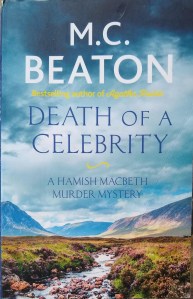
A long time ago I decided that I would set myself the task of reading the entire Hamish Macbeth series of books. There are 34 books in the series, all written by author M.C. Beaton which is in fact a pen name for Marion Chesney. Marion actually wrote many books under various pseudonyms including Ann Fairfax, Jennie Tremaine, Helen Crampton, Charlotte Ward and Sarah Chester. After Marion’s death in 2019 further Hamish Macbeth novels have appeared penned by writer R.W. Green.

Hamish Macbeth is a country policeman in the small Scottish Highland village of Lochdubh. Macbeth is a very relaxed kind of fellow. Some might even call him lazy. He shies away from promotion, even giving the credit for solving crimes to others so he can stay on in his beloved village.

A few years back the BBC made a TV series based on the books. ‘Based on’ is quite an interesting use of that particular phrase because the TV series is actually nothing like the books. The series was filmed in Plockton and Macbeth is played by Robert Carlyle. Macbeth is a laid-back relaxed character, just like in the books. He is not averse to poaching the odd salmon and he likes to apply the rule of law in his own way. He avoids promotion as all he wants is to remain in Lochdubh. That is pretty much where the resemblance to the books ends which was quite a surprise to me. Most of the characters in the series are the invention of the TV writers and not M.C. Beaton who wrote the books.

I’m not sure how happy I would be if someone made a TV show out of my book and then proceeded to change all the characters, still I did enjoy Hamish Macbeth as a TV show. It was an oddball, quirky little drama which ran for only three seasons and a few years ago Liz and I visited the village of Plockton which was very small and to be honest, didn’t actually look like the place in the TV series.

Not long ago after reading Death of a Scriptwriter last year, I put down the Hamish Macbeth books and took a little break from the murders in Lochdubh but as the summer has warmed up nicely and I’ve plenty of time to sit out in the back garden reading, I thought it was a good time to pick up the series again.

Death of an Addict.

This was a little different to the usual Hamish Macbeth novel. Macbeth and another officer, Glasgow DI Olivia Chater, masquerade as drug dealers to trap a drugs cartel operating in the highlands. I have to say that I didn’t like how the book leaves the usual village life behind and to be fair, I didn’t enjoy the book as much as the previous ones.

Death of a Dustman.

All the Macbeth series are titled ‘Death of’ someone and I noticed on the internet that there is one book that differs from the others called A Highland Christmas which seems to come in between Addict and Dustman. Anyhow, I don’t have a copy so I went straight on with Death of a Dustman. All the books in my collection end with the first chapter of the next book and Addict ended with chapter one of Dustman so perhaps the Christmas book is something a little different. Anyway, the action takes place once again in the village of Lochdubh where a new councillor decides to make the village ‘green’ by promoting recycling. As a result, the local dustman causes a lot of aggro when he declines to empty bins containing the ‘wrong’ sort of rubbish and of course he ends up getting bumped off.

Things get a little far fetched towards the end but overall, Death of a Dustman was a fairly pleasant read and another look at highland village life and its various characters.

Marathon Man

I mentioned a while ago about my brother dying and when I was sorting out his things I came across this short novel. Actually it was one of my own books and I must have lent it to Colin years ago and now it has once again come back to me. I can just imagine telling him ‘I told you that you never gave me Marathon Man back!’ to which he would probably reply ‘Well what about that Cary Grant book I lent you?’ Yes, I borrowed the Grant book ages ago when I wrote a post about Cary Grant and it’s still there, part read in my bedroom.

Marathon Man was written by the screenwriter William Goldman and later made into a film using Goldman’s own screenplay. It’s a fairly short book and according to Wikipedia it was the author’s most successful thriller novel. Escaped nazi dentist Christian Szell has been living in Paraguay since the end of WWII. He has a stash of diamonds acquired while he worked in a concentration camp which are in a New York vault looked after by his father. When his father dies in a car crash Szell has to return to New York to get the diamonds. Will it be safe though? Szell thinks that a US agent working for a secret department called the Division may be about to rob him when he picks up the diamonds.

The agent is known by the code name Scylla and Szell meets with him and uses a hidden knife to stab him. Scylla manages to survive long enough to get to his brother’s New York apartment whereupon he dies from his injuries. Szell believes that Scylla must have survived long enough to give his brother, nicknamed ‘Babe’, information about the diamonds and so his men kidnap Babe and he is tortured to reveal any information. Szell is a dentist and so he tortures Babe by drilling into his teeth. Later, Babe, a student who hopes to be a marathon runner manages to get away.

The story was made into a film starring Laurence Olivier as Szell and Dustin Hoffman as Babe. This led to an interesting confrontation of acting styles with Hoffman the ‘method’ actor and Olivier the celebrated traditional actor. On one occasion when Hoffman had to appear tired out after staying awake for three days Hoffman chose to actually stay awake for three days also. Olivier, tired of these antics famously asked Hoffman ‘Dear boy, why don’t you just act?’

(I should mention here that while researching this and checking my facts -I had originally thought that Hoffman had gone running to make himself appear breathless- I found a really interesting article in the Guardian in which the author finished with a wonderful quote about acting from George Burns who once said “sincerity is everything. Fake that and you’ve got it made!”)

The film very much follows the lines of the book except that in the film, it is Szell’s brother, not his father who looks after the diamonds and also in the book, Babe is a little more ruthless and cold blooded than Hoffman portrays him on film. In fact, Babe shoots Szell dead in the book but in the film, Szell is killed by falling on his own knife.

Both the book and the film were highly successful and Olivier’s Szell is one of the most famous screen villains, particularly with his catchphrase ‘Is it safe?’ which he continually asks Hoffman’s character before commencing to torture him. It’s a film which probably put a huge amount of people off going to the dentist for years and the book is equally as scary and also superbly written.

Anyway, that’s what I’ve been reading. What are your summer reads?


What to do next: Here are a few options.

Share this post on your favourite social media!

Hit the Subscribe button. Never miss another post!

Listen to my podcast Click here.

Buy the book! Click here to purchase my new poetry collection.

Click here to visit Amazon and download Floating in Space to your Kindle or order the paperback version.

Click here to visit amazon and purchase Timeline, my new anthology.


Saturday Nights

My book, Floating in Space, is set in the Manchester of the late seventies. There were no smartphones, no internet and no wireless networks. In fact, ‘wireless’ was an old fashioned word for the radio. I’m tempted to say that things moved at a slower pace then but that’s not true. Things just moved at a different pace. In 2025 you hear a lot about pubs closing down but back in 1977, pubs were far from closing down; at the weekend they were the place to be! That was where my friends and I met up, drank beer, listened to music and chatted up the ladies. Saturdays were the focus of our week back then but these days I’m actually not that keen on going out on a Saturday. I much prefer a weekday night out; things are a little quieter and there are fewer drunken idiots.

Having said that, Liz and I went into St Annes last Saturday to see our friends, Ray and Dean, perform as the Boogie Brothers at the Pier Inn. The Pier Inn is only a few years old and it’s a rather small little pub. The night we went in it was a hot and muggy evening and even with the door open it was hot in there so we decided to take a break and pop into Wetherspoons which we expected to be much cooler and it was. It did strike me though that most of the clientele in both those pubs were pretty similar to my own age group. OK there were a few young people but most people out that night were in my particular age bracket. Where do young people go these days on a Saturday night?

Back in 1977 Saturday nights were the culmination of the weekend for my twenty-one year old self. I always preferred it to Friday nights because things were more relaxed, there was no rushing home from work, no rushing to get your tea down your neck so you can get changed, then leg it out for the bus. Saturday, you could take your time and leisurely work up to things. Sometimes I would go out shopping and buy myself something new to wear for that evening, a shirt, or perhaps even a new pair of trousers. Then later I would have a long relaxed soak in the bath and dress unhurriedly in my room to the tune of my favourite music. In 1977 my favourite album was Elton John’s ‘Goodbye Yellow Brick Road’ and as I dressed I would mimic Nigel Olsson’s measured and rhythmic drumming to ‘The Ballad of Danny Bailey’, or ‘Candle in the Wind’.

These days I just pop into the bathroom, have a shave and a shower and throw on one of a number of short sleeved shirts that I tend to favour. Still, even back in 1977 I could sometimes get bored with the usual pubs and bars in Manchester. I remember one boozy night in which my friend Chris and I decided to go out on the train somewhere. We ended up in Nantwich if I remember correctly. We took our tent and put it up somewhere in a field or a park and proceeded to spent the night drinking in a local pub.

The next morning we woke in our tent which had partially collapsed around us. We staggered up and packed everything away and thought about making our way to the railway station. As we walked into the town various people hailed us ‘Hi Steve!’ ‘Hi Chris!’

We dropped into the local pub and the barman greeted us like old friends. ‘Great night last night wasn’t it?’ he said.  I guess it must have been.

Here are a few facts about Saturday compiled after a quick search of the internet.

Saturday is named after Saturn, the Roman God of agriculture.

Saturday is the 6th day of the week in western culture although in some places the first day of the week is considered to be Sunday, making Saturday the last day of the week.

In Hinduism, Saturday is dedicated to the planet Saturn and is considered a day for spiritual cleansing and fasting. Devotees may visit temples and perform special rituals on this day, or abstain from certain foods and activities as a form of penance.

In the UK, Saturday is the busiest shopping day of the week. Many people use this day to do their weekly grocery shopping and high streets and shopping centres are often crowded with shoppers. One of my hard and fast rules is to never go shopping on a Saturday. Tuesday works better for me, it’s much quieter.

Time for a music break. I was going to go with Saturday Night’s Alright for Fighting by Elton John but to be honest, as much as I like Elton, that song really isn’t my cup of tea these days. Here’s something much more enjoyable, Saturday Night at the Movies by the Drifters.

Talking about movies, Saturday Night Fever was a film released in 1977 starring John Travolta. Travolta plays Tony, a young man who spends his weekends drinking and dancing at a local disco. I haven’t seen the film for years until I watched it recently and was surprised to be reminded that, apart from the disco dancing interludes and the music of the Bee Gees, it is actually a gritty and dark film.

Here’s what I wrote in my book Floating in Space about Saturday nights;

“There was something about Saturday nights in Manchester. Some quality of security, of expectancy, a feeling that the night and the future were going to be good. A feeling that you might just meet some gorgeous girl and that even if you didn’t, it didn’t really matter because there was always the excitement of the people, the music, the drink, and everything else that made up the evening. And then there was always the expectancy of the next night, and the next, and on and on into the future. The past building up inside you like a great data bank, reminding you, reassuring you, like a light burning in some empty room in the corner of your mind.”

The Playground as it is today

Back in the late 70s, my friends and I used to go to a bar in Manchester called the Playground. We loved it in there. Inside the Playground, flickering multi-coloured spotlights rotated across the red carpeted room which, on Fridays and Saturdays, was generally packed. It had a small dance floor sunk low like a pit where people up on the raised bar level could look down at the gyrating girls and where also, on week day lunchtimes, a topless dancer appeared at the stroke of one o’clock to translate the soul and disco music of the time into pulsating physical motion, the eyes of jaded office workers glued to her as she did so.

There was a paltry fifty pence charge to get in, the solitary bouncer was silent but not unpleasant and the DJ, who always began the night with ‘Love’s Theme’ by the Love Unlimited Orchestra, played alternate sessions of rock, disco, and chart music. We were all mad about Jenny, the barmaid. She was lovely. She had a kind of round, open face framed by thick blonde hair and her skin was a creamy white. She served us Worthington ‘E’ and we melted into the hubbub of people on their Saturday night out while the music of the seventies drifted through us.

Yes, we had a lot of fun nights in the Playground until one night we turned up and the place was closed. We went somewhere else that night and for some reason it remained closed for a long while. Perhaps the owners had gone bust or their lease had expired. Eventually it was refurbished and opened under another name but it was never the same again. Even so, every time I walk down Oxford Road, I always stop for a moment and remember those long gone nights in the Playground.

What shall I do this Saturday night? Get dressed up and go into town?

Actually, I think I might just order a takeaway and watch television!


What to do next: Here are a few options.

Share this post on your favourite social media!

Hit the Subscribe button. Never miss another post!

Listen to my podcast Click here.

Buy the book! Click here to purchase my new poetry collection.

Click here to visit Amazon and download Floating in Space to your Kindle or order the paperback version.

Click here to visit amazon and purchase Timeline, my new anthology.


Heatwaves and Barbecues

This week in the UK we have been subject to a heatwave. Well, the media have told us it’s a heatwave although it’s not a heatwave in the sense that I understand, which is weeks and perhaps months of intense heat, drought and hosepipe bans. The media also tends to link the heatwave to things like climate change and the melting of the ice cap and lots of other stuff but to be honest, this heatwave has just been what we used to call summer. That’s right, summer, you know when things get warmer and the sun comes out and the kids get a 6 week school holiday and it stops raining. Well, stops raining for a short while.

To be fair there were one or two really hot days up here in the north west of England. In fact, it might even have been three days. Liz and I put up her small pool in the garden and we got out the barbecue. One day was really hot, so hot that in the evening we were sat in the lounge in as little as clothing as possible, in my case just a pair of shorts. We had the doors open and the fan at full blast. Now I think of it, actually the perfect conditions for a robber/murderer to pop in, tie us up, take our valuables and bump us off. Happily, that didn’t happen but it was a hot and uncomfortable night.

The next day we realised all our usual parasols and sun brollies were a bit knackered so we ordered a small gazebo. Liz’s daughter and grandson were due round for a barbecue and we wanted to keep them out of the direct sun. After about an hour of effort and a surprisingly small amount of bad language, we managed to get the gazebo together and fully installed. Our guests arrived, we all had a bit of a potter about in the pool, ate our food and all was well. I thought about taking the gazebo down but thought otherwise, after all, we were in the middle of a heatwave so keeping it up seemed like good idea.

The next day it was slightly cooler, still warm of course but much pleasanter although a bit of a wind had sprung up. Later, just when we were about to begin an unprecedented third barbecue in a row, it had actually become so windy that we were hanging grimly on to the gazebo to prevent it from taking off. The only option was to take it apart which we did. I think it’s worth noting here how strange it is that things that come in a box will never ever fit back into that same box once you take them apart and try to put them away. Actually, its not only strange but one of the great mysteries of the universe.

Just looking back over my older posts, I see that July is a pretty regular slot for barbecue themed posts. Here’s something I wrote in 2022.

A regular visitor to our barbecues is a large seabird which we have christened CBS. Nothing to do with the American TV channel but that bird is one heck of a Cheeky Bastard Seagull.

He usually arrives on our garden wall and struts around in the manner of an avian Mussolini. If he gets no response from us, he will tend to have a bit of a stretch before going into a major squawking session. Now he has made his presence felt we can expect some more strutting about until we put some bits of sausage or fat from our steak on the wall. He’ll gobble that up with the occasional foray into the sky to fend off any other birds who might be after a nibble before beginning his ritual again. When the gas goes off and he knows no more food will be forthcoming, CBS will usually have a final strut, give us a last squawk and be off into the sky.

These last few weeks however, CBS has not appeared. We’ve saved him some bits and pieces but our familiar feathered friend has not made an appearance. I’ve often wondered what has happened to him. Has he emigrated somewhere? No, surely it’s not the time of the year for birds to migrate? Has he passed away? It’s hard to tell if he was a young or an old bird. Has he been hit by a car trying to peck at some stray leftover sandwich accidentally dropped in the road?

At our last barbecue a large seabird appeared on our wall. At first, we thought it was CBS but there was no strutting or squawking and the bird did seem a little timid. He wouldn’t come close to collect his titbits on the wall. Was he a doppelganger trying to muscle in on CBS’s patch knowing the real CBS has passed away? We’ll never know.

Still on the subject of barbecues, here’s something I wrote in 2021, the year of Covid 19;

Because of Covid and now also because of my sore shoulder (did I mention the trapped nerve and my shoulder pain?) we haven’t used our motorhome much this year. We did have a run out to Yorkshire a while back and a pub stop over before that but otherwise the only trip was a run out to the garage for the MOT. Liz had bought a small portable gas barbecue ready for our travels and it was lying unused in the corner so we thought it was time to give it a trial run.

I do like barbecues but the flip side is that they are dirty and smelly and greasy. I always start off with some dry wood, pack in the charcoal and light up with some firelighters. Sometimes we’ll get a slow burner barbecue so we end up supping too much wine while we wait for things to get going. Other times we’ll get the reverse, a barbecue that catches quickly and voom, goes off in a big hot burn. That’s usually when we are expecting a slow burner and are still finishing off the salad and so when we sit down I realise I’m going to have to slap all the meat on quickly before the coals burn themselves out. The really annoying thing is when we are in the motorhome and I realise that after the barby has finished, I am somehow going to have to clean this horrible, greasy mess and get it packed away so we can move on.

So how have things gone with the gas barby? Pretty smoothly actually. None of that messing about with the coals and lighter fluid. The portable job snaps quickly together, slap in the calor gas cylinder, press the starter and hey presto, we are ready to barbecue. The other great thing about this one is that there is a water reservoir that catches all the grease and fat. Just swill that away somewhere in a corner of the garden, a quick wipe with a paper towel and we are all ready for next time. Barbecuing with gas, I love it!

Back to that unprecedented third barbecue.

In 2025 we are still using that little gas barbecue, so much easier than lighting all those coals. On the day we removed the gazebo the wind finally died down a little and we settled down for another meal. We started with some Padron peppers and some baby corn (so much nicer than full grown sweetcorn) followed by a couple of small steaks and some kofta kebabs with some French wine to wash it all down. It was almost but not quite like being on one of our French holidays.

The next day it was raining and normal British weather had resumed. The ‘heatwave’ was over.


What to do next: Here are a few options.

Share this post on your favourite social media!

Hit the Subscribe button. Never miss another post!

Listen to my podcast Click here.

Buy the book! Click here to purchase my new poetry collection.

Click here to visit Amazon and download Floating in Space to your Kindle or order the paperback version.

Click here to visit amazon and purchase Timeline, my new anthology.


5 Things that Happened in July

I published a post quite a while ago about the month of January. January of course is cold and believe me, I hate the cold so I thought I’d get a lot of cold and chilly feelings off my chest by writing about my least favourite time of the year. Today I’m going to go the opposite way and write about the month of July, generally the warmest month of the year. In fact the warmest month ever recorded was July 2023 according to a survey by scientists at NASA, the US space agency.

The Battle of the Somme July 1916

On the first of July, 1916, the Battle of the Somme began. It was an attempt by combined French and British forces to attack the German held lines by the river Somme in northern France during the First World War. The first day was the worst day in British military history with 57,470 casualties, 19,240 of which were men who were killed. The battle continued for another four months and the total casualties for both sides were over 1.5 million. The battle ended in November of 1916 with allied forces only making an advance of some 7 miles.

In March of 1917 the German forces drew back to the Hindenburg line and began to increase U Boat attacks on British shipping in an effort to starve the British into defeat. This however only spurred the entry of the Americans into the war in April 1917.

A few years ago, Liz and I visited the Somme and we saw a crater which is supposed to be the biggest crater of the First World War. It’s called the crater of Lochnagar and back in 1916 the 179th Tunnelling Company of the Royal Engineers had burrowed under the German lines and laid down huge explosive charges. They were detonated at 07.28 on the morning of July 1st. The British expected the Germans to have been wiped out by this and a huge artillery barrage but they were sadly mistaken.

Wilson44691, CC0, via Wikimedia Commons

Today the crater is still there. I had expected it to have perhaps become a lake but no. It’s a deep depression in the ground surrounded by wooden walking boards, many of which have the names of deceased soldiers inscribed on them.

The Trent and Mersey Canal 1766

The canal system of Great Britain was probably the shortest lasting transport revolution ever. After only a few years the railway revolution began and suddenly, the canal system was old technology. Parliament authorised the construction of various canals in 1766, one of them being the Trent and Mersey Canal. Construction began in July of that year and it was designed by James Brindley to link the rivers Mersey, Trent, Severn and Thames. It was completed in 1777.

Canals were built for the efficient transport of goods and raw materials during the Industrial revolution although shortly afterwards the new railways became the primary method of transporting goods and of course passengers.

Today the canal system in the UK is primarily one of leisure and holiday boating and many people like me have become interested in canals through TV programmes like Canal Boat Diaries. The show is a sort of video diary by a boater called Robbie Cummings who takes his viewers on a gentle meander through the canals of the UK. I’ve always found it an enjoyable and relaxing show although when I last looked into hiring a canal boat it was super expensive. Maybe one day though.

Execution of the Romanov Family, July 1918

The Romanov family, Czar Nicholas II and his family, were shot and bayoneted to death on the night of the 16th/17th July 1917. The Soviets were worried that the family might be rescued by the anti-revolutionary forces known as the ‘Whites’.

After the revolution the royal family had been moved to various places but in 1917 ended up at ‘The House of Special Purpose’ in Yekaterinburg. Friendly guards had been replaced by non-Russians who were chosen to murder the family.

On the night of the 16th July, the family were told that they were to be relocated because of the impending arrival of pro-monarchist forces. They were asked to assemble in the basement where they were all shot. Many survived the shooting because of diamonds and other jewellery sewn into their clothes and so the murderers were forced to use bayonets to finish off those still alive. The bodies were then dumped into a mine shaft. Later it was realised that the shaft was not deep enough so the bodies were extricated and transferred to another one.

The bodies were discovered many years later by a local amateur researcher in 1979 but he kept his discovery a secret until the fall of the Soviet Union. The bodies were removed and identified using DNA. They were eventually laid to rest in the Peter and Paul Cathedral in St Petersburg.

Picture courtesy Wikipedia Commons

Various people have claimed to be survivors of the murders, notably Anna Anderson who claimed to be Anastasia. DNA testing later proved she was not related to the Romanov family but was actually a woman named Franziska Schanzkowska.

Others have claimed to be Tatiana, Anastasia’s sister and also Tsarevich Alexei Nikolaevich, the only son of the Tsar. Alexei suffered from haemophilia, a condition in which the blood does not clot so it is unlikely that he survived the shooting. Interestingly though, Alexei and one of his sisters were discovered separately from the rest of the family in 2007.

The Ipatiev house where the family were murdered –the house of special purpose- was demolished in 1977 by Boris Yeltsin on the orders of the Politburo as it was attracting people who came to pay their respects to the Romanovs. Later when Yeltsin became president, he ordered a memorial church to be built on the site.

A famous film Anastasia was released in 1956 starring Ingrid Bergman as Anastasia and Yul Brynner as a man trying to use her to gain access to the Romanov millions stored in a British bank. Funnily enough, it’s a film I have not seen for years but after writing this passage I noticed it was coming up on TV so I recorded it and watched it the following evening.

The Moon Landing July 1969

The moon landing was one of the very first historical events that I actually felt a part of. In July 1969 I was 12 years old and on the morning of the 20th of July my mother had woken me up as usual for school. I came downstairs in my pyjamas for breakfast and to my utter amazement there was Neil Armstrong and Buzz Aldrin walking on the moon over on mum’s black and white television set. How my mother got me away from that TV set and off to school I’ll never know because at the time I read and watched everything I could about the US space program.

Believe it or not, many people today refuse to accept that Armstrong and Aldrin actually did walk on the moon that day. Many armchair ‘experts’ will call attention to photos from the lunar surface and explain that they were fakes because of various anomalies. On TikTok I recently watched a video in which a man swears his father was a security guard at a secret base where the moon landing was filmed. On YouTube there is a video where someone tries to get Armstrong to swear on the bible that he went to the moon. Neil Armstrong declined. Why? Was it because he didn’t go to the moon? Why did he retire from NASA so early? Was he ashamed about his continuing lies?

My personal verdict: Baloney. Armstrong and Aldrin walked on the moon in July 1969 in an incredible feat of exploration and bravery and as for refusing to swear on the bible about it, why should he?

The British Grand Prix

The first ever British Grand Prix was held in 1926 at Brooklands, one of the world’s first ever purpose-built racing tracks. Brooklands had an oval configuration and was famous for its banked corners. The track was also an airfield and during the two world wars Brooklands was taken over by the military for aircraft production. After 1945 the racing circuit was in poor condition and Brooklands was sold to the Vickers-Armstrong Company as a base for aircraft production. Motor sport was unable to return to Brooklands especially as after 1951, a four-lane road was built through the track area.

Giuseppe-Farina (Image from Motorsport Magazine fair use commons)

The current Formula One World Championship actually began at Silverstone in 1950 with the very first world championship Grand Prix. The first Silverstone British Grand Prix however was held two years earlier in 1948 when motor sport began again after the second world war. Luigi Villoresi won in 1948 in a Maserati but the 1950 race, round one in the new World Championship, was won by Giuseppe Farina.

This year, 2025, the British Grand Prix was held on the 6th of July and once again provided an exciting race with Lando Norris giving the fans another British winner after his team mate was given a controversial ten second penalty.


What to do next: Here are a few options.

Share this post on your favourite social media!

Hit the Subscribe button. Never miss another post!

Listen to my podcast Click here.

Buy the book! Click here to purchase my new poetry collection.

Click here to visit Amazon and download Floating in Space to your Kindle or order the paperback version.

Click here to visit amazon and purchase Timeline, my new anthology.

Fragments of a Life

It’s sad enough to have to lose a loved one but what is sometimes even worse is dealing with the things they have left behind; their clothes, their books, their personal items. The shampoo and shower gel in the bathroom, the uneaten items in their fridge, the notes on the coffee table; the fragments of their lives.

My brother Colin died almost two months ago and even now I find it hard to believe. Going home a couple of weeks ago I picked up two pizza bases from the shops. I bought two without thinking because I’d usually make Colin and me a couple of small pizzas for when he came round for one of our regular bi-weekly chats.

One of the first things I looked at when I went into my brother’s flat was his phone. He had two phones. One was unlocked but contained little information. No banking app or email account. The other phone was locked and I tried all of what I thought would be memorable numbers for him to use as a phone password. His date of birth….. no. My birthdate…… no. I tried my mother’s and father’s birthdates but no, the phone refused to open.

Colin and I used to speak on the phone every few days. A long time ago when mobile phones first became popular, we decided that when we would speak together on the phone, we would talk in either German or east European accents. I’m not quite sure why we did it but we maintained it over a number of years, although it could be a little embarrassing if I suddenly answered the phone in a German accent in the bar or in a restaurant.

Looking on the internet I searched for what are the most used codes for unlocking a phone. The most popular was 1-2-3-4. I trolled through the list but nothing seemed to work. 2-2-2-2….. no! 6-9-6-9….. no! About halfway through the list I got to the point where the phone would lock up for a minute after each failed attempt. Finally, I tried 3-3-3-3. I was watching a TV show at the time and was about to move on to the next suggestion when as if by magic the phone opened up.

There was no banking app which was what I was looking for in order to sort out his financial affairs. Looking through his house there didn’t seem to be any particular place for important documents. I found some in the bedroom, some in the lounge and some in the kitchen. Colin wasn’t very tidy. He was also the laziest man I have ever met. His first job after leaving school was in a high-class men’s tailors in Manchester city centre. Among the clientèle were presenters from the local TV news shows Look North and Granada Reports. Colin once told me he had served the guy who played Alec Gilroy in Coronation Street. His boss was a very well to do fellow who lived in Wilmslow and every morning he picked up Colin for work at a busy junction by the Bluebell pub. He used to drive a Rolls Royce and Colin was living at home in Handforth then and you might think that with his boss picking him up in a Rolls Royce, and waiting at a very busy junction, he would be keen to get up out of bed and get ready for work.

Well, things worked out ok for a short while but as time went on, Colin realised that getting out of bed in a morning was not for him. My mother told me that she used to sometimes throw a pan of cold water in his face to get him up but even so, he began to leave his boss stranded at the Bluebell and would arrive at work round about lunchtime. Soon he was presented with his p45.

The only other job he ever had, to my knowledge anyway, was a sales job in Rome in Italy, selling timeshares or insurance or something to English speaking people in that far away city. He didn’t last long there and made his way across Europe to a place called Nijmegen in Holland. He stayed there for quite a while and he even met his first girlfriend there, a girl called Inge with whom he stayed friends for the rest of his life.

Soon his money ran out and he was repatriated back to the UK with my mother, as usual, paying for his return.

Not long after coming home he had a nervous breakdown and that began a cycle of mental health issues that plagued him for the remainder of his life. He once told me that it all stemmed from bullying at school although I have to say, I always remember him as being such a happy and cheerful youngster. Clearly, things are not always what they seem.

He had arranged a funeral plan with a company called One Life which went bust back in 2024, however, I was sure he had taken out an insurance policy with Sun Life some time ago. I called them but they had never heard of my brother. I called another company and they said the same thing. ‘Have you tried Sun Life?’ they asked. I had but they had no record of my brother. Try again, they suggested. I tried again and this time the company came up with Colin’s policy which was actually linked to a funeral company so I was able to quickly begin the funeral arrangements.

I thought his laptop would probably tell me a lot about his affairs but it too was locked. I once again tried various numbers to no avail but I noticed that his email account was on his newly unlocked mobile phone. I clicked on the ‘forgotten passcode’ button on his laptop; a new code went to his emails and soon I had access to his laptop even though I found nothing of interest there. It’s interesting though how his digital footprints leave hints about things that he did. There was an email from Netflix reminding him to finish an episode of Star Trek he had been watching. Another was from a mail order company thanking him for his recent clothing purchases and offering him discounts on his next order.

Colin lived in a council flat and I was sure they would be keen to take over the place and get new tenants in but happily, the staff I dealt with at the housing office were friendly and sympathetic and gave me time to sort things out.

I took lots of his old clothes to the recycling centre and quite a few charity shops were the beneficiaries of his numerous DVDs although I must admit, I kept quite a few for myself. Colin was an avid buyer of leather jackets and although some of his older ones went to the recycling centre, I still have about five of his newer ones.

A charity place called The Tree of Life came and took away his washing machine, fridge freezer and microwave. I took away his big television screen on which I’ll probably watch the British Grand Prix this weekend. I went to hand his keys into the council but first I thought I’d take a last look around. I checked everywhere and picked up a few last items I thought I’d keep. I had been surprised that I hadn’t found a great big box of photographs as a long time ago Colin always used to be taking pictures.

As I took a last look around, I noticed a bin bag in the corner of a cupboard just by the door. More old clothes I thought but when I picked it up it was full of photographs, the very ones I had been looking for. I was so glad I had found those pictures as there were so many taken at home when he and my mother and father were still alive.

Colin: a self portrait

I dropped off his keys and later I found myself watching one of his old DVDs, sat in a chair wearing his aftershave, sporting one of his newly purchased T-shirts and drinking one of his leftover bottles of Pepsi Max, his favourite drink. That is the thing with death, someone dies but the world does not stop or even take a breath. The buses keep on running, the sun continues to rise and the dead man’s possessions are still there, waiting to be sold or given away or distributed to others via charity shops and other outlets.

Despite never having any money Colin had an expensive TV package from Virgin Media. He loved his black and white classic films and spent a fortune on numerous leather jackets as well as going everywhere by taxi. Until our mother died, he was forever asking me to bail him out of debt but in recent years helped by a PIP claim (Personal Independence Payment) and a small inheritance from mum he finally had some money in his pocket.

He was looking forward to getting himself a free bus pass but sadly, he was taken away much too soon. He was 64 years old.


What to do next: Here are a few options.

Share this post on your favourite social media!

Hit the Subscribe button. Never miss another post!

Listen to my podcast Click here.

Buy the book! Click here to purchase my new poetry collection.

Click here to visit Amazon and download Floating in Space to your Kindle or order the paperback version.

Click here to visit amazon and purchase Timeline, my new anthology.

Book Bag: Frederick Forsyth

It was sad to read in the news the other day of the passing of journalist and novelist Frederick Forsyth. He was 86 years old and had published more than 25 books. I’ve read quite a few of his novels and I wrote a segment about him some time ago in a blog post about novels that were rejected by publishers. A number of his books were made into films and so many people must be familiar with his work.

Forsyth did his national service in the RAF and was commissioned as an Acting Pilot Officer in 1956. After leaving the RAF he became a journalist working for the news agency Reuters and later he joined the BBC. He was the perfect choice for a foreign correspondent as he spoke numerous languages including French, German and Russian. In 1967 he was reporting on the war between Biafra and Nigeria when the BBC decided they were no longer interested in that particular war. Forsyth resigned from the BBC and continued to report on the war as a freelance. He even admitted later that this was when he was recruited by MI6 as an informant.

His most famous book and actually one that he struggled to get published was The Day of the Jackal. He apparently had no interest in becoming a novelist but turned to fiction as he was out of work and in dire straits financially.  The Day of the Jackal was rejected numerous times but finally one publisher decided to try a limited print run. The book took off first in the UK and then in the USA. It was a mixture of fact and fiction and Forsyth’s description of how to obtain a fake passport was used by John Darwin, the man who faked his own death in a canoe and later tried to make a new life in Panama. This true story was made into a book and TV mini series called The Thief, his Wife and a Canoe.

Forsyth followed up with The Odessa File, a book about the Odessa organisation which helped former nazis escape detection from the authorities after World War II. He wrote numerous other books but when The Day of the Jackal was re-imagined as a TV series recently on Sky TV, he earned nothing as he had already signed away the TV and film rights with the earlier screen version.

The Day of the Jackal

It was a very long time ago when I first read this book. Someone once called it an assassin’s handbook although I’m not sure that’s really fair. The book is set in the early 60s. The OAS was a terrorist organisation made up of ex-army personnel who were angered at De Gaulle’s decision to give independence to Algeria after many of their comrades had died fighting Algerian nationalists. They were trying to assassinate De Gaulle but their organisation had been penetrated by French Intelligence. To prevent any leaks the OAS top leadership decide to hole up in a hotel and arrange for a professional assassin to kill De Gaulle. The book follows the assassin, code named Jackal, as he plans the murder step by step. The French secret service however decide to kidnap a man who functioned as an aide to the leadership. Under torture he revealed the basic plot but how could the French track down the assassin?

The Jackal arranges three fake identities and the author explains meticulously how he does this. He met with a specialist rifle maker and explained how he wanted a rifle that could be dismantled and fitted into a series of metal tubes, the full import of this is only revealed on the planned day of the assassination.

The Jackal also asks for a number to ring for up to date information and the OAS arrange for an informant to seduce a member of the government and pass vital info to the Jackal.

Forsyth apparently wrote the book in 35 days and continued with a similar non stop workflow for all his subsequent books. He didn’t like the writing process and was anxious to get it all over with as quickly as possible. Even so, the result is a tense and gripping read. Forsyth’s books are heavily researched and often including real-life procedures, political contexts, or military operations. He includes authentic settings and terminology that lend a strong sense of realism to his stories. The characters in his books though are usually pretty functional, just there to carry the plot forwards although in The Jackal we find perhaps his most rounded characters, certainly in the few books that I have read.

The Day of the Jackal was made into a film in 1973 directed by Fred Zinneman.

The Odessa File

Again, it’s a long time since I have read this book but it’s really well put together with a real twist at the end. It’s about a German journalist who discovers a diary written by an old Jewish man who has committed suicide. The man was a former concentration camp prisoner and killed himself after seeing a sadistic SS officer known as ‘the butcher of Riga’ walking free in the city.

The journalist decides to try and track the SS man down and finds out that the nazis run an organisation known as the Odessa, which helps former SS men evade justice, assisting them with fake papers and even travel to friendly countries.

The journalist decides to pose as an ex-SS man seeking help from the Odessa and this leads him on a very dangerous path indeed.

The Odessa File was also made into a film starring John Voight as the journalist and the resulting publicity brought about the exposure of the real life ‘Butcher of Riga’, on whom the fictional character was based. Eduard Roschmann was arrested by Argentine police but then skipped bail and escaped to Paraguay.

The Fourth Protocol

I started reading this book a while ago and like all of Forsyth’s other books it is a very exciting read. I was also surprised to find that it was really quite different to the film which starred Michael Caine.

In the book, a professional jewel thief robs the safe of safe of a well to do civil servant. He takes away some pretty expensive jewels but breaks a golden rule by also taking what appears to be an expensive hand crafted leather briefcase.

It turns out that hidden in the briefcase are some top secret documents which the civil servant has been passing to a member of the South African security forces.

This gentleman then organises a group of thugs to find the case but the jewel thief is alerted just in time and is able to round up some tough guys of his own to combat the thugs. After finding out the thugs were after the briefcase, he discovers the secret documents and mails them to the authorities.

Robert Preston, our local MI5 man, then has to find out where the documents came from and who has been leaking them.

Eventually, Preston discovers that the civil service man was passing the documents to a south African diplomat who was also a Russian spy.

This whole episode was glossed over in the film and in fact in the film version it is John Preston played by Michael Caine who robs the safe forcing the traitor to meet with his contact.

The main story though involves a Soviet plot to destabilise NATO by causing an atomic explosion at a US Air Force base in the UK. Components for the bomb are to be smuggled into the country, set up at a safe house just by the air force base and later detonated.

Luckily, our man Preston manages to save the day.

Once again, this is an excellent read peppered with fascinating information about the workings of spies in MI5 and MI6 and also the KGB.


What to do next: Here are a few options.

Share this post on your favourite social media!

Hit the Subscribe button. Never miss another post!

Listen to my podcast Click here.

Buy the book! Click here to purchase my new poetry collection.

Click here to visit Amazon and download Floating in Space to your Kindle or order the paperback version.

Click here to visit amazon and purchase Timeline, my new anthology.

The Curse of the Blank Page

This week I’ve been experiencing that blank page syndrome; you know what I mean, you stare at the paper, or the empty laptop screen and nothing comes to mind, and the paper stays like that, blank. So in an effort to boost my creative powers I took a look back at some of my old blog posts.

I see that I started this blog page back in 2014 and my first post went out on the 23rd of May. It wasn’t anything exciting, in fact it was pretty much a sort of advertisement for my book Floating in Space which had just been published on Amazon to an overwhelming gush of cyberspatial silence.

Floating in Space was my first book and I put it together many years ago. At the time, I was writing lots of science fiction and espionage stories based on my love of television shows reflecting both those genres. I had begun to realise though that for fiction to be worthwhile it has to have a basis in real experience. All I knew about sci-fi and espionage was what I had read about or seen on TV so I started to write about myself. I wrote about the insurance company where I had worked and also the bus company where I worked later after a short trip to Europe that was supposed to last for a year but ended up covering about four weeks.

After I had compiled a few essays, I thought I could put them all together into a fictional story about a young man who packs in his job as an insurance clerk, goes to Europe and returns home penniless so gets himself a job as a bus conductor. Throw in some real life experiences and a healthy dose of fiction and the result was a short novel. I have to say that I love Floating in Space. Reading it today is like taking a trip back to my younger days and it brings back all sorts of memories and I do hope that I’ve managed to communicate that time in my life in the mobile phone free and non digital late 70s to my readers.

Floating In Space available now from Amazon!

There have been plenty of times when I’ve struggled to produce an essay or a post and I started one off a few years ago which began, pretty much like this one, in a sort of rambling fashion hoping that something would come to me. I ended up writing about some training which I had undertaken at the time. Here’s an excerpt:

I’ve been on a training course this week, a pretty interesting one but unfortunately not one I can talk about much as it relates to the data protection act and the computer misuse act and all sorts of legal stuff. Still, the training reminded me of a fairly funny training story that happened nearly ten years ago. It was when I had just started at the Highways Agency and in fact I was one of the first batch of operators to be recruited for the North West, a fact that I regularly bore my colleagues with.

The HA sent us to some establishment in Salford for an induction course and I have to say, as much as I like my job, that course was pretty dull! It was fun meeting some new people and doing some interesting team building exercises but after a while, they started to get a little boring and we were all thinking when will we be able to start learning the nuts and bolts of our jobs?

One of the exercises, and to this day I don’t know the point of it, was for us to split into twos and one member of the duo went into another room where they thought of a holiday story to tell, and the other was asked to completely ignore their partner when they returned and began to relate their story. In this instance my colleague was the storyteller and I was the ignorer! So she came back in and began her story. I polished my nails, yawned in her face, checked my watch, hummed a little tune to myself and so on. After a while some inner instinct made me turn to take a quick look at her, and it was lucky I did so because later on I reckoned I had been only a split second away from taking a hefty punch to the nose, however I was able to calm her down and explain it was all part of the exercise!

Just reading that brought lots of training memories back. We did lots of role playing at Highways in fact I had to do one during the interview for the job,. In that one I had to deal with a woman on the phone who supposedly was being chased by someone while on the motorway. I’m guessing the idea was to see if I could stay calm during stressful situations. Anyway, I managed to calm the lady down, told her the police were on the way after working out her exact location by careful questioning. I got the job so I must have done reasonably well.

Photo courtesy Highways Agency

Towards the end of the induction course, boredom had truly set in. I remember one hot afternoon in this stuffy office cum training room and the lecturer going on and on about the chain of command and how issues had to be escalated to one’s line manager and one’s line manager would escalate things further if need be. I feel rather embarrassed to admit this now but I nodded serenely off into a private world of slumber. Later, and whether it was minutes or even hours later I really don’t know but I was jolted sharply back to reality by the voice of our instructor calling my name. A sea of blank faces were looking at me so I tried to think back: What was the last thing we were talking about? Oh yes, I remember now:

“I’d escalate that to my team manager.”

“Escalate what to your team manager?”

“Well, er. . .”

I glanced over to my left, perhaps hoping for some help, but one of my new colleagues, actually the lady from the storytelling incident earlier, was looking at me in disgust. Over to my right two other colleagues were in a strange sort of state. One had gone almost purple in the face as he tried to hold in a tumult of suppressed laughter and another was covering his face and making strange noises as his shoulders pumped up and down hysterically.

Finally, the lecturer, looking at me with contempt, observed that it might be better for me if I paid attention more and moved on.

Not the finest training course but not my finest hour either.

My absolute favourite training time was something I wrote about a few weeks back, bus driver training.

In those days circa 1979, we trained in old back loader manual gearbox buses sat in a small cab at the front and steering with a huge steering wheel and having to double the clutch to change from first to second gear as those old gearboxes weren’t fully synchromeshed.

Vintage GM Bus flyer

The moment I climbed up into the cab I felt at home and I loved my time in the driving school. Every morning we used to check the bus over and top up the oil and water if required. Then our trainer would choose somewhere in the vast Greater Manchester operating area for breakfast. We might have a drive to perhaps Oldham garage or bus station. I’d start off and our trainer Bill sat behind me in the first seat. The window to the cab had been removed and Bill would give directions and off we would go. His main instruction particularly on narrower roads was to ‘ride the white line’ because our big bus needed the room, car drivers in smaller vehicles didn’t.

Bill knew all the canteen staff in all the canteens in Manchester. Sometimes we might just have tea and toast because on the next run Bill might designate Stockport as our next destination as the new canteen there always served up something good for lunch. To be honest though, I always preferred a breakfast. Back in those days the GM Buses canteens served a breakfast special which was egg, sausage, bacon, a slice of toast and a choice of either beans or tomatoes, all for a pound. My own breakfast favourite though was two eggs on two toast with beans and a sausage which is still a favourite today.

Well, I think that’s it for today’s blog post. I’m pretty pleased with myself. I started out without the faintest idea what to write and managed to write 1400+ words and I know I pinched a few from a couple of old posts but either way, I managed to break the curse of the blank page!


What to do next: Here are a few options.

Share this post on your favourite social media!

Hit the Subscribe button. Never miss another post!

Listen to my podcast Click here.

Buy the book! Click here to purchase my new poetry collection.

Click here to visit Amazon and download Floating in Space to your Kindle or order the paperback version.

Click here to visit amazon and purchase Timeline, my new anthology.