It’s always good to slip out of the pool, dry yourself off and then relax in the sun with a really good book. Here are three of my latest holiday reads. (try the video version by clicking here!)

The Thief, His Wife And The Canoe
I first heard about this story on the TV news many years ago. I’d mostly forgotten about it until recently when there was an ITV drama based on the story. This was the book version and even though the story is fascinating, the book, written by a newspaper journalist wasn’t that gripping.
 Essentially, John Darwin was facing bankruptcy after getting hugely overreached on a series of buy to let mortgages. He decided that the only way out was to fake his own death and cash in on some life insurance policies. His wife apparently tried to talk him out of the idea but John, a dominating and overpowering personality, went ahead and faked his own death. Amazingly he even went back to live with his wife, sometimes having to retreat to the bedsits next door when any friends or family came to visit. He arranged a false passport using a method explained in the book ‘Day of the Jackal’ by Frederick Forsyth and then the two, Darwin and his wife, planned to buy property in Panama and live a new life. Later, Darwin decided he wanted to return to the UK under his own name by posing as someone who had suffered with amnesia and in fact one day he disposed of his fake passport, walked into a police station and told them ‘I’ve lost my memory!’
Journalist David Leigh tracked down Darwin’s wife in Panama and managed to extract the entire story from her before she returned to the UK to face imprisonment along with John.
The result is interesting but not really a great read as perhaps the author is more used to newspaper stories rather than an entire book. Either way, it kept me interested for quite a few days.
Death of a President
I’ve read this book before many years ago but even so I thought I’d throw it in the motorhome and give it another read. The President’s widow, Mrs Jackie Kennedy asked the author, William Manchester to write the book so there would be one authorised record of what happened in Dallas when President Kennedy was assassinated. The result is a record, in fact a micro record of what happened to Kennedy and those around him, beginning a few days before the assassination and ending with his funeral and the shooting of his assassin by another assassin.
 For me, who has been interested in the JFK assassination since at least 1968 when his brother, Robert Kennedy was also murdered and I was 12 years old, it’s a fascinating record. Others might think perhaps that the author has spread his research too far, that we are not interested in what the President’s pilot thought or did or how the honour guard prepared for the President’s funeral and how the President’s sister or brother-in-law reacted.
Anyway as a passionate JFK researcher, a couple of things stood out. One was a time chart that showed that JFK was shot at 12:30 and that at 12:31 and a half, motorcycle cop Marion Baker intercepted Lee Oswald, the supposed assassin, on the second floor lunchroom of the Texas School Book Depository calmly drinking a coke. That meant that Lee had, in 90 seconds, hidden his Mannlicher Carcano rifle on the 6th floor and got himself down to the second floor to meet Baker. Did he shoot the President or was he in the lunchroom all the time?
Here’s another thing. In one of my favourite JFK assassination books, Best Evidence, author David Lifton reckons that sometime between leaving Dallas and arriving at Andrews Airforce base in Washington, JFK’s body was somehow removed from his coffin and transferred to a body bag and then helicoptered to Bethesda naval base where work was done on the body prior to it being seen by the official autopsy staff. In Death of a President, William Manchester says that Mrs Kennedy spent all her time sitting near to the casket on Airforce One with many of JFK’s team of assistants and secret service personnel. So how was Kennedy’s body removed without anyone knowing?
OK, I’ve gone off into the realm of JFK assassination folklore there but to get back to normality, this was a very well researched book and gives a massively detailed look at the events surrounding a tragic day. If anything, the detail is perhaps a little too much and I could sort of imagine it as a feature film using that split screen effect that you often saw in the 1970s; Kennedy getting into the limo side by side with a shot of the assassin getting ready and so on.
Verdict; an absorbing read, very detailed.
Blue Angel: The Life of Marlene Dietrich by Donald Spoto
This was a very compelling read, a biography of Marlene Deitrich who to be fair, I didn’t know much about until this book.
 Marlene was one of those people perhaps born at the wrong time. Today might be a better time for her when lifestyles of gay and lesbian people are not so much of an issue.
Marlene rose to prominence in the film world of Germany between the world wars. She was married to assistant director Rudolf Sieber and together they had a child, Maria. The couple had what we might call an open marriage and Marlene had various partners, both male and female and her husband too found himself another love. A big hit for Marlene was her performance as Lola Lola in The Blue Lamp, directed by Josef Von Sternberg in 1930. Shortly afterwards Marlene and Von Sternberg moved to Hollywood and the two made a series of films for Paramount. While she was away from Germany the Nazis rose to power. Goebbels himself asked her to come back and work in German films but when she declined, the Nazi party rejected her. Marlene became a naturalised American and even entertained the troops -the allied troops during World War II.
She had affairs with both men and women and at one point even began to wear male oriented clothes and once she was denied entry into a Paris night club for wearing trousers.
She was extremely concerned with how she looked in films and always arranged with the lighting crew for a key light to illuminate her face in a particular way, many times even bypassing the director. Alfred Hitchcock for one was not amused.
When the film work fizzled out she reinvented herself as a performer with a one woman show in Las Vegas. The clothes and lighting she organised herself, in fact at home she even had a special key light, just as she specified for her films, that she would stand under when she met journalists and even her friends.
She was always there to help her friends and still stayed close to her husband and his partner. If friends were sick or even just down, Marlene would come round and clean up and make food. She was not only a famous and beautiful star but also a proud hausfrau.
The book opens with her appearing in a short sequence in her very last film, which incidentally starred pop star David Bowie. She performed for the camera perfectly, only one take was required, then she returned to her Paris apartment and except for hospital and doctors’ appointments, she never left again until her death in 1992.
Not the best film book I’ve ever read but still an informative and intriguing read.
 This is an autobiography by Fenella Fielding, co-written with Simon McKay, and the title comes from her part in Carry On Screaming when she played a seductive character, possibly derived from the Adams Family, Valeria. In one scene Valeria tries to seduce Harry H Corbett standing in for the absent Sid James as a detective. Valeria asks ‘do you mind if I smoke?’ and then rather than smoking a cigarette, a cloud of smoke seems to arise from her body and envelop her. Harry H Corbett adds ‘just when I was trying to give it up’ before embracing her in the smoke.
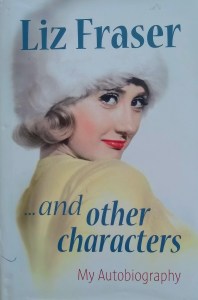 In Fenella’s book above, she mentions that she hoped her book would not go the way of a lot of other showbiz autobiographies, interesting at first but then dissolving into lists of plays and films and other celebrities. Sadly, that seems to be the way this book does go, even so I enjoyed it.
 I do love my showbiz biographies and autobiographies and one I picked up a while back was an autobiography by Dora Bryan. I love Dora from her many appearances in British films but my favourite film is probably
  This final book is the odd one out in this quartet of British comedy stars. It’s a biography rather than an autobiography. I don’t think Tony Hancock ever wrote one.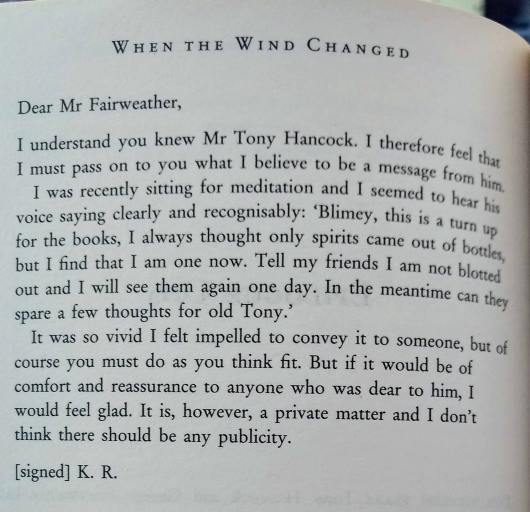
 In my last few posts about books, rather than publish my usual Book Bag posts, I’ve incorporated book reviews into other types of posts; holiday memories and posts about books made into films and so on. During my last few holidays, I always seem to either have a couple of John Grisham books with me or found some in the places, usually rented villas, where we have stayed. I thought it might be an idea to write a John Grisham themed book bag post. Who actually is John Grisham then?
 A Time to Kill by John Grisham
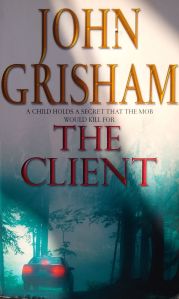 The Client
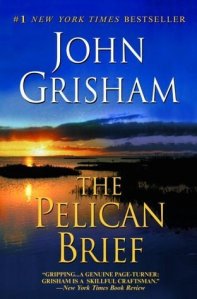 The Pelican Brief by John Grisham
 The Firm by John Grisham
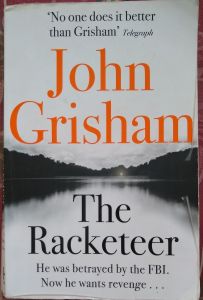 The Racketeer
 The Boys From Biloxi
 Liz and I are over here in sunny Lanzarote having exchanged the cold of the UK for the warmth of Lanzarote. Of course, it is still February and things aren’t perfect over here. It’s warm but there are plenty of days when gusty winds blow across the island as well as days when the sun has been obscured by clouds. Even so there are still plenty of bars to drink at, plenty of tapas to be eaten and of course we have plenty of books to read, two of which have inspired this week’s post.
 The plot of the book and film are pretty complicated, although having read the book recently I think that the book is easier to follow. During the filming the director and his stars wondered who killed the character of Owen Taylor, the Sternwood’s chauffeur. They sent a cable to Raymond Chandler asking him. Chandler told a friend later ‘Dammit, I don’t know either!’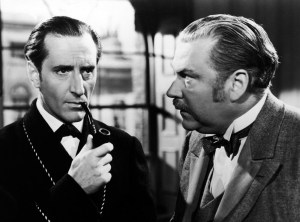
 The Bay of Pigs was a great disaster for Kennedy. He inherited the invasion plans from the Eisenhower administration in which Vice President Nixon was a prime mover. Nixon felt that an invasion would boost his chances in the election contest against Kennedy but the CIA seemed to be relying on the assassination of Castro to kick off the invasion but that planned murder, for whatever reason, never happened.
 Ten Days to Destiny by John Costello
 This book was the sequel to another book about Bill Clinton. The first one dealt with Clinton’s early life and his election to the presidency; this one takes us through his first four years as president. The author takes us through the years of the Clinton White House and documents the issues like Troopergate; when the former Governor Clinton’s State Troopers revealed the comings and goings of Bill’s various mistresses, as well as the disaster of his healthcare reform work which he entrusted to his wife Hillary. The public clearly weren’t keen on Clinton’s ‘co-president’ – his wife, and their healthcare proposals were rejected by Congress. The mid term elections were another disaster for Clinton and the Democrats and the book goes on to show how Clinton turned the final two years of his first term presidency around and was able to win a second term.
 Encore Provence by Peter Mayle
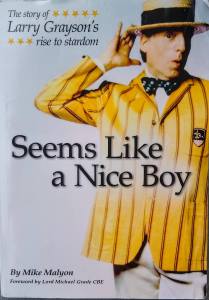 Many have speculated about his true sexuality but it’s clear that Larry enjoyed being labelled as camp rather than gay. The main relationship in his life was with his sister who became a mother figure to him when his adoptive mother died. The two lived next door to each other for many years in later life.

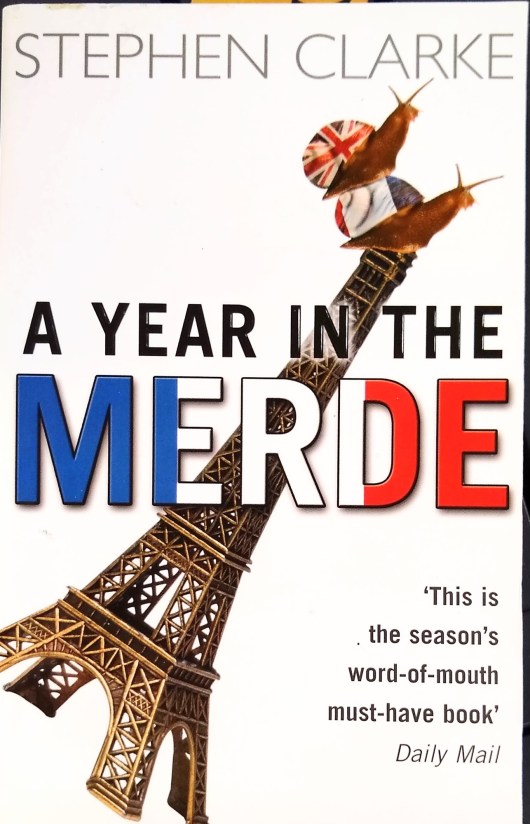

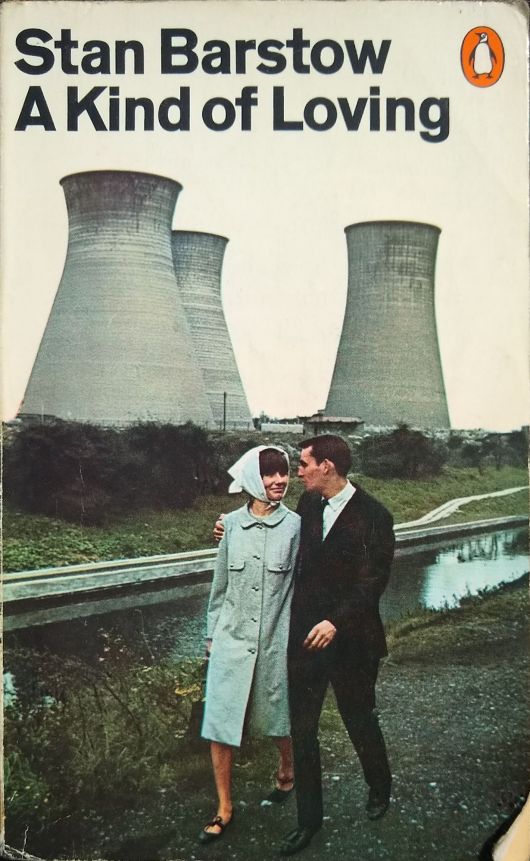 I’ve actually read this book quite a few times and it’s one of those that I mention when people ask me to describe Floating in Space. As much as I’m fond of Floating, this book is infinitely better. It’s a very simple story and probably one that has happened hundreds of times to hundreds of couples.
 Once again Liz and I are on holiday in France and as usual I’ve filled up my book bag with books to read. My selection this year was a mix of new books and some books from my collection which I haven’t read for years. The one I’d like to focus on this week is Random Harvest by one of my favourite writers,
  The book tells the story in an entirely different way. It begins with a chance encounter on a train with Rainier and a young man who is looking for work. The two strike up a sort of friendship and Rainier invites the young man to work for him, He explains that he was in the war, was injured and woke up in a German hospital with loss of memory. He was repatriated through Switzerland but got his memory back after a fall and a collision with a taxi in Liverpool. The time between his earlier life and waking up in Liverpool is a blank. The young man becomes Rainier’s assistant and the two sometimes talk late into the night discussing what might have happened. Later in the book, Rainier is called to intervene at a dispute at the Melbury factory and his memory begins to return. He asks a local taxi driver about the hospital. The man asks does he mean the new or the old one? Rainier thinks the old one and goes on to describe it. ‘That doesn’t sound like either of them,’ answers the man but adds, ‘would you be meaning the asylum sir?’
 Charles Dickens is one of my writing heroes. He is a giant in the world of literature and the author of one of my favourite books of all time, David Copperfield. He was a man with an incredible imagination and was a prodigious producer of numerous books and stories. Many of his works are still loved and appreciated today and the magic of his story telling is also reflected in film and television adaptations of his work.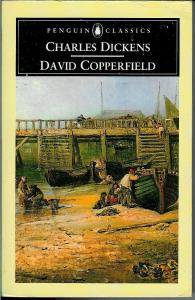

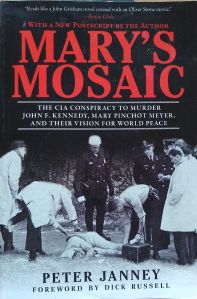 Mary’s Mosaic by Peter Janney
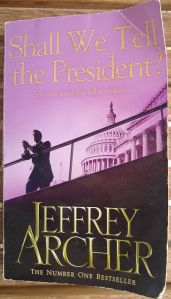 Shall we Tell the President? by Jeffrey Archer.
 The Long Dark Night by Susan Lund
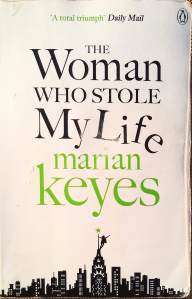 The Woman who Stole My Life by Marian Keyes.
 The Prime of Miss Jean Brodie
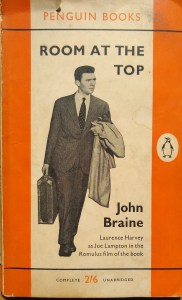 Room at the Top
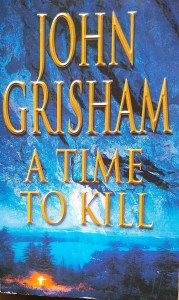 A Time to Kill by John Grisham
 Letters from an Unknown Author!