 Once again Liz and I are on holiday in France and as usual I’ve filled up my book bag with books to read. My selection this year was a mix of new books and some books from my collection which I haven’t read for years. The one I’d like to focus on this week is Random Harvest by one of my favourite writers, James Hilton.
Hilton hailed from Leigh in Lancashire, now Greater Manchester. He wrote several books and made his way to Hollywood, California where he worked as a screenwriter. He died in 1954. Searching through a box of my old books I came across Random Harvest, a book I don’t think I have ever read before. I bought it from a second hand book shop along with Goodbye Mr Chips, possibly Hilton’s most famous novel and one I have read before. I can imagine intending to read it but moving on to something else and the book was boxed up in one of numerous house moves before I had a chance to get to it.
The Film
The film version starred Ronald Colman and Greer Garson in the leading roles. The film opens with a man called Smith wandering out of an asylum on a day when there is much excitement. It is Armistice Day, 1918 and ‘Smithy’ is a man who has lost his memory during the fighting in the First World War. He wanders down to the town of Melbury and in a tobacco shop the shopkeeper realises Smithy is from the asylum. When she disappears into the back of the shop a woman played by Greer Garson explains that the shopkeeper has gone to call the asylum so that he if wants to avoid going back he must get away. The woman, Paula, befriends Smithy and hides him away and soon she finds she is falling for him. The two elope together, find a quiet village in which to settle down and get married.
Smithy, who has no memory of his former life begins to write and soon has a story accepted by a newspaper in Liverpool. He takes the train there for an interview with the editor but on a wet afternoon, slips in the road and is hit by a taxi. He is knocked unconscious and when he awakes his memory has returned but he has no memory of his time as Smithy. How did he get to Liverpool? What door to what house fits the key found in his pocket? A policeman asks his name and he replies ‘Charles Rainier’. Gathering his things he sets off to take the train home to his country estate but arrives just as his father has passed away. The family has gathered and they are all surprised but glad to see Charles who later goes on to take charge and rescue the failing family business.
The final part of the film sees Charles happy as a new Conservative MP and successful businessman but also sad that a part of his life has been lost to him. He makes various attempts to find his former life but all end in failure until one night when a strike breaks out at the Melbury factory and he has to go there to sort things out. As he walks into Melbury he comes to the tobacco shop he once entered as ‘Smithy’ and things begin to come back to him.
Colman and Greer Garson play their parts wonderfully well. The film is perhaps a little sentimental for modern viewers but it is one of those films I saw as a child and have always remembered. Reviewers at the time were not impressed but even so, the film was nominated for 7 Oscars and it was MGM’s biggest hit of 1942.
The Book
 The book tells the story in an entirely different way. It begins with a chance encounter on a train with Rainier and a young man who is looking for work. The two strike up a sort of friendship and Rainier invites the young man to work for him, He explains that he was in the war, was injured and woke up in a German hospital with loss of memory. He was repatriated through Switzerland but got his memory back after a fall and a collision with a taxi in Liverpool. The time between his earlier life and waking up in Liverpool is a blank. The young man becomes Rainier’s assistant and the two sometimes talk late into the night discussing what might have happened. Later in the book, Rainier is called to intervene at a dispute at the Melbury factory and his memory begins to return. He asks a local taxi driver about the hospital. The man asks does he mean the new or the old one? Rainier thinks the old one and goes on to describe it. ‘That doesn’t sound like either of them,’ answers the man but adds, ‘would you be meaning the asylum sir?’
The book is a really interesting read and being written in the years before the second world war, gives the reader a little insight into the feelings of that time, a dissatisfaction with the League of Nations, a feeling that perhaps the First World War could have been settled sooner or even that the allies might have gone on to Berlin and perhaps parcelled up Germany into a smaller nation.
The climax of the book is Charles’ reunion with Paula who turns out to be his wife and former secretary so we find that Charles and Smithy married the same girl which worked well in the book but of course had to be told differently in the film.
Which did I enjoy more? Well I loved both works but to be fair I’ve always loved the film version and as much as I love James Hilton, I think I prefer the film. It isn’t often seen on TV and not long ago I managed to copy my VHS version to DVD but I did notice that a restored DVD version was released in 2005 which I must look out for.
 Charles Dickens is one of my writing heroes. He is a giant in the world of literature and the author of one of my favourite books of all time, David Copperfield. He was a man with an incredible imagination and was a prodigious producer of numerous books and stories. Many of his works are still loved and appreciated today and the magic of his story telling is also reflected in film and television adaptations of his work.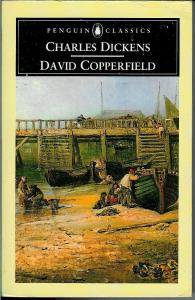

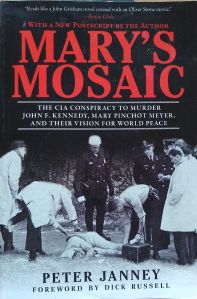 Mary’s Mosaic by Peter Janney
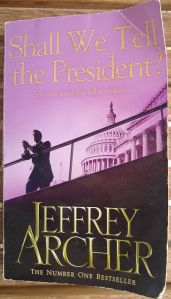 Shall we Tell the President? by Jeffrey Archer.
 The Long Dark Night by Susan Lund
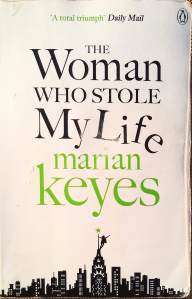 The Woman who Stole My Life by Marian Keyes.
 The Prime of Miss Jean Brodie
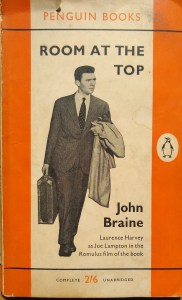 Room at the Top
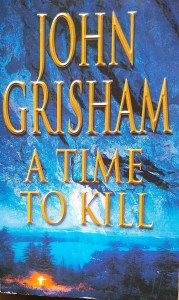 A Time to Kill by John Grisham
 I’m not sure which came first for me, the book or the film but I actually think it was the book. The Godfather was written by Mario Puzo and is the story of Don Vito Corleone, the head of one of the five mafia families of New York. The book opens with the wedding of Don Corleone’s daughter and Puzo sets the scene and introduces the various characters.
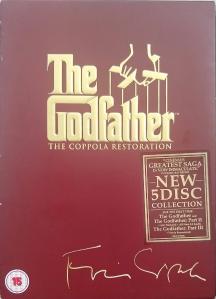 Francis Ford Coppola was the director of the film version and was also the co-writer of the screenplay along with Mario Puzo. Coppola wanted Marlon Brando to play the part of Don Corleone even though Brando at the time was rather unpopular with the producers. He was expensive, his last few films had not done well and his time wasting attitude had added huge expenses to his pictures. After the director had made the producers understand how important Brando was, they set various conditions for his employment. He would have to work for a reduced salary and put up a bond to ensure he would not delay the production. Another was that he had to have a screen test. Coppola has told the story in various interviews how he and his film crew had entered Brando’s house like ninjas and quietly set up their equipment. Brando slicked down his hair with shoe polish and stuffed cotton balls into his mouth to make the transformation into the aging mafia boss.
 Coppola decided that instead of finding the horse at the end of his bed like in the book, it would be better if Woltz awoke, was disturbed by something wet, pulls the bedclothes away to see blood and then uncovers the horse’s head. The head was the actual head of a horse, procured from a dog meat factory and Coppola mentions on the commentary to my DVD version that lots of animal lovers sent him hate mail about the horse, even though the horse had been condemned to its fate anyway.
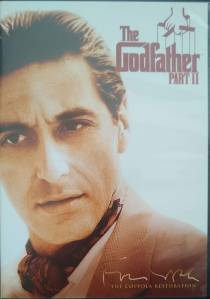 As previously mentioned, the book does have some storylines which were not used in the film but one chapter was a look at the beginnings of Vito Corleone. Born Vito Andolini in the Sicilian village of Corleone, Vito’s father was murdered by a local mafia boss and the young Vito was smuggled away to America. In America he took the name of Corleone and seemed to slip quietly into the role of mafia Don by murdering Fanucci, a New York Sicilian Godfather who preyed on his fellow Italians. Although this element of the story wasn’t used, Coppola kept the storyline for use in The Godfather Part II. The follow up film was a film classic in its own way.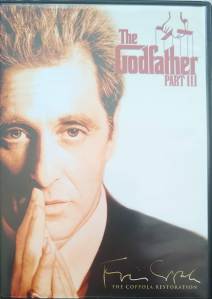
 This isn’t a post about my
 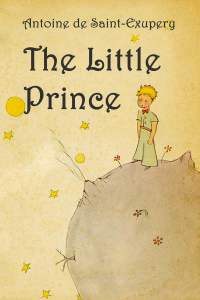 In the film William Bast played by Michael Brandon, leaves Dean in a restaurant and Dean later asks why Bast left. Bast was intimidated by Dean’s important looking friends and Dean replies that he was judging by surface appearances. When Bast questions Dean further, Dean produces his favourite book, The Little Prince and then goes on to read his favourite passage.
 Donald Campbell was the son of a famous racing driver and record breaker, Sir Malcolm Campbell. Campbell first broke the land speed record in 1924 at Pendine Sands in Wales which was the first of his nine land speed records. He also set the water speed record in his boat Bluebird K4. He was knighted in 1931 and died in 1948 aged 63. He was one of the few racing drivers and land speed record holders of his era to die of natural causes as many of his rivals were killed in crashes. His son, Donald Campbell, was determined to equal and even surpass his father’s achievements.
 This is perhaps where this post might start to unravel. I know the Donald Campbell link was a little tenuous and only based on a film but this next one was based on my own memory which can be prone to failure. I knew Noel was a great fan of the children’s writer E Nesbit and I’m sure I had heard or read somewhere that when he died, he was reading his favourite of that author’s books, The Railway Children. A quick bit of internet research and I see that Noel died after reading Nesbit’s The Enchanted Castle. Coward was a lifelong fan of E Nesbit who wrote a series of children’s books. He discovered the books as a child and revisited them many times during his life. In his diary he wrote this about the author:
 Woody is one of my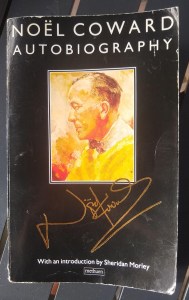





 James Bond has been in the news this week. The books by Ian Fleming are apparently being rewritten as they might be considered offensive to a modern generation of new readers and the producers are still looking for a new actor to play their famous secret agent. OK, time for another James Bond 007 post.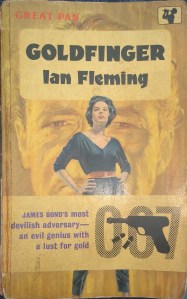



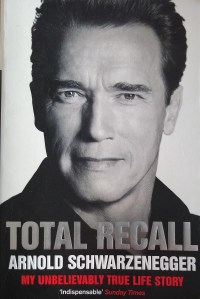 This book was a Christmas gift from Liz. She knows I’m a big film fan and I do love reading about the background to films and how they are made. Arnold is from Austria and he tells us a little of his life there but mainly focuses on his desire to be a great bodybuilder and to eventually go to America. There is a lot of talk about the process of competitive bodybuilding and the different muscles, muscle definition, reps and squats and all that stuff. Arnold eventually wins various competitions and is wondering how he can compete in the USA when he gets an invitation to do just that. The bodybuilding industry is a close knit one and there seem to be various people welcoming him to California, helping him to find a place to stay and so on. He wins more competitions and makes a little money. He starts a mail order business selling magazines and pamphlets about himself and his body building techniques. He brings one of his Austrian friends over and the two begin a bricklaying and home improvement business. His big break is getting a film part as Hercules and even though the production eventually goes bust it seems to give him a taste of the film business and he wants more. He plays Conan the Barbarian in the film version of a comic book hero and pretty soon he plays the Terminator and goes on to success after success, even becoming governor of California.
 This is not a book I brought on holiday but one I found on the shelves of our rented villa in Lanzarote. I started reading it when I got a little bored with Arnold Schwarzenegger and liked it so much I just carried on to the end. It is a real pleasure to read something by a master wordsmith and I enjoyed every minute even though I had read this novel years ago. Young Pip, apprenticed to be a blacksmith, is invited to the home of an eccentric rich woman, Miss Havisham, purely for her amusement. Later in his young life he finds he has ‘great expectations’ and is to inherit a remarkable property. He is taken to London to be brought up as a gentleman and although he is told that his benefactor has asked to remain a secret, he naturally assumes it is Miss Havisham. At the beginning of the book, Pip encounters Magwitch, an escaped convict on the marshes near his home. He compels Pip to bring him some food and a file. He is captured and transported to Australia and later we find, much to Mr Pip’s shock and amazement that Magwitch is the mysterious benefactor.
 This is a collection of globe trotting stories from John Simpson who has travelled the world as a journalist for the BBC. These though are travel stories with a difference, for instance in the first chapter he talks about airports, not the airports that I generally use, tourist destinations like Spain and Greece. The ones Mr Simpson mentions are airports in war torn Angola and Bosnia, and places like Kabul in Afghanistan and other places where he has had his passport and papers routinely torn up or thrown into a river by laughing revolutionaries and mercenaries. He tells us about headlong dashes to catch flights, including one somewhere in eastern Europe where he was in such a mess after weeks living rough the stewardess was reluctant to let him on board, especially as he had a first class seat. His fellow passenger in the next seat asked to be moved. Luckily John wasn’t flying on a budget airline like the ones I travel with.
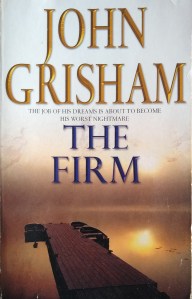 There is a process by which I choose books to take with me on holiday. I like to think it’s a thoughtful process combining different genres of books, some novels, maybe the odd classic, and some biographies and autobiographies. What actually happens is that the day before our trip I’ll just grab something near to hand that I know I haven’t read yet and shove it in my suitcase. Anyway, that’s how I ended up with the books you see above. Last year I read The Rainmaker by John Grisham and I thought it was a pretty good read. I must have mentioned that to Liz so she filed that away and got me a stack of Grisham novels for my last birthday. The Firm isn’t a bad read and in my case it was a nice change of pace after reading Dickens and John Simpson’s globetrotting memories. It’s a good story but like a lot of Grisham’s works, its more plot driven than character driven. The characters are sort of bland templates that I’ve recognised in a lot of his novels and so far I’ve only read three. Anyway, characters aside, this is a really original story about a young guy who graduates from law school and gets head hunted into a firm he has never heard of but which offers tremendous financial benefits, a brand new BMW, and an ultra cheap mortgage as well as other financial bonuses. The downside as he comes to learn later is that the firm is just a cover operation to launder money for a big mafia crime family and the FBI wants our hero James McDeere, to help them.
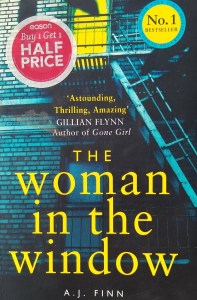 I’m not sure I would normally have picked up this book if I hadn’t run out of books to read. I saw this on the shelf in our rented villa and Liz had read it and mentioned about numerous references to old black and white films which were right down my alley, apparently.
