 My original idea for this post was to write about 90s British films but then I realised some of those 90’s films were actually from the 2000’s. I then changed tack to a blog about films written by Richard Curtis but that meant cutting out a few films that I really wanted to include. Then I thought what about films with Hugh Grant? Great but although many of the films below feature Hugh, I’ve got a personal favourite in which he doesn’t star. That of course has led to the final incarnation of this post, 5 British Rom-Coms.
4 Weddings and a Funeral 1994
I’ve always rather loved this film. In a way I tend to think of it as a sort of modern Ealing Comedy, or at least the sort of film that Ealing would be making were they still in business. The only difficulty in that respect is the rather liberal use of the ‘f’ word that the film can really do without. In the USA, or so I have read, the version screened over there has the ‘f’ word substituted by the slightly less alarming word bugger.
The plot is pretty simple. It’s about a group of friends who only seem to meet regularly at weddings. At the first wedding Charles, played by Hugh Grant, meets Carrie and falls for her only to find she is about to return to the USA. Happily he meets her again at another wedding and, sadly for Charles, he meets her again at yet another wedding, this time one in which she is the bride.
The happiness of constant weddings is shattered by the death of one of Charles’ friends but this being a rom-com, things all work out in the end. Carrie is played by Andie McDowell and the supporting actors who appear at each wedding are all well known to fans of British film and TV.
Four Weddings and a Funeral is the movie that brought fame to writer Richard Curtis and actor Hugh Grant, as the announcer mentioned last time I saw this film on the television. Strangely, he didn’t mention Mike Newell, who directed the film. Funny how the credit from a successful film doesn’t always get spread equally around.
Notting Hill 1999
Written again by Richard Curtis and starring Hugh Grant, Grant this time plays William Thacker, the owner of a bookshop in London’s Notting Hill. One afternoon at the bookshop, Hollywood film star Anna Scott played by Julia Roberts comes into the shop to browse. Not long afterwards William accidentally walks into her and spills takeaway drinks all over her. He invites her back to his place just across the road where she cleans herself up.
On another occasion the two go out for a date but William’s oddball flatmate Spike played by Rhys Ifans, happens to mention the film star’s presence to his mates at the pub and the flat is soon swamped by reporters. Anna is not amused and the two fall out and seem to go their separate ways.
There is a really lovely sequence here in which William walks along the Portabello Road and the scene transforms into winter, then autumn and finally summer showing the passage of time in a really unique way. Later, the two manage to sort things out just before Anna leaves for the USA.
Over on Wikipedia it was interesting to find that according to a 2018 interview High Grant gave to GQ magazine, the idea came to Richard Curtis after one of his friends became involved with an unnamed ‘big star’. The film was shot on location in Notting Hill and the blue door to William Thacker’s place in the film was actually a property owned by Richard Curtis.
Julia Roberts was the producer’s only choice for Anna Scott although personally, just like Andie McDowell in 4 weddings, I’ve never found her remotely attractive.
The film won a Brit Award for its soundtrack.
Sliding Doors 1998
This was a film written and directed by Peter Howitt. Howitt is probably best known for playing the part of Joey Boswell in the TV comedy series Bread. This is a really super film which is about a girl, Helen Quilley, who gets fired from her PR job. Helen, played by Gwyneth Paltrow, heads off for home. She goes to the tube station but is only seconds too late and misses her train. The film then rewinds a few minutes and when it replays, Helen manages to catch the train. The film then sets off in two separate directions with two differing storylines. In one she arrives home to find her boyfriend in bed with another woman. In the second she arrives home later and the boyfriend manages to cover up his two timing activities.
The film was made in 1998 but still looks fresh and contemporary. The only jarring things -from a 2026 point of view- are people still smoking in pubs and offices filled with huge computer monitors. It’s a lovely film and one I tend to watch quite a lot on DVD.
Bridget Jones Diary 2001
This film was based on the book by Helen Fielding and had a script written by Fielding, Andrew Davies and once again, Richard Curtis. American actress Renee Zellweger played Bridget with a very impressive British accent with her love interests played by Hugh Grant and Colin Firth.
Bridget works in publicity for a publishing company. She is 32 and worried about her weight and confides all her worries as well as her fantasies to her diary. At her mother’s Christmas party, she meets barrister Mark Darcy, a neighbour from her childhood, who she finds arrogant and rude. At work she flirts a lot with her boss Daniel Cleaver played by Grant and begins an affair with him only to find that he is a serial cheater.
Who will Bridget end up with, the slimy but nice Daniel or the boring but nice Mark? One of the film’s highlights is a drunken street fight between Daniel and Mark which plays out pretty much how two upper/middle class twits would be expected to behave.
Three sequels were made to the film, the last one was Mad About the Boy in 2025 but personally, I think the original was the best.
About a Boy 2002
This is still a rom-com but considerably darker than the other films on this list. Hugh Grant plays someone slightly different to his usual film persona. Will Freeman is a young man in his 30s who lives a rather aimless life. He does not go out to work, instead he has ample funds because of regular royalties due from a popular tune which was written by his late father. His one aim in life is to meet women and he happens to come across a young mother and feels that young single parent females would be good for him because they are mostly on the lookout for a new man. To achieve this aim he joins a group for single parents where he is the only man and after spinning a yarn about being deserted by the mother of his only child, ‘Ned’, he feels warmed by the sympathy vote of the whole group and quickly gets involved with an attractive young mother called Suzie.
Through various circumstances, this leads him to meet Marcus, the son of one of Suzie’s friends and the two begin a friendship of sorts which begins to bring a new meaning to Will’s life.
Overall, the film is perhaps a little slow and rather dark in a way but still a great film based on a book by Nick Hornby.
What to do next: Here are a few options.
Share this post on your favourite social media!
Hit the Subscribe button. Never miss another post!
Listen to my podcast Click here.
Buy the book! Click here to purchase my new poetry collection.
Click here to visit Amazon and download Floating in Space to your Kindle or order the paperback version.
Click here to visit amazon and purchase Timeline, my new anthology.
 Tv programmes of course cost money, quite a lot of money in fact. Back in the 1990s when I was fresh from a video production course and hoping to actually get a job in the TV industry (I never did) I was told an hour of television costs £100,000. What it costs nowadays is anyone’s guess but then again, it’s so easy to make a TV show in 2026. One of my favourite programmes is Canal Boat Diaries, an entirely self-shot show which has graduated from YouTube onto the BBC and can be seen quite regularly on the U-Yesterday channel. Does that mean an hour of TV is worth more or less than that 90’s figure of £100,000?
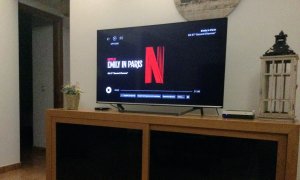 We watched The Crown last year while staying in the Loire valley even though we don’t normally watch much TV on holiday. This year in Lanzarote, we spent many an evening watching Emily in Paris, another Netflix show. I’d found it by searching on the internet for good TV shows to watch on Netflix and Emily came up so we thought we’d give it a go.
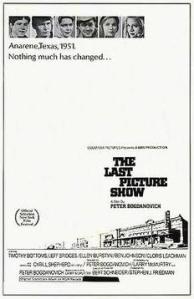 Another modern classic. This film was directed by Peter Bogdanovich and is set in a small town in northern Texas in the early 1950s. The film has an ensemble cast but the two main characters are Sonny and Duane played by Timothy Bottoms and Jeff Bridges. The two are teenagers and old friends and various things happen to them. They fall out over a girl called Jacy played by Cybill Shepherd. Ben Johnson plays ‘Sam the Lion’ who owns the bar and cinema in the town. Sam has a mentally disabled son who Sonny has befriended. Various things happen to the pair but towards the end of the film Duane enlists in the army and is due to leave town so the pair decide to visit the town cinema for the very last picture show as the cinema is about to close after Sam’s sudden death.
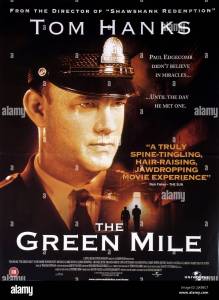 Like The Shining, this is another film based on a book by Stephen King. Tom Hanks plays the head of a death row section of an American penitentiary. One of the inmates is John Coffey, a huge black man who appears to have healing powers. He cures Tom Hanks’ bladder infection but the mood in death row is not good after sadistic Percy Wetmore joins the team and deliberately sabotages the execution of another inmate causing the prisoner to die in terrible agony. The warden’s wife is terminally ill and Hanks and his team wonder if John Coffey could cure her.
 By the time you are reading this, Christmas and New Year will all be over. We’ll be fed up of turkey and sprouts and thinking about taking down the Christmas decorations. So before Christmas becomes a distant memory here’s a quick look at 6 Christmas films that were all shown, with perhaps just one exception, over the last few weeks.

 This week I’ve noticed quite a few items about Richard Burton on the BBC iPlayer. I wasn’t sure why at first but it turns out that this year, 2025, is the centenary of Burton’s birth. He was born Richard Jenkins on November 10th 1925.
 Some years ago I read Melvyn Bragg’s biography of Richard Burton and that book was based partly on these diaries which have now been published and are available to everyone.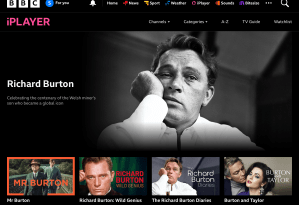
 After graduating, Scott joined the BBC as a set designer and director, working on popular series such as Z Cars and The Troubleshooters. His time in television taught him the mechanics of production and in 1968, he left the BBC to establish Ridley Scott Associates (RSA), a commercial production company. Over the next decade, he directed hundreds of adverts, developing a style of lighting, atmosphere and composition, qualities that made his transition to cinema with The Duellists (1977) both natural and visually striking.
 Just to backtrack a little, we rented this same house back in May and usually, the only time I put the TV on is to watch F1 racing. May is the usual month in the calendar for the Monaco grand prix, one of my favourite races of the year. There is actually plenty of talk recently about cancelling the race as nowadays, the F1 cars are faster and much bigger and so there is very little room left to overtake.

 Letters from an Unknown Author!