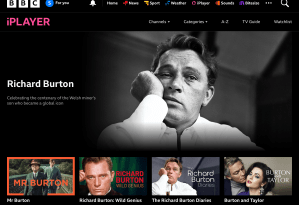
The Richard Burton Centenary

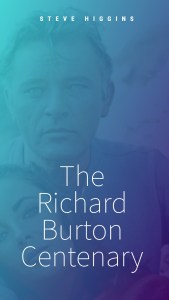
This week I’ve noticed quite a few items about Richard Burton on the BBC iPlayer. I wasn’t sure why at first but it turns out that this year, 2025, is the centenary of Burton’s birth. He was born Richard Jenkins on November 10th 1925.

Why did he change his name to Burton? Well one answer on the iPlayer was given in a wonderful film called Mr Burton. Harry Lawtey plays the young Burton and Toby Jones plays his mentor, Philip Burton. Burton came from a poor mining family in Pontrhydyfen in Wales. He had thoughts of becoming a teacher but things were not working in his favour. His mother died when he was young and his father was an alcoholic. Richard went to live with his sister and her husband but financial circumstances forced him to leave school and take up a job in the local Co-op. Enter teacher Philip Burton who urged Richard to rejoin school after promising to help with his finances.

The return to school caused some resentment from his brother in law and so with the consent of his father, Richard became Philip Burton’s legal ward and just aged eighteen, changed his surname on 26 November 1943 to Burton by means of a deed poll. Richard joined the Air Cadets and was able, with Burton’s help, to study at Oxford after applying for a six month RAF scholarship.

Philip Burton made Richard work on his voice and gradually the wonderful speaking voice we are familiar with today began to appear.

Mr Burton was an excellent film and full marks go to Harry Lawtey for his portrayal. In the early part of the film I did wonder how this youthful boy with the very Welsh accent could progress to the young confident actor but Harry’s performance and the way his own voice echoes that of the real Richard Burton was outstanding.

Another programme on iPlayer was a made for TV film called Burton and Taylor and it’s about, as if you hadn’t already guessed, Richard Burton and Elizabeth Taylor.

Back in 1983 when this film is set, Burton and Taylor were probably the most famous celebrity couple in the world. The only other couple of a similar status that I can think of are Mary Pickford and Douglas Fairbanks, a couple from a completely different era. Let me see who else comes to mind; Brad Pitt and Angelina Jolie, Kurt Russell and Goldie Hawn, Tom Cruise and Nicole Kidman, Posh and Becks. Hardly in the same class are they?

Richard Burton and Elizabeth Taylor met on the set of the film Cleopatra in 1961, a movie that went down in history as one of the most expensive ever made. Taylor didn’t want to make the picture so decided to ask for a ridiculous amount of money, confident that 20th Century Fox would never pay it. However, pay it they did and the troubled movie went into production.

The Burton/Taylor TV film focusses on the later years of the pair when they had been married and divorced twice and for some reason decided to star together in a stage revival of Noël Coward’s witty play, Private Lives.

In the film, Taylor is played by Helena Bonham-Carter and Burton by Dominic West. West doesn’t really look much like Burton but captures his voice and persona well. Bonham-Carter as Liz Taylor does look surprisingly like the original and together they make a good reproduction of the famous couple.

The writer seems to believe, and whether it is true or not I don’t claim to know, that Liz Taylor engineered the theatre production of Private Lives as a way of bringing her and Burton back together again. As I mentioned earlier, they had already been married and divorced twice and the movie revealed that Liz clearly still had feelings towards Burton. On the first day of rehearsals she is surprised that Burton will not be lunching with her but spending time with his new girlfriend, Sally. Burton in turn is shocked that on the first read through it is clear that Taylor has not previously read the play. Burton of course knows it off by heart. He is the consummate professional actor and Taylor the consummate professional movie star. During the run when Taylor calls in sick, the production is halted rather than carry on with an understudy, as it becomes clear from the public reaction that the audience are not interested in the play without superstar Liz.

Burton and Taylor were clearly in love but love must have been difficult in the face of their superstar status, just as it was for Fairbanks and Pickford. I can imagine Burton’s upbringing in a mining community and Taylor, having been a star since childhood, were not personalities that could bend much for the other.

The film is interesting, enjoyable and gives the viewer a fascinating peek into the private lives of these two superstars of the past.

The Richard Burton Diaries edited by Chris Williams

Some years ago I read Melvyn Bragg’s biography of Richard Burton and that book was based partly on these diaries which have now been published and are available to everyone.
There is a lot I like about this book and a lot that I don’t like. I tend to prefer paperbacks but I bought this one from the internet and it’s a big heavy hardback and as I took the book to France to read on holiday it became a little more battered every day.

Moving on to the text and I see a lot of the big events in Burton’s life are missing as sometimes he stops writing for days and even months at a time. We don’t hear about the making of Cleopatra and his meeting and affair with Elizabeth Taylor but he does mention some of those events in retrospect.

The book starts with his schoolboy diaries which are rather like mine, brief and to the point. Later, the main diary starts in 1965 when Burton begins to write in more detail. He tells us of his immense love for Taylor and how he has given up womanising to be faithful to her but sometimes I get the feeling he isn’t being totally honest, after all Liz has free access to his diary and she frequently jots down her own comments too. Burton was rumoured to have had an affair with Genevieve Bujold during the filming of Anne of a Thousand Days but of course, gives no mention of that in his journal.

He does talk a lot about food and having lunch in places like Paris and Rome. He enjoys having money and delights in spending it on jewels for Liz, a new private jet plane and a yacht which he thinks might actually save him money as he can stay on the yacht rather than use hotels. Even so, he continues to use hotels. At one point he considers buying a barge, modernising it and touring the canals of France.

He doesn’t seem to enjoy his acting and in fact rather looks down on it as a profession, although unlike an actor like Brando who had similar thoughts, he did take pride in what he did, learning his part and his lines whereas Brando couldn’t even be bothered to learn the script for the film of Superman despite his million dollar fee.

Surprisingly there is also quite a lot of professional jealousy in the text, for instance he gives Robert Shaw a bit of a slagging off for his performance as Henry VIII in A Man for all Seasons which I thought was rather good, better or at least the equal of Burton’s Henry VIII in Anne of a Thousand Days.

A screengrab from the BBC iPlayer

Burton drinks a lot and frequently argues with Liz, sometimes he is banished to the spare bedroom and usually he regrets his drunken words and wonders why he did what he did or said what he said.

He was though a man who loved reading, devouring anything from the classics to detective novels. He even had ambitions of being a writer himself. His entries are peppered with quotations from authors and poets and of course Shakespeare.

I was really looking forward to reading this book but after the first few pages I thought it a little uninteresting. As the narrative moved from 1968 into 1970, Burton seemed to be putting more effort into his journalling and consequently it became more enjoyable to read. Later large gaps appear in the diaries and he doesn’t appear to have written anything about his breakup with Liz Taylor. The entries become less frequent and to be honest, I ended up skipping quite a few pages.

Verdict: A book that promised a lot but failed to deliver.

Still with the BBC iPlayer, there’s a great documentary about Burton titled Richard Burton: Wild Genius which is rather good and perhaps unlike the above post gives a good overall look at the great actor’s life. Burton died on 5 August 1984 at his home in Céligny, Switzerland, aged only 58. He was buried at the Old Cemetery in Céligny and his widow Sally placed a copy of Dylan Thomas’ collected poems in his coffin.


What to do next: Here are a few options.

Share this post on your favourite social media!

Hit the Subscribe button. Never miss another post!

Listen to my podcast Click here.

Buy the book! Click here to purchase my new poetry collection.

Click here to visit Amazon and download Floating in Space to your Kindle or order the paperback version.

Click here to visit amazon and purchase Timeline, my new anthology.

F1, The Crown and Watching the Box on Holiday

My original title for this post was Watching the Box in France. That however seemed to give the impression that this post was about French TV which it isn’t. Liz and I don’t normally watch much television on holiday, we are far more interested in swimming, going out for meals and barbecuing. On this holiday however, the weather was a little mixed and on quite a few evenings we settled down in the lounge of our rented house and decided to pop the TV on.

Just to backtrack a little, we rented this same house back in May and usually, the only time I put the TV on is to watch F1 racing. May is the usual month in the calendar for the Monaco grand prix, one of my favourite races of the year. There is actually plenty of talk recently about cancelling the race as nowadays, the F1 cars are faster and much bigger and so there is very little room left to overtake.
Back in the 1960s, cars were much smaller, in fact in those days there were three cars on the front row of the starting grid, the cars lining up in 3-2-3 formation. Fast forward to the present day and F1 cars and their aerodynamic fins and wings have spread out hoping to grab that extra bit of air in order to generate more downforce and push themselves down to the track so they can corner ever faster.

Many people have called for the race to be cancelled as bigger cars combined with a narrow track makes it virtually impossible to overtake which reduces the racing to just a procession of high speed cars and of course whoever is on pole position is pretty much guaranteed a win. Push that to one side and I must tell you that I happen to love the Monaco grand prix, I love the track, I love the exotic names of the corners: Saint Devote, Mirabeau and Rascasse. I love the run down to the Casino Square, the dash into the tunnel and the following tight chicane, the prize giving, the boats in the harbour, the glamour; in short, I love it all.

Back in May then I was disappointed to find that the Skybox in this lovely house did not seem to be working. I switched it on and off, rebooted it, checked the connections but all to no avail. I was forced to watch the 8 minute highlights on YouTube and quite frankly, I was gutted. OK back in England our own trusty Skybox had recorded the race but by then I knew the outcome, I knew the winners and the excitement had all been lost.

Anyway, we came here once again in September and I was looking forward to watching the Italian Grand Prix, another of my favourite races. The TV worked ok but the skybox was no more, lying abandoned and disconnected on one side. A new TV set up had been sorted with the TV connected to the internet. I quickly ascertained that in France, F1 was available on Canal+. Yes, Canal was there, ok so far. I clicked on the channel only to find that a subscription was required. I would have to pay and subscribe to Canal to watch the racing!

My inner tightwad kicked in and declined to open up my wallet so once again I had to make do with the 8 mins of YouTube highlights. Oh well, we didn’t come on holiday to watch TV but even so, I was disappointed.

The other thing we noticed on one rainy evening was that Netflix was available. Now just recently when Liz renewed her Sky package, some negotiation was involved and to sweeten the deal, Sky threw in a Netflix subscription. I have to say I haven’t looked at Netflix much but I always assumed it was just an ordinary channel like BBC1 for instance, in that there was a schedule and certain programmes were broadcast at certain times. Not so, Netflix is more like YouTube, you can watch programmes on demand but what to watch, that is the question.

Liz wanted to watch The Crown which I can’t say I was really interested in at first but after a while I realised what a really excellent production it is. The actors are really good especially the portrayals of the Queen, Princess Margaret and Winston Churchill.

The younger Queen was played by Claire Foy and Princess Margaret by Vanessa Kirkby and Margaret’s situation as the Queen’s sister was explored in a few episodes. Her love affair with Peter Townsend was doomed because Townsend was a divorcee. The Queen was advised to ask Margaret to wait until she was 25 and then she could marry. When the time came the Queen’s advisors brought up more issues and then ultimately the two lovers had to separate which of course didn’t help the sisterly relationship between the Queen and Margaret. Margaret actually could have married Townsend but that would have meant giving up her royal status so it seems to me that perhaps being a royal meant more to her than being with Peter Townsend.

Prince Philip courtesy creative commons

Before watching The Crown I had no idea of the background of Prince Philip. I always assumed he was English and a member of some family which was eligible to marry into the royals. In actual fact he was Greek and aged only eighteen months old he and his family were exiled from their homeland which left him with a lifetime fear of revolution and anything that might threaten the royal family.

His and Charles’ school days at Gordonstoun were really well done especially the interplay and flashbacks between Philip’s and his son Charles’ time there. Philip apparently loved it but Charles hated it.

A real stand out story was the one about the retirement of Churchill which was cleverly linked to the famous, or infamous painting of a portrait of Churchill by Graham Sutherland. Churchill, played by John Lithgow, was coming up to his 80th birthday and various people wanted him to retire but he was adamant that he would carry on. Churchill had various sittings for the painting with the artist and Churchill himself was an amateur painter of some merit. The two, one a professional and the other an amateur, tried to examine each other through their works. Churchill was hugely disappointed with the result which portrayed him as a very old man and came to see at last, according to The Crown anyway, that the time had come for him to retire and hand over the leadership of the country to Anthony Eden. Everything was beautifully done.

The other thing about The Crown was even the quick cutaway and establishing shots of cars driving up to the Palace or through London in the 50s and 60s, were expertly done. I’m sure there was an element of special effects involved especially in scenes of crowds in London but even so, everything looked so good.

An interesting episode concerned Lord Altrincham who was concerned enough to put forward a little criticism of her Majesty when she seemed to brand the workers at a car factory ‘ordinary’ instead of praising their work. He said himself that he didn’t blame the Queen but those who were writing her speeches and he added; “The personality conveyed by the utterances which are put into her mouth is that of a priggish schoolgirl, captain of the hockey team, a prefect and a recent candidate for Confirmation.”

In the show, Lord Altrincham is invited to the palace to meet the Queen’s secretary, however when he arrives, he finds himself face to face with the Queen.

I doubt that ever actually happened but if it did then full marks to the Queen for meeting criticism head on. Many of the Lord’s recommendations, such as making a Christmas TV broadcast, were accepted by the monarch and surely must have helped her feel not as remote from her people as she had up till then. Another broadcast which was dramatised was the one made by the Duke of Windsor when he abdicated. The Duke flips in and out of the story. The Queen Mother detested him as he had forced the mantle of kingship onto her husband when he was ill-prepared for it. Prince Charles however, did strike up a sort of friendship with the Duke. I should imagine that a former King and a future one would have much in common although how much was fiction and how much was accurate, I don’t know. Charles was played by Josh O’Connor extremely well and the Duke in his later incarnation by Derek Jacobi.

Our last evenings in our gite at Parçay-les-Pins were made all the more enjoyable by this splendid series which I’m sure everyone has watched ages ago but for me, a latecomer to Netflix, is very new.


What to do next: Here are a few options.

Share this post on your favourite social media!

Hit the Subscribe button. Never miss another post!

Listen to my podcast Click here.

Buy the book! Click here to purchase my new poetry collection.

Click here to visit Amazon and download Floating in Space to your Kindle or order the paperback version.

Click here to visit amazon and purchase Timeline, my new anthology.

10 Classic TV Ads

Don’t you just hate TV adverts? I certainly do. There are those times when a TV advert comes in useful I suppose. Perhaps when you are watching a good film and you need to make a cup of tea or pop to the toilet. These days in the hi tech world of TV, most people are able to pause live TV and do those things anyway. I wouldn’t mind if the TV adverts were actually worth watching but these days of course they aren’t. Anyway, here are 6 classic TV ads of yesteryear that I think are rather good. Here we go . .

1.

This is an advert for Strongbow cider featuring Johnny Vaughn, who you might remember as fronting the Channel 4 breakfast show many years ago, and Jerry Hall. Jerry was an American model and was once upon a time involved with Bryan Ferry and then Mick Jagger. It’s a fun advert that has always made me laugh.

2.

A particular favourite of mine is the Ford Puma advert from 1997 featuring Steve McQueen. McQueen of course passed away from cancer in 1969 so how did he feature in the ad? Well, filmmakers shot footage of the Ford Puma in modern San Francisco and digitally inserted McQueen into the driving seat using footage from his 1968 film Bullitt. The result was a stylish short TV ad recreating a scene from the original feature film.

3.

An old TV advert I always used to enjoy involved an old guy trying to trace a copy of a secondhand book; Fly Fishing by J R Hartley. He eventually finds a copy and the book seller asks his name. “J R Hartley” he replies. What were they advertising? Yellow Pages! Strangely enough some bright spark – actually author Michael Russell – produced a spoof book; Fly Fishing by J R Hartley which became a best seller and prompted two additional sequels.

4.

Probably the funniest classic TV ads are the ones with Leonard Rossiter and Joan Collins which are promotions for Cinzano. They actually made 10 TV commercials between 1978 and 1983 which all ended with a glass of Cinzano getting spilled all over Joan.

Rossiter had a successful theatre career but is best remembered for his portrayal of the seedy landlord Rigsby in TV’s Rising Damp, still shown regularly on UK TV. Joan Collins has had a long career in TV and films including a spell in the USA starring in the TV series Dynasty. This year, 2025, she is due to portray Wallis Simpson in a new film production. Leonard Rossiter died in 1984 aged 57.

5.

A great advertising series were those for Boddingtons beer. I used to love a pint of ‘Boddies’ as we used to call it but then the brewery was taken over by another company (Whitbread, I think) and the Boddingtons bitter they produced was really not like the original Boddingtons at all. Anyway, back in the 1990s a series of adverts were produced starring Melanie Sykes speaking in a broad Manchester accent.

6.

My particular favourite Boddingtons ad was this one that starts off in Venice but ends up somewhere in Manchester.

7.

Bolton comedian Peter Kaye featured in a series of ads for John Smiths beer. Can’t say I was that keen, then or now, on John Smiths beer but the adverts were good.

8.

A great favourite for many people were the puppet ‘aliens’ used in an advert for Smash which was a powdered version of mashed potatoes. You just added liquid I presume but personally, I’m happy peeling and boiling my potatoes to make mash just as I have always done.

9.

In 2018 Elton John featured in a Christmas commercial for top end store John Lewis. According to Wikipedia there is a regular Christmas ad for the store every year. I’ve clearly missed the others but I always thought the Elton John one was pretty special.

10.

I’m going to finish with this one advertising another beer, this time Heineken. Bryan Pringle plays a sort of latter day Professor Higgins trying to teach a very well spoken lady, the exotically named Sylvestra le Touzel, to speak cockney. Bryan Pringle featured in a number of films and numerous sitcoms from the 70s to the 90s. He died in 2002.

What were your favourite TV ads?


Those were my 10 TV ads but just before I go to press I thought I’d add one final one. I know I said earlier that modern ads are just not as good these days but I recently spotted this one in which Meg Ryan and Billy Crystal were asked to recreate that famous scene from When Harry met Sally. (I’ll have what she’s having!)


What to do next: Here are a few options.

Share this post on your favourite social media!

Hit the Subscribe button. Never miss another post!

Listen to my podcast Click here.

Buy the book! Click here to purchase my new poetry collection.

Click here to visit Amazon and download Floating in Space to your Kindle or order the paperback version.

Click here to visit amazon and purchase Timeline, my new anthology.


8 Fictional Presidents

Donald Trump, the 47th president of the US, has been in the news quite a lot recently. He’s cutting down on the number of federal employees. He has stopped federal help for electric cars, he’s made it known he wants the USA to take over Gaza and he is also negotiating with Russia to stop the war in the Ukraine. He doesn’t seem to have involved President Zelensky in these talks despite Zelensky being the president of the Ukraine. Trump has even cast doubt on Zelensky’s right to be the president as, because of the war, Ukraine hasn’t held any elections. This is quite rich really as Putin, the leader of Russia, has not only rigged the Russian elections but has changed the law in Russia so he can continue as president and has also allegedly bumped off Alexei Navalny, his major political opponent.
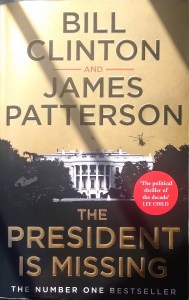
It’s a story that you couldn’t write and that got me thinking about fictional presidents so I thought I’d start with a book I’ve just read here in sunny Lanzarote.

President Duncan

The President is Missing by Bill Clinton and James Patterson has been a good holiday read. A helter skelter fast paced read but moves along quickly and has nicely laid out short chapters to enable me to pause, jump in the pool to cool off and then resume reading.
President Duncan has a lot of problems on his hands. His wife has recently died of cancer and he is suffering from some sort of blood disease. On top of that the Speaker of the House has started hearings regarding rumours that the President spoke to a known terrorist on the phone and even helped him to escape capture.

Not only that but the President agrees to meet an unknown woman who knows a secret password known only to the President and his trusted advisors. She asks the President to meet her colleague at a football game without security and the President agrees and dismisses the Secret Service. Happily the Secret Service are hanging about closely and save the President from an assassin’s bullet but now he has to deal with a threat concerning a computer virus that will shut down every computer in the USA including those that deal with nuclear strikes.

One of the reviews on the back cover was from someone who likened the book to the film Airforce One, and to be honest, I felt the same way, even picturing the President as Harrison Ford, who played the President in that film.

The book was a great holiday read although I did wonder what part Bill Clinton played in the writing process. Did he just provide background to James Patterson or did he contribute towards the storyline too?

Anyway, the book was a great holiday read.

President James Marshall

Clearly I have to follow on with Airforce One, an action packed film starring Harrison Ford as President James Marshall. In this film the President leaves Russia in his aircraft, Airforce One after a joint US/Russian mission to capture a terrorist named General Ivan Radek. Unknown to the President, a group of Radek sympathisers have joined the aircraft posing as journalists. They take over the Airforce One but it looks as though the President has got away in an escape pod. However, the President was unwilling to leave his family behind and he has hidden himself in the cargo hold. The film then unfolds in the manner of a Die Hard film with the President bumping off the terrorists and managing to contact the White House and also to free his colleagues pretty much in the way that Bruce Willis might have done.

Not a great cinema experience but I kind of enjoyed it.

President Jordan Lyman

Seven Days in May was a political thriller released in 1964 and directed by John Frankenheimer. Kirk Douglas plays United States Marine Corps Colonel “Jiggs” Casey who works for Four Star General James Mattoon Scott, a highly-decorated officer played by Burt Lancaster. Jiggs thinks that Scott might be planning a coup to remove the President who has just signed a nuclear disarmament treaty with the Soviet Union, a deal which is highly unpopular with the military. Jiggs discovers that a military group known as ECOMCON has been assigned to seize radio and television networks. He manages to see the President and convince him of the threat. The President, still somewhat sceptical, organises a small group of staff to investigate.

Interestingly, President Kennedy authorised the producers to film scenes at the White House. He had read the book that the film was based on and as he had dealt with critical members of the military himself, was perhaps worried that the fictional scenario could be a real possibility.

The President was played by Frederic March who was one of the great cinema actors of the 1930s and 40s. He was the original Norman Maine in the first version of A Star is Born made in 1936 and even starred with Greta Garbo in Anna Karenina in 1935.

Presidents Palmer, Taylor and Logan

The TV series 24 first appeared in 2001 on US television. Each episode lasted for an hour and is told in real time with a digital clock on screen updating the viewer. The first series is set on the day of the US presidential primary in California. Jack Bauer, a maverick agent of the CTU Counter Terrorism Unit, is detailed to protect presidential hopeful David Palmer from an assassination attempt. Palmer was played by Dennis Haysbert as a potential black US president.

Season 2 details how Bauer, played by Kiefer Sutherland, must prevent a nuclear bomb from exploding and assist David Palmer, now the US president, in finding the culprits. Jack is assisted by a team of agents at the CTU hi-tech control room who are adept at computer manipulation, taking over feeds from CCTV cameras, hacking into other public computers and researching various information to help Jack.

Allison Taylor is the first female president of the USA. She first appeared in the episode Redemption which was a bridging episode between series 6 and 7 as series 7 was delayed due to a writers’ strike in Hollywood. Taylor was played by actress Cherry Jones and almost seemed to be a precursor to a real life female president. As it happened, Hilary Clinton was defeated at the polls and Donald Trump became the president in 2017. (Personally, I always like President Taylor. She always reminded me a little of Captain Janeway from the TV series Star Trek Voyager.)

President Logan was played by Gregory Itzin and first appeared in season 4. He was the Vice President but was later sworn in as President when the previous President was injured in a terrorist attack. As President, Logan becomes involved in the murder of former President Palmer and is eventually forced to resign. Later, he tries to help President Taylor with a peace treaty with the Russians but again, some dodgy dealings lead him to commit suicide. Some thought the character was inspired by real life President Richard Nixon. Whether that was true or not I’m not sure but Logan was a very tricky President indeed.

I thoroughly enjoyed 24. Jack Bauer was an uncompromising agent who was convinced that the end justified the means and would shoot anyone, threaten anyone, good or bad who got in his way. The series was a very slick hi tech espionage show which combined spies, shoot outs and computer science in an exciting TV series.

Presidents Kane and Kennedy

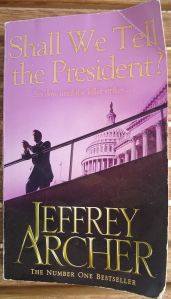
Shall We Tell the President was a novel by Jeffrey Archer first published in 1977. In the book Edward Kennedy has become the US President and FBI agents become aware of a plot to kill the President.
I read this book many years ago but recently came across this new edition, rewritten by the author himself. In real life Ted Kennedy never made it to the White House, his challenge cut short by the ghost of what happened to Mary Jo Kopechene at Chappaquiddick. In this rewrite then, the author puts his own fictional president, President Kane in charge at the White House.

The FBI learn of a plot to murder the President. A Greek waiter, an illegal immigrant, learns of the plot whilst working as a waiter at a restaurant in Washington DC. He calls the FBI and the two agents assigned to the case report quickly to their superior. Soon, one of the agents and their boss, as well as the informant are dead leaving only one agent who by chance has survived a murder attempt. He has six days to track down the assassins.

The book kept me interested but I can’t say it was a great read and I thought some of the dialogue was a little poor, in particular the FBI agent who kept referring to his new girlfriend constantly as ‘pretty lady’ was a little cringeworthy to say the least. Sorry Mr Archer but I’d have to give this one a five out of ten.

Just off the top of my head without using Google, that’s about all the fictional presidents I can come up with for now. Which was your favourite?


What to do next: Here are a few options.

Share this post on your favourite social media!

Hit the Subscribe button. Never miss another post!

Listen to my podcast Click here.

Buy the book! Click here to purchase my new poetry collection.

Click here to visit Amazon and download Floating in Space to your Kindle or order the paperback version.

Click here to visit amazon and purchase Timeline, my new anthology.

Underwater Adventures

This week’s theme is about underwater adventures. I’m come up with a few films, TV shows and books on the subject so, to start, I’ll have to cast my mind back to my childhood and remember what underwater TV series caught my imagination back then.

Stingray

Stingray was a puppet TV series created by producer Gerry Anderson and his wife Sylvia and it was the first of their shows to be filmed in colour. Stingray was a submarine in the service of the WASP, the World Aquanaut Security Patrol and was captained by Troy Tempest and his colleague ‘Phones’ who was a master at using sonar equipment. The duo discover an undersea kingdom where King Titan holds sway over his people, the Aquaphibians. Troy and Phones rescue the mute undersea girl Marina who joins them onboard Stingray. Most of the characters had sea related names like, Marina, Commander Sam Shore and his daughter, Atlanta. Atlanta was voiced by Lois Maxwell who played the original Miss Moneypenny in the James Bond films.

Stingray was probably my favourite of Anderson’s TV shows. I particularly loved the opening sequence in which commander Shore exclaims ‘Anything can happen in the next half hour!’ As a child I used to own quite a few Stingray models. One was a plastic kit I had to put together and another was a plastic Stingray shaped water pistol.

Voyage to the Bottom of the Sea

Voyage started out as a film made in 1961. It had some big stars including Peter Lorre, Walter Pidgeon and Joan Fontaine. I actually saw the film after the TV series so I was never impressed with seeing the submarine Seaview without what was to me, its regular crew of actors. The film and the series were produced by Irwin Allen. The film version is about an amazing new submarine, the Seaview, which travels to the Arctic and finds that the sky is on fire! It turns out that a flaming meteor has set the Van Allen belt on fire and Seaview must fire a nuclear rocket into space to blow out the flames.

That has always seemed a bit silly to me but the TV series was much superior. Richard Baseheart played Admiral Nelson and David Hedison was Captain Crane. The crew met with various undersea aliens as well as sea monsters and many of the episodes had espionage and cold war themes.

In the TV series, the Seaview was equipped with a mini submarine which could also fly and was dubbed the Flying Sub. Looking over on Wikipedia, I see the flying sub only appeared in the later seasons but like Stingray, I also had a plastic model kit of it.

The show lasted for four seasons from 1964 to 1968 and in many ways was a sort of undersea forerunner to Star Trek. Producer Irwin Allen went on to make three other TV sci-fi shows, Lost in Space, Land of the Giants and The Time Tunnel.

The Undersea World of Jacques Cousteau

This was a documentary series about the undersea research done by Jacques Cousteau and he travelled the world’s oceans in his research vessel the Calypso. I remember it from the late 1960’s although over on the internet I see that the series ran from 1968 to 1976. Jacques and his team studied underwater things like sea turtles and coral reefs and I always found it very fascinating. The series was narrated by Jacques himself as I remember it but over on Wikipedia they claim that Richard Johnson narrated the BBC version. Perhaps it was a mix of the two with Jacques stepping in to talk about particular elements.

Thunderball

Thunderball was a novel by Ian Fleming and was one of the adventures of his hero, James Bond 007. The novel and the film were subject to litigation as it was based on a film script on which Fleming had collaborated with Kevin McClory. McClory wasn’t happy that Fleming had used the screenplay for the basis of his novel and the result was that after suing Fleming, McClory won certain rights to the story which is how a rival Bond film came to be made in 1983. Never Say Never Again appeared as a rival to the official Eon production Bond films.

Anyway, in Thunderball, a Vulcan bomber with two atomic bombs on board is stolen by SPECTRE and they blackmail the UK government for their safe return. Bond finds the Vulcan underwater in the Caribbean. SPECTRE agent Emilio Largo has a wonderful boat with an underwater hatch through which an army of frogmen descend on various underwater vehicles to hide the bombs. 007 and his colleagues engage in an underwater battle with Largo and eventually get the upper hand.

The Spy Who Loved Me

This film was the one that appeared in competition to Never Say Never Again. Numerous legal issues surrounded the film as producer Harry Saltzman was in financial trouble. Various issues arose with his fellow producer Cubby Broccoli but eventually the two owners of the Bond franchise managed to come to agreement and Broccoli bought out Saltzman.

Another issue with the production was that Fleming was so disappointed with his original novel he had stipulated that the film producers could use only the title and not the story. Various writers were employed to come up with a new story which eventually revolved around villain Karl Stromberg who wants to create a new civilisation under the sea and at the same time destroy all terrestrial life.

To film this, Pinewood studios created a new stage, the 007 stage in which to accommodate the interior of Stromberg’s super tanker which manages to swallow numerous submarines.

Another interesting element was Bond’s car, a Lotus Elite which was able to travel underwater. This was achieved by the special effects team using various mock ups as well as models. One version was towed out of the water using hidden ropes when Bond, played by Roger Moore, calmly opens a window and drops out an errant fish.

Ice Station Zebra

I’ve written a few posts in the past about the eccentric billionaire Howard Hughes and it just so happens that his favourite film was Ice Station Zebra. Hughes had a projector and watched the film, presumably on 16mm, many times in his blacked out suite in Las Vegas. The film is a cold war story based on a novel by Alastair MacLean about a satellite which crashes in the Arctic and has photographed various secret sites in the Soviet Union as well as the USA and both the Americans and the Russians want the film from the satellite. A major storm has locked in the Arctic so a submarine is sent under the ice ostensibly to rescue anyone stranded at the eponymous research station. Rock Hudson starred as the submarine captain and Patrick McGoohan as an agent whose secret mission is to retrieve the film from the satelite.

20,000 Leagues Under the Sea

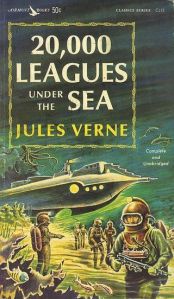
This was a novel by the celebrated author Jules Verne, first published in serial form in a French magazine in 1869 and published in book form in 1871. The book is highly regarded as one of Verne’s greatest works and features a futuristic submarine, the Nautilus, years ahead of its time. The story concerns an American expedition to capture or destroy a huge sea monster terrorising shipping. The expedition meets the monster but professor Aronnax, a French marine biologist and master harpooner Ned Land are thrown overboard only to find the monster is actually a submarine. They are taken aboard and meet the ship’s commander, Captain Nemo.

The novel was made into a film in 1954 starring James Mason as Captain Nemo.

Finally

Many years ago, I decided to try and become a certified scuba diver. I joined a club and went for lessons at Warrington baths in Cheshire. I completed the course and it was a lot of fun, pottering about underwater with oxygen tanks in the baths. The final part however involved taking your mask off underwater, filling it with air and replacing it back on your face. I tried and tried but I could not do it; every time I ended up thrashing about having swallowed half of the water in the swimming pool. I even tried it a few inches under the water in the shallow end but sadly I always managed to inhale water so unfortunately I failed and never managed to gain certification.

Years later I bought one of those little action cams with an underwater housing and managed to make a short film about me swimming, not in a beautiful underwater coral reef location as I would have liked but up and down in a French swimming pool.

I’ve probably only scratched the surface on this fascinating subject. I could have mentioned the films Titanic and Raise the Titanic or even The Abyss. What was your favourite underwater film?


What to do next: Here are a few options.

Share this post on your favourite social media!

Hit the Subscribe button. Never miss another post!

Listen to my podcast Click here.

Buy the book! Click here to purchase my new poetry collection.

Click here to visit Amazon and download Floating in Space to your Kindle or order the paperback version.

Click here to visit amazon and purchase Timeline, my new anthology.

A Slice of my TV Life

This week I thought I’d continue with my theme of real people in TV and film and throw in a few personal thoughts too. It’s been a quiet week. The weather in November in the UK has been the usual dull and dismal November weather and October wasn’t that great either.  Despite October being my birthday month it isn’t a month that I’m really keen on. There’s Hallowe’en for instance when perfect strangers knock on your door and ask for treats, then comes bonfire night when it’s the usual nightmare of fireworks going off at all times of the evening and night.

While I’m having a moan I might as well mention my back which has been sore for quite a while. To be fair I’m not in any kind of agony but it’s sore all the same. A few months back the doctor sent me for an x ray. Apparently, it didn’t turn out so good so then they sent me for another one. The other x ray didn’t turn out so good either but by then my back pain had eased off so I wasn’t that worried but then I got a call from the doctor asking me a whole raft of questions and suggesting a third x ray was needed.

This sounded a little odd to me, especially when I went into the doctor’s surgery to pick up the card that you need to take down to the walk in centre where they take the x ray. I must have misunderstood they told me, you don’t need another x ray. To be honest I don’t think I misunderstood at all and I tend to think that they need to get a grip at this surgery.

Until I Kill You

Anyway, let’s move on. I mentioned above about a post I published a few weeks back about real people portrayed in films and this last week I’ve watched quite a bit of TV on this theme. One particular programme was Until I Kill You. It was a true life drama in four parts and it was pretty scary. It was about a woman, Delia Balmer, who gets involved with a man called John Sweeney who turns out to be a serial killer. The couple move in together but Sweeney is a bit controlling so Delia asks him to leave. He responds by attacking her, tying her to the bed and repeatedly raping her. She is lucky in that she has a friend who is looking out for her. The friend telephones when Delia doesn’t turn up for work and doesn’t believe the story Sweeney gives and tells him so, threatening to call the police.

Later when Delia has been released, she goes to the police, reports the assault but the judge decides to parole Sweeney so he returns and tries to kill her although the next door neighbour intervenes and calls the police and ambulance. Despite stab wounds Delia survives but it is only years later when Sweeney is connected to other murders that he is finally imprisoned.

The police and the justice system don’t come out of this looking good but at least Delia was finally able to put things behind her and carry on with her life. You can stream the four part series over on ITVX.

Back to the Personal Stuff

A few days later the doctor’s surgery called and asked me to see the doctor that same day. The doctor discussed the x rays and said he had to send me for an urgent CT scan. When I asked why, he used a lot of big medical words and it was only after we were ushered out, Liz, who has some medical knowledge, told me he was saying that I might have cancer.

The first thing I thought of was I hoped that this wasn’t going to ruin our long stay in Lanzarote we have planned for next February. I started thinking about having chemotherapy and being stuck in hospital when I should be relaxing in the sun and I began to think maybe it’s time to get my things in order and write a will or something. My dad lived until he was 72 so I was kind of hoping I might have a few years left.

Sully: Miracle on the Hudson

When I was on holiday in France not so long ago, I picked up a DVD in a vide grenier, a car boot sale. The great thing about DVDs is that even if you buy a French one, as long as there is an English language option you can watch it in English. The DVD I picked up was called Sully and it falls quite easily into the theme of real people portrayed in films.

If the name Sully doesn’t quite ring a bell at least you might remember an incident that happened in New York in 2009 when a passenger airliner had to land on the Hudson River. The aircraft, piloted by Chesley ‘Sully’ Sullenberger, had just left LaGuardia airport when it was hit by a flock of birds which disabled both engines and forced the crew to ditch in the Hudson. That was pretty dramatic but you could be forgiven for thinking there wasn’t much material to make a film out of. Even so, the film, directed by Clint Eastwood was pretty exciting and concerns not only the landing in the river but the following inquest in which the civil aviation authority tries to make out that Sully could have made it back to the airport.

Various simulations seemed to show that an emergency landing at the airport was possible but at the hearing, Sully questions that the simulations were done without the human factor. The simulation pilots knew the engines would fail and were ready to turn immediately back to the airfield. Sully and his co-pilot did not. They followed procedure to restart the engines which failed and only then did they realise the only option was landing in the river.

Sully cooly asks how many attempts did the simulator pilots have before getting the landing right. The answer was 17. Sully of course only had 1 attempt.

Tom Hanks plays Sully and plays, as usual, a good part and if you happen to notice Sully on your TV listings, it’s well worth watching.

Back to the Personal Stuff

One day I received a text message asking me to come to have a CT scan at Victoria Hospital in Blackpool. I had to click on a link to confirm I was attending and that was pretty much it, until a few days later I got a confirmation letter and I realised the scan was at a drop in centre and not at the hospital. Anyway, I went along for the scan which was a very quick fire experience. I went into the scan area and lay down on a bed. I was expecting to have to strip off and get into a hospital gown but no, I lay down fully clothed, handed over my specs and wallet and the machine arch ran over me a few times and that was it.

Lord Lucan

I reckon I need another true life film or TV show to finish this post off. This week I watched a TV documentary about Lord Lucan which was pretty interesting. I tuned in thinking it was a drama but it was actually a documentary. It was an interesting documentary but a very slow and long winded one. It was in three parts and followed a Hampshire builder, Neil Berriman, who had been adopted as a baby and finds that his birth mother was the nanny murdered by Lord Lucan.

Back in November 1974 the body of Sandra Rivett was discovered in a Belgravia basement and the chief suspect was Lord Lucan, who promptly disappeared. Neil teams up with an investigative journalist and together they track Lucan down to Australia where they reckon a man using the name ‘John Crawford’, is actually Lucan. It all looked pretty likely that Crawford might actually be their man but then other evidence emerged that seemed to invalidate that claim. It was pretty interesting but to be honest, this very slow moving documentary could have easily been cut down to two or maybe even one episode. If you are interested you can stream Lucan on the BBC iPlayer.

And Finally

After about a week I noticed a report on my MY GP phone app about my scan which said ‘abnormal results, contact patient.’ No one had contacted me so I called up the surgery and asked to speak to the doctor. After about 20 mins the doctor called me back. Happily there was no need to worry, the scan had showed no trace of cancer and the ‘abnormal’ report referred to my back and the need for further treatment at the muscular skeletal unit.

I have to admit to a warm feeling of relief when I put the phone down. I wasn’t about to die after all and I could look forward to a month in Lanzarote. The only thing is, watching Sully has put me off air travel. Wonder if we could sail to Lanzarote instead?


What to do next: Here are a few options.

Share this post on your favourite social media!

Hit the Subscribe button. Never miss another post!

Listen to my podcast Click here.

Buy the book! Click here to purchase my new poetry collection.

Click here to visit Amazon and download Floating in Space to your Kindle or order the paperback version.

Click here to visit amazon and purchase Timeline, my new anthology.

Back to the 1960s

The 1960s seem like a long way off these days. We moved into the 1970s 54 years ago but even so, the 1960s were a revolutionary time in terms of music, the cinema and of course TV. This last Sunday afternoon after a gruelling session of blog writing, I settled down in front of the TV with a cup of tea and a cheese sandwich and what did I find? Well, a whole stack of TV shows from the 1960s still bringing in viewers today in 2024.

So, what did I watch? Well, time to settle back for some serious TV viewing.

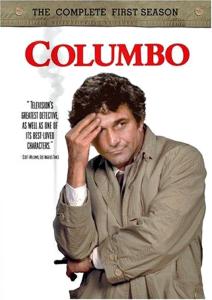
Columbo

Columbo, as you probably know, differs from other TV detective shows by showing the viewer exactly who the murderer is and how he, or she, did it. The whole point is not who did it, but how Columbo catches them. The essence then of a great episode comes in the clever way Columbo nails his man, or woman. Sometimes that moment is a bit of a non starter, other times it’s nothing short of brilliant. Sometimes, even if that final moment is not so great, it’s still been a great episode.

The Columbo of the early series is an absent-minded quirky fellow although in later episodes, Peter Falk who plays the detective, seems to downplay that quirky element. The later episodes are still pretty good though and among various episodes on TV today was Any Old Port in a Storm with Donald Pleasance as the guest murderer. Pleasance plays Adrian Mancini, the part owner of a wine producing business. He is something of a wine snob and he has just been voted ‘man of the year’. That was the good news; the bad news is that his half brother is threatening to sell the business. That of course doesn’t go down well so Adrian in a fit of anger bumps him off. A whack on the head didn’t quite do the job so Adrian leaves him to suffocate in his wine cellar. Unfortunately, it happens to be a really hot day which eventually leads Columbo to the clue that bags the culprit.

That was an episode from 1973 but the original Columbo pilot first aired in 1968.

Thunderbirds

Thunderbirds was about a secret organisation called International Rescue that had a small fleet of highly advanced machines and equipment with which to perform rescue operations. Millionaire ex-astronaut Jeff Tracy was the head man and the organisation was secreted in his island home. His five sons were the Thunderbird pilots, John, Scott, Virgil, Gordon and Alan, all named after US astronauts of the 1960s. The genius behind the Thunderbird craft was Hiram Hackenbacker, known as ‘Brains’. Thunderbird’s nemesis was a secret agent known as the Hood because of his talent for disguise and in many episodes the Tracy brothers had to ask their London agent, Lady Penelope, to track him down and sort him out.

Lady Penelope Creighton-Ward lived in a huge mansion somewhere in southern England and her manservant and chauffeur was Parker, a reformed safecracker. The head of ITV Sir Lew Grade saw the first episode and was so impressed that he asked for the episodes to be extended from 30 minutes to a full hour, less TV adverts of course. Gerry wanted Fenella Fielding to voice Lady Penelope but in the end, his wife Sylvia took on the role.

One other thing, I know Thunderbirds sounds pretty sophisticated from those last two paragraphs but it was actually a puppet series aimed at children. The great thing about it and really, the secret of its success, was the highly intelligent scripts which treated its audience of children not as kids but as intelligent young adults.

Two scripts that spring to mind were one called The Cham Cham about a code transmitted on a musical melody and another where Parker was called upon to break into the Bank of England. Later in the episode someone is trapped inside the vault and Parker is asked to break in again to rescue the man before the air is used up in the vault. Parker though thinks that his old mate, a bank robber recently released from prison, is about to complete his life’s ambition to break into the bank and so he tries to slow down his and Penelope’s drive into London. Everything of course comes right in the end though.

Time for a fresh cup of tea and I’m ready for the next programme.

Batman

We are probably all familiar with the modern Batman films which all have pretty grim and dark overtones. Tim Burton directed the first modern Batman film in 1989 which starred Michael Keaton as Batman and Jack Nicholson as the Joker. Back in 1966 however there was a TV series produced by William Dozier which starred Adam West as Batman and Burt Ward as Robin.

The suave Alan Napier played the part of Alfred, the butler to Bruce Wayne (Batman’s alter ego) and numerous guest stars played the villains. Frank Gorshin was a memorable Riddler, Burgess Meredith (remember him as the trainer in the Rocky films?) played the Penguin and Cesar Romero who refused to shave off his moustache played a rather manic Joker. Julie Newmar and Eartha Kitt both played Catwoman. George Sanders and Vincent Price also appeared as guest stars and even Hollywood director Otto Preminger appeared on the show as Mr Freeze. Anyway you look at it, that is an impressive cast list.

The episodes were all two parters and in the UK were aired on Saturday and Sundays; the Saturday episode always left the Dynamic Duo in some impossible situation and the Sunday one showed how they would escape and track down the villains. The series was very light hearted unlike the modern Batman films and in fact played rather like a live action cartoon series.

The series ran for three seasons and a feature film before being cancelled. In the UK episodes are currently being broadcast on the Talking Pictures channel.

Mission Impossible

The TV show was created by producer Bruce Geller and concerned a team of special agents known as the Impossible Missions Force. They are a US government agency which takes on hostile foreign governments, South American dictatorships and criminal organisations.

In the first series the team is led by Dan Briggs played by Steven Hill but he was replaced for season 2 by Peter Graves in the part of Jim Phelps. Other regular team members were Leonard Nimoy, Martin Laudau and his wife Barbara Bain, Greg Morris and Lesley Anne Warren. Each played a team member with a particular skill, for instance Laudau and Nimoy played agents with a talent for impersonation and disguise, Greg Morris played an electronics expert and so on.

Mission Impossible ran for 7 seasons and was cancelled because, according to Wikipedia, the producers at Paramount found they could make more money by syndicating the existing series rather than making new ones.

A revival series was made in the 1980’s also starring Peter Graves. To save money the series was not filmed in Hollywood but in Australia but it only lasted two seasons and was largely unsuccessful.

A great feature of the series was the opening title sequence which involved a match being struck and then lighting a fuse shown over quick clips of the upcoming episode to the sound of the iconic theme tune written by Lalo Schifrin. Next would be Jim Phelps listening to his tape recorded instructions which after being played would then self-destruct. Phelps would then look through his agents’ files complete with photos and choose who he wanted for the mission. Sometimes a guest star would play one of the agents who would be introduced by Jim checking out his dossier. A team briefing would then take place and the mission would get under way.

The IMF used a great deal of gadgets to accomplish their missions; secret listening devices and other electronic hardware as well as incredible masks and make up to impersonate people. One particular episode that I remember was when the team had to retrieve some stolen gold from a South American dictator’s safe. They did it by drilling a small hole in the safe, heating it until the gold melted and ran out down the small hole then a little gadget sprayed the interior of the empty safe to cover the hole. Mission Impossible was staple viewing in our household in the late 1960’s and it was nice to see once again on UK TV.

From Russia with Love

I’m perhaps cheating a little here because this is a film rather than a TV show but what the heck, it popped up on ITV so I thought I’d watch it. Just lately there seem to be James Bond films popping up on TV almost every week. This film was the second in the Bond series, made in 1963 and it’s probably one of the very best. There are no super villains trying to take over the world and the plot is actually pretty sensible. SPECTRE -the Special Executive for Counter Intelligence, Revenge and Extortion- decide to offer British Intelligence a Soviet Lektor decoding machine but the catch is, the lovely Soviet consulate clerk chosen for the mission and based in the Soviet embassy in Turkey will only offer it to Bond himself.

Sean Connery played James Bond of course and the Soviet clerk was Tatiana Romanova played by Italian actress Daniella Bianchi. A great Bond villain was former Soviet agent now a part of SPECTRE, Rosa Klebb played by Lotte Lenya. The best performance though was by Robert Shaw who plays Red Grant, the killer specially trained to eliminate Bond. Bond and Grant have a hugely exciting fight in a railway carriage towards the end of the film which underlines the serious and gritty nature of the film. I don’t think I’m giving anything away when I tell you Grant wasn’t successful but Rosa Klebb nearly gets Bond with a concealed knife in her shoe.

I could have gone on and talked about Star Trek, The Saint with Roger Moore and even The Avengers with Patrick MacNee as Steed and Diana Rigg as Mrs Peel.

Yes, in some ways the 60s are done and dusted but when it comes down to it, you only have to tune in to a few vintage TV shows to relive it all again.


What to do next: Here are a few options.

Share this post on your favourite social media!

Hit the Subscribe button. Never miss another post!

Listen to my podcast Click here.

Buy the book! Click here to purchase my new poetry anthology.

Click here to visit Amazon and download Floating in Space to your Kindle or order the paperback version.

Remembering Cary Grant

I’ve been a fan of Cary Grant for a very long time. I love his smooth and debonair style, his handsome and tanned good looks and that rather languid transatlantic brogue of his.

In the TV series Archie currently streaming on ITV X they seem to be saying that all of that was an invention, an invention by an Englishman called Archie Leach who transformed himself into a successful Hollywood film star named Cary Grant.

Grant was born Archibald Leach in Bristol, England in 1904. He had a poor upbringing and his mother suffered from depression and his father was an alcoholic. The young Archie was interested in the theatre and performing and his mother was keen on him having piano lessons. His older brother had died before reaching the age of one and this perhaps made his mother a little over protective of the young Archie. Even so, his mother was not a woman who was able to give or receive love easily and the older Cary Grant blamed his childhood relationship with his mother for his problems with women in later life.

When Archie was 9 years old his father placed his mother in Glenside Hospital, a mental institution, telling his son that she had gone away on a long holiday and later, that she had died.

Archie befriended a group of acrobatic dancers known as The Penders and he was able to eventually join them and there he trained as a stilt walker and became part of their act. Later the group toured America and Archie decided to stay, following in the footsteps of others before him like Charlie Chaplin and Stan Laurel who had made their way to the USA in an almost identical way.

On Wikipedia they mention that on the trip over to the USA Archie met Douglas Fairbanks and was greatly impressed by him, so much so that Fairbanks became a role model for the young Archie Leach.

In New York Archie worked in vaudeville with various comedy and theatrical groups. He joined the William Morris theatrical agency and began to pick up many theatre roles. In 1932 he had his first screen test and was given a five year contract with Paramount Pictures. B P Schulberg the general manager of Paramount decided that Archie Leach was not a good enough name for films so Archie came up with the name Cary Grant taking Cary from a stage character he had played and Grant chosen randomly from a telephone directory.

Cary Grant worked hard at his profession and in the TV series Archie they claim that Cary was a role or a part that Archie built up over time. Jason Isaacs who plays Grant says Cary would never be filmed or recorded during an interview because then he was being himself not playing at being Cary. The actor tracked down a recording of Grant made secretly by a student journalist who interviewed Cary over the phone and felt that for the first time he was hearing the real Archie who came over in the recording as very English rather than the usual mid Atlantic voice that we are used to hearing.

It seems to me that many stars who use a different name in the film world are in a way creating a character which they present to the public. You could argue that Marilyn Monroe was a similar personality and that she was a creation of Norma Jeane in the way that Cary Grant was created by Archie Leach.

A breakthrough role for Grant was starring with Mae West in the film She Done Him Wrong and the follow up, I’m No Angel. Grant went on to star in many famous films and amazingly, even though he was a star in Hollywood’s golden years, he was actually the first big star to not be a part of the studio system. He was a freelance actor, not contracted to any studio until 1937 when he signed a four-picture deal with Columbia.

In his early years in Hollywood, Grant shared a house with actor Randolph Scott leading to claims of the two being gay lovers. Still, young bachelors sharing a house with others is not uncommon. David Niven famously shared a house with Errol Flynn and we can hardly class those two as being gay.

Somewhere in my fairly huge book collection I have a biography of Cary Grant but despite an intensive search I couldn’t find it. I also have a copy of David Niven’s Bring on the Empty Horses which if I remember correctly has a short chapter on Grant. Now where did I put that book?

I did do some quite considerable research to produce this blog post. Firstly, I had to watch the four episodes of the TV series Archie, currently streaming on ITV X. That wasn’t anything difficult of course, it wasn’t a chore, in fact it was very enjoyable. Archie is a wonderful four part series and Jason Isaacs plays an outstanding part. He doesn’t try to impersonate Cary but he did manage to create a look of the late star and he caught Grant’s voice and enunciation perfectly. Most of the series follows Cary in later life when he becomes involved with and later marries Dyan Cannon, Dyan was his fourth wife and she was the mother of his only child Jennifer and she and her mother co-produced the series which is definitely well worth watching.

Next, I searched for the biography I had of Cary but despite searching the entire house I couldn’t find it. Oh well, I have a few copies of Bring on The Empty Horses about the house so I thought ok, I’ll grab that and have a read of the chapter on Cary. Once again, I searched through the entire house but could I find that book? No! Eventually I started to put everything back where I had found it and it was only after idly looking in a box of books that I had only recently packed away and had earlier dismissed, that I finally found it.

Anyway, I had a break from writing to look for that book and after a while when I couldn’t find it I popped the TV on. I wasn’t altogether surprised to find there was a Cary Grant film showing. It was An Affair to Remember, a love story in which Grant’s character, a playboy type meets Deborah Kerr on a transatlantic voyage and the two fall for each other. On arrival in the USA they decide to have a 6 month break from each other as they are both in other relationships and then meet at the top of the Empire State building in New York. It’s not really my cup of tea, in fact it’s overtly sentimental but then, sometimes a small dose of sentimentality is good for you. Cary Grant plays, well, Cary Grant and Deborah Kerr plays a very English New Yorker.

I have two of Grant’s other films on DVD, To Catch a Thief and North by Northwest, both directed by Cary’s favourite director, Alfred Hitchcock.

OK, enough TV watching for now. Getting back to Bring on the Empty Horses, David Niven wrote about Cary Grant in a short section of his book called Long Shots and Close Ups where he gives his readers a quick sketch about various film people. The section on Cary is only three and a half pages and not the full chapter I was expecting but Niven clearly liked the man and in those three and a bit pages, picked up on some essential elements of Grant’s character. Niven remembers Cary Grant as an intelligent man, particularly with money and he listed people like multi millionaire Howard Hughes among his friends. Grant invested his earnings well and became one of the richest people in Hollywood. He had an obsession with his health, embarking on various health pursuits and then moving on to the next one. Niven remarks that once when Cary was taking swimming lessons to learn the crawl, Niven mentioned that Cary could already swim the crawl. Grant answered ‘yes but I want to swim the crawl perfectly!’ Cary gave up smoking by hypnotising himself and Niven also mentions his use of LSD during his treatment by a psychiatrist which is also brought up in Archie.

Cary Grant retired from films in 1966 the year his daughter was born and he and Dyan Cannon divorced in 1968. Many tried to bring him out of retirement for various films including his favourite director Alfred Hitchcock but he declined. He must have wanted to keep on working though because he did accept a position on the board of Fabergé.

He died in 1986 aged 82 and left behind an estate reputedly worth around 80 million dollars. Archie is a well made and quite fascinating piece of TV. Look out for it, it’s well worth watching.


What to do next: Here are a few options.

Share this post on your favourite social media!

Hit the Subscribe button. Never miss another post!

Listen to my podcast Click here.

Buy the book! Click here to purchase my new poetry anthology.

Click here to visit Amazon and download Floating in Space to your Kindle or order the paperback version.

The TV Shows of Gerry Anderson

Many years ago when I was still at junior school, one of my friends asked me if I had seen a new TV show about a flying car. I hadn’t but apparently it was really good and so I made a mental note to watch out for it. As a child I was pretty keen on TV. My dad used to call me ‘square eyes’ because I watched so much TV and as you might imagine I soon found the TV show my friend had told me about. It was a short puppet show about a special machine called Supercar that could not only fly but also dive under the sea. It was designed and built by Professor Popkiss and Dr Beaker and the test pilot was a guy called Mike Mercury. I loved Supercar and everything about it and even though I didn’t realise it then, I had become a huge fan of TV producer Gerry Anderson and his Century 21 Productions.

Gerry Anderson was born in 1929 and after the war earned a traineeship with the British Colonial Film Unit. Later he worked for Gainsborough Pictures and had various jobs, subsequently as a director. He and cameraman Arthur Provis formed a production company called AP Films after their two names and began producing TV shows for children. Their first project was in 1957 called The Adventures of Twizzle and was the first time Gerry worked with puppeteer Christine Glanville, musician Barry Gray and special effects supervisor Derek Meddings.

They followed up with more puppet shows, Torchy the Battery Boy and the first series I remember, Four Feather Falls, a cowboy show about a sheriff with magic guns.

Anderson married his wife Sylvia in 1960 and the two collaborated on Supercar, Gerry’s first sci-fi puppet show in 1960. The series marked the first time Gerry used the name Supermarionation to describe the process which enabled the puppet mouths to move in synchronisation with pre-recorded dialogue. All the characters in the shows had American accents so the shows could be sold to the USA and it was Sylvia who was responsible for the characters and their fashions while Gerry concentrated on other aspects of the shows.

The next series was Fireball XL5 about a spacecraft that was part of the World Space Patrol piloted by Steve Zodiac. The following show, Stingray was the first to be filmed in colour. Stingray was a submarine in the service of the WASP, the World Aquanaut Security Patrol and was piloted by Troy Tempest and his colleague ‘Phones’ who was a master at using sonar equipment. The duo discover an undersea kingdom where King Titan holds sway over his people, the Aquaphibians. Troy and Phones rescue the mute undersea girl Marina who joins them onboard Stingray. Most of the characters had sea related names like, Marina, Commander Sam Shore and his daughter, Atlanta. Atlanta was voiced by Lois Maxwell who played the original Miss Moneypenny in the James Bond films.

Stingray was probably my favourite of Anderson’s TV shows. I particularly loved the opening sequence in which Commander Shore exclaims ‘Anything can happen in the next half hour!’

Stingray was filmed in 1964 and the show fitted neatly into the expanding Anderson universe set, like all his sci-fi shows, 100 years into the future. Around this time AP Films developed a merchandising company responsible for licensing all kinds of items related to the shows, things like models and puppets and so on. I used to have a puppet of Venus, the space doctor from Fireball XL5 although I think I would have preferred a Steve Zodiac puppet. I had a Fireball XL5 rocket which could be fired into the air with a big catapult and as it came down, a parachute deployed to float it down gently. I also had quite a few Stingray models. One was a plastic kit I had to put together and another was a plastic Stingray shaped water pistol.

image courtesy flickr

There was also a comic which I absolutely loved called TV21 with comic strips of all the sci-fi Anderson shows. TV21 had a front page fashioned like a newspaper with headlines referring to the stories coming up on the inside pages.

The next project for AP Films was probably Gerry and Sylvia’s greatest success and it was called Thunderbirds. Thunderbirds was about a secret organisation called International Rescue that had a small fleet of highly advanced machines and equipment with which to perform rescue operations. Millionaire ex-astronaut Jeff Tracy was the head man and the organisation was secreted in his island home. His five sons were the Thunderbird pilots, John, Scott, Virgil, Gordon and Alan, all named after US astronauts of the 1960s. The genius behind the Thunderbird craft was Hiram Hackenbacker, known as ‘Brains’. Thunderbird’s nemesis was a secret agent known as the Hood because of his talent for disguise and in many episodes the Tracy brothers had to ask their London agent, Lady Penelope, to track him down and sort him out.

Lady Penelope Creighton-Ward lived in a huge mansion somewhere in southern England and her manservant and chauffeur was Parker, a reformed safecracker. The head of ITV Sir Lew Grade saw the first episode and was so impressed that he asked for the episodes to be extended from 30 minutes to a full hour, less TV adverts of course. Gerry wanted Fenella Fielding to voice Lady Penelope but in the end Sylvia herself took on the role.

Thunderbirds is probably my second favourite of all the Gerry Anderson series. The great thing about it and really, the secret of its success was the highly intelligent scripts which treated its audience of children not as kids but as intelligent young adults. Two scripts that spring to mind were one called The Cham Cham about a code transmitted on a musical melody and another where Parker was called upon to break into the Bank of England. Later in the episode someone is trapped inside the vault and Parker is asked to break in again to rescue the man before the air is used up in the vault. Parker though thinks that his old mate, a bank robber recently released from prison, is about to complete his life’s ambition to break into the bank and so he tries to slow down his and Penelope’s drive into London.

A successful feature film, Thunderbirds are Go, was made in 1966 and AP Films began a new life as Century 21 Productions.

The follow up TV series was called Captain Scarlet and the Mysterons. Captain Scarlet is part of an organisation called Spectrum in which all the members have code names relating to colours. The Mysterons have the power of re-animation and both Scarlet and Captain Black have been re-animated giving them powers of indestructibility. It wasn’t really my cup of tea but the puppets in the series made a step forward in having normal dimensions instead of large heads like the previous shows.

Two further puppet shows followed, Joe 90 about a young boy who becomes a secret agent by using the brain patterns of various people. His father, Professor MacLaine had designed a machine called the Big Rat (Brain Impulse Galvanoscope Record and Transfer -funny how all these old acronyms come back to me!) The Big Rat takes the brain pattern of a pilot for instance, feeds them to the professor’s young son -the Joe 90 of the title- and he is able to fly a plane.

The Secret Service was a mixed puppet/live action series about a secret agent who is shrunk down to a small size and the producers used puppets in normal sized sets. Stanley Unwin played the role of an eccentric vicar who is part of a secret organisation called BISHOP (British Intelligence Service Headquarters – Operation Priest). The series was cancelled after 13 episodes as Lew Grade didn’t think the inclusion of comedian Stanley Unwin and his gobbledegook language would work in the USA.

Gerry Anderson’s ambition was always to leave the puppet shows behind and move on to live action features and after a live action sci-fi film Doppelganger, Gerry began work on UFO. UFO was set in the 1980s and was about a secret organisation called SHADO (Supreme Headquarters Alien Defence Organisation). The Earth is under attack from UFOs and it is SHADO’s job to defend the world. The headquarters is based in the Harlington-Straker film studios with an outpost on the moon called Moonbase. Moonbase tracks the UFO’s with the help of SID (Space Intruder Detector) and launches their interceptors. Ed Bishop, previously the voice of Captain Blue in Captain Scarlet, played Ed Straker and Gabrielle Drake was the Commander of Moonbase.

I loved the series but the TV networks were unsure whether UFO was aimed at children or adults, presumably because of Gerry Anderson’s previous childrens’ shows. Anderson prepared for the second series in which the American networks had asked for more lunar based stories. Many new sets were built and then series 2 was cancelled. Gerry then offered the networks a new show, Space 1999, centred entirely on the moon.

In Space 1999, a series I never really liked, a nuclear explosion pushes the moon out of earth orbit and out into space and the series chronicled the adventures of those still living on Moonbase Alpha. Husband and wife team Martin Laudau and Barbara Bain starred in the show which ran for two seasons but during the production Sylvia and Gerry divorced.

Gerry returned to producing more TV shows for children like Terrahawks and Space Police but even though new technology and techniques helped with the puppetry and filming, without Sylvia and her characterisations, those productions were a little lame.

In the 1990s Gerry produced a new series of Captain Scarlet replacing the puppets with computer animations.

Gerry Anderson died in 2012 aged 83 while Sylvia lived to be 88. In 2015 she made a guest appearance in an episode of a new animated series of Thunderbirds are Go as Great Aunt Sylvia, a relative of Lady Penelope. She died in 2016.

The two left behind a legacy of some much-loved television shows but what was the secret of the success of Gerry and Sylvia’s original productions? Personally, I think there were a number of elements: Outstanding and intelligent scripts that treated the younger viewers as young adults. The fabulous music and theme tunes of composer Barry Gray. The wonderful characters created by Sylvia. The special effects from Derek Meddings who went on to work on the James Bond films and of course Gerry Anderson who brought all those elements together.

This year, 2023, Thunderbirds can be seen on the Talking Pictures TV channel, 58 years after it was first seen on TV.


What to do next: Here are a few options.

Share this post on your favourite social media!

Hit the Subscribe button. Never miss another post!

Listen to my podcast Click here.

Buy the book! Click here to purchase my new poetry anthology.

Click here to visit Amazon and download Floating in Space to your Kindle or order the paperback version.

The Forgotten Stars of Columbo

Famous faces who have appeared in the classic detective series.

If you happen to be a big fan of murder mysteries then Sunday is a great day for you. Over on 5 USA on UK Freeview TV you can watch the classic detective series Columbo to your heart’s content.

Columbo first appeared in the early 1970s as part of the Mystery Movie TV series. Each week followed a different detective trying to track down a murder case, sometimes it was MacMillan and Wife and other weeks McCloud, Banacek or various others. The most popular one by far though was Columbo.

Columbo was a homicide detective for the LAPD and he was played by Peter Falk although the role was originally written for Bing Crosby. Crosby however thought a regular TV slot would interfere too much with his golf so he turned down the role, went back to the fairway and the part went to Peter Falk who made it his own.

If you ever see the original pilot, shot in 1968, you can see how Crosby might have fitted into the part as Falk plays Columbo in a very Crosby like laid back way. The very first guest murderer was Gene Barry who was familiar to TV audiences after playing Amos Burke in Burke’s Law for many years. He also starred in a 1953 film version of War of the Worlds.

The pilot episode also introduced audiences to a particular feature of Columbo in that we see who the murderer is and how he commits the crime first. Then we see lieutenant Columbo gradually solve the clues and get his man, or woman.

Columbo appears to be bumbling along chewing on his cigars and eating chilli but we soon realise that behind this façade and his famous raincoat, is a very shrewd detective.

Roddy McDowell and Ida Lupino

Short Fuse is one of my very favourite episodes and two famous stars make guest appearances. The guest murderer is Roddy MacDowell. Roddy became a child star in the 1940’s appearing in films like How Green Was My Valley and Lassie Come Home. He also played Cornelius in the Planet of The Apes films and in the subsequent TV series. Although he appeared in many films, he also appeared in a huge number of TV series and stage productions. He died in 1998 aged 70.

In the same episode, Ida Lupino plays murderer Roddy McDowell’s aunt, unable to believe that Roddy was the murderer of her husband. She appeared in another episode too, Swan Song, in which she gets bumped off by guest murderer Johnny Cash.

Ida Lupino, like Roddy MacDowell, was born in England, in fact both lived in the Herne Hill area of London. She wanted to be a writer rather than an actress but went into acting as she was part of a theatrical family and it seems that becoming an actor was expected of her. She appeared in many British films before moving to the USA in 1933.

She wasn’t content to just act in films and was very critical of the parts she was offered, being suspended numerous times by Jack Warner, the head of Warner Brothers. She and her husband Collier Young formed a production company called The Filmmakers Inc in 1948. The company produced twelve films, six of which Lupino directed and five of which she wrote or co-wrote. The company closed its doors in 1955 and Lupino began directing for TV. She was one of the very first Hollywood TV and Film directors and was the only woman ever to direct an episode of The Twilight Zone. Ida Lupino died in 1995 aged 77.

Ray Milland

Milland was another British actor who found fame in Hollywood. Milland was born in Wales and served with the British Army. When his army career finished, Milland decided to become an actor. He appeared in several British films before moving to Hollywood in 1929. He worked as a stock actor for MGM then moved to Paramount in 1930. His first lead role was in The Jungle Princess in 1930 with Dorothy Lamour.

He appeared in numerous films but never thought of himself as a serious actor. A great success for him was The Lost Weekend in which he played an alcoholic. The film was directed by Billy Wilder and Milland did a great deal of research for the role and won the Oscar for that year’s best actor, which led to his contract with Paramount being rewritten and making him Paramount’s highest paid actor.

In 1954 he worked for Alfred Hitchcock on Dial M for Murder. Milland decided to retire from acting at one point but soon found he was bored and returned to Hollywood. In 1963 he made the sci-fi film The Man with X Ray Eyes. He appeared in many TV series including of course Columbo.

He was the guest murderer in The Greenhouse Jungle where he plays a man who stages a fake kidnapping of his nephew and then bumps him off to keep the ransom money. In another, Death Lends a Hand, his wife is killed by Robert Culp, one of my favourite Columbo murderers and a classic episode.

Milland died of lung cancer in 1986.

Janet Leigh and John Payne

In 1975 Janet Leigh and John Payne both starred in the episode Forgotten Lady. Both had been stars in a bygone era. Janet Leigh was born in 1927 and made her film debut in 1947. Two notable successes were The Naked Spur and Orson Welles’ Touch of Evil. She appeared with her husband Tony Curtis in Houdini in which Curtis played Harry Houdini.

Another great success for Janet and possibly the film she is most remembered for was the Hitchcock film Pyscho in 1960 however, according to Wikipedia, she was so traumatised after seeing her shower death scene that she avoided showers for the rest of her life.

Clips from one of her films Walking my Baby Back Home, were used in the Columbo episode. She appeared with her daughter, Jamie Lee Curtis in the supernatural horror film The Fog in 1980. Jamie Lee Curtis also had a small role as a waitress in the Columbo episode The Bye Bye Sky High IQ Murder Case.

Janet Leigh died aged 77 in 2004

John Payne appeared in many film noir crime films as well as many 20th Century Fox musicals, his most famous film being Miracle on 34th Street. His final role came in the Columbo episode Forgotten Lady. He died, also aged 77 in 1989.

Myrna Loy

Myrna Loy appeared in the 1972 episode Etude in Black starring guest murderer John Cassavettes. She was born in 1905 in Montana and was the daughter of a Montana rancher. Her father was also a real estate developer and her mother encouraged him to buy land in Hollywood. Some of the land he sold to Charlie Chaplin who built his studio on the plot. The Loy family made a considerable profit on the deal. Myrna’s father took his family back to Montana but when he passed away his widow returned the family to Hollywood.

Myrna studied dance in Los Angeles. She had small parts in many silent pictures but some stills of her appeared in Motion Picture magazine and led to a contract with Warner Bros.

A big success came in 1934 when she appeared in the film The Thin Man with co-star William Powell. The two proved to be a popular screen couple and appeared in 14 films together.

In the late thirties she became one of Hollywood’s busiest and most highly paid actresses but in the 1940s she devoted all her energies to war work and the Red Cross. She was busy throughout the 1950s but in the late 60s began working more in television.

She died in 1993 aged 88.

Jane Greer

Jane Greer was apparently best known for her role as Kathie Moffat in the 1947 film noir Out of the Past. It’s not a film I’ve seen but it does sound like one to look out for. Jane was a beauty contest winner and model and was spotted by Howard Hughes in an edition of Life magazine when she was 18. Hughes became obsessed with the young girl and signed her to a seven year contract. Like many of the girls he had under contract, Hughes had them watched and followed and apart from drama classes, forbade them to go out with anyone except himself.

When Greer decided to ignore Hughes, he bought the studio where she was working, RKO, and continued to try and control her. She married Rudy Vallee and Hughes was still undeterred. She told Hughes she loved Rudy. Hughes replied that she didn’t and she wasn’t going to work until she came to her senses. Jane said OK, I’ll just carry on having babies then.

Hughes later relented and Jane began to work in films again.

She appeared in a number of films in the 1940s and 50s including the 1952 remake of The Prisoner of Zenda.

In television she joined the cast of Falcon Crest and Twin Peaks in her later life before retiring in 1996. In 1975 she appeared with Robert Vaughn in the Columbo episode Troubled Waters in which Columbo finally tracks down guest murderer Vaughn.

Jane Greer died of cancer in 2001 aged 76.


All the images above were reproduced via Wikipedia Creative Commons.


What to do next: Here are a few options.

Share this post on your favourite social media!

Hit the Subscribe button. Never miss another post!

Listen to my podcast Click here.

Click here to visit Amazon and download Floating in Space to your Kindle or order the paperback version.

Buy the book! Click here to purchase my new poetry anthology.