I’ve written a few of these ‘book or the film’ posts but in this one I’m going to stick with one particular film and book; The Godfather.
The Book
 I’m not sure which came first for me, the book or the film but I actually think it was the book. The Godfather was written by Mario Puzo and is the story of Don Vito Corleone, the head of one of the five mafia families of New York. The book opens with the wedding of Don Corleone’s daughter and Puzo sets the scene and introduces the various characters.
Don Corleone is a Sicilian and apparently no Sicilian can refuse a request on the day of his daughter’s wedding. One of those with a request for the don is singer Johnny Fontane whose show business career is waning. He feels that a part in a new film will revitalise it but the producer will not cast him. The don is happy to help out his favourite godson and dispatches his advisor and stepson Tom Hagen to Hollywood to sort things out.
Another supplicant is a funeral director. Two youths have attacked and beaten his daughter and because of political connections the courts of law have only handed down suspended sentences. The father asks for Don Corleone to give him revenge but the Don declines. The funeral director has never shown the correct respect to the Don but when he does and finally calls him Godfather then, and only then, does Corleone issue orders for the youths to be brutally beaten.
Some time afterwards the Don agrees to meet fellow mafioso Sollozo who wants Corleone’s help with a drug smuggling operation. The Don declines and this sets off a violent war between the mafia gangs.
The Film
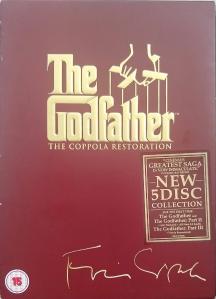 Francis Ford Coppola was the director of the film version and was also the co-writer of the screenplay along with Mario Puzo. Coppola wanted Marlon Brando to play the part of Don Corleone even though Brando at the time was rather unpopular with the producers. He was expensive, his last few films had not done well and his time wasting attitude had added huge expenses to his pictures. After the director had made the producers understand how important Brando was, they set various conditions for his employment. He would have to work for a reduced salary and put up a bond to ensure he would not delay the production. Another was that he had to have a screen test. Coppola has told the story in various interviews how he and his film crew had entered Brando’s house like ninjas and quietly set up their equipment. Brando slicked down his hair with shoe polish and stuffed cotton balls into his mouth to make the transformation into the aging mafia boss.
Paramount also wanted to shoot the film on their back lot but Coppola persuaded them to shoot on location in New York and stick to the original time frame of the book which was set in the 1930s and 40s.
Various people were auditioned for parts in The Godfather but finally the cast was resolved and shooting began with Brando as the Don, James Caan as Sonny, Al Pacino as Michael, Robert Duvall as Tom and Diane Keaton as Kay Adams.
The Book
The book is a fairly heft one and there is much in there that is not covered by the film. Johnny Fontane for instance features more in the book, while he plays only a supporting role in the film. There is a further story in the book about Lucy, a friend of Sonny’s wife with whom he is having an affair. After Sonny’s death Lucy feels she will never find not only love but sexual pleasure ever again. The reason for this is that Sonny had a rather large penis and Lucy’s corresponding anatomy is rather large, however she falls for a doctor who sorts her out with an operation which restores the anatomical status quo.
Going back to the Johnny Fontane character, there have been various stories and rumours which imply the character was based on Frank Sinatra. Like Johnny Fontane, Frank was tied to a lifetime contract with a bandleader, in this case Tommy Dorsey but Dorsey somehow relented and released Sinatra. Some say mobster Willie Moretti was instrumental in helping Sinatra free himself from the contract. Later when things weren’t going so good for Sinatra, he revived his career by appearing in the hit film From Here to Eternity for which he won a best supporting actor Oscar. In the book, Johnny Fontane is after a similar film part but the producer declines to give it to him. At the wedding of Corleone’s daughter, Fontane asks for the Don’s help, cue the famous scene where producer Jack Woltz finds his favourite racehorse’s head in his bed.
The Film
 Coppola decided that instead of finding the horse at the end of his bed like in the book, it would be better if Woltz awoke, was disturbed by something wet, pulls the bedclothes away to see blood and then uncovers the horse’s head. The head was the actual head of a horse, procured from a dog meat factory and Coppola mentions on the commentary to my DVD version that lots of animal lovers sent him hate mail about the horse, even though the horse had been condemned to its fate anyway.
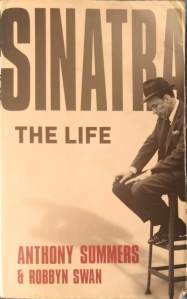
Sinatra always denied any involvement with the mafia although he did sing at the wedding of mafia boss Willie Moretti’s daughter, just like Johnny Fontane did at the Corleone wedding that opens the film. Anthony Summers, in his book about Sinatra, claims that the story was true and mafia enforcer Johnny Blue Eyes put pressure on studio boss Harry Cohn to give Sinatra the film role that rebooted his career.
Director Fred Zinnemann thought Sinatra might be good in the role so Cohn was happy to go along with the idea.
The Book
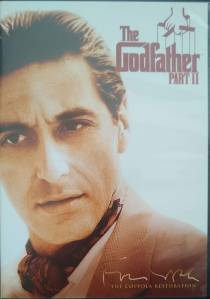 As previously mentioned, the book does have some storylines which were not used in the film but one chapter was a look at the beginnings of Vito Corleone. Born Vito Andolini in the Sicilian village of Corleone, Vito’s father was murdered by a local mafia boss and the young Vito was smuggled away to America. In America he took the name of Corleone and seemed to slip quietly into the role of mafia Don by murdering Fanucci, a New York Sicilian Godfather who preyed on his fellow Italians. Although this element of the story wasn’t used, Coppola kept the storyline for use in The Godfather Part II. The follow up film was a film classic in its own way.
The Godfather Parts II and III
In part II there are two parallel stories. One is the story of Vito Andolini, as described above, played by Robert De Niro and another follows on from the first film. Michael is now the head of the family and gets involved with gangster Hyman Roth with investments in Cuban casinos. After the Cuban revolution Michael realises Roth is out to kill him and so has him murdered. A senate investigation looks into Michael’s activities with information provided by Frank Pentangeli, a former member of his organisation, but Michael brings pressure to bear on the informant and the investigation collapses.
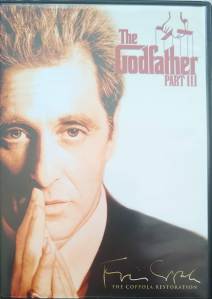
In The Godfather Part III Michael’s story continues. He is reconciled with his sister after the murder of her husband in the original film. He also gets involved in a scheme in Europe where he hopes to become fully legitimate but other mafia bosses have different ideas. The Papal bank scandal and the death of Pope John Paul I are real events that are also thrown into the mix. The film was the weak element in the Godfather trilogy. In 2020 The Godfather Coda: The Death of Michael Corleone was released. It was just a re-edited version of part III and personally I still didn’t find it anywhere near as good as the other two films.
Marlon Brando worked with Coppola again on the film Apocalypse Now. He played the part of an American Colonel in Vietnam who has apparently gone insane and Martin Sheen is sent to assassinate him. Brando turned up on set hugely overweight and not knowing his lines. He then decided to re write or improvise most of his scenes and the director was forced to shoot Brando in shadow due to his weight. Basically, he pulled all the stunts that Paramount expected of him in The Godfather. Not the best way to repay a director who had resurrected his career with the role of Don Corleone.
In 1990, Brando appeared in the comedy film, The Freshman, playing a parody of Don Corleone. When the shooting over ran, Brando demanded a million dollars to film for an extra week. The producers declined to pay and Brando threatened to badmouth the film to the press. Eventually they paid.
Brando died in 2004.
In 2023 Coppola finished filming his latest project, Megalopolis, a sci fi film about the rebuilding of New York after a major disaster.
Conclusion.
I enjoyed the Mario Puzo novel and I did re-read it for this post but it seems to stray into areas which really have no relevance to the main narrative which I found slightly annoying. The film version, which I also watched recently is a modern classic which continues to entertain everytime I see it. I like both the book and the film but I’d have to say I think the film version has the edge.
 This isn’t a post about my
 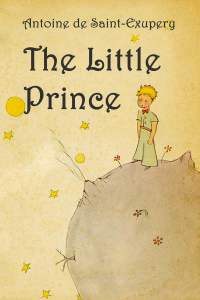 In the film William Bast played by Michael Brandon, leaves Dean in a restaurant and Dean later asks why Bast left. Bast was intimidated by Dean’s important looking friends and Dean replies that he was judging by surface appearances. When Bast questions Dean further, Dean produces his favourite book, The Little Prince and then goes on to read his favourite passage.
 Donald Campbell was the son of a famous racing driver and record breaker, Sir Malcolm Campbell. Campbell first broke the land speed record in 1924 at Pendine Sands in Wales which was the first of his nine land speed records. He also set the water speed record in his boat Bluebird K4. He was knighted in 1931 and died in 1948 aged 63. He was one of the few racing drivers and land speed record holders of his era to die of natural causes as many of his rivals were killed in crashes. His son, Donald Campbell, was determined to equal and even surpass his father’s achievements.
 This is perhaps where this post might start to unravel. I know the Donald Campbell link was a little tenuous and only based on a film but this next one was based on my own memory which can be prone to failure. I knew Noel was a great fan of the children’s writer E Nesbit and I’m sure I had heard or read somewhere that when he died, he was reading his favourite of that author’s books, The Railway Children. A quick bit of internet research and I see that Noel died after reading Nesbit’s The Enchanted Castle. Coward was a lifelong fan of E Nesbit who wrote a series of children’s books. He discovered the books as a child and revisited them many times during his life. In his diary he wrote this about the author:
 Woody is one of my
  It always happens to me when I’m away. I know I’ve written about this before but the National Lottery has been annoying me. Here I am away from home and I get an email saying check your account, you’ve won a prize. Great! I wonder what is it? The million-pound jackpot or £3.42 on the Thunderball? I’m guessing it’s the £3.42. Either way, the National Lottery site cannot be accessed from abroad so I’ll just have to wait until I’m back in the UK before I find out if I’m a millionaire -or not.
 Faithful by Marianne Faithful.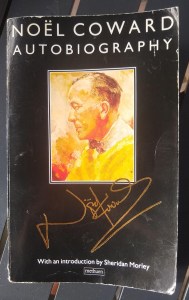


 What makes someone want to be a writer? Is it a need to emulate our own writing heroes or something else. I mentioned in a post last week that it’s important to be creative and we can be creative in a huge number of ways, not just in traditional artistic pursuits but also in everyday things, decorating our homes for instance, posting on social media, putting together a CD music mix or many other things.
 Coward has really been a surprising writing hero to me. I’ve been aware of him for years through film and television and his slightly eccentric persona has always been a little amusing to me. I remember once seeing an interview with him on the stage at the BFI, (British Film Institute) Richard Attenborough was interviewing him and seemed to me to be treating him as some sort of God that had been beamed down from the heavens. Coward was puffing away on a cigarette and lapping up all the praise.
 What attracted me to the persona of Marilyn Monroe? Well, apart from her obvious charms as a very attractive lady it’s her death that has always interested me. I’m a sucker for a modern mystery whether it’s the assassination of JFK, the disappearance of Amelia Aerhart or Marilyn’s own strange death. The obvious solution is that Marilyn committed suicide. She had tried suicide quite a few times before and various people along the years have saved her from death, including her acting coach Natasha Lytess and her third husband playwright Arthur Miller. Suicide is the obvious answer to her death but personally, I’m not so sure.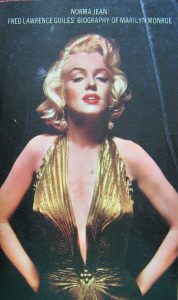


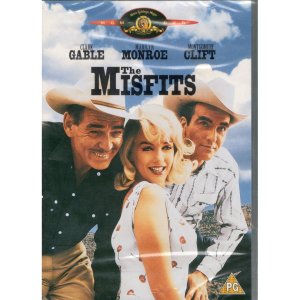
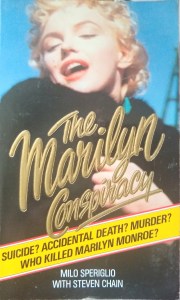

 Norman Mailer’s book about Monroe finished with a photo of Joe DiMaggio, grief stricken on the day of her funeral and he reckons we can perhaps surmise Marilyn’s true worth just by the look on Joe’s face that day. I cannot disagree.
 I’ve always been fascinated by transformations either in fiction or in real life but what do I mean by transformations? Well, I have written about transformations before in a previous post. I talked then about Professor Higgins who helped Eliza Doolittle change from a street flower seller to a lady in George Bernard Shaw’s Pygmalion but with this new post I thought I’d start with the story of Dr Jekyll and Mr Hyde.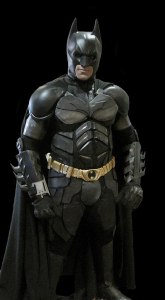
 I haven’t done an F1 post for a while so I reckon it’s time for a new one. F1 in 2023 seems to promise much but so far has failed to deliver. Red Bull seem to be winning everything which is great for them but makes things a bit boring for the average F1 fan. It’s in times like these that I tend to look back to the past for a little F1 drama.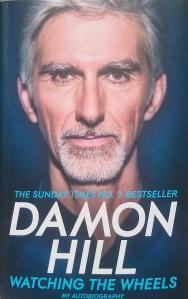
 After Graham’s death it was found that his pilot’s license had expired and this and some other things invalidated his insurance which meant that the other families who had lost loved ones in the crash were forced to sue Graham’s estate for compensation. This meant the Hills had to sell their home and move to a smaller house. These things seem to have weighed on young Damon’s mind for a long time, even into his own days as a racing driver.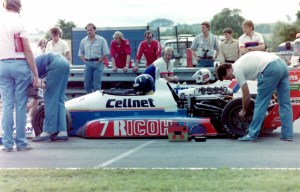



 It’s that time again for Liz and me to troll through France in our motorhome, on the look out for swimming lakes, cheese, wine and restaurants. The weather has so far been good but not great so sometimes I’ve been relaxing on my sun lounger, other times I’ve been inside wondering, where the hell is that sun?

