Holiday Book Bag 2024 Part 3

Parts one and two of my Book Bag were books I had taken to Lanzarote earlier in the year. This time Liz and I are tootling through France in our small motorhome. The weather has not been kind to us and rather than reading in the usual lovely sun, I’ve been reading indoors away from the rain. This year quite a few of my books are ones I have read before but I thought were due for a re-read. Anyway, here we go . . .

Toujours Provence by Peter Mayle

I wrote about this book a few weeks ago and you might be thinking ‘bet he’s included it here to pad out his post a bit’. Moi? As if I’d do such a thing. It’s the follow up to A Year in Provence, one of my favourite books about France by Peter Mayle. It’s a pleasant enough read but not a patch on the original.

Random Harvest by James Hilton

Wait a minute. Didn’t this guy write about this book a few weeks ago as well? Actually I did but as it was part of my book bag I thought I’d include it here anyway. A nice read, slightly different to the film starring Ronald Colman and Greer Garson. It was written before World War II and reflects the feelings of the time that perhaps more could have been done to either prevent the war or at least prepare more. A great read but I actually think I preferred the film to the book. Click here to read the full film and book review.

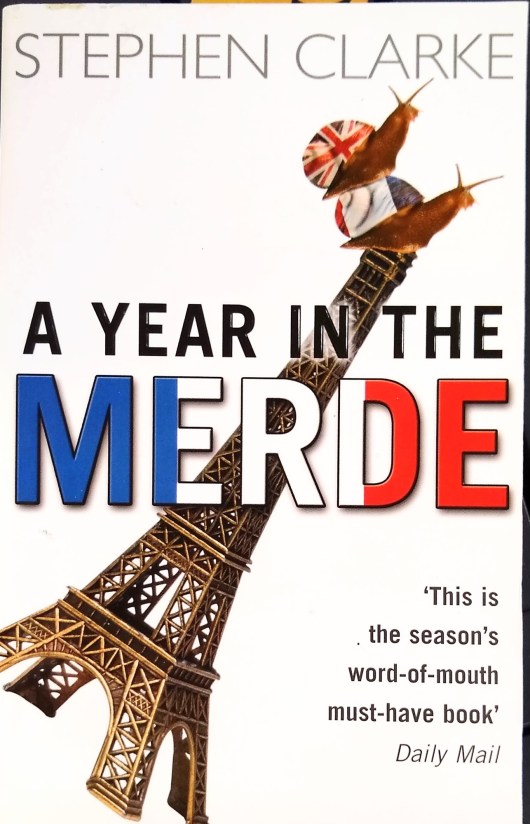
A Year in the Merde by Stephen Clarke

I read this book a few years ago and thought I’d throw it in my book bag for another read. As I remember, the first time round I absolutely loved this book. I saw it on a stall at a market once and mentioned to the seller what a great read it was. ‘Nah.’ replied the man. ‘It’s full of stereotypes!’ I wouldn’t say that at all. It’s a look at the life of a young man working in France as he tries to understand the French way of life and of course the language. The main character is engaged on a project to open an English tea room in Paris but feels that his boss and his colleagues are not that interested at all and when he eventually gets dropped by the company, he goes on to open the tea room himself. A nice read, humourous rather than laugh out loud funny and a little more biting than the Peter Mayle books. It’s a fun holiday read which goes a long way towards deciphering the French psyche.
The Kennedy Half Century by Larry J Sabato

This was billed as the ultimate Kennedy book but sadly it isn’t. It tells the story of John Kennedy and his run for the vice presidency, his years as a senator and then his presidential run. It goes on to look at his presidential years and then his murder and the last half of the book looks at how subsequent presidents have fared compared to JFK and the impact of Kennedy’s own presidency on the latter ones, all the way up to Obama.

A lot of it is interesting but there is nothing that I haven’t not only read about before but read in much more detail. The life and death of John Kennedy is one of my great interests. His murder happened on November the 22nd, 1963 when I was just seven years old and since then I’ve watched documentary after documentary and read numerous books.

The author tries to show an open mind about the assassination, looking briefly at the many theories that have been put forward over the years. Was the CIA or the mafia involved? Were the culprits the Cubans or the anti-Cubans? Was the military industrial complex behind the murder as Oliver Stone suggests in the film JFK? Perhaps it really was Oswald after all.

Looking back I think that one of the drawbacks to the book is that the author hasn’t really made his mind up what he actually thinks has happened. If he had a viewpoint himself, the narrative might have had more focus. The only real investigative effort in the book was to review the acoustical evidence, a recording made by a police officer with a microphone jammed open during the shooting and which led the House Select Committee on Assassinations to declare there was a shooter on the famous grassy knoll.

Well, maybe not says the author. Their research pinpoints a different officer with the jammed microphone and not the one selected by the HSCA which means there wasn’t another shooter after all. OK but there were clear shots of gunfire on the tape. Where did they come from? The author seems to think that they may have been noises from the officer’s motorcycle. Really?

An interesting read but the final chapters on the subsequent presidents and their relationships to JFK was actually a pretty pointless exercise that could have been summed up in just one chapter. If you would like to find out more, the book has its own website where you can read, among other things, the review of the acoustical evidence. Click here to access.

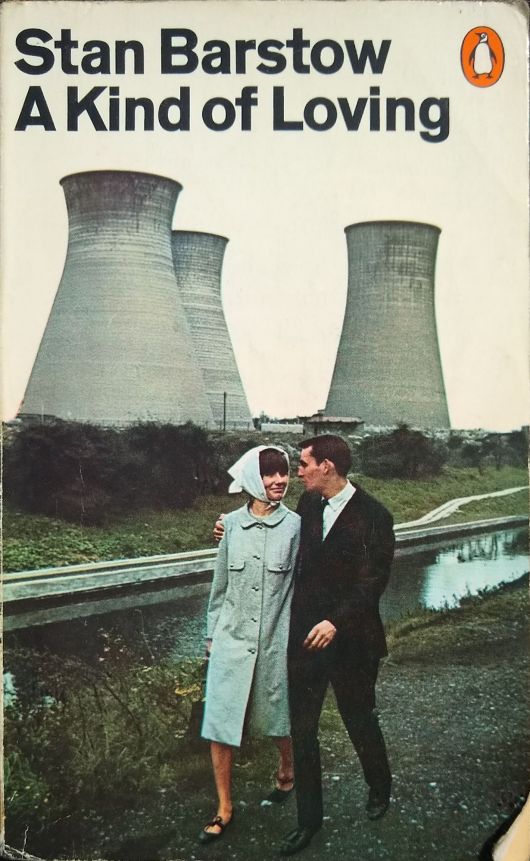
A Kind of Loving by Stan Barstow

This is another book that has been made into a successful film and also a great TV series. It’s a kitchen sink drama set in the early 1960s about a young Yorkshire lad who gets a girl pregnant and then realises he really wasn’t as in love with her as he thought he was. I’ve actually read this book quite a few times and it’s one of those that I mention when people ask me to describe Floating in Space. As much as I’m fond of Floating, this book is infinitely better. It’s a very simple story and probably one that has happened hundreds of times to hundreds of couples.
If you ever watch the TV series Long Lost Family, it shows that many people were in the same position as the couple in the book only instead of getting married, some young mothers in the 1950s and 60s were forced to give up illegitimate children for adoption.

Vic and Ingrid, the fictional couple, do get married even though Vic hopes for a last minute escape before the wedding day arrives. Not only is the main story authentic but so is the background to the book. Vic is a draughtsman in Yorkshire and his father is a miner.

The description of family life back then rings a bell with my own background in Manchester. Vic’s mother is a lot like my mother and there is a very lovely chapter when Vic goes to give blood with his father and then the two pop into the local pub for a pint. It was just like moments out with my own father, down to the banter with my mother when we both returned home. A wonderful read and so glad I brought it along to France.

What to do next: Here are a few options.

Share this post on your favourite social media!

Hit the Subscribe button. Never miss another post!

Listen to my podcast Click here.

Buy the book! Click here to purchase my new poetry anthology.

Click here to visit Amazon and download Floating in Space to your Kindle or order the paperback version.

Wet Weather, Books and Back Pain

Our little motorhome has been fuelled and packed and it’s time to take another drive over to France. We decided to go over to France via Eurotunnel. The big drawback of course is that travelling from the northwest, it’s a helluva drive down to Folkestone. Not just the drive itself but we have to contend with the perils of the M6 and the M25, two of the UK’s busiest motorways.

What we did was take a break and stop at a place called the Bricklayers Arms in Sevenoaks. We parked up, had some food and drinks and entered the pub quiz. The next morning it was only a quick trip down to Folkestone and soon we were chugging smoothly along under the ocean and over to Calais.

We drove across to one of our favourite restaurants, Le Mas Fleuri. It’s a quiet family run place and the simple food is always wonderful. I have to say I sometimes wonder how the place survives as, certainly in the evenings, it is always quiet. Anyway, this time we were dining at lunchtime and we found that not long after sitting down, a steady stream of customers began coming in after us and soon the dining room was full. The French do love their lunches.

We left Lanzarote a few months ago fit and well after five weeks of swimming and sunning ourselves but the trip back via Jet2.com was on the most uncomfortable aircraft I have ever flown on and since then I’ve been suffering with a sore back. I went into our local doctor’s surgery and they told me that they now have a practice physio. The physio, who I’m sure was a very competent fellow, didn’t seem to feel it necessary to actually examine my back in any way but even so, he felt confident enough to recommend that I take some over the counter painkillers and undertake a series of exercises which he thought would help. I have been doing the exercises, not totally on a full time basis but I have done them, well some of them, but the pain has been gradually getting worse.

That’s perhaps not the best time to drive a motorhome over to France and it has been challenging to say the least. My back soon went from sore to very painful and from then on to some moments of intense agony. The pain started in my lower back, then after a few days migrated to my right hip and now seems to be remaining in my right leg. At one point the epicentre of the pain moved to an area in my lower back from where it sent out electrically charged bolts of pain down both legs to a point where it seemed like my legs would collapse. I’ve still got a lot of pain but recently, touch wood, I have not had any what I tend to call screaming agony attacks.

Luckily, since then I’ve tried to anticipate when the bad times will come and gulp down an appropriate amount of painkillers. The bad times usually come in threes; the first comes at about lunchtime when Liz is doing our late breakfast. (Sorry I can’t assist Liz, I’m in pain.) Secondly about 6pm to 6:30 when Liz is making tea (Sorry I can’t assist again) and lastly late on about 1am, our usual bedtime (Liz, any chance of a back rub?)

It’s difficult to deal with certain situations now, situations that previously I wouldn’t even think about. I’ve dropped my handkerchief/tissue on the floor. OK. How the heck am I going to get that? I can’t just bend over. I can’t reach down. It happened the other day in a restaurant and I had to kick it over to Liz and she managed to raise it up with her collapsible back scratcher and I just managed to reach it. Situation (only just) sorted. Other situations arise that I wouldn’t even think about. I need to have a wee but an electric shock is going through my right leg when I try to move. What can I do? Just hang on until the pain eases, I suppose. I suddenly have a new respect for disabled people,

These last few days it is my right leg that is throbbing quietly with an ache that gnaws at the inside of my thigh and makes it difficult to walk and also to sleep. Another interesting thing is that while I’ve been researching the issue over on Google and YouTube, looking for exercises that might help, a number of those mysterious things called ‘cookies’ have clearly latched themselves to my iPad because everywhere I go on the internet, I find little adverts from someone who has discovered the ‘real’ cure to back pain and sciatica.

I can download their quick self-help guide and even sign up (for a small fee) to their regular pain free back sessions and discover the ‘secret’ to a pain free life.

The other thing about this trip is the weather. It’s cold! We have been coming to this part of France and renting this same property in Parçay Les Pins for a number of years but this is the first time we have ever had to crank up the heating. Week one, pottering about in our motorhome was pretty warm and week two was a bit of a mixture, some warm and sunny days and some cold and overcast. Today as I write this it has been cold and wet.

We drove down to a local fête and vide grenier this morning. As it is a bank holiday Monday in France, we knew that the local supermarket was only opening until 12:30 so we popped in to update our diminishing cheese supply. There was no bread of course, the locals had come in early doors and removed all that but at least we had a few ‘bake it in the oven’ loaves for later and of course, some cheese.

Just round the corner there was a local fête taking place. The roads were closed off as usual but from what we could see when we arrived, the rain had caused people to pack up and only a few solitary stalls remained. OK we thought, might as well drive down to our local restaurant for lunch.

The Station Restaurant which we both love was closed so as the rain was easing off we went back to the fête to take a closer look at the few stalls remaining. We found that on the other side of the village square there were some classic cars and motorcycles, all gleaming and wet. The bar was open and also a full multi course restauration was being served. All we wanted was the usual sausage and chips takeaway and a glass of red so we looked at the classic cars and motorcycles, watched the display by the local dancers and then went back home for some bacon and eggs.

Yesterday we had a lovely swim when the clouds parted for a short while and a burning hot sun appeared. Somehow I don’t think today will be swimming weather.

As usual on holiday I always come armed with a stash of books and this year is no exception. A few of the books are ones I have dug out of a box at home and are ones I haven’t read for a while. One of them was Toujours Provence, a sequel to the successful A Year in Provence by Peter Mayle.

A Year in Provence has long been one of my favourite books. There are no gunfights or car chases. It’s a very gentle read, about the author and his wife deciding to move to Provence to live. The story of how they settle into their new home and their new country is told in a very easy going and humorous style. They have problems with their heating, they have a new kitchen built, they buy a great stone table for outdoor meals, the author describes the personalities of the locals as well as the restaurants and the wonderful meals they have there.

The follow up, Toujours Provence, is a slightly different book. There is no story linking the chapters together. Each chapter is like a short essay about all things French. Some are interesting and some are not and sadly, many fall into the latter category. One exception however is a chapter about writing that fits in totally with my own thoughts on the subject.

For most of the time, it’s a solitary, monotonous business. There is the occasional reward of a good sentence -or rather, what you think is a good sentence, since there’s nobody else to tell you. There are long, unproductive stretches when you consider taking up some form of regular and useful employment like chartered accountancy. There is constant doubt that anyone will want to read what you’re writing, panic at missing deadlines that you have imposed on yourself, and the deflating realization that those deadlines couldn’t matter less to the rest of the world. A thousand words a day, or nothing; it makes no difference to anyone but you. That part of writing is undoubtedly a dog’s life. What makes it worth living is the happy shock of discovering that you have managed to give a few hours of entertainment to people you’ve never met. And if some of them should write to tell you, the pleasure of receiving their letters is like applause. It makes up for all the grind.

In Peter Mayle’s case, various people have decided to not only write to him but sometimes to even seek him out and ask for his autograph on their copy of his book. One couple of complete strangers even arrived and made themselves comfortable in his house while the author himself was out on the patio. He only found them when he came inside for a glass of wine.

As for me, I’m happy with the occasional ‘like’ either on Twitter or Facebook or even here on WordPress but wait a minute, is that some sunshine breaking through the cloud? Time for a glass of wine on the patio!


What to do next: Here are a few options.

Share this post on your favourite social media!

Hit the Subscribe button. Never miss another post!

Listen to my podcast Click here.

Buy the book! Click here to purchase my new poetry anthology.

Click here to visit Amazon and download Floating in Space to your Kindle or order the paperback version.

Random Harvest: The Film of the Book or the Book of the Film

Once again Liz and I are on holiday in France and as usual I’ve filled up my book bag with books to read. My selection this year was a mix of new books and some books from my collection which I haven’t read for years. The one I’d like to focus on this week is Random Harvest by one of my favourite writers, James Hilton.

Hilton hailed from Leigh in Lancashire, now Greater Manchester. He wrote several books and made his way to Hollywood, California where he worked as a screenwriter. He died in 1954. Searching through a box of my old books I came across Random Harvest, a book I don’t think I have ever read before. I bought it from a second hand book shop along with Goodbye Mr Chips, possibly Hilton’s most famous novel and one I have read before. I can imagine intending to read it but moving on to something else and the book was boxed up in one of numerous house moves before I had a chance to get to it.

The Film

The film version starred Ronald Colman and Greer Garson in the leading roles. The film opens with a man called Smith wandering out of an asylum on a day when there is much excitement. It is Armistice Day, 1918 and ‘Smithy’ is a man who has lost his memory during the fighting in the First World War. He wanders down to the town of Melbury and in a tobacco shop the shopkeeper realises Smithy is from the asylum. When she disappears into the back of the shop a woman played by Greer Garson explains that the shopkeeper has gone to call the asylum so that he if wants to avoid going back he must get away. The woman, Paula, befriends Smithy and hides him away and soon she finds she is falling for him. The two elope together, find a quiet village in which to settle down and get married.

Smithy, who has no memory of his former life begins to write and soon has a story accepted by a newspaper in Liverpool. He takes the train there for an interview with the editor but on a wet afternoon, slips in the road and is hit by a taxi. He is knocked unconscious and when he awakes his memory has returned but he has no memory of his time as Smithy. How did he get to Liverpool? What door to what house fits the key found in his pocket? A policeman asks his name and he replies ‘Charles Rainier’. Gathering his things he sets off to take the train home to his country estate but arrives just as his father has passed away. The family has gathered and they are all surprised but glad to see Charles who later goes on to take charge and rescue the failing family business.

The final part of the film sees Charles happy as a new Conservative MP and successful businessman but also sad that a part of his life has been lost to him. He makes various attempts to find his former life but all end in failure until one night when a strike breaks out at the Melbury factory and he has to go there to sort things out. As he walks into Melbury he comes to the tobacco shop he once entered as ‘Smithy’ and things begin to come back to him.

Colman and Greer Garson play their parts wonderfully well. The film is perhaps a little sentimental for modern viewers but it is one of those films I saw as a child and have always remembered. Reviewers at the time were not impressed but even so, the film was nominated for 7 Oscars and it was MGM’s biggest hit of 1942.

The Book

The book tells the story in an entirely different way. It begins with a chance encounter on a train with Rainier and a young man who is looking for work. The two strike up a sort of friendship and Rainier invites the young man to work for him, He explains that he was in the war, was injured and woke up in a German hospital with loss of memory. He was repatriated through Switzerland but got his memory back after a fall and a collision with a taxi in Liverpool. The time between his earlier life and waking up in Liverpool is a blank. The young man becomes Rainier’s assistant and the two sometimes talk late into the night discussing what might have happened. Later in the book, Rainier is called to intervene at a dispute at the Melbury factory and his memory begins to return. He asks a local taxi driver about the hospital. The man asks does he mean the new or the old one? Rainier thinks the old one and goes on to describe it. ‘That doesn’t sound like either of them,’ answers the man but adds, ‘would you be meaning the asylum sir?’

The book is a really interesting read and being written in the years before the second world war, gives the reader a little insight into the feelings of that time, a dissatisfaction with the League of Nations, a feeling that perhaps the First World War could have been settled sooner or even that the allies might have gone on to Berlin and perhaps parcelled up Germany into a smaller nation.

The climax of the book is Charles’ reunion with Paula who turns out to be his wife and former secretary so we find that Charles and Smithy married the same girl which worked well in the book but of course had to be told differently in the film.

Which did I enjoy more? Well I loved both works but to be fair I’ve always loved the film version and as much as I love James Hilton, I think I prefer the film. It isn’t often seen on TV and not long ago I managed to copy my VHS version to DVD but I did notice that a restored DVD version was released in 2005 which I must look out for.


What to do next: Here are a few options.

Share this post on your favourite social media!

Hit the Subscribe button. Never miss another post!

Listen to my podcast Click here.

Buy the book! Click here to purchase my new poetry anthology.

Click here to visit Amazon and download Floating in Space to your Kindle or order the paperback version.

Remembering James Dean

Back in the 1970s my Saturday ritual involved getting the bus into town and scouring book and record shops for, yes, you’ve guessed it, books and records. One day back then I was flipping through the posters in one particular shop. The posters were the music stars of the 70s; Elton John, Mick Jagger, Suzi Quatro, David Bowie and so on but one was a picture of a really good looking guy with a fifties combed back hair style. In some pictures he was dressed like a cowboy and in others in a red jacket and denim jeans. The guy behind the counter must have seen me wondering who the guy was and he told me he was a film star called James Dean. He handed me a paperback book about the actor and I took it home and read it and very soon I was trying to find out everything I could about him.

James Dean had been killed in a car crash in 1955 and had only appeared in three films and at the time of his death, only one of those films had been released. I read a great deal about Dean when I was in my late teens and from what I could find out, the biography to read was written by his best friend, William Bast. I never managed to get a copy of that book back then but Bast produced a made for TV film version, James Dean: Portrait of a friend with Stephen McHattie as Dean.

As TV biopics go, Portrait of a Friend was pretty enjoyable but I don’t think I’ve ever seen it repeated on TV. I used to have a VHS recording of the film but when I looked recently I was unable to find it. Funnily enough, not long ago I was in one of those budget shops, it might have been Poundstretchers and I saw a copy of the film on DVD. It was a very poor version, in fact it looked as though it had been copied straight from an old VHS tape but even so, it was interesting to see it again.

Watching that DVD got me interested in Dean again and so I had a search through my book collection to see what books I had on the subject.

The paperback book I bought that day in the record shop in the 1970’s was probably James Dean: A Short Life by Venable Herndon. It wasn’t a great book but an interesting introduction to Dean and who he was. It detailed his struggle for acting roles, TV work in New York, his apartment at 19 West Sixty-Eighth Street, his three films, his doomed affair with Pier Angeli and of course his death.

A similar book although bigger and with more photographs was a biography by John Howlet. I couldn’t find that particular book although I’m certain I wouldn’t have given it away or thrown it out.

A slightly different book I bought back in the 1970’s was a Japanese book about Dean. I’m not sure of the title, there are some Japanese ideograms and the name in English, James Dean, on the back cover. There is little text inside the book, basically it’s just a picture album and I guess the Japanese read books from right to left as the book starts with his last film and then finishes with his first film.

My Japanese James Dean book.

James Dean by David Dalton was another purchase back in the 1970s. It’s a much more in depth look at Dean’s life and skimming through it I came across a few pages about Dean’s last day, Friday September 30th, 1955. The author presented a short timeline of that day starting from 8am when Dean picked up his silver Porsche from Competition Motors in Hollywood to 5.45pm when he was killed in a car accident.

James Dean was competing in a car race in Salinas and had decided to drive his competition car, the Porsche, to the event as the car was brand new and Dean wanted to get some miles on the clock.

As well as my books on the famous actor I also have a box set containing his three films.

East of Eden is based on the final part of the book by John Steinbeck. It’s about two brothers who compete for the love of their father. Dean played the ‘bad’ brother and the father was played by veteran actor Raymond Massey who was continually shocked by Dean’s bad language and sullen and moody demeanour.

Rebel Without a Cause is probably the most well known of Dean’s three films. Dean plays Jim Stark, a rebellious teenager who has been in trouble at school and has either been expelled or forced to leave. The film follows him on his first day at the new school as he attempts to make friends with a group of fellow classmates but the result is that he makes more enemies. He gets involved in a ‘chicken run’ with fellow classmate Buzz in which the two have to drive a stolen car towards a cliff edge and the last one to jump out is ‘chicken’. Buzz fails to exit his car and is killed.

It’s a great film even though James Dean looks far too old to be still going to school.

His final film was Giant based on a novel by Edna Ferber. The film is set in Texas and is about millionaire ranchers and cattlemen. Dean plays Jett Rink, a sullen ranch hand who unexpectedly inherits some land, finds oil there and suddenly becomes rich. After punching ranch owner Rock Hudson, Dean, covered in oil after striking oil, drives away as Chill Wills says, ‘you should have shot that fella a long time ago. Now he’s too rich to kill.’

Another book I picked up only recently was another picture album James Dean: Portrait of Cool edited by Leith Adams and Keith Burns. It’s an album of photographs found in the Warner Bros archive and some have not been published before. Included are all sorts of documents such as casting sheets, production notes and messages. Dean’s address is listed as 3908 West Olive Avenue which I think might have been a place he shared with Dick Davalos who played his brother in East of Eden. During Rebel Without a Cause, Dean was listed as living at 1541 Sunset Plaza Drive.

1541 sunset Plaza Drive today from Google Maps.

Last Christmas Liz bought me one of my favourite presents, a copy of the Bill Bast memoir I mentioned earlier. Bill Bast shared apartments in both Hollywood and New York with Dean. In Hollywood, Bast became frustrated sharing a home with his friend. In the book, Bast accuses Dean of being untidy and moody and seemed to feel that he was subsidising Dean at one point as Bast was the only one with a job. After a dispute Bill decided to move to another apartment although the two remained friends. The book is written almost as if Dean was the love of Bast’s life and perhaps he was. In later life Bast wrote another memoir in which he claimed he and Dean had a gay relationship.

I’m not sure why someone like me, a council house boy from Northern England, should connect so closely with James Dean but back in the seventies the late star became one of my personal heroes. I remember going to a cinema on Oxford Road in Manchester to see back to back showings of East of Eden and Rebel Without a Cause on a very hot summer’s day. I bought a soundtrack album of those movies too, in the days before video and DVD.

Dean was a counterpoint to actors like Richard Burton; he mumbled and mispronounced things. I think that was what I liked about him; he was natural and imperfect. He had an image more rock star than 50’s actor. There was a great documentary about him made in the 70s and the music of the times, Bowie and Elton John featured heavily. Anyone remember that Eagles track ‘James Dean’?

Dean met his end on September 30th 1955 as he sped towards a race meeting in Salinas. He had already been stopped by the police and given a speeding ticket while driving his Porsche. In the passenger seat was his mechanic Rolf Weutherich and following behind was photographer Sandforth Roth and his friend Bill Hickman. They were towing the trailer on which the Porsche was originally mounted before Dean decided to drive.

As Dean approached the intersection of routes 466 and 41 in Chalome, a Ford station wagon turned across the path of the Porsche. “That guy up there’s gotta stop.” said Dean. The two cars collided. Rolf was thrown clear but James Dean was killed.

Today, years later, thousands of fans make pilgrimages every year to see Dean’s home in Fairmount, Indiana and to the intersection on highway 466 where he died. At his graveside in Fairmount fans chisel away bits of his gravestone for mementos and a bust of Dean by the sculptor Kenneth Kendall was ripped from its plinth. In 1977 a Japanese businessman named Seita Ohnishi had a chromium sculpture erected at the crash site on highway 466 in memory of Dean.

So why do people still hanker after James Dean all these years later? Well, I simply don’t know. As a young man I thought Dean was the epitome of cool and like many others I made him into my hero. Whilst doing some research about Jimmy Dean I came across this line on another site: “Some people are living lodestones. They get under the skin of people. You can’t explain why.” I can’t disagree.

Still, heroes come and heroes fade away. My heroes today are not the ones I used to love and worship thirty years ago. The thing is though, after writing this essay about Jimmy Dean I felt that I must find the time to look at some of his films again. Now where did I put that James Dean box set?


What to do next: Here are a few options.

Share this post on your favourite social media!

Hit the Subscribe button. Never miss another post!

Listen to my podcast Click here.

Buy the book! Click here to purchase my new poetry anthology.

Click here to visit Amazon and download Floating in Space to your Kindle or order the paperback version.


The Rise and Fall of OJ Simpson

Every Thursday Liz and I visit our local pub for our weekly quiz night. It’s not a particularly tough quiz and we’ve even won it on the odd occasion but one thing we do in advance is check the internet to see if any celebrities have died as Mike, our pub quizmaster, tends to throw in a question or two about recently deceased celebs. One name that popped up on Google was that of OJ Simpson who passed away recently from cancer. I tend to watch the TV news most days so either I missed the story about OJ or perhaps these days his name isn’t as newsworthy as it once was. Simpson was 76 years old and a former US sports star, actor and allegedly a murderer.
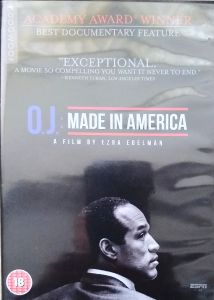
Back in 1994 Simpson’s estranged wife was brutally murdered and Simpson was the prime suspect. If he had been anyone other than a famous sports star and TV commentator, he would have been arrested but for whatever reason, he wasn’t. Later arrangements were made for OJ to come and surrender himself at Police Headquarters in Los Angeles but he did not appear. Shortly afterwards TV helicopters spotted Simpson driving down the freeway and a posse of police cars followed but kept at a distance because OJ was reported to be holding a gun to his head. This bizarre procession was broadcast live and at various intersections crowds gathered to watch and wave to OJ. When it was reported that OJ was heading to his home crowds of supporters gathered there to watch his arrival and eventually he surrendered his gun and was duly arrested.

OJ Simpson: Made in America is an outstanding documentary, released in 2016. It runs for over five hours and won an Oscar for best documentary. Episode one details Simpson’s incredible sporting career and also showed how it was important for him to be seen just as OJ rather than OJ the black athlete. He was apparently a friendly and amiable man who made many friends in the sporting world and kept himself well away from controversy and was never involved in the civil rights movement in America unlike sporting celebrities like Mohammed Ali. Later episodes show how he made a life after sport by becoming a TV sports pundit and by courting wealthy friends in Los Angeles to advise on his investments. In particular he made TV advertisements for Hertz car rentals which were highly popular and did well not only for Hertz but raised Simpson’s profile in the USA even higher.

The series also looks at the climate of race relations in Los Angeles and the activities and methods of the LAPD who clearly were not engaging or even trying to engage with the black community. A ‘them and us’ situation evolved in LA and when Rodney King, a black motorist was brutally beaten by a group of white police officers and caught on an amateur video, the situation become even more inflamed. The officers were taken to court but found innocent by a white jury causing riots and disturbances in the area.  This was the background of the later OJ Simpson murder trial.

Simpson divorced his wife and married eighteen-year-old Nicole Brown, a blonde LA waitress. Their marriage lasted seven years and was not happy, especially in the latter years when Nicole was beaten and abused by Simpson. She called the police numerous times reporting OJ for assault. On June 13th, 1994, Nicole and a waiter named Ron Goldman were found dead. A trail of blood led away from the scene and later blood was found on Simpson’s white Ford Bronco.

Simpson was not as famous in the UK as in America but I do remember seeing the crazy car chase on TV with Simpson in his white Bronco followed by a fleet of Police cars. The documentary series completely gripped me and the portrait of Simpson himself and the racial climate in Los Angeles and the attitude of the police was compelling.

I was so interested in the OJ trial I picked up a book about it and this is how I reviewed it a few years ago:

The People v OJ Simpson by Jeffrey Toobin

This fascinating book is a detailed look at the 1995 murder trial of former US football player OJ Simpson. Simpson was accused of murdering his ex-wife Nicole and her friend Ron Goldman. The pair were murdered outside Nicole’s house in the Brentwood area of Los Angeles and bloody footprints were found leading away from the scene. Simpson’s car had blood traces with matches to both Nicole’s and Goldman’s blood. There was even a low-speed police pursuit of Simpson that was broadcast live on TV bringing in a reported 95 million viewers.
The defence team managed to divert attention away from all of this evidence by playing into the troubled atmosphere in the area at the time. Motorist Rodney King, a black man had been beaten by a group of white police officers. They were all cleared of wrongdoing by a white jury despite the fact the incident was recorded on video clearly showing the officers beating up King. The defence also made great play about a ‘racist’ cop who was one of the first on the scene and even implied he could have planted damning evidence at Simpson’s home, that of a bloody leather glove that matched one found at the murder scene.

Witnesses gave newspaper and TV interviews as well as the lawyers themselves. The trial proceedings were broadcast live making the defence and prosecution teams into instant TV stars. The judge welcomed TV pundit Larry King into the courtroom and held up proceedings while King and the Judge chatted in his private chambers. The media attention led to the jury being sequestered for the length of the trial and not allowed to read newspapers, magazines or watch the TV news about the trial. A number of them were dismissed during the proceedings for various things, only 4 of the original jurors making it to the end.

Both sides were involved in the jury selection procedure asking questions ranging from sports to their views on domestic violence, all things that would be incredible in an English courtroom. Incredibly, before the trial had even started the TV news had broadcast a 999 call by Nicole requesting the police because Simpson was beating her up.

The author describes the background to the defence and prosecution teams and how they worked. One interesting thing was their use of outside companies who specialised in jury selection and analyses. The defence team followed the advice of their researchers who advised that middle aged black women tended to favour Simpson. The prosecution had the same advice but prosecutor Marcia Clark felt that that same group, middle aged black women, responded strongly to her and that her depiction of OJ as a wife beater would sway them. That was a big mistake.

This is a deeply fascinating book written by a journalist who covered the trial at the time for the New Yorker magazine.

Getting back to the present and I thought I’d watch the whole documentary, OJ Simpson: Made in America, all the way through, all five hours, over the course of a few evenings.

The first episode showed Simpson’s impressive sports career and the huge following he began to accrue. At one event in 1973 he was about to beat a record as the first player in the NFL, National Football League, to rush for more than 2000 yards. I’m not quite sure what that meant but from the video it looked equivalent to a rugby player making a try in the UK. Even the opposing team began to cheer him on. After retiring Simpson was asked to make a TV advert for the Hertz car rental company which was very popular. Simpson had become one of the most well known figures in America, loved by both black and white Americans. He had a beautiful wife, a fabulous home and wonderful children. Where could it all go wrong?

His wife made numerous calls to the police after beatings by OJ and the couple eventually split. At one point they tried to get back together but the violence began again and Nicole finally moved out.

On the evening of 12th June 1994, Nicole Simpson along with her children and various family members went for dinner at the Mezzaluna restaurant. Later, Nicole’s mother found she had left her glasses at the restaurant and waiter Ronald Goldman volunteered to return them to Nicole’s home. Later the two are found brutally stabbed to death. Simpson had left that evening on an 11.45pm flight to Chicago where he was due to play golf. However, blood stains were found on his car, a Ford Bronco and bloody footprints were left behind belonging to a type of shoe he was known to have worn.

At the trial the defence team tried to assert that one of the first detectives on the scene, Detective Mark Fuhrman, was a racist and had tried to frame OJ by leaving a bloody glove behind. It was later revealed that in the past he had given an interview to an author which she recorded in which he used disparaging language against the black community. When he was later recalled to the court he took the 5th amendment on each question, including when he was asked if he had planted the bloody glove.

Racial tensions had been bad in the area due to the Rodney King incident and there was jubilation in the black community when OJ was found innocent and shock in the white community.

OJ seemed to think he could carry on with his life as before but a civil suit by the Goldman family found him guilty and liable for damages. He was forced to sell his home and was later arrested when he forcefully tried to retrieve his sporting memorabilia which he believed had been stolen from him.

At the subsequent trial OJ was found guilty and sentenced to 33 years in prison. He was released on parole after serving 9 years.

OJ Simpson died on 10th April 2024 after suffering with prostate cancer.


What to do next: Here are a few options.

Share this post on your favourite social media!

Hit the Subscribe button. Never miss another post!

Listen to my podcast Click here.

Buy the book! Click here to purchase my new poetry anthology.

Click here to visit Amazon and download Floating in Space to your Kindle or order the paperback version.


Celebrating Charles Dickens

Charles Dickens is one of my writing heroes. He is a giant in the world of literature and the author of one of my favourite books of all time, David Copperfield. He was a man with an incredible imagination and was a prodigious producer of numerous books and stories. Many of his works are still loved and appreciated today and the magic of his story telling is also reflected in film and television adaptations of his work.
Dickens was born on February 7th, 1812. His father was John Dickens, a clerk in the Naval Pay Office. His mother was Elizabeth Dickens and she and her husband raised eight children including Charles, their second child. Charles and his family had a pretty idyllic life until John Dickens, who clearly lived beyond his means, was arrested for debts and incarcerated in the Marshallsea debtors’ prison in Southwark, London.

As was the custom then the younger members of the family were able to live in the prison with their mother and father but Charles, then aged 12, took lodgings nearby and was forced to leave school and work in Warren’s Blacking Warehouse where he earned six shillings a week for pasting labels on bottles of boot blacking.

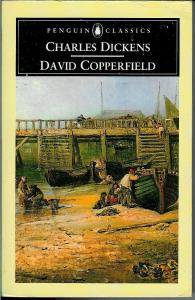
It was a shocking and humiliating experience for the young Dickens. He never mentioned the experience to any of his children and only spoke about it in later life to his great friend John Forster, who later wrote the first biography of Dickens. Dickens also wrote about the experience in his novel David Copperfield in which the young Copperfield suffers the same fate.

My well thumbed copy of David Copperfield

Mr Micawber, a character in the same book, was based on his own father and eventually John Dickens was able to pay off his debts when his mother died and left him £450. He and his family were released from prison but Charles was not immediately released from his work at the boot blacking warehouse, indeed his mother wanted him to continue there but it was his father who decided that Charles should return to school. Charles was forever indebted to his father for this and forever hurt by his mother’s wish that he should continue pasting labels onto bottles of boot blacking. The experience scarred him and his later desire to work harder and earn more and more money may have been a need to make himself safe from ever being forced into such a situation again.

After two years at school, Dickens obtained employment as a lawyer’s clerk and later, he taught himself shorthand and began work as a parliamentary reporter. He became infatuated at this time with a lady called Maria Beadnall who later became the inspiration for the character of Dora in David Copperfield. Charles pursued Maria over a period of three years but the romance, if indeed there ever was one, finally fizzled out in the spring of 1833.

Dickens first foray into the world of creative fiction was a short story titled A Dinner at Poplar Walk. He had sent the story to a monthly magazine simply called, The Monthly Magazine and upon finding his story printed within its pages, reported that ‘his eyes were so dimmed with joy and pride’ that he could barely see.

In 1835 the editor of the Morning Chronicle, George Hogarth, invited Dickens to contribute to his newspaper and during various visits to the Hogarth home he became acquainted with his editor’s daughter Catherine, whom he later married in 1836.

Dickens wrote his newspaper stories under the pseudonym Boz, and he was delighted when a publisher offered to publish a collection of his works entitled Sketches by Boz. This led to another publisher asking Dickens to supply the text to go with a series of illustrations by a popular illustrator of the day, Robert Stephens. Dickens somehow managed to turn the arrangement on its head, writing a story and having Stephens illustrate Dicken’s text. The story was The Pickwick Papers and it soon became something of a publishing phenomenon.

Robert Stephens passed away soon after the first publication and Dickens recruited another artist, Hablot Knight Browne, to provide the illustrations. Readers could buy a monthly instalment priced at a shilling and Dickens worked hard to produce each edition. Other stories had been published in a similar way but they were usually well known classics. This was the first time new fiction had been produced in this way.

That then was the start of Dicken’s career. He was a busy man, editing various publications as well as writing his novels. Great Expectations was published with the author shown as Boz but in later editions this was changed to Charles Dickens.

Dickens_by_Watkins_1858

Dickens seems to have rented various houses, moving around often but he eventually bought a house in 1851, Tavistock House in Tavistock Square, London. Dickens wrote various books here starting with Bleak House. He also fancied himself as something of an actor and he had a large room made into an improvised theatre where he, along with his friends and family, produced various amateur theatricals. In 1858, Charles separated from his wife Catherine and she moved out into a property in Camden Town.

The separation was said to have been sparked by Dickens’ obsession with a young actress called Ellen Ternan and his gift of either a brooch or a bracelet to her which somehow made its way to his wife. Dickens has this image of being the perfect Victorian family man but he didn’t always live up to it. According to Wikipedia he even tried to get his wife falsely diagnosed as mentally ill in order to have her committed to an asylum. Various accusations were bandied about at the time and rumours were so bad that Dickens himself was forced to publish a statement in the press about his marital situation.

Did Dickens have an affair with Ellen Ternan? So many years later it is hard to know the truth. One night when he was living at his new home Gad’s Hill Place, Dickens made a bonfire of all his personal letters and papers, some of which may have had the answers.

Certainly, Charles was fond of Ellen Ternan. He spent a lot of time with her and even took her abroad to France and Belgium but neither admitted to having an affair but he did have something of a history of obsessions. Years earlier he had been distraught when his sister-in-law Mary Hogarth had died suddenly at the age of 17. Mary was living with the Dickens family at the time and died in Charles’ arms. He was so upset that he kept his dead sister in law’s clothes for years afterwards, occasionally taking them out to look at them. Mary became the template for many women in his books, all of whom were ‘young, beautiful and good’.

Dickens had an incredible imagination and although many of his characters were based on real people, many others sprang directly from his own mind. He was a restless man and regularly took daily and nightly walks of twenty miles and more. Presumably on those walks he brought his imagination into check and channelled his thoughts into the development of his stories.

In his later life, Charles embarked on a series of readings from his books. The readings were highly charged emotional events and the author used all his powers as an actor to delight his audiences, frequently reducing them to tears. Tickets for the reading were highly sought after and Dickens was one of the most notable and famous men of his day. Imagine George Clooney or Brad Pitt doing a series of book readings today and we can get just a faint hint of what things were like for Dickens and his public back then.

Dickens bought his final home, Gad’s Hill Place in March of 1856. He had seen the house as a child when his father had pointed the house out to him as something that he might one day own if he worked hard enough. He lived at the house with his children although one, Charles junior, elected to live with his mother in Camden Town. Strangely, his estranged wife’s sister, Georgina, stayed with Charles as housekeeper.

On June 8th 1870, Dickens had a stroke after working on his final book, The Mystery of Edwin Drood. He died the next day without regaining consciousness. Some have speculated that he died at Ellen Ternan’s house and she had him taken back to Gad’s Hill to prevent a scandal. He was laid to rest in Poets Corner at Westminster Abbey.

Charles Dickens is one of the most loved and celebrated writers of all time but I’ve got to say that some of his books I’ve found a little hard to read. I’ve tried and tried to read Pickwick Papers but I just couldn’t get through it. Not long ago I picked up Bleak House and once again I couldn’t really get started on the book. I have read A Christmas Carol, Oliver Twist, Great Expectations and my absolute favourite, David Copperfield.

My favourite character in the book, apart from Copperfield himself, is Steerforth, a friend of David Copperfield but one who ultimately betrays him. The best part in the book probably, for me at any rate, is the storm when David returns to Yarmouth. Dickens builds the storm slowly and each word and phrase adds a new layer to the sense of danger and foreboding and when Copperfield is finally reunited with his old friend Steerforth at the height of the storm’s ferocity, death comes between them and Steerforth is sadly drowned.

Dickens reveals this in a very unique way; he does not tell the reader Steerforth is dead. He leaves the reader to realise this themselves and, in the process, makes the reader almost at one with the narrative. Throughout the book, Dickens mentions in passing about Steerforth’s habit of sleeping with his head on his arm. It’s referred to many times in the narrative almost as a matter of non interest, something unimportant that the reader doesn’t really need to know, but when David Copperfield spies someone aboard a stricken ship trapped in the fierce storm who evokes some faint remembrance for him, a tiny warning bell is set off.

Finally, when the body of a drowned man is brought ashore and lies mutely on the sand, his head upon his arm, we know just from that simple bit of information, without the author telling us anything more, that Steerforth is dead. The prompts and clues that Dickens has hinted at have paid off for the reader in the most satisfying of ways.

Dickens’ books are still popular today and a recent cinema version of David Copperfield was released in 2019. It was good although I do have a fondness for the 1935 version in which WC Fields plays the part of Mr Micawber. In 1946 David Lean directed one of the best ever films of a Dickens’ story, Great Expectations. In the 1960’s Oliver Twist was made into a stage musical by Lionel Bart and the film version was released in 1968.

Dickens’ most filmed story though is probably A Christmas Carol, the story of Ebenezer Scrooge and the three ghostly visits that transform his life.

What is your favourite Dickens’ story?


Sources:

Wikipedia

Dickens by Peter Ackroyd


What to do next: Here are a few options.

Share this post on your favourite social media!

Hit the Subscribe button. Never miss another post!

Listen to my podcast Click here.

Buy the book! Click here to purchase my new poetry anthology.

Click here to visit Amazon and download Floating in Space to your Kindle or order the paperback version.

Holiday Book Bag 2024 (Part 2)

Last week I gave you part one of my Holiday Book bag so here we go with part 2, more of my holiday reads and also what happened when tragedy occurred and I ran out of books.

Let’s kick off with this one, a Christmas pressy from Liz and a book I’ve been dying to read but purposely kept to read on holiday.

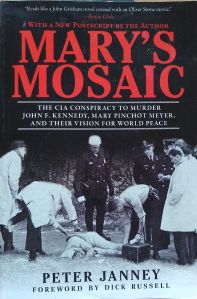
Mary’s Mosaic by Peter Janney

Liz bought me this book for Christmas and I’ve been saving it for a time when I can sit and read it undisturbed. After the assassination of President Kennedy there were numerous deaths of various witnesses in Dallas and elsewhere. One such death was of a lady named Mary Pinchot Mayer. She was the ex-wife of CIA agent Cord Mayer and one of JFK’s many mistresses. The author reckons she not only introduced the President to mind altering drugs but also agreed strongly with Kennedy’s desire for peace. He goes a little too far perhaps in making the case that Mary was the force behind JFK’s commencement address at American University in October, 1963 in which Kennedy called for both the USA and the Soviet Union to

‘direct attention to our common interests and to the means by which those differences can be resolved. And if we cannot end now our differences, at least we can help make the world safe for diversity. For, in the final analysis, our most basic common link is that we all inhabit this small planet. We all breathe the same air. We all cherish our children’s future. And we are all mortal.’

Mary was shocked by the murder of the President but came to realise the part played by the CIA and wanted to bring attention to the false story of the Warren Commission report. One day in Washington in October 1964, whilst walking along the towpath of the Chesapeake and Ohio canal towpath, she was murdered. Mary was shot once in the head and once in the chest and in this remarkable book the author goes on to trace the man who he thinks may have been the assassin.

A very fascinating read indeed.

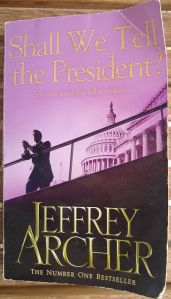
So that was it, by the start of our third week I had read all my books. What could I read next? Well, there wasn’t much in our rented villa’s bookcase so I read one of Liz’s books, Shall we Tell the President?.

Shall we Tell the President? by Jeffrey Archer.

I’ve actually read this book before, many years ago but this was a new edition, rewritten by the author himself. In the original, the president in question was Edward Kennedy but of course, in real life Kennedy never made it to the White House, his challenge cut short by the ghost of what happened to Mary Jo Kopechene at Chappaquiddick. In this rewrite then, the author puts his own fictional president, President Kane in charge at the White House.

The FBI learn of a plot to murder the president. A Greek waiter, an illegal immigrant learns of the plot whilst working as a waiter at a restaurant in Washington DC. He calls the FBI and the two agents assigned to the case report quickly to their superior. Soon, one of the agents and their boss, as well as the informant are dead leaving only one agent who by chance has survived a murder attempt. He has six days to track down the assassins.

The book kept me interested but I can’t say it was a great read and I thought some of the dialogue was a little poor, in particular the FBI agent who kept referring to his new girlfriend constantly as ‘pretty lady’ was a little cringeworthy to say the least. Sorry Mr Archer but I’d have to give this one a five out of ten.

The Long Dark Night by Susan Lund

This was a bit of a first for me. Liz had nothing else that I wanted to read so she said she would sort me out something on her Kindle. She searched for free books and I chose this one by Susan Lund. It was about ex-FBI detective Michael Carter who is now working for the police on cold cases. He is asked to look into the discovery of a dead body on a property that is currently being renovated. As more bodies are unearthed, Carter links the bodies to some current cases and feels that a serial killer might be at work.

Later, two young boys are abducted but one escapes and Carter finally has a clue to work on. Could the killer be an ex-police officer?

The book was a fairly interesting read in part but the author seems to lose direction towards the end and the finale seemed to me to be a bit of an anti-climax.

Even so, the book kept me interested for a few days.

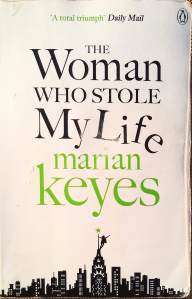
The Woman who Stole My Life by Marian Keyes.

This final holiday read was a book Liz took with her. She read it first, thought it was good and passed it on to me. I thought it was probably standard chick-lit fodder but actually it was a really good read, trotting along in a very chit chatty way, just like my own stories. It flips about timeline wise talking about things in the present and then flipping back to events of some years ago but once you got used to the situation it turned out to be a really enjoyable read.

Stella, many years ago was looking after her family when she was struck down by a mysterious illness which rendered her paralysed and unable to move or talk. Her neurologist Mannix, manages to communicate with her by getting her to blink, so he would go through the alphabet and she would blink at a particular letter and eventually they would put words and sentences together.

Gradually she begins to find that Mannix is becoming quite important to her especially when her husband and children don’t seem to be interested in either her or her predicament. When she gets well, she finds that 1, she has fallen for Mannix and 2, he has fallen for her, so much so that he has self-published a book called One Blink at a Time, a book of based on the notes he has made of their blinking conversations. Anyway, by a series of fluke events the book becomes a best seller in the USA and the two move to New York to promote the book.

All in all, a very enjoyable book indeed and I might even look at reading some more of Marian Keyes books.

That was my holiday book bag. What books are you planning to read on holiday?


What to do next: Here are a few options.

Share this post on your favourite social media!

Hit the Subscribe button. Never miss another post!

Listen to my podcast Click here.

Buy the book! Click here to purchase my new poetry anthology.

Click here to visit Amazon and download Floating in Space to your Kindle or order the paperback version.


Holiday Book Bag 2024 (Part 1)

This year Liz and I have spent five weeks in sunny Lanzarote and when we had just started week three I had run out of books. One of my great holiday pleasures is spending a lot of uninterrupted time reading in the sun. My big mistake this year was not bringing enough books and also including two very slim volumes in the ones I did bring. Sometimes in a holiday villa there will be something readable in the cupboard that other holidaymakers have left behind, but in our villa the majority of previous tenants appeared to be German and unfortunately my German language expertise only amounts to counting to ten.

Anyway, this particular book bag went on for a bit so I’ve split it into two parts and next week you can read part two. So, let’s take a look at what I have been reading in Lanzarote this winter.

The Prime of Miss Jean Brodie

I noticed this title on one of those blog posts about books you should read before you die. I knew I had a copy somewhere and after rummaging about for a while I finally came across it. It was a rather slim volume and I’d probably read it years ago but it looked interesting and so I opened it up and began to read. My big problem in reviewing this book is that I started reading it and after a few chapters put it down and began reading something else. It’s a small slim book so I popped it into my shoulder bag thinking I’d read it on the flight to Lanzarote. I couldn’t concentrate on the flight but I started reading it later by the pool but then I had to backtrack and re read some of the earlier pages so I lost the continuity. It’s about a teacher, Miss Brodie, who feels that as she is in her prime she must devote herself to a chosen group of her favourite pupils; the Brodie Set. Miss Brodie is not a conventional teacher and tells her pupils all about her visits to Italy and of her love for Mussolini and his fascists. This is done sometimes when the class should be studying mathematics and so a complicated mathematical sum is usually put up on the blackboard to fool any interlopers, like the headmistress for instance.

The Brodie Set all wonder about Miss Brodie and her love affairs and later, when Miss Brodie has lost her job, she wonders who was the traitor? Who reported her to the headmistress? Not one of the Brodie Set surely?

It’s an interesting and original book but I can’t say I was totally impressed but perhaps I should have read it properly and not put it down part way through.

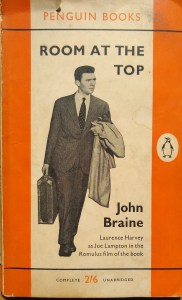
Room at the Top

This was another slim volume I found in a box of old books. I first read it in 1984 according to the note I added on the back of the cover. It’s about a young man, Joe Lampton, in a rigidly class structured 1950s England, still dealing with post war rationing and his journey from a small working class village to a room at the top of a big northern town. He gets a job as an assistant treasurer at the Warley district council and he sets his sights on a young girl who also happens to be the daughter of a rich business owning councillor. A man of his background is not the sort of man the councillor wishes to see romancing his daughter so Joe gets quietly warned off. He is jealous of former RAF pilot Jack Wales who is the sort of fellow who is much more acceptable to the councillor. Jack is a WWII hero who escaped from a prison camp. Joe was an RAF rear gunner who was also in a camp but used his time not to escape but to study for his accountancy exams.

Joe joins an amateur theatre group and starts an affair with a married woman ten years older than him. He is happy and there is talk about her divorcing her husband. This though is 1950s Britain. His involvement would mean scandal and the end of his job with the council, so what should he do?

There was a film version of this starring Laurence Harvey as Joe Lampton and Simone Signoret as Alice Aisgil with whom Joe has an affair. It’s slightly different to the book in a few minor ways but Laurence Harvey’s rather fake northern accent always puts me off.

Anyway, it was a fascinating read looking back to an England much different from today.

timestampe=1707908418

The Kennedy Curse by James Patterson with Cynthia Fagen

This wasn’t a bad read but to be fair it only really skimmed the surface of the story of the Kennedy family. There were no great revelations about the family and to be honest, I’ve read a huge amount about the Kennedy family and this was a book I could probably have written myself, at least to a certain extent. The book really begins with Joe Kennedy and his impressive rise in business and banking. He becomes the youngest ever bank manager in the USA and with his business acumen he soon amasses a large fortune along with his famous family. He supports FDR as the democratic candidate for the presidency but he wants something in return, the ambassadorship to Great Britain. Joe becomes the ambassador taking his family over to London but when the second world war looms he decides Britain will be no match for Nazi Germany.

The big problem for Joe is that FDR thinks otherwise and soon recalls Joe who finds himself out of a job. He has designs on the presidency himself but decides a better course of action would be to make his son, Joe, junior president. When Joe is killed in the war, his next son John F Kennedy has to take on the mantle.

As we all know JFK becomes president but is tragically murdered and the same fate falls to Bobby Kennedy who runs for president in 1968. Ted Kennedy decides to follow in his brothers’ footsteps but then the Chappaquiddick incident occurs when Ted leaves poor Mary Jo Kopechne to drown in his overturned car. Ted seems to ride out the ensuing scandal but it becomes clear he will never be president. The story then turns to the next generation of Kennedys who do not seem to be in the same league as their uncles and the narrative begins to turn toward drug addiction and other issues including rape charges against William Kennedy Smith, one of numerous next generation Kennedy cousins.

The story finishes with the death of John F Kennedy junior, the son of the late president, in a light aircraft crash.

A fascinating story but to be honest I’ve read better histories of the Kennedy family although this did keep me entertained for a while.

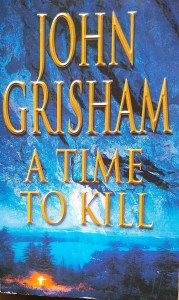
A Time to Kill by John Grisham

I’ve read a few of Grisham’s books and I’ve always been impressed with them, all except one. This one turns out to be his first novel and he says in the introduction how proud he was of finishing it as at that time, he hardly ever finished anything. It also contains some autobiographical elements as at the time, Grisham was a street lawyer, similar to the character in the book.

The book is set in America’s deep south where there is or was a great deal of racial prejudice. Two white guys decide to kidnap a young black girl, tie her to a tree and repeatedly rape her. They drive her away and dump her like garbage but she survives and the police arrest the two scumbags responsible. The next is that the young girl’s father Carl Lee Hailey decides to take a rifle and shoot the two guys. He is arrested and put on trial for murder and street lawyer Jake Brigance takes on the case.

The case ignites the small town of Clanton Mississippi. The Klu Klux Klan become involved as do various other groups and the stage is set for a tense murder trial which goes on while the police and the National Guard try to keep order.

It’s a very exciting read although the ending was a little underwhelming and if you find the N word offensive then this is a book which is not for you as that particular word appears numerous times on almost every page.

I read more books on holiday in Lanzarote. Tune in next week for more books, same time, same channel, same blog.


What to do next: Here are a few options.

Share this post on your favourite social media!

Hit the Subscribe button. Never miss another post!

Listen to my podcast Click here.

Buy the book! Click here to purchase my new poetry anthology.

Click here to visit Amazon and download Floating in Space to your Kindle or order the paperback version.

Fact or Fiction: Thoughts from a Sun Lounger

Here in our rented villa in Lanzarote it has been hugely relaxing. I did plan to do a lot of writing but instead I’ve been doing a lot of reading, swimming and drinking a lot of wine. To be fair I have done some writing. I’ve started two new short stories, one of which I have the story fully in my head and another that I’m not sure where it will end up. I’ve also worked on a couple of unfinished stories and blog posts. What has been interesting is that one of the books I’ve been reading by author John Grisham was actually John’s first novel and he says in the introduction that he was proud of his first book and also in particular, proud of finishing it as like me, he starts a lot of things but rarely sees them through to the end. Clearly, he’s sorted that problem out because he’s written a number of best selling books and all the ones that I have read, with one exception, have all been riveting page turners.
Grisham’s first book, A Time To Kill was based on his time when he was what he calls a ‘street lawyer’, someone hustling for cases. He explains in the introduction how the book was very autobiographical and inspired partly by dealing with similar cases and situations to the one he based the book on.

One of my unfinished stories was based on a radio play I wrote. I was hoping to get the BBC interested in it but sadly they declined. Pity, because I thought it was rather good and also it would have given me such a lot of pleasure to hear my work on Radio 4.

It was inspired by two things, the assassination of Bobby Kennedy and a film starring James Stewart. The film was called Call Northside 777. In the film Stewart plays a cynical newspaper reporter who is asked by his editor to investigate a small ad in the newspaper. The ad asks for someone to come forward who has information about a murder to call the eponymous phone number. Stewart finds the person running the ad is an old lady whose son is in prison for a murder she claims he didn’t commit. She works as a cleaner and is saving up to put together a reward for anyone having any information. Ultimately James Stewart proves that the woman’s son was innocent in part by having a newspaper photo enlarged. A key witness, and I’m going from memory here, had claimed she was somewhere on a particular date but a photo in the paper’s archive showed the woman with a paperboy in the background holding a newspaper and the photo was enlarged to show the date, which in turn somehow proved that part of her testimony was wrong.

The funny thing is that today a photo like that would have been taken by a digital camera and its quite possible the picture when enlarged wouldn’t show such detail yet with a film camera it’s a different story. Take something like the original Star Trek for instance, shot on 35mm film in the late sixties and still looking clear and sharp today. The following series, The Next Generation, shot on video in the 1980s is not remotely as sharp and it’s the older series which looks better on today’s HD TV sets.

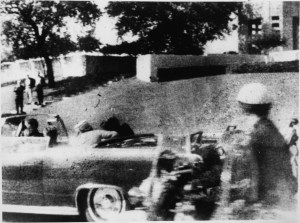
Photography has played a big part in theories surrounding the shooting of US President Kennedy in 1963. One lady, Mary Ann Moorman, took a polaroid shot of him being struck by a bullet. The photographer was on the left of the President’s limousine and many have conjectured that in the background to the President’s right, the figure of the assassin can just be seen. I’m personally not so certain but the picture does show the grassy knoll where a second shooter may have been lurking. The other shooter, the infamous Lee Harvey Oswald was over in the Texas School Book Depository. Was he shooting at the President or having a coke in the second floor lunch room?

Polaroid by Mary Ann Moorman

Next to Mary was another lady known only as the Babushka Lady. This lady has never been identified but she also filmed the assassination and her film, if ever found, would also have great footage of the grassy knoll area. The other day I saw a very clear picture of her on a JFK site I follow. The picture had been cleaned up by new AI technology which uses computer programs to clean up blurred pictures.

Going from fact to fiction, in my story it was a UK MP who gets murdered and the accused assassin’s mother who places the newspaper advertisement. In the real murder of Bobby Kennedy, the assassin Sirhan Sirhan shot Kennedy from a few feet away and various people grabbed him just as he fired his first shot. According to the autopsy, the fatal shot was fired from point blank range, possibly actually touching Kennedy’s head so how could Sirhan’s bullet, fired from a few feet away have been the fatal shot?

The JFK assassination has inspired quite a few conspiracy films. The most famous is the Oliver Stone film JFK which dramatises the investigation by New Orleans District Attorney Jim Garrison and his probe into the murder. Stone uses the Garrison investigation to take the audience through the various stages and theories of the assassination, the number of shots, the direction of the shots, the Oswald look alikes, the murder of police officer JD Tippet, the mafia connection, the intelligence connection, the background to Lee Oswald and so on. In the film Garrison played by Kevin Costner meets an informant known only as X. I’m not sure if this ever really happened but X was based on L Fletcher Prouty, an air force officer who served as Chief of Special Operations for the Joint Chiefs of Staff under President Kennedy. He gives the audience a view of the assassination from a covert intelligence CIA background.

Another film based on the assassination was Executive Action, a phrase coined by the CIA itself and referring to their capability of assassination. The film was written by three screenwriters including Mark Lane who was the author of Rush to Judgement, one of the first books to criticise the Warren Commission report on the JFK assassination. Lane also made a film version in which he interviewed many assassination witnesses.

In the film, a group of men discuss the Kennedy presidency and agree that Kennedy must be removed for various reasons, his civil rights stance, his nuclear test ban treaty and his decision to withdraw from Vietnam. Then they set out to obtain funding from various Texas oil magnates who are also not happy with President Kennedy.

Mark Lane was actually a lawyer and he defended a magazine which was sued by E Howard Hunt, one of the Watergate burglars, because the magazine claimed that Hunt was part of a JFK assassination plot. In the following trial, Mark Lane won his case and the jurors demanded action by the government to investigate further. Nothing of course happened but that’s hardly surprising according to another book I have just read called Mary’s Mosaic. It’s about a lady who was murdered by the CIA or so the author claims, because she knew too much about the JFK assassination. The book goes on to show how the CIA was able to manipulate the media into not delving too deeply or even not reporting at all, stories like these. I’ll be reviewing the book in more detail in an upcoming Book Bag post.
Anyway, that’s enough about conspiracy theories for now. Is it worth digging out that radio play for some more work or is it time for another dip in the pool? I know this is not good for my street cred as a writer but, you guessed it, time for another dip in the pool!


What to do next: Here are a few options.

Share this post on your favourite social media!

Hit the Subscribe button. Never miss another post!

Listen to my podcast Click here.

Buy the book! Click here to purchase my new poetry anthology.

Click here to visit Amazon and download Floating in Space to your Kindle or order the paperback version.

Remembering Cary Grant

I’ve been a fan of Cary Grant for a very long time. I love his smooth and debonair style, his handsome and tanned good looks and that rather languid transatlantic brogue of his.

In the TV series Archie currently streaming on ITV X they seem to be saying that all of that was an invention, an invention by an Englishman called Archie Leach who transformed himself into a successful Hollywood film star named Cary Grant.

Grant was born Archibald Leach in Bristol, England in 1904. He had a poor upbringing and his mother suffered from depression and his father was an alcoholic. The young Archie was interested in the theatre and performing and his mother was keen on him having piano lessons. His older brother had died before reaching the age of one and this perhaps made his mother a little over protective of the young Archie. Even so, his mother was not a woman who was able to give or receive love easily and the older Cary Grant blamed his childhood relationship with his mother for his problems with women in later life.

When Archie was 9 years old his father placed his mother in Glenside Hospital, a mental institution, telling his son that she had gone away on a long holiday and later, that she had died.

Archie befriended a group of acrobatic dancers known as The Penders and he was able to eventually join them and there he trained as a stilt walker and became part of their act. Later the group toured America and Archie decided to stay, following in the footsteps of others before him like Charlie Chaplin and Stan Laurel who had made their way to the USA in an almost identical way.

On Wikipedia they mention that on the trip over to the USA Archie met Douglas Fairbanks and was greatly impressed by him, so much so that Fairbanks became a role model for the young Archie Leach.

In New York Archie worked in vaudeville with various comedy and theatrical groups. He joined the William Morris theatrical agency and began to pick up many theatre roles. In 1932 he had his first screen test and was given a five year contract with Paramount Pictures. B P Schulberg the general manager of Paramount decided that Archie Leach was not a good enough name for films so Archie came up with the name Cary Grant taking Cary from a stage character he had played and Grant chosen randomly from a telephone directory.

Cary Grant worked hard at his profession and in the TV series Archie they claim that Cary was a role or a part that Archie built up over time. Jason Isaacs who plays Grant says Cary would never be filmed or recorded during an interview because then he was being himself not playing at being Cary. The actor tracked down a recording of Grant made secretly by a student journalist who interviewed Cary over the phone and felt that for the first time he was hearing the real Archie who came over in the recording as very English rather than the usual mid Atlantic voice that we are used to hearing.

It seems to me that many stars who use a different name in the film world are in a way creating a character which they present to the public. You could argue that Marilyn Monroe was a similar personality and that she was a creation of Norma Jeane in the way that Cary Grant was created by Archie Leach.

A breakthrough role for Grant was starring with Mae West in the film She Done Him Wrong and the follow up, I’m No Angel. Grant went on to star in many famous films and amazingly, even though he was a star in Hollywood’s golden years, he was actually the first big star to not be a part of the studio system. He was a freelance actor, not contracted to any studio until 1937 when he signed a four-picture deal with Columbia.

In his early years in Hollywood, Grant shared a house with actor Randolph Scott leading to claims of the two being gay lovers. Still, young bachelors sharing a house with others is not uncommon. David Niven famously shared a house with Errol Flynn and we can hardly class those two as being gay.

Somewhere in my fairly huge book collection I have a biography of Cary Grant but despite an intensive search I couldn’t find it. I also have a copy of David Niven’s Bring on the Empty Horses which if I remember correctly has a short chapter on Grant. Now where did I put that book?

I did do some quite considerable research to produce this blog post. Firstly, I had to watch the four episodes of the TV series Archie, currently streaming on ITV X. That wasn’t anything difficult of course, it wasn’t a chore, in fact it was very enjoyable. Archie is a wonderful four part series and Jason Isaacs plays an outstanding part. He doesn’t try to impersonate Cary but he did manage to create a look of the late star and he caught Grant’s voice and enunciation perfectly. Most of the series follows Cary in later life when he becomes involved with and later marries Dyan Cannon, Dyan was his fourth wife and she was the mother of his only child Jennifer and she and her mother co-produced the series which is definitely well worth watching.

Next, I searched for the biography I had of Cary but despite searching the entire house I couldn’t find it. Oh well, I have a few copies of Bring on The Empty Horses about the house so I thought ok, I’ll grab that and have a read of the chapter on Cary. Once again, I searched through the entire house but could I find that book? No! Eventually I started to put everything back where I had found it and it was only after idly looking in a box of books that I had only recently packed away and had earlier dismissed, that I finally found it.

Anyway, I had a break from writing to look for that book and after a while when I couldn’t find it I popped the TV on. I wasn’t altogether surprised to find there was a Cary Grant film showing. It was An Affair to Remember, a love story in which Grant’s character, a playboy type meets Deborah Kerr on a transatlantic voyage and the two fall for each other. On arrival in the USA they decide to have a 6 month break from each other as they are both in other relationships and then meet at the top of the Empire State building in New York. It’s not really my cup of tea, in fact it’s overtly sentimental but then, sometimes a small dose of sentimentality is good for you. Cary Grant plays, well, Cary Grant and Deborah Kerr plays a very English New Yorker.

I have two of Grant’s other films on DVD, To Catch a Thief and North by Northwest, both directed by Cary’s favourite director, Alfred Hitchcock.

OK, enough TV watching for now. Getting back to Bring on the Empty Horses, David Niven wrote about Cary Grant in a short section of his book called Long Shots and Close Ups where he gives his readers a quick sketch about various film people. The section on Cary is only three and a half pages and not the full chapter I was expecting but Niven clearly liked the man and in those three and a bit pages, picked up on some essential elements of Grant’s character. Niven remembers Cary Grant as an intelligent man, particularly with money and he listed people like multi millionaire Howard Hughes among his friends. Grant invested his earnings well and became one of the richest people in Hollywood. He had an obsession with his health, embarking on various health pursuits and then moving on to the next one. Niven remarks that once when Cary was taking swimming lessons to learn the crawl, Niven mentioned that Cary could already swim the crawl. Grant answered ‘yes but I want to swim the crawl perfectly!’ Cary gave up smoking by hypnotising himself and Niven also mentions his use of LSD during his treatment by a psychiatrist which is also brought up in Archie.

Cary Grant retired from films in 1966 the year his daughter was born and he and Dyan Cannon divorced in 1968. Many tried to bring him out of retirement for various films including his favourite director Alfred Hitchcock but he declined. He must have wanted to keep on working though because he did accept a position on the board of Fabergé.

He died in 1986 aged 82 and left behind an estate reputedly worth around 80 million dollars. Archie is a well made and quite fascinating piece of TV. Look out for it, it’s well worth watching.


What to do next: Here are a few options.

Share this post on your favourite social media!

Hit the Subscribe button. Never miss another post!

Listen to my podcast Click here.

Buy the book! Click here to purchase my new poetry anthology.

Click here to visit Amazon and download Floating in Space to your Kindle or order the paperback version.