McLaren, Big Ron and Lando

I do find it really strange that the F1 season should still be going on in December. Still, the F1 season these days is a long one. It starts off in March and winds its way around the world until it ends up in Abu Dhabi at what is essentially a twisty turny mickey mouse sort of track in the middle east.

The first full season of Formula One that I personally followed was in 1970 and so 2025 was the 55th season that I have been a motor sport fan. Back in 1970 the final race of the season was in Mexico which was round 13 on the calendar. The eventual world champion that year was Jochen Rindt who was sadly killed during practice for round 10, the Italian Grand Prix at Monza. It was thought that a brake shaft failed on the car sending Rindt’s Lotus into the barriers. The car hit a solid stanchion holding up the crash barrier and Rindt, who had not fully fastened the crotch straps on his seat harness, slid down into the cockpit in the crash and suffered a fatal neck injury.

Jochen Rindt (Picture via creative commons)

This year the final race of the season at Abu Dhabi was the 24th round of the championship which has made it a heck of a long season. Back in 1970 I was a major motor sporting fan, subscribing to various magazines and writing to my favourite drivers asking for pictures and autographs. These days I still follow the sport but I’m not quite as enthusiastic as I once was. I don’t subscribe to the Sky F1 channel and I’m content to watch the race highlights on channel Four.

Last Sunday this meant that I had to put down my phone and iPad after the race started about 1pm UK time so I could watch the later Channel Four broadcast without knowing the outcome. Lando Norris came home third which was enough to secure him the world championship by 2 points. Strangely, I actually found myself almost wanting to root for Max Verstappen. In the past I have not considered him to be a particularly likeable character but recently he seems to have matured quite a lot. The commentators on Channel four made great play about how Max has recently made up a deficit of over a hundred points to become a contender, along with Lando and Oscar Piastri, for the ultimate title in motorsport. Don’t get me wrong. I’m glad Lando turned out to be the champion but I always find myself wanting the underdog to win and this year, Max was the outsider who just could have done it. All it needed was a bad pit stop for Lando or maybe a puncture or something to drop him outside of the top three and Max would have won a really incredible victory. As it was, he won the race but Lando was able to secure the championship. It was good to see Max magnanimously congratulate the new holder of the crown and I’m gradually starting to find four times champion Max much more likeable.

picture courtesy monsterenergy.com

After the race various pundits gave their opinion of how Lando did it but there was one aspect of his win that was never mentioned and which I personally think was the key to his victory and that was loyalty. Lando joined McLaren in 2019 when the team were just middle of the grid runners hoping to move up towards the front. Lando stuck with them unlike his team mate at the time, Carlos Sainz who I bet was probably wishing he had stayed put instead of moving to Ferrari and later getting dropped in favour of Lewis Hamilton. Lewis of course is probably wishing that he had stayed put at Mercedes as this season has been his worst in F1. It turns out that Sainz has actually had a better season at Williams than Lewis has had at Ferrari.

Fernando Alonso. Image courtesy Wikipedia.

Another driver who may be looking at McLaren wishfully is another of their former drivers Fernando Alonso. Alonso is one of the all time greats of the sport, still soldiering on and looking for success in his twilight years. He is the winner of two world championships but he has a knack for being in the wrong place at the wrong time. Ron Dennis, the former boss of McLaren, enticed Alonso over to McLaren in 2007. Alonso wanted to be the undisputed number one driver there but his new team mate Lewis Hamilton had other plans. Alonso left but came back again with the promise of Honda engines in 2015. Sadly, Honda arrived late into the hybrid F1 era and their engines lacked development so after enduring a torrid time round the back end of the grid, Alonso moved on as did the great Ron Dennis who sold his shares in McLaren and retired from the sport. Ron had previously merged his old team Project 4 Racing with McLaren back in 1980 which is why all the cars were designated McLaren MP/4’s. Dennis took Bruce McLaren’s old team and made it one of the most successful in the sport taking Niki Lauda, Ayrton Senna, Alain Prost, Mika Hakkinen and Lewis Hamilton to multiple world championships.

By Matthew Lamb – FoS20162016_0626_105537AA, CC BY-SA 2.0, https://commons.wikimedia.org/w/index.php?curid=49763509

In 2007 the ‘spygate’ scandal emerged in which a former McLaren employee, Nigel Stepney, then working for Ferrari, decided to send his former colleague at McLaren, Mike Coughlan, copies of the latest technical designs at Ferrari. The FIA fined McLaren 100 million dollars for having had private information about a rival team although according to Wikipedia, they only paid half that, 50 million dollars, still a huge amount of money. No evidence that Ferrari’s designs were used on the McLaren cars was ever found. In 2017 Ron sold all his shares in the McLaren Technology Group and McLaren Automotive and effectively retired from motorsport.

The current CEO of McLaren is Zak Brown and it is he who has led McLaren back to the winners circle, winning back to back Constructors’ Championships in 2024 and 2025 and of course winning the 2025 Driver’s World Championship with Lando Norris.

In 2026 there is a big rule change coming to F1 so all the teams with their designers and engineers will be starting with a clean sheet of paper. Will McLaren still be on top? Well the Aston Martin team have paid a huge amount of money for the sport’s number 1 engineer and designer, Adrian Newey to build their new car so could Fernando Alonso at the very end of his career find himself back in the winners circle? Well, we won’t have long to wait. The first Grand Prix of 2026 opens up for practice on March 6th 2026 in Melbourne Australia. Will I be tuning in? Well I wouldn’t want to miss my 56th season, would I?


What to do next: Here are a few options.

Share this post on your favourite social media!

Hit the Subscribe button. Never miss another post!

Listen to my podcast Click here.

Buy the book! Click here to purchase my new poetry collection.

Click here to visit Amazon and download Floating in Space to your Kindle or order the paperback version.

Click here to visit amazon and purchase Timeline, my new anthology.

F1 in Numbers

A long time ago I wrote a post called Blogging by Numbers in which I wrote about various numbers that linked to the world of writing and blogging. This week I thought I’d try and do a similar thing with Formula One racing. I haven’t written much about the sport this year even though it has been quite an interesting season. Recently, Max Verstappen, who a few races ago was really out of contention for the World Championship, now seems to have caught up with the top two drivers, Norris and Piastri and it is even possible he could swipe the title from under the noses of those two, both driving for McLaren. Currently, Lando Norris leads Oscar Piastri by a single point so it looks like a three way fight for the title. Anyway, let’s take a look at those numbers.

1950

That’s a pretty good number to begin with. The world driver’s championship commenced in 1950 and the very first winner was Nino Farina who won the title after only 7 races. The very first race of the season was the British Grand Prix held at Silverstone and Farina won that one driving his Alfa Romeo.

5

Nigel Mansell German GP 1988 photo by author

The famous Red Five was Nigel Mansell’s race number. In the 1980s Nigel Mansell, Ayrton Senna, Alain Prost and Nelson Piquet were a quartet that dominated the sport for many years. Piquet won three titles in 1981, 1983 and 1987. Mansell joined Piquet at Williams Honda in 1985. Honda felt that Piquet could have won the championship in 1986 if Williams had nominated a number one driver. Frank Williams declined to do so and so Honda withdrew their engines prematurely at the end of 1987 and began a new relationship with McLaren instead. Together, McLaren drivers Prost and Senna dominated the 1988 season winning every race between them but one. Williams were forced to use the engine of a privateer, John Judd, and were hopelessly outclassed. Mansell signed for Ferrari, the last driver to be personally signed for the famous team by the Commendatore himself, Enzo Ferrari.

Designer Adrian Newey joined the team in 1990 and with a new Renault engine the Williams team began to return to form. Mansell was tempted back to Williams from Ferrari. He won the world championship in 1992 but was dismayed to find that Frank Williams had signed Alain Prost as his team mate for 1993. Mansell had been teamed with Prost at Ferrari and was not happy at the way Prost schemed behind the scenes. Mansell declined to sign for the 1993 season and instead opted to move to the USA and compete in Indycars. There the Haas team made him a gift of his new race number, Red Five.

Fangio (Picture courtesy Wikipedia)

Still on the subject of number 5, that was the total of world championships won by the Argentine driver Juan Manuel Fangio. He was the original Formula One legend, the one everyone else spent decades trying to catch. He raced in the 1950s, when cars were twitchy beasts with no seatbelts and drivers wore polo shirts instead of fireproof suits. And yet, Fangio made it look effortless. He won five World Championships with four different teams, Alfa Romeo, Ferrari, Maserati and Mercedes, an incredible effort which no other driver got close to until Alain Prost won his fourth in 1993 and finally Michael Schumacher equalled in 2001.

Decades later, when people discuss who the greatest driver of all time is, Fangio’s name still floats effortlessly to the top, a reminder that grace and talent once shared the same racing seat. Fangio retired from racing aged 47; he died in 1995 aged 84.

105

Image courtesy Wikipedia ceative commons

Lewis Hamilton currently holds the record for the most ever Formula One wins, 105. The previous record was held by Michael Schumacher at 91. Hamilton’s last win was the 2024 British Grand Prix. It was also his last win for Mercedes. In 2025, Lewis Hamilton moved to Ferrari. With the exception of a single sprint race victory, he has yet to win a full Grand Prix.

7

The record for the most world championships is held jointly by Michael Schumacher and Lewis Hamilton. Many feel that Hamilton’s 7 championships should really be an 8. The result of the final race of the 2021 season, the Abu Dhabi Grand Prix, was controversial. Title contenders Hamilton and Max Verstappen both had 369.5 points coming to the race meaning that whoever won would take the title. It would either be Verstappen’s first or Hamilton’s eighth.

What happened was that Lewis Hamilton was leading the race but on lap 53 of the 58 lap race, there was a crash and the safety car came out. Mercedes realised there was no time to restart the race and so Hamilton would win behind the safety car. The Red Bull team decided to change the tyres of their driver, Verstappen, and he rejoined the field, still in second place but with 5 lapped cars ahead of him. The race controller controversially decided that the cars in front of Max, and no others, could unlap themselves and restarted the race with a final lap remaining. According to the rules there should have been a mandatory final lap behind the safety car but this was ignored and the race restarted for one racing lap. With fresh tyres Verstappen overtook Hamilton and won, taking his first world championship.

Various protests were made by Mercedes but the race result was upheld although the race controller, Michael Masi, was later sacked.

65

65 was the tally of pole positions made by Ayrton Senna which at the time of his death in 1994 was the record. Together, Senna, Alain Prost, and Nigel Mansell dominated most of the eighties and early nineties in Formula One racing. Mansell had left the stage for Indycar racing in the United States and Prost had retired, leaving Senna to take his vacant seat at Williams, or perhaps he retired because Senna had been offered a seat at Williams. Certainly, after the intense animosity that developed between the two at McLaren you can hardly blame Prost for not wanting to work in that same situation again.

Ayrton Senna 1988. Photo by the author

Those retirements left Senna in 1994 as the Elder Statesman of Grand Prix motor racing. Now that his two closest competitors had gone perhaps Senna had hoped that he could relax, let up the pace a little bit, just as Prost had thought in 1988 before Senna began to push him harder. But a new phase had begun for Aryton Senna, a new Young Pretender had appeared to challenge him in the shape of Michael Schumacher. Schumacher had won the first two Grands Prix of the year and Senna came to Imola for the San Marino Grand Prix without a single point. “For us the championship starts here,” he told the TV cameras, “fourteen races instead of sixteen.” Further pressure mounted on Senna when fellow Brazilian Rubens Barrichello was injured in a crash and then Roland Ratzenberger was killed, the first fatality at a Grand Prix meeting since that of Riccardo Paletti 12 years before.

In the race as we all know, Senna went off the track at Tamburello and was killed when a suspension arm, crushed in the impact, flipped back and injured the Brazilian driver fatally in the head.

1

I thought I’d finish with some one hit wonders, drivers who only ever won one race. According to my research there are currently 25 drivers who have won just a single F1 race. The most recent single race winner is current Alpine driver Pierre Gasly who won the 2020 Italian Grand Prix. Gasly started the race in tenth, but gained positions due to a well-timed pit-stop prior to a safety car. Lewis Hamilton, who led the race until this point, was given a penalty for entering the pit lane when it was closed and so passed the lead to Gasly.

Jean Alesi was a hugely promising driver who sadly signed for Ferrari just as they entered a very dismal period in the Italian team’s long history. His one win came in 1995 at the Canadian Grand Prix when he was running second to Schumacher in a Benetton and the German retired with a gearbox problem.

Peter Gethin courtesy creative commons

Here is one final one hit wonder and the winner was a driver you may never have heard of but the race he won has been considered by many to be one of the most exciting of all time. Peter Gethin was driving for Yardley BRM in 1971. Back then before the arrival of the chicanes, Monza, the venue for the Italian Grand Prix, was a super fast slipstreaming event.

Gethin in his BRM won the race from Ronnie Peterson in a March 702 by an incredible by 0.01 seconds. The top five were covered by just 0.61 seconds, with François Cevert finishing third and Mike Hailwood in his debut race for Surtees finishing fourth and Howden Ganley fifth. With an average speed of 150.754 mph, this race stood as the fastest-ever Formula One race for 32 years, until 2003. The following year, 1972, chicanes were added to the Monza circuit to reduce the ever growing speeds of the cars.

Gethin retired from F1 in 1974.


What to do next: Here are a few options.

Share this post on your favourite social media!

Hit the Subscribe button. Never miss another post!

Listen to my podcast Click here.

Buy the book! Click here to purchase my new poetry collection.

Click here to visit Amazon and download Floating in Space to your Kindle or order the paperback version.

Click here to visit amazon and purchase Timeline, my new anthology.

F1, The Crown and Watching the Box on Holiday

My original title for this post was Watching the Box in France. That however seemed to give the impression that this post was about French TV which it isn’t. Liz and I don’t normally watch much television on holiday, we are far more interested in swimming, going out for meals and barbecuing. On this holiday however, the weather was a little mixed and on quite a few evenings we settled down in the lounge of our rented house and decided to pop the TV on.

Just to backtrack a little, we rented this same house back in May and usually, the only time I put the TV on is to watch F1 racing. May is the usual month in the calendar for the Monaco grand prix, one of my favourite races of the year. There is actually plenty of talk recently about cancelling the race as nowadays, the F1 cars are faster and much bigger and so there is very little room left to overtake.
Back in the 1960s, cars were much smaller, in fact in those days there were three cars on the front row of the starting grid, the cars lining up in 3-2-3 formation. Fast forward to the present day and F1 cars and their aerodynamic fins and wings have spread out hoping to grab that extra bit of air in order to generate more downforce and push themselves down to the track so they can corner ever faster.

Many people have called for the race to be cancelled as bigger cars combined with a narrow track makes it virtually impossible to overtake which reduces the racing to just a procession of high speed cars and of course whoever is on pole position is pretty much guaranteed a win. Push that to one side and I must tell you that I happen to love the Monaco grand prix, I love the track, I love the exotic names of the corners: Saint Devote, Mirabeau and Rascasse. I love the run down to the Casino Square, the dash into the tunnel and the following tight chicane, the prize giving, the boats in the harbour, the glamour; in short, I love it all.

Back in May then I was disappointed to find that the Skybox in this lovely house did not seem to be working. I switched it on and off, rebooted it, checked the connections but all to no avail. I was forced to watch the 8 minute highlights on YouTube and quite frankly, I was gutted. OK back in England our own trusty Skybox had recorded the race but by then I knew the outcome, I knew the winners and the excitement had all been lost.

Anyway, we came here once again in September and I was looking forward to watching the Italian Grand Prix, another of my favourite races. The TV worked ok but the skybox was no more, lying abandoned and disconnected on one side. A new TV set up had been sorted with the TV connected to the internet. I quickly ascertained that in France, F1 was available on Canal+. Yes, Canal was there, ok so far. I clicked on the channel only to find that a subscription was required. I would have to pay and subscribe to Canal to watch the racing!

My inner tightwad kicked in and declined to open up my wallet so once again I had to make do with the 8 mins of YouTube highlights. Oh well, we didn’t come on holiday to watch TV but even so, I was disappointed.

The other thing we noticed on one rainy evening was that Netflix was available. Now just recently when Liz renewed her Sky package, some negotiation was involved and to sweeten the deal, Sky threw in a Netflix subscription. I have to say I haven’t looked at Netflix much but I always assumed it was just an ordinary channel like BBC1 for instance, in that there was a schedule and certain programmes were broadcast at certain times. Not so, Netflix is more like YouTube, you can watch programmes on demand but what to watch, that is the question.

Liz wanted to watch The Crown which I can’t say I was really interested in at first but after a while I realised what a really excellent production it is. The actors are really good especially the portrayals of the Queen, Princess Margaret and Winston Churchill.

The younger Queen was played by Claire Foy and Princess Margaret by Vanessa Kirkby and Margaret’s situation as the Queen’s sister was explored in a few episodes. Her love affair with Peter Townsend was doomed because Townsend was a divorcee. The Queen was advised to ask Margaret to wait until she was 25 and then she could marry. When the time came the Queen’s advisors brought up more issues and then ultimately the two lovers had to separate which of course didn’t help the sisterly relationship between the Queen and Margaret. Margaret actually could have married Townsend but that would have meant giving up her royal status so it seems to me that perhaps being a royal meant more to her than being with Peter Townsend.

Prince Philip courtesy creative commons

Before watching The Crown I had no idea of the background of Prince Philip. I always assumed he was English and a member of some family which was eligible to marry into the royals. In actual fact he was Greek and aged only eighteen months old he and his family were exiled from their homeland which left him with a lifetime fear of revolution and anything that might threaten the royal family.

His and Charles’ school days at Gordonstoun were really well done especially the interplay and flashbacks between Philip’s and his son Charles’ time there. Philip apparently loved it but Charles hated it.

A real stand out story was the one about the retirement of Churchill which was cleverly linked to the famous, or infamous painting of a portrait of Churchill by Graham Sutherland. Churchill, played by John Lithgow, was coming up to his 80th birthday and various people wanted him to retire but he was adamant that he would carry on. Churchill had various sittings for the painting with the artist and Churchill himself was an amateur painter of some merit. The two, one a professional and the other an amateur, tried to examine each other through their works. Churchill was hugely disappointed with the result which portrayed him as a very old man and came to see at last, according to The Crown anyway, that the time had come for him to retire and hand over the leadership of the country to Anthony Eden. Everything was beautifully done.

The other thing about The Crown was even the quick cutaway and establishing shots of cars driving up to the Palace or through London in the 50s and 60s, were expertly done. I’m sure there was an element of special effects involved especially in scenes of crowds in London but even so, everything looked so good.

An interesting episode concerned Lord Altrincham who was concerned enough to put forward a little criticism of her Majesty when she seemed to brand the workers at a car factory ‘ordinary’ instead of praising their work. He said himself that he didn’t blame the Queen but those who were writing her speeches and he added; “The personality conveyed by the utterances which are put into her mouth is that of a priggish schoolgirl, captain of the hockey team, a prefect and a recent candidate for Confirmation.”

In the show, Lord Altrincham is invited to the palace to meet the Queen’s secretary, however when he arrives, he finds himself face to face with the Queen.

I doubt that ever actually happened but if it did then full marks to the Queen for meeting criticism head on. Many of the Lord’s recommendations, such as making a Christmas TV broadcast, were accepted by the monarch and surely must have helped her feel not as remote from her people as she had up till then. Another broadcast which was dramatised was the one made by the Duke of Windsor when he abdicated. The Duke flips in and out of the story. The Queen Mother detested him as he had forced the mantle of kingship onto her husband when he was ill-prepared for it. Prince Charles however, did strike up a sort of friendship with the Duke. I should imagine that a former King and a future one would have much in common although how much was fiction and how much was accurate, I don’t know. Charles was played by Josh O’Connor extremely well and the Duke in his later incarnation by Derek Jacobi.

Our last evenings in our gite at Parçay-les-Pins were made all the more enjoyable by this splendid series which I’m sure everyone has watched ages ago but for me, a latecomer to Netflix, is very new.


What to do next: Here are a few options.

Share this post on your favourite social media!

Hit the Subscribe button. Never miss another post!

Listen to my podcast Click here.

Buy the book! Click here to purchase my new poetry collection.

Click here to visit Amazon and download Floating in Space to your Kindle or order the paperback version.

Click here to visit amazon and purchase Timeline, my new anthology.

7 Great F1 Designers

There have been some pretty exciting races in F1 these days which is great for the fans and the sport in general. After all, who wants to see the same old faces winning again and again? But in this post I’d like to look at the men behind the machines, the designers who have created the cars that are the tools that the drivers use.

John Cooper.

I could start a little further back in the history of motor sport I suppose but I’ve chosen to start with the late 1950’s and John Cooper because he made a fundamental change to racing cars that set them on to today’s path. He decided to move the engine from the front to the back.

The rear engine revolution began in 1957 when Jack Brabham drove a rear engined Cooper at the Monaco Grand Prix. Jack won the championship in 1959 and 1960 for Cooper and since then every F1 winner has sat in front of the engine, not behind. The Cooper team sadly folded in the late 1960’s but the name is remembered today by the BMW Mini Cooper.

Colin Chapman.

Colin Chapman created his Lotus company in 1952 but had started out in racing by modifying an Austin 7. Later he created the Lotus 7 and made the car available to others in kit form. The car is still available today manufactured by the Caterham company and was the car driven by Patrick McGoohan in the TV series The Prisoner.

Chapman brought aircraft engineering and techniques into motorsport and created the first monocoque chassis with the Lotus 25. His design philosophy was for cars with lightweight construction rather than big heavy cars and engines.

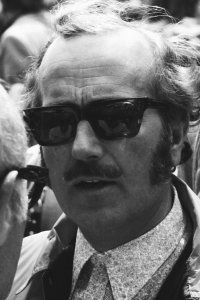
Maurice Philippe.

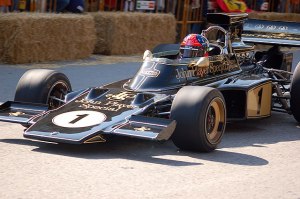
In 1970 Colin Chapman worked with designer Maurice Philippe to produce the revolutionary Lotus 72. The car featured inboard brakes and moved the radiator from the front to the sides of the car where they remain today on modern F1 cars. This produced a wedge shaped car which went on to win championships for Jochen Rindt and Emerson Fittipaldi.

Lotus produced other groundbreaking cars such as the Lotus 79 which dominated the 1978 championship. The car was the first ground effect car which used aerodynamics to produce a low pressure area under the car which literally sucked the car down to the track. Skirts were added to seal in the low pressure area but ground effect cars were later banned.
Another Chapman innovation was the dual chassis car, which had a softly sprung chassis in which the driver sat and a second chassis to which the aerodynamics were attached giving the driver a much smoother ride. Sadly the car, the Lotus 88, was banned.

Gordon Murray.

Gordon Murray was the designer for Bernie Ecclestone’s Brabham team in the late 70s and to combat the Lotus 79 he came up with the concept of the BT46b Fan car. The car had a huge fan, ostensibly used for cooling but a side effect was that it sucked the air from the underside of the car creating a low pressure area and consequently sucked the car to the track surface. The car was only used in one race despite the FIA, the F1 governing body, ruling the car was legal. Bernie Ecclestone withdrew the car fearing that as he had just been made the leader of FOCA, the Formula One Constructors’ Association, disputes about the car could derail FOCA.

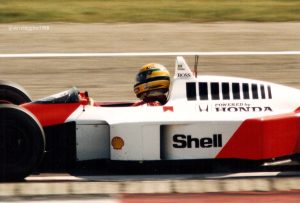
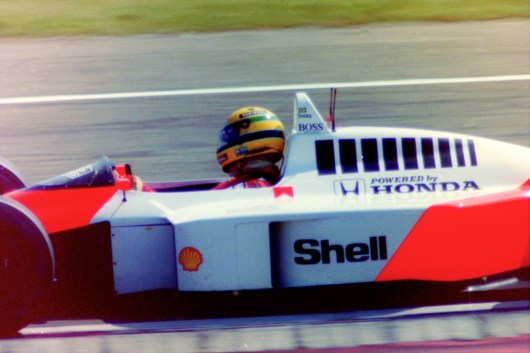
When John Barnard left McLaren, Murray was invited to join the team as technical director by Ron Dennis. Murray worked with the McLaren design team on the MP4/4 car which, coupled with the Honda engine, won 15 out of the 16 races in 1988.

Ayrton Senna in the Mp4/4 in 1988. Photo by the author

John Barnard.

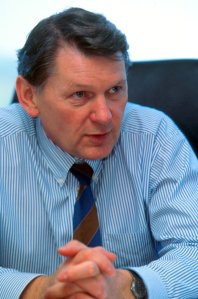
Barnard first worked in F1 for the McLaren team in the early 1970s then moved to the USA to work in US racing. He was recalled back to McLaren when the team was taken over by Ron Dennis and there he produced the first carbon fibre chassis in F1 which was built for the team by Hercules Aerospace in the USA. Other teams followed and today all F1 cars are built using carbon fibre.
Barnard became the key designer of the period and in 1986 he moved to Ferrari. As he was in such great demand he was able to name his own price which included surprisingly a design office not in Marenello in Italy but in the UK. A revolutionary design by Barnard was the semi automatic gearbox where the driver changed gear from paddles on the steering wheel rather than having to reach down to a gear lever. Once again, the semi automatic gearbox and steering wheel paddles are still in use today on all the current F1 cars.

Frank Dernie

Frank worked for the Hesketh team and designed his first F1 car for them in 1976. Frank Williams later hired him to work with technical manager Patrick Head. Dernie was one of the first designers to use computers to aid design and he convinced Frank Williams to get a wind tunnel to aid their development programs. That made Williams the first team to have their own wind tunnel which is today a vital element of F1 design and development. Frank also created the active suspension concept in which a car’s suspension was controlled by a computer which set up the suspension in the optimum configuration for each corner on any given circuit. Active ride suspension was later banned for the 1994 season.

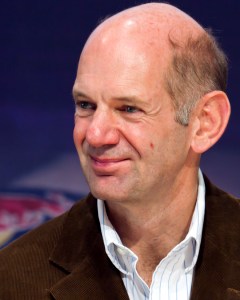
Adrian Newey.

Adrian Newey has been in the news lately as he has just signed to start work for the Aston Martin team from March 2025. Newey designed cars have won 25 world championships and Adrian designed cars for March, Williams and McLaren before joining the Red Bull team in 2006.

Newey has also seen the other side of Formula One. He designed the car which Ayrton Senna was driving when he was killed at the San Marino Grand Prix in Italy in 1994. It was a tragic day for all motorsport fans but it must have been even worse for Adrian.

Millionaire Laurence Stroll purchased Aston Martin in 1920 and he has spent a great deal of money in his quest to win at the sport. Numerous talented engineers and staff members have joined the team as well as double world champion driver Fernando Alonso. Aston Martin seemed to be looking good for a while in 2023 but this year seemed to be consigned to the middle of the grid. Adrian Newey has been hailed as one of greatest designers in F1 history. Will Newey and his design talent catapult Aston Martin towards the winners’ circle? Only time will tell.


All pictures courtesy Wikipedia creative commons except for the author’s shot of Ayrton Senna in the McLaren MP4/4.


What to do next: Here are a few options.

Share this post on your favourite social media!

Hit the Subscribe button. Never miss another post!

Listen to my podcast Click here.

Buy the book! Click here to purchase my new poetry anthology.

Click here to visit Amazon and download Floating in Space to your Kindle or order the paperback version.

Remembering Stirling Moss

I began to follow F1 way back in the late 1960’s. I’m not sure what first attracted me to the sport. I liked cars and back then I subscribed to a free magazine from Corgi, the makers of die cast model cars. They used to send me out a little monthly magazine which was nothing more than an advertising pamphlet and one of those thin missives was dedicated to model F1 cars. As well as reading about model cars I started to find out more about the actual cars and drivers of the time. It was probably 1969 when the cars first flirted with aerodynamics and later in 1970 the grids began to look very colourful as outside advertisers brought their brand colours to the sport.

Yardley sponsored the BRM team and John Player Tobacco sponsored the Lotus cars, even to the extent of naming the cars the John Player Specials. I also started to learn more about the history of the sport. Who was Juan Manuel Fangio, the guy who had won an incredible 5 world championships? Well he was an Argentinian driver who once drove for Mercedes in the 1950’s. His team mate back then was an Englishman named Stirling Moss. What had happened to him I wondered?
Moss was born in September 1928. His parents were amateur racing drivers. His father competed in the 1924 Indianapolis 500 and his mother competed in Hillclimb events. Even his sister Pat Moss became a rally driver so motorsport seems to have been in his blood.

His father got him his first car at the age of 9 and he drove it around the fields near his boyhood home, Long White Cloud House, on the banks of the river Thames.

Moss’s first racing car was a Cooper 500 which he bought using winnings from competing in horse racing events. He was good in the saddle as well as behind the wheel.

His first major international race victory came at the RAC Tourist Trophy in Northern Island driving a Jaguar XK120. That was the beginning of an incredible career in which Moss won 212 of the 529 races he entered including 16 Grands Prix, the most ever won by an English driver until that record was equalled by Nigel Mansell.

Moss came close to winning the world championship although he never quite managed it, becoming known as the greatest driver never to become world champion.

In 1953, Alfred Neubauer, the famous Mercedes team manager, was impressed by Moss. He made it clear he was willing to sign up the Englishman but wanted to see what he could achieve in more competitive machinery. He suggested Moss buy a Maserati 250F for 1954. Moss did so and was impressive; at the Italian Grand Prix that year Moss beat world champions Ascari and Fangio to the lead and only gave it up when his engine failed. Neubauer duly signed Moss for the 1955 season when he would be teamed with Fangio.

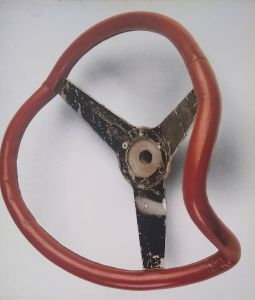
The mangled steering wheel from Moss’s crash.

Fangio and Moss worked well together and although it was Fangio who won another world championship Moss beat him at his home race, the British Grand Prix. The race was held that year at Aintree. The racetrack was in the grounds of the famous horse racing course and in fact used the same grandstands as the horse racing event. For the rest of his life, Moss questioned Fangio as to whether he, Moss, had actually won or had Fangio gifted him the win. Fangio always maintained that Moss was better than him on that day and won on his own merit.

In 1955 Fangio won his third championship and retired some years later having won 5, a feat unmatched until the modern era when Schumacher and later Lewis Hamilton upped the record to 7 titles.

By this time in 1955 Moss was a household name, probably as famous as Lewis Hamilton is today. In 1955 he also won the famous Italian race the Mille Miglia with Dennis Jenkinson as his navigator. Jenkinson was a journalist for Motor Sport magazine and famously signed himself off on his racing articles as DSJ. A few years later the classic race was discontinued after numerous fatal accidents during the race.

In 1962, Moss was competing in a Lotus at the Goodwood circuit. He came off the road and crashed.  He was trapped in his car for three quarters of an hour while various people tried to free him from his mangled car. He had sustained a shattered eye socket but more serious was a severe impact to the right side of his brain and this sent him into a coma. Moss was driving for Rob Walker at the time who was in France. Once he heard the news, Rob and his wife drove back to the UK, their radio tuned into the BBC Home Service which issued hourly updates on Stirling’s condition.

Moss had moments of lucidity but didn’t fully wake up for 38 days. In the excellent biography by Robert Edwards, the author describes Moss’s presence at the hospital in Colchester as ‘something of a sensation’. The switchboard was jammed with callers enquiring after Moss. Even Frank Sinatra called for information. The accident occurred on the 23rd April, 1962. Moss would not leave hospital until July that year.

Over a year later on Wednesday May 1st 1963 he drove a racing car again. It was a Lotus 19 sports car. He put in respectable lap times but the brain injury had resulted in subtle consequences. Moss reported that driving was for him now a disjointed, disconnected experience. Nothing flowed and now he had to think about what to do when before, all the aspects of driving fast would come naturally to him. He said this to a journalist about his decision to retire;

It was an easy decision to take at the time, because it was the only decision to take. I had to think. I had to give orders to myself -here I’ll brake, here I must change down and so on. And another thing: I used to be able to look at the rev counter without taking my eyes off the road -not only that but I could see the rev counter and a friend waving to me all at the same time. I’d lost that, that had gone.

He was by then divorced from his second wife and he was still a celebrity so he settled down at his impressive home at 46 Shepherd Street in London’s Mayfair. Moss had bought the vacant bombed out lot after the second world war and designed what was to him the perfect house. He retained an architect, a female architect to translate his ideas into reality. A spiral staircase takes one up to the first floor where there is a large sitting room and a smaller ‘snug’ and also an office. Upstairs again is a large kitchen and dining area and going up again there is the master bedroom where there are wardrobes with motorised shutters. He had remote controlled garage doors which were pretty amazing for 1962 when the house was built and also a descending table where Stirling could send a meal down from the kitchen to the dining room. He did love gadgets.

Just recently I saw an advert on the TV for a tap which could deliver hot, boiling or cold water at the touch of a button; Moss had one in 1962.

He married for the third and final time in 1980. He worked as a commentator on US TV and in public relations. He became involved in historic car racing but finally gave up competitive driving when he was 81.

He died in 2020 aged 90 after a long illness.

I’ve saved my favourite Moss story till the end. At a memorial service for Stirling this year, 2024, Jackie Stewart revealed that after winning his third world championship he was stopped by the police for speeding. Stewart was pretty famous himself by then. He had been called the world’s first superstar racing driver but as he wound down his window the police officer looked at him and said ‘who do you think you are, Stirling Moss?’

All the information and pictures in this post are from the excellent book by Robert Edwards, Stirling Moss; The Authorised Biography.


What to do next: Here are a few options.

Share this post on your favourite social media!

Hit the Subscribe button. Never miss another post!

Listen to my podcast Click here.

Buy the book! Click here to purchase my new poetry anthology.

Click here to visit Amazon and download Floating in Space to your Kindle or order the paperback version.

F1 in 2024: A Personal View

It’s a while since I’ve done an F1 post. If Formula One motor racing isn’t for you, apologies but please tune in again next week for something different.

I’ve followed F1 since the late sixties and in fact the 1970 season was the first one that I followed in full which means that this year is my 54th season as an F1 supporter.

Back in 1970 there were 13 races in the championship season but there were also a few non championship races; The Silverstone International, The Brands Hatch Race of Champions and the Oulton Park Gold Cup. This year there are a whopping 24 races on the calendar and no non championship races at all.

As I write this there have been 5 races so far and Max Verstappen has won 4 of them. In the Australian race, he had trouble with the brakes on his car which gave Spanish driver Carlos Sainz the chance to win a race for Ferrari. One thing I have noticed in recent years is the incredible reliability of the F1 cars today. In years gone by there was the always unexpected puncture or engine blow up to throw a spanner in the works when some exceptional driver or car combination threatened to dominate the proceedings but these days, the amazing engineering of the current cars seems to make that a very rare occurrence.

Let’s take a closer look at the drivers and my personal assessment of their chances this year.

Max Verstappen

You’d have to be a fool not to put a bet on Max winning the championship this year, once again. I personally don’t care for the guy but to be fair, he isn’t the cocky upstart he once was. He has mellowed a little and even seems to be showing signs of a little maturity. Is he the genius everyone says he is? Maybe but these days F1 is all about the car and without the car a good driver is nowhere. There was a time back in the 60s or even the 70s when a great driver could take a bad car and manhandle it to the front. There was even a time when an underpowered car could do the job, provided the right driver was in the cockpit. Think of Stirling Moss at Monaco in the Cooper Climax beating those powerful Ferraris in 1961 or Jackie Stewart in the much over hyped March in the Spanish Grand Prix of 1970. In 2024 if you have a dud car, forget it.

Image courtesy Wikipedia creative commons

Lewis Hamilton

He may be a 7 times world champion but these days Lewis Hamilton is looking a little sad. He was totally shafted at the 2021 championship finale when the race director decided to re start the race after a safety car incident when if he had followed the rules, the race should have finished under a safety car. Since then the once conquering Mercedes team have been looking rather like one of those teams who tend to populate the latter half of the grid.  Hamilton won 6 titles with Mercedes and one with McLaren. Towards the end of his time with McLaren the cars were not the class of the field but even so, in his last year with his old team he won four times whereas in 2024, just coming home in fourth position is just a daydream for Lewis. Is he good? Of course he is! You can’t win 7 championships by luck but sometimes I wonder if Lewis is as quite as good as I used to think he was.

Lando Norris

Lando came home second to Max in the Chinese Grand Prix. He seemed surprised to have done so thinking that the Ferrari team would have been faster. He comes across as an amiable sort of guy and I always listen to him in post race interviews because I know it won’t be the usual stuff about thanking his sponsors and the guys back at the factory. Will he ever win a race? Back in the 1970’s there was a driver called Chris Amon who was always a driver who looked good and was thought to be a future race winner and even a champion. The fact is, Amon never won a Grand Prix and never lived up to his full potential. I sometimes wonder if Lando Norris is the Chris Amon of the 21st century.

(Update 05/05/24: Lando Norris won the Miami Grand Prix which kind of makes me wonder whether I know as much about F1 as I thought I did!)

Sergio Perez

Perez has had quite a career in F1. He started out his career at Sauber and then moved to McLaren where he wasn’t popular with team mate Jensen Button. After only a year there he moved to Force India and when it looked like his F1 career was over he became a last minute team mate to Max at Red Bull. Despite having the same car as Max, he hasn’t had the same runaway dominance that Max seems to have. Maybe as many have suggested, his car isn’t quite the car that Max has, or is it just that Max is such a better driver. I have never driven an F1 car but having spent many years as a driver, I can tell you that no two Ford Transit vans are the same, just as no two Mercedes Sprinter vans are ever the same. If there is a better car you can be certain that Max will get that car just as, back in the 1970’s, the very best Ford DFV was allocated to Ford’s top man, Jackie Stewart.

Will Sergio be with Red Bull for 2025? Some commentators think he is bound to be dumped but then he is currently second in the championship which is exactly where the Red Bull team want him to be.

Charles LeClerc

I do rather like Charles and he is another guy I don’t mind listening to in the post race interviews. If he has driven a bad race, he will always admit it and when things don’t go according to plan, he seems ready to get down and work out the problems with his engineers. He has had 5 wins so far and has signed a long term contract with Ferrari so he is due to be teamed with new signing Lewis Hamilton in 2025.

Is he a future world champion? I’d have to say no. I’d put him on a par with Gerhard Berger, one of my favourite drivers, a multiple grand prix winner but not a champion.

Fernando Alonso. Image courtesy Wikipedia.

Fernando Alonso

Alonso is a double world champion and might even have won more championships had he not been so quick to move teams as well as moving at the wrong time. At McLaren he fell out with newcomer Lewis Hamilton. He had a stint at Ferrari which didn’t produce the expected results and his move back to McLaren was a disaster as their Honda engine was late in entering the new hybrid era of F1. That engine was finally sorted and currently powers the Red Bull cars but Fernando was in the right place at the wrong time. He is currently the oldest driver on the grid but his competitive spirit shows no sign of being diminished by age.

Alex Albon

Alex is currently my favourite driver. He pushes the uncompetitive Williams from the back of the grid up to the middle and sometimes even further. He comes over as a pleasant amiable sort of guy and would be a good fit next year at either Mercedes or perhaps even back at Red Bull, from where he was dropped a few years ago. There might be other teams looking to sign him too but at the moment, the only teams capable of providing a driver with a winning racing car are possibly Red Bull (if they give Perez the chop) and Ferrari with perhaps McLaren and maybe Aston Martin in with a chance of at least a top 5 finish.

Down at the other end of the grid there are a number of drivers that I tend to look at and wonder, why are you here? Daniel Ricciardo is surely at the end of his career as a so-so F1 pilot and as for Lance Stroll, if his dad wasn’t the millionaire owner of Aston Martin, would he even have a drive? Valteri Bottas has hardly shone since leaving Mercedes but perhaps that just reflects the state of the sport; if a driver is not in a top car, he cannot make his contribution and will forever see himself in the results as p13, p14 or lower.

Lewis Hamilton’s announcement of a move to Ferrari has set off F1’s ‘silly season’. The silly season is a host of rumours and unsubstantiated reports about who will move where. A very big rumour lately concerns not a star driver but Adrian Newey, the star designer of the Red Bull team. Adrian has designed cars for various teams and has won, as a designer, 25 World Driver and Constructors’ championships. The rumours said he was about to leave Red Bull and that was actually confirmed this week. Newey is leaving Red Bull after 20 years with the team. Will he sign for Ferrari or will he pocket the huge fee currently on the table from Aston Martin? Adrian is 65 so it could be he is just planning on retiring? What will he do? Only time will tell.

For me, as long as these various moves mean that someone new and different will be winning races instead of Max all the time, then that sounds good to me.


What to do next: Here are a few options.

Share this post on your favourite social media!

Hit the Subscribe button. Never miss another post!

Listen to my podcast Click here.

Buy the book! Click here to purchase my new poetry anthology.

Click here to visit Amazon and download Floating in Space to your Kindle or order the paperback version.

Graham and Damon: An F1 Story

I haven’t done an F1 post for a while so I reckon it’s time for a new one. F1 in 2023 seems to promise much but so far has failed to deliver. Red Bull seem to be winning everything which is great for them but makes things a bit boring for the average F1 fan. It’s in times like these that I tend to look back to the past for a little F1 drama.
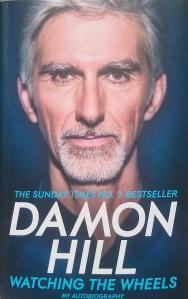
Damon Hill is not exactly my favourite racing driver. He pops up these days as a pundit on Sky TV’s F1 coverage and I’m sorry to say that I tend to fast forward past him until I find someone a little more interesting to listen to. Back in the day when he beat Michael Schumacher to the F1 world title in 1996 I cheered for him but even then, that was mostly a reaction to the tactics of the highly ruthless Michael Schumacher. Anyway, when Liz handed me a copy of Damon’s autobiography, I thought it might be worth scanning through.

Hill starts his story not with himself but with his celebrated father Graham Hill. Hill was a great driver, a double world champion but also one of the great, if not the greatest, characters in the sport. What F1 fan would not instantly recognise the prominently chinned and moustached Graham Hill with his swept back hair and his witty and straight to the point remarks?

Graham didn’t even pass his driving test until he was 24 yet went on to win two world championships. He began by seeing an advertisement offering some laps of Brands Hatch in a racing car for five shillings. He went along, paid his money and subsequently was hooked on motor sport. He got himself a job working as a mechanic for Colin Chapman’s Lotus team and soon talked his way into actually driving one of Colin’s cars.

In the 1960’s, Colin’s star driver was Jim Clark, one of motorsport’s absolute greats. Jim was universally respected as being the star driver of the day and won the world championship for Lotus in 1963. In that year Jim won seven of the year’s races (there were only 10) a record that stood until 1984 when Alain Prost won seven races for McLaren.

Graham Hill had left Lotus for the BRM team and won his first world championship in 1962. In 1967 Hill returned to partner Clark in Colin Chapman’s new Lotus 49 powered by the new Ford Cosworth DFV engine.

In 1968 Clark was entered in a Formula 2 race for Lotus at Hockenheim in Germany. In those days, F1 drivers regularly competed in other events apart from F1 including sports car racing, saloon cars and of course, Formula 2. During the race, Clark’s Lotus veered off the track into trees and Jim suffered a broken neck and was killed. A deflating rear tyre was thought to be the cause of the crash but the racing community was devastated. Clark was a quiet unassuming Scotsman, born into a farming family but is still remembered today as one of the greats of all time.

The Lotus team looked then to Graham Hill to lead them forward into the next round of F1 races and despite initial difficulties with the car and engine, Graham was able to win his second championship title. In 1969 he suffered a terrible crash in the USA when, after getting out to push his car after a spin, he jumped back into the cockpit but was unable to fasten his safety belts. He crashed and was thrown from the car breaking both legs. He later drove for Brabham and finally started his own F1 team with sponsorship from Embassy cigarettes. He was killed in a plane crash in 1975 along with key personnel from his team.

In Damon’s book, he gives an interesting insight into the events above, telling them from a son’s point of view. He knew many of the great drivers and team bosses of the time, meeting them as a child and he tells of Graham’s life from a family perspective; Dad being away from home a lot and always being so busy. He was the first to hear of his father’s death, seeing TV reports of a light aircraft crash just when the family was expecting him home. Graham was an accomplished pilot and owned his own Piper Aztec light aircraft. He had flown back from testing his new car in France but when he arrived back at Elstree, the weather was cold and foggy and he crashed on his final approach killing all on board. Not only was Damon distressed about the loss of his father but he resented the press who reported on not only the plane crash but also the subsequent funeral.

Graham HillAfter Graham’s death it was found that his pilot’s license had expired and this and some other things invalidated his insurance which meant that the other families who had lost loved ones in the crash were forced to sue Graham’s estate for compensation. This meant the Hills had to sell their home and move to a smaller house. These things seem to have weighed on young Damon’s mind for a long time, even into his own days as a racing driver.
Damon initially took up motorcycle racing and worked in a variety of jobs to fund this, including being a motorcycle courier. Later his mother arranged for him to take a course at a car racing school thinking cars would be safer than motorbikes and so Damon began his career in car racing. In his book he describes the difficulties of getting drives and wrestling with the issues of bringing money to the table through sponsorship.

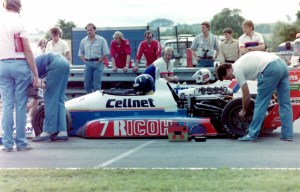
He managed to get drives in Formula 3 and then Formula 3000 and I personally saw Damon quite a few times at Oulton Park in the late 1980’s. I remember meeting his mum in the paddock at Oulton Park when I was photographing her son’s car. She went off to bring Damon back for a picture but alas, she wasn’t able to find him.

Damon at Oulton Park. Photo by the author

Damon struggled with the issues of sponsorship as many race teams were looking for drivers who could bring personal sponsors into a team but Damon was able to get himself a F3000 drive which also led to an F1 drive with the faltering Brabham team. At the same time, he had also replaced Mark Blundell as the test driver for Williams. After a difficult year with Brabham, Williams were having a tough time with their driver line up. Mansell had won the world championship in 1992 but he wasn’t happy about having Alain Prost as a team mate in 1993. Williams were still expecting Nigel to drive for them, after all he had just won the title, but Mansell decided to up sticks and go to the USA to drive in Indycars. Williams signed Prost and Hill got the promotion from test driver to full time driver for the 1993 season.

1993 was an interesting season. The Williams was without a doubt the best car of the field but Prost had just come back from a season out of the sport and was on a learning curve with the new car while Hill, who had been testing was actually pretty familiar with it.

Prost won the championship and Damon scored his first win but for 1994 Frank Williams had signed Ayrton Senna and Prost decided he wasn’t going to work with Senna again and promptly retired. That left Damon to partner Senna. In 1994 active suspension, a system where the suspension and ride height of the car was controlled by an onboard computer, was banned and the car had become rather difficult to drive. When the team came to Imola that year, Senna had scored no points at all and was desperate for a win. Damon says he had not settled into the team well and he was clearly still trying to get used to the way the Williams team operated. In the race Senna had a major accident.

Damon passed the scene of the crash, not knowing it was serious and felt for Senna thinking it would be three races in a row without points for the Brazilian driver. When the race was stopped he sat in his car on the grid waiting for information but little was forthcoming. Later, the team’s press officer advised him that things were serious but it was only after the restarted race had finished that news came through that Senna was indeed dead.

It was almost a familiar scenario to that which Graham Hill had experienced in 1968. The team leader had been killed and Graham had to step up and lead the team. Now Damon had to do the same.

Damon Hill won the world championship in 1996 but his team boss Frank Williams had for whatever reason decided Damon was not the driver he wanted for 1997 and his contract was not renewed. Damon ended up driving for Arrows in 1997 which he thought was a middle of the grid team trying to move up to the front. It turned out to be a back of the grid team, trying to move up to the middle. Damon won once more for the Jordan team and then retired. In some ways it almost seems that Damon had his F1 career in reverse, he started at the top and then drove for lesser teams until he decided to call it a day.

Damon’s book is not one I really fancied but in fact it was really a pretty good read. His younger years as the son of the great Graham Hill are fascinating, especially his behind-the-scenes motorsport memories. His recollections of his early racing days and the complexities of sponsorship and his experiences of F1 also make great reading. The book falters a little when Damon tries to interest the reader in his problems with depression, brought on possibly as a result of losing his father in such a tragic way, however, I do feel I have a little more respect and time for Damon and perhaps in future, when he comes on my TV screen as an F1 pundit, I might not be so quick to fast forward past him.


What to do next: Here are a few options.

Share this post on your favourite social media!

Hit the Subscribe button. Never miss another post!

Listen to my podcast Click here.

Click here to visit Amazon and download Floating in Space to your Kindle or order the paperback version.

Buy the book! Click here to purchase my new poetry anthology.

Aliens, F1 and a Quiet Saturday

7.44

My alarm goes off early on Saturday morning as a man from the council is coming to service my boiler. The council have given me an appointment ‘window’ which is from 08:00 to 15:00. Sometime during that window, the gas guy is coming to do the check.

08:00

I’m up and washed and wondering if the guy will actually turn up at 8am. I hang about expectantly in the lounge and by 08:10 I realise he isn’t coming this early, in fact he’s probably still asleep in his bed somewhere. I decide to make a quick breakfast, just a few rashers of bacon and an egg.

08:30

I’ve had my breakfast which was actually a little rushed so as I’m still hungry I think I’ll have a slice of toast and marmalade and another cup of tea.

08:45

I’ve had my tea and toast and I’m still checking the window for the gasman. No show so far. I take a quick look at the internet but I’m worried that I might see something about the qualifying results of the Australian Grand Prix. The qually took place early this morning but is not due on terrestrial UK TV until 11:15 so I don’t look at my notifications and quickly delete any emails that even faintly resemble F1 newsletters.

09:15

Time for another brew. I check the hall as the last time I waited in for the council I happened to pop into the hall and find a card slipped through the letter box which said we called today but you weren’t at home. This was after an entire day sat watching TV with the sound turned low so I wouldn’t miss a knock at the door. As you can imagine I was fuming and sent numerous threatening emails to the council and the next time the guy turned up on time.

Anyway, quick check and no card.

09:30

I decide to check the doorbell and I find that it is making no sound! I change the batteries and all is well, the bell is ringing again.

09:40

Time for another brew. There seems to be nothing on TV so I watch something I taped last night about Bob Lazar. You may have never heard of Bob but he is an American physicist whom claims he worked at Area 51 in the late 1980s to help reverse engineer captured flying saucers. He first appeared in the media with his face and voice disguised using the name ‘Dennis’. Later he went fully public and it was his claims that brought Area 51 into the public eye. Lazar says he worked at an Area 51 facility called S-4 and there were nine captured saucers there. These vehicles were powered by an antimatter reactor and the propulsion was anti-gravity based.

(I just realised I’ve written taped instead of recorded. Do people still say taped or is it just old guys like me?)

Bob says he worked at the Los Alamos National Laboratory but according to the documentary when staff at the lab were questioned, they said that no Bob Lazar ever worked there. However he appears in the lab’s own 1982 phone book as Robert Lazar and a clipping was found from the 1982 Los Alamos Monitor which profiles Bob and his interest in jet cars and mentions he works at the lab as a physicist. Are the authorities trying to discredit Bob or has he made up the whole thing? If he did make all this up, why would he do it?

10:00

I get a notification on my phone and I take a look without thinking. Luckily it’s from WordPress telling me my latest scheduled post has just been published. No more notifications now until I have seen the qualifying.

10:30

I need to use the toilet but I take a look outside and I can see a van arriving with ‘Gas’ on the side. No movement yet so maybe he is just sorting out his paperwork or something. Actually I fully expected him to arrive at five minutes to three. He was originally due last week but I was busy and so I asked my brother to let him in for me. My brother waited in all day only for me to get a call from the council late in the afternoon telling me the guy had called in sick!

10:40

The gasman has arrived!

10:57

Gas check all complete. I actually wanted to ask him something but he shot out of the house like a rocket. Well, it is Saturday, I suppose he was eager to get home and enjoy his weekend.

The documentary shows that Bob Lazar had a polygraph test which he passed with flying colours. His mission seems to be to tell the world there are extra terrestrial beings and the government in the USA is aware of them but for whatever reason is not telling the public. I do love these UFO documentaries. The next one was about people who claim to have been abducted by aliens and tested and probed like guinea pigs. When you come to think about it, the universe is big, really big. So vast it’s silly to think that life exists just on Earth and not elsewhere in the universe.

11:00

Kettle on. Now I can visit the toilet without worrying that the guy is going to knock on the door while I’m otherwise engaged.

11:15

Got myself a fresh cuppa and all set for the Australian Grand Prix qualifying.

The big problem with modern formula one is that a lot of the interviews that precede the big events as well as those that come afterwards are just full of modern PR talk. You know what I mean, the team did a great job, thanks to the guys back at the factory blah blah blah. No one seems to have anything that is actually interesting to say. In today’s broadcast there seems to be a lot of focus on Daniel Riccardo, the Australian driver, who thanks to his sacking is not actually driving this year. He now seems to be a sort of reserve driver for Red Bull but the other day I heard their team boss saying Daniel couldn’t expect a drive even if either of their main drivers were sick or incapacitated. So what is he then, just a test driver? Due to testing restrictions Daniel can’t do much testing except in the simulator. The McLaren he should have been driving isn’t looking that great so perhaps he’s glad not to be driving. I bet he wouldn’t mind a go in the Red Bull though.

11:35

I’m still hungry after this morning’s rushed breakfast. Should I go for a quick toast? Wait a minute, we’re seeing some actual action on TV. Better wait for the adverts.

13:02

Qually over and actually it was a pretty exciting session. These days I really think the qually is better than the race. Max in the Red Bull came out on top but his teammate skidded off at the first corner without even setting a time. He’ll be starting from the back tomorrow. Nico Hulkenberg was looking good in the Haas as was Alex Albon in the Williams. Great to see these drivers doing well in cars that are not really much good. Lewis Hamilton and his team mate George Russell were up at the top too so looks like a good race in the offing tomorrow.

13:04

Time for another brew. Time to do some writing so I can actually call myself a writer. I’ve finished some bits and pieces I’ve been working on as well as tweaking some other things. I had a look through some of my older blog posts looking for inspiration. Didn’t really find any but I took two posts about a similar subject, wove them together and published the result on my Medium page.

(I mentioned to Liz I have a Medium page. She said wouldn’t I be better with an XXL one? She can be a little cheeky.)

14:26

I started looking for a photo I took ages ago which I wanted to use on the Medium post and now realise I’ve spent over an hour trolling through my hard drive for it. Note to self: Start to label your pictures better Steve and add some keywords!

As I’m looking through some old pictures and graphics I thought I’d add some completely random pictures into this post. Here’s a self portrait I used to use on my Flickr page where I showcase my photography. I’ve always liked this picture, it was shot in a mirror and then reversed.

15:00

Time to crank up my microphone and record some audio for a couple of my latest poems. I publish them over on writeoutloud.net where fellow poets can offer their comments. Reading through some of the latest poetry blogs, I see there are some good poems there, well worth taking a look at. I’ve got the TV on in the background without the sound but I see Ancient Aliens is about to start so I think it’s time for another brew and a bit of TV watching. What about a ham sandwich too?

16:00

My brother is due round later on for some food and drink and a bit of a natter so I should start thinking of what to make. I’ve got some beef mince so I’m thinking chilli or spaghetti bolognese or even curried mince. I’m not a great cook by any means and I’m lost without my cookery books. Anyway, out comes the frying pan, in go the chopped onions and mince. I see I don’t have any garlic so I’ll have to do without. Next, throw in the spices including some fresh chillis, then come the tomatoes, a little stock and some tomato paste then I throw the whole lot into the slow cooker and leave it to simmer away. I have a little taste; yes, definitely one of my better ones.

16:26

My brother tells me he has a better offer for tonight but he’ll be round tomorrow. He’s obviously not forgotten about last week’s wasted wait for the gas man. Oh well, dinner for one then.


If you are interested, Max Verstappen won a chaotic Australian Grand Prix after various red flags and restarts. Lewis Hamilton took second place and Fernando Alonso was third.


What to do next: Here are a few options.

Share this post on your favourite social media!

Hit the Subscribe button. Never miss another post!

Listen to my podcast Click here.

Buy the book! Click here to purchase my new poetry anthology.

Click here to visit Amazon and download Floating in Space to your Kindle or order the paperback version.

Autographs, Murray Walker and Formula One

It’s a while since I’ve produced an F1 blog post so perhaps it’s about time for one. Over in France while we are on holiday we very rarely watch TV. We spend most of our evenings sitting in the porch watching the sun go down, watching the sky and chit chatting.

Last week I broke the no TV rule and watched the Italian Grand Prix. To be fair, Formula One has been pretty exciting this year with some great races and terrific battles. Max Verstappen who won the championship last year in controversial circumstances looks set to make it championship number 2 this year but if he wins, and it’s still not decided yet, he will have won it fairly and squarely and pretty convincingly too. His big challenger has been Charles LeClerc in the Ferrari and although Charles has been fast, his own team, Scuderia Ferrari, have not performed well in the area of strategy. They have cocked up Charles’ pit stops, stayed out when they should have pitted, pitted when they should have stayed out and gone for the wrong tyres at the wrong time.

At the historic race track of Monza, Charles was ready to chase Max for the win but a safety car came out when Daniel Riccardo conked out in a dangerous section of the circuit. The race marshals had problems shifting Daniel’s McLaren and the race ended under the safety car which stopped Charles’ pursuit of Max in its tracks and of course, ruined the race for the fans.

The big surprise this year is that so far, Lewis Hamilton has done pretty badly. Lewis is an all time record holder with more race wins and more pole positions than any other driver ever and is currently tied with Michael Schumacher for the most world championships ever (seven). However, Lewis’s team Mercedes have dropped the ball badly and after years of winning time after time they have produced a car which is not the class of the field.

Why have Mercedes failed in 2022? My personal feeling is that they should never have dubbed this year’s car the W13. Yes, there it is, I’ve said it. I know that’s going to be controversial but no one is ever going to win any kind of championship with a car numbered 13. Just go back some years to the Apollo space programme. All went pretty smoothly, Apollo 8 circled the moon, Apollo 9 tested the lunar module, Apollo 10 was a dress rehearsal for the landing and Apollo 11 landed on the moon. Apollo 12 made another successful moon landing but Apollo 13, well that was where everything went wrong and the crew were lucky to get back to earth alive. NASA should never have named that space craft Apollo 13 and gone straight to Apollo 14.

The same thing happened this year with Mercedes, those guys should also have gone straight to W14 and missed out W13 entirely or perhaps even numbered the car W12B. If they had, I think Lewis might well have won a few races this year.

During the summer break there has been quite a bit of controversy to keep us armchair F1 fans happy. Sebastian Vettel decided to jack everything in and announced his retirement. That caused Fernando Alonso to announce he would be quitting Alpine for Vettel’s vacant seat at Aston Martin for next year. Alpine then announced Oscar Piastri as their new driver. Oscar the current F2 champion announced that wouldn’t be the case. What? A rookie declining an F1 drive? It turned out that Daniel Riccardo was getting the bullet from McLaren and they had engaged Piastri only Daniel hadn’t been informed. The result, after a meeting of the F1 contracts recognition board is that Oscar is in at McLaren but Daniel is on his way out. OK, that’s how the cookie crumbles in modern F1.

Back in the 1970’s Jackie Stewart drove for Ken Tyrell with a handshake agreement. How times change.

Things have changed in F1 in many ways. A few years ago one of my friends came to me saying he had something he knew I would want. What is it? I asked. It turned out that his daughter who has emigrated to Australia had gone to the Australian Grand Prix. She had a paddock pass (very expensive) and had got all the current drivers to sign her programme. What was I offering for it?

Of course I love F1 and I am a bit of a collector. Over the years I’ve picked up various programmes, F1 models, memorabilia and autographs. We threw a few figures back and forth and then I asked to see the merchandise. My friend obliged and produced the programme. What a disappointment! The programme was covered in what looked like a series of scribbles and squiggles, all of which were completely illegible but which were apparently the signatures of the current crop of F1 drivers. Sorry, no sale I said to my disappointed friend who was forced to flog the goods on eBay.

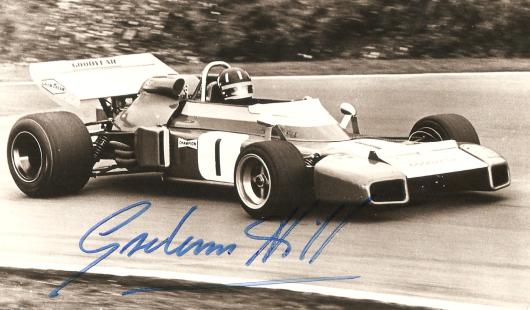
Here’s one of the autographs in my collection. Not the greatest driver of all time but Graham Hill is probably the most outstanding personality of Formula One racing, ever. Not only that, nice signature too Graham.

Graham Hill

On holiday I always grab a few books to take away with me. Reading is one of the great pleasures in life, at least I have always thought so. One book I picked up was the autobiography of Murray Walker. Murray was for many years the voice of F1. Clive James once described him as talking in his quieter moments like someone who has his trousers on fire. Murray always added his supreme enthusiasm and excitement into his broadcasts. He made mistakes, he mixed up drivers and cars but he always, always kept his viewers entertained. He belongs to that golden era of British TV Sporting commentators like Harry Carpenter (boxing) Brian Moore (football) David Coleman (football) Peter O’Sullivan (horse racing) and many others who are just a faded memory now.

Murray’s book ‘Unless I’m Very Much Mistaken’ was, according to the blurb on the back cover, the number 1 best seller. I was looking forward to reading it but sadly it was all a little boring. Many celebrity autobiographies start off well and are very interesting but when the author reaches the point of fame and fortune, they all seem to go down the same path and become lists and lists of films or shows or appearances or meeting other famous people and just become rather boring. Murray doesn’t waste much time, his book starts out with some boring bits and then goes straight into more boring bits.

To be fair, some of the book was interesting, for instance when he talked about working for the BBC when they commenced their regular Grand Prix highlights programme in 1979 and working with James Hunt, his co commentator for many years. Otherwise though, it was a book I found myself mostly skimming through.

Murray was someone who accepted he made many mistakes but even so, did a fabulous job over the years. I remember once watching the start of the Le Mans 24 hour race on BBC TV’s sports show Grandstand. Murray commented for the first hour or so and then the coverage went back to the studio. It was obvious to me that Murray was in France as he was so well informed, he knew what was going on and so on. Back in the studio in the UK the announcer explained how the BBC were clearly not going to be with the race for the full 24 hours and then turned to Murray who was sitting next to him. His commentary had not been from France but from the TV studio in the UK!

Murray did an amazing job but sorry, his book wasn’t the great read it should have been.

This weekend we will have left our rented French house behind with all its creature comforts and will be slowly meandering our way home in our motorhome, visiting family and friends en route. Happily, YouTube will be showing short highlights of this weekend’s race. Hope we’ll be in a spot where the Wi-Fi signal is good!


What to do next: Here are a few options.

Share this post on your favourite social media!

Hit the Subscribe button. Never miss another post!

Listen to my podcast Click here.

Buy the book! Click here to purchase my new poetry anthology.

Click here to visit Amazon and download Floating in Space to your Kindle or order the paperback version.

The Triumph and Tragedy of F1 Racing

This weekend the new 2022 Grand Prix season kicks off in Bahrain. I’ve been reading all about the testing sessions in the various F1 blogs I follow as well as catching up with some of the testing action on YouTube. Will Hamilton and Verstappen commence battle again? Will Ferrari be contenders for the win? How will George Russell get on at Mercedes? All these questions will soon be answered. Having got myself fully into Formula One mode it was time to take a look back at some bygone racing to get myself fully hyped up and ready for Sunday’s Grand Prix

A few years ago I wrote a post about the Weekend of a Champion. It was an old VHS video I had unearthed about the F1 weekend of racing driver Jackie Stewart at the Monaco Grand Prix in 1971. After watching the video I went onto the internet to do a little research and found that director Roman Polanski had recently remastered the film onto DVD. I went to my other old internet friend, eBay, and quickly got myself a cheap second-hand copy.

I put that DVD onto my shelf and pretty much forgot about it until the other day. I had been doing some work, writing and editing, and it was time to settle down and relax with some TV. As usual, there was nothing much on terrestrial TV to catch my eye so it seemed to me to be a good time to slap in that unwatched DVD and give it a go.

I do love watching old F1 films and documentaries. In the 1970’s I knew every driver and every car. Back in those days drivers chose a distinctive design for their helmets and stuck to it. Today in F1, drivers have a new helmet design and a new helmet for almost every race so fans can buy, if they so wish, a replica of their hero’s British Grand Prix helmet 2021, or Italian Grand Prix helmet 2020. More memorabilia for us fans and more income for the modern driver of course.

Jackie Stewart

Jackie Stewart

The Weekend of a Champion is a documentary that focuses closely on Jackie; we don’t see the work the mechanics have to do or the decisions made by the team manager but we do see Jackie setting up his car and deliberating about gear ratios and tyres and so on. A nice moment for him must have been strolling down into the circuit and having all the fans call ‘Jackie’ as he walked down towards his pit. Afterwards Jackie walked round to the first corner and watching the F3 cars, pointed out to Roman who was taking the corner properly and who wasn’t.

One particular scene stood out for me. Shot in Jackie’s hotel room, he is on the balcony talking to his wife Helen and director Polanksi. As they chat, the camera comes back into the room and reveals Nina Rindt, the widow of the 1970 world champion Jochen Rindt, killed at Monza in practice for the Italian Grand Prix. She looks sad and ill at ease and later Helen explains that in the past she and Nina, Jackie and Jochen spent time together travelling the world as they competed in motor races. She had come to Monaco at Helen’s invitation, to spend time together and perhaps remember the happy times of the past. The Formula One of the 1970’s was no less glamorous than that of today, although perhaps tinged with a sadness for the many who lost their lives back then.

Later Jackie is seen engaging in some 70’s style PR with fans who have won a competition to attend the event, then in the evening he and Helen are at a gala dinner evening.

Jackie drove for the Tyrell Team owned and managed by the affable Ken Tyrell. Ken worked with the French car company Matra and they produced a car for Ken in 1969 which, coupled with the Ford DFV engine, won the world championship for Jackie that year. For the 1970 season Matra wanted to run the car with their own engine so Ken and Jackie, fully committed to the Ford engine, parted company with the French car manufacturer. In 1970 they used a car produced by the then new March team but after disappointing results, Ken decided to build his own car for Jackie and mid-season the Tyrell 001 made its appearance.

Matra had always asked Ken to run a French driver in the second car and perhaps because of the sponsorship of French oil company Elf, they continued to do so. Johnny Servoz-Gavin was Jackie’s French team mate but when he retired from racing after an eye injury Ken recruited François Cevert.

Francois Cevert

Cevert was a good looking Frenchman who was eager to learn from his senior team mate Jackie Stewart. The film shows the two working closely together talking about the lines that they use around particular corners with Jackie advising François which gears to use around the Monaco street circuit.

Seen fleetingly in the film are the other star drivers from 1971, drivers who were once familiar figures to 1970’s race fans like me: Graham Hill, Ronnie Peterson, Emerson Fittipaldi, Pedro Rodriguez and Jo Siffert. Siffert and Rodriguez were both killed in racing accidents. Graham Hill later started his own racing team and retired from driving but was killed in a light aircraft crash when returning home from abroad. Fittipaldi went on to win two world championships, retire then make a comeback in the USA racing Indycars.

Ronnie Peterson was a driver who I always thought would become one of the F1 greats. He won 10 Grands Prix in his career and was the world championship runner up twice. He was known as the Superswede. After some bad career choices he returned to the Lotus team partnering Mario Andretti. In the 1978 Italian Grand Prix at Monza, Ronnie was involved in a first lap crash in which he was trapped in his car when it caught fire. Other drivers involved in the incident helped pull Ronnie from his burning car and his only injuries seemed to be just broken and fractured legs.

Graham Hill

Graham Hill

There was no regular TV coverage in the UK at the time and I used to tape record a radio broadcast about the race. I was shocked to hear about Ronnie but at least I went to bed that night knowing that he was ok. However, Ronnie’s broken bones produced a fat embolism and during the night his condition worsened. He died the next morning. His wife Barbro, never got over his death and she took her own life some years later.

Jackie Stewart won the 1971 Monaco Grand Prix and the World Championship that year but decided to retire at the end of 1973. He had a wife and family so I suppose his personal safety must have been high on his list of priorities. Jackie even had his personal doctor present at all his races, as immediate medical care in the aftermath of a crash was a big issue back then. He was close to François Cevert and glad that he would take his place as Ken’s lead driver. The US Grand Prix at Watkins Glen would have been Stewart’s 100th race. He must have been feeling confident. He had already tied up the ’73 world championship, he had a great car and was ready to retire. In the practice session Cevert had a bad crash. By all accounts he hit a kerb on the left side of the track which caused him to swerve over to the right where he bounced off the barrier and back into the barrier on the other side. Photographs show the car upside down on the barrier and poor François was killed instantly. The Tyrell team withdrew from the event and Jackie never raced again.

Towards the end of the DVD Jackie and Roman Polanski are filmed together for a present-day epilogue. They talk about the events of the 1971 race and it is clear that the death of Cevert still weighs heavily on the former champion’s shoulders.

Once, a few years ago, Liz and I were holidaying in the Loire and as usual were rummaging about at a vide grenier, a French car boot sale. I don’t usually look at the book stalls there as my French reading is even worse than my French speaking but I spotted a book with a familiar face on the cover. Liz asked who it was and I replied that it was François Cevert. Straight away the book stall owner mentioned that Cevert was a local man and was still popular in the region. Others heard us talking and they too came forward with their Cevert stories. After his death in the USA his body was returned to France and he was laid to rest in the village of Vaudelnay, Maine-et-Loire.

The 1970’s was a sad time for motorsport but today’s hi-tech F1 is a much safer environment despite being infinitely faster. Hopefully Lewis Hamilton and his fellow drivers will never have to deal with the death of a racing colleague unlike their counterparts in the 1970’s.


What to do next: Here are a few options.

Share this post on your favourite social media!

Hit the Subscribe button. Never miss another post!

Listen to my podcast Click here.

Buy the book! Click here to purchase my new poetry anthology.

Click here to visit Amazon and download Floating in Space to your Kindle or order the paperback version.