It was sad to hear about the passing of Niki Lauda last week. He died after contracting pneumonia after a lung transplant. He was 70 years old.
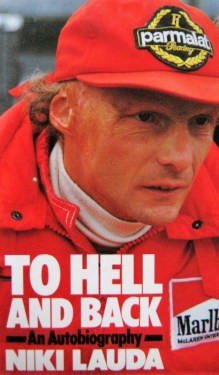 One of my favourite motor racing books is his autobiography titled To Hell and Back. This is what I wrote in one my reviews.
If someone had said to me at the end of 1973 when Jackie Stewart had just retired that Niki Lauda would be the next great champion of formula one, I would have laughed in his face. In my eyes it was obvious who the next great driver was. It was Ronnie Peterson. Had I tested those theories with a substantial cash wager I would have found myself out of pocket because Lauda won two world championships, retired, then made a comeback and won a third championship. The story of Lauda’s dreadful crash at the Nurburgring has been told many times, it’s even been made into the movie ‘Rush’ directed by Ron Howard. To Hell and Back is Niki’s story in his own words and a great story it is too. On his return to F1 at Monza after his terrible crash, Lauda drove out onto the track and was so scared he began to shake uncontrollably. Nevertheless, he carried on, overcame his fears and became a motorsport legend.
Things weren’t too great at Ferrari when he returned either. They had already replaced him with Carlos Reuteman, the Argentinian driver and Niki was understandably not amused. He returned to racing at the Italian Grand Prix that same year, 1976 and came home fourth, an incredible feat of endurance for a man who only months earlier had been given the last rites. At the championship decider, the Japanese Grand Prix, Lauda withdrew from the race in torrential rain after deciding the conditions were too dangerous to continue. James Hunt came third and therefore became the 1976 World Champion by a single point.
Lauda won the championship again in 1977 then left Ferrari. After two years with Bernie Ecclestone’s Brabham outfit he retired but was lured back to F1 again by Ron Dennis the boss of McLaren in 1982. Lauda won the championship for a third time in 1984 but this prompted a salary disagreement between the two men. Lauda claimed that he had only asked for a token £1 salary as a driver and the rest of his reported $3 million dollar salary was for his publicity value. Now he was world champion he reasoned, his salary should be upped considerably, after all his publicity value was the same if not more but now he was a world champion driver. Ron Dennis disagreed and Lauda took his financial issue straight to team sponsors Marlboro. They coughed up the extra cash but Alain Prost then became Ron Dennis’ favoured driver. Lauda retired at the end of 1985.
Lauda took a lot of risks in his early career, financial risks rather than racing ones. He took out a £30,000 bank loan to buy his way into the March team’s Formula 2 car. They were impressed and quickly elevated him to the F1 team. In 1973 he borrowed more money to buy his way into the BRM team. Lauda was good but the team were near to the end of their days, however when team mate Clay Reggazoni moved to Ferrari he told Enzo Ferrari how good Lauda was and Ferrari signed Lauda too and Lauda was happily able to repay his loans. Later in life he was able to start his own airline, Lauda Air which he sold in 1999 but then went on to start another airline.
In 2013 director Ron Howard made the Hunt/Lauda championship battle into the movie Rush.
Niki worked as a consultant to Ferrari and as team principal for the Jaguar F1 team and most recently he was a non executive director for the Mercedes F1 team. Until his lung transplant he was a familiar face in the Mercedes pit along with Toto Wolff, the Mercedes Team Boss and has been credited with luring Lewis Hamilton away from the Mclaren team.
Niki Lauda was one of the legends of Formula One and it was nice to see Niki remembered at Monaco this year by the F1 drivers and teams who all wore red caps in his memory.

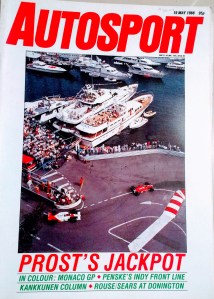
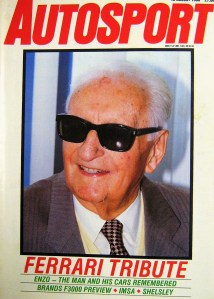 1988 was the year in which Enzo Ferrari passed away. Ferrari started out as a driver for the Alfa Romeo team before starting his own Scuderia Ferrari team in 1929. Ferrari’s team had support from Alfa and in fact raced and prepared Alfa Romeos for various drivers including the famous Tazio Nuvolari. In 1933 Alfa Romeo withdrew their support and Ferrari began to produce his own cars.
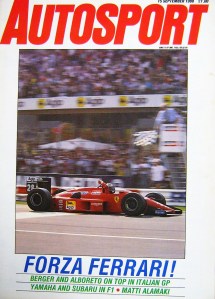 The McLaren duo of Senna and Prost won all the F1 races in 1988 but one. The one they didn’t win was that year’s Italian Grand Prix at Monza. Prost retired from the race and Senna was leading until a coming together with back marker Jean-Louis Schlesser who was deputising in the Williams for the poorly Nigel Mansell who was suffering from a bout of chicken pox. Senna tried to lap Schlesser at one of the chicanes, Schlesser locked his brakes and appeared to be heading towards the gravel trap, however, he managed to regain control, something that Senna wasn’t expecting and when he took the normal line through the chicane the two came into contact and Senna was forced out of the race with broken suspension.
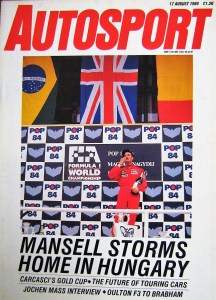 The story of Prost and Senna is probably the story we all remember from the eighties but they didn’t always have things their own way. Nigel Mansell nearly won the championship in 1986 and his rivalry with team-mate Piquet enabled Prost to take the title that year. Honda were not happy and Frank Williams’ refusal to give team orders to his drivers led to Honda taking their engines away from Williams and over to McLaren. Williams did take the championship in 1987 for Nelson Piquet but he left for Lotus for the 1988 season. Mansell wasn’t happy either in 1988 as the Williams team, left in the lurch by Honda, were forced to use engines from privateer John Judd. That was probably a major factor in Nigel switching to Ferrari for the 1989 season. Mansell was the last ever driver to be personally signed by the Commendatore himself, Enzo Ferrari. The cover shown here is from 1989 when Mansell took his Ferrari to victory in Hungary.
 Alain Prost was not happy working with Ayrton Senna. Their relationship broke down completely and Prost decided to jump ship from McLaren and join Nigel Mansell at Ferrari. The partnership of Prost and Mansell started off well with Mansell announcing that the only person he could learn from on the grid was Alain Prost. That relationship soon soured when Mansell felt that Prost was getting preferential treatment at Ferrari. His love affair with Ferrari over, Mansell rejoined the Williams team where he went on to win his only world championship in 1992.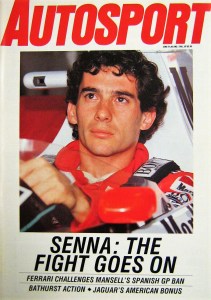
 1994 was a remarkable season in many ways. The Williams car which had been dominant for so many seasons was not handling well and a great deal of research and development was necessary for the car to be refined into a race winning motor car. Senna arrived at Imola for the San Marino Grand Prix in poor spirits. So far he had not scored a single point in the championship and murmured ruefully to the TV cameras, ‘for us the championship starts here, fourteen races instead of sixteen.’ Ratzenberger was killed in practice and Rubens Barrichello was lucky to escape from a horrifying crash without serious injury, all of which contributed to Senna’s darkening mood.
 The nights are growing shorter and the weather is cooling rapidly. In fact, the U.K. Is heading for a three-week freeze according to the latest weather report and Liz and I have lit our first coal fire since those long departed days of winter.
 A while ago I published a post called ‘
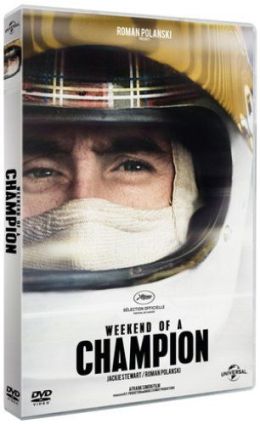 As this weekend is the start of the Formula One season, I thought I’d have a look through my motor sporting DVDs and recordings to get myself in the mood for a new season of the sport.
 I should start this post by explaining something. My blog posts have a sort of gestation period, usually about three weeks. I think of an idea and type out a few notes or a first draft. Sometimes I put it on my workstation and add to it as the day goes on and quiet moments appear. At home I’ll go over it again adding bits here, changing the language there. Sometimes I write about something topical and of course, by the time the post is published, the incident or event or TV show I’m writing about happened some time ago, so for the reader, it’s hardly topical at all! What is worse is that sometimes I shove something in ahead of schedule, making the post that was due to be posted even more out of date. Bit of a nightmare for readers I know so cast your mind back a few weeks. In the UK it was sunny but cool. Remember the weekend of the Mexican Grand Prix? Right, so here we go . .
 Back in the 1970’s I subscribed to a magazine called Motor Sport. The magazine was, and still is, a monthly motor sporting glossy and I kept each copy as my reference guide and revered it as my motor sporting bible. The F1 races were always fully covered in detail and there was also an interesting reflections column written by a journalist who signed himself DSJ.
 Letters from an Unknown Author!