4 Things That Happened in November

November is not my favourite time of the year. It’s getting colder and dark evenings are drawing in. Anyway, I got to thinking about things that have happened in November in the past and so here are four things that came to mind.

The Armistice of November 1918

The Armistice that ended the First World War was signed in Compiègne in France on the 11th November, 1918. It was signed aboard a famous railway carriage in a forest clearing. The railway carriage was designated 2419D and was part of Marshal Foch’s personal train. Foch decided on the spot for the surrender as he wanted to keep the negotiations away from the prying eyes of the press. The negotiations began on November 8th and were finally finished and the document of surrender signed at 5:45am on the 11th November, 1918.

The surrender came into force at 11am and fighting continued until that time with 2,738 men dying on the last day of the First World War.

The railway carriage went back into regular service for a while but was then attached to the French Presidential Train. Afterwards it was put on display in Paris until 1927 when it was returned to the glade at Compiègne.

Marshall Foch. Photo by the author

The Second World War began in 1939 when Hitler and the Nazis invaded Poland. The railway carriage was still in Compiègne on the 22nd June, 1940 when Hitler ordered it to be brought from its shed back to the glade and it was there that he and his generals accepted the surrender of the French. Three days later the site was demolished on the orders of the Führer and the railway carriage was taken to Berlin. A statue of Marshall Foch installed years earlier by the French was left standing intentionally, so that it would appear to stand in honour of a wasteland.

After the war, the site was restored by German prisoners of war and in 1950, an identical carriage was returned to the site. Carriage number 2439 was built with the same batch as the original and was also part of Marshall Foch’s train in 1918.

The carriage is housed in a small museum and when I entered early one Saturday morning back in 2022, I was the only visitor present. The staff asked me my nationality and when I stepped into the main area, a recording began telling the story of the site in English. It was really fascinating and as I walked around, I started up my camera and took numerous pictures and video.

Outside in the Glade, the statue of Marshall Foch is still there and today looks down on a beautiful clearing. It was a calm and peaceful place and it was strange to stand on the spot where Hitler and his Nazi cronies once stood.

The Death of Dylan Thomas 1953

Dylan was a slow worker when it came to writing and there was always something, usually a pub, to draw him away from his work. In his last days he was concerned that his talent, or his inspiration, had gone and that all his best work was perhaps behind him. He was short of money as usual and so he decided to accept an offer to go to the USA on a poetry tour. It was Canadian poet John Brinnin who made the offer to Dylan. Brinnin was the director of a poetry centre in New York and the trips Dylan undertook there were very lucrative for the always hard-up poet. Thomas had a number of wealthy patrons, in fact his famous house in Laugharne was bought for him by an admirer.
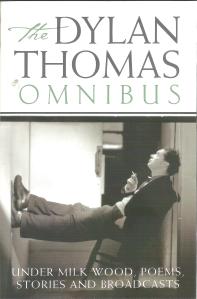
He had travelled to the USA before and on his penultimate visit had become romantically involved with a lady called Liz Reitel who worked for Brinnin at the poetry centre. When Dylan arrived for what would be his last visit Reitel was shocked to see the poet looking poorly and not his usual self.

Over the next few days Dylan’s mood alternated between being tired and poorly and getting drunk with some moments of normality in-between.

I get the impression from the book The Last Days of Dylan Thomas that Dylan liked attention, he liked admirers and although he was in the middle of an affair with Liz Reitel, he was not averse to enjoying the attention he received from other women.

At the poetry centre preparations were under way for a recital of the newly finished Under Milk Wood for which Dylan had produced some new edits and updates. The recital went well and was in fact tape recorded by someone at the time with Dylan taking the part of the narrator.

Liz called a doctor when Dylan became unwell again and the doctor gave Dylan an injection of morphine sulphate which may or may not have helped him.

After a night of drinking at the White Horse Tavern in Greenwich Village, Dylan returned to the Chelsea hotel claiming famously that he had downed ‘eighteen straight whiskies. I think that’s the record!’

Dylan’s breathing became difficult later in the evening and an ambulance was summoned. He slipped into a coma from which he never awoke and later died on the 9th of November, 1953. He was only 39 years old and died with assets of only £100.

I was always under the impression that Dylan had drunk himself to death but that may not be the case. The autopsy did not find any evidence of liver cirrhosis and his death may have been due to a combination of pneumonia and bronchitis.

The Assassination of President Kennedy, 22nd November, 1963

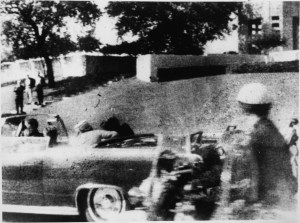
The graphic murder of President Kennedy was the cataclysm of our age, imprinted on the minds of a generation by the flickering incarnation of amateur cine film. Despite two official investigations which concluded that Lee Oswald killed Kennedy, doubts still remain even after 62 years. Did Oswald act alone?  Was he a patsy as he himself declared?

So what are the facts of the assassination? Perhaps the only undisputed fact to emerge from the tragedy was that John F. Kennedy, the thirty-fifth president of the United States, was shot in the head and killed. President Kennedy was hit by rifle fire in Dealey Plaza, Dallas, while riding in an open topped limousine, part of a motorcade that had just turned onto Elm Street by the Texas School Book Depository. Almost every other fact, every statement, every report, every document, every exhibit, every disclosure, is open to question. Were there three shots or four? Were there more? Was the President shot from behind or from the front? Was he shot from the sixth floor of the book depository or from the so called ‘grassy knoll’?  Did twenty-four-year-old ex-marine Lee Harvey Oswald fire the shots? Was he alone or were there other assassins? Why did Jack Ruby, a local night club owner subsequently shoot Oswald? Was it to silence him, to stop him from telling what he knew? Did Ruby act out of rage or was he part of a conspiracy? Was he in the pay of the Mafia? Was the CIA involved? The questions are endless, the answers are few.

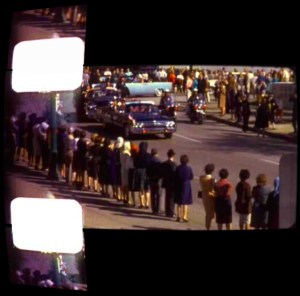
A frame from the famous Zapruder film

The President was shot at 12.30 pm, but Lee Oswald, who worked at the Texas School Book Depository, was seen by witnesses in the second floor lunch room as late as 12.15, which left him only fifteen minutes to ascend to the sixth floor, produce his rifle and take up position. Of course fifteen minutes might have been enough time for a cool and organised killer, but the President was actually due to arrive at a reception at the Dallas Trade Mart at 12.30, which meant he would pass through Dealey Plaza at about 12.25, giving Oswald only ten minutes to be in place, and he had no way of knowing the President would be late. Immediately after the shooting, patrolman Marrion Baker entered the Book Depository, drew his gun and with building superintendent Roy Truly hot on his heels, confronted a young man in the lunchroom calmly drinking a coke. Truly explained that this was Lee Oswald, an employee. Had Oswald rushed down from his ‘snipers lair’ on the sixth floor or had he been in the lunch room all the while?

Perhaps the strongest evidence linking Oswald to the murder was the supposed murder weapon, a 6.5 mm Mannlicher-Carcano bolt action rifle, a World War II vintage carbine found on the sixth floor of the book depository at 1.22 pm, almost an hour after the assassination. The officer who first found the rifle, Deputy Constable Seymour Weitzman, identified it as a 7.65 mm Mauser, and was confident enough to make a sworn affidavit to that effect. The day after the shooting, November 23rd, District Attorney Henry Wade also described the weapon as a Mauser at a televised press conference. How then does a 7.65mm Mauser become a 6.5mm Mannlicher-Carcano? I personally know nothing about guns at all but I have seen enough war films to know that a Mauser is German, and stamped clearly on the side of the Mannlicher-Carcano are the words ‘MADE ITALY’ and ‘CAL 6.5’. And surely a police officer, particularly an American policeman, would know what he was talking about concerning guns?

There is much more to talk about in the assassination, the Zapruder film, the murder of police officer JD Tippet, secret service men on the grassy knoll when no secret service men were deployed there. Was the assassin in the Texas School Book depository or was he on the grassy knoll? Were there multiple shooters?

In recent years the US authorities have been reviewing the final records ordered to be released by President Trump. Will anything be released that will prove conclusively who shot the President? I doubt it. Did Lee Oswald do it or was he like he said himself, just a patsy? Your guess is as good as mine. (Click here for a full post about the assassination.)

The Fall of the Berlin Wall 1989

It’s hard to imagine now, but for nearly three decades, the Berlin Wall divided a city and a country in two. Built in 1961, it stood as this cold, grey symbol of the divide between East and West, communism and democracy. Then, in November 1989, everything changed almost overnight. Word spread that East Germans would be allowed to cross freely into the West, and people rushed to the checkpoints. At first, the border guards didn’t even seem to know what to do, they just opened the gates. Suddenly, crowds poured through, cheering, crying, hugging strangers. Some climbed up on top of the wall, hammering at it with whatever tools they could find, breaking off chunks to keep as souvenirs.

The fall of the Berlin Wall didn’t just mark the end of a barrier; it marked the end of an era. Within a year, Germany was reunited, and the world felt like it was shifting into something new and hopeful. People around the globe watched those scenes on TV. Who brought the wall down? Well, it was US President Ronald Reagan who called for Mikhail Gorbachev to bring the wall down but really the wall came down because the East Germans wanted it down. Long time hardline East German leader Erich Honecker had died and new leader Egon Krenz decided to open the border with Czechoslovakia.

In Berlin on the 9th of November 1989, crowds gathered at the checkpoints urging the guards to open up. Eventually, overwhelmed by crowds of people, the checkpoints were opened and people began to pass through. I remember watching on TV over the next few days, Germans knocking down parts of the wall and it was only nearly a year later, on 3rd of October 1990 that East and West Germany were reunited.


What to do next: Here are a few options.

Share this post on your favourite social media!

Hit the Subscribe button. Never miss another post!

Listen to my podcast Click here.

Buy the book! Click here to purchase my new poetry collection.

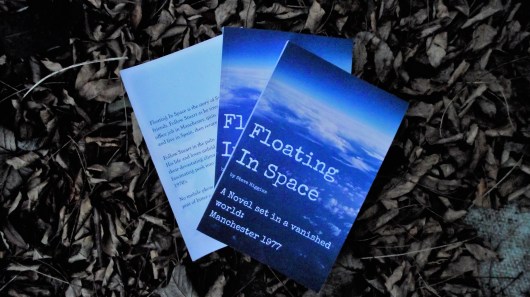
Click here to visit Amazon and download Floating in Space to your Kindle or order the paperback version.

Click here to visit amazon and purchase Timeline, my new anthology.

Another Blog Writing Day

It’s always good to pick up my iPad and see that my scheduled post has been successfully posted but the next task is to start thinking about a new one for next week. What can I write about? Has anything interesting happened to me? Have I read a great book or watched something good on TV? No? Well, that’s me up the creek without a paddle then.

Just lately I’ve haven’t been much of an early riser. I wake up late on a Saturday morning, visit the bathroom and then make some tea and take it back to the bedroom for Liz and myself.

Next I’ll open a new page on my laptop and just start writing about anything that comes into my head. After about ten minutes and I see the page is still blank I think that perhaps the best course is just to do what I usually do this time in a morning which is to check my emails. 500 deletions later I’m back to that blank page again. Perhaps I could write about my emails? Nah, I’ve done that already.

My next move will be to drink my tea and perhaps see what Liz has tuned the TV into. This being Saturday it will usually be Saturday Kitchen. Perhaps I could write a foodie post? Nah, done that a few times already. After drinking my tea and surfing through my social media I reckon I’m ready for some breakfast, to eat rather than to write about.

Time for a wash and a shave and then I get dressed and see what is on offer for breakfast. It’s a little late so we decide to go for a bacon and egg butty. Excellent. While we eat that we crank up an episode of the TV words and numbers game Countdown to get our brains working. Countdown? Could I write about that? Well, I could give it a few lines anyway.

Countdown was the first show to be broadcast on what was then UK’s new terrestrial TV channel 4 back in 1982. It is a fairly simple format with two contestants who have to make words out of 9 random letters, the winner being the one with the longest word. They also have to choose 6 numbers and then use those to make a number chosen randomly.

Back in 1982, the show was presented by Richard Whiteley with Carol Vorderman supervising the letters and numbers stuff. Richard Whiteley continued to host the show until his death in 2005. After that various people have presented the show including Des Lynam and Anne Robinson but the current host is Colin Murray. Carol Vorderman left in 2008 and her role was taken over by Rachel Riley. Also on the current show is Suzie Dent in charge of dictionary corner along with a celebrity guest. The show is currently the longest running game show on UK TV.

Personally, I am no good at Countdown whatsoever which puts me off trying to become a contestant. Liz is pretty good but sadly has no desire to be on the show. However, if she cannot get the random number, we usually have the TV on pause until she does. I then tend to say things like ‘you’re disqualified’ which can sometimes elicit a verbal reaction and so then I usually leave the room to make more tea.

Tea, now there’s a thing. Could I write about tea? Come to think of it, I have mentioned tea a few times but it’s hardly a subject for a blog post. Here are a few comments on the subject that kicked off a past holiday post;

Even on holiday in wonderful warm Lanzarote I’m a man who needs a cup of tea, and by tea, I mean hot tea. Just think of all the workers in far off India who have worked to grow and cultivate tea leaves and package it and send it off to people like me. I wouldn’t dream of insulting those people by drinking a cup of lukewarm or even cold tea. Liz however doesn’t mind cold tea but after chatting further I found our earlier experiences have shaped our attitude to tea. She, whilst at school, worked in a café and usually found that she was so busy that she had little time to drink her cuppa and generally picked it up when it was cold.

Once, many years ago, I had a cigarette vending round. I visited pubs in Merseyside, serviced their ciggy machines, filled them with cigarettes and took away the cash. A lot of the time I was in a hurry to get going to the next site. Even so, I would never turn down a cuppa and so many times I would have to drink a steaming hot cup of tea quickly so I could move on. The faster I worked, the earlier I finished and I very soon developed the knack of drinking hot tea,

Maybe I could build that up into an entire tea related blog post but would that interest any of my readers? I’m not so sure. Come to think of it, they mention tea in one of my favourite episodes of Columbo. Columbo is hot on the trail of Robert Culp who murders a man in the lobby of a cinema and he entices him there by putting subliminal cuts into a film which make him go in search of a cool drink. Anyway, while Columbo is chatting to the projectionist he mentions he is thirsty and the projectionist offered Columbo some tea, some iced tea!

Iced tea? Jesus, what planet is this guy on? Who drinks iced tea? That is a crime against tea. Dear me. Anyway, it’s time for a break. It’s a sunny day so Liz and I pop outside and settle down on the patio with our tea. (Our hot tea.) We’re creatures of habit so we always tend to kick off a session on the patio with a sudoku puzzle. Sudokus are little number games invented by those wily Japanese and once again, it keeps our brains active while we drink our tea. Most of the time Liz will beat me but the thing is, even while I’m trying to solve that sudoku I’ll be trying to think of something to write so that’s my excuse for Liz winning. If I really worked at those little number games, really worked at them, well, then it might be a different story.

After a quick sudoku session I pick up my book for a relaxing read in the sun. I’ve currently got a few books on the go. One is about the flight of Rudolph Hess and his mystery flight to the UK in 1940 and the other is about the JFK assassination. If I were ever to appear on TV’s Mastermind I would probably choose the JFK assassination as my specialist subject:

What is the grassy knoll?

It is an area of Deally Plaza in Dallas where it has been theorised that a frontal shot was fired at the president.

Who is Lee Harvey Oswald?

He is the alleged assassin of JFK.

Who was Alek Hidell?

That was an alias used by Oswald.

What is the magic bullet?

It was a bullet fired from the Texas School Depository that supposedly hit the president and then exited his body and then hit John Connally.

Who was John Connally?

He was the governor of Texas riding ahead of JFK in the presidential limousine.

Who shot Lee Oswald?

Jack Ruby.

I can imagine doing pretty well there but then going to pieces in the general knowledge round. Having said that there is a general knowledge round in the weekly quiz we attend at the Lord Derby pub in St Annes and we tend to do reasonably well.

If the weather stays warm we might stay outside for a barbecue and these days rather than getting the coals ready, lighting them three or four times before they finally get going and getting my favourite shorts covered in coal dust and grease, we nowadays use our little portable gas barbecue. Perhaps I could write a barbecue post? Well, I could probably write a barbecue section of perhaps another foodie post but an entire barbecue post? Probably not.
While I’m on the subject of barbecuing I think it’s important to share these two universal facts regarding a traditional coal barbecue;

One. Always watch your barbecue because if you don’t it will burn itself out before you’ve had a chance to set the table and serve the salad.

Two. Never watch a barbecue because if you do it will just take ages and ages to get going and just when it finally reaches optimum cooking temperature well, it’ll probably be time for bed, which is why we now use our trusty gas barby.

Liz and I tend to start off with a big salad including a large portion of Liz’s home made coleslaw and then munch our way through a selection of sausages, kebabs, burgers and steaks all washed down with some imported red wine which we select from French supermarkets on our annual travels.

I do love a barbecue from the first satisfying hiss as the steak hits the hot metal of the barbecue to the final mouthful of burger and the last glass of red wine. As the sun goes down it’s time to clear up and go back inside for some evening TV. Should I do a little work on that blog post?

Nah, there’s always tomorrow.


What to do next: Here are a few options.

Share this post on your favourite social media!

Hit the Subscribe button. Never miss another post!

Listen to my podcast Click here.

Buy the book! Click here to purchase my new poetry anthology.

Click here to visit Amazon and download Floating in Space to your Kindle or order the paperback version.


Fact or Fiction: Thoughts from a Sun Lounger

Here in our rented villa in Lanzarote it has been hugely relaxing. I did plan to do a lot of writing but instead I’ve been doing a lot of reading, swimming and drinking a lot of wine. To be fair I have done some writing. I’ve started two new short stories, one of which I have the story fully in my head and another that I’m not sure where it will end up. I’ve also worked on a couple of unfinished stories and blog posts. What has been interesting is that one of the books I’ve been reading by author John Grisham was actually John’s first novel and he says in the introduction that he was proud of his first book and also in particular, proud of finishing it as like me, he starts a lot of things but rarely sees them through to the end. Clearly, he’s sorted that problem out because he’s written a number of best selling books and all the ones that I have read, with one exception, have all been riveting page turners.
Grisham’s first book, A Time To Kill was based on his time when he was what he calls a ‘street lawyer’, someone hustling for cases. He explains in the introduction how the book was very autobiographical and inspired partly by dealing with similar cases and situations to the one he based the book on.

One of my unfinished stories was based on a radio play I wrote. I was hoping to get the BBC interested in it but sadly they declined. Pity, because I thought it was rather good and also it would have given me such a lot of pleasure to hear my work on Radio 4.

It was inspired by two things, the assassination of Bobby Kennedy and a film starring James Stewart. The film was called Call Northside 777. In the film Stewart plays a cynical newspaper reporter who is asked by his editor to investigate a small ad in the newspaper. The ad asks for someone to come forward who has information about a murder to call the eponymous phone number. Stewart finds the person running the ad is an old lady whose son is in prison for a murder she claims he didn’t commit. She works as a cleaner and is saving up to put together a reward for anyone having any information. Ultimately James Stewart proves that the woman’s son was innocent in part by having a newspaper photo enlarged. A key witness, and I’m going from memory here, had claimed she was somewhere on a particular date but a photo in the paper’s archive showed the woman with a paperboy in the background holding a newspaper and the photo was enlarged to show the date, which in turn somehow proved that part of her testimony was wrong.

The funny thing is that today a photo like that would have been taken by a digital camera and its quite possible the picture when enlarged wouldn’t show such detail yet with a film camera it’s a different story. Take something like the original Star Trek for instance, shot on 35mm film in the late sixties and still looking clear and sharp today. The following series, The Next Generation, shot on video in the 1980s is not remotely as sharp and it’s the older series which looks better on today’s HD TV sets.

Photography has played a big part in theories surrounding the shooting of US President Kennedy in 1963. One lady, Mary Ann Moorman, took a polaroid shot of him being struck by a bullet. The photographer was on the left of the President’s limousine and many have conjectured that in the background to the President’s right, the figure of the assassin can just be seen. I’m personally not so certain but the picture does show the grassy knoll where a second shooter may have been lurking. The other shooter, the infamous Lee Harvey Oswald was over in the Texas School Book Depository. Was he shooting at the President or having a coke in the second floor lunch room?

Polaroid by Mary Ann Moorman

Next to Mary was another lady known only as the Babushka Lady. This lady has never been identified but she also filmed the assassination and her film, if ever found, would also have great footage of the grassy knoll area. The other day I saw a very clear picture of her on a JFK site I follow. The picture had been cleaned up by new AI technology which uses computer programs to clean up blurred pictures.

Going from fact to fiction, in my story it was a UK MP who gets murdered and the accused assassin’s mother who places the newspaper advertisement. In the real murder of Bobby Kennedy, the assassin Sirhan Sirhan shot Kennedy from a few feet away and various people grabbed him just as he fired his first shot. According to the autopsy, the fatal shot was fired from point blank range, possibly actually touching Kennedy’s head so how could Sirhan’s bullet, fired from a few feet away have been the fatal shot?

The JFK assassination has inspired quite a few conspiracy films. The most famous is the Oliver Stone film JFK which dramatises the investigation by New Orleans District Attorney Jim Garrison and his probe into the murder. Stone uses the Garrison investigation to take the audience through the various stages and theories of the assassination, the number of shots, the direction of the shots, the Oswald look alikes, the murder of police officer JD Tippet, the mafia connection, the intelligence connection, the background to Lee Oswald and so on. In the film Garrison played by Kevin Costner meets an informant known only as X. I’m not sure if this ever really happened but X was based on L Fletcher Prouty, an air force officer who served as Chief of Special Operations for the Joint Chiefs of Staff under President Kennedy. He gives the audience a view of the assassination from a covert intelligence CIA background.

Another film based on the assassination was Executive Action, a phrase coined by the CIA itself and referring to their capability of assassination. The film was written by three screenwriters including Mark Lane who was the author of Rush to Judgement, one of the first books to criticise the Warren Commission report on the JFK assassination. Lane also made a film version in which he interviewed many assassination witnesses.

In the film, a group of men discuss the Kennedy presidency and agree that Kennedy must be removed for various reasons, his civil rights stance, his nuclear test ban treaty and his decision to withdraw from Vietnam. Then they set out to obtain funding from various Texas oil magnates who are also not happy with President Kennedy.

Mark Lane was actually a lawyer and he defended a magazine which was sued by E Howard Hunt, one of the Watergate burglars, because the magazine claimed that Hunt was part of a JFK assassination plot. In the following trial, Mark Lane won his case and the jurors demanded action by the government to investigate further. Nothing of course happened but that’s hardly surprising according to another book I have just read called Mary’s Mosaic. It’s about a lady who was murdered by the CIA or so the author claims, because she knew too much about the JFK assassination. The book goes on to show how the CIA was able to manipulate the media into not delving too deeply or even not reporting at all, stories like these. I’ll be reviewing the book in more detail in an upcoming Book Bag post.
Anyway, that’s enough about conspiracy theories for now. Is it worth digging out that radio play for some more work or is it time for another dip in the pool? I know this is not good for my street cred as a writer but, you guessed it, time for another dip in the pool!


What to do next: Here are a few options.

Share this post on your favourite social media!

Hit the Subscribe button. Never miss another post!

Listen to my podcast Click here.

Buy the book! Click here to purchase my new poetry anthology.

Click here to visit Amazon and download Floating in Space to your Kindle or order the paperback version.

The Rise and Fall of the Kennedys

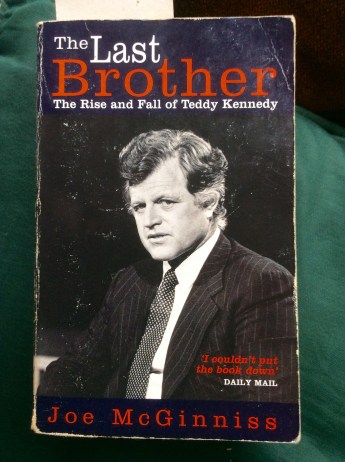
The Last brotherThe Last Brother by Joe McGinniss

The Last Brother as you can see, is subtitled, the Rise and fall of Teddy Kennedy. In a lot of ways Teddy is only incidental to the story told here because it is really the story of his father, Joe Kennedy, and his rise to success. Joe’s success lay not only in the business of banking but during the prohibition years he made a fortune in bootlegging and naturally rubbed shoulders with a number of gangsters. When he became successful, Joe wanted something more; he wanted political power. It was then that he attached himself to Franklin D Roosevelt. He helped Roosevelt’s campaign in many ways and when Roosevelt became president, he, like all presidents, had to reward those who had helped him. Joe became ambassador to the UK and it was there that his fall from grace began.

The ambassador and his family quickly became celebrities in England. In fact, Teddy Kennedy made his first public appearance as a young boy, the ‘baby’ of the Kennedy family and the son of the Ambassador, when he was invited to open pets’ corner at London Zoo.

However, In Joe’s eyes the coming war with Nazi Germany spelled the end of all he had worked for. He could not see how the UK could resist the might of the Nazis and was not slow in saying so. Kennedy advised Roosevelt that the British were finished. However, when Winston Churchill became prime minister in 1940, Churchill opened up direct communications with Roosevelt himself making Ambassador Kennedy almost superfluous.   Later, the family returned to America with Joe not perhaps in disgrace but acutely out of step, and the relationship between Churchill and Roosevelt flourished.

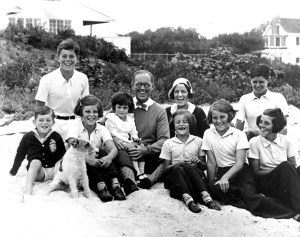
PC 8 The Kennedy Family at Hyannis Port, 1931. L-R: Robert Kennedy, John F. Kennedy, Eunice Kennedy, Jean Kennedy (on lap of) Joseph P. Kennedy Sr., Rose Fitzgerald Kennedy (behind) Patricia Kennedy, Kathleen Kennedy, Joseph P. Kennedy Jr. (behind) Rosemary Kennedy. Dog in foreground is "Buddy". Photograph by Richard Sears in the John F. Kennedy Presidential Library and Museum, Boston.

The Kennedy Family at Hyannis Port, 1931. L-R: Robert Kennedy, John F. Kennedy, Eunice Kennedy, Jean Kennedy (on lap of) Joseph P. Kennedy Sr., Rose Fitzgerald Kennedy (behind) Patricia Kennedy, Kathleen Kennedy, Joseph P. Kennedy Jr. (behind) Rosemary Kennedy. Dog in foreground is “Buddy”. Photograph by Richard Sears in the John F. Kennedy Presidential Library and Museum, Boston.

Kennedy left the Roosevelt administration but he wanted political power for himself and made sure he would find it through his financial wealth, and through his sons.

Joe Kennedy junior was the son that Joe meant to make into America’s first catholic president. His brother, John Kennedy, known as Jack by the family, was a poorly lad afflicted by Addisons disease and constant back pain. In World War 2 Jack joined the navy but began an affair with a Dutch journalist, Inga Arvad. Inga was thought to be a Nazi spy so Joe immediately arranged for Jack to be posted well away from Inga to South Carolina. Bored with his desk job in South Carolina, Kennedy volunteered for the Motor Torpedo Boat Squadrons and later took charge of his own boat, PT 109. He was awarded the Purple Heart for his bravery in rescuing his men when his torpedo boat was sliced in two by a Japanese destroyer.

Joe Kennedy Jr was not at all happy when he heard about the award. Competitiveness was drilled into the Kennedy clan from an early age and Joe did not want his younger brother to top him. Perhaps that is why he volunteered for a dangerous mission. The mission involved a radio controlled plane, full of explosives that were to be remotely steered to a target in Germany. Joe’s job was to take the aircraft into the air then bale out when the radio control was activated. Sadly the aircraft’s explosives were detonated prematurely and Joe was killed.

Jack knew then that it was he who would have to fulfil his father’s desire for the presidency.

Joe used his influence, and his money, to get Jack first a seat in congress and then a seat in the senate. In 1960 it was time for him to fulfil his father’s dream and go for the presidency. Lyndon Johnson wanted the democratic ticket that year and he began by attacking the the Kennedy candidacy. He described him as ‘a little scrawny fellow with rickets’ but soon the influence of father Joe came to bear and Johnson ceased his attacks. Johnson knew that that Joe Kennedy would pull out all the stops for his son to win but he hoped that if the vote wasn’t decisive on the first ballot he would have a chance on the second one. As it happened, John F Kennedy won the nomination on the first ballot. According to McGinnis it was Joe who wanted Johnson as JFK’s running mate; perhaps that was payback for Johnson laying off his attacks on Kennedy’s health issues.

The election was close, very close indeed and Joe decided he needed help from a rather unsavoury corner; he turned to his former prohibition gangster contacts, notably Sam Giancana to help him secure victory for his son. That help would come at a price. Giancana wanted back the casinos in Cuba that used to make millions for the mob until Castro overthrew the Batista regime, closed down the casinos and threw the gangsters out of Cuba. Giancana wanted them back.

Kennedy won the election by a narrow margin but things went wrong almost straight away. CIA backed revolutionaries were training in secret Florida locations for an assault on Cuba but the plans were in disarray and the president rejected many of them, When the attack came it was a disaster. Kennedy accused the CIA of trying to force him into a full scale US assault on Cuba and he would have none of it. Giancana would not get his casinos back. Worse, the president had engaged his brother, Robert Kennedy as attorney general and he began an assault on organised crime in the USA. One of the mafia bosses was heard to mutter in Sicilian, “who will get the stone out of my shoe?” It was more of a threat than a question.

Joe Kennedy was struck down by a stroke at the age of 88 and rendered unable to speak. The chief fixer, paymaster and head of the Kennedys was unable to carry on talks with the mafia and the time had come to remove the stone from Giancana’s shoe.

Dealey Plaza

Dallas 1963

President Kennedy was assassinated in Dallas in 1963 and his presumed assassin Lee Oswald murdered days later inside the Dallas Police headquarters. At the Kennedy home in Hyannis Port nobody wanted to tell Joe. He must have known something was wrong but he could only point numbly at the TV in his room that remained firmly switched off. Ted Kennedy, who was sent to tell his father the news, struggled to get the words out until his sister Eunice blurted out the truth.

Robert Kennedy was shot in 1968 as he prepared for a late campaign for the Democratic ticket. After winning the California primary he said a few words to his supporters and was shot moments later.

Ted Kennedy now had a surplus of Kennedy advisors and aides, all willing him on to go forward and run for the presidency. He declined even though a ‘draft Ted Kennedy’ movement had started to gain momentum. Instead people looked forward to 1972 when Teddy, the last remaining Kennedy brother would restore the lost kingdom, the lost Kennedy leadership but it was not to be.

In 1969 Kennedy attended a boating regatta at a small island called Chappaquiddick. Numerous parties were planned for the weekend; one was a gathering of the so-called ‘boiler room girls’ – a group of women who had been part of Robert Kennedy’s campaign team in 1968.

Kennedy apparently left the party late in the evening, supposedly to go to the island ferry with one of the girls, Mary Jo Kopechne but instead turned across a small bridge that led to the beach. Kennedy lost control of the car and the vehicle plunged upside down into a small lake. Kennedy somehow escaped leaving Mary to die in the car. Police divers found her body the next day, her head in a small air pocket in the foot well of the upside down car. Kennedy did not report the incident until nine hours later. What happened in those nine hours is open to question but the Police seemed to gloss over the numerous inconsistencies in Kennedy’s story and eventually he received a suspended sentence for leaving the scene of an accident.

On the cover of the book is a remark from the Daily Mail reviewer that he couldn’t put the book down. I was just the same and was engrossed from beginning to end. The writer seems convinced of his central thesis, that Joe Kennedy’s pact with the mafia was a poisoned chalice that became the downfall of his sons and his family. Maybe that is true, maybe not but McGinniss puts forward an interesting theory and a fabulous read.

Joe Kennedy died in 1969, his dream of securing the presidency for his sons lay in ruins, leaving nothing but heartache and sadness. Fate had delivered many cruel blows to him but lying mute and unable to communicate while his family suffered must have been the worst.

Ted Kennedy continued in the senate until his death in 2009 from brain cancer.

What to do next:

Share this post on your favourite social media!

Hit the Subscribe button. Never miss another post!

Buy the book! Click here to purchase my new poetry anthology.

Click here to visit Amazon and download Floating in Space to your Kindle or order the paperback version.


3 Books you should read about the JFK Assassination

quotescover-JPG-43The 22nd November is the anniversary of the assassination of John F Kennedy; one of the most shocking events of the twentieth century. It’s something I’ve been interested in ever since I was a boy and I’ve collected many books about the subject.

I’m still fascinated by the mystery: Did Lee Oswald shoot the President? Did he act alone? Why did Jack Ruby shoot Oswald? Was the CIA involved? Very few of those questions will ever be answered but it’s clear that the findings of the Warren Commission, the investigative body set up by President Lyndon Johnson are not definitive. Indeed the senate investigation in the 1970’s concluded that the President was assassinated ‘probably’ by a conspiracy. Even so, no attempts to investigate further or take action have been made. If you want to find out more, what should you read? Well, there are numerous books on the subject you might try but here below are three key and classic books you need to read:

Mark_Lane_Rush_to_Judgment_coverRush To Judgement by Mark Lane
This was one of the first books to take a critical look at the Warren Commission report and say, ‘hang on, some things don’t add up here!’ Lane deals with a lot of the minutiae of the assassination and Lee Harvey Oswald’s activities.

One interesting element to me was the murder weapon; the Mannlicher-Carcano rifle bought through mail order and sent to a post office box that Oswald rented. The gun was oily. The scope on the gun was not aligned properly, in fact the FBI found that it could not be aligned at all and had to add metal shims in order to align the scope, meaning that it was test fired by the FBI in a condition that was not available to Oswald!

The first officer to find the rifle even signed an affidavit that the rifle was a Mauser and not a Mannlicher-Carcano! Quite a mistake for an American police officer who would surely be familiar with firearms.

sixsecondsSix seconds in Dallas by Josiah Thompson
Thompson argued in favour of a conspiracy by analysing the Zapruder film of the assassination. In the film shot by local businessman Abraham Zapruder the last two shots come close together, meaning that one of them could not have come from Oswald’s rifle because it took 1.7 seconds to eject the used cartridge and make ready to fire again. This clearly occurred to the people in the Warren Commission as one of its members (Arlen Specter, a lawyer not a forensic expert) put forward the so called ‘single bullet theory’ which argued that a single bullet hit President Kennedy in the back, exited his throat and then struck Governor Connelly who was sitting ahead of Kennedy in the Presidential limousine.

This bullet was found on a stretcher in almost pristine condition which many commentators have asserted means it could not have passed through two bodies and inflicted so much damage.

In 1979 the Select Committee on Assassinations heard evidence of tests that showed the firing could have taken place in only 1.66 seconds per shot. Oswald’s original rifle however, was in too poor a condition to be used for the tests and another was substituted. Even so, none of the test shooters were able to replicate Oswald’s marksmanship despite Oswald being at best only a reasonable shot. An interesting, readable and thoughtful book but rather rare.

Best Evidence by David Lifton.

best evidence

best evidence

This is an excellent book in many ways. It’s not just about the assassination itself, the author spends a lot of time describing his personal fascination in the Kennedy case and how his interest has evolved and developed. He has followed the growth of theories and new revelations over the years and made efforts to meet and interview many of the witnesses involved.

Lifton puts forward an argument that is a little unbelievable, certainly to me, that Kennedy’s body was spirited away and the injuries changed to fit in with the theory that Oswald shot Kennedy from the rear. The doctors at Parkland Hospital all clearly state that Kennedy had a massive exit wound in the back of his head indicating a shot from the front but the autopsy report concluded Kennedy was shot from the rear.

I can understand where Lifton was coming from, the autopsy result and recollections of medical staff at Parkland clearly don’t match, but altering the President’s body? I don’t think so. The President’s body would have had to have been pried from the Secret Service who were with it from Dealey Plaza, to Parkland, and Air Force One to Bethesda Naval Hospital.

Some of those whom Lifton interviewed claimed a helicopter landed and the President’s body arrived, implying it came by helicopter when in fact it came by motorcade in an ambulance with the First Lady aboard. One interviewee stated that at Parkland Hospital the body was wrapped in sheets and placed in a coffin. Another spoke of taking the President’s body out of a body bag at Bethesda so clearly these accounts do not match up.

This book also did a lot to help me reconcile the workings of the Warren Commission. It is often dismissed by many people as a cover up but in fact the Warren Commission reacted to the evidence presented to it by the FBI as any other court or legal body would do: It processed the assassination according to the evidence.

Did anyone see someone shooting from the grassy knoll? No. Did anyone see a shooter in the Texas schoolbook depository? Yes. Was a rifle found in the sniper’s nest at the Texas School Book Depository? Yes. Was it delivered to a PO box belonging to Lee Oswald? Yes.

As you can imagine, the Warren Commission found Lee Oswald guilty of the assassination. What else could they do? However, many people not heard or dismissed by the commission heard gunfire and shots from the grassy knoll.

One Police Officer dropped his motorcycle and ran up there only to encounter a scruffy man looking like an auto mechanic. The man had Secret Service credentials and the officer let him go. There were no Secret Service there that day. They were all in the motorcade or waiting at the Trade Mart where the President’s next stop should have been, so who was the man? What was he doing there on the grassy knoll?

As you read more and more about the assassination, more stories like that come to light and the accumulated weight of these revelations is what fuels the enduring mystery. I do love a mystery and my interest in the JFK assassination, like Lifton’s has endured for a long time.

I’m not sure just how to describe to you just how fascinated I am in this story but if you’ve seen that part in the Woody Allen film Annie Hall, where Woody is trying to seduce someone but finds himself consumed by thoughts about the assassination then you’ve got the idea.

To find out more about the assassination try the JFK Lancer website at http://www.jfklancer.com

On a less serious note, here’s the Woody Allen clip:


If you enjoyed this post why not try my book Floating in Space set in Manchester, 1977? Click the links at the top of the page for more information.