I’ve always liked that lazy droning sound of light aircraft; maybe it comes from my childhood, brought up a stone’s throw from Manchester Airport which my friends and I would visit every weekend, cycling to the back of the airport down lanes and alleyways looking for obscure fields where we could get close to the aircraft. We spent many a lazy afternoon on the airport terraces, jotting down aircraft registrations and ticking them off in our flight books.
When I was younger I knew someone who had an ambition to be a pilot and was taking lessons at Blackpool Airport. He used to alleviate his tuition costs by taking friends or colleagues on his training flights if they would drive him down to Blackpool.
On the day that I joined James (the names have been changed to protect the innocent) as an eager passenger, I drove down to Blackpool Airport pretty excited. James advised that on the day he would be doing some instrument tests which involved flying the aircraft on instruments alone.
I stepped into the back of the small plane and strapped myself in. It was a hot day and the aircraft had a huge glass cockpit making it warmer still. I was at a point when I thought I would have to get out and cool off but just then the instructor turned up. He was an older chap and brought his big woolly dog along as he enjoyed, well so I was told, flying. Fido was led in to the rear seat with me and we eyed each other warily as he was strapped in.
The engine was started, we taxied out on to the runway and a few moments later we were aloft. It was exhilarating to look down on Blackpool and the tower, a place where I had spent many happy holidays as a child. After a while James had to put on a rather odd-shaped helmet which blocked out the view through the windscreen and he could only see his instruments. The small plane flew higher and higher, Blackpool Tower becoming the merest pinprick in the distance. Then the engine stopped.
image courtesy Wikipedia.
I’m not sure if you have ever seen one of those World War two films when German stuka bombers hurtled down at their targets with a banshee type wail. I only mention that because it seemed very much akin to our current situation and not only that, the pilot was lucky on this occasion that it wasn’t me issuing the wail but as we hurtled towards the ground Fido and I eyed each other with mutual fear in our eyes.
“Now come on James” said the instructor. “What have we forgotten?”
Fido pawed the back of the pilot’s seat in a vain attempt to jog his memory but our downward path continued. If you ever happen to see that rather old film ‘The Sound Barrier’ you might get some idea of our situation hurtling down towards the earth with Blackpool Tower looming ever closer in our windscreen.
“You’ve forgotten something haven’t you? The instructor might have been talking to a learner driver who had not put on his hand brake at the traffic lights.
“What if I mentioned the mixture?”
If that was a hint it was certainly in a much better class than his previous comments but either way the pilot got the message, adjusted the engine mixture and our tiny aircraft’s propeller burst into renewed life and not long later we touched down rather bumpily back in Blackpool.
“Watch out” said the instructor, “Fido gets a bit excited when we land.”
If this was a typical flight with his master then it was clear to me why Fido was excited when he landed but anyway, the dog gave me a look which said in its canine way “We made it!” and hopped out of the plane.
James completed his flying studies and left our company. He went on, I assume to a career in aviation and we never met again but I have learnt one thing.
Next time if, on the way to Spain, the engines of our jet airliner conk out I’ll be shouting to the pilot “What about the mixture!?”
If you liked this blog, why not try my book, available as a paperback or Kindle from amazon: Check out the links at the top of the page or click the icon below:
Many years ago when I was a bus conductor it was pretty easy to spot the fare fiddlers. They would never look directly at you. As I strolled down the bus asking for ‘any more fares please’ I knew who had paid and who hadn’t, after all, I had usually just watched them get on the bus. One scruffy guy got on one day and went straight down the bus, sat down and set a fixed gaze out of the window. Ok, I was chatting to other passengers at the time but I still knew he was new to the bus and I wanted his money.
“Fares please”, I called. Nothing. So then I turned directly to him and asked “I don’t think I’ve had your fare mate?” He finally turned away from the window.
“Where are you going to?”
“Levenshulme” he said.
“Thirty five pence please.” The guy thought for a minute, reached into his pocket and pulled out a can of soup.
“Can I pay with this?” He asked. The answer was no. He was asked to leave. After all it was pea and ham soup, tomato might have been another matter.
Here’s an extract from my book ‘Floating In Space’that deals with another odd ball passenger;
A harassed looking girl boarded in Stockport. There was something about her that I couldn’t put my finger on. She asked for a single to Manchester and did I require identification?
“Identification?” I asked.
“Only I don’t have my credentials on me at the moment. I’ve got to be careful.”
“Careful of what?”
“Well my boyfriend’s a nuclear arms salesman. I’m being watched by the CIA and God knows who else. MI5 have probably got the scent by now.”
“Right, we’ll keep a low profile then.”
“Probably best if you know what I mean.”
She was a Nutter.
“What was that all about?” asked Milligan, my driver, when I went back up to the front of the bus.
“Nutter” was all I had to say.
“That’s the 189 you see Stu. Used to be a hell of a lot of them on this route. Quietened down a lot lately, oh yes.”
The rest of the trip was pretty unremarkable. When we finally reached Albert Square in the city centre the nutter came storming towards me down the centre aisle and yelled at the top of her voice “If my boyfriend’s not a nuclear arms salesman then how did I get CIA Clearance?”
She charged through the open door and on into Manchester. An old chap behind her departing at a much slower and more sensible pace said, “Answer that one then!”
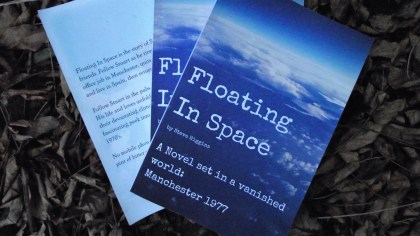
You can read more about life on the buses in Manchester in my book Floating In Space.
One final nutter to finish with; There used to be a guy who never boarded our bus but spent his time hurtling through the traffic on his bike cutting up cars and buses alike. How he was never ran over I do not know. My colleagues had dubbed him simply ‘the Levenshulme Nutter.’
One day, years later when I made been promoted from bus conducting to the lofty heights of bus driver, I was driving through Levenshulme on the 192 service when the Levenshulme nutter cut across me and I nearly ran him over. I stopped next to him at the traffic lights, opened my window to give him some abuse then, noticing his outsize spectacles with their purple lenses said, instead “I like your glasses!”
He popped the glasses up on his head and said “Yes, but it’s the man behind that counts!” And cycled away. I never saw him again.
If you liked this blog, then why not try my book? Click the the links at the top of the page for more information or to buy.
My current job is a safety critical one. I work in an emergency control room and many of the decisions me and my colleagues take have highly serious implications. It can be stressful work and sometimes I look back to a much easier control room job I had years ago. I once worked in the GM Buses Control room in Manchester.
Back then in the mid nineties the buses in Manchester had radio communication so the driver could advise control of late running or breakdowns, and even call for help in an emergency. I worked in a team in the enquiry section and we took queries from the bus travelling public of Greater Manchester.
In many ways it was a good job, lots of fun, good workmates and plenty of practical joking. Everyone had a nickname and one fellow I worked with, Paul, was known as ‘Mister Nasty’. He was the guy to deal with abusive callers and when a caller turned unpleasant we would put him on hold with a cheery ‘hold the line please!’ and shout across to Paul who would take the call and give back as much abuse as the caller would be giving.
One day ‘Nasty’ realised he had perhaps overstepped the line and the caller demanded to speak with his manager. The call was sent through to the duty Inspector who on that particular day was a nice guy called Alan who had the nickname ‘Leave it wi’ me’. Paul ran from his desk in the enquiry section, through the control room to where Alan sat on a raised dais where he could survey the whole room. Paul wanted to get his version of events in first and knew that with our antiquated telephone system the call would take its time to ping across the room. However, just as he reached the Inspectors desk the phone rang and Alan stopped Paul in mid sentence. ‘Just a minute Paul, I’d better take this call.’
Alan took the call, listened for a moment and said ‘Someone in enquiries called you a bastard? Leave it with me!’ and put the phone down. He turned to Paul and asked him to carry on. Paul thought for a moment then said, ‘Actually Alan, it doesn’t matter . .’ and went back to his desk.
Another staff member had the nickname ‘Norm’ which I think was based on a character from the TV comedy ‘Cheers’ but anyway, Norm had a particular dislike of the identity badge we had to wear in the control room. When it was time for a break, Norm would pull off his badge, slap it down on his desk and go off to the canteen. One day, some of the guys decided to cut out a shapely pair of breasts from that day’s newspaper page three model and insert the picture into Norm’s badge. I personally could not stop laughing and everyone was calling me to shut up and be quiet but I couldn’t help it. Thirty minutes later Norm returned, sat down at his desk, put on his headset, switched on his phone and clipped on his badge. I must have looked ready to burst and after stifling my laughter for about five minutes Norm looked over at me and asked what was wrong. He eventually found the offending picture and removed it convinced that I was the offending culprit.
Yes, that wasn’t the best job I have ever had but we did have some fun with fake calls and wind ups. We used to get calls from the Police and they would ask our radio staff to broadcast radio messages to our drivers. ‘Please be on the look out for a red Ford Fiesta registration number . .’ and so on. One day Norm called our radio man, an old chap called ‘Stoddy’ and pretending to be the Police asked him to put out information about a stolen Ford Camper van with a registration number of . . and gave out the registration of Stoddy’s beloved camper van. Stoddy had a near hysterical reaction and rushed out to the car park where of course his camper van was still parked. When he returned fuming to the control room we were still laughing.
Finally, I must tell you about Mr Scrimingeour who was one of the top bosses at GM buses and in charge of our fraud team. His rather unwieldy name was pronounced SKRIM- IN- JUR- and many calls came through the switchboard asking for him as anyone caught fiddling their bus fare received a letter demanding a five-pound fine which was signed by him. We had a list on the wall of the many mispronunciations of his name but the best, the very best came in a call taken by our very own Mr Nasty.
A caller had asked to speak to a Mr Scaremonger!
If you liked this post, why not try my book. Click on the links at the top of the page to learn more!
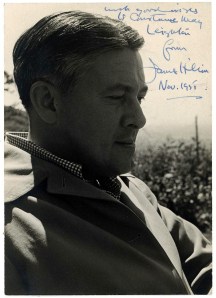
James Hilton is one of my personal writing heroes and yet his name may be unfamiliar to many of you reading this blog. He was a journalist and an author and made the trip from his home in Leigh, Lancashire, in the UK to the Hollywood hills in the United States to become a screen writer. He is probably more well known for his book ‘Goodbye Mr Chips’ which was made into a film with Robert Donat (actually another northerner from Didsbury in Manchester) but my favourite of his books and quite possibly my all-time favourite book is ‘Lost Horizon’.
Lost Horizon is a book I found in a second-hand shop many years ago. A battered 1940s paperback I paid twenty-five pence for and yet that small investment has paid me back many times over for sheer reading pleasure as Lost Horizon is a book I re read every year or so and I often pull it down from my bookshelf when a current read fails to entertain me.
Lost Horizon is a completely original idea and is about British consul Robert Conway in the dark days before World War II. Conway is helping his fellow British citizens escape from civil war in China and he and his small party escape in the last plane only to be kidnapped and taken to a distant Tibetan monastery. Conway meets the High lama and after a time it is revealed that the Tibetans want to preserve the best of world culture and art and make it safe from the coming war.
Hilton is one of those few people who have invented a word or coined a phrase that has become part of the English language. In this case it was the name of the Tibetan monastery, Shangri-la which has since become a byword for a peaceful paradise, a distant haven. Camp David, the US President’s retreat was originally called Shangi-la until renamed by Eisenhower for his son, David.
Hilton’s journey from Leigh to Hollywood must have been a magical one and one I envy, especially as his time in Hollywood was a golden age for movie making. Lost Horizon was made into a movie by Hollywood director Frank Capra and starred Ronald Colman as the urbane British diplomat of the novel. It’s a movie that was recently restored and is a great DVD if you happen to see it. Colman also starred in another movie authored by Hilton :‘Random Harvest ‘.
Hilton settled in Hollywood and wrote a number of screenplays for classic Hollywood movies such as ‘Mrs Miniver ‘. Sadly he died from cancer in 1954.
WordPress of course is an American site and I wonder sometimes if a bored Hollywood production executive may decide to sit down one day with his Ipad and search idly across the site in search of movie ideas. My own book; ‘Floating In space’ could easily be relocated from Manchester to Los Angeles and I am available for writing the screenplay.
Well, may keep my flight bag packed, just in case . . .
If you enjoyed this post, why not try my novel, Floating In Space? Click the links at the top of the page for more information.
As a younger man Saturday night was everything to me and my friends. Nights out, beer, music and the ritual ‘chatting up’ of girls was our ‘raison d’etre’
In my book ‘Floating in Space’ a lot of the action takes place in bars and pubs and one of my favourite places in late seventies Manchester was the ‘Playground’, a disco bar on Oxford street. Here’s an extract from the book where I introduce the venue;
The main venue that night, and on many other Saturday nights like it, was the ‘Playground’, a small disco bar on Oxford Rd in the town centre. Flickering multi- coloured spotlights rotated across the red carpeted room, which, on Fridays and Saturdays was generally packed. It had a small dance floor sunk low like a pit, where people up on the raised bar level could look down at the gyrating girls, and where also, on week day lunchtimes, a topless dancer appeared at the stroke of one o’clock to translate the soul and disco music of the time into pulsating physical motion, the eyes of jaded office workers glued to her as she did so.
My friend ‘Matty’ Edwards and I used to meet up in the Salisbury, by Oxford Rd station, have a few pints and a bit of a natter to any Regal Insurance cronies who we might find there, then make the short walk to the Playground. There was a paltry fifty pence charge to get in, the solitary bouncer was silent, but not unpleasant, and the DJ, who always began the night with ‘Loves Theme’ by the Love Unlimited Orchestra, played alternate sessions of rock, disco, and chart music. We were both mad about Jenny, the barmaid. She was lovely. She had a kind of round, open face, framed by thick blonde hair and her skin was a creamy white. She served us Worthington ‘E’ and we melted into the hubbub of people on their Saturday night out while the music of the seventies drifted through us.
Matty was tall, he had lazy, rather hayfevered eyes, and a biggish nose over thin lips. His brown hair was short and untidy and he was smart, but had a sort of ‘middle of the road’ taste in clothes.
“Jenny’s looking gorgeous tonight” he told me over his pint of Worthington’s.
We were propped up at the bar at a convenient spot where we could eye up any possible female talent, and cast a fond eye over Jenny’s appealing form.
“You’re not wrong mate” I agreed. “I wouldn’t mind getting a grip of that myself.”
I caught Jenny’s eye and ordered two more pints of Worthington ‘E’. It wasn’t a great drink but we were tuned into it now for the rest of the evening, and anyway, I hadn’t as yet developed any clearly defined tastes in beer. The first pint I ever ordered myself was a pint of mild, and that was because I had nervously entered a Cheshire country pub after a long cycle ride and hesitatingly asked for a pint of ‘beer’.
“A beer?” asked the barmaid.
“Yes,” I replied, “A pint, please.”
“A pint of what?”
I realised, uncomfortably, that something more was required. I had thought that ‘a pint of beer’ would have been enough, but what the barmaid wanted to know was did I want bitter, or mild, or lager even? My first tentative forays into the world of the alcoholic drink were with my friend Mike Larini and it was always he who had done the ordering. What did he ask for, I thought? I couldn’t remember but down the bar the faint voice of an old man asking for half of mild drifted along to me, and so I went on to drink mild. Later I changed to bitter, and even now I was currently considering another change as someone had given me the cheerful news that bitter ‘rots your guts’. Perhaps it had been that eternal pessimist Matty Edwards with his inside knowledge of beer. His father was a Didsbury publican, and Matty’s drink changed from pub to pub. Sometimes it was lager, sometimes bitter, but here, in the Playground, it was that now long departed brew, Worthington ‘E’.
You can read more about that night out in either the kindle or paperback version of my book available at amazon. Click the icon below for more details.
Everyone has their heroes, writers perhaps more so than other people because it’s our personal heroes that inspire us or perhaps even make us want to write. I come from a working class area of Manchester called Wythenshawe and when I get a bit down and look at my pile of rejected screenplays, essays and novels that seems to get bigger monthly, I wonder if I will never make it to the big time as a writer. That’s when I think about four working class northern men who did make it big, who worked hard at their craft and had incredible success. They weren’t authors but musicians; the Beatles!
One hundred percent northern through and through, John Lennon, Paul McCartney, George Harrison and Ringo Starr became the Beatles and didn’t just make it to the top of the hit parade they reinvented the pop music industry and their genius as both writers and performers will live on as long as music is listened to.
Many moons ago when I worked for a cigarette vending company I used to visit a small pub in Woolton and the owners of the pub were two retired ex shell tanker drivers. They were both friendly guys but one in particular was outgoing and talkative and if he was on duty at the bar we would always have a good chat while I sorted out the cigarette machine. One day we got onto the subject of the Beatles and Lennon’s working class background and I was surprised to hear that Lennon’s house was just around the corner. Woolton is a very pleasant middle class suburb of Liverpool and I remember thinking what? This is where Lennon was brought up? John Lennon always struck me as a typical working class guy and his image as a sort of working class hero led me to assume he had a background in a rough and tumble area of Liverpool, like the Dingle where Ringo was brought up. The truth was different. Perhaps Lennon fermented the working class hero thing, perhaps the fault was mine, I just assumed something without knowing the facts.
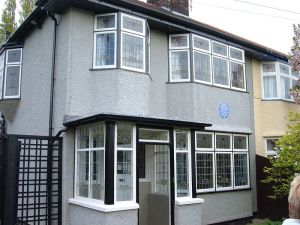
Driving round the corner I found Lennon’s old house, 251 Menlove Avenue. This was where Lennon lived with his aunt Mimi from the age of five. He was living here when he started his first band, the Quarrymen and also when he met Paul McCartney. Lennon’s life was one heck of a journey taking him around the world with the Beatles and finally to New York with Yoko Ono where he was shot and killed in 1980.
This blog is about personal heroes and I’ll introduce you to more of them in another blog but for now I’d like to finish by wandering off the subject and returning to that pub in Woolton.
I’m not totally sure but I think the pub was the Derby Arms and the owner, whose name I cannot remember told me a story about the death of his father. His father was an old chap, a veteran of the first world war and had picked up a habit in France of always having water with his meals and he would always raise his glass and toast ‘bonne sante’ to whoever he was with.
My friend went to visit him in hospital on his deathbed and asked the nurse how his was. ‘OK’ they replied ‘but a little dehydrated. Try and get him to drink a little water’
In the hospital ward the son passed a glass of water to his father’s lips and the father murmured ‘bonne sante’ before passing away.
So to all you who are reading, let me wish you ‘good health’ and if you enjoy my writing why not take a look at my book. Click the links at the top of the page to buy or for more information.
In my book ‘Floating in Space,’ available now as a paperback or a kindle e-book from amazon.co.uk, all the action takes place in Manchester in the north west of England in 1977. All the venues are authentic, all actual Manchester pubs or bars. here’s an excerpt about a bar called the ‘Playground’ which used to be on Oxford Road.
Saturday night was in a lot of ways the culmination of the weekend. I always preferred it to Friday nights because things were more relaxed, there was no rushing home from work, no rushing to get your tea down your neck so you can get changed, then leg it out for the bus. Saturday, you could take your time and leisurely work up to things. Sometimes I would go out shopping and buy myself something new to wear for that evening, a shirt, or perhaps even a new pair of trousers. Then later I would have a long relaxed soak in the bath, and dress unhurriedly in my room to the tune of my favourite music. In 1977 my favourite album was still Elton John’s ‘Goodbye Yellow Brick road’, and as I dressed I would mimic Nigel Olsson’s measured and rhythmic drumming to ‘The Ballad of Danny Bailey’, or ‘Candle in the Wind’.
There was something about Saturday nights in Manchester. Some quality of security, of expectancy, a feeling that the night and the future were going to be good. A feeling that you might just ‘get off’ with some gorgeous girl and that even if you didn’t it didn’t really matter because there was always the excitement of the people, the music, the drink, and everything else that made up the evening. And then there was always the expectancy of the next night, and the next, and on and on into the future. The past building up inside you like a great data bank, reminding you, reassuring you, like a light burning in some empty room in the corner of your mind.
The Playground in 2015. Photo by the author.
The main venue that night, and on many other Saturday nights like it, was the ‘Playground’, a small disco bar on Oxford Rd in the town centre. Flickering multi- coloured spotlights rotated across the red carpeted room, which, on Fridays and Saturdays was generally packed. It had a small dance floor sunk low like a pit, where people up on the raised bar level could look down at the gyrating girls, and where also, on week day lunchtimes, a topless dancer appeared at the stroke of one o’clock to translate the soul and disco music of the time into pulsating physical motion, the eyes of jaded office workers glued to her as she did so.
My friend ‘Matty’ Edwards and I used to meet up in the Salisbury, by Oxford Rd station, have a few pints and a bit of a natter to any Regal Insurance cronies who we might find there, then make the short walk to the Playground. There was a paltry fifty pence charge to get in, the solitary bouncer was silent, but not unpleasant, and the DJ, who always began the night with ‘Loves Theme’ by the Love Unlimited Orchestra, played alternate sessions of rock, disco, and chart music. We were both mad about Jenny, the barmaid. She was lovely. She had a kind of round, open face, framed by thick blonde hair and her skin was a creamy white. She served us Worthington ‘E’ and we melted into the hubbub of people on their Saturday night out while the music of the seventies drifted through us.
Matty was tall, he had lazy, rather hayfevered eyes, and a biggish nose over thin lips. His brown hair was short and untidy and he was smart, but had a sort of ‘middle of the road’ taste in clothes.
“Jenny’s looking gorgeous tonight” he told me over his pint of Worthington’s.
We were propped up at the bar at a convenient spot where we could eye up any possible female talent, and cast a fond eye over Jenny’s appealing form.
“You’re not wrong mate” I agreed. “I wouldn’t mind getting a grip of that myself.”
I caught Jenny’s eye and ordered two more pints of Worthington ‘E’. It wasn’t a great drink but we were tuned into now for the rest of the evening, and anyway, I hadn’t as yet developed any clearly defined tastes in beer. The first pint I ever ordered myself was a pint of mild, and that was because I had nervously entered a Cheshire country pub after a long cycle ride and hesitatingly asked for a pint of ‘beer’.
“A beer?” asked the barmaid.
“Yes,” I replied, “A pint, please.”
“A pint of what?”
I realised, uncomfortably, that something more was required. I had thought that ‘a pint of beer’ would have been enough, but what the barmaid wanted to know was did I want bitter, or mild, or lager even? My first tentative forays into the world of the alcoholic drink were with my friend Mike Larini and it was always he who had done the ordering. What did he ask for, I thought? I couldn’t remember but down the bar the faint voice of an old man asking for half of mild drifted along to me, and so I went on to drink mild. Later I changed to bitter, and even now I was currently considering another change as someone had given me the cheerful news that bitter ‘rots your guts’. Perhaps it had been that eternal pessimist Matty Edwards with his inside knowledge of beer. His father was a Didsbury publican, and Matty’s drink changed from pub to pub. Sometimes it was lager, sometimes bitter, but here, in the Playground, it was that now long departed brew, Worthington ‘E’.
I passed over Matty’s pint and we both took deep draughts. Worthington’s was never a great ale but it was good enough, and the first taste of a fresh pint is always the best. I looked into the deep mahogany of the beer and thought about the things you can see through the bottom of a glass. Could I see Spain, there, in the distance? Could I really do it? Pack in my job and go to Spain in search of sun, sea, sand, and girls?
Somebody bumped into me from behind and a gruff voice said “sorry mate” and shouted up four pints of lager.
“Busy in here tonight” I said to Matty.
“Its Saturday night isn’t it? It’s always busy.”
“Yes, but it seems to be mostly lads. Was there a match on today or something?”
“Of course. City and United. Still, it was at Maine Rd so I wouldn’t have expected a load of hooligans in town.”
“Keep it down,” I said quietly. “You know what these football fans are like. Look at them the wrong way and they’ll have you.”
A girl in short black outfit caught my eye across the other side of the room and as Matty and I nattered on I would occasionally glance over and make eye contact. Matty soon noticed me and asked who I was eyeing up, and I told him and of course he had to gawp over at her despite me asking him to be discreet.
I thought about going over to chat to her but the usual fear crept up on me. What could I say? Suppose she wasn’t even interested in me? Sometimes I had found myself eyeing up someone I later found I wasn’t really interested in, it was just that the invisible thread that bound you across the room wasn’t all that easy to break. You would find yourself turning again to meet those same eyes, attracted to each other purely by the link that held you.
“Are you getting them in or what?” I said to Matty.
“Just waiting till Jenny comes this way.”
“Shout up the other barmaid. She’s over this side,” I told him, impatiently.
“You shout her up if you want. I want Jenny. Look at that; gorgeous.”
We spent a few moments discussing the merits of Jenny. Her eyes, her lips, her hair. She was lovely. Matty finally caught her attention and she filled up our pint pots. Matty bought her a drink and they exchanged some pleasantries before she moved on to the next customer. Matty came closer and quietly told me about the letter he was thinking of sending to her, telling her how he felt about her, but what did I think? Was it a good idea?
“What, a letter?” I shook my head. “No, why don’t you get her alone on a quiet night, give her some chat? Ask her out or something?”
“I don’t know. What about a card though, instead. I could send her a nice card asking for a date.”
Matty was as shy as I was in some ways, but his ideas of writing to a girl were always a mistake. If the girl did like him, and wanted to go out, then he would be actually asking her to ask him out. He would be transferring the responsibility of the whole thing on to her. No, we’re all shy to varying degrees, but things like this are a part of life that we have to face up to. We have to rise to the occasion and take on the challenge. Perhaps that sounds a bit dramatic but, getting involved with the opposite sex is a normal part of life, it’s just that anything new is hard at first, and all of us are conscious of our feelings, especially where sexuality is concerned.
Floating in Space is available from Amazon as a Kindle download or traditional paperback. Click the icon below or go to the links at the top of the page for videos and more information!
 I’ve always liked that lazy droning sound of light aircraft; maybe it comes from my childhood, brought up a stone’s throw from Manchester Airport which my friends and I would visit every weekend, cycling to the back of the airport down lanes and alleyways looking for obscure fields where we could get close to the aircraft. We spent many a lazy afternoon on the airport terraces, jotting down aircraft registrations and ticking them off in our flight books.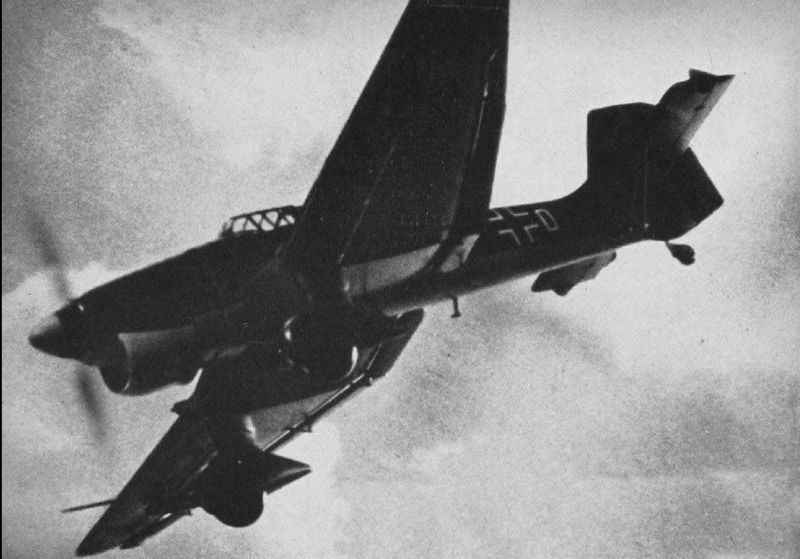

 Many years ago when I was a bus conductor it was pretty easy to spot the fare fiddlers. They would never look directly at you. As I strolled down the bus asking for ‘any more fares please’ I knew who had paid and who hadn’t, after all, I had usually just watched them get on the bus. One scruffy guy got on one day and went straight down the bus, sat down and set a fixed gaze out of the window. Ok, I was chatting to other passengers at the time but I still knew he was new to the bus and I wanted his money.

 The main venue that night, and on many other Saturday nights like it, was the ‘Playground’, a small disco bar on Oxford Rd in the town centre. Flickering multi- coloured spotlights rotated across the red carpeted room, which, on Fridays and Saturdays was generally packed. It had a small dance floor sunk low like a pit, where people up on the raised bar level could look down at the gyrating girls, and where also, on week day lunchtimes, a topless dancer appeared at the stroke of one o’clock to translate the soul and disco music of the time into pulsating physical motion, the eyes of jaded office workers glued to her as she did so.
 In my book ‘Floating in Space,’ available now as a paperback or a kindle e-book from amazon.co.uk, all the action takes place in Manchester in the north west of England in 1977. All the venues are authentic, all actual Manchester pubs or bars. here’s an excerpt about a bar called the ‘Playground’ which used to be on Oxford Road.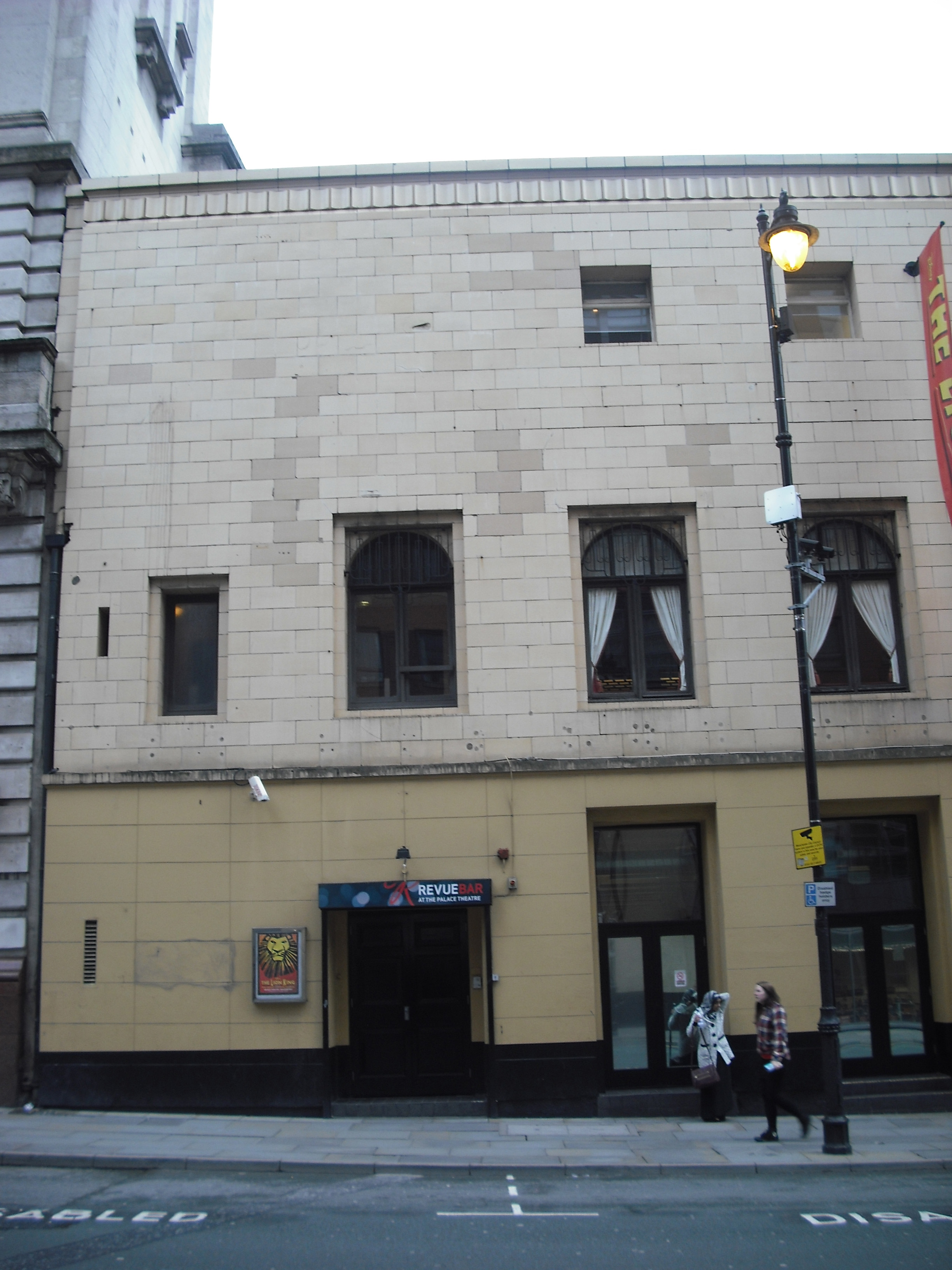
 Letters from an Unknown Author!