I am a great film fan as regular readers will know, particularly classic films. I do occasionally watch a film at the cinema but generally I reckon I am really your regular couch potato type of guy who tends to watch films in the comfort of home with a large cup of tea and perhaps a corned beef sandwich nearby.

Most people will have the experience of settling down to watch something good on the TV only to find that the film you have waited for is in fact, a load of old cobblers. What can you do but flip through the channels and try and find something else to watch. The big problem there is if you are watching during the evening, most films start at 9pm so if you have to flip over twenty minutes into a dud film, you’ll have missed the first twenty minutes of the good film that started over on some other channel.
Yes, it can be a hard life for us dedicated couch potatoes, that’s why I like to have a good DVD on standby to rescue the evening if things go sadly wrong.
According to Wikipedia: globally, film production varies significantly by country and year, but in 2023, China produced nearly 780 feature films, while the UK saw 207 films go into production, and the US and Canada saw 569 movies released.
To be honest, looking at those figures it’s hard to understand why a bad film actually gets made. Look at the process a bad film has to go through. Someone has an idea for a film, then they either write a screenplay or pay someone to write one. The screenplay comes to the attention of a producer and he says something like “I bet Brad Pitt would be good in the lead, and, what about Jennifer Anniston for the female lead”.
Scripts are sent out, a budget is raised, directors, cameramen, sound people, set designers and all manner of people come on board. The film is made and released. The critics go to see it and think, wow, this film stinks. Nobody comes to see it and a few weeks later it’s suddenly on Sky cinema with someone hired to write a whole lot of (lying) complimentary stuff about it to make you watch it.
People do watch it, realise it’s bad and twenty minutes later they change channel and are now watching a re-run of Star Trek that was made in 1968. Why didn’t someone way back down the line say ‘hang on, this is rubbish, let’s scrap it and film something else?’
Of course, one man’s Oscar winner is another man’s straight to DVD seriously bad film.
Here’s the crazy thing though, sometimes those bad films are so bad that you actually like them. Anyway, for this week’s blogging entertainment, I thought I’d list a few examples of rubbish films that I kind of enjoy.
Uncle Buck.
Uncle Buck is a complete load of old tosh but I just seem to be drawn to it like a moth to a flame. Never seen it? Really? OK it’s a sort of variant on the film Home Alone and in fact one of the characters is played by that kid from the Home Alone films, Macauley Culkin.
In this film a couple have to leave home because the wife’s father has had a heart attack. Who can they get to babysit the three kids? No one is available so the no-good bum of a brother-in-law is roped in, you guessed it, Uncle Buck.
Uncle Buck is played by the late John Candy and he has to contend with kids he doesn’t even know including, as well as young Mr Culkin, two screen sisters, one of them a teenage girl with a big attitude problem. She is completely embarrassed by her uncouth uncle and his smoke screen producing old banger automobile and even though the film is just a notch above rubbish, it’s actually quite fun in parts.
Buck sorts out ‘Bug’, the teenage girl’s cheating boyfriend and in doing so finally makes friends with his teenage niece. Uncle Buck is a great film to watch when you’re tired and not really paying attention and I always get the feeling it was written by a sort of committee of writers. (Probably the same committee that wrote Home Alone and Three Men and a Baby and so on.)
The thing about Uncle Buck is that the star, John Candy is actually pretty funny (in parts) and there are some actual funny elements to the film. Believe it not, even though I once hated this film, I’m beginning to warm to it.
Robin Hood, Prince of Thieves
There have been numerous film versions of the Robin Hood legend and for me the stand out one is the Errol Flynn version with Errol as Robin, Olivia De Havilland as Maid Marian and Basil Rathbone playing the villain. In this rather dire version made in 1991, Kevin Costner plays the legendary English hero with an accent that would not be out of place on the streets of New York.
Costner, as the noble Robin of Loxley, returns from the crusades to find that his father (not a bad performance by British favourite Brian Blessed) has been hung and his home laid to ruin by the Sheriff of Nottingham, played in a villainous but slightly camp way by Alan Rickman, whose performance was universally praised. Robin was accompanied by Azeem, a Muslim who feels he has to repay Robin for saving his life.
The film featured the hit single Everything I Do, I Do it For You sung by Bryan Adams and also had a small cameo from Sean Connery playing King John. The exteriors were shot in the UK and one particular location was at Sycamore Gap, just by Hadrian’s Wall in Northumberland. The tree used in the sequence became known as the Robin Hood tree which featured in the news in 2023 when it was cut down by vandals.
The film does start out fairly seriously with Robin escaping from capture in the holy lands and then making his way back to England. Alan Rickman’s performance later in the film gives the story a lighter sort of tone and although I’ve always preferred other versions of the Robin Hood legend, over the years I’ve actually begun to like this one.
Ferris Bueller’s Day Off.
So what have we here? A young American lad (Matthew Broderick) decides to have a day off school by pretending to be sick. He calls over his hypochondriac friend Cameron (Alan Ruck) and gets him to call their school with the fake news that his girlfriend’s grandmother has died so she (Mia Sara) can also get a day off and the three decide to have a little fun by going out in Cameron’s father’s beloved Ferrari.
The headmaster of the school (the Principal as the Americans call them) knows something is up and is determined to catch Ferris in the act of truancy.
The whole thing is a load of old rubbish but like the other two films mentioned above, it has somehow wormed its way into my affections.
The Vikings
I thought I might finish with that classic rubbish film, The Vikings. The Vikings is a 1958 epic produced by Kirk Douglas who also starred in the film. Douglas and Tony Curtis star as Viking half brothers and if my memory serves me right, they don’t actually know they are brothers. They do a lot of raiding and pillaging over in England and it turns out Tony Curtis might be the heir to a Kingdom in England and Kirk Douglas might be the heir to the Viking leadership. To be honest I’ve never been really sure what the score is even after looking up the film on Wikipedia but the finale ends with Kirk Douglas about to bump off Tony Curtis but hesitates for a moment having been told Tony Curtis is actually his half brother and then during that second of hesitation Curtis manages to bump off Kirk, or was it the other way round?
Anyway, the whole film is a mildly entertaining load of old tosh and my brother and I used to watch it as children and try to imitate the rather catching musical theme.
Once again, despite this being a completely dire film, I always tend to watch it for reasons completely unknown to anyone, especially myself.
What bad films do you enjoy?
 One of my unofficial New Year’s resolutions this year was to try and declutter, perhaps actually get rid of some of my huge DVD collection. It’s not always that easy though. Mooching around one of those cheap secondhand shops recently I picked up yet another DVD. I’ll tell you about it in more detail later but it was one of the many films made about Robin Hood and his Merry Men.
 I really do love books and reading. My idea of heaven is lying by a pool in somewhere like Lanzarote with the sun shining and a book in my hand. What is important for a good read is time. It’s alright to read a book on your lunch break or on the bus travelling home after work but to really get into a book, some uninterrupted time is important. So, what is really so good about reading? You, the reader must like reading otherwise you probably wouldn’t be reading this but for me reading is about connecting with worlds I will never see and connecting with my own world too; finding that I’m not as unique or as different as I had thought and that other people have had similar experiences to me.
 The Wooden Horse was written by one of the actual escapees, Eric Williams. He was an RAF pilot shot down over Germany and imprisoned in 1942 and in 1950 the book was made into a classic WWII film.
 Under normal circumstances I might go on to talk further about my favourite books but I have done that already. I think I did my top
 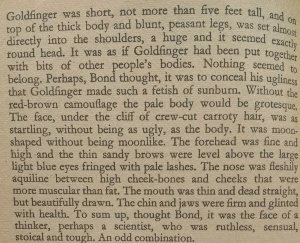 At school in English class our teacher had asked us to bring in a book with a vivid description of someone and my choice was Goldfinger. The book is about a man called Auric Goldfinger, a rich businessman who is suspected of smuggling gold. Bond is tasked to find out more and Fleming gives the reader a particularly compelling description of Goldfinger. Fleming describes him as having a body seemingly put together with parts of other people’s bodies. I always thought that was pretty good. Fleming used to write his first drafts of a book and then add in all sorts of details afterwards like the vodka martinis that James Bond liked so much and the Sea Island cotton shirts that Bond favours in the novels. It was actually Fleming who wore those particular shirts and who drank vodka martinis and also preferred scrambled eggs for breakfast. Many people have speculated who Bond was based on and my feeling has always been that in fact it was Ian Fleming himself.
 My current read is a book I mentioned last week, Charlie Chaplin and his Times by Kenneth S Lynn. Chaplin was a music hall entertainer working for the great impresario Fred Karno. Karno regularly sent teams of entertainers to the USA and while there Chaplin was invited to make a film for Mack Sennett, the famous producer of comedy films. Chaplin’s films proved to be enormously popular and so Chaplin moved on to different studios, all for better and better money until he established his own studio. I’ve always found the early days of Hollywood to be fascinating and this book is no exception.
 Where ever I have lived or stayed there will always be a time when you will find me curled up in bed by the glow of my reading lamp, reading a good book. If I rewind all the way back to my childhood that is still where you will find me, with either a book or a comic. One of the first books I can remember reading was a book I got for Christmas, it was in two parts, one part was about the mythical King Arthur and the other about the legendary Robin Hood. I have been interested in both of those two people ever since, perhaps because of that book. King Arthur and his knights of the round table: Was there really a round table, was there a Camelot? Was there even a King Arthur or was it just the imagination of Sir Thomas Mallory who wrote the book Morte d’Arthur many years ago. Was there a man called Robin Hood? Well, those are just two stories that continue to fascinate me and are still with us in books and in the movies.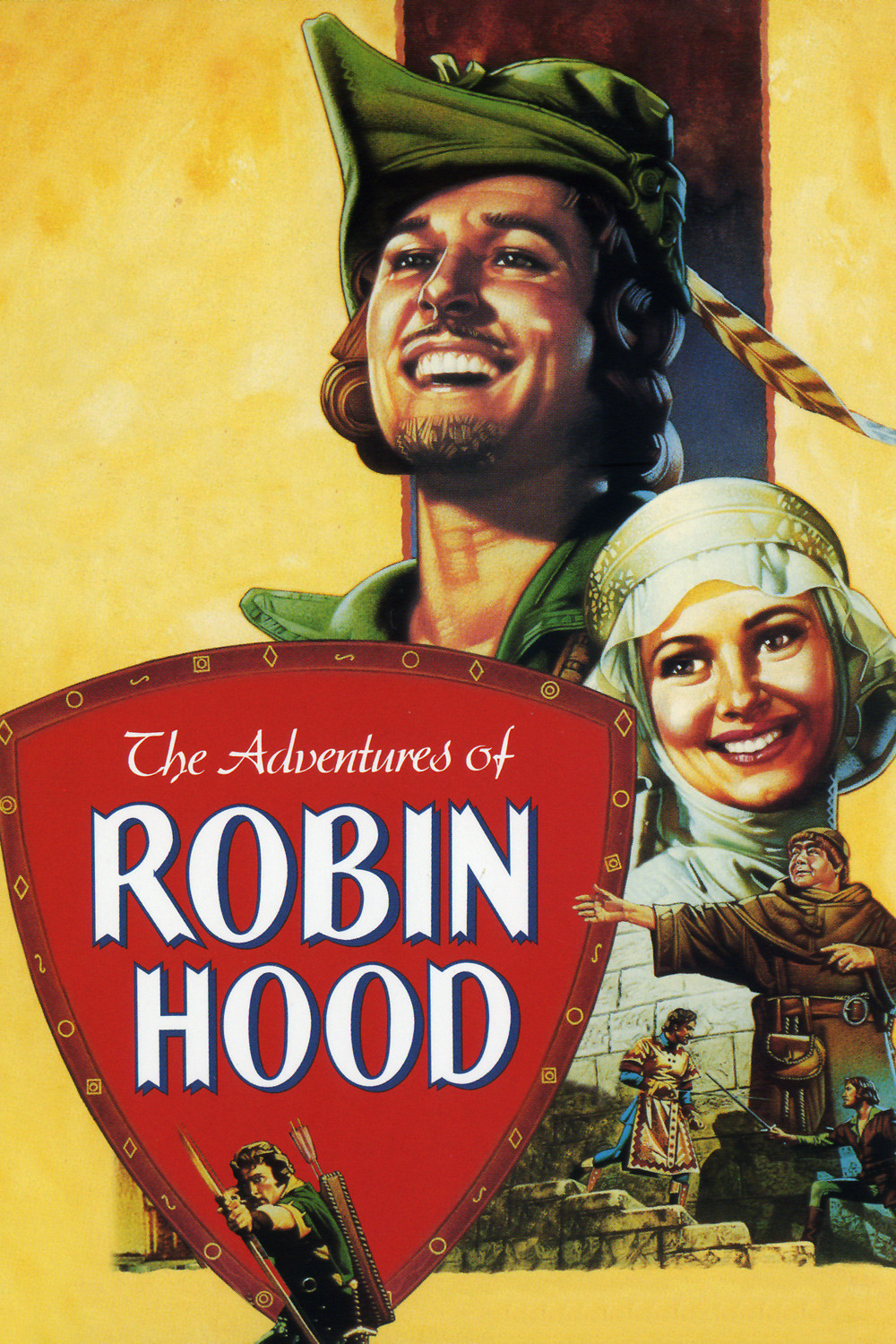

 Letters from an Unknown Author!