Movie Connections Part 2: Nora Ephron

A while back I wrote a post about my movie connections. Every time I see a great film it registers up there in the old grey matter and at some point I’ll take a closer look at the credits of those films and see if there was a connection. In the case of that particular post the connection was Terence Rattigan. Rattigan was a playwright who wrote many film scripts and adapted many of his own plays for the screen and in the course of my often extensive TV viewing I’ve come across a number of great films all written by him.

In another similar mental exercise, I examined another group of films and the common denominator turned out to be Nora Ephron. Now some of you out there may never have heard of Nora. Who was she anyway? Well Nora was a journalist, a screenwriter and a director. She’s probably most famous for penning the brilliant comedy When Harry met Sally.
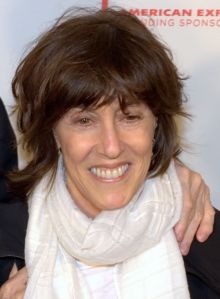
Photo by David Shankbone -, courtesy Wikipedia

When Harry met Sally is one of my all time favourite films and one that I wasn’t keen on at first. It didn’t impress me that first time at the cinema, the second time I saw it on TV I thought, hey, this isn’t so bad and I made a particular effort to seek it out a third time. After that third viewing, I loved it so much I bought the DVD version.

I was sad to hear of Nora’s passing in 2012 and made a mental note to find out more about her. Naturally, being me, a lazy semi-retired English blogger and occasional maker of YouTube videos, I never did.

A few weeks ago and eight years after making that mental note I was scanning idly through the TV listings and noticed a documentary film about Nora called Everything is Copy. The writer and director, Jacob Bernstein turned out be Nora’s son so he was clearly qualified to make a documentary about his mother. It wasn’t the greatest documentary film I’ve ever seen but it was certainly interesting. The film told the story of Nora’s life through various interviews. One surprising one was with Carl Bernstein, the famous Washington Post reporter whose articles on Watergate with Bob Woodward revealed the Watergate scandal to the world and eventually forced President Nixon to resign.

Nora was married to Bernstein and after becoming pregnant for a second time with their other son Max, Nora discovered he was having an affair with Margaret Jay, a British journalist and friend. Nora used the experience to write a book called Heartburn which was later made into a film starring Jack Nicholson and Meryl Streep. I have to say I’ve not seen the film or read the book but once again I’ve made a mental post it note and stuck it firmly up there in my brain for further attention.
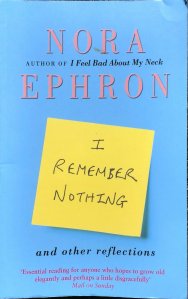
After watching the documentary film I felt even more determined to find out more about Nora so I went to abebooks on the internet and after some research ordered a copy of I Remember Nothing, a book by Nora that seemed to be a memoir. The book starts out as a sort of memoir, telling humorous stories about this and that, and her life without really giving much away. Nora wanted to be a journalist and after working for the Kennedy White House for a short while she joined the staff of the magazine Newsweek. In her book she tells the story of how Newsweek did not hire female writers and offered her a job as a mail girl. She doesn’t appear to have been upset by this despite it being blatantly sexist. She just got on with her job, still determined to be a journalist. In her book Nora makes the whole episode sound quite amusing, especially when she later writes a parody column during a newspaper strike and as a result gets invited to write for the New York Post. Over on Wikipedia, there is a slightly different story in which Ephron gets involved with a class action lawsuit filed against Newsweek for sexual discrimination.

I Remember Nothing is an amusing book although it’s a little short on copy for someone for whom everything is copy. I enjoyed it enormously although had I been reading it on holiday, I could have got through it in an afternoon by the pool. Even so, the book has some great stories, in particular I liked the one about when Nora was nearly an heiress and thought she was about to inherit a formidable sum of money. There is another one about Christmas dinner and the one about when a meal was named after her in a posh restaurant. All of the stories are nice blog post sized stories which if I were devious enough, I could easily steal for the days when I have no idea what to write about.

When Nora was married to Bernstein, she put together a screen version of All the President’s Men which was ultimately rejected (William Goldman eventually wrote the script) but her version was seen by someone else who offered her the chance to write the script for a television movie and that was how her screen career started.

Nora wrote the screenplay for When Harry met Sally in 1986 and apparently imagined herself in the role of Sally, and Rob Reiner, who directed the film, as Harry. Nora wrote the screenplay after interviewing Reiner and producer Andy Scheinman and various others about their lives.

There is one scene from When Harry met Sally that has become a classic. It’s the one where Harry and Sally are eating in what looks like a diner or cafe and Sally shows Harry how easy it is to fake an orgasm by demonstrating it there and then in the cafe. According to Wikipedia, the cafe was actually Katz’s Delicatessen at 205 East Houston street in Manhattan. Also, just while I’m in the mood for dishing out useless information, the lady in the film who says to the waiter, ‘I’ll have what she’s having‘ when Meg Ryan, who played Sally, had finishing orgasming was actually director Rob Reiner’s mother and the line was suggested by Billy Crystal who played Harry.

Personally, I’d be hard pushed to tell you my favourite scene in the film although the one where Harry tells his best friend about his divorce is a major contender. Harry says he only knew about the split when the moving men came to his house to shift his wife’s stuff. One of the movers wore a t-shirt with the legend ‘don’t f’**k with Mr Zero’ on his chest and Harry’s friend asks ‘are you saying Mr Zero knew you were getting divorced before you did?’

I thought the pairing of Meg Ryan and Billy Crystal was wonderful and I could never understand why the producers of films like You’ve Got Mail and Sleepless in Seattle paired Meg with Tom Hanks. Then again, Nora actually directed both those films so maybe she just preferred Tom Hanks.

Here’s one of the crazy things I love about movie connections. Ages ago, I caught a film on TV about a woman who wrote a cookery blog. Can you imagine that, a film, an actual motion picture about blogging? Who could do that, who could make a picture like that? I missed a few minutes at the beginning of the picture and made a mental note (yes, another one) to make sure to record it next time it was shown. No, I didn’t record it the next showing but to answer my last question, who would make a picture about blogging, the answer was, surprise surprise, Nora Ephron.

In 2009 she released Julie and Julia, a film based on an actual blog by Julie Powell, an American who decides to cook her way through the cookbook of Julia Child, a 1950’s American cook played by Meryl Streep. As Julie blogs about her cooking the film flashes back to the life of Julia. It’s a great film and the only film I can think of which focusses on blogging.

Nora died in 2012 from pneumonia, a complication of the leukaemia she was suffering from. She had not shared her illness with friends or family, thinking it might impede her career. However, in I Remember Nothing, she left a list of things she would miss when she had departed:

They include Spring, a walk in the park, reading in bed, the view out of the window, Paris, butter and taking a bath.

She was 71 years old.


What to do next:

Share this post on your favourite social media!

Hit the Subscribe button. Never miss another post!

Buy the book! Click here to visit Amazon and download Floating in Space to your Kindle or order the paperback version.

Airports, Saturday Nights and Ally McBeal


I really hated work this week. I hated it for a number of reasons even though I only worked one day. Now as I’m semi-retired I only work three days anyway so one day, well, you might think ok, that’s not so bad, wish I only worked one day this week. Wrong! I actually wish I’d not worked any days. The first day I was poorly with a bad tummy. Day two I was still poorly although not quite as bad and day three I was feeling a little better so I went back to work. I was actually feeling bad about having those two days off, yes guilty about taking sick leave. Maybe I should have called in sick the third day and then after my six days off (yes, I get six days off) I’d be fully ready to start work again. Come to think of it, that would mean fifteen days off wouldn’t it? (Six plus three plus six, see what I mean?)

Oh well, I still hated that one day either way. The funny thing is, I was recently looking at my horoscope and it said something about how I needed to get rid of something in my life to make room for something new. Is the cosmos hinting that I should just pack the job in? Would a great new job then come my way? It’s a nice thought but I’m not convinced. I tend to look at horoscopes for entertainment rather than to see into the future so I’ll just keep sending out my CV for now.

After my one day at work I thought I’d spend a couple of days at my mother’s house and make sure everything was ok. The garden was looking good. I had planned on giving the lawn a trim but I thought, what the heck, it’ll be ok for another week. More time for me to write and work on my various projects.

One long running project is the sequel to Floating in Space. It’s called the Girl in the Yellow Coat and it’s about a character that made a fleeting appearance in Floating, a girl in, guess what, a yellow coat. As I’ve not worked on it for a while, I started reading through what I had written so far, which then made me look back at Floating and read some of that. I love my writing, I really do. I’m not claiming it’s brilliant or anything but the thing is it’s written for me, I write it purely for myself so I’m bound to like it. The other thing is that a lot of my work is based on real things, real events and real people and sometimes when I read it I remember the real things that inspired the story. It’s like a walk down memory lane, looking back on things I’d actually forgotten about and people who I hadn’t thought about for years. Maybe that’s why I’m not making much headway on the book; I’m too busy reminiscing about stuff to get creative.

Another project I’m working on is making another version of one of my most popular YouTube videos; it’s called Manchester Airport 1986 and follows my late friend Steve and myself talking about spotting aircraft in and around the airport. I was never a real plane spotter myself but as a child living a stone’s throw from the airport, it was fun to tag along with my friends who were. I did love watching the big jet planes taxi out to the runway and blast off to their various destinations around the globe and people like Steve, Paul, Phil and various others all jotted down aircraft numbers into their notebooks. In the video, Steve and I visit a quiet country lane round the back of the airport where plane spotters gather and many other places like the Tatton Arms pub, ideally situated on the runway approach path and the old and original Airport Hotel. I say original because various other places have sprouted up in the area using that name.

On a whim on Saturday afternoon I decided to drag my brother out and cajoled him into filming with my video camera while I drove to the old locations. What about a sort of then and now video I thought, comparing the airport of 1986 to the huge place it has become now? Going into the airport itself I knew it was going to be different but I wasn’t prepared for just how different it actually was. There are three terminals at Manchester now and T2 was closed because of Covid 19. Anyway we wandered around and filmed various things although many areas seemed to be coned off and everywhere there were double yellow lines. Manchester Airport is not a car friendly environment and cars are discouraged from stopping or loitering. Nowadays you even have to pay to use the drop off and go areas.

I did manage to find the entrance to the multi storey car park which looked familiar. Back in 1986 Steve and I went to the top level and joined various other plane spotters watching aircraft but last Saturday I thought I’d save that for another day. I went off in search of that small lane round the back of the runway. That was easier said than done. Back in the 1980’s there was an old country pub called the Ship in Styal village, a posh village that is actually over the county border in Cheshire. It was a sleepy old pub and sometimes my friends and I would visit on a Friday or Saturday night.

On this particular Saturday afternoon the tiny car park was now three times as big as I remembered and was packed. The small lane was also crammed with parked cars making it hard to squeeze past. There is an old water mill further down that lane. We visited it once on a school trip. It’s nothing really exciting but today I could only imagine that all these visitors were either visiting the pub or the mill, after all there is nothing else in the village except the pub, the water mill and a small shop.

Eventually we managed to get past but in the old days the road carried on and eventually came to a steep hill just by the Valley Lodge hotel. Nowadays the road ahead seemed to have become a sort of pedestrianised walking area and traffic was forced off to the right. This must have been the old lane where we filmed in 1986 but the airport had grown and gradually encroached on and swallowed up some of the surrounding land. High barbed wire fences kept the public away and there were no longer any rough graveled parking bays to stop in. Eventually we came across a new and unfamiliar road which led us back into the airport itself.

The Tatton Arms looked similar to how it used to look but now it is now part pub and part bistro. We stopped for a moment, took a few pictures and left. Change is inevitable of course but I don’t think I was quite prepared for the scale of the change.

Getting back to Floating in Space, the main character, Stuart, is bored with his nine to five office job. He yearns for something different and lives for the weekend. The book starts off like this:

 The countdown starts on Friday afternoon at four thirty when my colleagues and I pour out from the Regal Assurance building and stream and scatter for the cars, buses, and trains that carry us away to different and better lives.  The countdown is for the weekend, and the weekend is one long high-energy cassette that plays on the hi-fi of life until that moment, that far distant moment, when the alarm bell rings for Monday morning and there are five days before you can rewind the tape and play it again.

That of course was 1977. In 2020 Stuart, like me might have been tempted to go into Manchester for a night out but Manchester is a hot spot as far as the Coronavirus is concerned. Bolton, a Manchester suburb has been forced back into lockdown because of a spike in Covid cases so for the time being I thought it might be better to just stay in and stay safe. That’s how I came to settle down in front of the TV with a can of Guinness and a packet of Doritos. I combed through my old VHS box looking for something I hadn’t watched for years. I picked up a couple of documentaries which looked interesting and then came across my Ally McBeal DVDs.

It’s a long time since I have seen Ally McBeal. It was a hit US show in the 1990’s and is something that I’ve never seen repeated even on all the new TV channels that have sprouted up, seemingly overnight. Ally was a Boston lawyer played by Calista Flockhart. She starts work at Cage and Fish, a Boston legal firm. The senior partners, John Cage and Richard Fish are two oddball characters presiding over a wacky company that has unisex toilets and on most nights everyone goes into a bar in the same building where resident singer Vonda Shepard regularly performs, sometimes handing the microphone over to the office staff. Barry White makes an appearance there as does Sting and other pop icons. The series is a comedy but with elements of drama, sentimentality and music all mixed in together.

My favourite character was John Cage played by Peter MacNicol. He was a shy character, unsure of himself who falls for Ally and fantasises about Barry White singing ‘You’re the First, My Last, My Everything’ in order to bulk up his confidence. In the first episode Ally loses her job at another firm because of sexual harassment, bumps into Richard Fish who immediately hires her and sets about suing the sexual harasser.

So that was my Saturday, getting lost at the airport, a place I used to know like the back of my hand. Staying in on a Saturday night and watching Ally McBeal, a TV show that was cancelled in 2002. What shall I do this Saturday I wonder?


What to do next:

Share this post on your favourite social media!

Hit the Subscribe button. Never miss another post!

Buy the book! Click here to visit Amazon and download Floating in Space to your Kindle or order the paperback version.

Scans, Old Pictures and the German Grand Prix

I do love old pictures. I’m not talking about films or movies, I mean actual pictures, old photographs. It’s amazing what we can do with old photographs these days in the world of digital images. We can scan them, remove blemishes, colourise black and white pictures, in fact we can do almost anything. I remember a recent documentary by director Peter Jackson which involved the restoration of old silent films from the trenches in World War 1. The films were cleaned and digitised, colourised and in some cases a lip reader was employed to try and surmise what those long dead soldiers were saying while the hand held camera was cranked. Computers removed the jerky motions and the result was genuinely amazing. I found myself so interested that I remembered a gadget I had bought a while back, a slide scanner with which I planned to scan and digitise my old colour slides. The results weren’t great and in fact I didn’t have quite as many slides as I thought I had but the results were interesting. I played with the device for a while, scanned a number of slides then moved on to some other project.

I dug the slide scanner out the other day and noticed that it was also possible to scan negatives. There is a holder supplied into which the negative strip fits securely. On the control panel a small box is selected for negative scan rather than colour slide and in a matter of seconds a digital image is produced.

I’ve scanned a lot of my old pictures although I’ve usually scanned them from a printed picture. This way, scanning from the original negative felt really interesting. One problem is that as the image is magnified any stray dust or hairs show up like a sore thumb so it’s important to clean the negatives first. I usually wipe them with a soft cloth which I normally use to clean my lenses then brush them with a small blower brush which sweeps free any dust and blows the offending material away.

I didn’t have any World War 1 material to restore but I did have a huge stack of photographs from the German Grand Prix of 1988. I was quite a keen photographer back then. I had an Olympus OM10 and graduated to an Olympus OM2 SP. SP stood for spot programming which was quite a significant piece of technology for 1988. SLR cameras come with built in light meters but what they do is take an average reading from the light coming into the camera and depending on your set up suggest either a shutter speed or lens aperture or even both. If the subject is evenly lit then that’s no problem but if your subject is in shadow with perhaps bright light from a window coming in stage left then the resulting picture might be too dark. With spot programming a light reading could be taken from the face of the subject so the face, the focal point of the shot would be exposed perfectly.

At the race track I didn’t have time to take spot meter readings, I probably had the camera set to auto or just used a similar setting for most of my shots. Not too fast a shutter as I didn’t want to freeze the cars, I did want a suggestion of speed. In the late 80s and early 90s I spent a lot of time at the Oulton Park circuit in Cheshire. Back then I knew every inch of Oulton Park. I knew where I could get close to the cars and where to get the most effective shots. I’d pick a point for my shot and get focussed then follow the cars round until they hit that exact spot and then fire the shutter. I must have hundreds of pictures of racing cars and one of the great things about the digital revolution is that now, instead of lying unseen in an album, my photographs have been seen by thousands of people over on the picture sharing site Flickr.

x

Ayrton Senna in his McLaren Honda. Practice laps for the German Grand Prix

Getting back to Formula 1, I tended to visit Silverstone for the British Grand Prix on Friday practice or Saturday qualifying, soak up the atmosphere and then go home to watch the race on Sunday at home on my TV. Visiting the 1988 German Grand Prix gave me a chance to see everything; practice, qually and visit the stalls selling motorsport memorabilia and, this being Germany, sample a sausage or two. The Grand Prix was held at Hockenheim which has a great stadium section where most of the spectators gather then the track snakes off into the German countryside. Somewhere in that countryside is a sad memorial to Jim Clark, killed here in 1968 at a Formula 2 event.

I journeyed to Hockenheim on a coach trip by a company specialising in sporting events. I had to get a train or coach into London then find the coach company and board ready for the trip to Germany.

The weather was excellent and just thinking about the trip brought back a number of things. 1988 was the first year of the Senna/Prost rivalry. It was also the year Williams lost their Honda engines to McLaren. Honda terminated their contract a year early with Williams because they were not amused that Frank Williams had let an inter team battle with their two drivers, Mansell and Piquet, hand the championship to Alain Prost at McLaren in 1986. Such a pity as if Williams and McLaren had both used Honda engines in 1988 there would have been an epic three-way battle between Senna, Prost and Mansell with Patrese in the second Williams perhaps getting into the action too. Sadly, it wasn’t to be.

Nigel Mansell in the Williams

During the practice session I had a ticket letting me wander about various enclosures. I was near where the cars came in to the stadium section and every time a Ferrari went through this big Italian guy would stand up and ring a big brass bell he was carrying. Ding a ding a ding a ding he rang, every time either Gerhard Berger or Michelle Alboretto came through. Every time I moved to the next spectator enclosure I would get settled, line up my shots then it would come: ding a ding a ding a ding! That Ferrari fan must have been following me about. Well, that’s my excuse for all those jerky shots!

I had spent a lot of money buying myself an Olympus OM2 SP but perhaps I should have spent some extra money on my lenses. I had a great Olympus 50mm lens and a great wide-angle lens too but my zooms and telephoto lenses were a little on the cheap side and I think if I had shelled out a little more money that would have been reflected in my pictures.

My first scans were not that good. I’d cleaned the film as I mentioned but perhaps there had been some dust or hairs in the camera. It was only later after I had spent time cleaning up each individual scan that I realised the dust might be in the scanner!

I’m tempted now to delete them all and rescan them. Oh well, might keep me out of mischief for a while. Meanwhile, here’s a video slideshow using some of the pictures. I’ve added in some snippets of the 1988 TV commentary just to liven things up a little.

Actors, Lemons and The Big Sleep

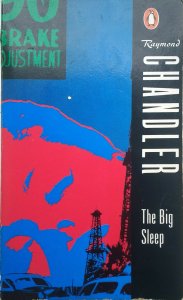
I was going into work the other day and remembered that I didn’t have anything to read. I do like to have a read on my break so I looked around and picked up The Big Sleep. If you haven’t read the book by Raymond Chandler you must surely have seen the film with Humphrey Bogart and Lauren Bacall. I love the opening scene where Bogart meets with General Sternwood and has separate encounters with his two daughters. Sternwood, an old former general lives in a sort of greenhouse where the heat that keeps his tropical plants alive makes Bogart wilt. That was a great opening and sets the scene for the rest of the film.

When I sat down on my break and flipped open the book, a small cutting fell out. It was a newspaper cutting dated November 14th 1995 from the Daily Express. An Actor Bombs went the headline and went on to tell the story of an actor:

An out of work actor was amazed when his agent rang and offered a part in a Shakespearean play. All he had to say was ‘My Lord, I hear a cannon.’

For weeks the actor rehearsed his line, giving it a variety of interpretations. Walking down the street (My Lord, I hear a cannon.) In the bath (My Lord, I HEAR a cannon.) In the shaving mirror (My LOOOORD, I hear a cannon)

The day came and the actor strode on to the stage and turned to the audience

The cannon went off with a terrifying bang and he shouted ‘What the *** was that?’

That newspaper clip really made me laugh and sometimes we all need a good giggle. That’s one of the things I love about second hand books; who put the clipping in the book? Did they find it as amusing as I did? I hope so.

Anyway getting back to The Big Sleep. The book was written by Raymond Chandler and he had this really fabulous talkative way of writing. You can almost imagine hearing Humphrey Bogart’s voice as you read the book. Here’s a quote from the text, an example of Chandler’s descriptive style:

I sat down on the edge of a deep soft chair and looked at Mrs Regan. She was worth a stare. She was trouble. She was stretched out on a modernistic chaise-longue with her slippers off so I stared at her legs in the sheerest silk stocking. They seemed to be arranged to stare at. They were visible to the knee and one of them well beyond. The knees were dimpled, not bony or sharp. The calves were beautiful, the ankles long and slim with enough melodic line for a tone poem. She was tall and rangy and strong looking. Her head was against an ivory satin cushion. Her hair was black and wiry and parted in the middle and she had the hot black eyes of the portrait in the hall. She had a good mouth and a good chin. There was a sulky droop to her lips and the lower lip was full.

Not bad eh? Dilys Powell called his writing ‘a peculiar mixture of harshness, sensuality, high polish and backstreet poetry’ and it’s easy to see why. Mrs Regan was played by Lauren Bacall in the film and up till now I had always thought this was the film where they had met. Wrong! A quick check on Wikipedia and I see the couple met on the set of To Have and Have Not in 1944. Bacall was 19 and Bogart was 45 and married to his third wife Mayo Methot at the time. Sparks apparently flew between the couple and Bogart divorced Mayo and married Bacall the next year, 1945. Despite the great on screen chemistry together the couple only made four films together.

The film version of The Big Sleep was a brilliant adaptation of the book and some of the differences are interesting. For instance, early in the book detective Philip Marlowe played by Bogart meets General Sternwood’s daughter Carmen. She looks at Marlowe and remarks how tall he is. In the film, Bogart of course wasn’t that tall so the dialogue is reversed ‘You’re not very tall are you?’ comments Carmen.

Carmen was played in the film by Martha Vickers and Chandler felt that she seemed to overshadow the performance of female lead Lauren Bacall. For that reason many of Vickers’ scenes were cut. Release of the film was delayed by Warner Brothers and in fact another of Bacall’s films shot after The Big Sleep, Confidential Agent, was released first. Reaction to Confidential Agent was so good Jack Warner, the studio head, decided to beef up Bacall’s part in The Big Sleep so new scenes were shot and added to the film including a new ending.

The plot of the book and film are pretty complicated, although having just read the book I think that the book is easier to follow. During the filming the director and his stars wondered who killed the character of Owen Taylor, the Sternwood’s chauffeur? They sent a cable to Raymond Chandler asking him. Chandler told a friend later ‘Dammit, I don’t know either!’

One strange element in the film, certainly for me, is a scene where Philip Marlowe (Bogart) is watching blackmailer Geiger. Geiger has a shop that sells rare books in Hollywood and Marlowe asks for information in another bookshop opposite. There he chats to a bookseller played by Dorothy Malone who, if you are old enough, will remember her from the Peyton Place TV series. Malone and Bogart seem to hit it off well in the film but he never returns to the bookshop and Dorothy is never seen again in the film.

Every time I watch the film I always expect Malone to reappear but that’s one of the many dead ends the film leads us down. I think it was Hitchcock who said that every scene in a film should lead the audience somewhere and Quentin Tarantino of course said the reverse. Perhaps director Howard Hawks favoured Tarantino’s view. Over on YouTube I found a clip from that scene. It was titled, The Big Sleep, best scene ever. I wouldn’t go that far myself but see what you think.

As I write this I have spent the day at my Mother’s house in Manchester. She is suffering from dementia and is being looked after nearby but sadly, because of Covid 19, I am unable to visit. Lately, every time I have visited her house with intentions to sort out the garden it has done nothing but rain. Today dawned nice and sunny, at least it was when I awoke at the ridiculous time of 6:30 am. After looking through my e-mails and planning my daily social media broadside into Twitter cyberspace I arose, had a wash, made a quick breakfast and got cracking. I mowed the lawn, trimmed the hedges and cleared the sharp and unruly brambles that have appeared at the end of the garden. I strimmed the path and finally, everything seems to look neat and tidy.

The apple tree in the corner, a birthday present from me to my dad who died 20 years ago this year is looking well but unlike last year I couldn’t see any apples. My mum used to make apple pies from the apples from this tree but after my dad died I came home to visit one day and was shocked to see the council had chopped down the tree. I was absolutely fuming and while I silently planned what I would do to the nameless official who had perpetrated this tragedy, my mum mentioned casually that it was she who arranged to have the tree chopped down. What on earth for I asked? She had been worried that the tree, which grew at an odd angle might trip her up.

Today the tree has  grown again, this time straight up and I can look forward to one day making apple pies again.

While I am on the subject of trees I might as well mention my lemon trees. I do love taking a stone or a pip from a fruit and growing something. I’ve grown quite a few lemon trees and I have two now, both grown from pips and both growing strong. They look good, I keep them well watered and fed but, no lemons. Liz bought me another lemon tree a while back. It was small but it came with about three small lemons. After a short while each of those lemons dropped off but no more have grown. It seems as though when it comes to lemons, I’ve got the kiss of death but if I could just grow a lemon, just one, it would really make my day.

My brother is planning to join me later. I’ve got a couple of lagers in the fridge and a chilli on the go in the slow cooker (gardening, blog writing and cooking: it’s been a busy day!) Tuesday, not much on TV tonight. Think I might just dig out my DVD of The Big Sleep!


What to do next:

Share this post on your favourite social media!

Hit the Subscribe button. Never miss another post!

Buy the book! Click here to visit Amazon and download Floating in Space to your Kindle or order the paperback version.