Autographs, Murray Walker and Formula One

It’s a while since I’ve produced an F1 blog post so perhaps it’s about time for one. Over in France while we are on holiday we very rarely watch TV. We spend most of our evenings sitting in the porch watching the sun go down, watching the sky and chit chatting.

Last week I broke the no TV rule and watched the Italian Grand Prix. To be fair, Formula One has been pretty exciting this year with some great races and terrific battles. Max Verstappen who won the championship last year in controversial circumstances looks set to make it championship number 2 this year but if he wins, and it’s still not decided yet, he will have won it fairly and squarely and pretty convincingly too. His big challenger has been Charles LeClerc in the Ferrari and although Charles has been fast, his own team, Scuderia Ferrari, have not performed well in the area of strategy. They have cocked up Charles’ pit stops, stayed out when they should have pitted, pitted when they should have stayed out and gone for the wrong tyres at the wrong time.

At the historic race track of Monza, Charles was ready to chase Max for the win but a safety car came out when Daniel Riccardo conked out in a dangerous section of the circuit. The race marshals had problems shifting Daniel’s McLaren and the race ended under the safety car which stopped Charles’ pursuit of Max in its tracks and of course, ruined the race for the fans.

The big surprise this year is that so far, Lewis Hamilton has done pretty badly. Lewis is an all time record holder with more race wins and more pole positions than any other driver ever and is currently tied with Michael Schumacher for the most world championships ever (seven). However, Lewis’s team Mercedes have dropped the ball badly and after years of winning time after time they have produced a car which is not the class of the field.

Why have Mercedes failed in 2022? My personal feeling is that they should never have dubbed this year’s car the W13. Yes, there it is, I’ve said it. I know that’s going to be controversial but no one is ever going to win any kind of championship with a car numbered 13. Just go back some years to the Apollo space programme. All went pretty smoothly, Apollo 8 circled the moon, Apollo 9 tested the lunar module, Apollo 10 was a dress rehearsal for the landing and Apollo 11 landed on the moon. Apollo 12 made another successful moon landing but Apollo 13, well that was where everything went wrong and the crew were lucky to get back to earth alive. NASA should never have named that space craft Apollo 13 and gone straight to Apollo 14.

The same thing happened this year with Mercedes, those guys should also have gone straight to W14 and missed out W13 entirely or perhaps even numbered the car W12B. If they had, I think Lewis might well have won a few races this year.

During the summer break there has been quite a bit of controversy to keep us armchair F1 fans happy. Sebastian Vettel decided to jack everything in and announced his retirement. That caused Fernando Alonso to announce he would be quitting Alpine for Vettel’s vacant seat at Aston Martin for next year. Alpine then announced Oscar Piastri as their new driver. Oscar the current F2 champion announced that wouldn’t be the case. What? A rookie declining an F1 drive? It turned out that Daniel Riccardo was getting the bullet from McLaren and they had engaged Piastri only Daniel hadn’t been informed. The result, after a meeting of the F1 contracts recognition board is that Oscar is in at McLaren but Daniel is on his way out. OK, that’s how the cookie crumbles in modern F1.

Back in the 1970’s Jackie Stewart drove for Ken Tyrell with a handshake agreement. How times change.
Things have changed in F1 in many ways. A few years ago one of my friends came to me saying he had something he knew I would want. What is it? I asked. It turned out that his daughter who has emigrated to Australia had gone to the Australian Grand Prix. She had a paddock pass (very expensive) and had got all the current drivers to sign her programme. What was I offering for it?

Of course I love F1 and I am a bit of a collector. Over the years I’ve picked up various programmes, F1 models, memorabilia and autographs. We threw a few figures back and forth and then I asked to see the merchandise. My friend obliged and produced the programme. What a disappointment! The programme was covered in what looked like a series of scribbles and squiggles, all of which were completely illegible but which were apparently the signatures of the current crop of F1 drivers. Sorry, no sale I said to my disappointed friend who was forced to flog the goods on eBay.

Here’s one of the autographs in my collection. Not the greatest driver of all time but Graham Hill is probably the most outstanding personality of Formula One racing, ever. Not only that, nice signature too Graham.
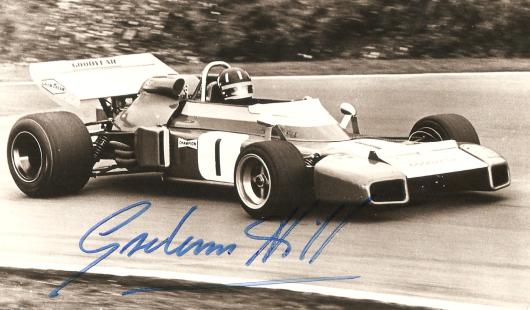
Graham Hill

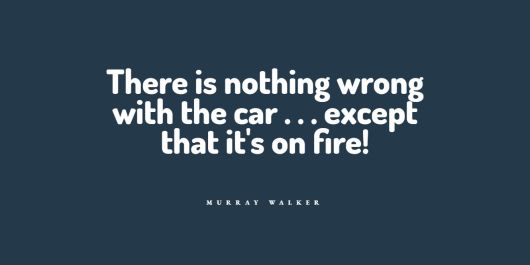
On holiday I always grab a few books to take away with me. Reading is one of the great pleasures in life, at least I have always thought so. One book I picked up was the autobiography of Murray Walker. Murray was for many years the voice of F1. Clive James once described him as talking in his quieter moments like someone who has his trousers on fire. Murray always added his supreme enthusiasm and excitement into his broadcasts. He made mistakes, he mixed up drivers and cars but he always, always kept his viewers entertained. He belongs to that golden era of British TV Sporting commentators like Harry Carpenter (boxing) Brian Moore (football) David Coleman (football) Peter O’Sullivan (horse racing) and many others who are just a faded memory now.

Murray’s book ‘Unless I’m Very Much Mistaken’ was, according to the blurb on the back cover, the number 1 best seller. I was looking forward to reading it but sadly it was all a little boring. Many celebrity autobiographies start off well and are very interesting but when the author reaches the point of fame and fortune, they all seem to go down the same path and become lists and lists of films or shows or appearances or meeting other famous people and just become rather boring. Murray doesn’t waste much time, his book starts out with some boring bits and then goes straight into more boring bits.

To be fair, some of the book was interesting, for instance when he talked about working for the BBC when they commenced their regular Grand Prix highlights programme in 1979 and working with James Hunt, his co commentator for many years. Otherwise though, it was a book I found myself mostly skimming through.

Murray was someone who accepted he made many mistakes but even so, did a fabulous job over the years. I remember once watching the start of the Le Mans 24 hour race on BBC TV’s sports show Grandstand. Murray commented for the first hour or so and then the coverage went back to the studio. It was obvious to me that Murray was in France as he was so well informed, he knew what was going on and so on. Back in the studio in the UK the announcer explained how the BBC were clearly not going to be with the race for the full 24 hours and then turned to Murray who was sitting next to him. His commentary had not been from France but from the TV studio in the UK!
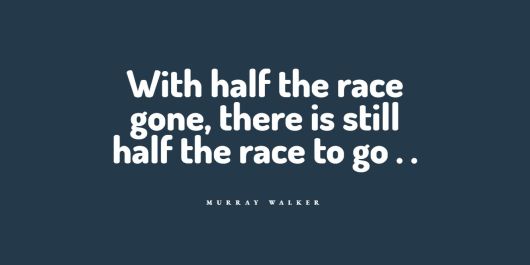
Murray did an amazing job but sorry, his book wasn’t the great read it should have been.

This weekend we will have left our rented French house behind with all its creature comforts and will be slowly meandering our way home in our motorhome, visiting family and friends en route. Happily, YouTube will be showing short highlights of this weekend’s race. Hope we’ll be in a spot where the Wi-Fi signal is good!


What to do next: Here are a few options.

Share this post on your favourite social media!

Hit the Subscribe button. Never miss another post!

Listen to my podcast Click here.

Buy the book! Click here to purchase my new poetry anthology.

Click here to visit Amazon and download Floating in Space to your Kindle or order the paperback version.

A Bit of a Blog or a Blog of Bits (Part 3)

Sometimes, as a writer of blogs, I end up with a few bit and bobs of a blog that I know aren’t going to make it into a full blown blog post. So, what can I do except maybe pull them all in together and give them a title like A Bit of a Blog. See where I’m going here? Of course you do. Let’s crack on then. .

As I write this, I’m in France once again as Liz and I have decided to nip over to the continent. We came over earlier this year and have wanted to return for a while but various appointments and arrangements have been in place, keeping us at home but what the heck we thought, time for another trip in our motorhome.
September isn’t perhaps the best time to visit France. Yes things are quieter, holidays are over and the kids have gone back to school but the summer is largely over too. We had planned a week touring in our motorhome followed by a week in a French gîte which we have rented before followed by another week touring. As it happened, when we booked the gîte, the owner very kindly advised that the property was empty the week prior to us arriving and so if we wished, we could arrive whenever we liked.

As a member of the Order of Northern Tightwads, this of course was music to my ears. Free rental at a French villa with a swimming pool! Ok, no touring for us. We literally raced down to the villa arriving in a matter of 48 hours.

Our first day was wonderful. The sun poured down warmly, we swam in the pool and between dips, relaxed on our sun loungers. Day 2 at the villa was a washout, it rained all day, but happily day three was an improvement. So far, despite the mixed weather, I’ve managed to swim every day which has always been one of my goals on holiday; to relax but also to do a little exercise.

Another important exercise in France is to get out and about and mix with the locals a bit. I’m not much of a lunch person, I kind of like my usual late breakfast but a few times on this holiday we’ve skipped breakfast and headed down to a fairly nearby restaurant, the Restaurant à La Gare, or the Station restaurant to you. It’s about a ten minute drive away from Parçay Les Pins where we are staying and it does a four course lunch (yes, four courses) for a measly 12.50 euros, including wine. Ok, the wine is vin ordinaire, the cheap French wine found in most places in France but to be honest, it’s the kind of wine I like, not strong, fairly tasty and hugely quaffable. I’ll have a glass with my starter which involves a trip to the buffet table for all kinds of salad, cold meats, pâtés and so on. Our basket of bread is routinely filled by the waitress who then brings the next course which is jambon (ham) served with either frites, rice or petis pois. Time for more vin ordinaire and by the way I went for the frites. Top up the wine for the cheese course and then there is the dessert. I fancied a little ice cream but instead I had meringue with cold custard (île flottante). I prefer my custard the English way, warm but what the heck, at 12.50 Euros each I wasn’t likely to complain.

The Queen

Last week on the 8th September the Queen passed away. I’m not a particular royalist and there is a lot I don’t like about the Royal Family but the Queen is someone I’ve always admired. She had a dignity and elegance never to be found elsewhere in the British political scene. Whenever controversy emerged she rose above it and stayed discreetly silent, whatever criticism arose in the news media.

She has been, I’ve always thought, the glue that holds together the United Kingdom of England, Scotland, Wales and Northern Ireland. As long as I’ve lived, she has been the Queen. I wonder now, how the country will change?

Books

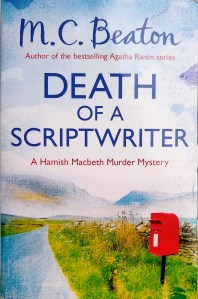
So, what else have I done on this trip? Well I’ve read books, after all reading has always been one of my greatest pleasures. I took it upon myself some time ago to read the entire library of Hamish Macbeth novels. They are not great works of literature but the world of books has everything for everyone and sometimes, I just like an old fashioned, easy going mystery read. Here in France, I’ve just finished Death of a Scriptwriter, the 14th entry into the series which wasn’t actually one of the best. The previous two were very good though, Death of a Macho Man and Death of a Dentist. If you are not familiar with Hamish Macbeth, he is a constable in a Scottish highland village. He likes to apply the rule of law in his own way, taking away the car keys from drink drivers before they leave the pub, giving various minor bootleggers a warning before removing their illegal stills and he’s not averse to poaching the odd salmon. The books are wonderful, quirky murder mysteries which Hamish always solves but tries to give credit to others in case his bosses think of promoting him and moving him away from his beloved village of Lochdubh.
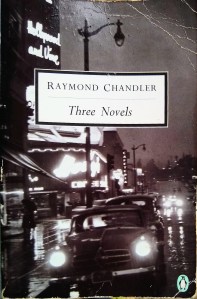
A somewhat different kettle of crimefighting fish is private detective Philip Marlowe and a while back I picked up a Raymond Chandler anthology containing three of his Marlowe books, The Big Sleep, Farewell my Lovely and The Long Goodbye.

I wrote about the first novel, The Big Sleep a while back. It is a brilliant novel, one of my favourite ever reads and I particularly like the opening where he is engaged by General Sternwood to look into an issue of blackmailing.

Book 2, Farewell My Lovely, starts off well. It’s about Moose Malloy, an oversized fellow looking for Velma, an old flame. Marlowe gets in on the hunt as well as looking into another case and later finds both are related. I read the first part of the novel pretty much all in one go and enjoyed it very much. The next quarter was a little confusing. (During the filming of The Big Sleep the director and his stars wondered who killed the character of Owen Taylor, the Sternwood’s chauffeur. They sent a cable to Raymond Chandler asking him. Chandler told a friend later ‘Dammit, I don’t know either!)’ Happily, in Farewell My Lovely, everything finally came together towards the end.
Dilys Powell called Chandler’s writing ‘a peculiar mixture of harshness, sensuality, high polish and backstreet poetry’ and it’s easy to see why. The Long Goodbye has been unputdownable. The mix of fabulous descriptive text and authentic dialogue has got me hooked and I love hearing about the Hollywood Hills, Mulholland Drive where so many film stars lived as well as Romanoff’s, the famous Hollywood restaurant.

Not quite sure how to finish off this blog post so let’s go with the trailer for The Big Sleep, the 1944 version starring Humphrey Bogart.


What to do next: Here are a few options.

Share this post on your favourite social media!

Hit the Subscribe button. Never miss another post!

Listen to my podcast Click here.

Click here to visit Amazon and download Floating in Space to your Kindle or order the paperback version.

Buy the book! Click here to purchase my new poetry anthology.

Blogging Out Loud

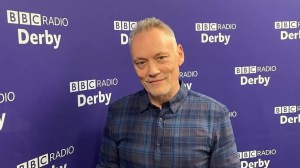
It’s really quite fascinating the way digital publishing is moving ever forward. Although I suppose I’m very much still an amateur writer I publish a blog post every weekend just like this one. I can also be found in various videos over on YouTube and many of my blog posts can be listened to as a podcast. I say many although in fact there are only nine podcasts available at the present time. I could make more I suppose, after all, I’m now retired and I’ve got plenty of time to make them as well as owning that special essential, a top quality microphone. The thing is I’m not really sure how I feel about my podcasts. I’m not a trained actor or public speaker and I’ve never been that keen on my voice. Someone once told me I sounded a lot like Terry Christian. You may not have heard of him but he’s a Manchester DJ and minor TV personality and he sounds a lot like a very northern working-class Mancunian which is pretty much how you might describe me.
A few years ago I wrote a poem about the way I sound over on Writeoutloud. I won’t reproduce it here because it wasn’t that good (although feel free to click that Writeoutloud link) but it did get a lot of comments. In the poem I mentioned that I wanted to sound like Richard Burton. I’ve always admired Burton’s rich speaking voice. He made many films and I listen to him from time to time on my CD recording of Under Milk Wood. Of course, Burton’s voice didn’t come naturally. He was a miner’s son from Wales and was born Richard Jenkins. He spent many years perfecting that wonderful voice under the tuition of his teacher Philip Burton.

To improve my podcasts and voice-overs I have subscribed to a couple of YouTube channels which explain the rudiments of public speaking and voice control but even so, I still reckon I sound pretty much the same.

I’ve mentioned many times that one of my favourite writers is Dylan Thomas. Dylan had a wonderful voice and made many recordings of his poems and plays. In fact quite a lot of his plays were written for the radio. One of the keys to appreciating Dylan’s work is his love of words, particularly the sound of words, which is at the heart of all Dylan’s work, especially his poetry. If you think about it, there must be a connection between the sound of a word and its meaning, a deep organic connection. After all, how did words begin? Imagine some ancient caveman, just wanting to get some concept over to his mate. What are the deepest and strongest feelings for a human being? Well, for a caveman food must be one, and love too. Surely love was present in those primordial days when every caveman went out on Saturday with his club looking for his mate. There must have been a moment when ancient man strived to say something to his mate, tried to express his feeling and a sound that was the precursor to the word love slipped uneasily from his lips.

Terry Christian. Picture courtesy BBC

I make great use in my video voice-overs and podcasts of one particular program on my laptop, my Magix sound mixer. I’m able, to a great extent, to cut out my mumbles and ums and ahs, add some bass and make myself sound just a little bit better than I actually do.

On one of my short videos, I once tried to dub my own voice with a new recording. You’ve probably seen on TV and films how this can be done. There are some amazing over dubs in the Bond films for instance. In Goldfinger, Gert Frobe played the eponymous villain but the actor was German and spoke poor English. His voice was dubbed by an actor called Michael Collins. Many films in the 60’s, particularly European films were made with a fully dubbed soundtrack so how hard could it be?

I got set up with my video, the text of what I was saying and my microphone and off I went. About two weeks later having got about ten seconds of useable video and having come pretty close to smashing my laptop to pieces, I finally realised that audio dubbing wasn’t as easy as I thought it was and made the video in a different way.

Over on Anchor where I produce my podcasts, they have the facility to take one of my blogs and convert it into a podcast by having it spoken by an electronic voice so none of the recording and editing that goes into making a podcast would in theory be necessary. Some of the voices available actually sound pretty real but they all fall down in things like pronunciation of odd words or names or sometimes when I’ve tried to render a particular accent into the text. Yes, I think I’ll stick to my own voice for the time being.

I’ve always found it fascinating how a particular sound can jog our memory. Some time ago I wrote a blog about Mr Todd’s projector. Mr Todd was a teacher from my junior school and every Christmas he set up his projector and screen in the hall and put on a film show for the school. The films were mostly cartoon shorts like Sylvester the cat, Daffy Duck and even some of Disney’s wildlife films. I loved those Christmas film shows and what brought back the memory was that wonderful sound of the projector, that clickety click sound of the film running through the machine.

One year, I think it must have been my last at the school, Mr Todd retired and there was no final Christmas film show. Instead, we were treated to some dreary school choir or something which was such a disappointment. Of course, there had been a final film show. It had been the one the previous year, only at the time, like many things in life, we didn’t know it would be the last.

Here’s one final thing about sound. Music. I do love my music and like most people I associate various songs and music tracks to various times in my life. The very first vinyl singles I ever bought were by Olivia Newton John and since then I’ve amassed quite a collection of records, tapes and CDs. My record collection fills a small corner in the spare room in my mother’s house but these days, youngsters have even bigger collections than mine kept either on a small device or in cyberspace. I have to say I do like to have physical versions of music. I like my record and CD covers. I like the sleeve notes and I like to see the small notes I have made myself on my own records, things like the date of purchase and so on.

Many years ago one of my favourite things to do on a Saturday afternoon was to sift through racks of records in the music shops in Manchester. It’s hard to even find a record shop these days. I was a big music fan and back in the seventies and eighties singles were marked down in price as soon as they dropped out of the charts and vultures like me were there to buy up cheap records. I started buying singles in 1973 and the last one I bought must have been in the late eighties or early nineties. I wish I knew which record it was. In the eighties I started buying picture singles which were singles in clear vinyl with a picture running through. My favourite is probably Alexi Sayle singing ‘Hello John, got a new motor’ which comes in the shape of a Ford Cortina With Alexi Sayle on the bonnet.

The day came, probably sometime in the nineties, when the pop charts became a mystery to me, singers and bands were in there that I’d never heard of with records I had no interest in buying. Just then, almost like a thief in the night, vinyl disappeared and the CD era began.

In the box room at my Mum’s house are four or five boxes of my singles, another box of LP’s and two boxes of 12 inch singles which started out in the eighties as a single but with a longer or different mix or sometimes with an extra track. I like my vinyl records, I like the smoothness of the plastic, the static electricity, the album covers, the sleeve notes (can anyone really read the sleeve notes on CDs written in that tiny writing?) and the inserts. I still have all the booklets that came with Elton John’s Captain Fantastic and the Brown Dirt Cowboy and I so wish I’d written the lyrics to that Cliff Richard song, ‘Wired for Sound’; power from the needle to the plastic.

I’m not much of a downloader but I do have a shedload of CD’s I’ve picked up over the years and I’ve gradually started to use my MP3 player, especially on holiday. I even have fun making up playlists on Spotify just like in the old days when I’d copy my vinyl singles onto cassette tapes.

Sometimes I wonder if I’ve really changed at all from the teenager I used to be.


What to do next: Here are a few options.

Share this post on your favourite social media!

Hit the Subscribe button. Never miss another post!

Listen to my podcast Click here.

Buy the book! Click here to purchase my new poetry anthology.

Click here to visit Amazon and download Floating in Space to your Kindle or order the paperback version.


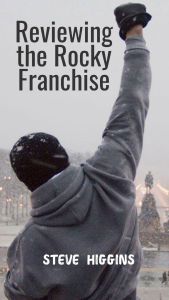
Reviewing the Rocky Franchise

I’ve always liked the original Rocky film but something more interesting than the film itself is the story of how it came to be made. In the mid-seventies Sylvester Stallone was a bit part actor with few acting credits to his name. One day in 1975 he watched the Ali v Chuck Wepner fight in which Wepner lost but managed to stay 15 rounds with heavyweight champion Muhammad Ali. Stallone, inspired by the bout, wrote a screenplay about a washed-up fighter called Rocky who manages to stay the distance with the world champion. He passed the screenplay to his agents who took it to various producers. The screenplay was good and many producers were interested but Stallone attached one small condition to the sale, that he himself had to play the part of Rocky.

The producers who finally picked up the screenplay were Winkler-Chartoff productions. They had a contract with United Artists but UA still wanted a big name star in the title role. Burt Reynolds and James Caan were suggested but Stallone hung on and continued to insist that he played Rocky. I have always thought that Stallone was offered a million dollars to let James Caan play Rocky but according to an article I read which quoted Stallone himself, the offer went up to $340,000 and he still said no. Eventually the producers gave in and Sylvester Stallone received just $35,000 for acting and writing the screenplay plus a percentage of the profits. United Artists had a major production in the pipeline at the time, New York, New York, a big budget musical and they felt that the profits from that film would cover any losses on Rocky. In fact, the musical was a flop and those losses were covered by the success of Rocky.

The basic plot of Rocky is that World Champion Apollo Creed, played by Carl Weathers and based loosely on Muhammed Ali, is let down after planning a title bout to be held during the US Bicentennial celebrations. His opponent backs out and no other contender is available. Creed decides to rescue the fight by selecting an unknown boxer for the hugely publicised event. He chooses Rocky Balboa, a part time boxer and debt collector. The problem is, Creed thinks it will just be a demonstration match but Rocky thinks he can win.

The film was a low budget production but is still a great looking film. It was one of the first films to be shot with a Steadicam, a revolutionary camera mounting which absorbs movement. It was used in the fight scenes and the scene in which Rocky runs through the market in Philadelphia. In a sequence filmed at a skating rink, the producers had no money for any extras so they changed the script. Instead of skating with extras, Rocky and his girl Adrian bribe the cleaning staff to let them in when the rink has closed and is empty.

Joe Frazier makes a cameo appearance in the film and in fact some aspects of his life were used on the film as part of Rocky’s training regimen, running up the steps of the Philadelphia Museum of Art and punching the meat carcass in a freezer.

Rocky was released in 1976 and grossed over $5 million in the first weekend of its national release and a later box office of 225 million dollars worldwide. The film was nominated for various awards and won the Oscar for Best Picture. Stallone’s pay packet has increased with each subsequent instalment of the film franchise but even today he still isn’t happy that the producers, rather than Stallone himself, own the rights to the Rocky character.

Verdict: 10/10

Rocky II

Given the huge success of the original there was really no doubt there would be a sequel. The film starts just where the last one left off except in the original the two fighters agree that there will not be a rematch. In this sequel, Apollo Creed does a quick reversal and is immediately on at Rocky about a rematch. Rocky is not sure what to do with his new found celebrity or with his money. He buys a house and a new car. He tries his hand at TV advertising but when that fails he sinks deeper into debt and begins to consider fighting again. His manager played again by Burgess Meredith is against the idea but when Apollo ups his campaign to get Rocky to fight and publicly insults Rocky, he finally comes on board. Adrian isn’t keen on the idea and Rocky trains in a lacklustre fashion until she gives him her blessing.

The title bout begins and at the end the two fighters knock each other down together but it is Rocky who gets up to claim the win.

Stallone asked to direct the film and when John G Avildsen, the director of the original film was unavailable, he got his chance.

I’ve seen this film before and always thought that in a way it was just a remake of the original. I watched it again for this blog and rather enjoyed it.

Verdict: 7/1

Rocky III

Rocky is doing well as the heavyweight world champion. He is settled with Adrian and has a son. He takes on various contenders but is constantly hassled by Clubber Lang, played by Mr T, for a title shot. Rocky agrees to meet Clubber in the ring but his manager Mickey, played by Burgess Meredith, is not so keen. On the night of the match Mickey dies of a heart attack and Rocky loses to Clubber. Apollo Creed decides to help Rocky and takes over his training for the rematch. After a tough match he wins back his title and the film finishes with Rocky and Apollo getting together in the ring for a friendly and private bout.

Stallone wrote the screenplay and directed the film and the theme song, Eye of the Tiger won an academy award.

I had not seen this before but watched it last week and thought it was pretty good.

Verdict: 7/10

Rocky IV

Can’t say I was totally impressed with this film. Apollo Creed decides to make his comeback with a fight against Russian Boxer Ivan Drago played by Dolph Lundgren. Creed is badly beaten by the Russian and dies from his injuries. Rocky agrees to fight Drago in Russia and takes a predictable win. It was again written and directed by Stallone and he and Lundgren traded real punches in the filming which ended up with Stallone in intensive care. Stallone’s future wife Brigitte Nielson played Drago’s wife, Ludmilla. Bill Conti who wrote the musical score for all the other Rocky films was absent from this one and instead Vince DiCola produced the disappointing music.

In 2021 Stallone released a new version of the film and the re-edited and re-released film was titled Rocky Vs Drago. The new version is only slightly longer but apparently was meant to add more depth to the relationship between Rocky and Apollo Creed as well as cutting some sillier elements like the robot Rocky gives to Paulie as a gift. A review I read in the Guardian felt that Stallone only marginally succeeded.

Verdict 4/10

Rocky V

This is probably the low point in the franchise. Original director John G Avildsen returned to the director’s chair and Stallone intended it to be the last in the Rocky franchise but it’s possible that because it was badly received, he went on to make Rocky Balboa.

Rocky returns from Russia but retires from boxing due to an injury. He then finds that his brother-in-law Paulie has given power of attorney to Rocky’s accountant who has then gone on to squander Rocky’s fortune. Rocky and his wife have to sell their home to pay their debts but Rocky finds purpose in training a young fighter. The relationship later sours and the two engage in a street fight which Rocky wins.

I have to admit that this is one Rocky film that has eluded me so far. Over on Rotten Tomatoes the review went like this: “Rocky V’s attempts to recapture the original’s working-class grit are as transparently phony as each of the thuddingly obvious plot developments in a misguided instalment that sent the franchise flailing into long term limbo.”

Verdict: Rotten Tomatoes gave the film only a 29% approval rating.

Rocky Balboa

I have two of the Rocky films on DVD. One is the original Rocky and the other is this one, Rocky Balboa. It’s a really thoughtful entry into the Rocky franchise. Rocky has retired. His wife has died and he has lost a lot of his money. His income comes from a small Italian restaurant in which many of the patrons come not just for Italian food but also to meet the former heavyweight champion of the world, Rocky Balboa.

The current champion Mason ‘the line’ Dixon has been criticised for fighting easy opponents. To get some positive publicity, he decides to enter into a computer fight with Rocky. It’s a fight reminiscent of the encounter between Rocky Marciano and Muhammad Ali in the 1970’s. At the time Marciano and Ali were the sport’s only two unbeaten champions. They were filmed sparring for various rounds and the result decided by probability formulas entered into a computer. Two different outcomes were filmed, the version shown in the UK showed Ali winning which my father was not happy about as he loved boxing and was a particular fan of Rocky Marciano.

In the film Rocky is judged to have won the computer fight and so decides to renew his boxing licence. Mason, not happy about being beaten, challenges Rocky to an exhibition fight which both men want to win. Mason emerges as the winner but Rocky doesn’t seem to mind. His day is over and he receives a standing ovation from the crowd.

This was probably the very best entry into the Rocky series. Rather than just boxing, the film looks at Rocky himself as he gets older, mourns the loss of his wife, and worries about his relationship with his son. He revisits many of the locations in the original Rocky film including his old house and the pet store where he met his wife. The only problem I had with the film was that the actor playing Mason Dixon didn’t look much like a heavyweight boxer to me. Surprise, surprise, then when I found out that actor Antonio Tarver was in fact a former light heavyweight champion! Ah, not a proper heavyweight then.

Rocky Balboa was the last in the Rocky series although a spin off series began in 2015 with Creed in which Rocky mentors boxer Adonis Johnson, the son of Apollo Creed. Although Stallone apparently contributed to the story, he did not write or direct either this or the following films. He isn’t happy about the producers owning the rights to characters he created either and publicly tweeted his unhappiness about a reported spin off film about Drago, the Russian boxer in Rocky IV.

In a lot of ways, the Rocky films parallel Stallone’s own life. He turned down big money offers to let others play what was the role of a lifetime, took it on himself and was propelled to film stardom.


What to do next: Here are a few options.

Share this post on your favourite social media!

Hit the Subscribe button. Never miss another post!

Listen to my podcast Click here.

Click here to visit Amazon and download Floating in Space to your Kindle or order the paperback version.

Buy the book! Click here to purchase my new poetry anthology.