Celebrating Charles Dickens

Charles Dickens is one of my writing heroes. He is a giant in the world of literature and the author of one of my favourite books of all time, David Copperfield. He was a man with an incredible imagination and was a prodigious producer of numerous books and stories. Many of his works are still loved and appreciated today and the magic of his story telling is also reflected in film and television adaptations of his work.
Dickens was born on February 7th, 1812. His father was John Dickens, a clerk in the Naval Pay Office. His mother was Elizabeth Dickens and she and her husband raised eight children including Charles, their second child. Charles and his family had a pretty idyllic life until John Dickens, who clearly lived beyond his means, was arrested for debts and incarcerated in the Marshallsea debtors’ prison in Southwark, London.

As was the custom then the younger members of the family were able to live in the prison with their mother and father but Charles, then aged 12, took lodgings nearby and was forced to leave school and work in Warren’s Blacking Warehouse where he earned six shillings a week for pasting labels on bottles of boot blacking.

It was a shocking and humiliating experience for the young Dickens. He never mentioned the experience to any of his children and only spoke about it in later life to his great friend John Forster, who later wrote the first biography of Dickens. Dickens also wrote about the experience in his novel David Copperfield in which the young Copperfield suffers the same fate.

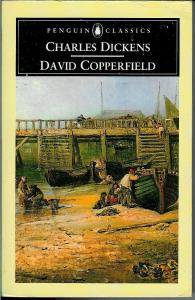
My well thumbed copy of David Copperfield

Mr Micawber, a character in the same book, was based on his own father and eventually John Dickens was able to pay off his debts when his mother died and left him £450. He and his family were released from prison but Charles was not immediately released from his work at the boot blacking warehouse, indeed his mother wanted him to continue there but it was his father who decided that Charles should return to school. Charles was forever indebted to his father for this and forever hurt by his mother’s wish that he should continue pasting labels onto bottles of boot blacking. The experience scarred him and his later desire to work harder and earn more and more money may have been a need to make himself safe from ever being forced into such a situation again.

After two years at school, Dickens obtained employment as a lawyer’s clerk and later, he taught himself shorthand and began work as a parliamentary reporter. He became infatuated at this time with a lady called Maria Beadnall who later became the inspiration for the character of Dora in David Copperfield. Charles pursued Maria over a period of three years but the romance, if indeed there ever was one, finally fizzled out in the spring of 1833.

Dickens first foray into the world of creative fiction was a short story titled A Dinner at Poplar Walk. He had sent the story to a monthly magazine simply called, The Monthly Magazine and upon finding his story printed within its pages, reported that ‘his eyes were so dimmed with joy and pride’ that he could barely see.

In 1835 the editor of the Morning Chronicle, George Hogarth, invited Dickens to contribute to his newspaper and during various visits to the Hogarth home he became acquainted with his editor’s daughter Catherine, whom he later married in 1836.

Dickens wrote his newspaper stories under the pseudonym Boz, and he was delighted when a publisher offered to publish a collection of his works entitled Sketches by Boz. This led to another publisher asking Dickens to supply the text to go with a series of illustrations by a popular illustrator of the day, Robert Stephens. Dickens somehow managed to turn the arrangement on its head, writing a story and having Stephens illustrate Dicken’s text. The story was The Pickwick Papers and it soon became something of a publishing phenomenon.

Robert Stephens passed away soon after the first publication and Dickens recruited another artist, Hablot Knight Browne, to provide the illustrations. Readers could buy a monthly instalment priced at a shilling and Dickens worked hard to produce each edition. Other stories had been published in a similar way but they were usually well known classics. This was the first time new fiction had been produced in this way.

That then was the start of Dicken’s career. He was a busy man, editing various publications as well as writing his novels. Great Expectations was published with the author shown as Boz but in later editions this was changed to Charles Dickens.

Dickens_by_Watkins_1858

Dickens seems to have rented various houses, moving around often but he eventually bought a house in 1851, Tavistock House in Tavistock Square, London. Dickens wrote various books here starting with Bleak House. He also fancied himself as something of an actor and he had a large room made into an improvised theatre where he, along with his friends and family, produced various amateur theatricals. In 1858, Charles separated from his wife Catherine and she moved out into a property in Camden Town.

The separation was said to have been sparked by Dickens’ obsession with a young actress called Ellen Ternan and his gift of either a brooch or a bracelet to her which somehow made its way to his wife. Dickens has this image of being the perfect Victorian family man but he didn’t always live up to it. According to Wikipedia he even tried to get his wife falsely diagnosed as mentally ill in order to have her committed to an asylum. Various accusations were bandied about at the time and rumours were so bad that Dickens himself was forced to publish a statement in the press about his marital situation.

Did Dickens have an affair with Ellen Ternan? So many years later it is hard to know the truth. One night when he was living at his new home Gad’s Hill Place, Dickens made a bonfire of all his personal letters and papers, some of which may have had the answers.

Certainly, Charles was fond of Ellen Ternan. He spent a lot of time with her and even took her abroad to France and Belgium but neither admitted to having an affair but he did have something of a history of obsessions. Years earlier he had been distraught when his sister-in-law Mary Hogarth had died suddenly at the age of 17. Mary was living with the Dickens family at the time and died in Charles’ arms. He was so upset that he kept his dead sister in law’s clothes for years afterwards, occasionally taking them out to look at them. Mary became the template for many women in his books, all of whom were ‘young, beautiful and good’.

Dickens had an incredible imagination and although many of his characters were based on real people, many others sprang directly from his own mind. He was a restless man and regularly took daily and nightly walks of twenty miles and more. Presumably on those walks he brought his imagination into check and channelled his thoughts into the development of his stories.

In his later life, Charles embarked on a series of readings from his books. The readings were highly charged emotional events and the author used all his powers as an actor to delight his audiences, frequently reducing them to tears. Tickets for the reading were highly sought after and Dickens was one of the most notable and famous men of his day. Imagine George Clooney or Brad Pitt doing a series of book readings today and we can get just a faint hint of what things were like for Dickens and his public back then.

Dickens bought his final home, Gad’s Hill Place in March of 1856. He had seen the house as a child when his father had pointed the house out to him as something that he might one day own if he worked hard enough. He lived at the house with his children although one, Charles junior, elected to live with his mother in Camden Town. Strangely, his estranged wife’s sister, Georgina, stayed with Charles as housekeeper.

On June 8th 1870, Dickens had a stroke after working on his final book, The Mystery of Edwin Drood. He died the next day without regaining consciousness. Some have speculated that he died at Ellen Ternan’s house and she had him taken back to Gad’s Hill to prevent a scandal. He was laid to rest in Poets Corner at Westminster Abbey.

Charles Dickens is one of the most loved and celebrated writers of all time but I’ve got to say that some of his books I’ve found a little hard to read. I’ve tried and tried to read Pickwick Papers but I just couldn’t get through it. Not long ago I picked up Bleak House and once again I couldn’t really get started on the book. I have read A Christmas Carol, Oliver Twist, Great Expectations and my absolute favourite, David Copperfield.

My favourite character in the book, apart from Copperfield himself, is Steerforth, a friend of David Copperfield but one who ultimately betrays him. The best part in the book probably, for me at any rate, is the storm when David returns to Yarmouth. Dickens builds the storm slowly and each word and phrase adds a new layer to the sense of danger and foreboding and when Copperfield is finally reunited with his old friend Steerforth at the height of the storm’s ferocity, death comes between them and Steerforth is sadly drowned.

Dickens reveals this in a very unique way; he does not tell the reader Steerforth is dead. He leaves the reader to realise this themselves and, in the process, makes the reader almost at one with the narrative. Throughout the book, Dickens mentions in passing about Steerforth’s habit of sleeping with his head on his arm. It’s referred to many times in the narrative almost as a matter of non interest, something unimportant that the reader doesn’t really need to know, but when David Copperfield spies someone aboard a stricken ship trapped in the fierce storm who evokes some faint remembrance for him, a tiny warning bell is set off.

Finally, when the body of a drowned man is brought ashore and lies mutely on the sand, his head upon his arm, we know just from that simple bit of information, without the author telling us anything more, that Steerforth is dead. The prompts and clues that Dickens has hinted at have paid off for the reader in the most satisfying of ways.

Dickens’ books are still popular today and a recent cinema version of David Copperfield was released in 2019. It was good although I do have a fondness for the 1935 version in which WC Fields plays the part of Mr Micawber. In 1946 David Lean directed one of the best ever films of a Dickens’ story, Great Expectations. In the 1960’s Oliver Twist was made into a stage musical by Lionel Bart and the film version was released in 1968.

Dickens’ most filmed story though is probably A Christmas Carol, the story of Ebenezer Scrooge and the three ghostly visits that transform his life.

What is your favourite Dickens’ story?


Sources:

Wikipedia

Dickens by Peter Ackroyd


What to do next: Here are a few options.

Share this post on your favourite social media!

Hit the Subscribe button. Never miss another post!

Listen to my podcast Click here.

Buy the book! Click here to purchase my new poetry anthology.

Click here to visit Amazon and download Floating in Space to your Kindle or order the paperback version.

Manipulating More Images

Once again, it’s time to settle down and write a new blog post. I spend a lot of time putting together a new post not only in terms of the words but equally important are the pictures. I use a lot of  images in my blogs and social media. According to a search I did on Google, social media posts with images get a whopping 94% more views than posts without images. That is a huge statistic and the reason why most internet authors need images. There are plenty of image sites on the internet where bloggers and content creators can source stock pictures but I always tend to try and use my own pictures where I can.

I create a graphic for my blogs every week using various image or graphic sites. The easiest one to use is probably Quotescover.com. It’s a very simple site that combines text and images or just text if you prefer. In Quotescover, you can very simply add your quote or in my case, blog title, add a name or the name of your website and click create. You can choose what type of image you want, for instance for a social media post, for Pinterest, or for a Facebook cover or whatever, then you have a choice of image shape; portrait, landscape or square. After that keep clicking ‘next fonts’ until you get the font that you like.

If I’m feeling a little more creative, I might use Canva which is once again a free site as long as you are making some basic images. At Canva the user can choose from a range of templates and there are various ones available for free but then to use the better ones you have to upgrade to the paid version. You can save your image in various ways, as a simple jpg, or if better quality is required, a png. You can also animate an image or graphic and save it as either a gif, just like the one seen here, which is just an animated picture, or as a short video. By saving your graphic as a video, the user can add music or sound effects, both are available from Canva but of course then you have to update to the paid version.

Most of the animated images I create are used in my blogs or on Twitter as gifs although sometimes I get really creative and add music or sound effects. scroll down to see an example below.

I’ve got a CD of sound effects at home that Liz got me for Christmas ages ago but sometimes I download them from sites like Zapsplat which has a huge library of free sounds.

Another interesting development in imaging is artificial intelligence, more commonly known as AI. We hear a lot about AI in the media lately. Things like what will it mean for all of us. I’m not sure it will mean a great deal unless you use a computer but then again these days, everyone uses a computer, even if it’s only the one in your mobile phone.

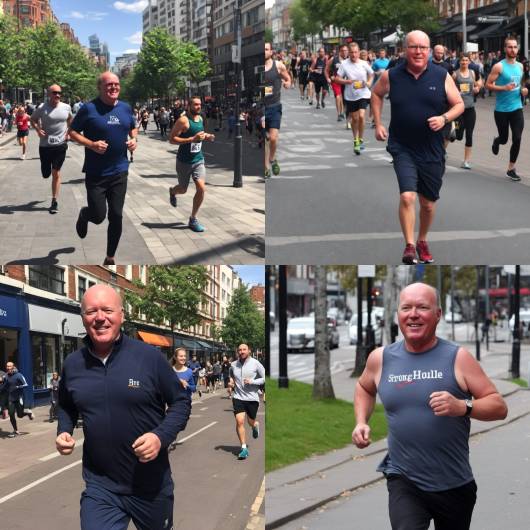
A collection of AI pictures of me made using my iPad.

One thing I’ve found interesting about AI is its use in imaging and as I have already said, imaging is vitally important in my blogs and videos. Aside from that I’m interested in images anyway. One of the great things about digital photography is the way images can be altered by editing. Years ago, I’d get a roll of film and have it developed and if there was a dud shot, there wasn’t much I could do about it. I’ve sometimes had almost an entire roll of film turn out to be pretty poor and still had to pay for the developing and printing but fast forward to the 21st century and things are different.

Pictures can be cropped and rotated. Dark pictures can be lightened and bright ones darkened. OK, some people could actually do those things in the past as long as they had access to a great deal of equipment but the great thing today is that anyone with a computer or a tablet can now change the images they produce. Add AI into the mix and pictures can be further transformed. Blurred pictures can be made sharp, backgrounds can be changed and even new images can be created by artificial intelligence.

Take a look at this next photo. You might think for a moment that it’s me, using an old-fashioned typewriter to knock out my next blog post. Come to think of it, that looks like a pretty perfect location to be writing a blog post and I can just imagine myself there, tapping away on a typewriter, which were my exact thoughts when I created it. I didn’t pose for the camera. I used a site called Nightcafe to produce the image. First, I had to create a ‘model’ of myself and to do so I had to upload a lot of photos of me with a minimum of 16 being required. After digesting this visual information Nightcafe created a visual model that I can use in my images.

The images themselves come from a text suggestion. After selecting my model my text went something like this: author typing away on a typewriter with an exciting landscape seen through the French windows.

There are other choices to be made too, choices of style and lighting and so on. I chose a photorealistic style but I could have chosen anime, hyperreal, impressionist, fantasy and many others.

Some of the images I’ve made look like me and some do not. Here’s my favourite which is a pretty good replica of my face.

Some time ago I used an app for my iPad. I eventually deleted it as it seemed to stop working but for £2.99, I was able to create 50 images of myself. Once again, I had to upload a number of photos of me. The results ranged from nothing like me at all to some that actually made me better looking than I really am.

I’ve noticed also that on many of the graphics apps and programs that I use there are options for AI to assist with the text or the backgrounds. These are always extra options and as I always tend to use the free versions of apps like this, I’ve not be able to use them.

Another great image and graphics editor is Adobe Express. Once again, I use the free version but even so, on the free version I’ve made a number of what I think are pretty impressive animated graphics, some of which I always tag onto the end of my YouTube videos.

Here’s another one, also made on adobe with a soundtrack downloaded from Zapsplat. It was mainly used on Twitter (X as they call it now). It was animated from a graphic I used on a blog post called Don’t Make Me Laugh.

Deepfake videos are ones in which the image of someone famous is inserted into another video. According to the internet, recent deepfake videos have been made of people like Barack Obama, Donald Trump and Taylor Swift. What is a deepfake video? Well, it’s a video powered by AI in which images of well-known people are digitally merged into video footage to create something wholly new and fake. Fake sexually explicit images of Taylor Swift were recently distributed on the internet and had many views before they were taken down. X which used be Twitter said recently it was actively removing all identified images and is taking action against the accounts responsible.

AI certainly has great implications for the future, even more realistic images for use on the internet and in the cinema. Better special effects for Star Trek and superhero films and hopefully, even better graphics for blogs like this one. Even the Royal Family have been featured in digital imaging news, did they digitally alter a picture of Kate Middleton and her children? Oh dear.

Anyway, that’s enough blogging for now. Think I might go out for a jog. well, not a real jog, maybe just an AI one!


What to do next: Here are a few options.

Share this post on your favourite social media!

Hit the Subscribe button. Never miss another post!

Listen to my podcast Click here.

Buy the book! Click here to purchase my new poetry anthology.

Click here to visit Amazon and download Floating in Space to your Kindle or order the paperback version.

Not Responding

I’m still coming down to earth after five weeks in sunny and warm Lanzarote. OK, we’ve had a few warm days but mostly the weather has been wet and windy and cold.

I retired in 2022 so I don’t have to get off to work every day and, unlike many bloggers and amateur writers, I don’t have to struggle for writing time. Even so, my motivation to get up and write next week’s blog post has been a little deflated by the bad weather. Still, in a few days we will be in April my favourite time of the year. The days are getting longer and warmer and soon Liz and I will be off to France in our small motorhome.

Back in December I decided to save a little money by declaring the van off road and getting a rebate on the road tax but now it’s time to get the MOT sorted and get the van ready for the road again.

I had the van running the other day and it started up ok but there was one little cloud on the horizon, the left rear tyre was flat. It was parked up against the wall so I had to struggle over with my pump and soon the tyre began to inflate but then I realised there was a definite hissing sound and air was escaping. OK, new tyre required for this year plus whatever the MOT throws up.

I mentioned last week how I was glad to finally get a new video ready for my YouTube channel but my big problem with video is that I just can’t leave them alone. The video was all finished and uploaded to YouTube but then, as usual, I decided to tweak it a little. A further issue was that after editing a video on my laptop I usually upload the clips to Animoto and mix another version on the Animoto online editing site but my subscription had run out so I couldn’t do the things I wanted to do. So, it was time to put video editing aside for a while and try and write a blog for this week.

Not much has happened to me lately so what could I write about? My visit to the cinema? No, I mentioned that last week. Some more reflections on Lanzarote? No, I reckon we’ve had enough of that too. Restaurant visits? As usual I’ve had a few of those, after all, dining out is one of life’s great pleasures but then again, that’s another subject I’ve written about.

Putting blog posts on hold for a moment I decided to dig out an old poem I’ve always rather liked, give it a little makeover and make a new poetry video. I made it from scratch on my laptop, just with me reading the poem to camera. What I’ve always found when I record a ‘piece to camera’, as the professionals call it, is that my first attempt, take 1, will always be the best. Later by take 5 I find that I’ve completely lost the plot and I’m mixing all my words up, especially the bits at the end which are so easy I don’t even bother to write down. Things like, Thanks for watching, if you’d like to read more of my poetry look out for this new anthology, A Warrior of Words, available from Amazon.

That came out on take 5 as Thanks for watching my new anthology. If you’d like to er . . Take 6: Thanks for watching Amazon, go to Amazon to read er . . Take 7: Thanks for reading more of er Amazon . . It reminded me of the time when Marilyn Monroe had to do a scene on Some Like it Hot in which all she had to say was, ‘it’s me, sugar.’ The scene took 47 takes to complete!

Time for a break but later I did manage to put together a reasonable sort of video.

Later it was back to trying to knock out this week’s post. Sometimes when I’ve been really stuck, I’ll take an old post and either rewrite it or add to it. After trolling through lots of old blogs I thought the best thing to do was to just open up a blank page and start writing. I did that, wrote a couple of lines and realised that even though I was typing, nothing was happening. After a while a message came up on my screen saying Word is not responding. You don’t say, I thought.

Technology issues can be really frustrating and I’m sometimes rather tempted to resolve them by smashing my laptop to smithereens but I thought, no! The best thing to do, seeing as I had no idea what to write, was to go back and work on another video project. OK. I had a project which was fully edited once again on Animoto. As my subscription had expired, I couldn’t add a narration so it was time to download the result and narrate the voiceover on my laptop.

Download complete, I noticed that when I recorded the voiceover, the recording seemed to be jumping and missing out various words and then another message appeared: Video Editor is not responding! Aaagh! I clicked over to Google and searched for information about optimising sound recordings. I found that I had set my recordings to DVD quality and maybe my laptop just couldn’t cope with that. OK, time to reset to CD quality and finally that was another problem sorted. (I’m happy to report I resisted the temptation to just smash my laptop to smithereens again.)

I noticed then that when I had my narration on my computer screen and scrolled down as I read, the microphone was picking up the clicks on the scroll button. I couldn’t print off the narration as I had no ink in the printer so what I did was upload the narration to my OneDrive and open it up on my iPad and read it from there. On my iPad I was asked to log in to OneDrive. I did but they wanted further confirmation. They wanted a passcode entered which they sent to my mobile. Off I went in search of the mobile. I entered the passcode but I was too late. It had expired! I did it again but this time the password was wrong!

(Steve don’t do it. Don’t smash the iPad to smithereens!)

I was getting more than a little exasperated but I recorded the first section of the voiceover, paused, scrolled the text and recorded some more. Brilliant I thought but then that message popped up again: Video editor is not responding. OK, keep calm I thought, don’t smash the laptop to pieces. What could I do? Perhaps I’d used up too much memory so I took a load of video files and moved them to my portable hard drive. A quick reboot and a check of my C drive: delete my temporary files and finally things seemed to be working properly.

OK, final narration added, time for a few quick changes here and there and that was it. I like to leave the finished video for a few days then take another look and then any minor errors are much easier to see.

In the old days of editing video, the editor began at the beginning and just carried on adding the next clip and then the next and so on. Today, working in digital video, the approach is slightly different. A scene can be easily compiled into a rough cut but then the editor can go back and change clips earlier in the video, trimming a bit here or re-ordering things there. Another great thing about modern video editing is that you can save your project, so if at a later date you want to change something, you don’t have to start all over again. You just open up your saved project, change whatever you want and create a video file for the new version.

I’ve often thought about how wonderful it would be to be a professional video editor but then I always imagine myself at work and the boss comes in and says ’can you have that ready by this afternoon?’. I doubt if I would last long at that company when I handed in the finished product two weeks later.

One of my favourite video editing stories is about Charlie Chaplin. Over a hundred years ago in 1920, Chaplin had just completed his first major film as a director; The Kid. He was in the middle of a messy divorce from his first wife Mildred Harris and thinking she was about to seize the unreleased film, Chaplin smuggled the negative to Salt Lake City where he completed the edit in his hotel room. Despite this, The Kid was released to rave reviews and became the second highest grossing film of 1921.

I doubt whether Return to Stockport Bus Station will get a similar response but I do love messing about with video or as Liz tends to call it; twatting about on my laptop!

A little later I checked my emails and there was one tempting me to renew my Animoto subscription with a half price offer. As a fully paid up member of Northern Tightwads it just not in my psyche to ignore such an offer so I signed up for half price and went about making a new version of my latest video. That would be version 3 and by the way, everything worked fine and I didn’t smash my laptop into a thousand pieces.

OK, time to write that blog post. I opened up word and stared back at the few lines I had written but nothing in the way of inspiration seemed to be occurring. I was getting a new message but in my head rather than on my screen:

Brain not responding.


What to do next: Here are a few options.

Share this post on your favourite social media!

Hit the Subscribe button. Never miss another post!

Listen to my podcast Click here.

Buy the book! Click here to purchase my new poetry anthology.

Click here to visit Amazon and download Floating in Space to your Kindle or order the paperback version.


A Slice of My Life 2024

It’s a long time since I’ve made a video for my YouTube channel and recently I’ve been trying to think about what my next project should be. When I’m stuck for a video I tend to tweak or even remake some of the short videos I use on social media to promote this page and my two books. In fact my YouTube page is made up of quite a lot of videos like that as well as numerous short video versions of my poems. Every now and again I try and put something different together. I usually make a video about our yearly trips to France in our motorhome and I’ve made a few videos about Manchester, my home town and also the place where my book Floating in Space is set.

Liz and I have just spent 5 weeks in Lanzarote and although I took my video camera over there I actually didn’t use it except to take some holiday snaps.

Last week I decided to take a little jolly out on the bus over to Stockport and see how the new bus station, currently under construction there, was coming along. Travelling to Stockport on the bus made me think about how our lives change and move on. Back in 1979 I was a coach driver for National Express but I wasn’t happy with the job. In the summer of 79 I was 22 years old and far too young and immature to do such a responsible job. Covering the long distance National Express routes wasn’t too bad but private hires were difficult as the driver had to plan his routes and to be honest I didn’t know my way about the country particularly well.

After being stuck on the same long distance bus route from Manchester to Lowestoft far too many times I packed the job in. I went to ask for my old job back at GM Buses but they gave me a big lecture about how they were fed up of training drivers only for them to resign and go driving for other companies and so I was turned away. That same afternoon I drove over to the GM Bus depot at Stockport where they were short of staff and they started me the same day. For over ten years I spent every working day in Stockport taking fares and later, driving buses. Returning in 2024 after over 30 years away was interesting, I must say.

Most of Mersey Square, the square at the very centre of Stockport, was fenced off while the builders worked on the new bus station. A huge railway viaduct spans the centre of Stockport and the bus station or bus interchange as they are now calling it is mostly on one side of the viaduct with part of it spilling over onto the other side. Someone told me it was due to open in two weeks time but looking around, that seemed to be a pretty tall order.

I shot some video in the square then walked around the construction, filming as I went. I was planning to film myself with my trusty selfie stick and chat away to the camera about my memories of Stockport but as usual, I felt a little self-conscious and just stuck to filming the new construction. I couldn’t walk through the area as of course the builders were still working so I had to walk around it.

When I got to the other side a new Stagecoach bus went past on its way into the Stagecoach garage. It was displaying the route number 192 which is a very busy bus route indeed, going down the A6 from Hazel Grove into Stockport and then on into Manchester. Back in my day there was a 192 every six minutes and each one was packed. Looking back I must have spent an awful lot of time going up and down on that bus route.

When the bus services were deregulated in 1986 the Busy Bee bus company tried to muscle in onto our route and so the service moved up to one every three minutes! Yes we would load up in Piccadilly, Manchester. An inspector would count three minutes and then you were off. Straight away there was a set of traffic lights and if you hit those on red you were in trouble as the bus behind was already following you out.

I followed the Stagecoach bus round the corner to the old GM Buses depot, now of course owned and run by Stagecoach. Inside it was full of buses and for a moment I remembered the old days when it was full of the old orange and cream of GM Buses.

I left the bus company in the early 1990s and started my own company selling motorsport memorabilia. I loved that job and spent all my day chatting to various regular people about F1 and motorsport but sadly, I didn’t make a lot of money, eventually selling all my stock to someone who had a similar business. After a failed attempt to become a TV producer I ended up short of money and went back to GM Buses. I worked for the GM coaching company known as Charterplan. After a short while there I transferred to an office job in the GM Buses control room in Ardwick, Manchester and that was the last time I set foot in Stockport, until last week.

The Comfy GillI walked round to the other side of the bus depot and there opposite, what used to be the main exit for our buses, was the Comfortable Gill. The Comfy, as we affectionately called it, was the pub where we busmen used to drink after the day’s shift was over. At one time if a driver was due to finish after last orders at 11, the landlord used to accept telephone orders for a pint so sometimes we could pull in at 11:20, park the bus in the depot and then pop over to the Comfy to find a pint waiting for us to sup while we cashed up our day’s takings. When I saw it the other day the Comfy was all closed up and looked neglected. So many of Britain’s pubs have closed down and I walked away hoping that the Comfy might be saved in the near future.

It’s always interesting to look back and have a stroll down memory lane. I can’t say working at GM Buses was a great job and looking back I wonder why I stayed so long. Of course back then I had bought a house and I had a very expensive mortgage to pay and I put in a lot of hours to pay for it. Perhaps I would have been better served by prioritising my career rather than my house. Oh well!

Liz and I went to the pictures this week. It was the first time we had visited the cinema since seeing Oppenheimer last year and although I didn’t rate it as the work of genius many people seem to think it is, Oppenheimer was certainly an excellent film and deservedly won the best picture Oscar.

The film we went to see was Wicked Little Letters set in England after the first World War. It’s about an Irish lady who comes to live in an English village. She is outspoken, very rude and swears a lot and is soon branded as the author of a very nasty series of poison pen letters. It wasn’t a bad film but what was odd was the way the 1920s were portrayed. There was a black judge, a black Asian policewoman, numerous other black people and the Irish lady was living with a black man. It was if they had substituted 1920s life with today’s multicultural society. I’m not sure why they would do that but the end result was that the entire film looked a little bit strange. Why didn’t they just set the film in the present day when different ethnic groups, as well as bad language is just the norm? Or was the director trying to make some point about society that perhaps I have missed? Wicked Little Letters isn’t a bad film in fact it’s quite amusing in a way and was actually based on a true story but that cutural shift just didn’t work for me.

Perhaps we all look back at the past in different ways.


What to do next: Here are a few options.

Share this post on your favourite social media!

Hit the Subscribe button. Never miss another post!

Listen to my podcast Click here.

Buy the book! Click here to purchase my new poetry anthology.

Click here to visit Amazon and download Floating in Space to your Kindle or order the paperback version.

The Post Holiday Blues

It’s always sad to come home after a holiday, especially when you’re leaving a warm and lovely place like Lanzarote and returning to cold and wet England. We’ve been in Lanzarote for the entire month of February as well as the end of January and it almost felt more of a house move than a holiday. On holiday you know you only have a week or two weeks to do all the things you want to do but with a month out here there is no rush to do anything so you can simply relax.

To be honest, Liz and I don’t do much in Lanzarote anyway except read, swim, have barbecues or go out for meals. All the other stuff that people do on holiday, visiting the sights and things like that, we’ve done it all before on previous visits. We don’t even bother hiring a car, we just get on the local circular bus which is pretty reliable or get taxis.

I’ve often thought about actually moving here. Of course, I don’t speak Spanish which might be a problem but there is a huge British ex-pat community here and I’m sure they don’t all speak Spanish either but of course, knowing the language would not only be a great help but also a way of connecting with the locals. I remember once meeting someone in France who had lived there for years but seemed proud of the fact he did not speak French and had no intention of ever learning it. That seemed to me to be rather pompous and hugely disrespectful to the country that had taken him in.

Another relocation issue I thought about was how would I go on about health care, eye tests and dentistry and so on? Then of course there is Brexit and the fact that the UK is no longer a part of the European Community. We Brits can only stay for 90 days out of every 180 days so I’d have to get a visa. How would I go about that? Is it easy? Would the Spanish even accept me?

Talking of the 90 days, we tried a new bar which was about a five minute walk from our villa. It was only small and served beer, snacks and cocktails but we met an English couple there and we felt pretty pleased with ourselves when we mentioned we were staying in Lanzarote for a month. They were clearly well versed in the art of one upmanship as they promptly advised us that they were staying for three months! Ninety days actually, they stay for ninety days then pop back to the UK and spend 90 days there. When they told me they hated the cold I knew they were talking my language.

The weather was fabulous from day one and in fact we only had one or two bad weather days and when I say bad, they weren’t even that bad really, just a bit dull and windy. On day one the holiday stretches off into the distance and then at a certain point when you still think you have ages left, you realise you only have a week to go. Suddenly the end of your holiday is rushing towards you and then there you are, waiting for your taxi to the airport.

Flying into Lanzarote there must have been a pretty big demand for the journey because our aircraft was upped to an airbus with more seats. They were set out in 2 4 2 formation, two seats, an aisle, four seats then another aisle then two seats. The change of aircraft meant that Liz and I lost our pre-arranged seats so I called the airline up, had a moan and they put us together although we were sat across from each other on either side of the aisle. I had a very pleasant family sat next to me and Liz had a spare seat next to her but she decided to stretch out onto the empty seat. My seat was quite comfortable but on the smaller aircraft coming home I was really cramped and very uncomfortable, so much so when we got back to Manchester my back was killing me.

It always makes me laugh to see the way air travel is portrayed in films and TV. They always, especially on American films, have big seats and lots of legroom. In the second of the Die Hard films, Bruce Willis’ wife is stuck on an aircraft with lots of room and can even make telephone calls. Clearly, these updates to air travel have not yet made it over the Atlantic to UK aeroplanes.

Coming back Liz and I had a free seat next to us so I was able to move over to the window seat. I was all ready with my camera to record the take-off but when we taxied over to a waiting area, the captain advised us that we had a problem with something on the underside of the wing and someone was coming over from the airport to take a look. The guy came over and all was ok but it meant we had to wait for over an hour before we could finally get going.

When we did get going, I felt I needed a wee but almost as soon as the seat belt light went out, a big queue formed for the bathroom. OK I thought. I wasn’t desperate, I can wait. We were on row two so we were one of the first to be served by the ‘in-flight service’. Liz and I had two small bottles of wine each, a cheese and ham toastie each and we both chose the special offer half size (or was it quarter size) packet of Pringles.

A few glasses of wine later and perhaps it was time to try for the facilities again. There was one guy waiting to go in but very quickly a queue formed behind. Before I could get up the queue began to get longer. The guy must have been wondering if there was actually anyone in the toilet and he tried to open it but nothing happened and he resumed his wait. After a while the stewardess came down and she tried knocking on the door. Nothing was heard so she tried the door which opened. The bathroom was empty. There was a communal moan from those waiting in the queue but finally they all began to move up.

There were two people waiting when I decided to get up. Liz had to move to let me out and I had to shuffle along the seats, making sure not to knock over our remaining wine. Just as I managed to squeeze out of my seat, we hit some turbulence and soon the seat belt light was on and the stewardess asked us all to sit down. She went onto the intercom and told everyone the toilets were to be locked while we went through the turbulence. Sadly, I had to squeeze back into my seat.

Despite closing the toilets, the turbulence was clearly not bad enough to affect our in-flight service. By this time, I was having serious tea withdrawal symptoms. I’d only had one cuppa earlier that morning so I ordered a tea. The seat belt light went out but I couldn’t get to the toilet because the stewardess trolley was in the way. Frustrating I know but I’m a big fella and I told myself that I must therefore have a corresponding big bladder so I settled down to enjoy my tea.

A little later I’d finished my tea and I needed to go, I mean I really needed to go and soon I saw my chance. There was one woman waiting and then the bathroom became free and she went in. I asked Liz to move up and she did so, happily blocking someone who was planning to pinch my place. I stepped up to the bathroom. Finally, no one could stop me now. Even if we hit turbulence, I was going into that toilet. What was that woman doing in there? Reading a book?

Finally, she stepped out and I managed to gain entry and relieve myself. Happy days! I zipped myself up, washed my hands and went back to my seat. I finished off my tea and then, wait a minute, I’ve just had a wee, why do I need another one?

That was a very uncomfortable flight back to Manchester but happily our friend and taxi driver Craig, was ready to drive us back to St Annes.

Hasta la vista baby!


What to do next: Here are a few options.

Share this post on your favourite social media!

Hit the Subscribe button. Never miss another post!

Listen to my podcast Click here.

Buy the book! Click here to purchase my new poetry anthology.

Click here to visit Amazon and download Floating in Space to your Kindle or order the paperback version.

Holiday Book Bag 2024 (Part 2)

Last week I gave you part one of my Holiday Book bag so here we go with part 2, more of my holiday reads and also what happened when tragedy occurred and I ran out of books.

Let’s kick off with this one, a Christmas pressy from Liz and a book I’ve been dying to read but purposely kept to read on holiday.

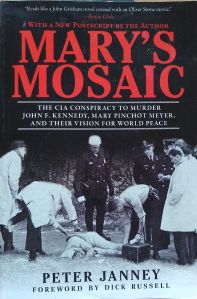
Mary’s Mosaic by Peter Janney

Liz bought me this book for Christmas and I’ve been saving it for a time when I can sit and read it undisturbed. After the assassination of President Kennedy there were numerous deaths of various witnesses in Dallas and elsewhere. One such death was of a lady named Mary Pinchot Mayer. She was the ex-wife of CIA agent Cord Mayer and one of JFK’s many mistresses. The author reckons she not only introduced the President to mind altering drugs but also agreed strongly with Kennedy’s desire for peace. He goes a little too far perhaps in making the case that Mary was the force behind JFK’s commencement address at American University in October, 1963 in which Kennedy called for both the USA and the Soviet Union to

‘direct attention to our common interests and to the means by which those differences can be resolved. And if we cannot end now our differences, at least we can help make the world safe for diversity. For, in the final analysis, our most basic common link is that we all inhabit this small planet. We all breathe the same air. We all cherish our children’s future. And we are all mortal.’

Mary was shocked by the murder of the President but came to realise the part played by the CIA and wanted to bring attention to the false story of the Warren Commission report. One day in Washington in October 1964, whilst walking along the towpath of the Chesapeake and Ohio canal towpath, she was murdered. Mary was shot once in the head and once in the chest and in this remarkable book the author goes on to trace the man who he thinks may have been the assassin.

A very fascinating read indeed.

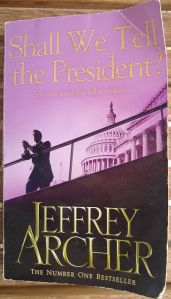
So that was it, by the start of our third week I had read all my books. What could I read next? Well, there wasn’t much in our rented villa’s bookcase so I read one of Liz’s books, Shall we Tell the President?.

Shall we Tell the President? by Jeffrey Archer.

I’ve actually read this book before, many years ago but this was a new edition, rewritten by the author himself. In the original, the president in question was Edward Kennedy but of course, in real life Kennedy never made it to the White House, his challenge cut short by the ghost of what happened to Mary Jo Kopechene at Chappaquiddick. In this rewrite then, the author puts his own fictional president, President Kane in charge at the White House.

The FBI learn of a plot to murder the president. A Greek waiter, an illegal immigrant learns of the plot whilst working as a waiter at a restaurant in Washington DC. He calls the FBI and the two agents assigned to the case report quickly to their superior. Soon, one of the agents and their boss, as well as the informant are dead leaving only one agent who by chance has survived a murder attempt. He has six days to track down the assassins.

The book kept me interested but I can’t say it was a great read and I thought some of the dialogue was a little poor, in particular the FBI agent who kept referring to his new girlfriend constantly as ‘pretty lady’ was a little cringeworthy to say the least. Sorry Mr Archer but I’d have to give this one a five out of ten.

The Long Dark Night by Susan Lund

This was a bit of a first for me. Liz had nothing else that I wanted to read so she said she would sort me out something on her Kindle. She searched for free books and I chose this one by Susan Lund. It was about ex-FBI detective Michael Carter who is now working for the police on cold cases. He is asked to look into the discovery of a dead body on a property that is currently being renovated. As more bodies are unearthed, Carter links the bodies to some current cases and feels that a serial killer might be at work.

Later, two young boys are abducted but one escapes and Carter finally has a clue to work on. Could the killer be an ex-police officer?

The book was a fairly interesting read in part but the author seems to lose direction towards the end and the finale seemed to me to be a bit of an anti-climax.

Even so, the book kept me interested for a few days.

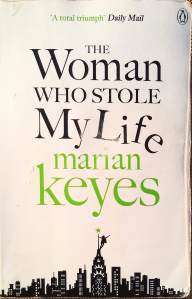
The Woman who Stole My Life by Marian Keyes.

This final holiday read was a book Liz took with her. She read it first, thought it was good and passed it on to me. I thought it was probably standard chick-lit fodder but actually it was a really good read, trotting along in a very chit chatty way, just like my own stories. It flips about timeline wise talking about things in the present and then flipping back to events of some years ago but once you got used to the situation it turned out to be a really enjoyable read.

Stella, many years ago was looking after her family when she was struck down by a mysterious illness which rendered her paralysed and unable to move or talk. Her neurologist Mannix, manages to communicate with her by getting her to blink, so he would go through the alphabet and she would blink at a particular letter and eventually they would put words and sentences together.

Gradually she begins to find that Mannix is becoming quite important to her especially when her husband and children don’t seem to be interested in either her or her predicament. When she gets well, she finds that 1, she has fallen for Mannix and 2, he has fallen for her, so much so that he has self-published a book called One Blink at a Time, a book of based on the notes he has made of their blinking conversations. Anyway, by a series of fluke events the book becomes a best seller in the USA and the two move to New York to promote the book.

All in all, a very enjoyable book indeed and I might even look at reading some more of Marian Keyes books.

That was my holiday book bag. What books are you planning to read on holiday?


What to do next: Here are a few options.

Share this post on your favourite social media!

Hit the Subscribe button. Never miss another post!

Listen to my podcast Click here.

Buy the book! Click here to purchase my new poetry anthology.

Click here to visit Amazon and download Floating in Space to your Kindle or order the paperback version.


Holiday Book Bag 2024 (Part 1)

This year Liz and I have spent five weeks in sunny Lanzarote and when we had just started week three I had run out of books. One of my great holiday pleasures is spending a lot of uninterrupted time reading in the sun. My big mistake this year was not bringing enough books and also including two very slim volumes in the ones I did bring. Sometimes in a holiday villa there will be something readable in the cupboard that other holidaymakers have left behind, but in our villa the majority of previous tenants appeared to be German and unfortunately my German language expertise only amounts to counting to ten.

Anyway, this particular book bag went on for a bit so I’ve split it into two parts and next week you can read part two. So, let’s take a look at what I have been reading in Lanzarote this winter.

The Prime of Miss Jean Brodie

I noticed this title on one of those blog posts about books you should read before you die. I knew I had a copy somewhere and after rummaging about for a while I finally came across it. It was a rather slim volume and I’d probably read it years ago but it looked interesting and so I opened it up and began to read. My big problem in reviewing this book is that I started reading it and after a few chapters put it down and began reading something else. It’s a small slim book so I popped it into my shoulder bag thinking I’d read it on the flight to Lanzarote. I couldn’t concentrate on the flight but I started reading it later by the pool but then I had to backtrack and re read some of the earlier pages so I lost the continuity. It’s about a teacher, Miss Brodie, who feels that as she is in her prime she must devote herself to a chosen group of her favourite pupils; the Brodie Set. Miss Brodie is not a conventional teacher and tells her pupils all about her visits to Italy and of her love for Mussolini and his fascists. This is done sometimes when the class should be studying mathematics and so a complicated mathematical sum is usually put up on the blackboard to fool any interlopers, like the headmistress for instance.

The Brodie Set all wonder about Miss Brodie and her love affairs and later, when Miss Brodie has lost her job, she wonders who was the traitor? Who reported her to the headmistress? Not one of the Brodie Set surely?

It’s an interesting and original book but I can’t say I was totally impressed but perhaps I should have read it properly and not put it down part way through.

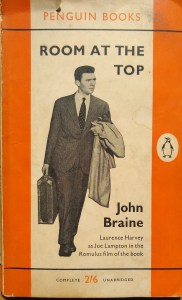
Room at the Top

This was another slim volume I found in a box of old books. I first read it in 1984 according to the note I added on the back of the cover. It’s about a young man, Joe Lampton, in a rigidly class structured 1950s England, still dealing with post war rationing and his journey from a small working class village to a room at the top of a big northern town. He gets a job as an assistant treasurer at the Warley district council and he sets his sights on a young girl who also happens to be the daughter of a rich business owning councillor. A man of his background is not the sort of man the councillor wishes to see romancing his daughter so Joe gets quietly warned off. He is jealous of former RAF pilot Jack Wales who is the sort of fellow who is much more acceptable to the councillor. Jack is a WWII hero who escaped from a prison camp. Joe was an RAF rear gunner who was also in a camp but used his time not to escape but to study for his accountancy exams.

Joe joins an amateur theatre group and starts an affair with a married woman ten years older than him. He is happy and there is talk about her divorcing her husband. This though is 1950s Britain. His involvement would mean scandal and the end of his job with the council, so what should he do?

There was a film version of this starring Laurence Harvey as Joe Lampton and Simone Signoret as Alice Aisgil with whom Joe has an affair. It’s slightly different to the book in a few minor ways but Laurence Harvey’s rather fake northern accent always puts me off.

Anyway, it was a fascinating read looking back to an England much different from today.

timestampe=1707908418

The Kennedy Curse by James Patterson with Cynthia Fagen

This wasn’t a bad read but to be fair it only really skimmed the surface of the story of the Kennedy family. There were no great revelations about the family and to be honest, I’ve read a huge amount about the Kennedy family and this was a book I could probably have written myself, at least to a certain extent. The book really begins with Joe Kennedy and his impressive rise in business and banking. He becomes the youngest ever bank manager in the USA and with his business acumen he soon amasses a large fortune along with his famous family. He supports FDR as the democratic candidate for the presidency but he wants something in return, the ambassadorship to Great Britain. Joe becomes the ambassador taking his family over to London but when the second world war looms he decides Britain will be no match for Nazi Germany.

The big problem for Joe is that FDR thinks otherwise and soon recalls Joe who finds himself out of a job. He has designs on the presidency himself but decides a better course of action would be to make his son, Joe, junior president. When Joe is killed in the war, his next son John F Kennedy has to take on the mantle.

As we all know JFK becomes president but is tragically murdered and the same fate falls to Bobby Kennedy who runs for president in 1968. Ted Kennedy decides to follow in his brothers’ footsteps but then the Chappaquiddick incident occurs when Ted leaves poor Mary Jo Kopechne to drown in his overturned car. Ted seems to ride out the ensuing scandal but it becomes clear he will never be president. The story then turns to the next generation of Kennedys who do not seem to be in the same league as their uncles and the narrative begins to turn toward drug addiction and other issues including rape charges against William Kennedy Smith, one of numerous next generation Kennedy cousins.

The story finishes with the death of John F Kennedy junior, the son of the late president, in a light aircraft crash.

A fascinating story but to be honest I’ve read better histories of the Kennedy family although this did keep me entertained for a while.

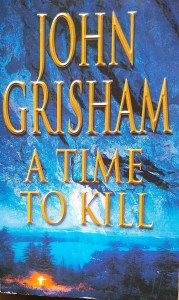
A Time to Kill by John Grisham

I’ve read a few of Grisham’s books and I’ve always been impressed with them, all except one. This one turns out to be his first novel and he says in the introduction how proud he was of finishing it as at that time, he hardly ever finished anything. It also contains some autobiographical elements as at the time, Grisham was a street lawyer, similar to the character in the book.

The book is set in America’s deep south where there is or was a great deal of racial prejudice. Two white guys decide to kidnap a young black girl, tie her to a tree and repeatedly rape her. They drive her away and dump her like garbage but she survives and the police arrest the two scumbags responsible. The next is that the young girl’s father Carl Lee Hailey decides to take a rifle and shoot the two guys. He is arrested and put on trial for murder and street lawyer Jake Brigance takes on the case.

The case ignites the small town of Clanton Mississippi. The Klu Klux Klan become involved as do various other groups and the stage is set for a tense murder trial which goes on while the police and the National Guard try to keep order.

It’s a very exciting read although the ending was a little underwhelming and if you find the N word offensive then this is a book which is not for you as that particular word appears numerous times on almost every page.

I read more books on holiday in Lanzarote. Tune in next week for more books, same time, same channel, same blog.


What to do next: Here are a few options.

Share this post on your favourite social media!

Hit the Subscribe button. Never miss another post!

Listen to my podcast Click here.

Buy the book! Click here to purchase my new poetry anthology.

Click here to visit Amazon and download Floating in Space to your Kindle or order the paperback version.

Cigarettes and Whisky and Wild, Wild Women.

This is a story about cigarettes. Women come into the picture too but not necessarily whisky. Still, it’s also about pubs and pubs do sell whisky so in a roundabout way that title isn’t such a bad one. Anyway, I’ve made the graphic now and it’s too late to change it so let’s crack on.

Even on holiday in wonderful warm Lanzarote I’m a man who needs a cup of tea, and by tea, I mean hot tea. Just think of all the workers in far off India who have worked to grow and cultivate tea leaves and package it and send it off to people like me. I wouldn’t dream of insulting those people by drinking a cup of lukewarm or even cold tea. Liz however doesn’t mind cold tea but after chatting further I found our earlier experiences have shaped our attitude to tea. She had a Saturday job working in a café and usually found that she was so busy that she had little time to drink her cuppa and generally picked it up when it was cold.

Once, many years ago, I had a cigarette vending round. I visited pubs in Merseyside, serviced their ciggy machines, filled them with cigarettes and took away the cash. A lot of the time I was in a hurry to get going to the next site. Even so, I would never turn down a cuppa and so many times I would have to drink a steaming hot cup of tea quickly so I could move on. The faster I worked, the earlier I finished and I very soon developed the knack of drinking hot tea,

Some areas of Liverpool were rather dangerous so in places like Kirkby, Croxteth and Anfield, I learned to cultivate the cleaners and find out which ones would come in early so they could in turn let me in to do my job and get going before the villains had time to wake up.

I had a fabulous van, a brand new Ford Transit. On Monday mornings I tried to be the first one in the depot in Warrington. The stock delivery came, I helped sort it out with the other early starters and then I would check my own, sign it off, fill my van and be off for a day of filling machines with cigarettes and taking cash.

I used to park as near as possible to the pub doors and knock on the windows until the landlord or cleaner would appear. A quick check for any villains (Scallies they call them in Liverpool) then I’d whip out my K9 and slip into the pub. A K9 was a big cart on wheels. On the top I would have my paperwork and my numerous keys and inside the cart would be a selection of cigarettes. Each machine usually had a big security bar. I’d insert the key and get that off and then depending on what kind of machine I had, I’d select another key and open it up. A quick clean of the coin mechanism and then I’d count the stock, fill it up and put the cash into a numbered cash bag. Then perhaps I might have time for a cup of tea and a bit of a natter to the staff. If not, I’d be off to the next pub.

Collectable cigarette item

In Liverpool my top selling brands were Regal King Size and Lambert and Butler although in Manchester their top brand was Benson and Hedges. At the end of the week if I was running low, I’d be swapping cigarettes with Paul who covered Manchester; I’d swap my Bensons for his Regals.

In some pubs I’d be just in and out but in others I became really friendly with the staff. At one pub in Huyton the cleaner was a lovely lady called Marge. She always asked me to call her when I was leaving the pub just around the corner and then she would put the kettle on and slap a couple of crumpets in the toaster. We used to have a nice brew and a natter and then I’d get on with the job of filling the ciggy machine.

Things changed a little when the company was taken over by Imperial Tobacco. I was given new sites to visit and a different accounting system. We had a gadget called a ‘ready’, a little hand held computer which totalled the stock and cash and helped with the accounting. I also got a new van, a Mercedes Sprinter van.

I always wondered at the hold cigarettes had over people. I used to service one pub that the manageress always described as being ‘out in the country’. In fact, it was about 10 minutes from the M62 motorway. Yes, it was down a country lane but it was hardly out in the country. Betty, the landlady, would sometimes call up, seemingly almost in agony because the Lambert and Butler column was empty.

“Steve,” she would wail. “We’re out of Lamberts! Everyone’s desperate, there are no shops nearby!” (Except for Asda, a ten minute drive away, just by the M62!) “We need you round here straight away!”

“I’ll be there this afternoon Betty,” I used to say. When I’d finished my normal day’s run, I’d nip onto the M62 and go round to her pub. Sometimes she would be waiting just by the emergency door and she’d open it and beckon me over.

“The Lamberts have run out Steve. Everyone’s going mad!”

I didn’t ever see any mad queues of people panicking about the lack of cigarettes. Once I went there and Betty was over with her £5.20 for a packet of Lamberts before I had even got my keys out. It turned out that the coin mechanism had been jammed up because some idiot had torn up a beer mat and shoved it into the coin slot. When I showed her, she went bonkers; “I know who that was. The bastard! Wait until I see him tonight!”

cigarette machine

It was funny to see the effect of the cigarette on her. After a few puffs she would start to calm down, the nicotine seemed to relax her and soon she was offering me a cup of tea and laughing about the whole thing. It must have been stressful to be a pub landlady.

Betty was quite a nice looking lady. She was always smart but she was always smoking. I sometimes asked her if she had ever tried to give up smoking but she would always refer to someone, her father or grandfather who smoked so many packets a day and yet lived to be eighty something. Even so, like many smokers she had a sort of grey pallor. I often wonder how she went on with the later pub smoking ban. Did she ever give up smoking? What did she do when the cigarette machine was finally taken away?

I visited another pub nearby. It was in a run down area that looked a little like Beirut. The pub was a square building with a high fence around it. Both the fence and the roof of the pub were covered with barbed wire. The car park entrance was at the back and I used to park up and ring the bell. After a while a little hatch would open and someone would say “Who is it?”

I’d tell them who I was and I’d be let in. I used to visit at about 9am and despite the early hour, the pub would be full of illegal drinkers. I serviced the machine which happily was behind the bar. The first time I went they asked me if I wanted a drink. I said ‘yes please’ and a few minutes later a pint of lager was handed to me! When they mentioned drink, I thought they meant a cup of tea! The landlord, a big sumo wrestler sized thug said “Tea? We don’t serve tea in here!”

I didn’t want to upset him so I drank the beer and left.

A few months later I returned to the pub and it was gone. When I say gone, I mean gone; there was nothing left but a smoking ruin. Later I mentioned it to Betty and she told me that the owners were in a feud with another family. They duffed up a guy from another family and so the other family duffed up a guy from their family in return. Things escalated and the other family torched the pub! Things get serious in that part of Liverpool!

One day I got robbed. Well, an attempt was made to rob my Ford Transit van. Surprisingly, it wasn’t in Kirkby, Anfield or Croxteth, some of the less salubrious areas I used to work in, it was in Haydock. I was near the end of my shift and I was visiting a small pub where I sold very few packets of cigarettes. I returned to my van and the alarm was sounding. Someone had forced open the back doors but sadly for them, just behind the back doors was another security door which they were unable to break through. It was a bit of a bummer for me though because I had to get the doors shut, report to my boss and also contact the police.

The Mercedes Sprinter van I had later had a lot of gadgets including a ‘proximity alarm’. Whenever anyone loitered too close, a voice, an American voice, used to tell people to ‘please step away from the vehicle’. It was very polite but soon everyone in the depot was trying to wind me up. ‘Please step away from the cash machine Steve’. ‘Please step away from the computer please Steve’. That alarm did lose me a lot of sleep.

I started in that job in the late 1990s and gradually government regulations became more severe. Bar towels and beermats featuring cigarettes were banned. Cigarette advertising was banned on the machines themselves. I had to take out pictures of packets of cigarettes from the advertising panels of my machines and replace them with bland pictures of a match flaring up. I left the job in 2005 and joined the Highways Agency and in 2011 cigarette machines were banned from UK pubs. Nice to see some familiar looking ciggy machines here in Lanzarote though!

In a lot of ways I miss that job. Liverpool may be rough and ready but it was a friendly place and I spent a lot of time chatting with a lot of talkative people.

And it’s where I learned to drink hot tea very quickly.


What to do next: Here are a few options.

Share this post on your favourite social media!

Hit the Subscribe button. Never miss another post!

Listen to my podcast Click here.

Buy the book! Click here to purchase my new poetry anthology.

Click here to visit Amazon and download Floating in Space to your Kindle or order the paperback version.

Fact or Fiction: Thoughts from a Sun Lounger

Here in our rented villa in Lanzarote it has been hugely relaxing. I did plan to do a lot of writing but instead I’ve been doing a lot of reading, swimming and drinking a lot of wine. To be fair I have done some writing. I’ve started two new short stories, one of which I have the story fully in my head and another that I’m not sure where it will end up. I’ve also worked on a couple of unfinished stories and blog posts. What has been interesting is that one of the books I’ve been reading by author John Grisham was actually John’s first novel and he says in the introduction that he was proud of his first book and also in particular, proud of finishing it as like me, he starts a lot of things but rarely sees them through to the end. Clearly, he’s sorted that problem out because he’s written a number of best selling books and all the ones that I have read, with one exception, have all been riveting page turners.

Grisham’s first book, A Time To Kill was based on his time when he was what he calls a ‘street lawyer’, someone hustling for cases. He explains in the introduction how the book was very autobiographical and inspired partly by dealing with similar cases and situations to the one he based the book on.

One of my unfinished stories was based on a radio play I wrote. I was hoping to get the BBC interested in it but sadly they declined. Pity, because I thought it was rather good and also it would have given me such a lot of pleasure to hear my work on Radio 4.

It was inspired by two things, the assassination of Bobby Kennedy and a film starring James Stewart. The film was called Call Northside 777. In the film Stewart plays a cynical newspaper reporter who is asked by his editor to investigate a small ad in the newspaper. The ad asks for someone to come forward who has information about a murder to call the eponymous phone number. Stewart finds the person running the ad is an old lady whose son is in prison for a murder she claims he didn’t commit. She works as a cleaner and is saving up to put together a reward for anyone having any information. Ultimately James Stewart proves that the woman’s son was innocent in part by having a newspaper photo enlarged. A key witness, and I’m going from memory here, had claimed she was somewhere on a particular date but a photo in the paper’s archive showed the woman with a paperboy in the background holding a newspaper and the photo was enlarged to show the date, which in turn somehow proved that part of her testimony was wrong.

The funny thing is that today a photo like that would have been taken by a digital camera and its quite possible the picture when enlarged wouldn’t show such detail yet with a film camera it’s a different story. Take something like the original Star Trek for instance, shot on 35mm film in the late sixties and still looking clear and sharp today. The following series, The Next Generation, shot on video in the 1980s is not remotely as sharp and it’s the older series which looks better on today’s HD TV sets.

Photography has played a big part in theories surrounding the shooting of US President Kennedy in 1963. One lady, Mary Ann Moorman, took a polaroid shot of him being struck by a bullet. The photographer was on the left of the President’s limousine and many have conjectured that in the background to the President’s right, the figure of the assassin can just be seen. I’m personally not so certain but the picture does show the grassy knoll where a second shooter may have been lurking. The other shooter, the infamous Lee Harvey Oswald was over in the Texas School Book Depository. Was he shooting at the President or having a coke in the second floor lunch room?

Polaroid by Mary Ann Moorman

Next to Mary was another lady known only as the Babushka Lady. This lady has never been identified but she also filmed the assassination and her film, if ever found, would also have great footage of the grassy knoll area. The other day I saw a very clear picture of her on a JFK site I follow. The picture had been cleaned up by new AI technology which uses computer programs to clean up blurred pictures.

Going from fact to fiction, in my story it was a UK MP who gets murdered and the accused assassin’s mother who places the newspaper advertisement. In the real murder of Bobby Kennedy, the assassin Sirhan Sirhan shot Kennedy from a few feet away and various people grabbed him just as he fired his first shot. According to the autopsy, the fatal shot was fired from point blank range, possibly actually touching Kennedy’s head so how could Sirhan’s bullet, fired from a few feet away have been the fatal shot?

The JFK assassination has inspired quite a few conspiracy films. The most famous is the Oliver Stone film JFK which dramatises the investigation by New Orleans District Attorney Jim Garrison and his probe into the murder. Stone uses the Garrison investigation to take the audience through the various stages and theories of the assassination, the number of shots, the direction of the shots, the Oswald look alikes, the murder of police officer JD Tippet, the mafia connection, the intelligence connection, the background to Lee Oswald and so on. In the film Garrison played by Kevin Costner meets an informant known only as X. I’m not sure if this ever really happened but X was based on L Fletcher Prouty, an air force officer who served as Chief of Special Operations for the Joint Chiefs of Staff under President Kennedy. He gives the audience a view of the assassination from a covert intelligence CIA background.

Another film based on the assassination was Executive Action, a phrase coined by the CIA itself and referring to their capability of assassination. The film was written by three screenwriters including Mark Lane who was the author of Rush to Judgement, one of the first books to criticise the Warren Commission report on the JFK assassination. Lane also made a film version in which he interviewed many assassination witnesses.

In the film, a group of men discuss the Kennedy presidency and agree that Kennedy must be removed for various reasons, his civil rights stance, his nuclear test ban treaty and his decision to withdraw from Vietnam. Then they set out to obtain funding from various Texas oil magnates who are also not happy with President Kennedy.

Mark Lane was actually a lawyer and he defended a magazine which was sued by E Howard Hunt, one of the Watergate burglars, because the magazine claimed that Hunt was part of a JFK assassination plot. In the following trial, Mark Lane won his case and the jurors demanded action by the government to investigate further. Nothing of course happened but that’s hardly surprising according to another book I have just read called Mary’s Mosaic. It’s about a lady who was murdered by the CIA or so the author claims, because she knew too much about the JFK assassination. The book goes on to show how the CIA was able to manipulate the media into not delving too deeply or even not reporting at all, stories like these. I’ll be reviewing the book in more detail in an upcoming Book Bag post.

Anyway, that’s enough about conspiracy theories for now. Is it worth digging out that radio play for some more work or is it time for another dip in the pool? I know this is not good for my street cred as a writer but, you guessed it, time for another dip in the pool!


What to do next: Here are a few options.

Share this post on your favourite social media!

Hit the Subscribe button. Never miss another post!

Listen to my podcast Click here.

Buy the book! Click here to purchase my new poetry anthology.

Click here to visit Amazon and download Floating in Space to your Kindle or order the paperback version.

The Big 601

It’s that time of the year when Liz and I depart for the substantially warmer climes of Lanzarote. I wrote a post a while ago called It’s C C Cold which really sums up my feelings about this time of the year. I really hate the cold. Yes, I admit I it, I hate this time of year. To be fair, this winter hasn’t been so bad in the north of England. Yes we’ve had to put up with two big storms but to be honest, they weren’t that bad, not in my part of the world anyway and apart from a few chilly days it’s not been so cold either. Even so, the cold isn’t my cup of tea.

A long time ago I relocated to a place called Newton-le-Willows. I worked in the GM Buses control room at the time and our control room was about to relocate to Atherton, a mere stone’s throw from Newton-le-Willows hence our move. I’d even been to Atherton depot and checked out the offices that were to house our new northern control room but then our bosses decided to relocate to Oldham instead. I’m not sure why but then when Atherton depot was closed down, reduced to rubble and a new housing estate was built on the spot, I pretty much understood.

Assured of the move to Atherton I went ahead and bought my new house and a short while later I was forced to drive to Oldham to report for duty at our new control room which was a heck of a journey. In the winter I left Newton which was usually raining or sleeting to find there was about 2 foot of snow in Oldham and most days of the winter I had to dig my car out of the snow before returning home.

Anyway, getting back to the present, Liz and I have jetted off to Lanzarote for a little winter warmth. I don’t mind flying, at least not the actual flying but all the other related stuff can be a bit of a pain. Going through customs and passport control for instance. I always take a bag on board the flight for my camera, iPad and laptop, all of which have to be extracted from the bag and placed in a tray in order to be X rayed. Can take you jacket off please sir? OK, jacket off. Watch off as well? No sir you can keep that on. Belt off? No you can keep that on sir. Happy days. My stuff disappears towards the X ray machine and I myself go through the electronic portal and then- Can you take your watch off please? Is there anything in your pocket? Yes, my wallet. Can you take your shoes off please? Are you wearing a belt? Take it off please. Bloody hell!

Further down the queue I’m trying to grab my laptop, put my shoes on and fasten my belt all before my trousers drop to my ankles. I can see the headlines now: Flasher arrested in passport control!

After all that the flight itself was rather enjoyable. When I left home that morning a tune was strumming around my head and it was still there as I buckled myself into my seat. I tried to hum it to Liz but she didn’t recognise it. Anyway, I glanced through the flight menu, decided what I would order later and settled down.

When we checked in online we had a bit of a panic. We had booked the flight about a year ago and we chose our seats right at the front. Since then however it looks like Jet2 have decided to use a different aircraft. It was an airbus something or other and it was one of those planes with a 2, 4, 2 set up. Two seats then an aisle, 4 seats then another aisle and the final two seats on the other side. Anyway, we had to choose our seats again and the only ones near the front of the aircraft were ones sat either side of the aisle.

Only the other day I was watching a documentary about the early days of passenger flights and the passengers boarding their aircraft were served food on proper plates and had tea in proper cups as well as wine in actual glasses. Our cheese and ham toasties were served on a piece of cardboard and the wine came with a plastic cup. So much for the advances in passenger transport.

Lanzarote may be just a big volcanic rock in the ocean but it’s a warm rock, a friendly rock and full of welcoming bars and restaurants and just the place for a winter getaway. Prices seem to have rocketed in the last few years though. Looking at my video from Lanzarote in 2021, most of the tapas at the Berrugo bar, a favourite haunt of ours were round about 4.65 to 4.85 euros. This year most of those are in the 7 or 8 Euro range and the meal we had there the other day was €8.95 and it was nice but so much smaller than it used to be.

The flip side was that it was January and we were sitting outside eating and drinking in the warm evening. That tune was still in my head and I tried it on Liz again but she still didn’t recognise it. Do you remember any words she asked? Sadly no . .

Anyway, moving on. I knew I had my 600th blog post coming up soon and this last week before getting my passport and driving licence together, sorting some euros and packing my case I tried to put together a few thoughts about what to write about. Not a lot came to mind and to be fair, I did have a lot on my mind, all those things I’ve just mentioned as well as sorting out our airport transfers and so on as well as getting a blog post ready for Saturday, the day before we left the UK. Imagine my surprise then when I realised that last week’s post, the one about romcoms was actually my big 600th blog post and I never even realised.

This week then is my 601st blog post, stretching back in a line to the 23rd of May 2014 when I created my very first post. It wasn’t anything exciting, just three paragraphs about the book I was writing and about to publish on Amazon. It was actually a pretty dreadful post and I like to think my blogs have improved a little since then. There is more to them certainly. A typical post for 2014 had 638 words, and a post in 2024 has on average 1626 words. I’ve had over 52,600 views and I’ve been shared over 12,000 times each on Facebook, Twitter and Reddit as well as other social media sites. Every post I’ve ever produced finishes with a little bit of a plug for my book Floating in Space or my poetry anthology so clearly I’m getting my message out there but as sales for either haven’t yet gone viral I’ve had to call Ferrari and tell them to put a hold on the new sportscar I ordered a while ago. I hope that when I can finally afford it, I’ll still be able to actually get in it as my back is giving me a heck of a lot of pain lately.

The plan for this holiday has been to take it easy and do a little light exercise like walking and swimming and try and slim down a little. So far I’ve managed to swim every day and when we visited Casa Carlos, another of our favourite restaurants, I found I had to move my trouser belt up to the next notch which must be a good sign.

Another plan was to make a big effort at writing and while I have done a little of that, the lure of the pool, the sunbed and a good book has so far been a little too much.

Yesterday I still had that tune in my head and I finally began to recognise a little more of it. The singer was Neil Diamond and yes, I finally recognised the tune.

“What is it?” asked Liz.

“Yes I’ve finally got it, it’s The Reverend Blue Jeans!”

“What?”

“You must have heard it. Neil Diamond, The Reverend Blue Jeans?”

“You total divvy! It’s called Forever in Blue Jeans!

Forever in Blue Jeans? Really?”

Oh well, I might save that for a misheard lyrics post. Watch this space!


What to do next: Here are a few options.

Share this post on your favourite social media!

Hit the Subscribe button. Never miss another post!

Listen to my podcast Click here.

Buy the book! Click here to purchase my new poetry anthology.

Click here to visit Amazon and download Floating in Space to your Kindle or order the paperback version.