Ok, here we go. It’s 2025 and it’s time to kick off with my first proper blog post of the New Year: I settle down in front of the fire, crank up my trusty old laptop. The blank page glares at me as usual; what to write about today?
 I first started posting in 2014 and that year I managed to get 2341 views which I was pretty pleased about. If I had also managed to sell 2341 copies of any of my books, I would have been even more pleased but hey, that’s another story.
Last year in 2024 I managed to accumulate a total of 14,182 visits which is pretty fantastic although I’m sure there are plenty of blogs out there that have an even larger readership. My most read post has been Manipulating the Image, a look at various aspects of photo manipulation. I’ve tried a couple of follow up posts on the same subject but that post, actually from 2022, continues to boost my readership. Why is it so popular? I really don’t know despite looking at things like subject matter, keywords, search engine optimisation and so on, I still don’t understand its popularity.
A lot of blogs on the internet seem to focus on a particular subject. Things like cycling, classic films or canal boating for instance. Those blogs always know where the next post is coming from; another cycling trip, another classic film review or canal journey. As there is no actual focus on this blog it’s sometimes hard to hone in on a new subject although generally, I stick to books, films and my little old life. Plus the occasional plug for my three books.
I have tried to occasionally write one of those ‘how to’ blog posts and impart some of my blogging knowledge to my readers and fellow bloggers but I reckon those sort of posts might be of interest only to my fellow writers. One of my previous posts was about three ways to write a poem (click here for the video version) and when it comes down to it, I think those three ways could also be used to write a blog post.
The first way was the easy way, a flash of inspiration; a great idea comes to you out of the blue and hits you square in the face and you are off and running. That is probably the best way to write a post or a poem. The second way is when something happens to inspire you. In my poetry example I wrote about a time when I returned home and went into the kitchen to make a cup of tea. While I was waiting for the kettle to boil I looked out of the window and watched the cat that belonged to the house opposite make its way across their lawn, take a good look around and then settle down under a small young tree and go to sleep in the afternoon sun.
Later subdued screams and cries were heard over the way and it turned out that the lady of the house had returned home to find her cat was sadly dead and it seemed to me that I had seen the cat resign itself to its fate, even taking a last look around before slipping away to start the next of its nine lives. Inspired by these events, shocked even, I went away and began a poem.
The third and final way of writing a poem or indeed any kind of creative work is an obvious way known to all professional writers everywhere and that is simply hard work. Unlike mere amateurs like me, the professional has no choice but to sit down and get on with things, firm in the knowledge that at a certain time their editor or publisher or Hollywood producer will be asking for that article, blog, book or screenplay.
I too have my deadline, that of 10:00am on a Saturday morning and sometimes even that is hard to work to. Sometimes I have finished a post on Friday afternoon and have passed it over to my proofreader for a quick final check, confident that all will be well for Saturday and then later find that I have forgotten to hit the schedule button or even worse, scheduled the post for the wrong day.
Coming up with a new blog post week after week just seems to get even harder and here I am on my 649th post. Six hundred and forty-nine posts! I suppose to those of you who have been writing for years, 649 may not be such a big milestone but for an amateur writer like me, it’s pretty special. The crazy thing is this, looking through my diary from a few years ago I see I was commenting on one of those online forums, praising WordPress and blogging and someone commented that if I hadn’t been blogging I might have finished my second book!
 Looking back I now wonder whether that guy was actually right. 649 blog posts, times my average word count per post: That comes to over 700,000 words. I could have written another book and to be fair, that was part of the idea behind Timeline, to utilise all those old forgotten posts in a new collection of stories and blog posts. Perhaps I could have written another novel. But then again, it’s not just the words, it’s the idea behind the words, the creative thrust of a book that’s important. Get that and the book should just follow. Still, that fellow had a point. Should I give up my blog posts in favour of my book? Well, if that would guarantee me producing a book then yes, great! The thing is, it’s not a lack of words that have kept my sequel to Floating in Space in a constant state of abandonment. It’s really my own laziness.
Laziness, fear of the blank page, procrastination, they are all enemies of the writer. The only way to overcome them is just to keep on writing. If you are writing a blog post and it won’t come, switch to something else; that other post you had on the back burner or that script you had started a few years back. A great deal of my work is done like that, in small bursts of activity. A while back I had an idea for a film screenplay and worked away creating the first quarter of the work. Later I decided to turn it into a book and as I worked with the text, adding in all sorts of detail that wasn’t in the original script, the story came alive to me in a different way and I started to bring something new to the book version. Don’t hold your breath though, it’s still far from completion.
Oh well. Here’s another script story. Ages ago when I first met Liz and we began socialising in St Annes, we started frequenting Wetherspoons there. It’s a pretty friendly pub and we made friends with quite a few people. There was Big Steve who I wrote about in another post but we also met two guys, Craig and Danny (as usual, names have been changed to protect the innocent!) They were brothers in law who were married to twin sisters and they both owned and ran small hotels in St Annes. The hotels were on the same street opposite each other and the sisters were identical twins so their whole scenario seemed to scream ‘sitcom’ to me.
I used to ask them what funny things had happened to them in their work as hoteliers and being married to identical women. ‘Loads of things’ they would always say but I could never get any details. Anyway, when I had a quiet moment, I started off a pilot sitcom script using their situation, rival hoteliers married to identical sisters. It’s nothing brilliant but mildly amusing and it sat in my documents folder for a long time. Every now and again when I slipped into that blank page syndrome, I’d pull out the script and add a few more pages.
One day I noticed on one of my occasional visits to the BBC Writersroom page that a window of opportunity was coming up for a sitcom script. The BBC, rather than accepting ‘spec’ scripts all year round open a small ‘window’ of a few weeks where you can submit your work in certain areas, sometimes a film script or a play, sometimes drama, other times situation comedy. I went back to my sitcom script, pulled it quickly into some sort of shape, added an ending and bunged it off to the BBC. Then I sat down and waited, glued to my inbox, awaiting the BBC email that may or may not even arrive.
Of course, I do wonder what might happen if the BBC actually decided that my sitcom script is worth making into a pilot? Imagine if the BBC said “we’re going to make a twelve episode series!” Imagine me trying to write twelve episodes when it took me months to write one 25 minute episode! Even the great Spike Milligan had a nervous breakdown writing the numerous scripts of the radio show ‘The Goon Show’. Of course, someone at the BBC could be reading this very post. Did I say something about 12 episodes? Would I be able to write 12 episodes?
Of course! What’s 12 episodes to a top writer like me? I might even start episode 2 straight away. Well, straight away after a cup of tea. And maybe a sandwich. Better make it first thing tomorrow. Well, tomorrow afternoon might be better . .
 It seems like only yesterday that I was writing a blog post about looking back at 2023 and now, here I am looking back at 2024. I don’t intend to cover everything that happened to me in 2024 but just to mention a few things of interest and of course, a few of my own blog posts.
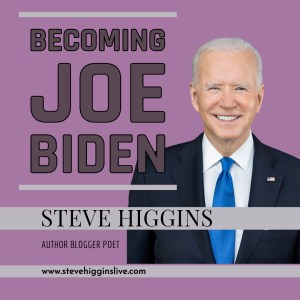 In September after a disastrous debate with Donald Trump, US President Joe Biden began to realise what everyone else was thinking, namely that perhaps he was getting a little too old to be the president and so he stepped down as a candidate in favour of vice president Kamala Harris. That inspired me to write a little quirky fantasy post called
 Sting, aka Gordon Sumner was the lead singer, bass guitarist and writer. Stewart Copeland was on drums and Andy Summers played lead guitar. Their first hits were Roxanne and Can’t Stand Losing You released in 1977 from their debut album Outlandos d’Amour. They had numerous hits, all penned by Sting until their eventual break up in 1986 although they returned for a reunion tour in 2008.
 Some years ago I watched a documentary about Kate on
 It took me three attempts to pass my driving test. Still, it was difficult for me. We had no family car. I doubt if we could have afforded one even if my father had been able to drive. That meant that when I had my driving lesson of just an hour a week, by the time the next week came around I was almost back to square one again. I failed my test twice and then bought a motor bike. It was a Honda 125cc trail bike. I loved it but the day it was delivered my brother and I went to see
 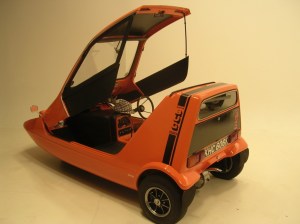 It was actually a pretty eye catching car for a three wheeler. It had no doors but the roof lifted up to gain access and the side windows were plastic held on by Velcro. I always remember bringing it home and showing it off to my family with a certain amount of pride and my Dad looking at it and saying “How are we all going to get into that?” Perhaps he thought I was going to take us all away for a holiday!

 This the third instalment of a post on the theme of transformations. The very first one (
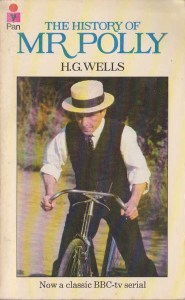 This is not a science fiction story despite being penned by H G Wells. Our hero, Mr Polly, finds himself in a very dull job with a very dull wife and resolves to commit suicide. Anyway, events unfold and instead of committing suicide, Polly accidentally starts a fire which threatens the whole street and he then mounts a brave rescue of an old lady. Instead of dying, Mr Polly becomes a hero and when the insurance money comes in, he leaves his wife nicely settled with the insurance money, takes a little for himself and departs for pastures new. He sends some money to a post office in another village and gradually meanders in that direction, sleeping in fields and hedges, getting himself a tan. He works occasionally when he wants and sleeps when the mood takes him at other times.
 A film version was made in 1949 starring John Mills as Mr Polly and Megs Jenkins as the landlady of the Inn where Polly finds happiness.
 Having the odd day just pottering about is good for the soul and for me, an opportunity to indulge in numerous cups of tea and sandwiches. I really do like my sandwiches.
 OK, let’s get started. The first thing to remember about blogs is that a big wall of text tends to put off readers so it’s a good idea to break up the text with a few pictures. What kind of pictures though? Well in the blog posts themselves I’ll use either my own photos or use an online stock photo site like


 trickier. First the user has to upload pictures of the person you want to make an AI model of, in this case me, then you add a prompt to describe the picture you want. On Nightcafe and many other AI sites too, you can upload a picture and develop it. On Freepik you can hit the reimagine button and a different version of your picture will appear.
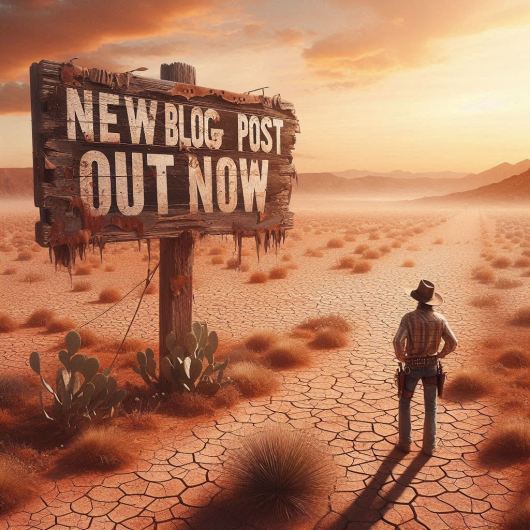
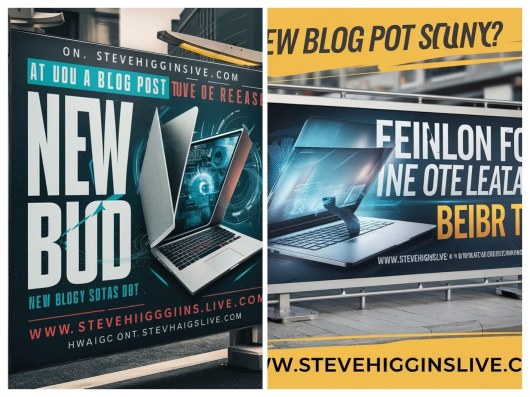 Both of the images above were supposed to say ‘New blog post out now!’ Oh well.
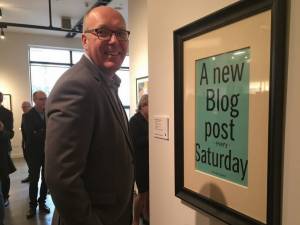
 OK, what AI image can I create now for my next social media post? What about an art gallery, perhaps seen from above? Light streams in dramatically from windows off to the side. It’s a wide angle shot, looking down. Art lovers are admiring a new poster advertising my blog. It should turn out something like this . .
 This week I thought I’d continue with my theme of