Famous People and Favourite Books

This isn’t a post about my favourite books. I’m pretty certain I’ve done that one already but I thought I’d talk about the favourite books of some famous people and I’d like to start with one of my film heroes, James Dean.

James Dean and The Little Prince

Back in the 1970s my Saturday ritual involved getting the bus into town and scouring book and record shops for books and records. One day back then I was flipping through the posters in one particular shop. The posters were the music stars of the 70s, Elton John, Mick Jagger, Suzi Quatro, David Bowie and so on but one was a picture of a really good looking guy with a fifties combed back hair style. In some pictures he was dressed like a cowboy and in others in a red jacket and denim jeans. The guy behind the counter must have seen me wondering who the guy was and he told me he was a film star called James Dean. He handed me a paperback book about the actor and I took it home and read it and very soon I was trying to find out everything I could about Dean.

Dean had been killed in a car crash in 1955 and had only appeared in three films and at the time of his death, only one of those films had been released. I read a great deal about Dean and from what I could find out, the biography to read was written by his best friend, William Bast. I never managed to get a copy of that book but Bast produced a made for TV film version, James Dean: Portrait of a Friend with Stephen McHattie as Dean.
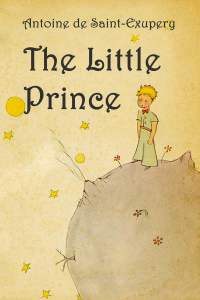
In the film William Bast played by Michael Brandon, leaves Dean in a restaurant and Dean later asks why Bast left. Bast was intimidated by Dean’s important looking friends and Dean replies that he was judging by surface appearances. When Bast questions Dean further, Dean produces his favourite book, The Little Prince and then goes on to read his favourite passage.

In the book Dean explains, the Little Prince is from a distant planet. He meets a fox but the fox won’t play with the prince because he hasn’t been tamed.

Later the fox gives the prince a secret which is this: It is only with the heart that one can see rightly, what is essential is invisible to the eye, something which Bast claimed was the secret to Dean’s style of acting.

James Dean was killed in 1955 and in later life William Bast wrote another book about James Dean claiming that the two were lovers and that Dean was gay.

The Little Prince was written by Antoine De Saint-Exupéry and according to Wikipedia has sold an estimated 140 million copies. It is also the second most translated work ever, only beaten by the Bible.

What did Dean see in the book? Well, it was a childhood favourite of his so perhaps it brought back memories of happy times, or perhaps it was just the undeniable charm of the book that appealed to him.

Donald Campbell and 1001 Nights
Donald Campbell was the son of a famous racing driver and record breaker, Sir Malcolm Campbell. Campbell first broke the land speed record in 1924 at Pendine Sands in Wales which was the first of his nine land speed records. He also set the water speed record in his boat Bluebird K4. He was knighted in 1931 and died in 1948 aged 63. He was one of the few racing drivers and land speed record holders of his era to die of natural causes as many of his rivals were killed in crashes. His son, Donald Campbell, was determined to equal and even surpass his father’s achievements.

He set about doing so with the help of his father’s engineer, Leo Villa. He made various runs at the land speed record, his last was in Australia. He chose to run his Bluebird car at Lake Eyrie and the vast dry salt lake bed offered the perfect course. It hadn’t rained there for nine years but Campbell had just started his trials when the rains came and ruined the course. Eventually Campbell managed to raise the record to 403.10 mph in 1964 but the huge expense and difficulties of the project cast a great strain on Campbell. In November of 1966 he tried for a new water speed record at Lake Coniston but once again, bad weather caused problems. He was still at Coniston in the following January and when the weather improved, he tried for the record. He was killed in his Bluebird boat on the 4th January 1967.

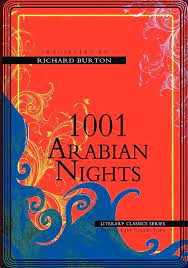
In the BBC film Across the Lake, Campbell was played by Anthony Hopkins and claims his favourite book was 1001 Nights. The book is a collection of Arabian folk tales perhaps more well known in England as The Arabian Nights. The book is about a king who after finding that his brother’s wife has been unfaithful, decides that all women are the same. He decides then to marry a succession of virgins and after their wedding night have them executed to make way for the next, One day he marries Scheherazade who tells the king a story but promises to finish it the next night. The king delays her execution wanting to hear the end of the story but the next night she starts another one, again promising to finish the story the following night. The stories go on for a thousand and one nights, Scheherazade telling more stories in order to save herself from execution.

The screenplay for Across the Lake was written by Roger Milner and was based on true events although whether that includes Campbell’s love of 1001 Nights or not, I’m not sure. In the film Campbell gives a girlfriend a necklace inscribed with a quotation from the book. ‘Beautiful of face with attributes of grace’, a reference to Scheherazade herself.

Noel Coward and The Railway Children

This is perhaps where this post might start to unravel. I know the Donald Campbell link was a little tenuous and only based on a film but this next one was based on my own memory which can be prone to failure. I knew Noel was a great fan of the children’s writer E Nesbit and I’m sure I had heard or read somewhere that when he died, he was reading his favourite of that author’s books, The Railway Children. A quick bit of internet research and I see that Noel died after reading Nesbit’s The Enchanted Castle. Coward was a lifelong fan of E Nesbit who wrote a series of children’s books. He discovered the books as a child and revisited them many times during his life. In his diary he wrote this about the author:

“Sunday 3rd February 1957. I am reading again through all the dear E. Nesbits and they seem to me to be more charming and evocative than ever. It is strange that after half a century I can still get such lovely pleasure from them. Her writing is so light and unforced, her humour so sure and her narrative quality so strong that the stories, which I know backwards, rivet me as much now as they did when I was a little boy. Even more so in one way because I can now enjoy her actual talent and her extraordinary power of describing hot summer days in England in the beginning years of the century.

All the pleasant memories of my own childhood jump up at me from the pages… E. Nesbit knew all the things that stay in the mind, all the happy treasures. I suppose she, of all the writers I have ever read, has given me over the years the most complete satisfaction and, incidentally, a great deal of inspiration. I am glad I knew her in the last years of her life.””

The Enchanted Castle is about a country estate and three youngsters who meet a princess and discover a magical ring. I have never read either that or the Railway Children although I did find a copy of that latter book not long ago. The film version is a delightful adaptation that has been seen and loved by many generations of children and adults since it was released in 1970. It was written and directed by Lionel Jefferies and stars Jenny Agutter and Bernard Cribbins.

Noel Coward died at his home in Jamaica in March of 1973.

Woody Allen and The Catcher in the Rye

Woody is one of my favourite film directors and after a search on the internet looking for more favourite books from my favourite people, I found he was apparently greatly inspired by The Catcher in the Rye by J D Salinger. Woody had this to say about the book:

“The Catcher in the Rye has always had special meaning for me because I read it when I was young – 18 or so. It resonated with my fantasies about Manhattan, the Upper East Side and New York City in general.

It was such a relief from the other books I was reading at the time, which all had a quality of homework to them. For me, reading Middlemarch or Sentimental Education was work, whereas reading The Catcher in the Rye was pure pleasure. The burden of entertainment is on the author. Salinger fulfils that obligation from the first sentence on.”

I can understand Woody when he talks about books that have a quality of homework about them. Many classic books I’ve tried to read, particularly in recent years, have left me disappointed and with that same feeling that Woody describes.

I read Catcher in the Rye a long time ago and rather than inspiring me, I found it dreadfully boring and pointless. The hero, Holden Caulfield goes to New York and basically moans about all the things he finds false and ‘phoney’ about the city and its people. Mark Chapman, the murderer of John Lennon, was obsessed with the novel and left behind a copy after he had shot Lennon with a note saying ‘this is my statement’.

Sorry Woody, you and I will have to disagree about Catcher in the Rye.

So what is my favourite book? Well, I’ve got quite an extended shortlist but I think I’d have to plump for David Copperfield by the wonderful Charles Dickens. I first read it many years ago and perhaps the moral of this post is that the books we love in our youth are the ones that continue to give us pleasure in later life.

What is your personal favourite?


Sources:

James Dean: My own imperfect memory.

Donald Campbell; the film Across the Lake.

Noel Coward: https://www.noelcoward.com/

Woody Allen: https://fivebooks.com/best-books/woody-allen-on-inspiration/


What to do next: Here are a few options.

Share this post on your favourite social media!

Hit the Subscribe button. Never miss another post!

Listen to my podcast Click here.

Buy the book! Click here to purchase my new poetry anthology.

Click here to visit Amazon and download Floating in Space to your Kindle or order the paperback version.



The TV Shows of Gerry Anderson

Many years ago when I was still at junior school, one of my friends asked me if I had seen a new TV show about a flying car. I hadn’t but apparently it was really good and so I made a mental note to watch out for it. As a child I was pretty keen on TV. My dad used to call me ‘square eyes’ because I watched so much TV and as you might imagine I soon found the TV show my friend had told me about. It was a short puppet show about a special machine called Supercar that could not only fly but also dive under the sea. It was designed and built by Professor Popkiss and Dr Beaker and the test pilot was a guy called Mike Mercury. I loved Supercar and everything about it and even though I didn’t realise it then, I had become a huge fan of TV producer Gerry Anderson and his Century 21 Productions.

Gerry Anderson was born in 1929 and after the war earned a traineeship with the British Colonial Film Unit. Later he worked for Gainsborough Pictures and had various jobs, subsequently as a director. He and cameraman Arthur Provis formed a production company called AP Films after their two names and began producing TV shows for children. Their first project was in 1957 called The Adventures of Twizzle and was the first time Gerry worked with puppeteer Christine Glanville, musician Barry Gray and special effects supervisor Derek Meddings.

They followed up with more puppet shows, Torchy the Battery Boy and the first series I remember, Four Feather Falls, a cowboy show about a sheriff with magic guns.

Anderson married his wife Sylvia in 1960 and the two collaborated on Supercar, Gerry’s first sci-fi puppet show in 1960. The series marked the first time Gerry used the name Supermarionation to describe the process which enabled the puppet mouths to move in synchronisation with pre-recorded dialogue. All the characters in the shows had American accents so the shows could be sold to the USA and it was Sylvia who was responsible for the characters and their fashions while Gerry concentrated on other aspects of the shows.

The next series was Fireball XL5 about a spacecraft that was part of the World Space Patrol piloted by Steve Zodiac. The following show, Stingray was the first to be filmed in colour. Stingray was a submarine in the service of the WASP, the World Aquanaut Security Patrol and was piloted by Troy Tempest and his colleague ‘Phones’ who was a master at using sonar equipment. The duo discover an undersea kingdom where King Titan holds sway over his people, the Aquaphibians. Troy and Phones rescue the mute undersea girl Marina who joins them onboard Stingray. Most of the characters had sea related names like, Marina, Commander Sam Shore and his daughter, Atlanta. Atlanta was voiced by Lois Maxwell who played the original Miss Moneypenny in the James Bond films.

Stingray was probably my favourite of Anderson’s TV shows. I particularly loved the opening sequence in which Commander Shore exclaims ‘Anything can happen in the next half hour!’

Stingray was filmed in 1964 and the show fitted neatly into the expanding Anderson universe set, like all his sci-fi shows, 100 years into the future. Around this time AP Films developed a merchandising company responsible for licensing all kinds of items related to the shows, things like models and puppets and so on. I used to have a puppet of Venus, the space doctor from Fireball XL5 although I think I would have preferred a Steve Zodiac puppet. I had a Fireball XL5 rocket which could be fired into the air with a big catapult and as it came down, a parachute deployed to float it down gently. I also had quite a few Stingray models. One was a plastic kit I had to put together and another was a plastic Stingray shaped water pistol.

image courtesy flickr

There was also a comic which I absolutely loved called TV21 with comic strips of all the sci-fi Anderson shows. TV21 had a front page fashioned like a newspaper with headlines referring to the stories coming up on the inside pages.

The next project for AP Films was probably Gerry and Sylvia’s greatest success and it was called Thunderbirds. Thunderbirds was about a secret organisation called International Rescue that had a small fleet of highly advanced machines and equipment with which to perform rescue operations. Millionaire ex-astronaut Jeff Tracy was the head man and the organisation was secreted in his island home. His five sons were the Thunderbird pilots, John, Scott, Virgil, Gordon and Alan, all named after US astronauts of the 1960s. The genius behind the Thunderbird craft was Hiram Hackenbacker, known as ‘Brains’. Thunderbird’s nemesis was a secret agent known as the Hood because of his talent for disguise and in many episodes the Tracy brothers had to ask their London agent, Lady Penelope, to track him down and sort him out.

Lady Penelope Creighton-Ward lived in a huge mansion somewhere in southern England and her manservant and chauffeur was Parker, a reformed safecracker. The head of ITV Sir Lew Grade saw the first episode and was so impressed that he asked for the episodes to be extended from 30 minutes to a full hour, less TV adverts of course. Gerry wanted Fenella Fielding to voice Lady Penelope but in the end Sylvia herself took on the role.

Thunderbirds is probably my second favourite of all the Gerry Anderson series. The great thing about it and really, the secret of its success was the highly intelligent scripts which treated its audience of children not as kids but as intelligent young adults. Two scripts that spring to mind were one called The Cham Cham about a code transmitted on a musical melody and another where Parker was called upon to break into the Bank of England. Later in the episode someone is trapped inside the vault and Parker is asked to break in again to rescue the man before the air is used up in the vault. Parker though thinks that his old mate, a bank robber recently released from prison, is about to complete his life’s ambition to break into the bank and so he tries to slow down his and Penelope’s drive into London.

A successful feature film, Thunderbirds are Go, was made in 1966 and AP Films began a new life as Century 21 Productions.

The follow up TV series was called Captain Scarlet and the Mysterons. Captain Scarlet is part of an organisation called Spectrum in which all the members have code names relating to colours. The Mysterons have the power of re-animation and both Scarlet and Captain Black have been re-animated giving them powers of indestructibility. It wasn’t really my cup of tea but the puppets in the series made a step forward in having normal dimensions instead of large heads like the previous shows.

Two further puppet shows followed, Joe 90 about a young boy who becomes a secret agent by using the brain patterns of various people. His father, Professor MacLaine had designed a machine called the Big Rat (Brain Impulse Galvanoscope Record and Transfer -funny how all these old acronyms come back to me!) The Big Rat takes the brain pattern of a pilot for instance, feeds them to the professor’s young son -the Joe 90 of the title- and he is able to fly a plane.

The Secret Service was a mixed puppet/live action series about a secret agent who is shrunk down to a small size and the producers used puppets in normal sized sets. Stanley Unwin played the role of an eccentric vicar who is part of a secret organisation called BISHOP (British Intelligence Service Headquarters – Operation Priest). The series was cancelled after 13 episodes as Lew Grade didn’t think the inclusion of comedian Stanley Unwin and his gobbledegook language would work in the USA.

Gerry Anderson’s ambition was always to leave the puppet shows behind and move on to live action features and after a live action sci-fi film Doppelganger, Gerry began work on UFO. UFO was set in the 1980s and was about a secret organisation called SHADO (Supreme Headquarters Alien Defence Organisation). The Earth is under attack from UFOs and it is SHADO’s job to defend the world. The headquarters is based in the Harlington-Straker film studios with an outpost on the moon called Moonbase. Moonbase tracks the UFO’s with the help of SID (Space Intruder Detector) and launches their interceptors. Ed Bishop, previously the voice of Captain Blue in Captain Scarlet, played Ed Straker and Gabrielle Drake was the Commander of Moonbase.

I loved the series but the TV networks were unsure whether UFO was aimed at children or adults, presumably because of Gerry Anderson’s previous childrens’ shows. Anderson prepared for the second series in which the American networks had asked for more lunar based stories. Many new sets were built and then series 2 was cancelled. Gerry then offered the networks a new show, Space 1999, centred entirely on the moon.

In Space 1999, a series I never really liked, a nuclear explosion pushes the moon out of earth orbit and out into space and the series chronicled the adventures of those still living on Moonbase Alpha. Husband and wife team Martin Laudau and Barbara Bain starred in the show which ran for two seasons but during the production Sylvia and Gerry divorced.

Gerry returned to producing more TV shows for children like Terrahawks and Space Police but even though new technology and techniques helped with the puppetry and filming, without Sylvia and her characterisations, those productions were a little lame.

In the 1990s Gerry produced a new series of Captain Scarlet replacing the puppets with computer animations.

Gerry Anderson died in 2012 aged 83 while Sylvia lived to be 88. In 2015 she made a guest appearance in an episode of a new animated series of Thunderbirds are Go as Great Aunt Sylvia, a relative of Lady Penelope. She died in 2016.

The two left behind a legacy of some much-loved television shows but what was the secret of the success of Gerry and Sylvia’s original productions? Personally, I think there were a number of elements: Outstanding and intelligent scripts that treated the younger viewers as young adults. The fabulous music and theme tunes of composer Barry Gray. The wonderful characters created by Sylvia. The special effects from Derek Meddings who went on to work on the James Bond films and of course Gerry Anderson who brought all those elements together.

This year, 2023, Thunderbirds can be seen on the Talking Pictures TV channel, 58 years after it was first seen on TV.


What to do next: Here are a few options.

Share this post on your favourite social media!

Hit the Subscribe button. Never miss another post!

Listen to my podcast Click here.

Buy the book! Click here to purchase my new poetry anthology.

Click here to visit Amazon and download Floating in Space to your Kindle or order the paperback version.

Tapes and Tape Recordings

I started work in 1973 and one of the first things I wanted to buy with my new found income was a cassette tape recorder. To be honest I can’t think of anything that had such a profound effect on me until the video camera or the home computer which both came along many years later.

I had a huge amount of recorded music of course. By the mid-seventies my record collection was already pretty big and I was buying vinyl records, usually 45 rpm singles, every week. My tape recorder had a built-in radio so I could record my favourite tracks straight onto tape for free and I spent a lot of time taping the new top twenty which came out every Tuesday. The other thing I could do with my tape recorder was record myself with a microphone.

I used to write some rather silly plays made up of sketches based on Monty Python and Spike Milligan and my brother Colin and I used to read the parts. One tape I digitised some years ago featured a cowboy sketch with dialogue something like this:

Colin: (Fake John Wayne voice) You’ve got a helluva chip on your shoulder.

Me: (Fake James Stewart voice) That’s not a chip, it’s a potato!

If you think that was bad, here’s another sketch, this one was a spoof on The Glenn Miller Story.

Me: (Fake James Stewart voice) You know I’m still searching, still trying to find that sound, that special sound . . .

(Colin aka Special effects man: Flushes the toilet.)

Me: (Fake James Stewart voice) That’s it! The sound, the special sound I’ve been looking for!

Later on, I bought myself a music centre which for the benefit of any younger readers was a record deck, a tape recorder and a radio all in one unit. I could then record my music onto a tape and make up music collections. They called them ‘mix tapes’ which to be fair was not a phrase I ever heard back in the seventies but I seem to hear quite a lot these days. Anyway, I used to make lots of mix tapes which became even more important when I bought my first car. To record music back then you had to actually play the record to copy it onto tape so each of my tapes in a way reflected the atmosphere in my bedroom as I played and copied one track after another, each track in turn inspiring the next and then the next and so on. I loved my mix tapes.

Probably the most famous tape in TV fiction was the tape used in Mission Impossible.

The TV show was created by producer Bruce Geller and concerned a team of special agents known as the Impossible Missions Force. They are a US government agency which takes on hostile foreign governments, South American dictatorships and criminal organisations.

A great feature of the series was the opening title sequence which involved a match being struck and then lighting a fuse shown over quick clips of the upcoming episode to the sound of the iconic theme tune written by Lalo Schifrin. Next, Jim Phelps, the head of IMF would listen to his tape-recorded instructions which, after being played, would then self-destruct. Phelps would then look through his agents’ files complete with photos and choose who he wanted for the mission. Sometimes a guest star would play one of the agents who would be introduced by Jim checking out his dossier. A team briefing would then take place and the mission would get under way.

The show was re-booted in 1996 as a film franchise starring Tom Cruise.

When I bought my music centre, I realised I could actually connect my old tape recorder into the music centre and make tape to tape copies so I began to edit my tapes, particularly those radio recordings where I could edit out things like DJs who talked too much or songs I didn’t like. I also used to review my recordings and put together what I called a Tape Review in which I spoke with a microphone and introduced various recordings.

Another tape I made was called ‘Self Portrait in Tape’ which was me yakking away into the microphone talking about my favourite books, TV shows and of course introducing some of my favourite music.

My childhood friend Steve and I were both big record buyers and music fans. We interviewed each other on tape about our music loves in the style of a radio show of the time called ‘My Top Twelve’. The show was really a rip off of Desert Island Discs in which a celebrity is interviewed and talks about their favourite music and Steve and I did the same. I reviewed my tape back in 2017 when I digitised it and transferred it to a CD. I have to say I was surprised at some of the music choices I had made back in the mid-seventies and in the CD version I did give certain tracks the chop and add some additional ones plus I added some comments in a new voiceover discussing how my musical tastes had changed.

In the 1990s I bought another music centre, a mini one with a CD player and tape recorder with which I used to copy my CDs onto tape to play in my car. My car at the time was a Rover and it had a tape player and it wasn’t until 2020 that I bought a car with a CD player and it was only then that my mix tape producing days were over.

The Watergate Tapes.

I have always understood that John F Kennedy was the first President to install a taping system in the White House though Wikipedia seems to think the practice began with Roosevelt. Many of the recordings made during Kennedy’s presidency have been released to the public including those of cabinet meetings during the missile crisis of 1962.

President Lyndon Johnson carried on the tradition of taping and recording phone calls and numerous calls have been declassified and released by the authorities. Some with a special poignancy were even recorded on Air Force One on the 22nd November, 1963, the day Kennedy was shot and Johnson elevated to the presidency.

Anyway, despite his two predecessors, the President most famous for taping in the White House was Richard Nixon and it was the ‘Watergate tapes’ that were at the heart of the Watergate scandal.

The White House under President Nixon was worried about security. When Nixon realised the FBI weren’t willing to do his bidding, he created a security team which became known as the Plumbers. It was their job to plug the leaks to the press and they were also used to get information on Nixon’s rivals in the election.

A team of five men entered the Watergate building on the night of June 16th/17th 1972. Sometime after midnight on the 17th a security guard noticed that various doors into the building had been taped, preventing them from locking. He called the Police and the five men were arrested. They all had connections to the White House. Various investigations began and the President himself was implicated but things changed when investigators became aware that conversations in the Oval Office had been recorded. Would the tapes prove or disprove that Nixon knew about the break in? Well President Nixon refused to hand over his tapes at first but when he finally succumbed to pressure and handed over some, they revealed him to be foul mouthed, bigoted and small minded.

Nixon resigned from the presidency on August 8th 1974.

The Watergate tapes can be listened to on the university of Virginia’s Miller Centre for Public Affairs. (millercenter.org)

I read on the internet that cassette tapes are making a comeback. CDs and digital recordings are of a much higher quality than cassette tapes but tapes are handy, easy to use and certainly in the old days they were pretty cheap. I’d make a music tape up and if it jammed or broke, I’d just throw it away and record a new tape. Recording a music tape was always an experience because, as I mentioned earlier, you had to record it live, you had to actually play the record or CD to copy it onto tape unlike the CD compilations I make nowadays. Those are made by just dragging and dropping a track into the CD burner file so you only get to hear it after it is made.

Tape cassette

Prior to the digital revolution, singers and musicians recorded their songs on vinyl but the vinyls were produced from master recordings made on tape in a recording studio. Pressings of a record are made from a mixing of the master tapes. These days, quite a few classic albums have had their master tapes digitised and many new mixes of old recordings have been released. I’ve got a few albums which have been rereleased in this way; they are a little like ‘director’s cut’ versions of old albums with new mixes, outtakes and alternative versions, so Paul McCartney’s Band on the Run becomes three CDs instead of one, same for Rumours by Fleetwood Mac. Two interesting albums but to be fair, I prefer the original versions.

As I write this, the Beatles are once again running high in the pop charts with a ‘new’ release. Back in the 1970s, John Lennon switched on his cassette recorder high up in his New York apartment and recorded a demo of a song he had written called Now and Then. Yoko Ono passed the tape to the surviving Beatles some years ago and Paul McCartney, Ringo Star and George Harrison tried to make it into a new song. Alas, the background hum on the tape could not be removed and neither could the sound of Lennon’s piano. Recently however, new technology has enabled Lennon’s voice to be cleaned up, Harrison’s guitar has been added as well as new additions from Paul and Ringo. The result is what people are calling the very last Beatles song ever.

Many fans think the result is wonderful and it’s certainly pleasant and interesting but hardly in the same class as the Beatles classics that we know and love.

These days I tend to listen to music via Spotify. One of the great things about Spotify is that it listens to the kind of music you choose and then suggests similar music. On my Spotify page I have various playlists I can listen to but you do need that all important Wi-Fi connection which isn’t always available. Of course, as a fully paid up member of the noble order of Northern Tightwads I still only use the free version of Spotify which means every now and then I have to put up with the bane of the music world – advertisements! (Even the Beatles video above starts with an ad!)

Perhaps that’s why I’m still listening to my mix tapes!


What to do next: Here are a few options.

Share this post on your favourite social media!

Hit the Subscribe button. Never miss another post!

Listen to my podcast Click here.

Buy the book! Click here to purchase my new poetry anthology.

Click here to visit Amazon and download Floating in Space to your Kindle or order the paperback version.

My Week with Man Flu

It’s been a tough week for me, stricken with man flu, hanging at death’s door. I managed to get through but only just.

Friday was another cold and wet day here in the north west of England. We had planned to dine out at a nearby Italian restaurant and then walk over to the Pier Inn for a few beers and listen to the music. I wasn’t feeling at my best even though Liz and I knew our friend Ray would be performing and we do like his music. There was a 30% off deal at Allegria, the Italian restaurant in question but the catch was this: to get the 30% off, diners have to book a table 24 hours in advance. We hadn’t booked and that meant paying the full price. There was only one thing for it, I had to call for help. I quickly dialled the Northern Association of Tightwads and I was soon through to an advisor.

I outlined the situation and he answered immediately. There were two possible options, I could stay at home or I could try to bluff it out.

“How do you mean?” I asked.

“Bluff it out! Tell them you called up yesterday and booked the table. Make out they have lost your booking and insist they honour it.”

Knowing the guys in Allegria I knew they were a little touchy about their offers. It was always important to check the small print because if you didn’t meet the criteria, they wouldn’t give you the offer. Anyway, I wasn’t feeling too good and thinking about it, I suspected even then that I was suffering with the lethargic symptoms of pre-man-flu. What the heck, we had some leftover cottage pie in the fridge so after a quick look outside and taking in the cold and windy evening we gave it all a miss and stayed in.

I didn’t sleep well that night and the next morning I had a sore throat and headache and then the sneezing began. My worst fears were confirmed: I had man flu.

A quick look around the bathroom and I found a couple of old cough mixture bottles which was handy and in the kitchen I still had some Lemsips left. That might just keep me going I thought. It wasn’t going to be a good day. I dragged myself outside and filled up the coal scuttle. Then I raked out the ashes, got some wood together and finally got the fire going. A lot of people think it’s great to have a real fire and it is nice I must admit but it takes some time and effort to get it going, which is not ideal when you’re suffering with one of the most deadly illnesses known to man.

Soon the flames were roaring in the hearth and that felt good but the effort had worn me out. For a moment I thought about calling the emergency services but of course, these days our NHS emergency services are really stretched. Of course, I know they would help and be sympathetic but one of the problems the ambulance services have to put up with are these idiots suffering with inane things like the common cold or a headache who call for an ambulance. OK, I know I’m hardly in that category but I thought I’d try and brave things out, for a little while anyway.

The next day I was worse but I was able to light the fire again and watch the qually for the Mexican Grand Prix. It was a good qually but sadly my current favourite driver Alex Albon didn’t do too well despite a good showing in the practice sessions. It was great to see the two Ferraris both on the front row though. I managed to drag myself through the day, staying close to the fire and dosing myself with Lemsips and whisky. A few times I felt really poorly, constantly sneezing and coughing and the cold sweats and shivering were dreadful. That morning I reached out to call for the ambulance a few times but ultimately I just said to myself, come on Steve, we can get through this.

By Sunday I was feeling slightly better. I wasn’t getting much sleep but the sweating had eased off. The headaches were down to bearable and the only real problem was the constant sneezing and coughing. That seemed to ease off later and Liz reminded me that we had booked to go to a church charity night. I wasn’t sure whether I could make that but the thing was, we had already paid for two £5 entry tickets. There was only one option, I had to call the emergency hotline for the Northern Order of Tightwads again and I got through quickly.

“Hello, Northern Tightwads, Yul B Allright speaking, how can I help?”

I quickly outlined the situation to Yul and his immediate response was “Looks like an open and shut case to me Steve. Are the tickets refundable?”

“Sadly no,” I answered.

There was a long intake of breath on the line. “That’s your problem straight away Steve. If you don’t go to this function, you’re out of pocket by £10. I know you’re not well and I take my hat off to you even considering going out when you’ve got man flu, I know how tough that can be but it seems to me that shelling out £10 and getting nothing in return is just plain wrong. I’ll bet you’re not happy about that yourself.”

“Well, I didn’t actually pay for the tickets myself.”

“What?”

“Yes, my girlfriend paid for them so I myself won’t actually lose out but I don’t want to see her lose out either.”

“Wow, that’s a tough situation Steve. Firstly, let me congratulate you, making sure advance payments are paid by others is one of the great tenets of Tightwadism as you know. Look, I’ll tell you what I’ll do. I need some further advice. I’m gonna make a few phone calls and get right back to you.”

“Thanks Yul.”

I put the phone down feeling already that a great weight had been lifted.

I made myself a Lemsip, put some more coal on the fire, wrapped myself in a blanket and waited for the call. I wasn’t well and on top of that, Liz had already told me what I could do if I didn’t turn up that night and it wasn’t pleasant. I did think of telling her that what she suggested doing with the coal scuttle was a medical impossibility but I decided to keep that to myself. Not long afterwards the phone rang.

“Steve Higgins,” I answered.

“Yul B Allright here. Steve, I’ve spoken to some colleagues and what we think is that health situation permitting, you should get down to that charity do.”

“Really?” I asked.

“Yep. I know you didn’t buy the tickets but what we have to think about is our ideology here at Northern Tightwads. We could just say OK, you didn’t buy the tickets and of course your girlfriend, Liz, isn’t even a member but this a wider issue. Culture and ethos are important here and even if the loss won’t be sustained by a member of our group, paying for something and not getting the benefit of that payment is not acceptable. We think the only course of action for a true tightwad is to go down to that function and enjoy what you’ve paid for.”

“Well, there is a hotpot supper included in the ticket price.”

“That just confirms it Steve, you’ve got to get down there and make sure you get that hotpot and if humanly possible, make sure you get an extra portion!”

I was moved for a minute.

“Yul, you’re right. I just don’t know what to say. I can’t tell you how much I appreciate your advice. No way we can leave that hotpot uneaten. Thanks Yul.”

“Anytime Steve. All of us at Northern Tightwads are right behind you and just remember.”

“Remember what Yul?”

“Anytime a round of drinks need buying, just make sure you need to visit the gents.”

“Thanks Yul, I’ll remember.”

We had a good night at the charity night, we even won a fiver and a bottle of gin in the raffle. I even started to feel better but that night things took a turn for the worse. I awoke at five in the morning with a major coughing and sneezing fit. I wrapped myself up in my dressing gown and staggered to the lounge. The fire had gone out but it was still warm in the room. I settled down with another Lemsip and watched the Grand Prix. Local star Perez got himself shunted off at the first corner much to the dismay of the crowd. The Ferraris tried to hang on to the tail of new three times world champion Max Verstappen but sadly failed and Max won again.

I watched a shed load of TV until about 9am when I went back to bed for some more much needed sleep.

When I awoke later my sore throat had eased a little, my temperature was down and the coughing and sneezing had begun to subside. I checked my pulse.

Yes I thought, I might just get through this.


What to do next: Here are a few options.

Share this post on your favourite social media!

Hit the Subscribe button. Never miss another post!

Listen to my podcast Click here.

Buy the book! Click here to purchase my new poetry anthology.

Click here to visit Amazon and download Floating in Space to your Kindle or order the paperback version.

Some Thoughts from a Francophile

It’s been a little chilly this week although here in the north west we had one rather sunny day in which I was able to give the lawn and the privets a final trim before the winter.


That brief glimpse of the sun got me looking back through some of my older posts and I started reading about and remembering our recent trips to France this year. I do love the French countryside. I like the quiet country lanes, the swimming lakes and the many parking aires for motorhomes. Occasionally we will find a parking area well placed for a nice restaurant. In many ways French food is for me a little over rated but what I love is the relaxed French way of eating. Lots of small courses rather than one big course.

We spend most of our weekends in France at vide greniers and brocantes. A vide grenier is literally a loft sale, the equivalent of a UK car boot sale.  A brocante is slightly different, a cross between a flea market and an antique sale. Many of these events in France are combined with a village fête and have a bar and a food area which can range from merguez (French sausages) and frites (chips to UK readers and fries to you in the USA) to a full three or four course French sit down meal.

As I mentioned above, there is always a bar, hey we are in France after all. Eighty cents for a glass of vin rouge, two euros for a glass of beer, and nothing stops these events. Rain shower at a UK car boot -forget it! Event over! Everyone leg it to your car and pack up. Are the French bothered by a downpour? No way! Put a bit of plastic sheeting down on your goods and quickly make way to the bar for a glass of red. Stalls soon open up again when the skies clear.

Bric a brac at a brocante

Now, here’s another thing; All these events are pretty well attended which means there must be plenty of people about in the local area but- and this is an important question. What do the French do when there isn’t a village fête on? Where do they go? What do they do and where do they do it!

Liz and I have spent many years travelling through France and here’s the thing; French towns close at 12 midday on the dot. Shops close. The only places open are the restaurants because nothing, and I mean nothing, interferes with the French lunch. Nothing! Everywhere shuts down until 2 pm. Okay, I’ve noticed in recent years the supermarkets have started to stay open, which is a good time to shop for all us UK tourists. But even in the late afternoons French villages are still and quiet. UK villages are full of people, cars, traffic and kids. Where do the kids go? Why aren’t they kicking balls about in the middle of the street like normal kids? Where do the people go and what are they doing? If you know the answer, let me know!

Parked up at a french aire

This is what we need to do. Not so long ago on BBC there was a pretty interesting documentary about cats. The BBC team wired up all the cats in a village, had cameras and tracking devices on the cats and worked out what the cats did, where they did it and in fact the whole pattern of their behaviour. What the BBC need to do for a follow up programme is to attach cameras and GPS tracking to a village of French people and report the results as soon as possible!

We need to know!

In previous posts I’ve wondered about what I would do if I was ever lucky enough to win a large amount of money. After the usual new car and new laptop, next on my purchase list would be a nice house and perhaps a holiday home in France, somewhere towards the south of the country because I really don’t like the cold.

Come to think of it, a great purchase would be one of those large French canal barges. I could spend the summer in the lush Loire then chug serenely south when the weather cooled keeping an eye out for suitable bars and bistros along the way. A change of blog might be in order. Letters from an Unknown Diner sounds pretty good!

The starter at a french restaurant

The French departments, similar I suppose to English counties, date from Napoleonic times and there are 96 departments in France today which are further subdivided into cantons.

In the Cher region which we visited a few years ago, there are some lovely rural communities. Still and quiet villages, almost haunting in their silence can be found everywhere.

What I’ve always liked in France is the simple tabac. As the name suggests it’s a place where you can get your tobacco and in some places it is also combined with a presse so you can also pick up a newspaper. One thing you will always find in the tabac though is a bar, similar to the vault of an old English pub where French men chat and drink coffee, sip wine or a pastis. In the village where Liz and I stayed, Germigny l’Exempt, there is a small sell-everything shop, a combination épicerie, depot de pain (the lady owner explained carefully that they are not a boulangerie, but a pain depot) and of course, a bar! An interesting combination.

You can imagine the situation if a similar establishment was available in England: The wife happens to mention to the husband, sitting in the lounge watching sport that they are a little short on veggies for the coming Sunday dinner. The husband jumps up; “need some vegetables love? Well, I’ll just nip down to the local shop and get you some!” And have a few beers while he’s there no doubt! Frenchmen, at least those of the rural Cher countryside, are clearly made differently here because I’ve yet to see anyone in that bar!

One Friday night, Liz and I went down to a nearby town, La Guerche sur l’Aubois, and had a meal out. The only place open appeared to be a rather nice looking pizza place so we went in. There were only two other diners and at the small bar –this was Friday evening remember- were two or three French guys chatting. We had our pizza, had a beer at the bar and by nine pm they were ushering us out! What do the French do ‘au weekend’? I don’t know but it’s certainly not a beer and a pizza! One really nice thing about that bar though, every time a new customer came in, he said hello to all at the bar and shook hands with everyone in turn, including Liz and me, two English strangers. As for eating out though, that is something the rural French do of a lunchtime, not an evening.

You can’t go to France and not have some fromage!

At every restaurant or bar serving food you will always see a sign for the ‘plat du jour’ or the dish of the day and one thing I love about French restaurants is their menu deals. You might see something like, for instance, a starter, the plat du jour, and then fromage (cheese) to finish. I do so much prefer small courses to one big meal!

The great thing about France is the wine and my personal rule about French wine is this –buy the cheapest, it’s always the best but then, I like my wine cheap and cheerful. In Intermarche, the Asda of France, you can buy a 10 litre box of merlot for about 22 euros, that’s about £19 in UK money, an absolute bargain. Forget expensive French wines, a nice quaffable French red does it for me every time!

Whisky in a french supermarket -and this was only one section!

Another thing about the French, especially regarding drink. You’d think that France, the country that created brandy would be a haven of cheap brandy, after all, this is where the drink is made! Sadly that isn’t the case, in fact, brandy in France always looks to me to be pretty expensive. However, when you come to whisky, a product of Great Britain, there seems to be an incredibly vast choice, far bigger than you would find in the UK. Perhaps the French are a nation of secret whisky drinkers!

Another thing I miss about France is when we rent a place with its own pool. Recently we have rented a regular place in the small village of Parçay Les Pins. It’s an old house with great thick walls and a lovely pool. It’s great to relax in the sun reading and then when you warm up you can just take a dip and cool down. Later in the warm evening we might light the barbecue for our evening meal and sip a glass of wine while the sun slips slowly down.

Of course if I did win the lottery and buy the barge I spoke about earlier, where could I swim? Yes, I may have to rethink what to do with my lottery win!


What to do next: Here are a few options.

Share this post on your favourite social media!

Hit the Subscribe button. Never miss another post!

Listen to my podcast Click here.

Buy the book! Click here to purchase my new poetry anthology.

Click here to visit Amazon and download Floating in Space to your Kindle or order the paperback version.

A Few Random Thoughts about Time

Time is a pretty odd thing when you think about it. You can’t see it or touch it but it’s there just the same. As far as I understand, time is uniform, it bumbles along at exactly the same speed, year after year. There are always 24 hours in any given day and 365 days in every year, except of course for leap years. I mentioned last week about encountering each new birthday with a sense of apprehension. After all, each birthday brings me closer to my inevitable end, my dying day but it seems to me that as we get older, time seems to speed up and the months and years pass by faster and faster.

Perhaps that’s a consequence of nearing the latter stages of my journey through life. Recently when we were travelling through France motoring along through the endless country lanes of the Loire valley, it seems as if I only became aware of the speed when I reached a new village or hamlet and had to slow down. Perhaps that’s the way it is with time too, that you only notice the passing of time with some new event, something that brings time into perspective.

One of my friends has a daughter born on my birthday and the other day the child’s grandmother mentioned to me that she would be soon off to school. School already I thought? After all, I still think of that child as a baby, which clearly she no longer is. (Quick check and the little girl in question was born in 2019!)

In the boot of my car are two big yellow anoraks with reflective stripes. I put them there in case I ever break down on the motorway although they were given to me when I first joined the Highways Agency. They were compulsory clothing for being out and about seeing the motorway network first hand with our traffic officers, our area contractors and the police. I remember being out with the motorway police for a day and looking down at the speedometer as we made our way to an RTC and seeing it registering 120mph. That was an interesting day but it was actually back in 2005, 18 years ago. Can those yellow jackets really be 18 years old?

Music is another thing that always registers the passing of time. In the pub quiz that we visit every Thursday there is always a music section. The quizmaster plays 10 tracks and asks for three answers for each; the title, the artist and the year. We are helped in the year aspect as the DJ plays two tracks from each of ten decades and gives us the year endings. Now back in the 1980’s I was at the height of my love of vinyl singles. I bought singles every week, usually when they dropped out of the charts and were sold off at half price and not only that, later in the 80’s I bought my first video recorder and spent a lot of time recording my favourite music on video. What this means is that I should be spot on with the 80’s music but a lot of the time I sadly am not. Last week at the quiz, one of the tracks was Red Light Spells Danger, a hit by Billy Ocean which I was convinced was 1987. Actually it was older and was released in 1977. Fortunately Liz’s recollection was better than mine.

I have always been one for skimming through records and CDs, especially when the word ‘sale’ can be seen. Some years ago, a prime location for buying cheap CDs was Woolworths which sadly went bankrupt in 2015. In Woolworths many years ago I picked up a compilation CD. It had some really nice tracks and a few I’d never heard of but I chose it particularly because of one track, ‘Horse with no Name’ by America. I’ve always loved that song and I don’t have a copy of it so I bought the CD. Later when I had got home and played the album I was surprised to find another track that I hadn’t spotted earlier, it was Desiderata, a poem by Max Ehrman made into a pop song, of sorts, by an American guy called Les Crane.

Now not only is that poem one of my favourites but so is the musical version. It was played a lot at school by our headmaster in the morning services and as soon as I heard it again it brought memories of those long ago schooldays flooding back to me: The registrations, the morning assembly, the prayers. Back in the late sixties a lot of those morning assemblies were about Vietnam and how our headmaster, Mr Trickett wove his morning address from Vietnam to the Desiderata, I do not know but that musical version was something I loved and finding it again on a CD was like getting part of my youth back.


Quite a few years back Liz and I visited many of the war cemeteries in Northern France and like many others were moved by the many monuments to those who lost their lives in two world wars. I made a video about the many war memorials we came across and in the video commentary I spoke about the passing of time.

I have a theory about time and it’s this, it’s that time flows differently in different places. OK; sounds a bit mad doesn’t it? Let me explain further.

On many occasions when trundling through rural France I’ve come across many bunkers, fortresses and other sites. In northern France Liz and I stopped at a war grave cemetery that was picture perfect in its own way. The lawns were incredibly neat, and the hedgerows immaculately trimmed. Sadness pervaded the site like a scent coming over from the adjacent fields. Throughout there is a feeling of peace, of slowness and a feeling that time has stopped here or perhaps just slowed. That’s not strange when you think that time must have speeded up during the action of the first and second world wars, so it seems only fair that nature must compensate, that time must slow later to make up for the fast and frantic earlier time.

You can imagine the pace of things even a hundred years ago: The early morning bombardment, the whistles blowing as officers called their troops to go over the top. The advance parties who made ahead to cut the barbed wire, the troops walking apprehensively forward until they walked into the deadly machine gun fire that cut most of them down. Many found their final resting places in these cemeteries, places that are now quiet and peaceful with a silent beauty, timeless and moving with the beat of nature as a backdrop; the humming of the insects, distant cows mooing, and the birds flying past.

All the places we visited have had their moments in the spotlight of world history. They all lived through times of accelerated pace when time flowed swiftly. Perhaps it’s their time now for a quieter pace while time flows slowly.

Back to me then and my 67 birthdays. Time as I mentioned seems to speed up with age but there is still time to mention one more thing.

Time for a cup of tea!


What to do next: Here are a few options.

Share this post on your favourite social media!

Hit the Subscribe button. Never miss another post!

Listen to my podcast Click here.

Buy the book! Click here to purchase my new poetry anthology.

Click here to visit Amazon and download Floating in Space to your Kindle or order the paperback version.


My Birthday Week

Some time ago, and I can’t remember when it was, I went from looking forward to my birthdays to not being interested in them at all. In fact, I even think I’ve gone a little the other way. I don’t hate my birthdays but they worry me as with each one I just get older and older.

I’ve had 67 birthdays now which is quite a considerable number and one thing is certain, I won’t get another 67. This year I took my birthday off Facebook, I’m not sure why, perhaps I just don’t want people to know I’m so ancient. Perhaps inwardly I’m ashamed of being old but either way, Liz posted birthday wishes on Facebook so removing my birthday was a pretty pointless exercise. Anyway, together, Liz and I had a pretty lovely week.

To kick things off, on the Monday prior to the big day we visited one of our favourite restaurants. It’s called Ego and it’s actually part of a big chain of Ego restaurants and on a Monday they have a special offer which consists of any starter and main course at a reduced fixed price and also £10 off a bottle of wine.

The food isn’t outstanding at Ego but the one thing that makes it stand out is that if something is wrong, the staff will fix it. There will be no questions, no excuses, they will just get you another meal or just fix whatever it is that was wrong.

In a lot of restaurants staff seem to want to give excuses or reasons for the problem but never seem to want to do anything about it. A while ago we were in another restaurant, actually one of my favourites and we complained that the mussels were a bit gritty. The manager came over and explained that it wasn’t the fault of the restaurant but the fishmongers. Really? Another time we complained that some of the leaves in a salad were a bit dead. Again, it wasn’t their fault as the salad comes pre-washed. Yes, but didn’t the chef look at the plate? Wasn’t it checked before it came to the table? A quick check and the offending leaf could have been removed and then there would be no problem. That particular restaurant has since gone down a little in my estimation.

Anyway, if those things had happened at Ego, the manager would be round to our table to apologise, the food would have been instantly replaced and now I come to think of it, the last time we complained, the manager not only sorted the issue but also gave us both a free glass of wine which is why we keep coming back there. The food is important at a restaurant but so is the service.

Anyway, that was Monday. On Tuesday, the day of my actual birthday, we went to the restaurant which served the gritty mussels and I had a really nice meal. The waiters had been tipped off beforehand that it was my birthday and after our meal came and sang happy birthday and two of our friends who were also in the restaurant came over and joined in too.

Later, we went over to the Pier Inn for their Tuesday night quiz. These days you hear a lot about pubs closing down. Even the Rovers Return, the pub in the long running soap Coronation Street is currently boarded up and closed so it’s nice to see new pubs opening. The Pier Inn used to be a shop many moons ago and now it has reopened as a small pub serving some very nice real ales.

(Picture courtesy Wikipedia creative commons)

The quiz at the Pier Inn is one of those that is mostly based on current affairs rather than general knowledge so as we hadn’t watched the news that much it was certain we weren’t going to do well, however, we were joined by a friend who actually was pretty well up on current affairs and combined with a few crucial answers we added when it came to music and Hollywood, we ended up as the winners!

I believe that the decisive question was actually one that I answered. Which four things were removed from the top of Mount Lee in Las Angeles, California in 1949?

 Yes, that was a tough one for many of the quizzers but being a fan of classic Hollywood I guessed that the four things were letters, actually LAND. Yes, the famous Hollywood sign was originally ‘HOLLYWOODLAND’ and was erected to advertise a new housing estate in Hollywood in 1923. In 1949 when the sign became rather dilapidated, the Hollywood Chamber of Commerce offered to repair the sign but removed the ‘land’ segment so the sign would advertise the area itself and not just a housing estate. It was refurbished again in the 1970s and still stands today.

I thought I’d take a break from my birthday week and talk for a minute about Sex and the City. On a previous post I gave the latest series of And Just Like That a bit of a slagging off but I thought, is it that bad or is it that SATC was not actually as good as I remember? In order to resolve this issue, I opened up my DVD box set collection and plumped for my favourite season, season 4. With the DVD player cranked up I slipped in the first disc and there it was, SATC how it used to be; fabulous stories, great characters like Maria, Samantha’s lesbian lover, Charlotte’s husband Trey and his mother Bunny, Aidan, Steve, Mr Big, the OCD jazz guy and many others and Charlotte doesn’t look like some plastic botoxed oddball version of herself like she does today. I loved it and yes, And Just Like That really is as bad as I had thought.

Picture courtesy Olivers

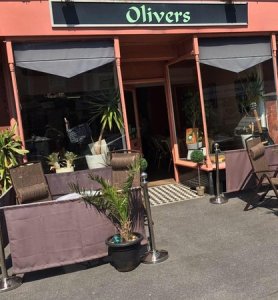
Wednesday was a day of rest and a chance to ease up on my food and alcohol intake but on Thursday, our regular quiz night, we ate out once again. This time we went to Olivers, a friendly little place only a 5 minute drive from Liz’s house. Olivers is a small place with only a few tables serving pizza and pasta. They don’t serve alcohol but you can bring your own beer or wine which keeps the prices down which of course is vital to a tightwad like me. The pizzas are nice at Olivers but the dish I really like is a sharing board consisting of some pretty simple elements. Meatballs in tomato sauce, slices of some fabulous bread the chef makes himself, a pretty amazing garlic mayonnaise, olives, salami and potatas bravas which Liz doesn’t like so we swap that for a side salad. It’s simple but I love it plus the pizza we share for a starter is really nice.

After that it was off to our regular quiz. We excelled as usual in the picture round, we did reasonably well in the general knowledge but the music round was our downfall where we attributed the wrong songs to the wrong years. Oh well, you can’t win them all.


What to do next: Here are a few options.

Share this post on your favourite social media!

Hit the Subscribe button. Never miss another post!

Listen to my podcast Click here.

Buy the book! Click here to purchase my new poetry anthology.

Click here to visit Amazon and download Floating in Space to your Kindle or order the paperback version.

A Slice of My Life Part 7

It’s always good to come back home and yet, at the same time, it’s always sad to leave your holiday destination. As you arrive back in rainy and cold UK, you can be sure that someone else is sitting on your sun lounger, sipping wine from your glass and contemplating a dip in your pool. Oh well, there’s always next year to look forward to.
We’ve spent three and a half weeks tootling through France in our motorhome. The weather was wonderful and not exactly what I was expecting in France in September. Usually, in the first weeks of September in the Loire, and I do speak from considerable experience of the area, there will be a big thunderstorm and the next day the temperature will be substantially cooler. This year we had the usual thunderstorm except that the next day it was just as hot and muggy as it had been the day before.

We sailed from Dieppe back to Newhaven and it isn’t a trip we’ve done before but we had a great cabin and despite a poor forecast, the English channel was pretty calm.

In the UK the traffic on the M25 was an absolute nightmare and what made it worse was that for the previous three weeks in France, driving had been an absolute joy. Yes, there was the occasional traffic jam, a bouchon as the French call it, but nothing like the endless queues on the M25. Rather than complete the trip to the North West in one drive, Liz found us a small village which boasted a cosy pub with lovely food and real ales and was happy for motorhomers to park overnight in their car park.

The next day we carried on north and found that the M6 boasted as many traffic jams, if not more than the m25. Anyway, after various diversions we finally found our way home and after swapping my t-shirt for a fleece we started thumbing through three and half weeks of mail and it’s probably round about then when we started thinking about the people, who were using our sun loungers and our pool, who I mentioned at the beginning of this post.

A few days after returning home I had to start preparations for a visit to the hospital. Prior to going away on holiday I had been for a routine test for bowel cancer and the result was that further investigations were required. I had thought that perhaps an x-ray was required or something like that but it turned out that the further investigations involved a colonoscopy. I’ve got to say that I didn’t like the sound of that at all. As you may know, it involves slipping a camera up the rear end to have a good look round inside your bowels.

The whole thing put a bit of a dampener on our first weekend at home. On the Sunday I had to stop eating at 3pm and then at 7pm drink a not very appetising potion designed to empty my bowels. It took a while to get working and one of the side effects was a rather intense belly ache. Not long after I thought I’d better visit the toilet.

The next dose of the potion was due at 6am so I set my alarm and when it went off Liz had already been up and got the dreaded mixture ready for me to drink. Thanks Liz!

After taking the mixture there was nothing to do but wait for it to do its work. The Japanese Grand Prix highlights were due on TV so I moseyed over to the lounge hoping to crank the race up. The race wasn’t broadcast until 10am so scanning through my recorded items I saw that the final episode of And Just Like That season 2 was ready and waiting to be watched. A cup of tea and a slice of toast would have gone down great guns but sadly, that wasn’t allowed.

Sometimes I wonder why I’m still watching And Just Like That. My favourite character, Mr Big has gone and although it’s has been good to see the return of Aidan, things just aren’t the same somehow. The dynamic of Sex and The City has been lost partly because Samantha is not in the series and the new characters are ones I don’t really have any interest in. Not only that, there seem to be very few male characters in this new series when back in the old Sex and the City days there seemed to be a lot of interesting men engaging with the central quartet of girls.

This episode was in the news before it had even been broadcast as it had a special appearance from Samantha who made a quick phone call to Carrie. Apparently Kim Cattrall who plays the part declined to take part in the series as she felt she was done and dusted with the character as well as not being paid enough money. Anyway, some executive asked her to make a cameo appearance which she did and for a moment it felt as if the series was finally back on track. The moment didn’t last long though.

Later in the episode, Charlotte’s gay friend Anthony is in a relationship with a new boyfriend who wants anal sex but it turns out that Anthony doesn’t do anal sex. Now, I know this is a delicate subject but I thought all gay people had sex that way so that just shows how much I know about homosexual life. Anyway, Anthony submitted to the ordeal and going by the look on his face he wasn’t enjoying it at all. In fact, I’d guess he felt just like me with a camera going up my bottom.

The nurses and staff were all very nice and friendly and made a great effort to treat me with a lot of dignity despite this very undignified process. Even so, that camera bloody well hurt, certainly at first. The worst thing was that as it went up my bowel it pushed a load of air into my stomach giving me really painful wind. The nurses encouraged me to break wind but I struggled to do so, although eventually I was able to shift position which in turn helped to release some wind. After that it wasn’t so bad although I had to turn over so I struggled to watch the camera pictures. Yes, welcome to 21st century healthcare where you can actually see the inside of your bowel on a TV screen.

The ordeal was soon over and apart from finding a small hemorrhoid which caused all the concern in the first place, everything was ok but believe me, that was not a pleasant experience.

Generally I like to finish these kind of posts with a link to the cinema world but I found it hard to think of anything appropriate. However, the other night I sat down to watch one of my favourite feel good films The Best Exotic Marigold Hotel. Maybe you have to be a certain age to enjoy a film about retired people choosing to spend their last years in India but I’ve always enjoyed it. One thing I noticed on this latest viewing was something I hadn’t picked up on before. Towards the end of the film there are numerous repetitions of a phrase that I’ve always attributed to John Lennon and which I’ve used many times on my Twitter feed.


What to do next: Here are a few options.

Share this post on your favourite social media!

Hit the Subscribe button. Never miss another post!

Listen to my podcast Click here.

Buy the book! Click here to purchase my new poetry anthology.

Click here to visit Amazon and download Floating in Space to your Kindle or order the paperback version.

7 Directors Who Acted in Their Own Films

I thought I’d try to write or at least start this post off by writing from memory without using Google. I could only come up with 6 directors so I added another who acted but not in his own films. I decided to exclude actor/directors like Woody Allen and Clint Eastwood but then I broke that rule by adding Orson Welles. Now that the parameters are clear for this post, well fairly clear, let’s get going . . .

Alfred Hitchcock

Hitchcock was a British director who began in the days of silent films and came to be known as the master of suspense. Blackmail made in 1929 was the first British Talkie and 10 years later producer David O Selznick lured him to Hollywood where he made many films that are now regarded as classics, films like North by Northwest, Dial M for Murder, Rear Window, The Birds and Pyscho. Hitchcock might also be seen as one of the first celebrity directors. He became popular because of his habit of appearing, however briefly, in all of his films, sitting on a bus for instance, just missing the bus in another. He also became well known by introducing his television series, Alfred Hitchcock Presents. He is probably the most famous director to appear in his own films. He never played a speaking role but he appeared in every one of his films in some small way.

Hitchcock was knighted in 1980 and died in March that same year.

Quentin Tarantino

Tarantino is an interesting filmmaker in many ways, writing and acting as well as directing. His films also seem to follow an unconventional path with many extended scenes and dialogue to fill in character background. I haven’t seen many of his films but Pulp Fiction from 1994 is one of my favourites and it involves a number of overlapping storylines. Tarantino plays the part of Jimmie, a friend of two gangsters played by John Travolta and Samuel Jackson. Travolta’s character accidentally shoots someone in the back of their car and the two turn to Jimmie for help who then calls another gangster played by Harvey Keitel who sorts out the situation.

Oliver Stone

Oliver Stone is one of my very favourite filmmakers, responsible for directing such films as Platoon, Born on the Fourth of July and JFK. In Wall Street Stone takes a close look at the American stock market and the world of stocks, shares and stockbroking. A young ambitious trader dreams of working with big time corporate trader Gordon Gekko,

The young ambitious trader is Bud Fox played by Charlie Sheen and he manages to wangle himself into the world of the high flying Gordon Gekko played by Michael Douglas who won an Oscar for his portrayal. The two find that rival stockbroker Sir Lawrence Wildman is buying Anacot Steel and they buy shares and then leak information to the press which drives up the price. In a montage of shots, Oliver Stone himself appears as an investor who is buying shares.

Stone also had a cameo in the film Dave in 1993 in which the President of the USA has a stroke and an impersonator takes over until the President is well enough to return. Stone plays himself as a ‘conspiracy theorist’ claiming that the President has been replaced by a doppelganger.

Martin Scorcese

Scorcese is one of the great filmmakers of all time having directed numerous classic films such as Goodfellas, Raging Bull, The Aviator and many others. In Taxi Driver, Scorcese follows a disturbed former Vietnam veteran called Travis Bickle played by Robert De Niro. Bickle works nights in New York City as a taxi driver and as he drives around we hear his voice on the soundtrack lamenting the moral decay of the city and his desire to rid the streets of the scum that he sees nightly. Later he plans to assassinate a political candidate but eventually shoots the pimp of a young girl. Wounded by the pimp, he falls into a coma but awakens to find he has become a hero to people in the city.

In one scene, Scorcese plays a passenger in Bickle’s cab who asks to stop below an apartment where his wife is apparently involved with another man.

Martin Scorcese continues to make films and his latest release in 2023 is Killers of the Flower Moon.

John Huston

Born in 1906, John was the son of the Walter Huston and his wife Rhea. Walter was an actor and Rhea a sports editor for various magazines. His parents divorced when he was young but Huston spent time with both his parents. He wrote stories for various magazines and decided to try his hand with the new film business starting up in Hollywood. Huston had a contract with Universal, his father’s studio, and wrote dialogue for various films but after a drunken incident driving a car which left an actress dead he left to live in Paris. Later he returned and began writing for Warner Bros with great success. After the hit film Sergeant York starring Gary Cooper for which he wrote the screenplay, he managed to convince the film company to let him direct a picture. Huston chose The Maltese Falcon and the result was an absolute classic film starring Humphrey Bogart.

In 1948 Huston directed The Treasure of The Sierra Madre. He adapted the book by B Traven for his own screenplay and also cast his father, Walter Huston, as the old time prospector who takes two others, Humphrey Bogart and Tim Holt, on a search for gold.

In the opening scenes Bogart is down on his luck in the Mexican town of Tampico and approaches a smartly dressed American asking ‘could you stake a fellow American to a meal?’

Later Bogart, as Fred C Dobbs, approaches the same man again until the man asks ‘can’t you occasionally go to someone else?’ The smart American was played by Huston himself.

Huston had various other roles as an actor, one I remember was in the 1960’s spoof version of Casino Royale. Various directors contributed to the chaotic film including Huston. He was to shoot a segment about M, the head of the Secret Service but Robert Morley was unable to play the part so Huston played it himself.

Huston directed numerous films but died in 1987 aged 81.

Orson Welles

Primarily Welles was known as an actor but he directed many films, including his very first one, Citizen Kane which has become known as one of the greatest films of all time. Welles was known for having one of the most incredible contracts in Hollywood history, not in terms of money but for the creative control that Welles had. In Citizen Kane the film opens with the death of Kane, a millionaire newspaper magnate. His last words were ‘Rosebud’. The makers of a cinema newsreel decide to find out what or who Rosebud was.

To do so they research Kane’s life; his inheritance of a huge fortune, his takeover of a newspaper, his great wealth, his power and influence, his marriage and divorce and ultimately his death. The reporters never find the answers to their questions but we, the cinema audience, have the secret revealed to us right at the end of the picture.

Citizen Kane is a wonderful piece of cinema with an outstanding visual style and the only criticism I can put forward is that for all its visual fireworks it is a film with a cold centre, a cold heart. Does the viewer feel sympathy for Kane? I’m not sure he does.

Welles went on to make many films but never again achieved the directorial success he had with Kane. He died on the morning of October 10th, 1985 from a heart attack. He left behind numerous unfinished films and screenplays.

Cecil B DeMille

Cecil was born in 1881 and is known as one of the founding fathers of American cinema. He was famous as a director of epics from the silent Ten Commandments in 1923 to Samson and Delilah and another version of The Ten Commandments, this time with sound and shot in colour in 1956.

DeMille actually appeared in many cameos doing prologues or trailers but in 1950 he starred as himself in Sunset Boulevard directed by Billy Wilder. In the film, retired silent star Norma Desmond wants to return to the screen. She has written a screenplay which she has asked Joe Gillis, a writer desperate for some income, to edit. The script is terrible but after a phone call from the studio, Desmond arrives at the Paramount lot to see DeMille. DeMille finds that the phone call was actually a request to hire her grand old car for use in a film and not, as Norma thought, a call for her to return to films.


What to do next: Here are a few options.

Share this post on your favourite social media!

Hit the Subscribe button. Never miss another post!

Listen to my podcast Click here.

Buy the book! Click here to purchase my new poetry anthology.

Click here to visit Amazon and download Floating in Space to your Kindle or order the paperback version.

ULEZ, the Lottery and More Thoughts From a Sun Lounger

It always happens to me when I’m away. I know I’ve written about this before but the National Lottery has been annoying me. Here I am away from home and I get an email saying check your account, you’ve won a prize. Great! I wonder what is it? The million-pound jackpot or £3.42 on the Thunderball? I’m guessing it’s the £3.42. Either way, the National Lottery site cannot be accessed from abroad so I’ll just have to wait until I’m back in the UK before I find out if I’m a millionaire -or not.

What would I do though if I won a huge amount, millions of pounds? Well, it would be brilliant of course but me with my council house mentality, what could I do with say three million pounds? Well, the first thing would be to give away a third to charity. Yes, sounds good, doesn’t it? Really commendable but the thing is, I’ve already promised the Almighty that if he stopped for a minute and gave me a multi-million pound win, I’d give a third to charity.

I’ve promised so I could hardly say no and keep all the dosh could I? He would probably bump me off in a car crash or something. The big problem there is that I’ve also promised a third to the other side, you know, Lucifer, The Devil, Satan. I’ve promised him a certain amount of wickedness if he, the devil, will give me the jackpot. It’s shocking I know but I won’t be doing anything really nasty, just something moderately wicked like blocking up a post box on the last posting day before Christmas, just a little something that could be accepted as being wicked. Know what I mean?

Still, once I had the money, what would I do with it? Its ok for these rich people who are used to money. They will invest it and even if they invest it and go bankrupt, they will be still riding around in Rolls Royces and staying at top hotels whereas little old me would be in the nick for insider trading before you can say Gordon Gekko!

So, imagine I’ve got three million burning a hole in my pocket. Well, my old HP laptop is a little behind the times and slows down quite a lot when I try to edit my YouTube videos so a new PC or laptop must be on the cards. A new house? Of course, in fact the lovely villa that we rent here in Parçay Les Pins is a wonderful place. Perhaps I’d offer Rebecca the owner a few quid to take it off her hands. A little updating would be good. The lounge needs a makeover as do the bedrooms and the bathroom. Yes, I could see myself settling here quite happily. Then of course I’d need a nice car. My current vehicle, a Skoda is looking a bit long in the tooth, I quite fancy one of those cars with a lot of leg room. A few years ago the government was encouraging us to buy diesel cars, now those of us who still own them are being penalised by idiots like the Mayors of London and Manchester, Sadiq Khan and Andy Burnham.

Both want new low emissions in their towns and Khan has already gone ahead and expanded ULEZ, the Ultra Low Emission Zone from the centre of London to the Greater London area. Now, if you want to use a diesel car in those areas you will have to pay £12.50 per day. Yes, £12,50 per day to drive in the low emission zone, even though your vehicle has an MOT and has passed the ministry of transport emissions test. I’m all for cleaner air but what Khan is trying to do is get the working man who mostly drives a second hand car or van to contribute towards the London Mayor’s almost bankrupt set up. How fines will change the air quality though I’m not sure but what about the companies who designed and produced our polluting vehicles in the first place? Wouldn’t it be better if the government decided to say to the manufacturers, reduce the emissions on your vehicles by 2025 and then allow those vehicles time to gradually drop down into the second hand market? After all, we can’t all afford brand new electric vehicles.

Andy Burnham wanted to do a similar thing in Manchester but the outraged response of the residents of Manchester forced him to back down. Now he will tell you he didn’t want a low emission zone. Actually he did, certainly when he was MP for Leigh. Now as Mayor he says ‘I was forced into this by the Government.’ No, not really, the Government didn’t ask for a charging zone, just a small city centre low emissions zone, it was Andy Burnham who extended the zone to the whole of Greater Manchester, no one else. Sorry but Andy Burnham is a liar.

Funny how you can get onto a rant without meaning to. Time to calm down and read a book.

Faithful by Marianne Faithful.

I picked this book up after reading a blog post that made it seem like the most wonderful book ever written about the 1960s. I knew very little about Marianne Faithful except that once upon a time she was involved with Mick Jagger and I was surprised to find that Marianne was actually a singer. She had a hit in 1964 with a song called As Tears Go By which I thought I’d never heard of but when I played it, I realised I had. I’d always thought this was by the Seekers but of course it wasn’t. Good job that song hasn’t been played on our weekly quiz night as I would have got it wrong.

Marianne seems to have made friends with someone who was a record producer and in the crazy world of the 60s a couple of tracks were recorded, a single was put out and made the charts. Later, caught up in the swinging London scene she met Mick Jagger and began seeing him regularly. This being the rock and roll scene, booze, drugs and sex make a lot of appearances. Marianne was initially attracted to Keith Richards but after the two hit the hay together Keith remarked casually while getting dressed that he thought Mick really fancied her so despite her rather liking Keith she began seeing Mick.

Mick comes over in her book as quite a nice guy really. He seems to have been happy to enjoy booze, drugs and sex just like your average rock and roller but he seems to have always been able to step away from anything, like drugs or booze in particular, and stop it taking over his life.

Marianne did let drugs take her life over later on but at the beginning things seemed pretty amateur. For instance in the famous police drugs raid on the Rolling Stones, circa 1967 I think, Marianne had bought some travel sickness pills quite legally in either Italy or Spain but because they contained speed, they were illegal in the UK, not that anyone knew that of course.

Marianne stayed with Mick for quite a while but her life seemed to be going out of control as she seems to have been stoned for most of the 60s. Eventually she became a major drug user and at one point ended up living in a squat but still seems to have found the time and money to score drugs.

Actually, this book is very like a book I read not long ago about John Cooper Clarke in that when people are drug addicts, all they can think of is getting more drugs. Even though Marianne gets in quite a state, she never thinks that the reason might actually be her drug taking and neither does she ever even entertain actually not taking drugs.

Somehow, even when Marianne is living in a squat someone thinks she might be able to put an album together and make some money which she does. She ends up in New York and eventually manages to get into a detox place from which she finally emerges, in later life, clean and drug free.

Her life has been  -and here I have to use a phrase that I hate but here is actually relevant- a sort of roller coaster ride and the book is written in a sort of stream of consciousness way in which she describes her LSD trips with quite mesmerising clarity.

At the end of the book, she is happy that her albums have done well and people regard her now as a serious artist and not just Mick Jagger’s druggie girlfriend which, sorry Marianne, was my conception of her before reading this book.

One final thing. I clicked onto Spotify and listened to a few of her music tracks and I have to say, even though Marianne seems to be nowadays up there with the gods of rock and roll, I didn’t find anything that resonated with me. Sorry, Marianne.

Here in France we have been really lucky with the weather, it has been lovely, sunny and warm. I’ve been to France at this time of the year many times and usually the summer ends with a big thunderstorm. One day it’s hot, the thunderstorm comes and the next day it’s considerably cooler and the summer has gone. This year we had the usual storm but afterwards it was still muggy and hot. As I write this on the 13th of September, we’ve sat outside for our usual evening meal but as we came to the cheese course I felt cold. After a while I was so cold, I had to nip inside and dig out my fleece.

Yes, the summer is finally over.


What to do next: Here are a few options.

Share this post on your favourite social media!

Hit the Subscribe button. Never miss another post!

Listen to my podcast Click here.

Buy the book! Click here to purchase my new poetry anthology.

Click here to visit Amazon and download Floating in Space to your Kindle or order the paperback version.