Yes, It’s that time again. As I write this there are only a couple of days left before the big event, Christmas day.
Thanks to all my readers for their support over the past year. I hope you all have a lovely and enjoyable Christmas. I’ve not written much for this week but I have added a little something which you can download and read at your leisure when you’ve had enough mince pies and Christmas TV.
Click the link below to download a pdf file containing two short stories which I hope you will find entertaining. I’ll be back next week with my final post of 2023.
I’ve been a fan of Cary Grant for a very long time. I love his smooth and debonair style, his handsome and tanned good looks and that rather languid transatlantic brogue of his.
In the TV series Archie currently streaming on ITV X they seem to be saying that all of that was an invention, an invention by an Englishman called Archie Leach who transformed himself into a successful Hollywood film star named Cary Grant.
Grant was born Archibald Leach in Bristol, England in 1904. He had a poor upbringing and his mother suffered from depression and his father was an alcoholic. The young Archie was interested in the theatre and performing and his mother was keen on him having piano lessons. His older brother had died before reaching the age of one and this perhaps made his mother a little over protective of the young Archie. Even so, his mother was not a woman who was able to give or receive love easily and the older Cary Grant blamed his childhood relationship with his mother for his problems with women in later life.
When Archie was 9 years old his father placed his mother in Glenside Hospital, a mental institution, telling his son that she had gone away on a long holiday and later, that she had died.
Archie befriended a group of acrobatic dancers known as The Penders and he was able to eventually join them and there he trained as a stilt walker and became part of their act. Later the group toured America and Archie decided to stay, following in the footsteps of others before him like Charlie Chaplin and Stan Laurel who had made their way to the USA in an almost identical way.
On Wikipedia they mention that on the trip over to the USA Archie met Douglas Fairbanks and was greatly impressed by him, so much so that Fairbanks became a role model for the young Archie Leach.
In New York Archie worked in vaudeville with various comedy and theatrical groups. He joined the William Morris theatrical agency and began to pick up many theatre roles. In 1932 he had his first screen test and was given a five year contract with Paramount Pictures. B P Schulberg the general manager of Paramount decided that Archie Leach was not a good enough name for films so Archie came up with the name Cary Grant taking Cary from a stage character he had played and Grant chosen randomly from a telephone directory.
Cary Grant worked hard at his profession and in the TV series Archie they claim that Cary was a role or a part that Archie built up over time. Jason Isaacs who plays Grant says Cary would never be filmed or recorded during an interview because then he was being himself not playing at being Cary. The actor tracked down a recording of Grant made secretly by a student journalist who interviewed Cary over the phone and felt that for the first time he was hearing the real Archie who came over in the recording as very English rather than the usual mid Atlantic voice that we are used to hearing.
It seems to me that many stars who use a different name in the film world are in a way creating a character which they present to the public. You could argue that Marilyn Monroe was a similar personality and that she was a creation of Norma Jeane in the way that Cary Grant was created by Archie Leach.
A breakthrough role for Grant was starring with Mae West in the film She Done Him Wrong and the follow up, I’m No Angel. Grant went on to star in many famous films and amazingly, even though he was a star in Hollywood’s golden years, he was actually the first big star to not be a part of the studio system. He was a freelance actor, not contracted to any studio until 1937 when he signed a four-picture deal with Columbia.
In his early years in Hollywood, Grant shared a house with actor Randolph Scott leading to claims of the two being gay lovers. Still, young bachelors sharing a house with others is not uncommon. David Niven famously shared a house with Errol Flynn and we can hardly class those two as being gay.
Somewhere in my fairly huge book collection I have a biography of Cary Grant but despite an intensive search I couldn’t find it. I also have a copy of David Niven’s Bring on the Empty Horses which if I remember correctly has a short chapter on Grant. Now where did I put that book?
I did do some quite considerable research to produce this blog post. Firstly, I had to watch the four episodes of the TV series Archie, currently streaming on ITV X. That wasn’t anything difficult of course, it wasn’t a chore, in fact it was very enjoyable. Archie is a wonderful four part series and Jason Isaacs plays an outstanding part. He doesn’t try to impersonate Cary but he did manage to create a look of the late star and he caught Grant’s voice and enunciation perfectly. Most of the series follows Cary in later life when he becomes involved with and later marries Dyan Cannon, Dyan was his fourth wife and she was the mother of his only child Jennifer and she and her mother co-produced the series which is definitely well worth watching.
Next, I searched for the biography I had of Cary but despite searching the entire house I couldn’t find it. Oh well, I have a few copies of Bring on The Empty Horses about the house so I thought ok, I’ll grab that and have a read of the chapter on Cary. Once again, I searched through the entire house but could I find that book? No! Eventually I started to put everything back where I had found it and it was only after idly looking in a box of books that I had only recently packed away and had earlier dismissed, that I finally found it.
Anyway, I had a break from writing to look for that book and after a while when I couldn’t find it I popped the TV on. I wasn’t altogether surprised to find there was a Cary Grant film showing. It was An Affair to Remember, a love story in which Grant’s character, a playboy type meets Deborah Kerr on a transatlantic voyage and the two fall for each other. On arrival in the USA they decide to have a 6 month break from each other as they are both in other relationships and then meet at the top of the Empire State building in New York. It’s not really my cup of tea, in fact it’s overtly sentimental but then, sometimes a small dose of sentimentality is good for you. Cary Grant plays, well, Cary Grant and Deborah Kerr plays a very English New Yorker.
I have two of Grant’s other films on DVD, To Catch a Thief and North by Northwest, both directed by Cary’s favourite director, Alfred Hitchcock.
OK, enough TV watching for now. Getting back to Bring on the Empty Horses, David Niven wrote about Cary Grant in a short section of his book called Long Shots and Close Ups where he gives his readers a quick sketch about various film people. The section on Cary is only three and a half pages and not the full chapter I was expecting but Niven clearly liked the man and in those three and a bit pages, picked up on some essential elements of Grant’s character. Niven remembers Cary Grant as an intelligent man, particularly with money and he listed people like multi millionaire Howard Hughes among his friends. Grant invested his earnings well and became one of the richest people in Hollywood. He had an obsession with his health, embarking on various health pursuits and then moving on to the next one. Niven remarks that once when Cary was taking swimming lessons to learn the crawl, Niven mentioned that Cary could already swim the crawl. Grant answered ‘yes but I want to swim the crawl perfectly!’ Cary gave up smoking by hypnotising himself and Niven also mentions his use of LSD during his treatment by a psychiatrist which is also brought up in Archie.
Cary Grant retired from films in 1966 the year his daughter was born and he and Dyan Cannon divorced in 1968. Many tried to bring him out of retirement for various films including his favourite director Alfred Hitchcock but he declined. He must have wanted to keep on working though because he did accept a position on the board of Fabergé.
He died in 1986 aged 82 and left behind an estate reputedly worth around 80 million dollars. Archie is a well made and quite fascinating piece of TV. Look out for it, it’s well worth watching.
What to do next: Here are a few options.
Share this post on your favourite social media!
Hit the Subscribe button. Never miss another post!
This will be my 592nd post and as you can imagine I sometimes struggle for new ideas. Scrolling through the internet the other day I chanced on something about Robin Williams and the post mentioned the film Dead Poets Society. It isn’t one of my favourite films but if you’ve ever seen it you might remember the poem O Captain My Captain by Walt Whitman which features a lot in the film. It got me thinking about Captains so I thought I might kick of this post with a few words about my favourite captain, James T Kirk.
Captain James T Kirk
The first series of Star Trek starred William Shatner as Captain James T Kirk. Forget Captain pointy head Picard, Kirk is a proper Captain and after a good twenty minutes of any episode he will usually have blasted a number of aliens with his phaser (a sort of ray gun) and done some pretty serious kissing of any beautiful girl, alien, android or otherwise, within a 100 yard area. Mr Spock was played by Leonard Nimoy. He is the ship’s science officer and as a Vulcan rarely displays emotion, logic being his primary motivation. Doctor McCoy played by DeForest Kelley is a doctor of the old school and he and Spock frequently get into verbal confrontations. Together they are the chief officers of the starship Enterprise on its five year mission to go where no man has gone before.
As a schoolboy I wrote to Desilu studios where I believed Star Trek was made, based on credits shown at the end of the show. After a while I received a set of glossy pictures of the show’s stars. They were all signed by the various actors, Shatner, Nimoy and so on but the signatures, I have long suspected, were made by a machine.
The original Star Trek, like many TV programmes of the sixties was shot on film and today it looks pretty sharp compared to shows from the 80’s that were shot straight to video. It was given a digital makeover a few years back with digital effects and new CGI spacecraft and is looking pretty good these days. Which was my favourite episode? Well I’d have to say it was the one that fans voted the best Star Trek episode ever; City on the Edge of Forever. The crew of the Enterprise arrive at a distant planet searching for the source of some time displacement. The source is a time portal, left among the ruins of an ancient civilisation which although abandoned, still emits waves of time displacement. In the meantime, Doctor McCoy is suffering from paranoia brought on by an accidental overdose of the wonder drug cordrazine which any Star Trek fan will tell you can cure any known Galactic ailment. McCoy in his crazed state bumbles through the time portal, back to 1930’s America (handy for that old 1930’s set on the Paramount back lot) and changes history. Kirk and Spock are forced to also go back in time, stop McCoy from changing history and restore things to the way they were. Joan Collins plays a charity worker at the core of events; does she have to die in order to restore normality?
What happened to Kirk? Well in the movie Generations, the character of Captain Kirk was sadly killed off. Generations which started off pretty well, combining the usual sci-fi elements of Star Trek with an intriguing mystery; who is the mysterious Soran and what is he up to? As it happened what he was up to wasn’t really that interesting, but the film marked the cinema handover from the original Star Trek cast to the new one. Pity really because as I mentioned above, I never really took to the Next Generation. However in the last two Star Trek films, the producers returned to the original characters, Kirk Spock, McCoy and Scott and with new actors playing the old characters, the story of Captain Kirk continues. As I write this William Shatner, who played the original Kirk is still active even though he is in his 90s. Wonder if they could get him to play Kirk one last time?
Captain Scott
Captain Scott planned to make an expedition to the north pole but then changed his mind and went for the south pole. At pretty much the same time Roald Amundsen, a Norwegian explorer, decided he also wanted to make the trip so a kind of race began. Who would get to the pole first? Amundsen decided to travel in classic fashion with teams of dogs pulling sledges. Scott decided he would use new mechanical devices, vehicles with caterpillar tracks, all of which broke down in the cold. Scott also used ponies but they were not acclimatised to the cold and fared poorly. Amundsen’s dogs turned out to be the best choice.
Why either of them would want to go to the pole is completely beyond me. All that they found there was a shed load of snow and ice which most people could have predicted anyway.
As we all know, Scott got beaten to the pole by Amundsen. The gallant British explorers then had to face the task of getting back to civilisation, however the weather worsened and the men froze to death in their tent.
You can watch the story of Captain Scott and his tragic expedition in the film Scott of The Antarctic. It is a sad film although John Mills as Scott plays a good part as usual and James Robertson Justice plays a serious role for a change, that of Captain Oates who disappears into the snow after telling his friends that he ‘might be some time.’ Oates perished like his friends but his courageous actions have never been forgotten.
Captain James Cook
Captain Cook was born in 1728 and died in 1779. He was a British explorer, navigator, cartographer, and captain in the British Royal Navy, who left behind a legacy of geographical and scientific knowledge.
He achieved the first recorded European contact with the eastern coastline of Australia and the Hawaiian Islands, and the first recorded circumnavigation of New Zealand. His mapping of the Pacific, Australia, and New Zealand changed the face of world geography. Before his famous three voyages to the Pacific and Australia, he also had made detailed maps of Newfoundland.
Cook was attacked and eventually killed by the natives in the Hawaiian Islands, during his attempt to kidnap the Hawaiian chief to reclaim the cutter stolen from one of his ships.
Captain Scarlet
Captain Scarlet was a TV puppet series made by producer Gerry Anderson in 1967. It was the first of Gerry’s puppet series to use puppets with realistic body proportions which although they looked more realistic were difficult for the puppeteers to manipulate. The idea for the series was that earth was under attack from the mysterious ‘Mysterons’, a race from the planet Mars that had been disturbed by the Zero X Mars exploration missions. The Mysterons have the power of ‘retrometabolism’, a way of reconstituting matter after an object or person has been destroyed. Captain Black has been recreated in this way and is under the control of the Mysterons. A similar thing happens to Scarlet but somehow he has broken free from Mysteron control. Scarlet is a member of Spectrum, an organisation set up to defend earth. All the agents have colour code names, hence captain Scarlet, voiced by Francis Matthews and Captain Blue, voiced by Ed Bishop.
A computer animated reboot was broadcast in 2005.
Captain Nemo
Nemo was a character in the Jules Verne novel 20.000 Leagues Under the Sea. The novel was first published in 1870 and reappears in another of Vernes books, Mysterious Island written five years later. In the first book a French scientist has joined an expedition to find a sea monster. They ship is attacked by the monster and the biologist is surprised to find the monster is an advanced submarine. He and other members of the ships company are taken prisoner where they meet the mysterious captain Nemo. Not much is ever revealed about Nemo except that he seems bent on revenge after his homeland, wherever that was, was conquered by a powerful imperialist nation.
There have been numerous film versions but my personal favourite Nemo was played by actor James Mason.
Captain America
Captain America was a comic book hero first created in the 1940s. Steve Rogers is a frail man who volunteers to use a new serum which will rapidly boost his physical powers. He combats the nazi menace with his sidekick Bucky Barnes but an accident leaves him in a state of suspended animation until he is revived in the modern era and becomes the leader of the super-hero group The Avengers. I can’t say I was ever a great fan of the captain even in my younger comic reading days. Youngsters these days may know Captain America from the current wave of super hero films. Captain America: The First Avenger was released in 2011 starring Chris Evans as the eponymous hero.
Captain and Tennille
Captain and Tennille were a husband and wife recording duo who had most of their success in the 1970s. Daryl Dragon was known as the captain because of his habit of wearing a captain’s hat when he was the keyboard player for the Beach Boys. He and his wife Toni Tennille had a number of hits throughout the 1970s although the one I particularly remember was ‘Love Will Keep Us Together’, a number one hit in the USA.
Captain Von Trapp
Never heard of captain Von Trapp? Well clearly you haven’t seen the Sound of Music. The story of the Von Trapp family of singers is actually a true story and Maria Von Trapp wrote a memoir about her experiences which was published in 1949. The book was made into a German film in 1956 and was so successful that a sequel was produced. Naturally Hollywood became interested but before that producers Leland Hayward and Richard Halliday secured the rights to make the story into a stage musical. They employed Rodgers and Hammerstein to write new songs as the German film had no original songs and just used Austrian folk songs. The musical was a huge hit and later became the famous hit film. Julie Andrews starred as Maria, the trainee nun who becomes a nanny to the Von Trapp children. Their father, Captain Von Trapp played by Christopher Plummer eventually falls for Maria and the family manage to escape from Austria just as the Nazis take hold of the country.
I’m not a great fan of musicals but I do love The Sound of Music.
Captain My Captain
O Captain My captain is a poem by Walt Whitman about the death of Abraham Lincoln. As I mentioned earlier it is perhaps most famous for being used in the film Dead Poets Society starring Robin Williams as an unconventional teacher.
What to do next: Here are a few options.
Share this post on your favourite social media!
Hit the Subscribe button. Never miss another post!
I’ve written a few of these ‘book or the film’ posts but in this one I’m going to stick with one particular film and book; The Godfather.
The Book
I’m not sure which came first for me, the book or the film but I actually think it was the book. The Godfather was written by Mario Puzo and is the story of Don Vito Corleone, the head of one of the five mafia families of New York. The book opens with the wedding of Don Corleone’s daughter and Puzo sets the scene and introduces the various characters.
Don Corleone is a Sicilian and apparently no Sicilian can refuse a request on the day of his daughter’s wedding. One of those with a request for the don is singer Johnny Fontane whose show business career is waning. He feels that a part in a new film will revitalise it but the producer will not cast him. The don is happy to help out his favourite godson and dispatches his advisor and stepson Tom Hagen to Hollywood to sort things out.
Another supplicant is a funeral director. Two youths have attacked and beaten his daughter and because of political connections the courts of law have only handed down suspended sentences. The father asks for Don Corleone to give him revenge but the Don declines. The funeral director has never shown the correct respect to the Don but when he does and finally calls him Godfather then, and only then, does Corleone issue orders for the youths to be brutally beaten.
Some time afterwards the Don agrees to meet fellow mafioso Sollozo who wants Corleone’s help with a drug smuggling operation. The Don declines and this sets off a violent war between the mafia gangs.
The Film
Francis Ford Coppola was the director of the film version and was also the co-writer of the screenplay along with Mario Puzo. Coppola wanted Marlon Brando to play the part of Don Corleone even though Brando at the time was rather unpopular with the producers. He was expensive, his last few films had not done well and his time wasting attitude had added huge expenses to his pictures. After the director had made the producers understand how important Brando was, they set various conditions for his employment. He would have to work for a reduced salary and put up a bond to ensure he would not delay the production. Another was that he had to have a screen test. Coppola has told the story in various interviews how he and his film crew had entered Brando’s house like ninjas and quietly set up their equipment. Brando slicked down his hair with shoe polish and stuffed cotton balls into his mouth to make the transformation into the aging mafia boss.
Paramount also wanted to shoot the film on their back lot but Coppola persuaded them to shoot on location in New York and stick to the original time frame of the book which was set in the 1930s and 40s.
Various people were auditioned for parts in The Godfather but finally the cast was resolved and shooting began with Brando as the Don, James Caan as Sonny, Al Pacino as Michael, Robert Duvall as Tom and Diane Keaton as Kay Adams.
The Book
The book is a fairly heft one and there is much in there that is not covered by the film. Johnny Fontane for instance features more in the book, while he plays only a supporting role in the film. There is a further story in the book about Lucy, a friend of Sonny’s wife with whom he is having an affair. After Sonny’s death Lucy feels she will never find not only love but sexual pleasure ever again. The reason for this is that Sonny had a rather large penis and Lucy’s corresponding anatomy is rather large, however she falls for a doctor who sorts her out with an operation which restores the anatomical status quo.
Going back to the Johnny Fontane character, there have been various stories and rumours which imply the character was based on Frank Sinatra. Like Johnny Fontane, Frank was tied to a lifetime contract with a bandleader, in this case Tommy Dorsey but Dorsey somehow relented and released Sinatra. Some say mobster Willie Moretti was instrumental in helping Sinatra free himself from the contract. Later when things weren’t going so good for Sinatra, he revived his career by appearing in the hit film From Here to Eternity for which he won a best supporting actor Oscar. In the book, Johnny Fontane is after a similar film part but the producer declines to give it to him. At the wedding of Corleone’s daughter, Fontane asks for the Don’s help, cue the famous scene where producer Jack Woltz finds his favourite racehorse’s head in his bed.
The Film
Coppola decided that instead of finding the horse at the end of his bed like in the book, it would be better if Woltz awoke, was disturbed by something wet, pulls the bedclothes away to see blood and then uncovers the horse’s head. The head was the actual head of a horse, procured from a dog meat factory and Coppola mentions on the commentary to my DVD version that lots of animal lovers sent him hate mail about the horse, even though the horse had been condemned to its fate anyway.
Sinatra always denied any involvement with the mafia although he did sing at the wedding of mafia boss Willie Moretti’s daughter, just like Johnny Fontane did at the Corleone wedding that opens the film. Anthony Summers, in his book about Sinatra, claims that the story was true and mafia enforcer Johnny Blue Eyes put pressure on studio boss Harry Cohn to give Sinatra the film role that rebooted his career.
Director Fred Zinnemann thought Sinatra might be good in the role so Cohn was happy to go along with the idea.
The Book
As previously mentioned, the book does have some storylines which were not used in the film but one chapter was a look at the beginnings of Vito Corleone. Born Vito Andolini in the Sicilian village of Corleone, Vito’s father was murdered by a local mafia boss and the young Vito was smuggled away to America. In America he took the name of Corleone and seemed to slip quietly into the role of mafia Don by murdering Fanucci, a New York Sicilian Godfather who preyed on his fellow Italians. Although this element of the story wasn’t used, Coppola kept the storyline for use in The Godfather Part II. The follow up film was a film classic in its own way.
The Godfather Parts II and III
In part II there are two parallel stories. One is the story of Vito Andolini, as described above, played by Robert De Niro and another follows on from the first film. Michael is now the head of the family and gets involved with gangster Hyman Roth with investments in Cuban casinos. After the Cuban revolution Michael realises Roth is out to kill him and so has him murdered. A senate investigation looks into Michael’s activities with information provided by Frank Pentangeli, a former member of his organisation, but Michael brings pressure to bear on the informant and the investigation collapses.
In The Godfather Part III Michael’s story continues. He is reconciled with his sister after the murder of her husband in the original film. He also gets involved in a scheme in Europe where he hopes to become fully legitimate but other mafia bosses have different ideas. The Papal bank scandal and the death of Pope John Paul I are real events that are also thrown into the mix. The film was the weak element in the Godfather trilogy. In 2020 The Godfather Coda: The Death of Michael Corleone was released. It was just a re-edited version of part III and personally I still didn’t find it anywhere near as good as the other two films.
Marlon Brando worked with Coppola again on the film Apocalypse Now. He played the part of an American Colonel in Vietnam who has apparently gone insane and Martin Sheen is sent to assassinate him. Brando turned up on set hugely overweight and not knowing his lines. He then decided to re write or improvise most of his scenes and the director was forced to shoot Brando in shadow due to his weight. Basically, he pulled all the stunts that Paramount expected of him in The Godfather. Not the best way to repay a director who had resurrected his career with the role of Don Corleone.
In 1990, Brando appeared in the comedy film, The Freshman, playing a parody of Don Corleone. When the shooting over ran, Brando demanded a million dollars to film for an extra week. The producers declined to pay and Brando threatened to badmouth the film to the press. Eventually they paid.
Brando died in 2004.
In 2023 Coppola finished filming his latest project, Megalopolis, a sci fi film about the rebuilding of New York after a major disaster.
Conclusion.
I enjoyed the Mario Puzo novel and I did re-read it for this post but it seems to stray into areas which really have no relevance to the main narrative which I found slightly annoying. The film version, which I also watched recently is a modern classic which continues to entertain everytime I see it. I like both the book and the film but I’d have to say I think the film version has the edge.
What to do next: Here are a few options.
Share this post on your favourite social media!
Hit the Subscribe button. Never miss another post!
This isn’t a post about myfavourite books. I’m pretty certain I’ve done that one already but I thought I’d talk about the favourite books of some famous people and I’d like to start with one of my film heroes, James Dean.
James Dean and The Little Prince
Back in the 1970s my Saturday ritual involved getting the bus into town and scouring book and record shops for books and records. One day back then I was flipping through the posters in one particular shop. The posters were the music stars of the 70s, Elton John, Mick Jagger, Suzi Quatro, David Bowie and so on but one was a picture of a really good looking guy with a fifties combed back hair style. In some pictures he was dressed like a cowboy and in others in a red jacket and denim jeans. The guy behind the counter must have seen me wondering who the guy was and he told me he was a film star called James Dean. He handed me a paperback book about the actor and I took it home and read it and very soon I was trying to find out everything I could about Dean.
Dean had been killed in a car crash in 1955 and had only appeared in three films and at the time of his death, only one of those films had been released. I read a great deal about Dean and from what I could find out, the biography to read was written by his best friend, William Bast. I never managed to get a copy of that book but Bast produced a made for TV film version, James Dean: Portrait of a Friend with Stephen McHattie as Dean.
In the film William Bast played by Michael Brandon, leaves Dean in a restaurant and Dean later asks why Bast left. Bast was intimidated by Dean’s important looking friends and Dean replies that he was judging by surface appearances. When Bast questions Dean further, Dean produces his favourite book, The Little Prince and then goes on to read his favourite passage.
In the book Dean explains, the Little Prince is from a distant planet. He meets a fox but the fox won’t play with the prince because he hasn’t been tamed.
Later the fox gives the prince a secret which is this: It is only with the heart that one can see rightly, what is essential is invisible to the eye, something which Bast claimed was the secret to Dean’s style of acting.
James Dean was killed in 1955 and in later life William Bast wrote another book about James Dean claiming that the two were lovers and that Dean was gay.
The Little Prince was written by Antoine De Saint-Exupéry and according to Wikipedia has sold an estimated 140 million copies. It is also the second most translated work ever, only beaten by the Bible.
What did Dean see in the book? Well, it was a childhood favourite of his so perhaps it brought back memories of happy times, or perhaps it was just the undeniable charm of the book that appealed to him.
Donald Campbell and 1001 Nights
Donald Campbell was the son of a famous racing driver and record breaker, Sir Malcolm Campbell. Campbell first broke the land speed record in 1924 at Pendine Sands in Wales which was the first of his nine land speed records. He also set the water speed record in his boat Bluebird K4. He was knighted in 1931 and died in 1948 aged 63. He was one of the few racing drivers and land speed record holders of his era to die of natural causes as many of his rivals were killed in crashes. His son, Donald Campbell, was determined to equal and even surpass his father’s achievements.
He set about doing so with the help of his father’s engineer, Leo Villa. He made various runs at the land speed record, his last was in Australia. He chose to run his Bluebird car at Lake Eyrie and the vast dry salt lake bed offered the perfect course. It hadn’t rained there for nine years but Campbell had just started his trials when the rains came and ruined the course. Eventually Campbell managed to raise the record to 403.10 mph in 1964 but the huge expense and difficulties of the project cast a great strain on Campbell. In November of 1966 he tried for a new water speed record at Lake Coniston but once again, bad weather caused problems. He was still at Coniston in the following January and when the weather improved, he tried for the record. He was killed in his Bluebird boat on the 4th January 1967.
In the BBC film Across the Lake, Campbell was played by Anthony Hopkins and claims his favourite book was 1001 Nights. The book is a collection of Arabian folk tales perhaps more well known in England as The Arabian Nights. The book is about a king who after finding that his brother’s wife has been unfaithful, decides that all women are the same. He decides then to marry a succession of virgins and after their wedding night have them executed to make way for the next, One day he marries Scheherazade who tells the king a story but promises to finish it the next night. The king delays her execution wanting to hear the end of the story but the next night she starts another one, again promising to finish the story the following night. The stories go on for a thousand and one nights, Scheherazade telling more stories in order to save herself from execution.
The screenplay for Across the Lake was written by Roger Milner and was based on true events although whether that includes Campbell’s love of 1001 Nights or not, I’m not sure. In the film Campbell gives a girlfriend a necklace inscribed with a quotation from the book. ‘Beautiful of face with attributes of grace’, a reference to Scheherazade herself.
Noel Coward and The Railway Children
This is perhaps where this post might start to unravel. I know the Donald Campbell link was a little tenuous and only based on a film but this next one was based on my own memory which can be prone to failure. I knew Noel was a great fan of the children’s writer E Nesbit and I’m sure I had heard or read somewhere that when he died, he was reading his favourite of that author’s books, The Railway Children. A quick bit of internet research and I see that Noel died after reading Nesbit’s The Enchanted Castle. Coward was a lifelong fan of E Nesbit who wrote a series of children’s books. He discovered the books as a child and revisited them many times during his life. In his diary he wrote this about the author:
“Sunday 3rd February 1957. I am reading again through all the dear E. Nesbits and they seem to me to be more charming and evocative than ever. It is strange that after half a century I can still get such lovely pleasure from them. Her writing is so light and unforced, her humour so sure and her narrative quality so strong that the stories, which I know backwards, rivet me as much now as they did when I was a little boy. Even more so in one way because I can now enjoy her actual talent and her extraordinary power of describing hot summer days in England in the beginning years of the century.
All the pleasant memories of my own childhood jump up at me from the pages… E. Nesbit knew all the things that stay in the mind, all the happy treasures. I suppose she, of all the writers I have ever read, has given me over the years the most complete satisfaction and, incidentally, a great deal of inspiration. I am glad I knew her in the last years of her life.””
The Enchanted Castle is about a country estate and three youngsters who meet a princess and discover a magical ring. I have never read either that or the Railway Children although I did find a copy of that latter book not long ago. The film version is a delightful adaptation that has been seen and loved by many generations of children and adults since it was released in 1970. It was written and directed by Lionel Jefferies and stars Jenny Agutter and Bernard Cribbins.
Noel Coward died at his home in Jamaica in March of 1973.
Woody Allen and The Catcher in the Rye
Woody is one of my favourite film directors and after a search on the internet looking for more favourite books from my favourite people, I found he was apparently greatly inspired by The Catcher in the Rye by J D Salinger. Woody had this to say about the book:
“The Catcher in the Rye has always had special meaning for me because I read it when I was young – 18 or so. It resonated with my fantasies about Manhattan, the Upper East Side and New York City in general.
It was such a relief from the other books I was reading at the time, which all had a quality of homework to them. For me, reading Middlemarch or Sentimental Education was work, whereas reading The Catcher in the Rye was pure pleasure. The burden of entertainment is on the author. Salinger fulfils that obligation from the first sentence on.”
I can understand Woody when he talks about books that have a quality of homework about them. Many classic books I’ve tried to read, particularly in recent years, have left me disappointed and with that same feeling that Woody describes.
I read Catcher in the Rye a long time ago and rather than inspiring me, I found it dreadfully boring and pointless. The hero, Holden Caulfield goes to New York and basically moans about all the things he finds false and ‘phoney’ about the city and its people. Mark Chapman, the murderer of John Lennon, was obsessed with the novel and left behind a copy after he had shot Lennon with a note saying ‘this is my statement’.
Sorry Woody, you and I will have to disagree about Catcher in the Rye.
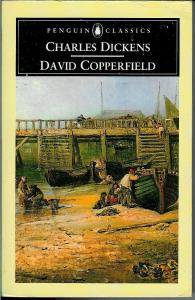
So what is my favourite book? Well, I’ve got quite an extended shortlist but I think I’d have to plump for David Copperfield by the wonderful Charles Dickens. I first read it many years ago and perhaps the moral of this post is that the books we love in our youth are the ones that continue to give us pleasure in later life.
Many years ago when I was still at junior school, one of my friends asked me if I had seen a new TV show about a flying car. I hadn’t but apparently it was really good and so I made a mental note to watch out for it. As a child I was pretty keen on TV. My dad used to call me ‘square eyes’ because I watched so much TV and as you might imagine I soon found the TV show my friend had told me about. It was a short puppet show about a special machine called Supercar that could not only fly but also dive under the sea. It was designed and built by Professor Popkiss and Dr Beaker and the test pilot was a guy called Mike Mercury. I loved Supercar and everything about it and even though I didn’t realise it then, I had become a huge fan of TV producer Gerry Anderson and his Century 21 Productions.
Gerry Anderson was born in 1929 and after the war earned a traineeship with the British Colonial Film Unit. Later he worked for Gainsborough Pictures and had various jobs, subsequently as a director. He and cameraman Arthur Provis formed a production company called AP Films after their two names and began producing TV shows for children. Their first project was in 1957 called The Adventures of Twizzle and was the first time Gerry worked with puppeteer Christine Glanville, musician Barry Gray and special effects supervisor Derek Meddings.
They followed up with more puppet shows, Torchy the Battery Boy and the first series I remember, Four Feather Falls, a cowboy show about a sheriff with magic guns.
Anderson married his wife Sylvia in 1960 and the two collaborated on Supercar, Gerry’s first sci-fi puppet show in 1960. The series marked the first time Gerry used the name Supermarionation to describe the process which enabled the puppet mouths to move in synchronisation with pre-recorded dialogue. All the characters in the shows had American accents so the shows could be sold to the USA and it was Sylvia who was responsible for the characters and their fashions while Gerry concentrated on other aspects of the shows.
The next series was Fireball XL5 about a spacecraft that was part of the World Space Patrol piloted by Steve Zodiac. The following show, Stingray was the first to be filmed in colour. Stingray was a submarine in the service of the WASP, the World Aquanaut Security Patrol and was piloted by Troy Tempest and his colleague ‘Phones’ who was a master at using sonar equipment. The duo discover an undersea kingdom where King Titan holds sway over his people, the Aquaphibians. Troy and Phones rescue the mute undersea girl Marina who joins them onboard Stingray. Most of the characters had sea related names like, Marina, Commander Sam Shore and his daughter, Atlanta. Atlanta was voiced by Lois Maxwell who played the original Miss Moneypenny in the James Bond films.
Stingray was probably my favourite of Anderson’s TV shows. I particularly loved the opening sequence in which Commander Shore exclaims ‘Anything can happen in the next half hour!’
Stingray was filmed in 1964 and the show fitted neatly into the expanding Anderson universe set, like all his sci-fi shows, 100 years into the future. Around this time AP Films developed a merchandising company responsible for licensing all kinds of items related to the shows, things like models and puppets and so on. I used to have a puppet of Venus, the space doctor from Fireball XL5 although I think I would have preferred a Steve Zodiac puppet. I had a Fireball XL5 rocket which could be fired into the air with a big catapult and as it came down, a parachute deployed to float it down gently. I also had quite a few Stingray models. One was a plastic kit I had to put together and another was a plastic Stingray shaped water pistol.
image courtesy flickr
There was also a comic which I absolutely loved called TV21 with comic strips of all the sci-fi Anderson shows. TV21 had a front page fashioned like a newspaper with headlines referring to the stories coming up on the inside pages.
The next project for AP Films was probably Gerry and Sylvia’s greatest success and it was called Thunderbirds. Thunderbirds was about a secret organisation called International Rescue that had a small fleet of highly advanced machines and equipment with which to perform rescue operations. Millionaire ex-astronaut Jeff Tracy was the head man and the organisation was secreted in his island home. His five sons were the Thunderbird pilots, John, Scott, Virgil, Gordon and Alan, all named after US astronauts of the 1960s. The genius behind the Thunderbird craft was Hiram Hackenbacker, known as ‘Brains’. Thunderbird’s nemesis was a secret agent known as the Hood because of his talent for disguise and in many episodes the Tracy brothers had to ask their London agent, Lady Penelope, to track him down and sort him out.
Lady Penelope Creighton-Ward lived in a huge mansion somewhere in southern England and her manservant and chauffeur was Parker, a reformed safecracker. The head of ITV Sir Lew Grade saw the first episode and was so impressed that he asked for the episodes to be extended from 30 minutes to a full hour, less TV adverts of course. Gerry wanted Fenella Fielding to voice Lady Penelope but in the end Sylvia herself took on the role.
Thunderbirds is probably my second favourite of all the Gerry Anderson series. The great thing about it and really, the secret of its success was the highly intelligent scripts which treated its audience of children not as kids but as intelligent young adults. Two scripts that spring to mind were one called The Cham Cham about a code transmitted on a musical melody and another where Parker was called upon to break into the Bank of England. Later in the episode someone is trapped inside the vault and Parker is asked to break in again to rescue the man before the air is used up in the vault. Parker though thinks that his old mate, a bank robber recently released from prison, is about to complete his life’s ambition to break into the bank and so he tries to slow down his and Penelope’s drive into London.
A successful feature film, Thunderbirds are Go, was made in 1966 and AP Films began a new life as Century 21 Productions.
The follow up TV series was called Captain Scarlet and the Mysterons. Captain Scarlet is part of an organisation called Spectrum in which all the members have code names relating to colours. The Mysterons have the power of re-animation and both Scarlet and Captain Black have been re-animated giving them powers of indestructibility. It wasn’t really my cup of tea but the puppets in the series made a step forward in having normal dimensions instead of large heads like the previous shows.
Two further puppet shows followed, Joe 90 about a young boy who becomes a secret agent by using the brain patterns of various people. His father, Professor MacLaine had designed a machine called the Big Rat (Brain Impulse Galvanoscope Record and Transfer -funny how all these old acronyms come back to me!) The Big Rat takes the brain pattern of a pilot for instance, feeds them to the professor’s young son -the Joe 90 of the title- and he is able to fly a plane.
The Secret Service was a mixed puppet/live action series about a secret agent who is shrunk down to a small size and the producers used puppets in normal sized sets. Stanley Unwin played the role of an eccentric vicar who is part of a secret organisation called BISHOP (British Intelligence Service Headquarters – Operation Priest). The series was cancelled after 13 episodes as Lew Grade didn’t think the inclusion of comedian Stanley Unwin and his gobbledegook language would work in the USA.
Gerry Anderson’s ambition was always to leave the puppet shows behind and move on to live action features and after a live action sci-fi film Doppelganger, Gerry began work on UFO. UFO was set in the 1980s and was about a secret organisation called SHADO (Supreme Headquarters Alien Defence Organisation). The Earth is under attack from UFOs and it is SHADO’s job to defend the world. The headquarters is based in the Harlington-Straker film studios with an outpost on the moon called Moonbase. Moonbase tracks the UFO’s with the help of SID (Space Intruder Detector) and launches their interceptors. Ed Bishop, previously the voice of Captain Blue in Captain Scarlet, played Ed Straker and Gabrielle Drake was the Commander of Moonbase.
I loved the series but the TV networks were unsure whether UFO was aimed at children or adults, presumably because of Gerry Anderson’s previous childrens’ shows. Anderson prepared for the second series in which the American networks had asked for more lunar based stories. Many new sets were built and then series 2 was cancelled. Gerry then offered the networks a new show, Space 1999, centred entirely on the moon.
In Space 1999, a series I never really liked, a nuclear explosion pushes the moon out of earth orbit and out into space and the series chronicled the adventures of those still living on Moonbase Alpha. Husband and wife team Martin Laudau and Barbara Bain starred in the show which ran for two seasons but during the production Sylvia and Gerry divorced.
Gerry returned to producing more TV shows for children like Terrahawks and Space Police but even though new technology and techniques helped with the puppetry and filming, without Sylvia and her characterisations, those productions were a little lame.
In the 1990s Gerry produced a new series of Captain Scarlet replacing the puppets with computer animations.
Gerry Anderson died in 2012 aged 83 while Sylvia lived to be 88. In 2015 she made a guest appearance in an episode of a new animated series of Thunderbirds are Go as Great Aunt Sylvia, a relative of Lady Penelope. She died in 2016.
The two left behind a legacy of some much-loved television shows but what was the secret of the success of Gerry and Sylvia’s original productions? Personally, I think there were a number of elements: Outstanding and intelligent scripts that treated the younger viewers as young adults. The fabulous music and theme tunes of composer Barry Gray. The wonderful characters created by Sylvia. The special effects from Derek Meddings who went on to work on the James Bond films and of course Gerry Anderson who brought all those elements together.
This year, 2023, Thunderbirds can be seen on the Talking Pictures TV channel, 58 years after it was first seen on TV.
What to do next: Here are a few options.
Share this post on your favourite social media!
Hit the Subscribe button. Never miss another post!
I started work in 1973 and one of the first things I wanted to buy with my new found income was a cassette tape recorder. To be honest I can’t think of anything that had such a profound effect on me until the video camera or the home computer which both came along many years later.
I had a huge amount of recorded music of course. By the mid-seventies my record collection was already pretty big and I was buying vinyl records, usually 45 rpm singles, every week. My tape recorder had a built-in radio so I could record my favourite tracks straight onto tape for free and I spent a lot of time taping the new top twenty which came out every Tuesday. The other thing I could do with my tape recorder was record myself with a microphone.
I used to write some rather silly plays made up of sketches based on Monty Python and Spike Milligan and my brother Colin and I used to read the parts. One tape I digitised some years ago featured a cowboy sketch with dialogue something like this:
Colin: (Fake John Wayne voice) You’ve got a helluva chip on your shoulder.
Me: (Fake James Stewart voice) That’s not a chip, it’s a potato!
If you think that was bad, here’s another sketch, this one was a spoof on The Glenn Miller Story.
Me: (Fake James Stewart voice) You know I’m still searching, still trying to find that sound, that special sound . . .
(Colin aka Special effects man: Flushes the toilet.)
Me: (Fake James Stewart voice) That’s it! The sound, the special sound I’ve been looking for!
Later on, I bought myself a music centre which for the benefit of any younger readers was a record deck, a tape recorder and a radio all in one unit. I could then record my music onto a tape and make up music collections. They called them ‘mix tapes’ which to be fair was not a phrase I ever heard back in the seventies but I seem to hear quite a lot these days. Anyway, I used to make lots of mix tapes which became even more important when I bought my first car. To record music back then you had to actually play the record to copy it onto tape so each of my tapes in a way reflected the atmosphere in my bedroom as I played and copied one track after another, each track in turn inspiring the next and then the next and so on. I loved my mix tapes.
Probably the most famous tape in TV fiction was the tape used in Mission Impossible.
The TV show was created by producer Bruce Geller and concerned a team of special agents known as the Impossible Missions Force. They are a US government agency which takes on hostile foreign governments, South American dictatorships and criminal organisations.
A great feature of the series was the opening title sequence which involved a match being struck and then lighting a fuse shown over quick clips of the upcoming episode to the sound of the iconic theme tune written by Lalo Schifrin. Next, Jim Phelps, the head of IMF would listen to his tape-recorded instructions which, after being played, would then self-destruct. Phelps would then look through his agents’ files complete with photos and choose who he wanted for the mission. Sometimes a guest star would play one of the agents who would be introduced by Jim checking out his dossier. A team briefing would then take place and the mission would get under way.
The show was re-booted in 1996 as a film franchise starring Tom Cruise.
When I bought my music centre, I realised I could actually connect my old tape recorder into the music centre and make tape to tape copies so I began to edit my tapes, particularly those radio recordings where I could edit out things like DJs who talked too much or songs I didn’t like. I also used to review my recordings and put together what I called a Tape Review in which I spoke with a microphone and introduced various recordings.
Another tape I made was called ‘Self Portrait in Tape’ which was me yakking away into the microphone talking about my favourite books, TV shows and of course introducing some of my favourite music.
My childhood friend Steve and I were both big record buyers and music fans. We interviewed each other on tape about our music loves in the style of a radio show of the time called ‘My Top Twelve’. The show was really a rip off of Desert Island Discs in which a celebrity is interviewed and talks about their favourite music and Steve and I did the same. I reviewed my tape back in 2017 when I digitised it and transferred it to a CD. I have to say I was surprised at some of the music choices I had made back in the mid-seventies and in the CD version I did give certain tracks the chop and add some additional ones plus I added some comments in a new voiceover discussing how my musical tastes had changed.
In the 1990s I bought another music centre, a mini one with a CD player and tape recorder with which I used to copy my CDs onto tape to play in my car. My car at the time was a Rover and it had a tape player and it wasn’t until 2020 that I bought a car with a CD player and it was only then that my mix tape producing days were over.
The Watergate Tapes.
I have always understood that John F Kennedy was the first President to install a taping system in the White House though Wikipedia seems to think the practice began with Roosevelt. Many of the recordings made during Kennedy’s presidency have been released to the public including those of cabinet meetings during the missile crisis of 1962.
President Lyndon Johnson carried on the tradition of taping and recording phone calls and numerous calls have been declassified and released by the authorities. Some with a special poignancy were even recorded on Air Force One on the 22nd November, 1963, the day Kennedy was shot and Johnson elevated to the presidency.
Anyway, despite his two predecessors, the President most famous for taping in the White House was Richard Nixon and it was the ‘Watergate tapes’ that were at the heart of the Watergate scandal.
The White House under President Nixon was worried about security. When Nixon realised the FBI weren’t willing to do his bidding, he created a security team which became known as the Plumbers. It was their job to plug the leaks to the press and they were also used to get information on Nixon’s rivals in the election.
A team of five men entered the Watergate building on the night of June 16th/17th 1972. Sometime after midnight on the 17th a security guard noticed that various doors into the building had been taped, preventing them from locking. He called the Police and the five men were arrested. They all had connections to the White House. Various investigations began and the President himself was implicated but things changed when investigators became aware that conversations in the Oval Office had been recorded. Would the tapes prove or disprove that Nixon knew about the break in? Well President Nixon refused to hand over his tapes at first but when he finally succumbed to pressure and handed over some, they revealed him to be foul mouthed, bigoted and small minded.
Nixon resigned from the presidency on August 8th 1974.
The Watergate tapes can be listened to on the university of Virginia’s Miller Centre for Public Affairs. (millercenter.org)
I read on the internet that cassette tapes are making a comeback. CDs and digital recordings are of a much higher quality than cassette tapes but tapes are handy, easy to use and certainly in the old days they were pretty cheap. I’d make a music tape up and if it jammed or broke, I’d just throw it away and record a new tape. Recording a music tape was always an experience because, as I mentioned earlier, you had to record it live, you had to actually play the record or CD to copy it onto tape unlike the CD compilations I make nowadays. Those are made by just dragging and dropping a track into the CD burner file so you only get to hear it after it is made.
Tape cassette
Prior to the digital revolution, singers and musicians recorded their songs on vinyl but the vinyls were produced from master recordings made on tape in a recording studio. Pressings of a record are made from a mixing of the master tapes. These days, quite a few classic albums have had their master tapes digitised and many new mixes of old recordings have been released. I’ve got a few albums which have been rereleased in this way; they are a little like ‘director’s cut’ versions of old albums with new mixes, outtakes and alternative versions, so Paul McCartney’s Band on the Run becomes three CDs instead of one, same for Rumours by Fleetwood Mac. Two interesting albums but to be fair, I prefer the original versions.
As I write this, the Beatles are once again running high in the pop charts with a ‘new’ release. Back in the 1970s, John Lennon switched on his cassette recorder high up in his New York apartment and recorded a demo of a song he had written called Now and Then. Yoko Ono passed the tape to the surviving Beatles some years ago and Paul McCartney, Ringo Star and George Harrison tried to make it into a new song. Alas, the background hum on the tape could not be removed and neither could the sound of Lennon’s piano. Recently however, new technology has enabled Lennon’s voice to be cleaned up, Harrison’s guitar has been added as well as new additions from Paul and Ringo. The result is what people are calling the very last Beatles song ever.
Many fans think the result is wonderful and it’s certainly pleasant and interesting but hardly in the same class as the Beatles classics that we know and love.
These days I tend to listen to music via Spotify. One of the great things about Spotify is that it listens to the kind of music you choose and then suggests similar music. On my Spotify page I have various playlists I can listen to but you do need that all important Wi-Fi connection which isn’t always available. Of course, as a fully paid up member of the noble order of Northern Tightwads I still only use the free version of Spotify which means every now and then I have to put up with the bane of the music world – advertisements! (Even the Beatles video above starts with an ad!)
Perhaps that’s why I’m still listening to my mix tapes!
What to do next: Here are a few options.
Share this post on your favourite social media!
Hit the Subscribe button. Never miss another post!
It’s been a tough week for me, stricken with man flu, hanging at death’s door. I managed to get through but only just.
Friday was another cold and wet day here in the north west of England. We had planned to dine out at a nearby Italian restaurant and then walk over to the Pier Inn for a few beers and listen to the music. I wasn’t feeling at my best even though Liz and I knew our friend Ray would be performing and we do like his music. There was a 30% off deal at Allegria, the Italian restaurant in question but the catch was this: to get the 30% off, diners have to book a table 24 hours in advance. We hadn’t booked and that meant paying the full price. There was only one thing for it, I had to call for help. I quickly dialled the Northern Association of Tightwads and I was soon through to an advisor.
I outlined the situation and he answered immediately. There were two possible options, I could stay at home or I could try to bluff it out.
“How do you mean?” I asked.
“Bluff it out! Tell them you called up yesterday and booked the table. Make out they have lost your booking and insist they honour it.”
Knowing the guys in Allegria I knew they were a little touchy about their offers. It was always important to check the small print because if you didn’t meet the criteria, they wouldn’t give you the offer. Anyway, I wasn’t feeling too good and thinking about it, I suspected even then that I was suffering with the lethargic symptoms of pre-man-flu. What the heck, we had some leftover cottage pie in the fridge so after a quick look outside and taking in the cold and windy evening we gave it all a miss and stayed in.
I didn’t sleep well that night and the next morning I had a sore throat and headache and then the sneezing began. My worst fears were confirmed: I had man flu.
A quick look around the bathroom and I found a couple of old cough mixture bottles which was handy and in the kitchen I still had some Lemsips left. That might just keep me going I thought. It wasn’t going to be a good day. I dragged myself outside and filled up the coal scuttle. Then I raked out the ashes, got some wood together and finally got the fire going. A lot of people think it’s great to have a real fire and it is nice I must admit but it takes some time and effort to get it going, which is not ideal when you’re suffering with one of the most deadly illnesses known to man.
Soon the flames were roaring in the hearth and that felt good but the effort had worn me out. For a moment I thought about calling the emergency services but of course, these days our NHS emergency services are really stretched. Of course, I know they would help and be sympathetic but one of the problems the ambulance services have to put up with are these idiots suffering with inane things like the common cold or a headache who call for an ambulance. OK, I know I’m hardly in that category but I thought I’d try and brave things out, for a little while anyway.
The next day I was worse but I was able to light the fire again and watch the qually for the Mexican Grand Prix. It was a good qually but sadly my current favourite driver Alex Albon didn’t do too well despite a good showing in the practice sessions. It was great to see the two Ferraris both on the front row though. I managed to drag myself through the day, staying close to the fire and dosing myself with Lemsips and whisky. A few times I felt really poorly, constantly sneezing and coughing and the cold sweats and shivering were dreadful. That morning I reached out to call for the ambulance a few times but ultimately I just said to myself, come on Steve, we can get through this.
By Sunday I was feeling slightly better. I wasn’t getting much sleep but the sweating had eased off. The headaches were down to bearable and the only real problem was the constant sneezing and coughing. That seemed to ease off later and Liz reminded me that we had booked to go to a church charity night. I wasn’t sure whether I could make that but the thing was, we had already paid for two £5 entry tickets. There was only one option, I had to call the emergency hotline for the Northern Order of Tightwads again and I got through quickly.
“Hello, Northern Tightwads, Yul B Allright speaking, how can I help?”
I quickly outlined the situation to Yul and his immediate response was “Looks like an open and shut case to me Steve. Are the tickets refundable?”
“Sadly no,” I answered.
There was a long intake of breath on the line. “That’s your problem straight away Steve. If you don’t go to this function, you’re out of pocket by £10. I know you’re not well and I take my hat off to you even considering going out when you’ve got man flu, I know how tough that can be but it seems to me that shelling out £10 and getting nothing in return is just plain wrong. I’ll bet you’re not happy about that yourself.”
“Well, I didn’t actually pay for the tickets myself.”
“What?”
“Yes, my girlfriend paid for them so I myself won’t actually lose out but I don’t want to see her lose out either.”
“Wow, that’s a tough situation Steve. Firstly, let me congratulate you, making sure advance payments are paid by others is one of the great tenets of Tightwadism as you know. Look, I’ll tell you what I’ll do. I need some further advice. I’m gonna make a few phone calls and get right back to you.”
“Thanks Yul.”
I put the phone down feeling already that a great weight had been lifted.
I made myself a Lemsip, put some more coal on the fire, wrapped myself in a blanket and waited for the call. I wasn’t well and on top of that, Liz had already told me what I could do if I didn’t turn up that night and it wasn’t pleasant. I did think of telling her that what she suggested doing with the coal scuttle was a medical impossibility but I decided to keep that to myself. Not long afterwards the phone rang.
“Steve Higgins,” I answered.
“Yul B Allright here. Steve, I’ve spoken to some colleagues and what we think is that health situation permitting, you should get down to that charity do.”
“Really?” I asked.
“Yep. I know you didn’t buy the tickets but what we have to think about is our ideology here at Northern Tightwads. We could just say OK, you didn’t buy the tickets and of course your girlfriend, Liz, isn’t even a member but this a wider issue. Culture and ethos are important here and even if the loss won’t be sustained by a member of our group, paying for something and not getting the benefit of that payment is not acceptable. We think the only course of action for a true tightwad is to go down to that function and enjoy what you’ve paid for.”
“Well, there is a hotpot supper included in the ticket price.”
“That just confirms it Steve, you’ve got to get down there and make sure you get that hotpot and if humanly possible, make sure you get an extra portion!”
I was moved for a minute.
“Yul, you’re right. I just don’t know what to say. I can’t tell you how much I appreciate your advice. No way we can leave that hotpot uneaten. Thanks Yul.”
“Anytime Steve. All of us at Northern Tightwads are right behind you and just remember.”
“Remember what Yul?”
“Anytime a round of drinks need buying, just make sure you need to visit the gents.”
“Thanks Yul, I’ll remember.”
We had a good night at the charity night, we even won a fiver and a bottle of gin in the raffle. I even started to feel better but that night things took a turn for the worse. I awoke at five in the morning with a major coughing and sneezing fit. I wrapped myself up in my dressing gown and staggered to the lounge. The fire had gone out but it was still warm in the room. I settled down with another Lemsip and watched the Grand Prix. Local star Perez got himself shunted off at the first corner much to the dismay of the crowd. The Ferraris tried to hang on to the tail of new three times world champion Max Verstappen but sadly failed and Max won again.
I watched a shed load of TV until about 9am when I went back to bed for some more much needed sleep.
When I awoke later my sore throat had eased a little, my temperature was down and the coughing and sneezing had begun to subside. I checked my pulse.
Yes I thought, I might just get through this.
What to do next: Here are a few options.
Share this post on your favourite social media!
Hit the Subscribe button. Never miss another post!
It’s been a little chilly this week although here in the north west we had one rather sunny day in which I was able to give the lawn and the privets a final trim before the winter.
That brief glimpse of the sun got me looking back through some of my older posts and I started reading about and remembering our recent trips to France this year. I do love the French countryside. I like the quiet country lanes, the swimming lakes and the many parking aires for motorhomes. Occasionally we will find a parking area well placed for a nice restaurant. In many ways French food is for me a little over rated but what I love is the relaxed French way of eating. Lots of small courses rather than one big course.
We spend most of our weekends in France at vide greniers and brocantes. A vide grenier is literally a loft sale, the equivalent of a UK car boot sale. A brocante is slightly different, a cross between a flea market and an antique sale. Many of these events in France are combined with a village fête and have a bar and a food area which can range from merguez (French sausages) and frites (chips to UK readers and fries to you in the USA) to a full three or four course French sit down meal.
As I mentioned above, there is always a bar, hey we are in France after all. Eighty cents for a glass of vin rouge, two euros for a glass of beer, and nothing stops these events. Rain shower at a UK car boot -forget it! Event over! Everyone leg it to your car and pack up. Are the French bothered by a downpour? No way! Put a bit of plastic sheeting down on your goods and quickly make way to the bar for a glass of red. Stalls soon open up again when the skies clear.
Bric a brac at a brocante
Now, here’s another thing; All these events are pretty well attended which means there must be plenty of people about in the local area but- and this is an important question. What do the French do when there isn’t a village fête on? Where do they go? What do they do and where do they do it!
Liz and I have spent many years travelling through France and here’s the thing; French towns close at 12 midday on the dot. Shops close. The only places open are the restaurants because nothing, and I mean nothing, interferes with the French lunch. Nothing! Everywhere shuts down until 2 pm. Okay, I’ve noticed in recent years the supermarkets have started to stay open, which is a good time to shop for all us UK tourists. But even in the late afternoons French villages are still and quiet. UK villages are full of people, cars, traffic and kids. Where do the kids go? Why aren’t they kicking balls about in the middle of the street like normal kids? Where do the people go and what are they doing? If you know the answer, let me know!
Parked up at a french aire
This is what we need to do. Not so long ago on BBC there was a pretty interesting documentary about cats. The BBC team wired up all the cats in a village, had cameras and tracking devices on the cats and worked out what the cats did, where they did it and in fact the whole pattern of their behaviour. What the BBC need to do for a follow up programme is to attach cameras and GPS tracking to a village of French people and report the results as soon as possible!
We need to know!
In previous posts I’ve wondered about what I would do if I was ever lucky enough to win a large amount of money. After the usual new car and new laptop, next on my purchase list would be a nice house and perhaps a holiday home in France, somewhere towards the south of the country because I really don’t like the cold.
Come to think of it, a great purchase would be one of those large French canal barges. I could spend the summer in the lush Loire then chug serenely south when the weather cooled keeping an eye out for suitable bars and bistros along the way. A change of blog might be in order. Letters from an Unknown Diner sounds pretty good!
The starter at a french restaurant
The French departments, similar I suppose to English counties, date from Napoleonic times and there are 96 departments in France today which are further subdivided into cantons.
In the Cher region which we visited a few years ago, there are some lovely rural communities. Still and quiet villages, almost haunting in their silence can be found everywhere.
What I’ve always liked in France is the simple tabac. As the name suggests it’s a place where you can get your tobacco and in some places it is also combined with a presse so you can also pick up a newspaper. One thing you will always find in the tabac though is a bar, similar to the vault of an old English pub where French men chat and drink coffee, sip wine or a pastis. In the village where Liz and I stayed, Germigny l’Exempt, there is a small sell-everything shop, a combination épicerie, depot de pain (the lady owner explained carefully that they are not a boulangerie, but a pain depot) and of course, a bar! An interesting combination.
You can imagine the situation if a similar establishment was available in England: The wife happens to mention to the husband, sitting in the lounge watching sport that they are a little short on veggies for the coming Sunday dinner. The husband jumps up; “need some vegetables love? Well, I’ll just nip down to the local shop and get you some!” And have a few beers while he’s there no doubt! Frenchmen, at least those of the rural Cher countryside, are clearly made differently here because I’ve yet to see anyone in that bar!
One Friday night, Liz and I went down to a nearby town, La Guerche sur l’Aubois, and had a meal out. The only place open appeared to be a rather nice looking pizza place so we went in. There were only two other diners and at the small bar –this was Friday evening remember- were two or three French guys chatting. We had our pizza, had a beer at the bar and by nine pm they were ushering us out! What do the French do ‘au weekend’? I don’t know but it’s certainly not a beer and a pizza! One really nice thing about that bar though, every time a new customer came in, he said hello to all at the bar and shook hands with everyone in turn, including Liz and me, two English strangers. As for eating out though, that is something the rural French do of a lunchtime, not an evening.
You can’t go to France and not have some fromage!
At every restaurant or bar serving food you will always see a sign for the ‘plat du jour’ or the dish of the day and one thing I love about French restaurants is their menu deals. You might see something like, for instance, a starter, the plat du jour, and then fromage (cheese) to finish. I do so much prefer small courses to one big meal!
The great thing about France is the wine and my personal rule about French wine is this –buy the cheapest, it’s always the best but then, I like my wine cheap and cheerful. In Intermarche, the Asda of France, you can buy a 10 litre box of merlot for about 22 euros, that’s about £19 in UK money, an absolute bargain. Forget expensive French wines, a nice quaffable French red does it for me every time!
Whisky in a french supermarket -and this was only one section!
Another thing about the French, especially regarding drink. You’d think that France, the country that created brandy would be a haven of cheap brandy, after all, this is where the drink is made! Sadly that isn’t the case, in fact, brandy in France always looks to me to be pretty expensive. However, when you come to whisky, a product of Great Britain, there seems to be an incredibly vast choice, far bigger than you would find in the UK. Perhaps the French are a nation of secret whisky drinkers!
Another thing I miss about France is when we rent a place with its own pool. Recently we have rented a regular place in the small village of Parçay Les Pins. It’s an old house with great thick walls and a lovely pool. It’s great to relax in the sun reading and then when you warm up you can just take a dip and cool down. Later in the warm evening we might light the barbecue for our evening meal and sip a glass of wine while the sun slips slowly down.
Of course if I did win the lottery and buy the barge I spoke about earlier, where could I swim? Yes, I may have to rethink what to do with my lottery win!
What to do next: Here are a few options.
Share this post on your favourite social media!
Hit the Subscribe button. Never miss another post!
Time is a pretty odd thing when you think about it. You can’t see it or touch it but it’s there just the same. As far as I understand, time is uniform, it bumbles along at exactly the same speed, year after year. There are always 24 hours in any given day and 365 days in every year, except of course for leap years. I mentioned last week about encountering each new birthday with a sense of apprehension. After all, each birthday brings me closer to my inevitable end, my dying day but it seems to me that as we get older, time seems to speed up and the months and years pass by faster and faster.
Perhaps that’s a consequence of nearing the latter stages of my journey through life. Recently when we were travelling through France motoring along through the endless country lanes of the Loire valley, it seems as if I only became aware of the speed when I reached a new village or hamlet and had to slow down. Perhaps that’s the way it is with time too, that you only notice the passing of time with some new event, something that brings time into perspective.
One of my friends has a daughter born on my birthday and the other day the child’s grandmother mentioned to me that she would be soon off to school. School already I thought? After all, I still think of that child as a baby, which clearly she no longer is. (Quick check and the little girl in question was born in 2019!)
In the boot of my car are two big yellow anoraks with reflective stripes. I put them there in case I ever break down on the motorway although they were given to me when I first joined the Highways Agency. They were compulsory clothing for being out and about seeing the motorway network first hand with our traffic officers, our area contractors and the police. I remember being out with the motorway police for a day and looking down at the speedometer as we made our way to an RTC and seeing it registering 120mph. That was an interesting day but it was actually back in 2005, 18 years ago. Can those yellow jackets really be 18 years old?
Music is another thing that always registers the passing of time. In the pub quiz that we visit every Thursday there is always a music section. The quizmaster plays 10 tracks and asks for three answers for each; the title, the artist and the year. We are helped in the year aspect as the DJ plays two tracks from each of ten decades and gives us the year endings. Now back in the 1980’s I was at the height of my love of vinyl singles. I bought singles every week, usually when they dropped out of the charts and were sold off at half price and not only that, later in the 80’s I bought my first video recorder and spent a lot of time recording my favourite music on video. What this means is that I should be spot on with the 80’s music but a lot of the time I sadly am not. Last week at the quiz, one of the tracks was Red Light Spells Danger, a hit by Billy Ocean which I was convinced was 1987. Actually it was older and was released in 1977. Fortunately Liz’s recollection was better than mine.
I have always been one for skimming through records and CDs, especially when the word ‘sale’ can be seen. Some years ago, a prime location for buying cheap CDs was Woolworths which sadly went bankrupt in 2015. In Woolworths many years ago I picked up a compilation CD. It had some really nice tracks and a few I’d never heard of but I chose it particularly because of one track, ‘Horse with no Name’ by America. I’ve always loved that song and I don’t have a copy of it so I bought the CD. Later when I had got home and played the album I was surprised to find another track that I hadn’t spotted earlier, it was Desiderata, a poem by Max Ehrman made into a pop song, of sorts, by an American guy called Les Crane.
Now not only is that poem one of my favourites but so is the musical version. It was played a lot at school by our headmaster in the morning services and as soon as I heard it again it brought memories of those long ago schooldays flooding back to me: The registrations, the morning assembly, the prayers. Back in the late sixties a lot of those morning assemblies were about Vietnam and how our headmaster, Mr Trickett wove his morning address from Vietnam to the Desiderata, I do not know but that musical version was something I loved and finding it again on a CD was like getting part of my youth back.
Quite a few years back Liz and I visited many of the war cemeteries in Northern France and like many others were moved by the many monuments to those who lost their lives in two world wars. I made a video about the many war memorials we came across and in the video commentary I spoke about the passing of time.
I have a theory about time and it’s this, it’s that time flows differently in different places. OK; sounds a bit mad doesn’t it? Let me explain further.
On many occasions when trundling through rural France I’ve come across many bunkers, fortresses and other sites. In northern France Liz and I stopped at a war grave cemetery that was picture perfect in its own way. The lawns were incredibly neat, and the hedgerows immaculately trimmed. Sadness pervaded the site like a scent coming over from the adjacent fields. Throughout there is a feeling of peace, of slowness and a feeling that time has stopped here or perhaps just slowed. That’s not strange when you think that time must have speeded up during the action of the first and second world wars, so it seems only fair that nature must compensate, that time must slow later to make up for the fast and frantic earlier time.
You can imagine the pace of things even a hundred years ago: The early morning bombardment, the whistles blowing as officers called their troops to go over the top. The advance parties who made ahead to cut the barbed wire, the troops walking apprehensively forward until they walked into the deadly machine gun fire that cut most of them down. Many found their final resting places in these cemeteries, places that are now quiet and peaceful with a silent beauty, timeless and moving with the beat of nature as a backdrop; the humming of the insects, distant cows mooing, and the birds flying past.
All the places we visited have had their moments in the spotlight of world history. They all lived through times of accelerated pace when time flowed swiftly. Perhaps it’s their time now for a quieter pace while time flows slowly.
Back to me then and my 67 birthdays. Time as I mentioned seems to speed up with age but there is still time to mention one more thing.
Time for a cup of tea!
What to do next: Here are a few options.
Share this post on your favourite social media!
Hit the Subscribe button. Never miss another post!